Results by title
377 books match the query 'French' and 25 start with f

Fe-Lines
French Cat Poems through the AgesCollected and Translated by Norman Shapiro
University of Illinois Press, 2015
Norman R. Shapiro lionizes the feline's limitless allure in this one-of-a-kind collection. Spanning centuries and styles, he draws on she-cats and toms, and an honor roll of French poets, well known and lesser known, who have served as their devoted champions. He reveals the remarkable range of French cat poems, with most works presented here for the first time in English translation. Scrupulously devoted to evoking the meaning and music of the originals, Shapiro also respects the works' formal structures. Pairing Shapiro's translations with Olga Pastuchiv's elegant illustrations, Fe-Lines guides the reader through the marvels and inscrutabilities of the Mystique féline.

Fiction Rivals Science
The French Novel from Balzac to ProustAllen Thiher
University of Missouri Press, 2001
In Fiction Rivals Science, Allen Thiher describes the epistemic rivalry that the major nineteenth-century French novelists felt in dealing with science. After brief considerations of Stendhal, Thiher focuses on the four most important "realist" novelists in France: Balzac, Flaubert, Zola, and, going into the twentieth century, Proust. According to Thiher, each of these novelists considered himself to be in competition with science to make the novel an instrument for knowledge.
The first chapter sets forth the understanding of science that dominated the early nineteenth century in order to make it plausible that literary minds, throughout the nineteenth century, thought that they could not only rival science, but even make positive contributions to knowledge. The Newtonian paradigm that had dominated the Enlightenment was slowly being challenged by new developments both in physics and in nonphysical sciences such as biology. Especially in biology the development of a scientific discourse using narrative temporality favored the idea that novelists could also use fiction to construct discourses that advanced knowledge.
Balzac wanted to construct a natural history of society and correct the chemical theory of his time. Flaubert drew upon medicine and physiology for the rhetoric of his realist fiction. Zola used unsuccessful medical paradigms for his doctrine of heredity, and models drawn from thermodynamics to describe the relation of the individual to societal forces. Finally, Proust drew upon thinkers such as Poincar‚ to elaborate an epistemology that put an end to the rivalry novelists might feel with scientists. Proust located certain knowledge within the realm of human subjectivity while granting the power of laws to rule over the contingent realm of physical reality, in which, after Poincar‚, neither mathematics nor Newton was any longer a source of absolute certainty. Proust's novel is thus the last great realist work of the nineteenth century and the first modernist work of consciousness taking itself as the object of knowledge.
By demonstrating that the great French realist novelists dealt with many of the same problems as did the scientists of the nineteenth century, Fiction Rivals Science attempts to show how culture unites literary and scientific inquiry into knowledge. Providing a new interpretation of the development of literary realism, this important new work will be welcomed not only by literary scholars, but by historians of science and culture as well.
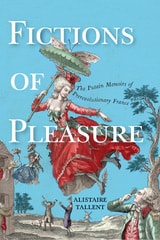
Fictions of Pleasure
The Putain Memoirs of Prerevolutionary FranceAlistaire Tallent
University of Delaware Press, 2024

Fictions of Sappho, 1546-1937
Joan DeJean
University of Chicago Press, 1989

Fifty Fables of La Fontaine
Jean de La Fontaine. Translated by Norman R. Shapiro. Illustrated by Alan James Robinson
University of Illinois Press, 1988

Figurations of France
Literary Nation-Building in Times of Crisis (1550-1650)Marcus Keller
University of Delaware Press, 2011
In Figurations of France: Literary Nation-Building in Times of Crisis (1550-1650), Marcus Keller explores the often indirect and subtle ways in which key texts of early modern French literature, from Joachim Du Bellay’s Défense et illustration de la langue française to Corneille’s Le Cid, contribute to the fiction of France as a nation. Through his fresh take on these and other classics, he shows that they not only create the French as an imaginary community but also provide venues for an incisive critique of the political and cultural construct that underpins the modern nation-state.
Current theories of nationhood, in particular the concepts of the nation form and fictive ethnicity (Étienne Balibar), inform the close readings of Du Bellay’s Défense, Ronsard’s Discours, d’Aubigné’s Tragiques, Montaigne’s Essays, Malherbe’s odes, and Corneille’s Le Cid and Horace. They reveal the imaginary power and unifying force of early modern figurations of France that come to bear in this heteregoneous corpus of French literature, with texts ranging from manifesto and epic poem to essay and tragedy. Situating each author and text in their particular historical context, the study suggests that the literary invention of France in the sixteenth and seventeenth centuries is as abundant as it is conceptually innovative: Du Bellay, for example, develops an idea of France by portraying the French language as a pruned and grafted tree while d’Aubigné proposes to think of the French as a nuclear but fatherless family. Blood functions as a highly charged metaphor of nationhood in all texts.
Opening up new perspectives on these canonical works, the focus on literary nation-building also puts them into unexpected and thought-provoking relationships to each other. Figurations of France deliberately crosses the fictive boundary between the sixteenth and the seventeenth centuries and argues that, in terms of imaginary nation-building, the contours that delineate the early modern period and separate it from what we call the modern era quickly begin to dissolve. Ultimately, the book makes the case for early modern literature as a creative and critical discourse, able to nourish and nuance our thinking about the nation as the postmodern nation-state is increasingly called into question by the economical, political, and cultural effects of globalization.
Published by University of Delaware Press. Distributed worldwide by Rutgers University Press.
Figures of Ill Repute
Representing Prostitution in Nineteenth-Century FranceCharles Bernheimer
Duke University Press, 0

Figures of the World
The Naturalist Novel and Transnational FormChristopher Laing Hill
Northwestern University Press, 2020
The book begins by tracing the history of naturalist fiction from the 1860s into the twentieth century and the reasons it spread around the world. Hill explores the development of three naturalist figures—the degenerate body, the self-liberated woman, and the social milieu—through close readings of fiction from France, Japan, and the United States. Rather than genealogies of European influence or the domination of cultural “peripheries” by the center, novels by Émile Zola, Tayama Katai, Frank Norris, and other writers reveal conspicuous departures from metropolitan models as writers revised naturalist methods to address new social conditions. Hill offers a new approach to studying culture on a large scale for readers interested in literature, the arts, and the history of ideas.

Fleur de Lys and Calumet
Being the Penicaut Narrative of French Adventure in LouisianaEdited by Richebourg McWilliams
University of Alabama Press, 1988
Andre Penicaut, a carpenter, sailed with Iberville to the French province of Louisiana in 1699 and did not return to France until 1721. The book he began in the province and finished upon his return to France is an eyewitness account of the first years of the French colony, which stretched along the Gulf Coast from Florida to Texas and in the Mississippi Valley from the Balize to the Illinois country. As a ship carpenter, Penicaut was chosen as a member of several important expeditions: he accompanied Le Sueur up the Mississippi River in 1700 to present-day Minnesota, and he went with Juchereau de St. Denis on the first journey from Mobile to the Red River and overland to the Rio Grande, to open trade with the Spaniards in Mexico. Penicaut helped to build the first post in Louisiana, at Old Biloxi, and the second post on the Mobile River.
Penicaut was at his best when describing the lives and social customs of the Indians of the region. He saw them in realistic terms, showing no prejudice toward their native habits. Neither were his French colleagues cast in heroic or villainous molds—though their accomplishments must strike modern readers as truly epic.
When first published, Fleur de Lys and Calumet was a major stimulus to scholarship in the field. This new edition will be welcomed by a new generation of scholars and readers interested in the colonial history of the Deep South and the Mississippi Valley.

For Love or for Money
Balzac's Rhetorical RealismArmine Kotin Mortimer
The Ohio State University Press, 2011

Fort Toulouse
The French Outpost at the Alabamas on the CoosaDaniel H Thomas, with an introduciton by Gregory A. Waselkov
University of Alabama Press, 1989
Situated at the head of the Alabama River system—at the juncture of the Coosa and Tallapoosa rivers—Fort Toulouse in 1717 was planned to keep the local Indians neutral, if not loyal, to the French and contain the British in their southernmost Atlantic colonies. Unlike the usual frontier settlements, Fort Toulouse was both a diplomatic post, since its officers acted as resident ministers, and a military post. Because it was located in a friendly territory adjoining an area under a rival (British) influence, the post participated in psychological warfare rather than in blood-letting. It used trade and aid, and was familiar with spies and double-agents—welcoming and debriefing British defectors; no cannon was discharged in anger at Toulouse.
The most eminent figure to have been connected directly with Fort Toulouse was General Andrew Jackson, who established a military post there during the War of 1812 after his victory over the Indians at Horseshoe Bend. The outpost was named Fort Jackson in his honor and played a key role in the treaty negotiations and eventual settlement of the Indian land by Americans.
In addition to discussing geopolitical and military affairs and diplomatic relations with Indian chiefs, Thomas describes daily life at the post and the variety of interactions between residents and visitors. Waselkov's introduction places the original 1960 book within the context of the existing scholarship of that time and adds an extensive and enlightening review of the most recent archaeological and historical research to Thomas' pioneering work.

Francophonie and the Orient
French-Asian Transcultural Crossings (1840-1940)Mathilde Kang
Amsterdam University Press, 2018

Francophonie en Orient
Aux croisements France-Asie (1840-1940)Mathilde Kang
Amsterdam University Press, 2017

French Colonial Archaeology
The Illinois Country and the Western Great LakesEdited by John A. Walthall
University of Illinois Press, 1991
results of many of the investigations of French colonial sites made in
the mid-continent during the last decade. It includes work done at Fort
St. Louis, Fort de Chartres, Fort Massac, French Peoria, Cahokia, Prairie
du Pont, Prairie du Rocher, and other locations controlled by the French
during a time when their dominance in North America was more than twice
that of Britain and Spain combined.
Five of the book's fifteen chapters summarize major excavations at colonial
fortifications, four of which are public monuments that currently attract
thousands of visitors each year. Another five chapters deal with French
colonial villages, and the remainder of the book is devoted to diet, trade,
the role of historic documents in the reconstruction of life on the French
colonial frontier, and other topics.
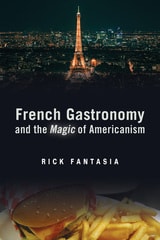
French Gastronomy and the Magic of Americanism
Rick Fantasia
Temple University Press, 2019
A tectonic shift has occurred in the gastronomic field in France, upsetting the cultural imagination. In a European country captivated by a high-stakes power struggle between chefs and restaurants in the culinary field, the mass marketing of factory-processed industrial cuisine and fast foods has created shock waves in French society, culture, and the economy.
In this insightful book, French Gastronomy and the Magic of Americanism, Rick Fantasia examines how national identity and the dynamics of cultural meaning-making within gastronomy have changed during a crucial period of transformation, from the 1970s through the 1990s. He illuminates the tensions and surprising points of cooperation between the skill, expertise, tradition, artistry, and authenticity of grand chefs and the industrial practices of food production, preparation, and distribution.
Fantasia examines the institutions and beliefs that have reinforced notions of French cultural supremacy—such as the rise and reverence of local cuisine—as well as the factors that subvert those notions, such as when famous French chefs lend their names to processed, frozen, and pre-packaged foods available at the supermarket. Ultimately, French Gastronomy and the Magic of Americanism shows what happens to a cultural field, like French gastronomy, when the logic and power of the economic field imposes itself upon it.
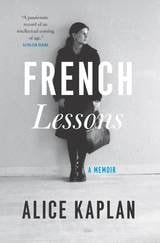
French Lessons
A MemoirAlice Kaplan
University of Chicago Press, 2018
The daughter of a Jewish lawyer who prosecuted Nazi war criminals at Nuremburg, Kaplan grew up in the 1960s in the Midwest. After her father's death when she was seven, French became her way of "leaving home" and finding herself in another language and culture. In spare, midwestern prose, by turns intimate and wry, Kaplan describes how, as a student in a Swiss boarding school and later in a junior year abroad in Bordeaux, she passionately sought the French "r," attentively honed her accent, and learned the idioms of her French lover.
When, as a graduate student, her passion for French culture turned to the elegance and sophistication of its intellectual life, she found herself drawn to the language and style of the novelist Louis-Ferdinand Celine. At the same time she was repulsed by his anti-Semitism. At Yale in the late 70s, during the heyday of deconstruction she chose to transgress its apolitical purity and work on a subject "that made history impossible to ignore:" French fascist intellectuals. Kaplan's discussion of the "de Man affair" — the discovery that her brilliant and charismatic Yale professor had written compromising articles for the pro-Nazi Belgian press—and her personal account of the paradoxes of deconstruction are among the most compelling available on this subject.
French Lessons belongs in the company of Sartre's Words and the memoirs of Nathalie Sarraute, Annie Ernaux, and Eva Hoffman. No book so engrossingly conveys both the excitement of learning and the moral dilemmas of the intellectual life.

French Verbs Made Simple(r)
By David Brodsky
University of Texas Press, 2006
It's time for a new approach to learning French verbs. Unlike popular verb guides that require the rote memorization of hundreds of verb forms, this book clearly explains the rules that govern the conjugation of all classes of French verbs—especially the irregular ones that give second-language learners the most trouble. These straightforward, easy-to-understand rules for conjugating French verbs are effective learning tools for both beginning students and more advanced speakers who want to perfect their usage of French verb forms.
French Verbs Made Simple(r) has many helpful features that you won't find in any other verb guide:
- Clear explanations of all verb tenses and forms.
- The simple patterns and rules that govern the conjugation of all verbs—including those verbs whose irregularities follow patterns that can be easily learned.
- A detailed discussion of how each verb form is used, with numerous examples.
- A full explanation of whether a verb should be conjugated with avoir or être, and the conditions under which the past participle is variable—two of the thorniest problems for students of French.
- An extended treatment of the subjunctive that will help you understand why it is used in some situations but not others.
- Complete conjugations for 57 basic model verbs (along with 27 "variants") and a comprehensive listing of some 6,200 verbs that indicates which of the models each verb follows.
Going well beyond any other guide in the clarity and detail of its explanations—as well as the innovative manner in which individual verbs are linked to model conjugations—French Verbs Made Simple(r) is the only guide to French verbs a learner needs.

French Women Authors
The Significance of the Spiritual, 1400–2000Kelsey L. Haskett
University of Delaware Press, 2013
Published by University of Delaware Press. Distributed worldwide by Rutgers University Press.
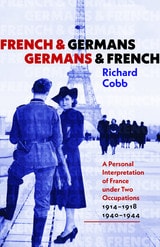
French and Germans, Germans and French
A Personal Interpretation of France under Two Occupations, 1914–1918/1940–1944Richard Cobb
Brandeis University Press, 2018

French and Indians in the Heart of North America, 1630-1815
Robert Englebert
Michigan State University Press, 2013
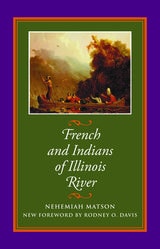
French and Indians of Illinois River
Nehemiah Matson. Foreword by Rodney O. Davis
Southern Illinois University Press, 2001
Complex and paradoxical, Nehemiah Matson (1816–1873) celebrated the occupation of the Middle West by European pioneers even as he labored to preserve the memory of the natives these pioneers replaced. He perpetuated the memory of the Indians who were driven out of the territory, but he nevertheless accumulated wealth selling their land to the pioneers. Rodney O. Davis notes in his new foreword to this book that Matson combined the attributes of a scholar with those of a salesman and promoter.
Matson settled in Princeton, Illinois, in 1836. He left behind a library partially endowed by him, named for him, and finally completed in 1913. According to Davis, however, Matson’s other legacy, “of equal significance in his own eyes, consisted of the five books he authored on northern Illinois and Illinois River history and cartography, volumes based not only on conscientious scholarship but also on both Indian and white reminiscence and on local folklore.”
Matson’s historical writings are valuable even when he deals with well-known events because his personal perspective makes his observations unique. Without the stories and reminiscences he collected, much valuable information would have been lost, especially since many of his informants, both Indian and European, were illiterate. Because his informants often told conflicting stories, Matson admitted that “harmonizing all conflicting accounts . . . has not been a success.”
Although Matson’s sources may not always have agreed, and sometimes his heart may have overruled his head and colored his accounts, he was a conscientious and committed author. “Obviously,” Davis explains, “this book must be evaluated as what it is, a piece of colorful local history, romantically anchored in legend yet rooted also in invaluable research and produced by a dedicated amateur whose standards were high. . . . French and Indians of Illinois River is a model of its type, indeed a minor classic.”

French and Provençal Lexicography
Edited by Urban T. Holmes and K. R. Scholberg
The Ohio State University Press, 1900
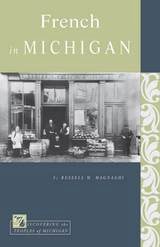
French in Michigan
Russell M. Magnaghi
Michigan State University Press, 2016
The colonial French served as explorers, soldiers, missionaries, fur traders, and colonists. Later, French priests and nuns were influential in promoting Catholicism in the state and in developing schools and hospitals. Father Gabriel Richard fled the violence of the French Revolution and became a prominent and influential citizen of the state as a U.S. Congressman and one of the founders of the University of Michigan. French observers of Michigan life included Alexis de Tocqueville. French entrepreneurs opened copper mines and a variety of service-oriented businesses. Louis Fasquelle became the first foreign-language instructor at the University of Michigan, and François A. Artault introduced photography to the Upper Peninsula. As pioneers of the early automobile, the French made a major contribution to the language used in auto manufacturing.
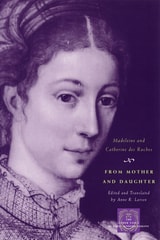
From Mother and Daughter
Poems, Dialogues, and Letters of Les Dames des RochesMadeleine and Catherine des Roches
University of Chicago Press, 2006
Madeleine and Catherine spent their entire lives in civil war–torn Poitiers, where a siege of the city, vandalism, and desecration of churches fueled their political and religious commentary. Members of an elite literary circle that would inspire salon culture during the next century, the Dames des Roches addressed the issues of the day, including the ravages of religious civil wars, the weak monarchy, education for women, marriage and the family, violence against women, and the status of women intellectuals. Through their collaborative engagement in shared public discourse, both mother and daughter were models of moral, political, and literary agency.
Fulfulde (Maasina) - English - French Lexicon
A Root-Based Compilation Drawn from Extant SourcesDonald W. Osborn
Michigan State University Press, 1993
The Lexicon brings together lexical material from a wide range of published and non-published sources to create an extensive compilation of the vocabulary of Fulfulde as it is spoken in that part of central Mali known as Masina (in Fulfulde, Maasina). The Lexicon is intended primarily for non-Fulfulde speakers who are learning the language at the intermediate or advanced levels and who need access to a comprehensive reference source on Fulfulde vocabulary. Scholars, development workers, and others whose research or fieldwork involves use of the Fulfulde of Masina may find it helpful as well in clarifying nuances of meaning and standardized spelling for the less familiar terms they might encounter. It is also intended that the present work, beyond the matter of organizing vocabulary, will contribute significantly to the expanding lexicographical and linguistic investigations of Fulfulde.