Results by title
2817 books match the query 'Nature' and 165 start with f
FISHES OF OHIO
Milton B. Trautman
The Ohio State University Press, 1982
“The objectives of [this] edition are to demonstrate and explain distributional changes from 1750 to 1980, and to provide keys to the 166 species of Ohio fishes. These aims are admirably achieved. The natural factors influencing distribution of fishes are discussed in Part I, which relates the geology, physiography, topography, hydrology, and climatic history of the regions. . . . Part II reviews changes that have occurred from 1750 until 1980, and is an excellent chronicle of modern man's alternation and manipulation of essentially every aquatic ecosystem in Ohio. . . . Part III is a listing of species, synonomy and nomenclatorial history of Ohio’s fishes. . . . Part IV is an informative section of the systematics and nomenclature of fishes that is very useful to beginning students of ichthylogy. The glossary and family and species keys contained in Part V are excellent. Part VI contains the major content of the book, the 166 species accounts. . . .
“The updated range maps, a central focus of Trautman's approach, are excellent and obviously the result of endless efforts. Ohio is one of the most thoroughly surveyed of all states and to translate these data to visual understanding is an unenviable task for which the reader should be deeply appreciative. . . . Also of exceptional quality are the species illustrations originally rendered by Mrs. E. R. Weeks and Trautman himself for the 1957 edition. They are among the best of their kind in a fish reference work, and serve well to facilitate identification of specimens in hand. . . .
“Anyone concerned with or otherwise interested in the fishes, aquatic environments, or general natural history of Ohio or eastern North America should consider this book a valued addition to their library.”
—Ohio Journal of Science
Far Flung
Improvisations on National Parks, Driving to Russia, Not Marrying a Ranger, the Language of Heartbreak, and Other Natural DisastersCassandra Kircher
West Virginia University Press, 2019
Cassandra Kircher was in her twenties when she was hired by the National Park Service, landing a life that allowed her to reinvent herself. For four years she collected entrance fees and worked in the dispatch office before being assigned as the first woman to patrol an isolated backcountry district of Colorado’s Rocky Mountain National Park. There, Kircher encountered wonder and beauty, accidents and death. Although she always suspected the mountains might captivate her, she didn’t realize that her adopted landscape would give her strength to confront where she was from—both the Midwest that Willa Cather fans will recognize, and a childhood filled with problems and secrets.
Divided and defined by geographic and psychological space, Far Flung begins in the Rockies but broadens its focus as Kircher negotiates places as distant as Alaska’s Kenai Peninsula, Russia’s Siberian valleys, and Wisconsin’s lake country, always with Colorado as a heartfelt pivot. These thirteen essays depict a woman coming to terms with her adoration for the wilds of the West and will resonate with all of us longing to better understand ourselves and our relationships to the places and people we love most.
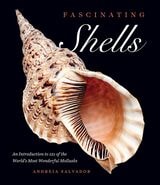
Fascinating Shells
An Introduction to 121 of the World’s Most Wonderful MollusksAndreia Salvador
University of Chicago Press, 2022
Beautiful photographs of stunning shells from London's Natural History Museum, home to one of the most significant and comprehensive collections in the world.
Collected and treasured for their beauty, used in religious rituals, or even traded as currency, shells have fascinated humans for millennia. Ancient and enchanting, dazzling in form and variety, these beautiful objects come from mollusks, one of the most diverse groups in the animal kingdom, including snails, oysters, cuttlefish, and chitons. Soft-bodied, these creatures rely on shells for protection from enemies and their environments, from snowy mountains to arid deserts, in deep-sea hydrothermal vents and the jungles of the tropics, on rocky shores, and in coral reefs.
In this book, mollusk expert Andreia Salvador profiles some of the world’s most beautiful and quirky shells, each selected from the more than eight million specimens held in the collection at London’s Natural History Museum. We lock eyes with the hundred-eyed cowry, named after "the all-seeing one," the giant Argus Panoptes of Greek mythology. We see how shells' appearances translate into defense strategies, as with the zigzag nerite, which varies its patterning to deceive and confuse predators. And we meet shell inhabitants, such as the amber snail, which eats earthworms by sucking them up like spaghetti. Reproduced in full color and striking detail, these shells have much to reveal about the history of collecting, the science of taxonomy, and the human desire to understand the natural world.

Father Nature
Fathers as Guides to the Natural WorldPaul S. & Stan Piper & Tag
University of Iowa Press, 2003
Fauna and Flora, Earth and Sky
Brushes with Nature's WisdomTrudy Dittmar
University of Iowa Press, 2003
Fawn Island
Douglas Wood
University of Minnesota Press, 2018
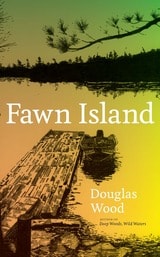
Fawn Island is a place where crows serve as alarm clocks, white-throated sparrows leave the tracks of their songs upon the evening hush, and chickadees help a woodsman learn to whistle. The island is also a jumping-off place for journeys large and small, earthly and spiritual-to nearby Mallard Island, Gull Island, or Bald Rock, by sea kayak into the wild recesses of sprawling Voyageurs National Park, or on a midnight paddle in which the paddler can reach the silent wilderness of the stars themselves. In his latest book, best-selling author Douglas Wood guides the reader on a deep journey into the heart of the North Woods.
For Wood, Fawn Island is not merely a charming wilderness hideaway; it is the entry to realms of thought and meaning as well. From its pine-clad shores he probes for insights into the nature of neighborliness and independence, of community and solitude. Out of an ancient Ojibwe legend comes an exploration of personal loss and life after death. Wood questions the notion of being a “force of nature” and the concept of the passage of time in the context of seemingly eternal trees, lakes, rock ledges, and stars. From beneath the ascending trunks of pines comes an inquiry into the principles of optimism and, finally, a personal response to the eternal question: Is the universe a friendly place?
Embedded in the text like roots of the island’s pines is Wood’s gentle, self-effacing humor and the author’s own original pen-and-ink drawings that superbly evoke the poetry and mystery of this “small bit of rock and tree,” this “lucky place” in the wilderness.
Fear Falls Away
and Other Essays from Hard and Rocky PlacesJanice Emily Bowers
University of Arizona Press, 1997
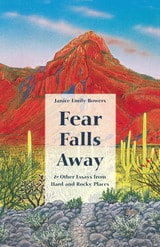
Faced with the prospect of moving to another place, Bowers finds herself thinking about the familiar world in new and unfamiliar ways. Through her eyes, too, we see how an interest in nature and the outdoors developed from early childhood and how simple curiosity has led her to the most surprising discoveries. At odd and unexpected moments, her work also seems to bring new insights into herself and her life as a writer, a wife, and a mother. These pages promise a new adventure at every turn in the trail. For sheer terror, there's a climb up the face of Baboquivari, for laughs, there's the great bagworm caper, and for some quiet truths, there are themes of gain and loss, of connection and reconcilliation. Crunching through winter snow or sweating under summer sun, we know we're in the hands of an experienced guide. And we know we couldn't ask for a better companion.

Fear of a Dead White Planet
More Worlds Collective. Joseph Masco, Tim Choy, Jake Kosek, M. Murphy
Duke University Press, 2025
Feather Brained
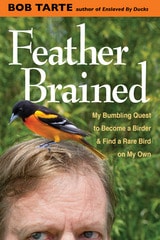
My Bumbling Quest to Become a Birder and Find a Rare Bird on My OwnBob Tarte
University of Michigan Press, 2016

Feeding Strategy
Jennifer Owen
University of Chicago Press, 1982
Among both plants and animals elaborate strategies have evolved for exploring the surrounding life as food. The feeding behavior of predators is based on a search and strike strategy. In contrast, grazers live surrounded by their food and are relatively immobile. Such animals as impalas and grasshoppers, whose persistent feeding make them ready prey, have evolved means of avoiding the notice of predators or methods of speedy escape. Plants that digest animal tissue have evolved complex and devious means to attract prey.
The variations in style of these feeding encounters and the precision involved in some of the feeding mechanisms are the themes of Feeding Strategy.
Feeding the Planet
Environmental Protection through Sustainable AgricultureKlaus Hahlbrock
Haus Publishing, 2009
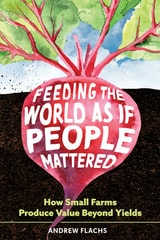
Feeding the World as if People Mattered
How Small Farms Produce Value Beyond YieldsAndrew Flachs
University of Arizona Press, 2026
The dominant view of agriculture has focused only on what we produce. It sees value in terms of capital gains or yield efficiency, masking how our global food system produces tremendous amounts of food commodities while failing to feed people, support rural communities, or enhance ecological well-being. Feeding the World as if People Mattered asks us to look more deeply and more humanely at what we perceive to be most valuable in our agricultural systems.
This book draws on fifteen years of anthropological research, taking readers to fields in South India, Eastern Europe, and North America, where people are already feeding the future amid global change. From these fields, Flachs shows us how a radical rethinking of the value of small farms and farmers is already happening. Bringing together conversations in agriculture, economics, anthropology, and the environmental humanities, Flachs deftly shows how small farms reproduce social and ecological relationships that are the only sustainable path forward.
For anyone who is curious about the food on their plate and the people who helped to get it there, Feeding the World as if People Mattered will offer a new way to find value in the food we grow and the people who grow it.
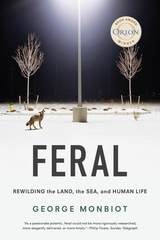
Feral
Rewilding the Land, the Sea, and Human LifeGeorge Monbiot
University of Chicago Press, 2014
So what if we stopped hedging? What if we grounded our efforts to solve environmental problems in hope instead, and let nature make our case for us? That’s what George Monbiot does in Feral, a lyrical, unabashedly romantic vision of how, by inviting nature back into our lives, we can simultaneously cure our “ecological boredom” and begin repairing centuries of environmental damage. Monbiot takes readers on an enchanting journey around the world to explore ecosystems that have been “rewilded”: freed from human intervention and allowed—in some cases for the first time in millennia—to resume their natural ecological processes. We share his awe, and wonder, as he kayaks among dolphins and seabirds off the coast of Wales and wanders the forests of Eastern Europe, where lynx and wolf packs are reclaiming their ancient hunting grounds. Through his eyes, we see environmental success—and begin to envision a future world where humans and nature are no longer separate and antagonistic, but are together part of a single, healing world.
Monbiot’s commitment is fierce, his passion infectious, his writing compelling. Readers willing to leave the confines of civilization and join him on his bewitching journey will emerge changed—and ready to change our world for the better.
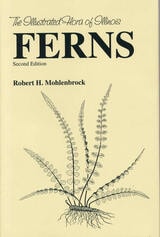
Ferns
Robert H. Mohlenbrock
Southern Illinois University Press, 1999
Perhaps no other group of plants attracts more interest among both professional and amateur botanists than ferns. As early as 1846, when one of the first lists of Illinois plants was published, sixteen species of ferns were already known in the state. The longtime interest of a great many people makes the distribution of ferns better known than that of any other group of plants in Illinois.
This detailed account of ferns and fern-allies was first published in 1967 as the first volume in the series The Illustrated Flora of Illinois. Eminent botanist Robert H. Mohlenbrock has now revised Ferns to include twenty-five additional taxa of ferns that have since been discovered in Illinois. In addition, numerous nomenclatural changes have occurred for plants already known in the state.
The introductory information of Ferns includes discussions of the morphology and life history of the ferns and fern-allies, the taxonomic history of the group in Illinois, and the habitats where they can be found.
The semitechnical keys and descriptions, familiar to the professional botanist, have been simplified for the novice and are accompanied by a glossary and a profuse use of illustrations. A new key has been included for the additional ferns. Two general keys enable the reader to identify the order and the genus of the fern or fern-ally in question. One of these is designed for use with specimens that have sporangia; the other is for use with sterile specimens. The keys are composed of a hierarchy of characteristics for determining the order, family, and genus of any given specimen. Once a genus is ascertained, the reader can apply its key to more than one species of the same genus.
Each species has its own description, statement of habitat and range, Illinois distribution, map, discussion, synonymy, and full-page line illustration showing its diagnostic characteristics.
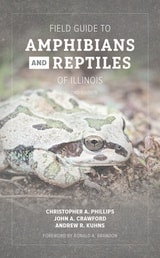
Field Guide to Amphibians and Reptiles of Illinois
Christopher A. Phillips, John A. Crawford, and Andrew R. Kuhns. Foreword by Ronald A. Brandon
University of Illinois Press, 2022
A one-of-a-kind resource, the Field Guide to Amphibians and Reptiles of Illinois is a definitive guide aimed at biologists, teachers, students, wildlife specialists, natural resource managers, conservationists, law enforcement officials, landowners, hobbyists, and everyone else eager to explore herpetology and nature in the Prairie State.
Field Guide to Coastal Wetland Plants of the Northeastern United States
Ralph W. Tiner
University of Massachusetts Press, 1987
Coastal wetlands are among our most important fish and wildlife habitats. For example, over two-thirds of our recreationally and commercially important marine fishes depend on coastal marshes and associated waters for nursery and spawning grounds.
This book is arranged in four major sections: (1) Coastal Wetland Ecology: A General Overview, (2) Identification of Coastal Wetland Plants, (3) Wetland Plant Descriptions and Illustrations, and (4) Places to Observe Coastal Wetlands, and (5) Sources of Other Information. In addition , a list of references used in preparing this book and a glossary of technical terms are provided.
Field Guide to Illinois Mammals
Joyce E. Hofmann
University of Illinois Press, 2026
Designed to use in the field or the backyard, Field Guide to Illinois Mammals updates a singular reference for wildlife biologists, ecologists, hikers, armchair adventurers, and anyone else fascinated by the state’s wildlife.
Field Guide to Oregon Rivers
Tim Palmer
Oregon State University Press, 2024
Field Guide to Tidal Wetland Plants of the Northeastern United States and Neighboring Canada
Vegetation of Beaches, Tidal Flats, Rocky Shores, Marshes, Swamps, and Coastal PondsRalph W. Tiner
University of Massachusetts Press, 2009
First published in 1987, Ralph W. Tiner's A Field Guide to Coastal Wetland Plants of the Northeastern United States soon established itself as the definitive work on its subject. Now Tiner has prepared a revised and expanded edition, broadening the coverage both botanically and geographically. It emphasizes plant identification and includes descriptions of over 700 species and illustrations of approximately 550 species. More tidal wetland types are covered (beaches, rocky shores, and tidal swamps) and the geographic scope extends as far north as Canada's Maritime Provinces.
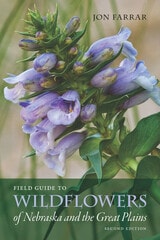
Field Guide to Wildflowers of Nebraska and the Great Plains
Second EditionJon Farrar
University of Iowa Press, 2012
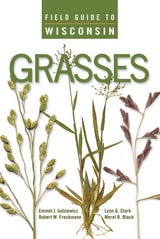
Field Guide to Wisconsin Grasses
Emmet J. Judziewicz , Robert W. Freckmann, Lynn G. Clark, Merel R. Black
University of Wisconsin Press, 2014
The book includes:
• drawings of most species
• chapters on grass morphology and grasses in natural communities
• keys to all species, including an illustrated key to genera
• a glossary of grass terminology.
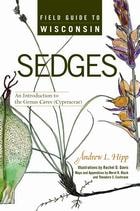
Field Guide to Wisconsin Sedges
An Introduction to the Genus Carex (Cyperaceae)Andrew L. Hipp; Illustrations by Rachel D. Davis; Maps and Appendices by Merel R. Black and Theodore S. Cochrane
University of Wisconsin Press, 2008
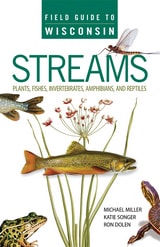
Field Guide to Wisconsin Streams
Plants, Fishes, Invertebrates, Amphibians, and ReptilesMichael A. Miller, Katie Songer, and Ron Dolen
University of Wisconsin Press, 2014
More than 1,000 images illustrate the species in this field guide. These images are augmented by detailed ecological and taxonomic notes, descriptions of look-alike species, and distribution maps. The guide identifies:
• more than 130 common plants
• all 120 fishes known to inhabit Wisconsin streams
• 8 crayfishes
• 50 mussels
• 10 amphibians
• 17 reptiles
• 70 families of insects
• other commonly found invertebrates.
Best Regional General Interest Books, selected by the American Association of School Librarians
Best Regional General Interest Books, selected by the Public Library Reviewers
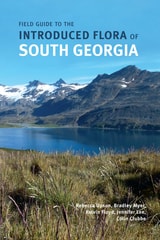
Field Guide to the Introduced Flora of South Georgia
Rebecca Upson, Bradley Myer, Kelvin Floyd, Jennifer Lee, and Colin Clubbe
Royal Botanic Gardens, Kew, 2017
This is the first field guide to comprehensively cover these species, providing full-color photographs, distribution maps, and species descriptions, plus keys to the grasses and sedges of the area. This guide is accessible even to non-botanists and also provides an opportunity for visitors to be part of a citizen science program contributing sightings and improving our knowledge of the introduced flora of South Georgia.
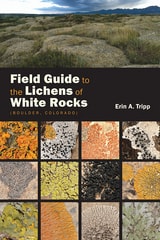
Field Guide to the Lichens of White Rocks
(Boulder, Colorado)Erin Tripp
University Press of Colorado, 2017
This extensively illustrated field guide presents detailed information on the macroscopic and microscopic features needed to identify species, as well as extensive notes on how to differentiate closely related lichens—both those present at White Rocks and those likely to be found elsewhere in western North America. This guide is one of the only complete lichen inventories of a sandstone formation in North America and covers all constituents including the crustose microlichen biota, traditionally excluded from other inventories. A short introduction and glossary equip the reader with basic information on lichen morphology, reproduction, and ecology.
Visitors to White Rocks Nature Preserve must schedule staff-led public tours or set up sponsored research projects through the City of Boulder Open Space and Mountain Parks, and there are many other outcroppings of Fox Hills sandstone across the West, making Field Guide to the Lichens of White Rocks a significant resource for anyone interested in this unique environment. This accessible, user-friendly guide will also be valuable to naturalists and lichenologists around the world as well as educators, conservationists, and land managers concerned with the growing significance of open spaces and other protected urban areas throughout North America.
The University Press of Colorado gratefully acknowledges the generous support of the University of Colorado Natural History Museum, City of Boulder Parks & Open Spaces, and the Colorado Native Plant Society board and members toward the publication of this book.
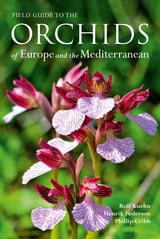
Field Guide to the Orchids of Europe and the Mediterranean
Rolf Kuehn, Henrik Pedersen, and Phillip Cribb
Royal Botanic Gardens, Kew, 2018
The book covers orchids from Europe and the Mediterranean, as well as areas in Turkey and the immediate near east of North Africa and Macaronesia. It includes thirty genera and their species including Ophrys, Cypripedium, Orchis, Dactylorhiza, Epipactis, and Serapias, as well as seventy natural hybrids. The authors emphasize the natural variability that exists in many wild species and work to eliminate the confusion that can arise due to the morphological variation. Each species includes multiple images to illustrate this diversity as well as notes on distinguishing features and distribution maps. Common names and important synonyms accompany each species alongside notes on habitat, flowering times, and distinguishing features.
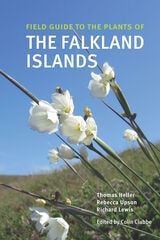
Field Guide to the Plants of the Falkland Islands
Thomas Heller, Rebecca Upson, and Richard Lewis
Royal Botanic Gardens, Kew, 2018
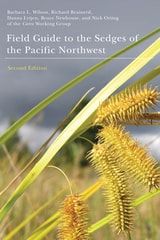
Field Guide to the Sedges of the Pacific Northwest
Second EditionBarbara J. Wilson, Richard Brainerd, Danny Lytjen, Bruce Newhouse, and Nick Otting of the Carex Working Group
Oregon State University Press, 2014
Sedges can be difficult to identify, with differences between species based on small, technical characters. This comprehensive guide contains identification keys, descriptions, more than 650 color photographs, and distribution maps for each species, providing users with helpful tools and tips for identifying the plants in this challenging group. Information about sedge ecology, habitat, management and restoration, ethnobotanical uses, and propagation enhances the guide’s utility.
Field Guide to the Sedges of the Pacific Northwest provides an invaluable resource for botanists, land managers, restoration ecologists, and plant enthusiasts. And, as the genus Carex becomes increasingly important amongst landscapers, nurseries, and gardeners, the guide will serve as a handy tool for choosing Northwest natives for the garden.
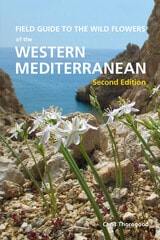
Field Guide to the Wild Flowers of the Western Mediterranean, Second Edition
Chris Thorogood
Royal Botanic Gardens, Kew, 2021
The western Mediterranean—running from Italy to Portugal and encompassing Corsica, Sardinia, the Balearic Islands, and coastal North Africa—is one of the most biodiverse regions in the world, home to more than 10,000 plant species. This updated edition of the Field Guide to the Wild Flowers of the Western Mediterranean is the most comprehensive plant identification guide to the area. Covering more than 2,500 plants, this accessible guide focuses on the most common and conspicuous species that occur in the area, with descriptions, color photographs, and illustrations throughout. The book also includes sections on where to find native plants in the wild, as well as a glossary of terms. An ideal companion for wildlife and plant enthusiasts, this guide will enable even the most botanically blind to reliably identify native flora in the sunny and coastal climes of the western Mediterranean.
Field Guide to the Wildflowers of the Western Mediterranean
Chris Thorogood
Royal Botanic Gardens, Kew, 2016
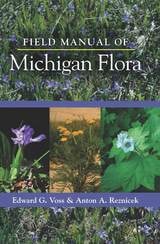
Field Manual of Michigan Flora
Edward G. Voss and Anton A. Reznicek
University of Michigan Press, 2012
Field Manual of Michigan Flora is the most up-to-date guide available for all seed plants growing wild in Michigan. Significantly expanding and updating the three-volume Michigan Flora, the book incorporates the discoveries of numerous additional species, recent systematic research, and a vast trove of new information on the shifting distributions of Michigan species. It presents concise identification keys, information about habitats, and completely updated distribution maps for all the seed plants, native or naturalized, that have been recorded from the state, fully treating over 2,700 species. All non-native species are included with notes on their first discovery in the state and comments on invasive tendencies. Rare native species that appear to be declining or to have shrinking ranges are also noted. This book is an essential reference for anyone interested in appreciating Michigan's natural heritage and understanding our ever-changing environment.
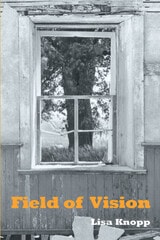
Field Of Vision
Lisa Knopp
University of Iowa Press, 1996
In this contemplative collection of essays, Lisa Knopp moves out from the prairies of Nebraska and Iowa to encompass a fully developed vision of light, memory, change, separateness, time, symbols, responsibility, and unity. Knopp charts a stimulating course among the individual, community, and culture that removes the boundaries between self and other, allowing one to become fully present in the world. Her keen vision sees beyond the ordinary to illuminate the mysteries and meanings of our personal and natural worlds.
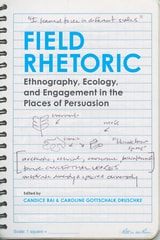
Field Rhetoric
Ethnography, Ecology, and Engagement in the Places of PersuasionEdited by Candice Rai and Caroline Gottschalk Druschke
University of Alabama Press, 2018
A survey of the innovative scholarship emerging at the intersections of rhetoric, and fieldwork
A variety of research areas within rhetorical studies—including everyday and public rhetorics, space and place-based work, material and ecological approaches, environmental communication, technical communication, and critical and participatory action research, among others—have increasingly called for ethnographic fieldwork that grounds the study of rhetoric within the contexts of its use and circulation. Employing field methods more commonly used by ethnographers allows researchers to capture rhetoric in action and to observe the dynamic circumstances that shape persuasion in ordinary life.
Field Rhetoric: Ethnography, Ecology, and Engagement in the Places of Persuasion gathers new essays that describe and theorize this burgeoning transdisciplinary mode of field-based scholarship. Contributors document and support this ethnographic turn in rhetorical studies through sustained examination of the diverse trends, methods, tools, theories, practices, and possibilities for engaging in rhetorical field research.
This fascinating volume offers an introduction to these inquiries and serves as both a practical resource and theoretical foundation for scholars, teachers, and students interested in the intersection of rhetoric and field studies. Editors Candice Rai and Caroline Gottschalk Druschke have assembled scholars working in diverse field sites to map and initiate key debates on the practices, limitations, and value of rhetorical field methods and research. Working synthetically at the junction of rhetorical theory and field practices, the contributors to this collection build from myriad field-based cases to examine diverse theoretical and methodological considerations. The volume also serves as a useful reference for interdisciplinary qualitative researchers interested in doing research from a rhetorical or discursive perspective in various disciplines and fields, such as English, composition, communication, natural resources, geography, sociology, urban planning, anthropology, and more.
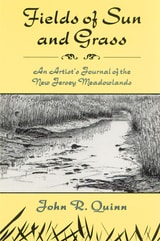
Fields of Sun and Grass
An Artist's Journal of the New Jersey MeadowlandsQuinn, John R
Rutgers University Press, 1997
The setting is the New Jersey Meadowlands, a wild and reedy tract located a mere six miles west of New York's Times Square. It is considered by many as nothing more than a "toxic wasteland," but is in fact home to a dazzling array of often overlooked plants and animals. While there is little doubt that many of the life forms that once thrived here are long gone, many others remain, and these are the primary focus of this book. Many, many species are discussed; far too many to list here. Suffice it to say Quinn leaves no stones unturned.
The book has three central parts, respectively called "Yesterday," "Today," and "Tomorrow." Each covers a different time period in the ecological life of the Meadowlands. There also is an "Introduction," a "Starting Point," an "Epilogue," a bibliography, an index, and an interesting sort of "hands-on" chapter called "Exploring the Meadowlands." This will be of particular interest to anyone who lives within traveling distance of the region. It gives helpful and experienced advice on enjoyed the Meadowlands firsthand through boating, fishing, hiking, and the visiting of local parks.
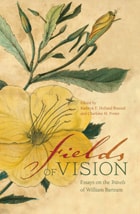
Fields of Vision
Essays on the Travels of William BartramEdited by Kathryn E. Holland Braund and Charlotte M. Porter
University of Alabama Press, 2010
A classic work of history, ethnography, and botany, and an examination of the life and environs of the 18th-century south
William Bartram was a naturalist, artist, and author of Travels through North and South Carolina, Georgia, East and West Florida, the Cherokee Country, the ExtensiveTerritories of the Muscogulees, or Creek Confederacy, and the Country of the Choctaws. The book, based on his journey across the South, reflects a remarkable coming of age. In 1773, Bartram departed his family home near Philadelphia, Pennsylvania, as a British colonist; in 1777, he returned as a citizen of an emerging nation of the United States. The account of his journey, published in 1791, established a national benchmark for nature writing and remains a classic of American literature, scientific writing, and history. Brought up as a Quaker, Bartram portrayed nature through a poetic lens of experience as well as scientific observation, and his work provides a window on 18th-century southern landscapes. Particularly enlightening and appealing are Bartram’s detailed accounts of Seminole, Creek, and Cherokee peoples.The Bartram Trail Conference fosters Bartram scholarship through biennial conferences held along the route of his travels. This richly illustrated volume of essays, a selection from recent conferences, brings together scholarly contributions from history, archaeology, and botany. The authors discuss the political and personal context of his travels; species of interest to Bartram; Creek architecture; foodways in the 18th-century south, particularly those of Indian groups that Bartram encountered; rediscovery of a lost Bartram manuscript; new techniques for charting Bartram’s trail and imaging his collections; and a fine analysis of Bartram’s place in contemporary environmental issues.
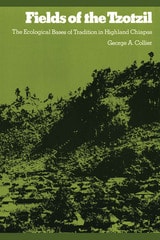
Fields of the Tzotzil
The Ecological Bases of Tradition in Highland ChiapasBy George A. Collier
University of Texas Press, 1975
Fields of the Tzotzil is the first study of social processes in contemporary highland Maya communities to encompass a regional view of the highlands of Chiapas as a system. In viewing tradition, not as a survival of traits, but as a dynamic process of adaptation by local systems to their placement in larger social and economic systems, it lays to rest the theory that tribal peoples apparently are politically and economically isolated. In addition, its broad regional perspective sheds light on the problems of understanding the position of traditional ethnic groups in contemporary society.
The approach of the book is ecological in two senses. First, all the topics dealt with concern the traditional behavior of Indian groups as revealed in their relationship to the land. Second, the analysis seeks out factors that condition land use, not just locally, but as part of a larger system that includes influences of the market and the impact of nationalist agrarian policy. Thus, the author examines land inheritance patterns and food production, as well as the interethnic relations in the region in which Indians are subordinate to mestizos. He discusses in detail corn farming, craft specialization, wage labor, and Indian colonization efforts under the Mexican ejido—all factors that directly affect land use and are thus part of the environment in highland Chiapas.
The study is unique in its use of previously inaccessible historical source material and its use of novel methodological aids. Aerial photography was used in data collection, and the computer was used in ethnographic census analysis. The result is a book that reveals the Indian groups of Chiapas as apparent enclaves whose ethnicity is a dynamic, adaptive response to their position of marginal dependency. While their plight is extreme, it is nevertheless structurally similar to the position of ethnic groups in most large social systems.
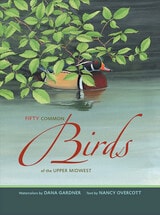
Fifty Common Birds of the Upper Midwest
Dana Gardner
University of Iowa Press, 2006
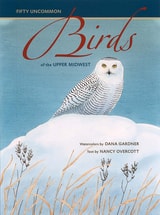
Fifty Uncommon Birds of the Upper Midwest
Dana Gardner
University of Iowa Press, 2007
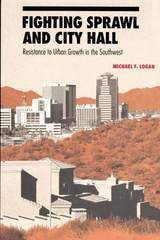
Fighting Sprawl and City Hall
Resistance to Urban Growth in the SouthwestMichael F. Logan
University of Arizona Press, 1995
Fighting Sprawl and City Hall now sets the record straight, tracing the roots of antigrowth activism in two southwestern cities, Tucson and Albuquerque, where urbanization proceeded in the face of constant protest. Logan tells how each of these cities witnessed multifaceted opposition to post-war urbanization and a rise in political activism during the 1950s. For each city, he describes the efforts by civic boosters and local government to promote development, showing how these booster-government alliances differed in effectiveness; tells how middle-class Anglos first voiced opposition to annexations and zoning reforms through standard forms of political protest such as referendums and petitions; then documents the shift to ethnic resistance as Hispanics opposed urban renewal plans that targeted barrios. Environmentalism, he reveals, was a relative latecomer to the political arena and became a focal point for otherwise disparate forms of resistance.
Logan's study enables readers to understand not only these similarities in urban activism but also important differences; for example, Tucson provides the stronger example of resistance based on valuation of the physical environment, while Albuquerque better demonstrates anti-annexation politics. For each locale, it offers a testament to grass-roots activism that will be of interest to historians as well as to citizens of its subject cities.
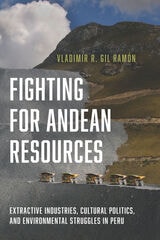
Fighting for Andean Resources
Extractive Industries, Cultural Politics, and Environmental Struggles in PeruVladimir R. Gil Ramón, Foreword by Enrique Mayer
University of Arizona Press, 2020
2021 American Anthropological Association´s, finalist of the Association for Political and Legal Anthropology Book Prize in Critical Anthropology
Mining investment in Peru has been presented as necessary for national progress; however, it also has brought socioenvironmental costs, left unfulfilled hopes for development, and has become a principal source of confrontation and conflict.
Fighting for Andean Resources focuses on the competing agendas for mining benefits and the battles over their impact on proximate communities in the recent expansion of the Peruvian mining frontier. The book complements renewed scrutiny of how globalization nurtures not solely antagonism but also negotiation and participation.
Having mastered an intimate knowledge of Peru, Vladimir R. Gil Ramón insightfully documents how social technologies of power are applied through social technical protocols of accountability invoked in defense of nature and vulnerable livelihoods. Although analyses point to improvements in human well-being, a political and technical debate has yet to occur in practice that would define what such improvements would be, the best way to achieve and measure them, and how to integrate dimensions such as sustainability and equity.
Many confrontations stem from frustrated expectations, environmental impacts, and the virtual absence of state apparatus in the locations where new projects emerged. This book presents a multifaceted perspective on the processes of representation, the strategies in conflicts and negotiations of development and nature management, and the underlying political actions in sites affected by mining.
Filicineae, Gymnospermae and Other Monocots Excluding Cyperaceae
Ferns, Conifers, and Other Monocots Excluding SedgesRobert H. Mohlenbrock
Southern Illinois University Press, 2006
The second in a series of four illustrated guides to identifying aquatic and standing water plants in the central Midwest, this convenient reference volume includes descriptions, nomenclature, ecological information, and identification keys to plants in all of the monocot families except sedges—which are covered in the first volume in the series—that are found in Kentucky (except for the Cumberland region), Ohio, Indiana, Illinois, Iowa, Missouri, Kansas, and Nebraska.
Monocots covered in this volume include ferns, conifers, grasses, rushes, orchids, duckweeds, irises, sweet flags, arrowheads, aroids, flowering rushes, pipeworts, frog-bits, arrowgrasses, naiads, pickerelweeds, pondweeds, bur reeds, cattails, and yellow-eyed grasses. Robert H. Mohlenbrock includes three types of plants: submergents, those that spend their entire lives with their vegetative parts either completely submerged or at least floating on the water’s surface; emergents, which are typically rooted underwater with their vegetative parts standing out of water; and a third category of plants that live most of their lives out of water, but which may live in water at least three months a year.
With taxa arranged alphabetically, the volume is well organized and easy to use. In addition, basic synonymy, description, distribution, comments, and line drawings show the habits and distinguishing features for each plant. Habitat and nomenclatural notes are also listed, as are the official wetland designations given by the U.S. Fish and Wildlife Service.
Filicineae, Gymnospermae, and Other Monocots, Excluding Cyperaceae is a useful standard reference for state and federal employees who deal with both aquatic and wetland plants and environmental conservation and mitigation issues. It is furthermore an essential guide for students and instructors in college and university courses focusing on the identification of aquatic and wetland plants.
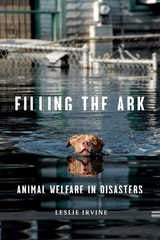
Filling the Ark
Animal Welfare in DisastersLeslie Irvine
Temple University Press, 2009
When disasters strike, people are not the only victims. Hurricane Katrina raised public attention about how disasters affect dogs, cats, and other animals considered members of the human family. In this short but powerful book, noted sociologist Leslie Irvine goes beyond Katrina to examine how disasters like oil spills, fires, and other calamities affect various animal populations—on factory farms, in research facilities, and in the wild.
Filling the Ark argues that humans cause most of the risks faced by animals and urges for better decisions about the treatment of animals in disasters. Furthermore, it makes a broad appeal for the ethical necessity of better planning to keep animals out of jeopardy. Irvine not only offers policy recommendations and practical advice for evacuating animals, she also makes a strong case for rethinking our use of animals, suggesting ways to create more secure conditions.
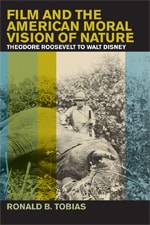
Film and the American Moral Vision of Nature
Theodore Roosevelt to Walt DisneyRonald B. Tobias
Michigan State University Press, 2011

Final Causality in Nature and Human Affairs
Richard F. Hassing
Catholic University of America Press, 2018
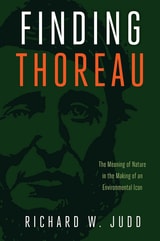
Finding Thoreau
The Meaning of Nature in the Making of an Environmental IconRichard W. Judd
University of Massachusetts Press, 2018
In his 1862 eulogy for Henry David Thoreau, Ralph Waldo Emerson reflected that his friend “dedicated his genius with such entire love to the fields, hills, and waters of his native town, that he made them known and interesting to all reading Americans, and to people over the sea.” Finding Thoreau traces the reception of Thoreau's work from the time of his death to his ascendancy as an environmental icon in the 1970s, revealing insights into American culture's conception of the environment.
Moving decade by decade through this period, Richard W. Judd unveils a cache of commentary from intellectuals, critics, and journalists to demonstrate the dynamism in the idea of nature, as Americans defined and redefined the organic world around them amidst shifting intellectual, creative, and political forces. This book tells the captivating story of one writer's rise from obscurity to fame through a cultural reappraisal of the work he left behind.
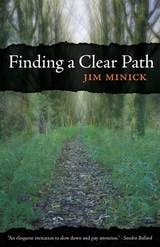
Finding a Clear Path
JIM MINICK
West Virginia University Press, 2006
Finding a Clear Path intertwines literature, agriculture, and ecology as author Jim Minick takes the reader on many journeys, allowing you to float on a pond, fly with a titmouse, gather ginseng, and grow the lowly potato. The reader visits monarch butterflies and morel mushrooms, encountering beavers, black snakes, and bloodroot along the way. Using his background as a blueberry farmer, gardener and naturalist, Minick explores the Appalachian region and also introduces information that can be appreciated from a scientific point of view, explaining, for example, the ears of an owl, or the problems with the typical Christmas tree. Reading this collection of essays invites you to search for ways to better understand and appreciate this marvelous world, opening paths for journeys of your own.
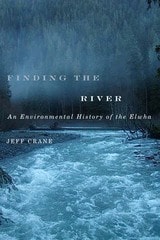
Finding the River
An Environmental History of the ElwhaJeff Crane
Oregon State University Press, 2011

Finding the Singing Spruce
Musical Instrument Makers and Appalachia's Mountain ForestsJasper Waugh-Quasebarth
West Virginia University Press, 2023
Environment, craft, and meaning in the work of Appalachian instrument makers.
How can the craft of musical instrument making help reconnect people to place and reenchant work in Appalachia? How does the sonic search for musical tone change relationships with trees and forests? Following three craftspeople in the mountain forests of Appalachia through their processes of making instruments, Finding the Singing Spruce considers the meanings of work, place, and creative expression in drawing music from wood.
Jasper Waugh-Quasebarth explores the complexities and contradictions of instrument-making labor, which is deeply rooted in mountain forests and expressive traditions but also engaged with global processes of production and consumption. Using historical narratives and sensory ethnography, among other approaches, he finds that the craft of lutherie speaks to the past, present, and future of the region’s work and nature.
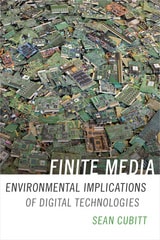
Finite Media
Environmental Implications of Digital TechnologiesSean Cubitt
Duke University Press, 2017

Fire Management in the American West
Forest Politics and the Rise of MegafiresMark Hudson
University Press of Colorado, 2011
Drawing on correspondence both between and within the Forest Service and the major timber industry associations, newspaper articles, articles from industry outlets, and policy documents from the late 1800s through the present, Hudson shows how the US forest industry, under the constraint of profitability, pushed the USFS away from private industry regulation and toward fire exclusion, eventually changing national forest policy into little more than fire policy.
More recently, the USFS has attempted to move beyond the policy of complete fire suppression. Interviews with public land managers in the Pacific Northwest shed light on the sources of the agency's struggles as it attempts to change the way we understand and relate to fire in the West.
Fire Management in the American West will be of great interest to environmentalists, sociologists, fire managers, scientists, and academics and students in environmental history and forestry.