Results by title
8812 books match the query 'Political Science' and 329 start with f

F. D. R. and the Press
Graham J. White
University of Chicago Press, 1979
White challenges and disproves Roosevelt's contention that the press was unusually severe and slanted in its treatment of the Roosevelt years. His original work traces FDR's hostile assessment of the press to his own political philosophy: an ideology that ordained him a champion of the people, whose task it was to preserve American democracy against the recurring attempt by Hamiltonian minorities (newspaper publishers and captive reporters) to wrest control of their destiny from the masses.
White recounts Roosevelt's initial victory over the press corps, and the effect his wily manipulations had on press coverage of his administrations and on his own public image. He believes Roosevelt's denunciation of the press was less an accurate description of the press's behavior towards his administrations than a product of his own preconceptions about the nature of the Presidency. White concludes that Roosevelt's plan was to disarm those he saw as the foes of democracy by accusing them of unfairly maligning him.
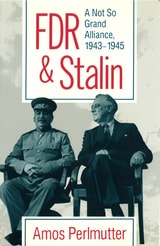
FDR & Stalin
A Not So Grand Alliance, 1943–1945Amos Perlmutter
University of Missouri Press, 1993
Perlmutter's hard-hitting, revisionist history of Roosevelt's foreign policy explores FDR's not-so-grand alliance with the ruthless Soviet leader. As the first Western scholar granted access to key foreign ministry documents recently declassified in the former Soviet Union, Perlmutter provides a provocative portrait of a popular leader whose failure to comprehend Stalin's long-range goals had devastating results for the postwar world.
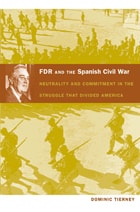
FDR and the Spanish Civil War
Neutrality and Commitment in the Struggle that Divided AmericaDominic Tierney
Duke University Press, 2007
Between 1936 and 1939, Roosevelt’s perceptions of the Spanish Civil War were transformed. Initially indifferent toward which side won, FDR became an increasingly committed supporter of the leftist government. He believed that German and Italian intervention in Spain was part of a broader program of fascist aggression, and he worried that the Spanish Civil War would inspire fascist revolutions in Latin America. In response, Roosevelt tried to send food to Spain as well as illegal covert aid to the Spanish government, and to mediate a compromise solution to the civil war. However unsuccessful these initiatives proved in the end, they represented an important stage in Roosevelt’s emerging strategy to aid democracy in Europe.
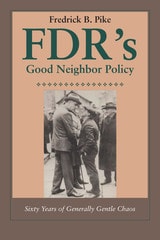
FDR's Good Neighbor Policy
Sixty Years of Generally Gentle ChaosBy Fredrick B. Pike
University of Texas Press, 1995
During the 1930s, the United States began to look more favorably on its southern neighbors. Latin America offered expanded markets to an economy crippled by the Great Depression, while threats of war abroad nurtured in many Americans isolationist tendencies and a desire for improved hemispheric relations.
One of these Americans was Franklin Delano Roosevelt, the primary author of America's Good Neighbor Policy. In this thought-provoking book, Fredrick Pike takes a wide-ranging look at FDR's motives for pursuing the Good Neighbor Policy, at how he implemented it, and at how its themes have played out up to the mid-1990s.
Pike's investigation goes far beyond standard studies of foreign and economic policy. He explores how FDR's personality and Eleanor Roosevelt's social activism made them uniquely simpático to Latin Americans. He also demonstrates how Latin culture flowed north to influence U.S. literature, film, and opera. The book will be essential reading for everyone interested in hemispheric relations.
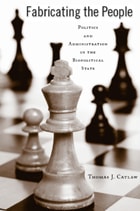
Fabricating the People
Politics and Administration in the Biopolitical StateThomas J. Catlaw
University of Alabama Press, 2012
Fabricating the People boldly proposes post-representational governance that reframes the practice of modern democracy and reinvents the role of public administration.
Since the 1960s, hostility and mistrust toward the U.S. government has risen precipitously. At the same time, the field of public administration has wrestled with its own crisis of legitimacy. What is at the root of current antigovernment sentiment? Conventionally, two explanations for this problem persist. Some see it primarily in moral terms, a deficit of Constitutional or democratic values in government. Others emphasize government’s performance failures and managerial inefficiency.
Thomas J. Catlaw departs from both explanations in this groundbreaking study and demonstrates that the current crisis of government originates in the uncritical manner in which we have accepted the idea of “the People.” He contends that this unifying, foundational concept—and the notion of political representation it entails—have failed. While illuminating some of our most pressing social and political problems, Catlaw shows how the idea of the People, far from serving to unify, relies in fact on a distinctive logic of exclusion. True political power is the power to determine what constitutes the normal, natural life of the electorate. Today, the exclusionary practices that once made up or fabricated the People are increasingly contested. In turn, government and political power now appear more invasive, less legitimate, and our shared reality appears more fragmented and disconnected.
In order to address this crisis and reinvigorate democracy, Catlaw argues, we must accept as bankrupt the premise of the People and the idea of representation itself. Fabricating the People boldly proposes post-representational governance that reframes the practice of modern democracy and reinvents the role of public administration.

Faces of Internationalism
Public Opinion and American Foreign PolicyEugene R. Wittkopf
Duke University Press, 1990
The breakdown of the “consensus” approach to American foreign policy after the Cold War years has become the subject of much analysis. This study contributes to revisionist scholarship by describing the beliefs and preferences that have emerged in the wake of this breakdown. Wittkopf counters traditional views by demonstrating the persistence of U.S. public opinion defined by two dominant and distinct attitudes in the post-Vietnam war years—cooperative and militant internationalism.
The author explores the nature of these two “faces” of internationalism, focusing on the extent to which elites and masses share similar opinions and the political and sociodemographic correlates of belief systems. Wittkopf also offers an original examination of the relationship between beliefs and preferences.

Facing the Khmer Rouge
A Cambodian JourneyRonnie Yimsut
Rutgers University Press, 2011
As a child growing up in Cambodia, Ronnie Yimsut played among the ruins of the Angkor Wat temples, surrounded by a close-knit community. As the Khmer Rouge gained power and began its genocidal reign of terror, his life became a nightmare. In this stunning memoir, Yimsut describes how, in the wake of death and destruction, he decides to live.
Escaping the turmoil of Cambodia, he makes a perilous journey through the jungle into Thailand, only to be sent to a notorious Thai prison. Fortunately, he is able to reach a refugee camp and ultimately migrate to the United States, where he attended the University of Oregon and became an influential leader in the community of Cambodian immigrants. Facing the Khmer Rouge shows Ronnie Yimsut’s personal quest to rehabilitate himself, make a new life in America, and then return to Cambodia to help rebuild the land of his birth.
Facing the Planetary
Entangled Humanism and the Politics of SwarmingWilliam E. Connolly
Duke University Press, 2017
Fact and Fancy in Television Regulation
An Economic Study of Policy AlternativesHarvey J. Levin
Russell Sage Foundation, 1980
Failed States and Fragile Societies
A New World Disorder?Ingo Trauschweizer
Ohio University Press, 2014
Since the end of the Cold War, a new dynamic has arisen within the international system, one that does not conform to established notions of the state’s monopoly on war. In this changing environment, the global community must decide how to respond to the challenges posed to the state by military threats, political and economic decline, and social fragmentation. This insightful work considers the phenomenon of state failure and asks how the international community might better detect signs of state decay at an early stage and devise legally and politically legitimate responses.
This collection of essays brings military and social historians into conversation with political and social scientists and former military officers. In case studies from the former Yugoslavia, Somalia, Iraq, and Colombia, the distinguished contributors argue that early intervention to stabilize social, economic, and political systems offers the greatest promise, whereas military intervention at a later stage is both costlier and less likely to succeed.
Contributors: David Carment, Yiagadeesen Samy, David Curp, Jonathan House, James Carter, Vanda Felbab-Brown, Robert Rotberg, and Ken Menkhaus.

Failing Peace
Gaza and the Palestinian-Israeli ConflictSara Roy
Pluto Press, 2006
The book focuses on the Gaza Strip, an area that remains consistently neglected and misunderstood despite its political centrality. Drawing on more than two thousand interviews and extensive firsthand experience, Sara Roy chronicles the impact of Israeli occupation in Palestine over nearly a generation.
Exploring the devastating consequences of socio-economic and political decline, this is a unique and powerful account of the reality of life in the West Bank and Gaza. Written by one of the world's foremost scholars of the region, it offers an unrivalled breadth of scholarship and insight.
Fair Bananas!
Farmers, Workers, and Consumers Strive to Change an IndustryHenry J. Frundt
University of Arizona Press, 2009
Fair Bananas! is one of the first books to examine the issue of “fair-trade bananas.” Specifically, Henry Frundt analyzes whether a farmer-worker-consumer alliance can collaborate to promote a fair-trade label for bananas—much like those for fair-trade coffee and chocolate—that will appeal to North American shoppers. Researching the issue for more than ten years, Henry Frundt has elicited surprising and nuanced insights from banana workers, Latin American labor officials, company representatives, and fair-trade advocates.
Frundt writes with admirable clarity throughout the book, which he has designed for college students who are being introduced to the subject of international trade and for consumers who are interested in issues of development. Frankly, though, Fair Bananas! will appeal to anyone who wants to know more about bananas, including where they come from and how they get from there to here.
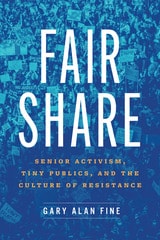
Fair Share
Senior Activism, Tiny Publics, and the Culture of ResistanceGary Alan Fine
University of Chicago Press, 2023
If you've ever been to a protest or been involved in a movement for social change, you have likely experienced a local culture, one with slogans, jargon, and shared commitments. Though one might think of a cohort of youthful organizers when imagining protest culture, this powerful ethnography from esteemed sociologist Gary Alan Fine explores the world of senior citizens on the front lines of progressive protests. While seniors are a notoriously important—and historically conservative—political cohort, the group Fine calls “Chicago Seniors Together” is a decidedly leftist organization, inspired by the model of Saul Alinsky. The group advocates for social issues, such as affordable housing and healthcare, that affect all sectors of society but take on a particular urgency in the lives of seniors. Seniors connect and mobilize around their distinct experiences but do so in service of concerns that extend beyond themselves. Not only do these seniors experience social issues as seniors—but they use their age as a dramatic visual in advocating for political change.
In Fair Share, Fine brings readers into the vital world of an overlooked political group, describing how a “tiny public” mobilizes its demands for broad social change. In investigating this process, he shows that senior citizen activists are particularly savvy about using age to their advantage in social movements. After all, what could be more attention-grabbing than a group of passionate older people determinedly shuffling through snowy streets with canes, in wheelchairs, and holding walkers to demand healthcare equity, risking their own health in the process?
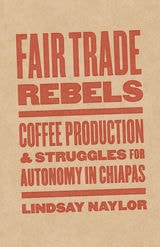
Fair Trade Rebels
Coffee Production and Struggles for Autonomy in ChiapasLindsay Naylor
University of Minnesota Press, 2019
Reassessing interpretations of development with a new approach to fair trade
Is fair trade really fair? Who is it for, and who gets to decide? Fair Trade Rebels addresses such questions in a new way by shifting the focus from the abstract concept of fair trade—and whether it is “working”—to the perspectives of small farmers. It examines the everyday experiences of resistance and agricultural practice among the campesinos/as of Chiapas, Mexico, who struggle for dignified livelihoods in self-declared autonomous communities in the highlands, confronting inequalities locally in what is really a global corporate agricultural chain.
Based on extensive fieldwork, Fair Trade Rebels draws on stories from Chiapas that have emerged from the farmers’ interaction with both the fair-trade–certified marketplace and state violence. Here Lindsay Naylor discusses the racialized and historical backdrop of coffee production and rebel autonomy in the highlands, underscores the divergence of movements for fairer trade and the so-called alternative certified market, traces the network of such movements from the highlands and into the United States, and evaluates existing food sovereignty and diverse economic exchanges.
Putting decolonial thinking in conversation with diverse economies theory, Fair Trade Rebels evaluates fair trade not by the measure of its success or failure but through a unique, place-based approach that expands our understanding of the relationship between fair trade, autonomy, and economic development.
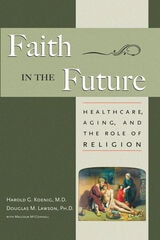
Faith In The Future
Healthcare, Aging and the Role of ReligionHarold Koenig
Templeton Press, 2012
After an interview in Newsweek about his book Spirituality in Patient Care and his research in religion and health, Dr. Harold Koenig became the international voice on spirituality, health, and aging. In this book, Faith in the Future, he is joined by two other experts on aging and human development. They present a compelling look at one of the most severe issues in today’s society: health care in America.
How will we provide quality healthcare to older adults needing it during the next thirty to fifty years? Who will provide this care? How will it be funded? How can we establish systems of care now to be in place as demographic and health-related economic pressures mount?
Alongside the sobering reality of our country’s challenges, there are reasons for optimism. Innovative programs created and maintained by volunteers and religious congregations are emerging as pivotal factors in meeting healthcare needs. Summarizing decades of scientific research and providing numerous inspirational examples and role models, the authors present practical steps that individuals and institutions may emulate for putting faith into action.
<
Faith and Political Philosophy
The Correspondence Between Leo Strauss and Eric Voegelin, 1934-1964Edited & Intro by Peter Emberley & Barry Cooper
University of Missouri Press, 2004
Faith and Political Philosophy consists of fifty-three letters between Leo Strauss and Eric Voegelin, two of the most important political theorists of the twentieth century. In this correspondence, Strauss and Voegelin explore the nature of their similarities and differences, offering insightful observations about one another's work, about the state of the discipline, and about the influences working on them. The letters shed light on many assumptions made in their published writings, often with an openness that removes all vestiges of uncertainty.
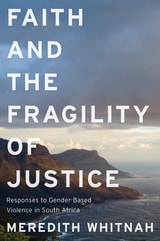
Faith and the Fragility of Justice
Responses to Gender-Based Violence in South AfricaMeredith Whitnah
Rutgers University Press, 2025
Faith in Action
Religion, Race, and Democratic Organizing in AmericaRichard L. Wood
University of Chicago Press, 2002
To find out how this faith-based form of community organizing succeeds, Richard L. Wood spent several years working with two local groups in Oakland, California—the faith-based Pacific Institute for Community Organization and the race-based Center for Third World Organizing. Comparing their activist techniques and achievements, Wood argues that the alternative cultures and strategies of these two groups give them radically different access to community ties and social capital.
Creative and insightful, Faith in Action shows how community activism and religious organizations can help build a more just and democratic future for all Americans.

Faith in Paper
The Ethnohistory and Litigation of Upper Great Lakes Indian TreatiesCharles E. Cleland
University of Michigan Press, 2011

Faithful to Our Tasks
Arkansas's Women and the Great WarElizabeth Griffin Hill
Butler Center for Arkansas Studies, 2017
The United States was a vital, if brief, participant in World War I—spending only eighteen months fighting in “the Great War.” But that short span marked an era of tremendous change for women as they moved out of the Victorian nineteenth century and came into their own as social activists during the early years of the twentieth century.
Faithful to Our Tasks provides the context for women’s actions and reactions during the war. It incorporates the mitigating factors and experiences of American women in general and compares Arkansas women’s Progressive Era actions with those of other southern women. The contextual underpinnings provide a rich tapestry as we attempt to understand our grandmothers and great-grandmothers’ responses to wartime needs.
Primary records of the World War I era, accessed in archives in central Arkansas, reveal that the state’s organized women were suddenly faced with a devastating world war for which they were expected to make a significant contribution of time and effort. “Club women” were already tackling myriad problems to be found in abundance within a poor, rural state as they worked for better schools, a centralized education system, children’s well-being, and improved medical care.
Under wartime conditions, their contributions were magnified as the women followed a barrage of directions from Washington, DC, within a disconcerting display of micromanagement by the federal government. The important takeaway, however, is that the Great War created a scenario in which Arkansas’s organized women—as well as women throughout the nation—would step forward and excel as men and governments stood up and took notice. After the war, these same organized women won the right to vote.
Fake News – What’s the harm?
Four ideas for fact-checkers, policymakers & platforms on countering the consequences of false information & defending free speechPeter Cunliffe-Jones
University of Westminster Press, 2025
Faking It
U.S. Hegemony in a “Post-Phallic” EraCynthia Weber
University of Minnesota Press, 1999
Fallout
Nuclear Diplomacy in an Age of Global FractureGrégoire Mallard
University of Chicago Press, 2014
In Fallout, Grégoire Mallard seeks to understand why some nations agreed to these limitations of their sovereign will—and why others decidedly did not. He builds his investigation around the 1968 signing of the Nuclear Nonproliferation Treaty (NPT), which, though binding in nature, wasn’t adhered to consistently by all signatory nations. Mallard looks at Europe’s observance of treaty rules in contrast to the three holdouts in the global nonproliferation regime: Israel, India, and Pakistan. He seeks to find reasons for these discrepancies, and makes the compelling case that who wrote the treaty and how the rules were written—whether transparently, ambiguously, or opaquely—had major significance in how the rules were interpreted and whether they were then followed or dismissed as regimes changed. In honing in on this important piece of the story, Mallard not only provides a new perspective on our diplomatic history, but, more significantly, draws important conclusions about potential conditions that could facilitate the inclusion of the remaining NPT holdouts. Fallout is an important and timely book sure to be of interest to policy makers, activists, and concerned citizens alike.
False Black Power?
Jason L. Riley
Templeton Press, 2017
Black civil rights leaders have long supported ethnic identity politics and prioritized the integration of political institutions, and seldom has that strategy been questioned. In False Black Power?, Jason L. Riley takes an honest, factual look at why increased black political power has not paid off in the ways that civil rights leadership has promised.
Recent decades have witnessed a proliferation of black elected officials, culminating in the historic presidency of Barack Obama. However, racial gaps in employment, income, homeownership, academic achievement, and other measures not only continue but in some cases have even widened. While other racial and ethnic groups in America have made economic advancement a priority, the focus on political capital for blacks has been a disadvantage, blocking them from the fiscal capital that helped power upward mobility among other groups.
Riley explains why the political strategy of civil rights leaders has left so many blacks behind. The key to black economic advancement today is overcoming cultural handicaps, not attaining more political power. The book closes with thoughtful responses from key thought leaders Glenn Loury and John McWhorter.
False Dawn
The New Deal and the Promise of Recovery, 1933–1947George Selgin
University of Chicago Press, 2025
CHOSEN AS ONE OF THE WALL STREET JOURNAL’S 10 BEST BOOKS OF 2025
A definitive history of the United States’ recovery from the Great Depression—and the New Deal's true part in it.
FDR’s New Deal has long enjoyed a special place in American history and policy—both because it redefined the government’s fundamental responsibilities and because Roosevelt’s “bold experimentation” represented a type of policymaking many would like to see repeated.
But “the thing about bold experiments,” economist George Selgin reminds us, “is that they often fail.” In False Dawn Selgin draws on both contemporary sources and numerous studies by economic historians to show that, although steps taken during the Roosevelt administration’s first days raised hopes of a speedy recovery from the Great Depression, instead of fulfilling those hopes, subsequent New Deal policies proved so counterproductive that over seventeen percent of American workers—more than the peak unemployment rate during the COVID-19 crisis—were still either unemployed or on work relief six years later.
By distinguishing the New Deal’s successes from its failures, and explaining how the U.S. finally managed to lay the specter of mass unemployment to rest, Selgin draws salient lessons for dealing with future recessions.
False Front
The Failed Promise of Presidential Power in a Polarized AgeKenneth Lowande
University of Chicago Press, 2024
A provocative new perspective on presidential power.
Border walls, school bathrooms, student loans, gun control, diversity, abortion, climate change—today, nothing seems out of reach for the president's pen. But after all the press releases, ceremonies, and speeches, shockingly little gets done. The American presidency promises to solve America's problems, but presidents' unilateral solutions are often weak, even empty.
Kenneth Lowande argues this is no accident. The US political system is not set up to allow presidents to solve major policy problems, yet it lays these problems at their doorstep, and there is no other elected official better positioned to attract attention by appearing to govern. Like any politician, presidents are strategic actors who seek symbolic wins. They pursue executive actions, even when they know that these will fail, because doing so allows them to put on a compelling show for key constituencies. But these empty presidential actions are not without their costs: they divert energy from effective government—and, over time, undermine public trust. Drawing on thousands of executive actions, news coverage, interviews, and presidential archives, False Front shows that the real root of presidential power is in what presidents can get away with not doing.

False Hopes
Overcoming the Obstacles to a Sustainable, Affordable MedicineCallahan, Daniel
Rutgers University Press, 1999

False Promises
The Struggle for Black Voting Rights in 1800s OhioRic S. Sheffield
Ohio University Press, 0
Brings to life the struggle for Black suffrage in nineteenth-century Ohio
In False Promises, the fight for Black voting rights in Ohio comes alive through narratives of men of color who defied the state’s nineteenth-century restrictions on suffrage. Though ratification of the Fifteenth Amendment ostensibly extended the franchise, state election laws still forced men of color into a perilous struggle for full citizenship. Ric S. Sheffield depicts their courage and determination, revealing their humanity through stories of sacrifice, resistance, and hope.
Drawing on Saidiya Hartman’s concept of critical fabulation, Sheffield weaves together historical records with imaginative reconstructions of dialogue, setting, and descriptive elements beyond the dusty courthouse pages. Grounded in archival evidence yet reimagined to fill in the silences, these stories recount the lived experiences of those who risked everything to exercise their right to vote.
False Promises also connects these historical battles to the present, illustrating how voter-suppression tactics in today’s Ohio have roots in the racial exclusions of the nineteenth century. By exposing the enduring legacy of white supremacist policies, the book challenges the widespread misconception that racial disenfranchisement was solely a southern problem. Ohio’s complex racial history—noted for its role in the Underground Railroad but also for its repressive Black Laws—also includes a fierce and ongoing struggle over the right to vote. Through compelling storytelling, historical analysis, and a reclamation of voices lost to history, False Promises urges readers to reconsider their understanding of democracy and the right to vote.
Familiar Perversions
The Racial, Sexual, and Economic Politics of LGBT FamiliesMontegary, Liz
Rutgers University Press, 2018
Over the past two decades, same-sex couples raising children have become more visible within US political and popular culture. Thanks to widely circulated images of well-mannered, well-dressed, and well-off two-parent families, a select number of LGBT-identified parents have gained recognition as model American citizens. In Familiar Perversions, Liz Montegary shows how this seemingly progressive view of same-sex parenting has taken shape during a period of growing racial inequality and economic insecurity in the United States. This book evaluates the recent successes of the “family equality” movement, while asking important questions about its relationship to neoliberalism, the policing of sexual cultures, and the broader context of social justice organizing at the turn of the twenty-first century.
Montegary’s investigation of the politics of LGBT family life takes us on a journey that includes not only activist events and the courtrooms where landmark decisions about same-sex families were made, but also parenting workshops, cruise ships, and gay resort towns. Through its sustained historical analysis, Familiar Perversions lays critical groundwork for imagining a queer family movement that can support and strengthen the diverse networks of care, kinship, and intimacy on which our collective survival depends.
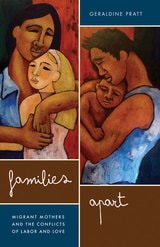
Families Apart
Migrant Mothers and the Conflicts of Labor and LoveGeraldine Pratt
University of Minnesota Press, 2012
In a developing nation like the Philippines, many mothers provide for their families by traveling to a foreign country to care for someone else’s. Families Apart focuses on Filipino overseas workers in Canada to reveal what such arrangements mean for families on both sides of the global divide.
The outcome of Geraldine Pratt’s collaboration with the Philippine Women Centre of British Columbia, this study documents the difficulties of family separation and the problems that children have when they reunite with their mothers in Vancouver. Aimed at those who have lived this experience, those who directly benefit from it, and those who simply stand by and watch, Families Apart shows how Filipino migrant domestic workers—often mothers themselves—are caught between competing neoliberal policies of sending and receiving countries and how, rather than paying rich returns, their ambitions as migrants often result in social and economic exclusion for themselves and for their children. This argument takes shape as an open-ended series of encounters, moving between a singular academic voice and the “we” of various research collaborations, between Vancouver and the Philippines, and between genres of “evidence-based” social scientific research, personal testimony, theatrical performance, and nonfictional narrative writing.
Through these experiments with different modes of storytelling, Pratt seeks to transform frameworks of perception, to create and collect sympathetic witnesses—in short, to promote a wide-ranging public discussion and debate about a massive worldwide shift in family (and nonfamily) relations of intimacy and care.

Families and Food in Hard Times
European Comparative ResearchRebecca O'Connell and Julia Brannen
University College London, 2021
Food is fundamental, yet food poverty has increased in the Global North. Adopting a comparative case approach, Food and Families in Hard Times addresses the global problem of economic retrenchment and the burden it places on the most vulnerable. This timely book examines food poverty in the United Kingdom, Portugal, and Norway following the 2008 financial crisis, examining the resources available to families in relation to the intersection of public policies, local institutions, and kinship networks. The book explores the ways that low income impacts household food provisioning, formal and informal support for struggling families, the provision and role of school meals, and constraints upon families’ social participation. Drawing upon extensive and intensive knowledge on the conditions and experiences of low-income families, the book also draws upon current research in European social science literature to shed light on the causes and consequences of food poverty in austerity-era Europe.

Famine Foods
Plants We Eat to SurvivePaul E. Minnis
University of Arizona Press, 2021
How people eat today is a record of food use through the ages—and not just the decadent, delicious foods but the less glamorous and often life-saving foods from periods of famine as well. In Famine Foods, Paul E. Minnis focuses on the myriad plants that have sustained human populations throughout the course of history, unveiling the those that people have consumed, and often still consume, to avoid starvation. For the first time, this book offers a fascinating overview of famine foods—how they are used, who uses them, and, perhaps most importantly, why they may be critical to sustain human life in the future.
In addition to a broader discussion of famine foods, Minnis includes fourteen short case studies that examine the use of alternative foods in human societies throughout the world, from hunter-gatherers to major nations. When environmental catastrophes, war, corrupt governments, annual hunger seasons, and radical agricultural policies have threatened to starve populations, cultural knowledge and memories of food shortages have been crucial to the survival of millions of people.Famine Foods dives deeply into the cultural contexts of famine food use, showing the curious, strange, and often unpleasant foods people have turned to in order to get by. There is not a single society or area of the world that is immune to severe food shortages, and gaining a deeper knowledge of famine foods will be relevant for the foreseeable future of humanity.
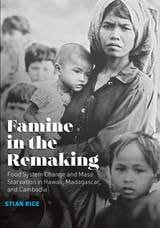
Famine in the Remaking
Food System Change and Mass Starvation in Hawaii, Madagascar, and CambodiaStian Rice
West Virginia University Press, 2020
Famine in the Remaking examines the relationship between the reorganization of food systems and large-scale food crises through a comparative historical analysis of three famines: Hawaii in the 1820s, Madagascar in the 1920s, and Cambodia in the 1970s. This examination identifies the structural transformations—that is, changes to the relationships between producers and consumers—that make food systems more vulnerable to failure. Moving beyond the economic and political explanations for food crisis that have dominated the literature, Stian Rice emphasizes important socioecological interactions, developing a framework for crisis evolution that identifies two distinct temporal phases and five different types of causal mechanisms involved in food system failure. His framework contributes to current work in famine prevention and, animated by a commitment to social justice, offers the potential for early intervention in emerging food crises.

Famous but Misunderstood
Three Essays on Maurice Duverger’s Political ScienceMiroslav Novák
Karolinum Press, 2026
A major reassessment of the work of the canonical political theorist Maurice Duverger.
Widely cited but increasingly seldom read, Maurice Duverger (1917–2014) exemplifies the fate of many canonical thinkers in political science. Famous but Misunderstood revisits his legacy through a comprehensive analysis of three interconnected pillars of his work: the formulation of Duverger’s laws concerning the relationship between electoral systems and party systems; his typology of pluralist party systems; and his empirical theories of democracy. Duverger’s ideas are examined in close comparison with the later and highly influential contributions of Giovanni Sartori (1924–2017) and Arend Lijphart (*1936), highlighting both continuities and divergences.
Authored by political scientist Miroslav Novák, recipient of the 2024 Czech Political Science Association Award for his contribution to the development of Czech political science, the book persuasively argues that contemporary scholarship has significantly misunderstood Duverger’s work. In doing so, it calls for a reassessment not only of Duverger’s theories but also of prevailing narratives about the evolution of political science in the second half of the twentieth century.

Fare Well, Illyria
David Binder
Central European University Press, 2014

Farewell to Freedom
A Western Genealogy of LibertyRiccardo Baldissone
University of Westminster Press, 2018

Farm to Form
Modernist Literature and Ecologies of Food in the British EmpireJessica Martell
University of Nevada Press, 2020
Deeply informed by Martell’s extensive knowledge of modern British, Irish, American, and World Literatures, this progressive work positions modernism as central to the study of narratives of resistance against social and environmental degradation. Analyzed works include those of Thomas Hardy, E. M. Forster, Virginia Woolf, Joseph Conrad, George Russell, and James Joyce.
In light of climate change, fossil fuel supremacy, nutritional dearth, and other pressing food issues, modernist texts bring to life an era of crisis and anxiety similar to our own. In doing so, Martell summons the past as a way to employ the modernist term of “defamiliarizing” the present so that entrenched perceptions can be challenged. Our current food regime is both new and constantly evolving with the first industrial food trades. Studying earlier cultural responses to them invites us to return to persistent problems with new insights and renewed passion.
Farm
A Multimodal ReaderJoyce Kinkead
Utah State University Press, 2020
The text guides the reader through the Jeffersonian idealism of the yeoman farmer (“cultivators of the earth are the chosen people of God”) to literature of the nineteenth and twentieth centuries (Thoreau’s “The Bean-Field,” Cather’s prairie trilogy, Steinbeck’s The Grapes of Wrath, and Carpenter’s Farm City). Contributors provide historical context for the literary texts, such as discussion of sharecropping vs. plantation systems, the rise of agribusiness and chemical farming, and Teddy Roosevelt’s Country Life Commission. Written, visual, and oral texts ask readers to consider the farm in art (Grant Wood), ecology (Rachel Carson’s Silent Spring), children’s and young adult literature (classic children’s books, YA novels, nonfiction, and poetry), advertising (from early boosterism to Chipotle videos), print culture (farmers’ market and victory garden posters from both world wars), folklore (food culture, vintners, and veterinarian practices), popular culture (Farm Aid concerts), and much more. Each reading is supported by activities, exercises, projects, and visual rhetorical elements that further connect students to agriculture and the essential work of farmers.
Farmers in Rebellion
The Rise and Fall of the Southern Farmers Alliance and People's Party in TexasBy Donna A. Barnes
University of Texas Press, 1984
The years after the Civil War brought struggle to the Southern farmer as the economic mainstay of the South—cotton—steadily dropped in price. Prompted by hard times, farmers in Lampasas County, Texas, gathered in 1877 to discuss what could be done. From these modest origins emerged the National Farmers Alliance and Industrial Union, later known as the Southern Farmers Alliance, a powerful protest movement that played an important role in the formation in 1892 of a new political force, the People's party. In the "solid South," particularly in Texas, large numbers of voters abandoned the Democratic party for the new party. Yet despite this support, the decline of the People's party after 1894 was swift.
Farmers in Rebellion recounts the compelling story of these two crucial and closely related movements. Donna A. Barnes examines their developmental histories, asking such important questions as: Under what conditions do protest movements remain weak? Under what conditions do they prosper, amassing large numbers of supporters? And under what conditions do successful protest movements lose their momentum and die? The author explores these complex questions with deft use of archival data that allows her to reflect on the adequacy of the past sociological answers to these questions.
Farmers in Rebellion is a book rich in detail and scope in its look at a critical juncture in the growth of national populist movements. Of interest to sociologists, historians, and political scientists, it stands as an important contribution to our understanding of a pivotal time in Texas, and national, history.
Farmers' Markets of the Heartland
Janine MacLachlan
University of Illinois Press, 2012
A visual feast of the Midwest's homegrown bounty
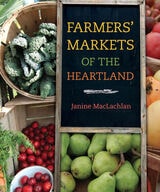
In this splendidly illustrated book, food writer and self-described farm groupie Janine MacLachlan embarks on a tour of seasonal markets and farmstands throughout the Midwest, sampling local flavors from Michigan, Ohio, Indiana, Illinois, Missouri, Iowa, Minnesota, and Wisconsin. She conducts delicious research as she meets farmers, tastes their food, and explores how their businesses thrive in the face of an industrial food supply. She tells the stories of a pair of farmers growing specialty crops on a few acres of northern Michigan for just a few months out of the year, an Ohio cattle farm that has raised heritage beef since 1820, and a Minnesota farmer who tirelessly champions the Jimmy Nardello sweet Italian frying pepper. Along the way, she savors vibrant red carrots, slurpy peaches, vast quantities of specialty cheeses, and some of the tastiest pie to cross anyone's lips.
Informed by debates about eating local, seasonal crops, organic farming, sanitation, and biodiversity, Farmers' Markets of the Heartland tantalizes with special recipes from farm-friendly chefs and dozens of luscious color photographs that will inspire you to harvest the homegrown flavors in your own neighborhood.
Farming and Famine
Landscape Vulnerability in Northeast Ethiopia, 1889–1991Donald E. Crummey; Edited by James C. McCann
University of Wisconsin Press, 2018
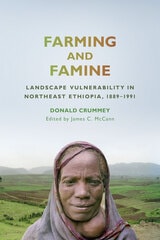
Crummey draws on photographs comparing identical landscapes in 1937 and 1997 as well as interviews with local farmers, among other sources. He reveals that forestation actually increased due to farmers' tree-planting initiatives. More broadly, he shows that, in the face of growing environmental stress, Ethiopian farmers have innovated and adapted. Yet the threat of famine remains because of constricted access to resources and erratic rainfall. To avoid future famines, Crummey suggests, Ethiopia's farmers must transform agricultural productivity, but they cannot achieve that on their own.
Fascism Comes to America
A Century of Obsession in Politics and CultureBruce Kuklick
University of Chicago Press, 2022
From the time Mussolini took power in Italy in 1922, Americans have been obsessed with and brooded over the meaning of fascism and how it might migrate to the United States. Fascism Comes to America examines how we have viewed fascism overseas and its implications for our own country. Bruce Kuklick explores the rhetoric of politicians, who have used the language of fascism to smear opponents, and he looks at the discussions of pundits, the analyses of academics, and the displays of fascism in popular culture, including fiction, radio, TV, theater, and film. Kuklick argues that fascism has little informational meaning in the United States, but instead, it is used to denigrate or insult. For example, every political position has been besmirched as fascist. As a result, the term does not describe a phenomenon so much as it denounces what one does not like. Finally, in displaying fascism for most Americans, entertainment—and most importantly film—has been crucial in conveying to citizens what fascism is about. Fascism Comes to America has been enhanced by many illustrations that exhibit how fascism was absorbed into the US public consciousness.
Fascism Comes to America
A Century of Obsession in Politics and CultureBruce Kuklick
University of Chicago Press, 2022
A deeply relevant look at what fascism means to Americans.
From the time Mussolini took power in Italy in 1922, Americans have been obsessed with and brooded over the meaning of fascism and how it might migrate to the United States. Fascism Comes to America examines how we have viewed fascism overseas and its implications for our own country. Bruce Kuklick explores the rhetoric of politicians, who have used the language of fascism to smear opponents, and he looks at the discussions of pundits, the analyses of academics, and the displays of fascism in popular culture, including fiction, radio, TV, theater, and film. Kuklick argues that fascism has little informational meaning in the United States, but instead, it is used to denigrate or insult. For example, every political position has been besmirched as fascist. As a result, the term does not describe a phenomenon so much as it denounces what one does not like. Finally, in displaying fascism for most Americans, entertainment—and most importantly film—has been crucial in conveying to citizens what fascism is about. Fascism Comes to America has been enhanced by many illustrations that exhibit how fascism was absorbed into the US public consciousness.
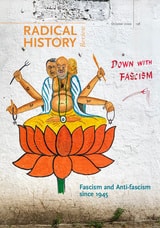
Fascism and Antifascism since 1945
Mark Bray, Jessica Namakkal, Giulia Riccò, and Eric Roubinek, special issue editors
Duke University Press, 2020
Contributors. Benjamin Bland, Mark Bray, Rosa Hamilton, Jessica Namakkal, Giulia Riccò, Cole Rizki, Eric Roubinek, Antonino Scalia, Stuart Schrader, Vivian Shaw, Michael Staudenmaier
Fascism
Comparison and DefinitionStanley G. Payne
University of Wisconsin Press, 1983

Fascism
History and TheoryDavid Renton
Pluto Press, 2020
To explain this disturbing trend, David Renton surveys the history of fascism in Europe from its pre-war origins to the present day, examining Marxist responses to fascism in the age of Hitler and Mussolini, the writings of Trotsky and Gramsci and contemporary theorists. Renton theorizes that fascism was driven by the chaotic and unstable balance between reactionary ambitions and the mass character of its support. This approach will arm a new generation of anti-fascists to resist those who seek to re-enact fascism.
Rewritten and revised for the twentieth anniversary of its first publication, Renton's classic book synthesizes the Marxist theory of fascism and updates it for our own times.
Fascism
The History of a WordFederico Marcon
University of Chicago Press, 2025
The rise and popular support for authoritarianism around the world and within traditional democracies have spurred debates over the meaning of the term “fascist” and when and whether it is appropriate to use it. The landmark study Fascism: The History of a Word takes this debate further by tackling its most fundamental questions: How did the terms “fascism” and “fascist” come to be in the first place? How and in what circumstances have they been used? How can they be understood today? And what are the advantages (or disadvantages) of using “fascism” to make sense of interwar authoritarianism as well as contemporary politics?
Exploring the writings and deeds of political leaders, activists, artists, authors, and philosophers, Federico Marcon traces the history of the term’s use (and usefulness) in relation to Mussolini’s political regime, antifascist resistance, and the quest of postwar historians to develop a definition of a “fascist minimum.” This investigation of the semiotics of “fascism” also aims to inquire about people’s voluntary renunciation of the modern emancipatory ideals of freedom, equality, and solidarity.
Fascism
Theory and PracticeDavid Renton
Pluto Press, 1999

Fashioning China
Precarious Creativity and Women Designers in Shanzhai CultureSara Liao
Pluto Press, 2020
Broadening the digital labor debate beyond typical masculine and techno-utopic readings, Sara Liao studies the precarious practices of women trying to create sustainable and creative lives, vividly illustrating a fashion culture that exists online as a significant part of the digital economy.
Drawing on material from interviews, participant observation, archives, policy documents, films and advertisements, Liao takes a multi-disciplinary approach to the topic, charting out the politics of intellectual property rights, globalization, technocracy, patriarchy and nationalism in a non-Western context.

Fashioning Postfeminism
Spectacular Femininity and Transnational CultureSimidele Dosekun
University of Illinois Press, 2020
Simidele Dosekun's interviews and critical analysis consider the female subjectivities these women are performing and desiring. She finds that the women embody the postfeminist idea that their unapologetically immaculate beauty signals—but also constitutes—feminine power. As empowered global consumers and media citizens, the women deny any need to critique their culture or to take part in feminism's collective political struggle. Throughout, Dosekun unearths evocative details around the practical challenges to attaining their style, examines the gap between how others view these women and how they view themselves, and engages with ideas about postfeminist self-fashioning and subjectivity across cultures and class.
Intellectually provocative and rich with theory, Fashioning Postfeminism reveals why women choose to live, embody, and even suffer for a fascinating performative culture.