Results by title
828 books match the query 'Research' and 21 start with f
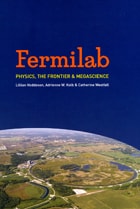
Fermilab
Physics, the Frontier, and MegascienceLillian Hoddeson, Adrienne W. Kolb, and Catherine Westfall
University of Chicago Press, 2008
Fermi National Accelerator Laboratory, located in the western suburbs of Chicago, has stood at the frontier of high-energy physics for forty years. Fermilab is the first history of this laboratory and of its powerful accelerators told from the point of view of the people who built and used them for scientific discovery.
Focusing on the first two decades of research at Fermilab, during the tenure of the laboratory’s charismatic first two directors, Robert R. Wilson and Leon M. Lederman, the book traces the rise of what they call “megascience,” the collaborative struggle to conduct large-scale international experiments in a climate of limited federal funding. In the midst of this new climate, Fermilab illuminates the growth of the modern research laboratory during the Cold War and captures the drama of human exploration at the cutting edge of science.
Field Rhetoric
Ethnography, Ecology, and Engagement in the Places of PersuasionEdited by Candice Rai and Caroline Gottschalk Druschke
University of Alabama Press, 2018
A survey of the innovative scholarship emerging at the intersections of rhetoric, and fieldwork
A variety of research areas within rhetorical studies—including everyday and public rhetorics, space and place-based work, material and ecological approaches, environmental communication, technical communication, and critical and participatory action research, among others—have increasingly called for ethnographic fieldwork that grounds the study of rhetoric within the contexts of its use and circulation. Employing field methods more commonly used by ethnographers allows researchers to capture rhetoric in action and to observe the dynamic circumstances that shape persuasion in ordinary life.
Field Rhetoric: Ethnography, Ecology, and Engagement in the Places of Persuasion gathers new essays that describe and theorize this burgeoning transdisciplinary mode of field-based scholarship. Contributors document and support this ethnographic turn in rhetorical studies through sustained examination of the diverse trends, methods, tools, theories, practices, and possibilities for engaging in rhetorical field research.
This fascinating volume offers an introduction to these inquiries and serves as both a practical resource and theoretical foundation for scholars, teachers, and students interested in the intersection of rhetoric and field studies. Editors Candice Rai and Caroline Gottschalk Druschke have assembled scholars working in diverse field sites to map and initiate key debates on the practices, limitations, and value of rhetorical field methods and research. Working synthetically at the junction of rhetorical theory and field practices, the contributors to this collection build from myriad field-based cases to examine diverse theoretical and methodological considerations. The volume also serves as a useful reference for interdisciplinary qualitative researchers interested in doing research from a rhetorical or discursive perspective in various disciplines and fields, such as English, composition, communication, natural resources, geography, sociology, urban planning, anthropology, and more.
Field Seasons
Reflections on Career Paths and Research in American ArchaeologyAnna Marie Prentiss
University of Utah Press, 2012
In Field Seasons, Anna Marie Prentiss chronicles her experiences as an archaeologist, providing an insider’s look at the diverse cultures, personal agendas, and career pathways associated with American archaeology since the late twentieth century. As the narrative moves from her academic training to employment in government and private consulting to her eventual professorship at a state university, several themes emerge.
This book is about career paths. Its discussion of the diverse jobs within the archaeological profession makes it valuable to students seeking guidance about their career options. It also provides insight into the cultures of American archaeology, a discipline with many schools of thought and unique subcultures. The world of archaeological field technicians is quite different from that of government bureaucrats or academics. Prentiss also explores the elements of cultural change within archaeology while she reflects on her personal evolution throughout her thirty years within the discipline.
The book’s unique personal assessment of the state of American archaeology will appeal to a broad swath of students and professionals. Students will find it an entertaining road map to possible careers while professionals will find plenty of scholarly material concerning ethics, archaeological theory, and interpretations of the archaeological record.
Fifty Years of Economic Measurement
The Jubilee of the Conference on Research in Income and WealthEdited series contract is 9894 by Ernst R. Berndt and Jack E. Triplett
University of Chicago Press, 1990
This volume contains papers presented at a conference in May 1988 in Washington, D.C., commemorating the fiftieth anniversary of the founding of the Conference on Research in Income and Wealth (CRIW). The call for papers emphasized assessments of broad topics in economic measurement, both conceptual and pragmatic. The organizers desired (and succeeded in obtaining) a mix of papers that, first, illustrate the range of measurement issues that economics as a science must confront and, second, mark major milestones of CRIW accomplishment. The papers concern prices and output (Griliches, Pieper, Triplett) and also the major productive inputs, capital (Hulten) and labor (Hamermesh). Measures of saving, the source of capital accumulation, are covered in one paper (Boskin); measuring productivity, the source of much of the growth in per capita income, is reviewed in another (Jorgenson). The use of economic data in economic policy analysis and in regulation are illustrated in a review of measures of tax burden (Atrostic and Nunns) and in an analysis of the data needed for environmental regulation (Russell and Smith); the adequacy of data for policy analysis is evaluated in a roundtable discussion (chapter 12) involving four distinguished policy analysts with extensive government experience in Washington and Ottawa.

Fighting for Reliable Evidence
Judith M. Gueron
Russell Sage Foundation, 2013

Finding Mars
Ned Rozell
University of Alaska Press, 2011
First Person Squared
A Study of Co-Authoring in the AcademyKami Day & Michele Eodice
Utah State University Press, 2001
In (First Person)2, Day and Eodice offer one of the few book-length studies of co-authoring in academic fields since Lunsford and Ede published theirs over a decade ago. The central research here involves in-depth interviews with ten successful academic collaborators from a range of disciplines and settings. The interviews explore the narratives of these informants' experience—what brought them to collaborate, what cognitive and logistical processes were involved as they worked together, what is the status of collaborated work in their field, and so on—and situate these informants within the broader discussion of collaboration theory and research as it has been articulated over the last ten years.
As the study develops, Day and Eodice become most interested in the affective domain of co-authorship, and they find the most promising explorations of that domain in the work of feminist theorists in composition.
First-Generation Faculty of Color
Reflections on Research, Teaching, and ServiceTracy Lachica Buenavista
Rutgers University Press, 2023
Firsthand
How I Solved a Literary Mystery and Learned to Play Kickass Tennis while Coming to Grips with the Disorder of ThingsKeith Gandal
University of Michigan Press, 2024
Keith Gandal combines this scholarly detective story with a comic personal narrative about how a midlife crisis accidentally sent him on a journey to write a research monograph that many in his profession—including at times himself—were dubious about. While researching how Hemingway, Fitzgerald, and Faulkner faced their forgotten crises of masculinity, Gandal discovers that his own crisis is instrumental to his creative process. Incorporating stories from Gandal’s comic romp through the hyper-competitive world of middle-aged men’s tennis, adopting pitbulls, and discussing Michel Foucault, Firsthand gives readers an inside look at how to acquire accurate knowledge—about the world, about history, and about oneself.

Formal Modeling in Social Science
Carol Mershon and Olga Shvetsova
University of Michigan Press, 2019
A formal model in the social sciences builds explanations when it structures the reasoning underlying a theoretical argument, opens venues for controlled experimentation, and can lead to hypotheses. Yet more importantly, models evaluate theory, build theory, and enhance conjectures. Formal Modeling in Social Science addresses the varied helpful roles of formal models and goes further to take up more fundamental considerations of epistemology and methodology.
The authors integrate the exposition of the epistemology and the methodology of modeling and argue that these two reinforce each other. They illustrate the process of designing an original model suited to the puzzle at hand, using multiple methods in diverse substantive areas of inquiry. The authors also emphasize the crucial, though underappreciated, role of a narrative in the progression from theory to model.
Transparency of assumptions and steps in a model means that any analyst will reach equivalent predictions whenever she replicates the argument. Hence, models enable theoretical replication, essential in the accumulation of knowledge. Formal Modeling in Social Science speaks to scholars in different career stages and disciplines and with varying expertise in modeling.

Framing Information Literacy (PIL#73) Volume One
Research as InquiryJanna L. Mattson
American Library Association, 0
Fraud and Misconduct in Research
Detection, Investigation, and Organizational ResponseNachman Ben-Yehuda and Amalya Oliver-Lumerman
University of Michigan Press, 2017

French DNA
Trouble in PurgatoryPaul Rabinow
University of Chicago Press, 1999

From A to A
Keywords of MarkupBradley Dilger
University of Minnesota Press, 2010
From A to investigates the relationship between media and culture by articulating questions regarding the role of markup. How do the codes of HTML, CSS, PHP, and other markup languages affect the Web's everyday uses? How do these languages shape the Web's communicative functions? This novel inquiry positions markup as the basis of our cultural, rhetorical, and communicative understanding of the Web.
Contributors: Sarah J. Arroyo, CSU Long Beach; Jennifer L. Bay, Purdue U; Helen J. Burgess, U of Maryland, Baltimore County; Michelle Glaros, Centenary College of Louisiana; Matthew K. Gold, NYCC of Technology; Cynthia Haynes, Clemson U; Rudy McDaniel, U of Central Florida; Colleen A. Reilly, UNC, Wilmington; Thomas Rickert, Purdue U; Brendan Riley, Columbia College Chicago; Sae Lynne Schatz, U of Central Florida; Bob Whipple, Creighton U; Brian Willems, U of Split, Croatia.
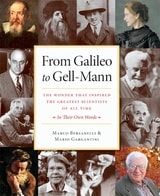
From Galileo to Gell-Mann
The Wonder that Inspired the Greatest Scientists of All Time: In Their Own WordsMarco Bersanelli
Templeton Press, 2009

Frontiers Of Illusion
Science, Technology, and the Politics of ProgressDaniel Sarewitz
Temple University Press, 1996
For the past fifty years, science and technology—supported with billions of dollars from the U.S. government—have advanced at a rate that would once have seemed miraculous, while society's problems have grown more intractable, complex, and diverse. Yet scientists and politicians alike continue to prescribe more science and more technology to cure such afflictions as global climate change, natural resource depletion, overpopulation, inadequate health care, weapons proliferation, and economic inequality.
Daniel Sarewitz scrutinizes the fundamental myths that have guided the formulation of science policy for half a century—myths that serve the professional and political interests of the scientific community, but often fail to advance the interests of society as a whole. His analysis ultimately demonstrates that stronger linkages between progress in science and progress in society will require research agendas that emerge not from the intellectual momentum of science, but from the needs and goals of society.
Frontiers in Comparative Medicine
W.I.B. Beveridge
University of Minnesota Press, 1972
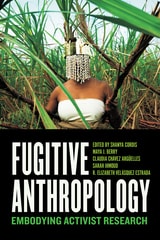
Fugitive Anthropology
Embodying Activist ResearchEdited by Shanya Cordis, Maya J. Berry, Claudia Chávez Argüelles, Sarah Ihmoud, and R. Elizabeth Velásquez Estrada
University of Texas Press, 2026
A personal, provocative, and boundary-breaking volume on the power relations that racialized, gendered, and sexualized researchers grapple with while conducting activist research.
Fugitive Anthropology is a transnational, intergenerational engagement that extends feminist theory, activist research methodologies, and the discipline of anthropology in new directions. Contributors examine the tensions that arise from conducting politically engaged, collaborative research alongside communities in struggle, in particular theorizing from the experiences of racialized women, queer, trans, and gender nonconforming researchers across distinct geographies. Essays contend with the matrices of colonial, imperial, and patriarchal violence that afflict the researchers and communities with which they seek political alignment.
Articulating an ethnographic practice grounded in Black and Indigenous political struggles and committed to collective liberation, the volume reflects on what it means to navigate violent relations of power, systemic inequities, and current onslaughts shaping field research and US academia. Ultimately, Fugitive Anthropology argues that a feminist ethos—one that embraces embodied knowledges and fugitive sensibilities—forges liberatory spaces that break from dominant masculinist frames of the “political” and challenge colonial regimes within and beyond the neoliberal university.
Fundamental Development of the Social Sciences
Rockefeller Philanthropy and the United States Social Science Research CouncilDonald Fisher
University of Michigan Press, 1993
The United States Social Science Research Council (SSRC), founded in 1923, was the first national social science institution in the world and might be said to represent the creation of a "science of society." In Fundamental Development of the Social Sciences , Donald Fisher shows how this institution, under the considerable influence of Rockefeller philanthropy, shaped an entire discipline.
Fisher demonstrates that the creation and growth of the SSRC during the 1920s and 1930s is essential to our understanding of the major developments in the social sciences since World War II. He shows that during this period, the place of social science and social scientists in American society was fixed in a way that has had substantial, lasting impact.
The author weaves a number of larger, related issues into his account of the wide-ranging influence of the SSRC: the role of social scientists in the political life of the societies in which they live; the way in which knowledge systems develop and change; the role of philanthropy in industrialized societies; and the formation and preservation of the modern capitalist state.
Donald Fisher's discussion of how an American institution sculpted an entire discipline will be of interest to all social scientists and historians of social science.

Fungible Life
Experiment in the Asian City of LifeAihwa Ong
Duke University Press, 2016

Fuzzy-Set Social Science
Charles C. Ragin
University of Chicago Press, 2000
Ragin argues that fuzzy sets allow a far richer dialogue between ideas and evidence in social research than previously possible. They let quantitative researchers abandon "homogenizing assumptions" about cases and causes, they extend diversity-oriented research strategies, and they provide a powerful connection between theory and data analysis. Most important, fuzzy sets can be carefully tailored to fit evolving theoretical concepts, sharpening quantitative tools with in-depth knowledge gained through qualitative, case-oriented inquiry. This book will revolutionize research methods not only in sociology, political science, and anthropology but in any field of inquiry dealing with complex patterns of causation.