Results by title
80 books match the query 'foundations' and 39 start with f
Feminist Legal Theory
FoundationsD. Kelly Weisberg
Temple University Press, 1993

Floating PV and Integration with Hydropower
Foundations, principles and design, Volume 1Ngo Dang Luu
The Institution of Engineering and Technology, 2026
Foundations and Government
State and Federal Law SupervisionMarion R. Fremont-Smith
Russell Sage Foundation, 1965
Foundations and Methods from Mathematics to Neuroscience
Essays Inspired by Patrick SuppesEdited by Colleen E Crangle, Adolfo García de la Sienra, and Helen E. Longino
CSLI, 2014
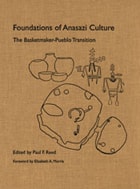
Foundations of Anasazi Culture
The Basketmaker Pueblo TransitionPaul F Reed
University of Utah Press, 2002
This major synthesis of work explores new evidence gathered at Basketmaker III sites on the Colorado Plateau in search of further understanding of Anasazi development.
Since the 1960s, large-scale cultural resource management projects have revealed the former presence of Anasazi within the entire northern Southwest. These discoveries have resulted in a greatly expanded view of the BMIII period (A.D. 550-750) which immediately proceeds the Pueblo phase. Particularly noteworthy are finding of Basketmaker remains under those of later periods and in sites with open settings, as opposed to the more classic Basketmaker cave and rock shelter sites.
Foundations of Anasazi Culture explores this new evidence in search of further understanding of Anasazi development. Several chapters address the BMII-BMIII transition, including the initial production and use of pottery, greater reliance on agriculture, and the construction of increasingly elaborate structures. Other chapters move beyond the transitional period to discuss key elements of the Anasazi lifestyle, including the use of gray-,red-, and white-ware ceramics, pit structures, storage cists, surface rooms, full dependence on agriculture, and varying degrees of social specialization and differentiation. A number of contributions address one or more of these issues as they occur at specific sites. Other contributors consider the material culture of the period in terms of common elements in architecture, ceramics, lithic technology, and decorative media.
This work on BMIII sites on the Colorado Plateau will be useful to anyone with an interest in the earliest days of Anasazi civilization.

Foundations of Animal Behavior
Classic Papers with CommentariesEdited by Lynne D. Houck and Lee C. Drickamer
University of Chicago Press, 1996
The papers are divided into six sections, each introduced by prominent researchers. Sections one and two cover the origins and history of the field and the emergence of basic methods and approaches. They provide a background for sections three through six, which focus on development and learning; neural and hormonal mechanisms of behavior; sensory processes, orientation, and communication; and the evolution of behavior.
This outstanding collection will serve as the basis for undergraduate and graduate seminars and as a reference for researchers in animal behavior, whether they focus on ethology, behavioral ecology, comparative psychology, or anthropology.
Published in association with the Animal Behavior Society

Foundations of Applied Electromagnetics
Kamal Sarabandi
Michigan Publishing Services, 2022

Foundations of Biogeography
Classic Papers with CommentariesEdited by Mark V. Lomolino, Dov F. Sax, and James H. Brown
University of Chicago Press, 2004
List of Contributors
John C. Briggs, James H. Brown, Vicki A. Funk, Paul S. Giller, Nicholas J. Gotelli, Lawrence R. Heaney, Robert Hengeveld, Christopher J. Humphries, Mark V. Lomolino, Alan A. Myers, Brett R. Riddle, Dov F. Sax, Geerat J. Vermeij, Robert J. Whittaker
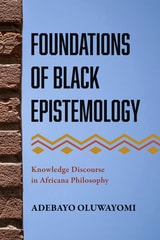
Foundations of Black Epistemology
Knowledge Discourse in Africana PhilosophyAdebayo Oluwayomi
Temple University Press, 2025
Foundations of Black Epistemology examines writings by Phillis Wheatley, Frederick Douglass, Ida B. Wells, W.E.B. DuBois, Frantz Fanon, Steve Bantu Biko, Huey P. Newton, and Kathleen Neal Cleaver. Each chapter addresses issues of self-knowledge, self-assertion, Black consciousness, or anticolonialism and its relation to personal and political epistemologies.
Oluwayomi offers innovative perspectives on the formulation, deduction, and interrogation of epistemological themes within Black Africana philosophy. By considering the important epistemological theories and arguments in Black philosophy particularly in the last 150 to 200 years, Foundations of Black Epistemology promises to generate new discussions around this necessary field of Black Africana philosophy.

Foundations of Colonial Rule
Rebuilding Lima after the Earthquake of 1687Judith Mansilla
University of Alabama Press, 2026
Foundations of Colonial Rule analyzes diverse primary documents to understand how the viceroyalty, the Catholic clergy, local authorities, and everyday citizens of Lima, Peru, managed and rebuilt after the 1687 earthquake.

Foundations of Conservation Biology
A Guide to the Classic LiteratureEdited by Jeffrey D. Brawn, Erica Fleishman, Curt Meine
University of Chicago Press, 2026
This book summarizes over a century of multidisciplinary scientific literature that contributed to the development of conservation biology. It explores how different scientific, social, and cultural traditions have informed that literature, enabling a deeper comprehension of the natural world and conservation practices. The volume traces conservation biology’s scientific and cultural foundations and its emergence in the mid-1980s in response to the accelerating effects of human activity on biological diversity. As conservation moved beyond its early emphasis on sustaining yields of selected natural resources and responding to environmental degradation, it both reflected and required changes in its scope and foundations. Today, conservation biologists aim to understand the complex ecological and social causes of biodiversity loss and apply that integrated understanding to sustain life and ecological integrity at all levels.
Examining this evolving field’s foundations in philosophy and culture, population genetics, landscape ecology, management techniques, law, the social sciences, and climate change science, the contributors to this volume identify and provide historical and contextual interpretations of the key literature. Foundations of Conservation Biology shows how insights from the past have influenced contemporary studies, and how they may continue to shape future research and actions.

Foundations of Digital Signal Processing
Theory, algorithms and hardware designPatrick Gaydecki
The Institution of Engineering and Technology, 2004

Foundations of Ecology II
Classic Papers with CommentariesEdited by Thomas E. Miller and Joseph Travis
University of Chicago Press, 2022
The period of 1970 to 1995 was a time of tremendous change in all areas of ecology—from an increased rigor for experimental design and analysis to the reevaluation of paradigms, new models for understanding, and theoretical advances. Edited by ecologists Thomas E. Miller and Joseph Travis, Foundations of Ecology II includes facsimiles of forty-six papers from this period alongside expert commentaries that discuss a total of fifty-three key studies, addressing topics of diversity, predation, complexity, competition, coexistence, extinction, productivity, resources, distribution, abundance, and conservation. The result is more than a catalog of historic firsts; this book offers diverse perspectives on the foundational papers that led to today’s ecological work. Like this book’s 1991 predecessor, Foundations of Ecology edited by Leslie A. Real and James H. Brown, Foundations of Ecology II promises to be the essential primer for graduate students and practicing ecologists for decades to come.

Foundations of Ecology
Classic Papers with CommentariesEdited by Leslie A. Real and James H. Brown
University of Chicago Press, 1991
The papers span nearly nine decades of ecological research, from 1887 on, and are organized in six sections: foundational papers, theoretical advances, synthetic statements, methodological developments, field studies, and ecological experiments. Selections range from Connell's elegant account of experiments with barnacles to Watt's encyclopedic natural history, from a visionary exposition by Grinnell of the concept of niche to a seminal essay by Hutchinson on diversity.
Six original essays by contemporary ecologists and a historian of ecology place the selections in context and discuss their continued relevance to current research. This combination of classic papers and fresh commentaries makes Foundations of Ecology both a convenient reference to papers often cited today and an essential guide to the intellectual and conceptual roots of the field.
Published with the Ecological Society of America.

Foundations of Exercise Psychology
Third EditionBonnie G. Berger
FiT Publishing, 2015
The third edition of Foundations of Exercise Psychology is the most comprehensive textbook of its kind. Robert C. Eklund has joined the writing team of Bonnie G. Berger and Robert S. Weinberg for this edition. The authors expand upon the key concepts and models of the field, focusing on the interrelationships of exercise and psychology. The new edition includes an important new chapter on exercise and cognitive function.
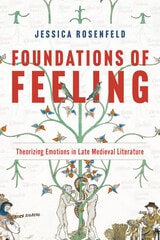
Foundations of Feeling
Theorizing Emotions in Late Medieval LiteratureJessica Rosenfeld
University of Chicago Press, 2026
A fresh reading of medieval literature as deeply concerned with thinking about feelings.
Are emotions primarily bodily or cognitive? Do “natural” emotions exist? What is the relationship between emotion and gender? In Foundations of Feeling, Jessica Rosenfeld shows how medieval literature informs contemporary ideas about how emotions operate. Ranging widely from love poetry to pastoral and theological writings, to political satire and more, Rosenfeld reveals a wealth of attention to emotions in both scientific and philosophical discourses of the time. By mining Latin, medieval French, and Middle English traditions, she relates medieval concerns to the most central, current debates (and impasses) in the fields of history of emotion and affect theory today, reframing how we think about and define feelings.

Foundations of High-Energy Astrophysics
Mario Vietri
University of Chicago Press, 2008
The most thorough and engaging survey of high-energy astrophysics available today, Foundations of High-Energy Astrophysics introduces the main physical processes relevant to the field in a rigorous yet accessible way, while paying careful attention to observational issues. Vietri’s book will quickly become a classic text for students and active researchers in astronomy and astrophysics. Those in adjoining fields will also find it a valuable addition to their personal libraries.
Foundations of Information Ethics
John T. F. Burgess
American Library Association, 2019
As discussions about the roles played by information in economic, political, and social arenas continue to evolve, the need for an intellectual primer on information ethics that also functions as a solid working casebook for LIS students and professionals has never been more urgent. This text, written by a stellar group of ethics scholars and contributors from around the globe, expertly fills that need. Organized into twelve chapters, making it ideal for use by instructors, this volume from editors Burgess and Knox
- thoroughly covers principles and concepts in information ethics, as well as the history of ethics in the information professions;
- examines human rights, information access, privacy, discourse, intellectual property, censorship, data and cybersecurity ethics, intercultural information ethics, and global digital citizenship and responsibility;
- synthesizes the philosophical underpinnings of these key subjects with abundant primary source material to provide historical context along with timely and relevant case studies;
- features contributions from John M. Budd, Paul T. Jaeger, Rachel Fischer, Margaret Zimmerman, Kathrine A. Henderson, Peter Darch, Michael Zimmer, and Masooda Bashir, among others; and
- offers a special concluding chapter by Amelia Gibson that explores emerging issues in information ethics, including discussions ranging from the ethics of social media and social movements to AI decision making.
This important survey will be a key text for LIS students and an essential reference work for practitioners
Foundations of Information Law
Paul T. Jaeger, Jonathan Lazar, Ursula Gorham, and Natalie Greene Taylor
American Library Association, 2023
- discusses information law as part of a continuum of interrelated issues rather than an assortment of discrete topics;
- examines information law in the context of different types of libraries;
- delves into the manifold legal issues raised when interacting with patrons and communities, from intellectual freedom topics like censorship and public activities in the library to the legal issues surrounding materials and information access;
- elucidates operational and management legal issues, including library security, interacting with law enforcement, advocacy, lobbying, funding, human resources, and liability;
- promotes literacy of the law, its structures, and its terminology as a professional skill;
- gives readers the tools to find and understand different sources of legal authority and demonstrates how to interpret them when they conflict; and
- explores information law as a national and cross-national issue.
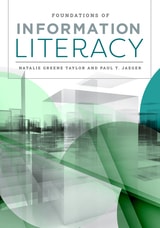
Foundations of Information Literacy
Natalie Greene Taylor
American Library Association, 2021
It’s not hyperbole to conclude that in today’s world, information literacy is essential for survival and success; and also that, if left unchecked, the social consequences of widespread misinformation and information illiteracy will only continue to grow more dire. Thus its study must be at the core of every education. But while many books have been written on information literacy, this text is the first to examine information literacy from a cross-national, cross-cultural, and cross-institutional perspective. From this book, readers will
- learn about information literacy in a wide variety of contexts, including academic and school libraries, public libraries, special libraries, and archives, through research and literature that has previously been siloed in specialized publications;
- come to understand why information literacy is not just an issue of information and technology, but also a broader community and societal issue;
- get an historical overview of advertising, propaganda, disinformation, misinformation, and illiteracy;
- gain knowledge of both applied strategies for working with individuals and for addressing the issues in community contexts;
- find methods for combating urgent societal ills caused and exacerbated by misinformation; and
- get tools and techniques for advocacy, activism, and self-reflection throughout one’s career.
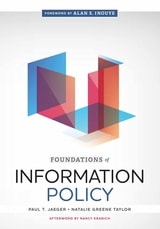
Foundations of Information Policy
Paul T. Jaeger
American Library Association, 2019
Foreword by Alan S. Inouye; Afterword by Nancy Kranich
The first of its kind, this important new text provides a much-needed introduction to the myriad information policy issues that impact information professionals, information institutions, and the patrons and communities served by those institutions. In this key textbook for LIS students and reference text for practitioners, noted scholars Jaeger and Taylor
- draw from current, authoritative sources to familiarize readers with the history of information policy;
- discuss the broader societal issues shaped by policy, including access to infrastructure, digital literacy and inclusion, accessibility, and security;
- elucidate the specific laws, regulations, and policies that impact information, including net neutrality, filtering, privacy, openness, and much more;
- use case studies from a range of institutions to examine the issues, bolstered by discussion questions that encourage readers to delve more deeply;
- explore the intersections of information policy with human rights, civil rights, and professional ethics; and
- prepare readers to turn their growing understanding of information policy into action, through activism, advocacy, and education.
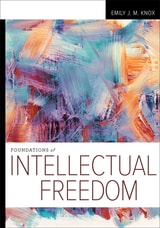
Foundations of Intellectual Freedom
Emily J. M. Knox
American Library Association, 2022
- the historical and legal roots of intellectual freedom, with an in-depth examination of John Stuart Mill’s “On Liberty” and Article 19 of the U.N Declaration of Human Rights, and its central concepts and principles;
- the intersection of intellectual freedom, freedom of expression, and social justice;
- professional values, codes of ethics, ALA’s Library Bill of Rights, and Freedom to Read/View Statements;
- pro- and anti- censorship arguments and their use in impeding and facilitating access to information;
- book banning and internet filtering;
- privacy and its relationship to information services;
- U.S. case law and precedents;
- the basics of U.S. copyright law, including fair use, and how it differs from international copyright law; and
- emerging global issues and their impact on future intellectual freedom.

Foundations of Library and Information Science
Richard E. Rubin
American Library Association, 2020
Richard E. Rubin’s book has served as the authoritative introductory text for generations of library and information science practitioners, with each new edition taking in its stride the myriad societal, technological, political, and economic changes affecting our users and institutions and transforming our discipline. Rubin teams up with his daughter, Rachel G. Rubin, a rising star in the library field in her own right, for the fifth edition. Spanning all types of libraries, from public to academic, school, and special, it illuminates the major facets of LIS for students as well as current professionals. Continuing its tradition of excellence, this text addresses
- the history and mission of libraries from past to present, including the history of service to African Americans;
- critical contemporary social issues such as services to marginalized communities, tribal libraries, and immigrants;
- the rise of e-government and the crucial role of political advocacy;
- digital devices, social networking, digital publishing, e-books, virtual reality, and other technology;
- forces shaping the future of libraries, including Future Ready libraries, and sustainability as a core value of librarianship;
- the values and ethics of the profession, with new coverage of civic engagement, combatting fake news, the importance of social justice, and the role of critical librarianship;
- knowledge infrastructure and organization, including Resource Description and Access (RDA), linked data, and the Library Research Model;
- the significance of the digital divide and policy issues related to broadband access and net neutrality;
- intellectual freedom, legal issues, and copyright-related topics;
- contemporary issues in LIS education such as the ongoing tensions between information science and library science; and
- the changing character of collections and services including the role of digital libraries, preservation, and the digital humanities.
In its newest edition, Foundations of Library and Information Science remains the field’s essential resource.

Foundations of Library and Information Science
Richard E. Rubin
American Library Association, 2016
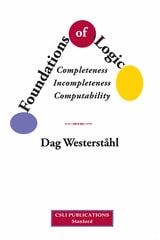
Foundations of Logic
Completeness, Incompleteness, ComputabilityDag Westerståhl
CSLI, 2023
This book provides a concise but detailed account of modern logic's three cornerstones: the completeness of first-order logic, Gödel's Incompleteness Theorems, and Turing's analysis of computability. In addition to the central text, an appendix explains the required technical terminology and facts. The main ideas behind the three cornerstones are explained in a simple, easy-to-grasp manner, and it is possible to select among the chapters and sections so that the reader becomes familiar with these ideas, even if some technicalities are skipped or postponed. A wealth of exercises accompany a wide selection of materials, including the histories and philosophical implications of the three main premises, making it useful as a textbook for undergraduate or graduate courses focusing on any of the three main themes. The material is rigorous and detailed but keeps the main ideas in sight, and there are numerous excursions into more advanced material for curious readers to explore.

Foundations of Macroecology
Classic Papers with CommentariesEdited by Felisa A. Smith, John L. Gittleman, and James H. Brown
University of Chicago Press, 2014
Foundations of Macroecology charts the evolutionary trajectory of these concepts—from the species-area relationship and the latitudinal gradient of species richness to the relationship between body size and metabolic rate—through forty-six landmark papers originally published between 1920 and 1998. Divided into two parts—“Macroecology before Macroecology” and “Dimensions of Macroecology”—the collection also takes the long view, with each paper accompanied by an original commentary from a contemporary expert in the field that places it in a broader context and explains its foundational role. Providing a solid, coherent assessment of the history, current state, and potential future of the field, Foundations of Macroecology will be an essential text for students and teachers of ecology alike.
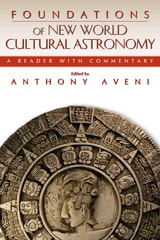
Foundations of New World Cultural Astronomy
A Reader with CommentaryAnthony Aveni
University Press of Colorado, 2008
Cultural astronomy, first called archaeoastronomy, has evolved at ferocious speed since its genesis in the 1960s, with seminal essays and powerful rebuttals published in far-flung, specialized journals. Until now, only the most closely involved scholars could follow the intellectual fireworks. In Foundations of New World Cultural Astronomy, Anthony Aveni, one of cultural astronomy's founders and top scholars, offers a selection of the essays that built the field, from foundational works to contemporary scholarship.
Including four decades of research throughout the Americas by linguists, archaeologists, historians, ethnologists, astronomers, and engineers, this reader highlights the evolution of the field through thematic organization and point-counterpoint articles. Aveni - an award-winning author and former National Professor of the Year - serves up incisive commentary, background for the uninitiated, and suggested reading, questions, and essay topics. Students, readers, and scholars will relish this collection and its tour of a new field in which discoveries about ancient ways of looking at the skies cast light on our contemporary views.
Foundations of Paleoecology
Classic Papers with CommentariesEdited by S. Kathleen Lyons, Anna K. Behrensmeyer, and Peter J. Wagner
University of Chicago Press, 2019
This book brings together forty-four classic papers published between 1924 and 1999 that trace the origins and development of paleoecology. The articles cross taxonomic groups, habitat types, geographic areas, and time and have made substantial contributions to our knowledge of the evolution of life. Encompassing the full breadth of paleoecology, the book is divided into six parts: community and ecosystem dynamics, community reconstruction, diversity dynamics, paleoenvironmental reconstruction, species interaction, and taphonomy. Each paper is also introduced by a contemporary expert who gives context and explains its importance to ongoing paleoecological research. A comprehensive introduction to the field, Foundations of Paleoecology will be an essential reference for new students and established paleoecologists alike.
Foundations of Real World Intelligence
Edited by Yoshinori Uesaka, Pentti Kanerva, and Hideki Asoh
CSLI, 2001

Foundations of Space-Time Theories
John Earman, Clark N. Glymour, and John J. Stachel, Editors
University of Minnesota Press, 1977
Foundations of Space-Time Theories was first published in 1977. Minnesota Archive Editions uses digital technology to make long-unavailable books once again accessible, and are published unaltered from the original University of Minnesota Press editions.
The essays in this volume are based on the papers given at a conference on the philosophical aspects of the space-time theory held under the auspices of the Minnesota Center for Philosophy of Science.

Foundations of Sport Management
Fourth EditionR. Brian Crow
FiT Publishing, 2022
Foundations of Sport Management, 4th edition, features content from a comprehensive collection of leading sport management scholars and industry professionals who bring a fresh perspective to the introductory study of sport management. The text provides the fundamental theories and principles of the discipline in a practical and user-friendly format, as well as an abundance of real-world examples in the sport industry. The fifteen chapters thoroughly examine strategies for sport leadership, sport facility management, event management and tourism, sponsorship, analytics, law, governance, ethics, globalization, and other vital topics in the field of sport management. Foundations of Sport Management is essential reading for entry-level sport management students pursuing this field of study and a career in the sport industry.

Foundations of Sport Management
Third EditionAndy Gillentine
FiT Publishing, 2014
With an updated and expanded look at the skills and knowledge needed to succeed in the sport industry, the third edition of Foundations of Sport Management will maintain its previous editions stance as one of the most widely adopted sport management foundational texts on the market. Editors Andy Gillentine and R. Brian Crow, along with a team of leading authors, aim to provide readers with a dynamic and comprehensive overview of the core concepts and current trends of the industry. Their years of experience as elite academicians and practitioners make this volume a cutting-edge resource for undergraduates considering or pursuing careers in sport management. Topics covered in this edition include economics and finance, marketing, sponsorship and sales, facility and event management, media relations, governance, and ethics.

Foundations of Stream and River Ecology
A Guide to the Classic LiteratureEdited by Wyatt F. Cross, Jonathan P. Benstead, Amy M. Marcarelli, and Ryan A. Sponseller
University of Chicago Press, 2024
The study of streams and rivers combines ecology, chemistry, hydrology, and geology to reveal the factors that control the biological diversity and functioning of these unique ecosystems. Although stream ecology is a relatively young discipline, foundational papers published over the past half century have shaped our current understanding of these ecosystems and have informed our efforts to manage and protect them. Organized by topics such as the physical template, community structure, food webs, ecosystem energetics, and nutrient dynamics, the chapters of this book offer summaries of the key literature, historical and contextual information, and insightful discussions of how past research has influenced present studies and may shape future work.

Foundations of Tropical Forest Biology
Classic Papers with CommentariesEdited by Robin L. Chazdon and T. C. Whitmore
University of Chicago Press, 2002
Foundations of Tropical Forest Biology makes essential works in the development of tropical biology available in a convenient form to both senior scholars interested in the roots of their discipline and to students encountering the field for the first time, as well as to everyone concerned with tropical conservation.

Foundations of World Order
The Legalist Approach to International Relations, 1898–1922Francis Anthony Boyle
Duke University Press, 1999
Although both the League of Nations and the Permanent Court of International Justice were rejected by the U.S. Senate, Boyle shows how the early governance of these institutions—precursors, respectively, to the United Nations and the International Court of Justice—informed later efforts to reduce and regulate transnational threats and the use of military force. Delving into such topics as the United States and its initial stance of neutrality in World War I and its imperial policy toward Latin America and the Caribbean, Boyle offers detailed readings of the relevant treaties, tribunals, and conferences, and assesses the political actors involved. Taking up the legalist point of view, he discusses the codification of customary international law, the obligatory arbitration of international disputes, and the creation of a new regime for the settlement of such disputes.
Boyle has provided in Foundations of World Order a compelling portrait of the relationship between political power and law, and of the impact of these forces on U.S. diplomacy. This volume will serve as a valuable resource to students, scholars, and practitioners of international law; it will also be of great interest to historians and political scientists engaged with issues of U.S. foreign policy and diplomatic history.
Foundations of the Portuguese Empire, 1415-1580
Bailey W. Diffie and George D. Winius
University of Minnesota Press, 1978
Foundations of the Portuguese Empire, 1415-1580 was first published in 1977. Minnesota Archive Editions uses digital technology to make long-unavailable books once again accessible, and are published unaltered from the original University of Minnesota Press editions.
This account traces the history of the Portuguese overseas discoveries, following the expansion into the Atlantic island, the Madeiras, and the Azores. It continues the account with the history of Portuguese discoveries along the African coast, at Guinea, the Congo, and Good Hope, then follows the voyages of Vasco da Gama to India and to Cabra, Brazil, and the expansion in the early years of the sixteen century to Malacca, China, and the East Indies. The volume presents not only a useful narrative of the spread of Portuguese empire but also new interpretations and analyses of the Portuguese overseas history.

Foundations of the Portuguese empire, 1415-1580
Bailey W. Diffie
University of Minnesota Press, 1977

Foundations of the Unity of Science, Volume 2
Edited by Otto Neurath, Rudolf Carnap, and Charles F. W. Morris
University of Chicago Press, 1971
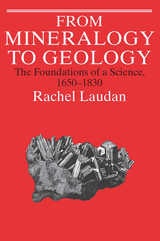
From Mineralogy to Geology
The Foundations of a Science, 1650-1830Rachel Laudan
University of Chicago Press, 1987