Results by title
22279 books match the query 'Social Science' and 955 start with f

Flourishing Thought
Democracy in an Age of Data HoardsRuth A. Miller
University of Michigan Press, 2016
Miller’s argument has shattering implications for the debates over the proper use and disposal of embryonic tissue, alarms about data gathering by the state and corporations, and other major ethical, social, and security issues.

Flower Worlds
Religion, Aesthetics, and Ideology in Mesoamerica and the American SouthwestEdited by Michael D. Mathiowetz and Andrew D. Turner
University of Arizona Press, 2021
The recognition of Flower Worlds is one of the most significant breakthroughs in the study of Indigenous spirituality in the Americas. These worlds are solar and floral spiritual domains that are widely shared among both pre-Hispanic and contemporary Native cultures in Mesoamerica and the American Southwest. Flower Worldsis the first volume to bring together a diverse range of scholars to create a truly multidisciplinary understanding of Flower Worlds. During the last thirty years, archaeologists, art historians, ethnologists, Indigenous scholars, and linguists have emphasized the antiquity and geographical extent of similar Flower World beliefs among ethnic and linguistic groups in the New World.
Flower Worlds are not simply ethereal, otherworldly domains, but rather they are embodied in lived experience, activated, invoked, and materialized through ritual practices, expressed in verbal and visual metaphors, and embedded in the use of material objects and ritual spaces. This comprehensive book illuminates the origins of Flower Worlds as a key aspect of religions and histories among societies in Mesoamerica and the American Southwest. It also explores the role of Flower Worlds in shaping ritual economies, politics, and cross-cultural interaction among Indigenous peoples.
Flower Worlds reaches into multisensory realms that extend back at least 2,500 years, offering many different disciplines, perspectives, and collaborations to understand these domains. Today, Flower Worlds are expressed in everyday work and lived experiences, embedded in sacred geographies, and ritually practiced both individually and in communities. This volume stresses the importance of contemporary perspectives and experiences by opening with living traditions before delving into the historical trajectories of Flower Worlds, creating a book that melds scientific and humanistic research and emphasizes Indigenous voices.
Contributors: Oswaldo Chinchilla Mazariegos, James M. Córdova, Davide Domenici, Ángel González López, Kelley Hays-Gilpin, Michael D. Mathiowetz, Cameron L. McNeil, Felipe S. Molina, Johannes Neurath, John M. D. Pohl, Alan R. Sandstrom, David Delgado Shorter, Karl A. Taube, Andrew D. Turner, Lorena Vázquez Vallín, Dorothy Washburn
Flowering of the Cumberland
Harriette Simpson Arnow
Michigan State University Press, 2013
Flowers in the Dustbin
Culture, Anarchy, and Postwar EnglandNeil Nehring
University of Michigan Press, 1993
Flowers in the Dustbin looks at the volatile relations between literature, rock music, and youth subcultures in postwar England. Neil Nehring traces the continuities between the original avant-garde of the twenties and thirties and the postwar youth culture, arguing that anarchism never really disappeared from the world. The author shows that British youth groups like the Mods, the Rockers, Punks, and Teddy Boys and the music that inspired them appear increasingly more acute than their literary counterparts, belying conventional assumptions about the relative powers of "high" and "low" culture. By examining literary texts as part of a larger sampling of cultural forms and their uses in everyday life, Flowers in the Dustbin provides a striking illustration of the significance the field of cultural studies holds for studies in English.

Flows of Violence
Water, Infrastructures, and the State in Buenaventura, ColombiaFelipe Fernández
University of Arizona Press, 2025
Flows of Violence offers a profound ethnographic exploration of the intricate relationship between violence and water infrastructure in one of Colombia’s most marginalized cities. This groundbreaking work engages with the concept of “infrastructural violence,” revealing how the Colombian state’s neglect and inadequate provision of water services perpetuate inequality and suffering among Buenaventura’s residents. Through extensive fieldwork, Fernández provides rich empirical data and firsthand accounts that bring to light the daily struggles and resilience of the city’s inhabitants.
The book critically examines how everyday crime and state neglect intersect, altering the improvised practices of water storage and access among the population. It also highlights the innovative mechanisms employed by social movements and ordinary citizens to cope with and resist these challenges.
Flows of Violence is an essential read for scholars in anthropology, geography, and Latin American studies, offering valuable insights into the sociopolitical impacts of infrastructure. This timely contribution underscores the urgent need for equitable infrastructure development and social justice, making it a pivotal text for understanding urban poverty and state dynamics in Latin America and beyond.

Fluent Bodies
Ayurvedic Remedies for Postcolonial ImbalanceJean M. Langford
Duke University Press, 2002
Interweaving theory with narrative, Langford explores the strategies of contemporary practitioners who reconfigure Ayurvedic knowledge through institutions and technologies such as hospitals, anatomy labs, clinical trials, and sonograms. She shows how practitioners appropriate, transform, or circumvent the knowledge practices implicit in these institutions and technologies, destabilizing such categories as medicine, culture, science, symptom, and self, even as they deploy them in clinical practice. Ultimately, this study points to the future of Ayurveda in a transnational era as a remedy not only for the wounds of colonialism but also for an imagined cultural emptiness at the heart of global modernity.
Fluid Geographies
Water, Science, and Settler Colonialism in New MexicoK. Maria D. Lane
University of Chicago Press, 2024
Maria Lane’s Fluid Geographies traces New Mexico’s transition from a community-based to an expert-led system of water management during the pre-statehood era. To understand this major shift, Lane carefully examines the primary conflict of the time, which pitted Indigenous and Nuevomexicano communities, with their long-established systems of irrigation management, against Anglo-American settlers, who benefitted from centralized bureaucratic management of water. The newcomers’ system eventually became settled law, but water disputes have continued throughout the district courts of New Mexico’s Rio Grande watershed ever since.
Using a fine-grained analysis of legislative texts and nearly two hundred district court cases, Lane analyzes evolving cultural patterns and attitudes toward water use and management in a pivotal time in New Mexico’s history. Illuminating complex themes for a general audience, Fluid Geographies helps readers understand how settler colonialism constructed a racialized understanding of scientific expertise and legitimized the dispossession of nonwhite communities in New Mexico.

Fluid New York
Cosmopolitan Urbanism and the Green ImaginationMay Joseph
Duke University Press, 2013
Joseph considers New York's relation to the water that surrounds and defines it. Her reflections reach back to the city's heyday as a world-class port—a past embodied in a Dutch East India Company cannon recently unearthed from the rubble at the World Trade Center site—and they encompass the devastation caused by Hurricane Sandy in 2012. They suggest that New York's future lies in the reclamation of its great water resources—for artistic creativity, civic engagement, and ecological sustainability.
Fluted Points of the Far West
Michael F. Rondeau
University of Utah Press, 2022
Fluted Points of the Far West provides the first large-scale overview of fluted points in the far western United States, including details of their attributes, trends in production, and range of variability. It serves as a compendium of groundbreaking research by the California Fluted Lanceolate Uniform Testing and Evaluation Database (CalFLUTED) project. Details regarding size, morphology, material, basal flaking technology, breakage patterns, repair patterns, manufacturing (as revealed by unfinished fluted bifaces), margin grinding, and flute scratching are provided through this research, both in terms of general trends and noteworthy exceptions.
Designed as a ready reference, these data are also summarized for each of the four sample states covered: California, Nevada, Oregon, and Utah. Summaries introduce the history and circumstances of fluted point studies by state, a list of references for each state used in the CalFLUTED study reports, a comprehensive listing of the relevant CalFLUTED study reports, and a breakdown by state of fluted point attribute details as listed above.
Reviews and discussions cover a range of topics, including classification of fluted points, identifying flute scars, and indicative traits that a fluted point is not from the prehistoric Far West. Additional discussions cover hafting alternatives, fluted point dating, far western fluted point typology, and the likely direction of further research on a range of fluted point topics.

Flyboy 2
The Greg Tate ReaderGreg Tate
Duke University Press, 2016

Flying Saucers Rock 'n' Roll
Conversations with Unjustly Obscure Rock 'n' Soul EccentricsJake Austen, ed.
Duke University Press, 2011
Contributors
Steve Albini
Ben Austen
Jake Austen
John Battles
Bosco
Ken Burke
Mike Maltese
King Merinuk
Ken Mottet
Jonathan Poletti
James Porter
"Colonel" Dan Sorenson
Jacqueline Stewart

Flying Under the Radar with the Royal Chicano Air Force
Mapping a Chicano/a Art HistoryBy Ella Maria Diaz
University of Texas Press, 2017
Winner, National Association for Chicana and Chicano Studies Book Award, 2019
The Royal Chicano Air Force produced major works of visual art, poetry, prose, music, and performance during the second half of the twentieth century and first decades of the twenty-first. Materializing in Sacramento, California, in 1969 and established between 1970 and 1972, the RCAF helped redefine the meaning of artistic production and artwork to include community engagement projects such as breakfast programs, community art classes, and political and labor activism. The collective’s work has contributed significantly both to Chicano/a civil rights activism and to Chicano/a art history, literature, and culture.
Blending RCAF members’ biographies and accounts of their artistic production with art historical, cultural, and literary scholarship, Flying under the Radar with the Royal Chicano Air Force is the first in-depth study of this vanguard Chicano/a arts collective and activist group. Ella Maria Diaz investigates how the RCAF questioned and countered conventions of Western art, from the canon taught in US institutions to Mexican national art history, while advancing a Chicano/a historical consciousness in the cultural borderlands. In particular, she demonstrates how women significantly contributed to the collective’s output, navigating and challenging the overarching patriarchal cultural norms of the Chicano Movement and their manifestations in the RCAF. Diaz also shows how the RCAF’s verbal and visual architecture—a literal and figurative construction of Chicano/a signs, symbols, and texts—established the groundwork for numerous theoretical interventions made by key scholars in the 1990s and the twenty-first century.

Flying Yoginis
Irwin Allan Sealy
Seagull Books, 2026
Irwin Allan Sealy—master chronicler of the Indian imagination—sets off on a singular quest: to follow in the wake of the yoginis, those fierce, flying, shape-shifting female adepts of yoga whose images were carved in stone a thousand years ago across India and who now sit, displaced, in American museums.
Part travelogue, part philosophical musing, part cultural excavation, Flying Yoginis is a meditation on art, power, devotion, and the subversive energy of women who step out of line. With wit and wonder, Sealy traces their transcontinental journey from lost temples near Kanchipuram to glass-walled galleries in Kansas City and Minneapolis—finding along the way unexpected kinship with rebels and visionaries, from Rosa Parks to Carson McCullers. Blending the spiritual with the personal, the mythic with the mundane, Sealy offers a dazzling, genre-defying reflection on how the sacred persists, how memory travels, and how history is always being rewritten by those bold enough to reclaim it.

Flying for the Air Service
The Hughes Brothers in World War IDavid K. Vaughan
University of Wisconsin Press, 1998
Folk Culture in the Digital Age
The Emergent Dynamics of Human InteractionTrevor J. Blank
Utah State University Press, 2012
Smart phones, tablets, Facebook, Twitter, and wireless Internet connections are the latest technologies to have become entrenched in our culture. Although traditionalists have argued that computer-mediated communication and cyberspace are incongruent with the study of folklore, Trevor J. Blank sees the digital world as fully capable of generating, transmitting, performing, and archiving vernacular culture. Folklore in the Digital Age documents the emergent cultural scenes and expressive folkloric communications made possible by digital “new media” technologies.
New media is changing the ways in which people learn, share, participate, and engage with others as they adopt technologies to complement and supplement traditional means of vernacular expression. But behavioral and structural overlap in many folkloric forms exists between on- and offline, and emerging patterns in digital rhetoric mimic the dynamics of previously documented folkloric forms, invoking familiar social or behavior customs, linguistic inflections, and symbolic gestures.
Folklore in the Digital Age provides insights and perspectives on the myriad ways in which folk culture manifests in the digital age and contributes to our greater understanding of vernacular expression in our ever-changing technological world.

Folk Groups And Folklore Genres Reader
A Readeredited by Elliott Oring
Utah State University Press, 1989
Folk Groups And Folklore Genres
An Introductionedited by Elliott Oring
Utah State University Press, 1986

Folk Law
Essays in the Theory and Practice of Lex Non ScriptaAlison Dundes Renteln
University of Wisconsin Press, 1995
In every culture there exists unwritten law—obligations and prohibitions that are understood and passed on, and transgressions that are punished. Folk Law, a comprehensive two-volume collection of essays, examines this meeting place of folklore and jurisprudence. The contributors explore the historical significance and implications of folk law, its continuing influence around the globe, and the conflicts that arise when folk law diverges from official law.
The collection begins by defining various forms of “folk law,” drawing on examples from many cultures. The second section provides historical profiles of pioneering figures in the study of folk law. Following sections examine field research techniques used to identify folk laws; aspects of folk law within the realm of rituals, songs, and other forms of expressive culture; instances where folk law comes into conflict with national law, and the role of folk law in the international arena. The volumes also include description and analysis of two approaches to folk law—the rule approach, in which scholars dissect the codes that underlie folk law, and the case approach, in which researchers examine specific cases involving folk law.
Valuable for students and scholars of law, folklore, or anthropology, this extensive casebook marks a rare interdisciplinary approach to two important areas of research.
Folk Mammalogy of the Northern Pimans
Amadeo M. Rea
University of Arizona Press, 1998
Rea describes the relationship of the River Pima, Tohono O'odham (Papago), Pima Bajo, and Mountain Pima to the furred creatures of their environment: how they are named and classified, hunted, prepared for consumption, and incorporated into myth. He also identifies associations between mammals and Piman notions of illness by establishing correlations between the geographical distribution of mammals and ideas regarding which animals do or do not cause staying sickness. This information reveals how historical and ecological factors can directly influence the belief systems of a people. At the heart of the book are detailed species accounts that relate Piman knowledge of the bats, rabbits, rodents, carnivores, and hoofed mammals in their world, encompassing creatures ranging from deer mouse to mule deer, cottontail to cougar.
Rea has been careful to emphasize folk knowledge in these accounts by letting the Pimans tell their own stories about mammals, as related in transcribed conversations. This wide-reaching study encompasses an area from the Rio Yaqui to the Gila River and the Gulf of California to the Sierra Madre Occidental and incorporates knowledge that goes back three centuries. Folk Mammalogy of the Northern Pimans preserves that knowledge for scholars and Pimans alike and invites all interested readers to see natural history through another people's eyes.
Folk Practices in North Mexico
Birth Customs, Folk Medicine, and Spiritualism in the Laguna ZoneBy Isabel Kelly
University of Texas Press, 1965
The Mexican folkways described in this monograph, of scientific interest to anthropologists, will fascinate laypeople as well. Isabel Kelly collected these notes in the 1950s, as a diversion when official field work was not feasible, in the vicinity of Torreón and particularly in the nearby village of El Cuije, in northern Mexico. She recounts folk customs and habits, focusing on beliefs and practices related to health and healing and on notions concerning magic. These form, Kelly believes, a core of folk culture which has survived tenaciously in the rural areas and on the outskirts of the cities, among mestizo families of scant education and limited economic resources.
These people are well acquainted with simple, matter-of-fact illnesses which result from natural causes and which respond to treatment by herbal and other home remedies or by modern medicines. But they also recognize the evil eye and the emotional upset known as “fright.” They are thoroughly familiar with the ever-present danger of ailments which are not “natural” and God-sent, but which are deliberately inflicted by an enemy, through the artifice of a sorcerer or a spiritualist. Such “instigated” illnesses may take any form, from a cold in the head to a false pregnancy. If a person suspects that poor health results from such malevolence, he or she spurns Western medicine and looks instead to the witch or to the spiritualist as the only hope of a cure.
El Cuije pays an annual quota from community funds to make available modern health services provided by the government. But community funds are similarly drawn upon to provide “medical” attention for those who repair to the sorcerers. Once a week the village truck takes all presumed witchcraft victims to a nearby town, where they receive clinical treatment from professional sorcerers.
Kelly sees little that is genuinely indigenous in the beliefs and practices described; many of them demonstrably result from infiltration from the Old World in the years following the Spanish Conquest. She considers spiritualistic curing—important in northern Mexico and many other parts of Latin America—in some detail, but the specific outlines of its history in northern Mexico still awaited clarification at the time of her research.
Folk Religion in Japan
Continuity and ChangeIchiro Hori
University of Chicago Press, 1968
Folk religion, transmitted by the common people from generation to generation, has greatly conditioned the political, economic, and cultural development of Japan and continues to satisfy the emotional and religious needs of the people. Hori examines the organic relationship between the Japanese social structure—the family kinship system, village and community organizations—and folk religion. A glossary with Japanese characters is included in the index.
Folk Stories from the Hills of Puerto Rico / Cuentos folklóricos de las montañas de Puerto Rico
Rafael Ocasio
Rutgers University Press, 2021
Some stories provide a distinctive Caribbean twist on classic tales including “Snow White” and “Cinderella.” Others fictionalize the lives of local historical figures, such as infamous pirate Roberto Cofresí, rendered here as a Robin Hood figure who subverts the colonial social order. The collection also introduces such beloved local characters as Cucarachita Martina, the kind cockroach who falls in love with Ratoncito Pérez, her devoted mouse husband who brings her delicious food.
Including a fresh English translation of each folktale as well as the original Spanish version, the collection also contains an introduction from literary historian Rafael Ocasio that highlights the historical importance of these tales and the Jíbaro cultural values they impart. These vibrant, funny, and poignant stories will give readers unique insights into Puerto Rico’s rich cultural heritage.
Esta nueva y emocionante antología reúne cuentos populares puertorriqueños que fueron transmitidos oralmente durante generaciones antes de ser finalmente transcritos comenzando en 1914 por el equipo del famoso antropólogo Franz Boas. Estos encantadores cuentos ofrecen a los lectores un vistazo a la imaginación y las aspiraciones de los jíbaros, los campesinos de Puerto Rico.
Algunas historias brindan un distintivo toque caribeño a cuentos clásicos como "Blanca Nieves" y "Cenicienta". Otros ficcionalizan la vida de personajes históricos locales, como el famoso pirata Roberto Cofresí, representado como una figura al estilo de Robin Hood, quien subvierte el orden social colonial. La colección también presenta personajes locales tan queridos como Cucarachita Martina, la amable cucaracha que se enamora de Ratoncito Pérez, su devoto esposo ratón que le trae deliciosa comida.
Incluyendo una nueva traducción al inglés de estos cuentos populares, así como las versiones originales en español, la colección también contiene una introducción del historiador literario Rafael Ocasio, quien destaca la importancia histórica de estos cuentos y los valores culturales del jíbaro que éstos imparten en los relatos. Estas historias vibrantes, divertidas y conmovedoras brindarán a los lectores una visión única de la rica herencia cultural de Puerto Rico.
Introducción en español (https://d3tto5i5w9ogdd.cloudfront.net/wp-content/uploads/2021/02/03154419/Ocasio_Cuentos_Intro_Espan%CC%83ol.pdf)
Rafael Ocasio will discussing his book, 'Folk Stories from the Hills of Puerto Rico / Cuentos folklóricos de las montañas de Puerto Rico' at Biblioteca Juvenil de Mayagüez in Puerto Rico (https://youtu.be/o6Tub094EoI)

Folklore Fights the Nazis
Humor in Occupied Norway, 1940–1945Kathleen Stokker
University of Wisconsin Press, 1997
In relating this dramatic story, Kathleen Stokker draws upon her many interviews with survivors of the Occupation and upon the archives of the Norwegian Resistance Museum and the University of Oslo. Central to the book are four “joke notebooks” kept by women ranging in age from eleven to thirty, who found sufficient meaning in this humor to risk recording and preserving it. Stokker also cites details from wartime diaries of three other women from East, West, and North Norway. Placing the joking in historical, cultural, and psychological context, Stokker demonstrates how this seemingly frivolous humor in fact contributed to the development of a resistance mentality among an initially confused, paralyzed, and dispirited population, stunned by the German invasion of their neutral country.
For this paperback edition, Stokker has added a new preface offering a comparative view of resistance through humor in neighboring Denmark.

Folklore Genres
Edited by Dan Ben-Amos
University of Texas Press, 1976
The essays in Folklore Genres represent development in folklore genre studies, diverging into literary, ethnographic, and taxonomic questions. The study as a whole is concerned with the concept of genre and with the history of genre theory. A selective bibliography provides a guide to analytical and theoretical works on the topic.
The literary-oriented articles conceive of folklore forms, not as the antecedents of literary genres, but as complex, symbolically rich expressions. The ethnographically oriented articles, as well as those dealing with classification problems, reveal dimensions of folklore that are often obscured from the student reading the folklore text alone. It has long been known that the written page is but a pale reproduction of the spoken word, that a tale hardly reflects the telling. The essays in this collection lead to an understanding of the forms of oral literature as multidimensional symbols of communication and to an understanding of folklore genres as systematically related conceptual categories in culture. What kinship terms are to social structure, genre terms are to folklore. Since genres constitute recognized modes of folklore speaking, their terminology and taxonomy can play a major role in the study of culture and society.
The essays were originally published in Genre (1969–1971); introduction, bibliography, and index have been added to this edition.
Folklore Methodology
Formulated by Julius Krohn and Expanded by Nordic ResearchersBy Kaarle Krohn
University of Texas Press, 1971
Kaarle Krohn's Folklore Methodology was the first systematic attempt to state a method of studying folkloristic materials. For centuries scholars had collected folkloristic texts and had commented on them, but they had not tried to formulate a method of investigating folklore.
Folklore Methodology became the handbook for the great Finnish School of folklore research. It provided for its students a guide to the geographical research of traditional materials, a radical departure from the literary scholarship that had dominated folklore studies.
Krohn's book explores the causes and modes of folklore diffusion, development, and destruction; it outlines the influences that cause change in folklore; it provides valuable insights into the nature of folklore; and, finally, it develops geographic methods for analyzing, classifying, and reconstructing individual items from the folk repertoire.
While many developments have taken place since Krohn first published his guide, important new concepts of folklore research sprang from his efforts. For this reason, Folklore Methodology is mandatory reading for every serious student of folklore.
Folklore Rules
A Fun, Quick, and Useful Introduction to the Field of Academic Folklore StudiesS.
Utah State University Press, 2013
- What Is Folklore?
- What Do Folklorists Do
- Types of Folklore
- Types of Folk Groups;
- What Do I Do Now?
These chapters guide students toward a working understanding of the field, learn basic terms and techniques, and learn to perceive the knowledge base and discourse frame for materials used in folklore courses. Folklore Rules has become a classic text, serving instructors and students for a variety of courses, including introductory folklore and comparative studies as well as literature, anthropology, and composition classes that include a folklore component.

Folklore and Culture on the Texas-Mexican Border
By Américo Paredes
University of Texas Press, 1995
In an illustrious career spanning over forty years, Américo Paredes has often set the standard for scholarship and writing in folklore and Chicano studies. In folklore, he has been in the vanguard of important theoretical and methodological movements. In Chicano studies, he stands as one of the premier exponents.
Paredes's books are widely known and easily available, but his scholarly articles are not so familiar or accessible. To bring them to a wider readership, Richard Bauman has selected eleven essays that eloquently represent the range and excellence of Paredes's work. The hardcover edition of Folklore and Culture was published in 1993. This paperback edition will make the book more accessible to the general public and more practical for classroom use.
Folklore and Folklife
An IntroductionRichard M. Dorson
University of Chicago Press, 1982
Folklore and Social Media
Andrew Peck
Utah State University Press, 2020
This book features twelve chapters ranging in topics from legend transmission and fake news to case studies of memes, joke cycles, and Twitter hashtag campaigns and offers fresh insights on digital heritage and web archiving. The editors and contributors take both the “digital” and “folklore” elements seriously because social media fundamentally changes folk practices in new, though often invisible, ways. Social media platforms encourage hybrid performances that appear informal and ordinary while also offering significant space to obfuscate backstage behaviors through editing and retakes. The result is that expression online becomes increasingly reminiscent of traditional forms of face-to-face interaction, while also hiding its fundamental differences.
Folklore and Social Media demonstrates various ways to refine methods and analyses in order to develop a better understanding of the informal and traditional dynamics that define an era of folklore and social media. It is an invaluable addition to the literature on digital folklore scholarship that will be of interest to students and scholars alike.
Contributors:
Sheila Bock, Peter M. Broadwell, Bill Ellis, Jeana Jorgensen, Liisi Laineste, John Laudun, Linda J. Lee, Lynne S. McNeill, Ryan M. Milner, Whitney Phillips, Vwani Roychowdhury, Timothy R. Tangherlini, Tok Thompson, Elizabeth Tucker, Kristiana Willsey

Folklore and the Internet
Vernacular Expression in a Digital WorldTrevor J. Blank
Utah State University Press, 2009
A pioneering examination of the folkloric qualities of the World Wide Web, e-mail, and related digital media. These stuidies show that folk culture, sustained by a new and evolving vernacular, has been a key, since the Internet's beginnings, to language, practice, and interaction online. Users of many sorts continue to develop the Internet as a significant medium for generating, transmitting, documenting, and preserving folklore.
In a set of new, insightful essays, contributors Trevor J. Blank, Simon J. Bronner, Robert Dobler, Russell Frank, Gregory Hansen, Robert Glenn Howard, Lynne S. McNeill, Elizabeth Tucker, and William Westerman showcase ways the Internet both shapes and is shaped by folklore

Folklore by the Fireside
Text and Context of the Tuscan VegliaBy Alessandro Falassi
University of Texas Press, 1980
For centuries, social life in rural Tuscany has centered around the veglia, an evening gathering of family and friends at the hearth. Folklore by the Fireside is a thorough and insightful study of this custom—from the tales, riddles, lullabies, and folk prayers performed as the small children are put to bed to the courtship songs and dances later in the evening to the anti-veglia male gossip, card games, and protest songs originating in the tavern.
Alessandro Falassi skillfully correlates the veglia to the rites of passage and family values of an agrarian society. Although the impact of mass media and other factors has tended to weaken the tradition, even today Tuscan children are taught to behave and adolescents are guided along the conventional path to adulthood, courtship, and marriage through veglia folklore.
This is the first work to deal systematically with Tuscan folklore from a semiotic and structural viewpoint and to examine the veglia as a means of handing down traditional values. It is important not only for its careful, detailed description but also for its rigorous methodology and theoretical richness.
Folklore in Utah
A History and Guide to ResourcesDavid Stanley
Utah State University Press, 2004
Over thirty scholars examine the development of folklore studies through the lens of over one hundred years of significant activity in a state that has provided grist for the mills of many prominent folklorists. In the past the Folklore Society of Utah has examined the work of such scholars in biographical and other essays published in its newsletters. This book incorporates those essays and goes well beyond them to include many other topices, offering a thorough history of folklore studies and a guide to resources for those pursuing research in Utah now and in the future.
The essays survey the development and contributions of folklore studies in Utah from 1892 to 2004 but also represent developments in both academic and public-sector folklore throughout the United States. Following a thorough historical introduction, part I profiles the first folklorists working in the state, including Hector Lee, Thomas Cheney, Austin and Alta Fife, Wayland Hand, and Lester Hubbard. Part II looks at the careers of prominent Utah folklorists Jan Harold Brunvand, Barre Toelken, and William B. Wilson, as well as the works of the next, current generation of folklorists. Part III covers studies in major folklore genres, with essays on the study of material culture, vernacular architecture, and Mormon, ethnic, Native American, and Latino folklore. Part IV examines public folklore programs including organizations, conferences, and tourism. Back matter describes academic programs at Utah institutions of higher education, summarizes the holdings of the various folklore archives in the state, and provides a complete cross-indexed bibliography of articles, books, and recordings of Utah folklore.

Folklore in the Nordic World
Thomas A. DuBois
University of Wisconsin Press, 2024
From methods of preparing suovabiergu (smoked reindeer meat) in Sápmi, to celebrating graduation by “running the falls” at Uppsala University in Sweden, to massive folk music festivals in Finland and tales of supernatural visitors bestowing baby names in Iceland, folklore offers unique insights into the everyday life of Nordic society. The study of Nordic folklore began in the nineteenth century, when early folklorists imagined that the true character of a nation could be found among the tales of the peasantry. Today, the theories, tools, and institutions developed by influential folklorists in the Nordic region continue to lead the way in documentation, preservation, and analysis of folklore.
Folklore in the Public Square
How the Study of Traditional Culture Can Solve Contemporary Social ProblemsAndrea Kitta
Utah State University Press, 2026
Folklore is often positioned at the center of critical social issues. While folklorists have acknowledged this power and explored how folklore has been used for political ends, far less attention has been paid to the role folklorists and folklore scholarship can play in addressing contemporary social issues in public discourse. Folklore in the Public Square explores how folklorists apply their research to engage general audiences and address the challenging issues we face daily.
Folklore in the Public Square brings together folklorists working in the humanities and the social sciences committed to applying their research to help solve contemporary social challenges, formalizing an undercurrent of thought that has gained growing attention. Case studies apply ethical research to address pervasive questions about the environment, poverty, health and healthcare, political partisanship, war, tourism, stigma, racism, and conspiracy theories, among others. Building on conversations raised by folklorists who have contributed to public programming or conducted collaborative research in local communities, this book appeals to anyone interested in contemporary social issues, applied research, or collaborative and ethical fieldwork.
Folklore of the Atayal of Formosa and the Mountain Tribes of Luzon
Edward Norbeck
University of Michigan Press, 1950
Folklore/Cinema
Popular Film as Vernacular CultureSharon R. Sherman and Mikel J. Koven
Utah State University Press, 2007
Interest in the conjunctions of film and folklore is stronger and more diverse than ever. Documentaries on folk life and expression remain a vital genre, but scholars such as Sharon Sherman and Mikel Koven also are exploring how folklore elements appear in, and merge with, popular cinema. They look at how movies, a popular culture medium, can as well be both a medium and type of folklore, playing cultural roles and conveying meanings customarily found in other folkloric forms. They thus use the methodology of folklore studies to analyze films made for commercial distribution.
The contributors to this book look at film and folklore convergences, showing how cinema conveys vernacular culture in traditional and popular venues. Folklore/Cinema will be of interest to scholars from many fields---folklore, film studies, popular culture, American studies, history, anthropology, and literature among them---and will help introduce students in various courses to intersections of film and culture.
Folkloresque
Reframing Folklore in a Popular Culture WorldMichael Dylan Foster
Utah State University Press, 2015
This volume introduces a new concept to explore the dynamic relationship between folklore and popular culture: the “folkloresque.” With “folkloresque,” Foster and Tolbert name the product created when popular culture appropriates or reinvents folkloric themes, characters, and images. Such manufactured tropes are traditionally considered outside the purview of academic folklore study, but the folkloresque offers a frame for understanding them that is grounded in the discourse and theory of the discipline.
Fantasy fiction, comic books, anime, video games, literature, professional storytelling and comedy, and even popular science writing all commonly incorporate elements from tradition or draw on basic folklore genres to inform their structure. Through three primary modes—integration, portrayal, and parody—the collection offers a set of heuristic tools for analysis of how folklore is increasingly used in these commercial and mass-market contexts.
The Folkloresque challenges disciplinary and genre boundaries; suggests productive new approaches for interpreting folklore, popular culture, literature, film, and contemporary media; and encourages a rethinking of traditional works and older interpretive paradigms.
Contributors: Trevor J. Blank, Chad Buterbaugh, Bill Ellis, Timothy H. Evans, Michael Dylan Foster, Carlea Holl-Jensen, Greg Kelley, Paul Manning, Daniel Peretti, Gregory Schrempp, Jeffrey A. Tolbert
Folklorist in the Marketplace
Conversations at the Crossroads of Vernacular Culture and EconomicsWillow G. Mullins
Utah State University Press, 2019
As trade, technology, and geopolitics have led to a rapid increase in the global spread of cultural products like media, knowledge, objects, and folkways, there has been a concomitant rise in fear and anxiety about globalization’s dark other side—economic nativism, neocolonialism, cultural appropriation, and loss. Culture has become a resource and a currency in the global marketplace. This movement of people and forms necessitates a new textual consideration of how folklore and economics interweave. In The Folklorist in the Marketplace, contributors explore how the marketplace and folklore have always been integrally linked and what that means at this cultural and economic moment.
Covering a variety of topics, from creel boats to the history of a commune that makes hammocks, The Folklorist in the Marketplace goes far beyond the well-trod examinations of material culture to look closely at the historical and contemporary intersections of these two disciplines and to provoke cross-disciplinary conversation and collaboration.
Contributors:
William A. Ashton, Halle M. Butvin, James I. Deutsch, Christofer Johnson, Michael Lange, John Laudun, Julie M-A LeBlanc, Cassie Patterson, Rahima Schwenkbeck, Amy Shuman, Irene Sotiropoulou, Yuanhao Zhao

Folklórico in the United States
Unwritten HistoriesEdited by Norma E. Cantú and Olga Nájera-Ramírez
University of Illinois Press, 2027
Multidimensional and enlightening, Folklórico in the United States expands our knowledge of a powerful and creative dance tradition central to Mexican Americans’ sense of self and community.
Contributors: Erica Acevedo-Ontiveros, Jenna Cortez-Aguirre, Manuel R. Cuellar, Alma Ixchel Flores-Pérez, Guadalupe Friaz, Ennio García-Miera, Javier Sepúlveda Garibay, Jacquelyn Y. Guzmán, Aida Hurtado, Cándida F. Jácquez, Gabriela Mendoza-García, Mona Lisa Montgomery, Cassondra Montoya, Felisa Patiño-Longoria, Cindy Padilla, Russell C. Rodriguez, Gema Sandoval, Sarahí Lay Trigo
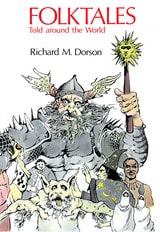
Folktales Told Around the World
Richard M. Dorson
University of Chicago Press, 1978
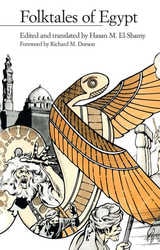
Folktales of Egypt
Hasan M. El-Shamy
University of Chicago Press, 1982
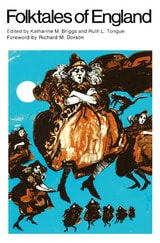
Folktales of England
Edited by Katharine M. Briggs and Ruth L. Tongue
University of Chicago Press, 1968
"This is a fine, homely feast, immediately intelligble. . . ."—Times Educational Supplement
". . . should be of special concern to Americans since many of the tales are parallel to or the source of our own folk stories."—Choice
"This is entertainment, to be sure, but is also part of man's attempts to comprehend his world."—Quartet
"Folktales of England is by all odds the most satisfactory general collection of folktales to come out of England since the advent of modern collection and classification techniques."—Ernest W. Baughman, Journal of American Folklore
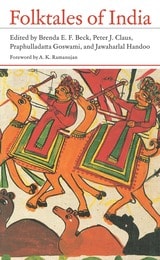
Folktales of India
Edited by Brenda E. F. Beck, Peter J. Claus, Praphulladatta Goswami, and Jawahar
University of Chicago Press, 1986

Folktales of India
Edited by Brenda E. F. Beck, Peter J. Claus, Praphulladatta Goswami, and Jawahar
University of Chicago Press, 1987
"This collection does an excellent job of representing India. . . . It is the type of book that can be enjoyed by all readers who love a well-told tale as well as by scholars of traditional narrative and scholars of India in general."—Hugh M. Flick, Jr., Asian Folklore Studies
"The stories collected here are representative, rich in structural subtlety, and endowed with fresh earthy humor."—Kunal Chakraborti, Contributions to Indian Sociology
Folktales of Ireland
Edited by Sean O'Sullivan
University of Chicago Press, 1966
Folktales of Ireland
Edited by Sean O'Sullivan
University of Chicago Press, 1966
Folktales of Norway
Edited by Reidar Christiansen
University of Chicago Press, 1964
"The translation is excellent, retaining the traditional Norwegian style . . . the tales themselves will also appeal to the interested layman."—Library Journal

Follow My Footprints
Changing Images of Women in American Jewish FictionEdited by Sylvia Barack Fishman
Brandeis University Press, 1992

Follow Your Conscience
The Catholic Church and the Spirit of the SixtiesPeter Cajka
University of Chicago Press, 2021
Peter Cajka’s erudite book shows how even staunch Catholics were transformed by the maelstrom of the American Sixties, turning away from powerful and corrupt institutions and toward the inner moral compass provided by their own consciences.
What is your conscience? Is it, as Peter Cajka asks in this provocative book, “A small, still voice? A cricket perched on your shoulder? An angel and devil who compete for your attention?” Going back at least to the thirteenth century, Catholics viewed their personal conscience as a powerful and meaningful guide to align their conduct with worldly laws. But, as Cajka shows in Follow Your Conscience, during the national cultural tumult of the 1960s, the divide between the demands of conscience and the demands of the law, society, and even the church itself grew increasingly perilous. As growing numbers of Catholics started to consider formerly stout institutions to be morally hollow—especially in light of the Vietnam War and the church’s refusal to sanction birth control—they increasingly turned to their own consciences as guides for action and belief. This abandonment of higher authority had radical effects on American society, influencing not only the broader world of Christianity, but also such disparate arenas as government, law, health care, and the very vocabulary of American culture. As this book astutely reveals, today’s debates over political power, religious freedom, gay rights, and more are all deeply infused by the language and concepts outlined by these pioneers of personal conscience.

Follow the Maid
Domestic Worker Migration from IndonesiaOlivia Killias
National University of Singapore Press, 2017
This fascinating study unveils the workings of the Indonesian migration regime, one that sends hundreds of thousands of women abroad as domestic workers each year. Drawing on extended ethnographic research since 2007, the book literally follows migrant women from one particular village in Central Java and tracks the moral, social, economic and legal processes by which they are turned into ‘maids’. From recruitment by local brokers to the ‘training’ received in secluded camps in Jakarta, employment in gated middle-class homes in Malaysia and back home again, Olivia Killias highlights the implications of the migration process on gendered practices of labour mobility (and immobilisation). She also reveals the disciplinary power that states, recruitment agencies and employers exercise over migrant domestic workers as well as highlighting frictions within the system. Killias’s analysis demonstrates that ironically, the “legalisation” of the migration industry, under the joint pressures of the Indonesian migration bureaucracy and international humanitarian agencies, does not automatically improve the situation of the women who embark on the migration adventure. Rather, Killias unmasks the gendered moralizing discourses on “illegal” migration and “trafficking” as legitimizing indentured labour and constraining migrant mobility. By exploring the workings of the Indonesian state’s overseas legal labour migration regime for migrants, she brings the reader directly into the nerve-racking lives of migrant village women, and reveals the richness and ambiguity of their experiences, going beyond stereotypical representations of them as “victims of trafficking”.