Results by title
5159 books match the query 'Biography' and 245 start with f

Field Man
Life as a Desert ArchaeologistJulian D. Hayden; Edited by Bill Broyles and Diane E. Boyer
University of Arizona Press, 2012
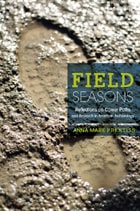
Field Seasons
Reflections on Career Paths and Research in American ArchaeologyAnna Marie Prentiss
University of Utah Press, 2012
In Field Seasons, Anna Marie Prentiss chronicles her experiences as an archaeologist, providing an insider’s look at the diverse cultures, personal agendas, and career pathways associated with American archaeology since the late twentieth century. As the narrative moves from her academic training to employment in government and private consulting to her eventual professorship at a state university, several themes emerge.
This book is about career paths. Its discussion of the diverse jobs within the archaeological profession makes it valuable to students seeking guidance about their career options. It also provides insight into the cultures of American archaeology, a discipline with many schools of thought and unique subcultures. The world of archaeological field technicians is quite different from that of government bureaucrats or academics. Prentiss also explores the elements of cultural change within archaeology while she reflects on her personal evolution throughout her thirty years within the discipline.
The book’s unique personal assessment of the state of American archaeology will appeal to a broad swath of students and professionals. Students will find it an entertaining road map to possible careers while professionals will find plenty of scholarly material concerning ethics, archaeological theory, and interpretations of the archaeological record.

Fields of Play
Constructing an Academic LifeRichardson, Laurel
Rutgers University Press, 1997
Deeply engaging, movingly written with grace, elegance, and clarity, the book stimulates readers to situate their own writing in personal, social, and political contexts.
Fierce Solitude
A Life of John Gould FletcherBen Johnson
University of Arkansas Press, 1993
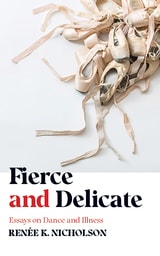
Fierce and Delicate
Essays on Dance and IllnessRenée K. Nicholson
West Virginia University Press, 2021
Renée Nicholson’s professional training in ballet had both moments of magnificence and moments of torment, from fittings of elaborate platter tutus to strange language barriers and unrealistic expectations of the body. In Fierce and Delicate, she looks back on the often confused and driven self she had been shaped into—always away from home, with friends who were also rivals, influenced by teachers in ways sometimes productive and at other times bordering on sadistic—and finds beauty in the small roles she performed. When, inevitably, Nicholson moved on from dancing, severed from her first love by illness, she discovered that she retained the lyricism and narrative of ballet itself as she negotiated life with rheumatoid arthritis.
An intentionally fractured memoir-in-essays, Fierce and Delicate navigates the traditional geographies of South Florida, northern Michigan, New York City, Milwaukee, West Virginia, and also geographies of the body—long, supple limbs; knee replacements; remembered bodies and actual. It is a book about the world of professional dance and also about living with chronic disease, about being shattered yet realizing the power to assemble oneself again, in a new way.
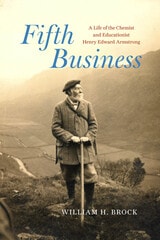
Fifth Business
A Life of the Chemist and Educationist Henry Edward ArmstrongWilliam H. Brock
University of Chicago Press, 2025
Fifth Business is a biography of the English chemist, educator, and scientific critic Henry Edward Armstrong. Today, Armstrong, who was a central figure in the development of the science of chemistry between 1885 and 1914, is more remembered for his campaigns to improve the teaching of chemistry, and science generally, and less for his theory of residual affinity and reverse electrolysis—or his hostility toward physical chemistry. However, right up until his retirement, Armstrong was a significant and prolific organic chemist, as well as a major figure in the academic and social life of the Chemical Society.
Fifth Business is structured as chronologically as possible, with Armstrong’s life and achievements as an active chemist in Part I (1848–1911) and as a critic in his long retirement in Part II (1911–1937). Brock’s authoritative biography provides a unique inside look at its subject, allowing us to better understand the history of British science, scientific institutions, scientific education, pedagogical theory, and social relations of science during the last third of the nineteenth century and the first third of the twentieth.
Fifty Cents and a Box Top
The Creative Life of Nashville Session Musician Charlie McCoyCharlie McCoy
West Virginia University Press, 2017
Fifty Years Below Zero
A Lifetime of Adventure in the Far NorthCharles Brower
University of Alaska Press, 1994
Fighter in Velvet Gloves
Alaska Civil Rights Hero Elizabeth PeratrovichAnnie Boochever with Roy Peratrovich Jr.
University of Alaska Press, 2019
In 1945, Peratrovich stood before the Alaska Territorial Legislative Session and gave a powerful speech about her childhood and her experiences being treated as a second-class citizen. Her heartfelt testimony led to the passing of the landmark Alaska Anti-Discrimination Act, America’s first civil rights legislation. Today, Alaska celebrates Elizabeth Peratrovich Day every February 16, and she was honored on the gold one-dollar coin in 2020.
Annie Boochever worked with Elizabeth’s eldest son, Roy Peratrovich Jr., to bring Elizabeth’s story to life in the first book written for young teens on this remarkable Alaska Native woman.
Fighting Bob La Follette
The Righteous ReformerNancy C Unger
Wisconsin Historical Society Press, 2008
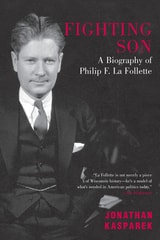
Fighting Son
A Biography of Philip F. La FolletteJonathan Kasparek
Wisconsin Historical Society Press, 2006
Former Wisconsin governor Philip F. La Follette forged a political path characterized by his progressive, innovative vision. Growing up in the shadow of revered senator "Fighting Bob" La Follette made for a politically charged childhood and laid the groundwork for Phil's emergence as a powerful figure in Wisconsin politics. A gregarious and fiery politician, Phil's efforts led to the passage of the country's first unemployment compensation act, aid programs for workers and farmers, and the reorganization of state government.
This approachable, comprehensive book traces La Follette's journey through public office as well as his life after the waning of the Progressive era. Phil La Follette’s is a history of continuing progressivism, of innovative solutions to social problems, and of loyalty to a political ethos that goes far beyond love of country. Kasparek's treatment of this Fighting Son is a monument not only to La Follette but to progressive politics in Wisconsin.
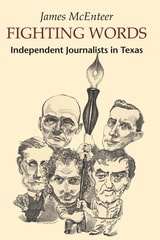
Fighting Words
Independent Journalists in TexasBy James McEnteer
University of Texas Press, 1992
Fighting Words profiles five journalists who published the truth as they saw it, no matter how their reporting angered politicians, social and religious leaders, or other journalists.
The five journalists are William Brann (1855–1898), Don Biggers (1868–1957), John Granbery (1874–1953), Archer Fullingim (1902–1984), and Stoney Burns [Brent Stein] (1942–2011). Though they lived in different eras, all these men dealt with issues that society continues to face—racism, official corruption, religious freedom, educational reform, political extremism of the left and right, the clash of urban and rural values, and the fear of change. Their lives and work constitute a unique, alternative perspective on Texas history and the history of journalism itself.
In addition to the troubling questions they raised on social issues, these independent journalists challenge us, as they challenged the mainline media of their own times, to define the function of journalism and to examine the mandate of the First Amendment. We may doubt the wisdom of some of their convictions, but not the courage they needed to express them in the face of ridicule, hostility, intimidation, and even death. More than the specific causes they fought for, the independents’ passion for truth and their absolute belief in free speech constitute their greatest legacy to us and to journalism.
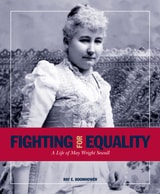
Fighting for Equality
A Life of May Wright SewallRay E. Boomhower
Indiana Historical Society Press, 2007
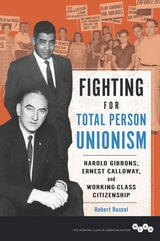
Fighting for Total Person Unionism
Harold Gibbons, Ernest Calloway, and Working-Class CitizenshipRobert Bussell
University of Illinois Press, 2015
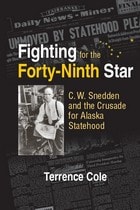
Fighting for the Forty-Ninth Star
C. W. Snedden and the Crusade for Alaska StatehoodTerrence Cole
University of Alaska Press, 2010
C.W. "Bill" Snedden, the publisher of America's farthest north daily newspaper, the Fairbanks Daily News-Miner, helped lead the battle of the Far North against the Deep South. Working behind the scenes with his protege, a young attorney named Ted Stevens, and a fellow Republican newspaperman, Secretary of Interior Fred Seaton, Snedden's "magnificent obsession" would open the door to development of the oil fields at Prudhoe Bay, inspire establishment of the Arctic Wildlife Range (now the Arctic National Wildlife Refuge), and add the forty-ninth star to the flag.
Fighting for the Forty-Ninth Star is the story of how the publisher of a little newspaper four thousand miles from Washington, D.C., helped convince Congress that Alaskans should be second-class citizens no more.
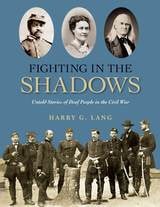
Fighting in the Shadows
Untold Stories of Deaf People in the Civil WarHarry G. Lang
Gallaudet University Press, 2017
Lang pieces together hundreds of stories, accompanied by numerous historical images, to reveal a powerful new perspective on the Civil War. These soldiers and civilians were not “disabled” by their deafness. On the contrary, despite the marginalization and paternalism they experienced in society, they were able to apply their skills and knowledge to support the causes in which they ardently believed.
Fighting in the Shadows is a story of how deaf civilians and soldiers put aside personal concerns about deafness, in spite of the discrimination they faced daily, in order to pursue a cause larger than themselves. Yet their stories have remained in the shadows, leaving most Americans, hearing and deaf, largely unaware of the deaf people who made significant contributions to the events that changed the course of our nation’s history. This book provides new insights into Deaf history as well as into mainstream interpretations of the Civil War.
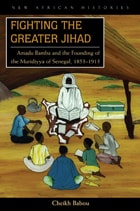
Fighting the Greater Jihad
Amadu Bamba and the Founding of the Muridiyya of Senegal, 1853–1913Cheikh Anta Babou
Ohio University Press, 2007
In Senegal, the Muridiyya, a large Islamic Sufi order, is the single most influential religious organization, including among its numbers the nation’s president. Yet little is known of this sect in the West. Drawn from a wide variety of archival, oral, and iconographic sources in Arabic, French, and Wolof, Fighting the Greater Jihad offers an astute analysis of the founding and development of the order and a biographical study of its founder, Cheikh Ahmadu Bamba Mbakke.
Cheikh Anta Babou explores the forging of Murid identity and pedagogy around the person and initiative of Amadu Bamba as well as the continuing reconstruction of this identity by more recent followers. He makes a compelling case for reexamining the history of Muslim institutions in Africa and elsewhere in order to appreciate believers’ motivation and initiatives, especially religious culture and education, beyond the narrow confines of political collaboration and resistance. Fighting the Greater Jihad also reveals how religious power is built at the intersection of genealogy, knowledge, and spiritual force, and how this power in turn affected colonial policy.
Fighting the Greater Jihad will dramatically alter the perspective from which anthropologists, historians, and political scientists study Muslim mystical orders.
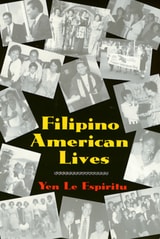
Filipino American Lives
Yen Le Espiritu
Temple University Press, 1995
Filipino Americans are now the second largest group of Asian Americans as well as the second largest immigrant group in the United States. As reflected in this collection, their lives represent the diversity of the immigrant experience and their narratives are a way to understand ethnic identity and Filipino American history.
Men and women, old and young, middle and working class, first and second generation, all openly discuss their changing sense of identity, the effects of generational and cultural differences on their families, and the role of community involvement in their lives. Pre- and post-1965 immigrants share their experiences, from the working students who came before WWII, to the manongs in the field, to the stewards and officers in the U.S. Navy, to the "brain drain" professionals, to the Filipinos born and raised in the United States.
As Yen Le Espiritu writes in the Introduction, "each of the narratives reveals ways in which Filipino American identity has been and continues to be shaped by a colonial history and a white-dominated culture. It is through recognizing how profoundly race has affected their lives that Filipino Americans forge their ethnic identities—identities that challenge stereotypes and undermine practices of cultural domination."
In the series Asian American History and Culture, edited by Sucheng Chan, David Palumbo-Liu, Michael Omi, K. Scott Wong, and Linda Trinh Võ.
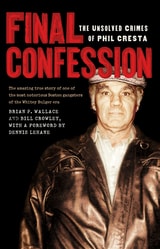
Final Confession
The Unsolved Crimes of Phil CrestaBrian P. Wallace and Bill Crowley
University Press of New England, 2013
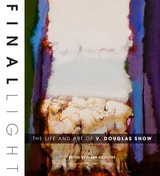
Final Light
The Life and Art of V. Douglas SnowFrank McEntire
University of Utah Press, 2013
A nationally recognized artist, Snow chose to stay in Utah where, when not teaching at the University of Utah, he roamed the southern Utah desert gaining inspiration from the red rock formations, especially the Cockscomb outside his studio near Capitol Reef National Park. Snow said, “Every artist probably wonders if he or she made the right decision to dig in to a certain place.” He dug into the landscape in and around Southern Utah and never regretted it. Just as “Tennessee Williams’s South, William Faulkner’s Mississippi, [or] John Steinbeck’s West Coast, formed their work,” the desert lands of the Colorado Plateau formed Snow’s. Their sense of place, “without provincialism,” said Snow “is what gives their art its enduring power.” Final Light will appeal to art historians and art lovers, especially those interested in abstract expressionism and the art of Utah, the West, and the Southwest.
Chosen by 15 Bytes, Utah's art magazine, as the most exceptional art book for 2014.
Final Negotiations
A Story of Love, Loss, and Chronic IllnessCarolyn Ellis
Temple University Press, 2018
Taking an autoethnographic perspective, Ellis focuses on her feeling and thinking self in relationships, narrating particular lived experiences that offer a gateway into understanding interpersonal and cultural life. In her new epilogue, “From New Endings to New Beginnings,” Ellis describes her changed identity and how Final Negotiations informs her life and her understanding of how she and her current partner grow older together. She hopes her book provides companionship and comfort to readers who also will suffer loss in their lives.
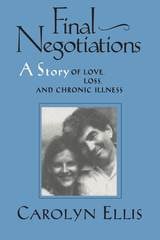
Final Negotiations
A Story of Love, and Chronic IllnessCarolyn Ellis
Temple University Press, 1995
When Carolyn Ellis, a graduate student, and Gene Weinstein, her Professor, fell in love, he was experiencing the first stages of emphysema. As he became increasingly disabled and immobile, these two intensely connected partners fought to maintain their love and to live a meaningful life. They learned to negotiate their daily lives in a way that enabled each of them to feel sufficiently autonomous—him not always like a patient and her not always like a caretaker. Writing as a sociologist, Ellis protrays their life together as a way to understand the complexities of romance, of living with a progressive illness, and, in the final negotiation and reversal of positions, of coping with the loss of a loved one.
This rare memoir full of often raw details and emotions becomes an intimate conversation about the intricacies of feeling and relating in a relationship. What Ellis calls experimental ethnography is a finely crafted, forthright, and daring story framed by the author's reflections on writing about and analyzing one's own life. Casting off the safe distance of most social science inquiry, she surrenders the private shroud of a complex relationship to bring sociology closer to literature.
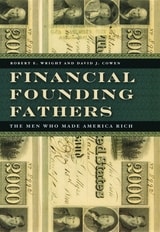
Financial Founding Fathers
The Men Who Made America RichRobert E. Wright and David J. Cowen
University of Chicago Press, 2006
Robert E. Wright and David J. Cowen here chronicle how a different group of founding fathers forged the wealth and institutions necessary to transform the American colonies from a diffuse alliance of contending business interests into one cohesive economic superpower. From Alexander Hamilton to Andrew Jackson, the authors focus on the lives of nine Americans in particular—some famous, some unknown, others misunderstood, but all among our nation’s financial founding fathers. Such men were instrumental in creating and nurturing a financial system that drove economic growth in the nascent United States because they were quick to realize that wealth was as crucial as the Constitution in securing the blessings of liberty and promoting the general welfare. The astonishing economic development made possible by our financial founding fathers was indispensable to the preservation of national unity and of support for a government that was then still a profoundly radical and delicate political experiment.
Grand in scope and vision, Financial Founding Fathers is an entertaining and inspiring history of the men who made America rich and steered her toward greatness.
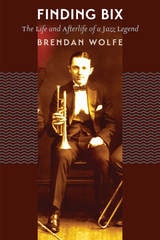
Finding Bix
The Life and Afterlife of a Jazz LegendBrendan Wolfe
University of Iowa Press, 2017
A native of Beiderbecke’s hometown of Davenport, Iowa, Wolfe grew up seeing Bix’s iconic portrait on everything from posters to parking garages. He never heard his music, though, until cast to play a bit part in an Italian biopic filmed in Davenport. Then, after writing a newspaper review of a book about Beiderbecke, Wolfe unexpectedly received a letter from the late musician's nephew scolding him for getting a number of facts wrong. This is where Finding Bix begins: in Wolfe's good-faith attempt to get the facts right.
What follows, though, is anything but straightforward, as Wolfe discovers Bix Beiderbecke to be at the heart of furious and ever-timely disputes over addiction, race and the origins of jazz, sex, and the influence of commerce on art. He also uncovers proof that the only newspaper interview Bix gave in his lifetime was a fraud, almost entirely plagiarized from several different sources. In fact, Wolfe comes to realize that the closer he seems to get to Bix, the more the legend retreats.
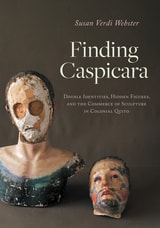
Finding Caspicara
Double Identities, Hidden Figures, and the Commerce of Sculpture in Colonial QuitoSusan Verdi Webster
University of Texas Press, 2024
2026 Eleanor Tufts Award, Society for Iberian Global Art, College Art Association
An examination of sculpture and authorship in eighteenth-century Quito that documents Caspicara as a participant in the innovative artistic production of the city’s workshops and its widespread commerce of polychrome sculptures.
Who is Caspicara? Nothing is known of Caspicara’s life, and not a single sculpture has been documented as his work. Yet traditional histories laud him as a prolific Indigenous sculptor in eighteenth-century Quito who created exquisite polychrome figures and became a national artistic icon. Drawing on extensive archival, historical, and object research, Susan Verdi Webster peels away layers of historiographical fabrication to reveal what we do and do not know about Caspicara and his work.
Rather than being a solitary master, Caspicara collaborated with other, largely Indigenous artists in Quito’s protoindustrial workshops, manufacturing sculptures now credited to him alone. The high quality of Quito sculptures produced by anonymous artists turned the city into a hub of wide-ranging commerce in religious icons. The art world and post-independence Ecuadorians have lionized the one named sculptor, Caspicara, according to the Western model of the artist-genius, amplifying the market for works bearing his name and creating a national hero on par with European masters. Lost in this process were the artists themselves. Webster returns to their world, detailing their methods and labor and, for the first time, documenting a sculpture made by Caspicara.
Finding Freedom
The Untold Story of Joshua Glover, Runaway SlaveWalter T. McDonald
Wisconsin Historical Society Press, 2007
"Shall a man be dragged back to Slavery from our Free Soil, without an open trial of his right to Liberty?" —Handbill circulated in Milwaukee on March 11, 1854
In Finding Freedom, Ruby West Jackson and Walter T. McDonald provide readers with the first narrative account of the life of Joshua Glover, the runaway slave who was famously broken out of jail by thousands of Wisconsin abolitionists in 1854. Employing original research, the authors chronicle Glover's days as a slave in St. Louis, his violent capture and thrilling escape in Milwaukee, his journey on the Underground Railroad, and his 33 years of freedom in rural Canada.
While Jackson and McDonald demonstrate how the catalytic "Glover incident" captured national attention—pitting the proud state of Wisconsin against the Supreme Court and adding fuel to the pre-Civil War fire—their primary focus is on the ordinary citizens, both black and white, with whom Joshua Glover interacted. A bittersweet story of bravery and compassion, Finding Freedom provides the first full picture of the man for whom so many fought, and around whom so much history was made.
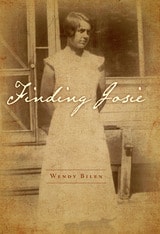
Finding Josie
Wendy Bilen
Wisconsin Historical Society Press, 2008
With a focus squarely on the Midwest, Wendy Bilen pieces together the history of her grandmother, Josie Broadhead, born in 1911 and raised on the North Dakota prairie. Josie married a Wisconsin farmer and moved to a large dairy farm outside La Crosse; along the way she began taking in people in need of a home: ". . . beggars and drunks and children of drunks, mentally ill children and children with mentally ill parents. Brothers and cousins and sisters and in-laws and strangers."
By taking on these challenges that no one else wanted, Josie left an almost mythical legacy. Years after Josie's death, Bilen embarks on a journey to unearth Josie's story and quickly realizes that the search is about her, too. As she discovers her grandmother's complicated nature ("a woman proud and humble, loving and unaffectionate, strict and visionary, joyful and troubled, a woman held together by contradictions like an arch and its capstone"), she learns much about herself and her own choices. And as she breathes life into Josie and her family, friends, and neighbors, the author evokes a powerful sense of place of small towns and farms, of prairie, of Josie's home, all of which feel both fresh and satisfyingly familiar.
Much more than mere memoir or family history, this dual story about Bilen's journey illuminates the surprising ways our lives intersect with our ancestors'. An extraordinary story about a seemingly ordinary woman, Finding Josie will inspire readers to explore their own family history in their own way.
Finding Mars
Ned Rozell
University of Alaska Press, 2011
Finding Querencia
Essays from In-BetweenHarrison Candelaria Fletcher
The Ohio State University Press, 2022
With its roots in the Spanish verb querer—“to want, to love”—the term querencia has been called untranslatable but has come to mean a place of safety and belonging, that which we yearn for when we yearn for home. In this striking essay collection, Harrison Candelaria Fletcher shows that querencia is also a state of being: the peace that arises when we reconcile who we are. A New Mexican of mixed Latinx and white ethnicity, Candelaria Fletcher ventures into the fault lines of culture, landscape, and spirit to discover the source of his lifelong hauntings. Writing in the persona of coyote, New Mexican slang for “mixed,” he explores the hyphenated elements within himself, including his whiteness. Blending memory, imagination, form, and language, each essay spirals outward to investigate, accept, and embrace hybridity. Ultimately, Finding Querencia offers a new vocabulary of mixed-ness, a way to reconcile the crosscurrents of self and soul.
Finding True North
First-Hand Stories of the Booms that Built Modern AlaskaMolly Rettig
University of Alaska Press, 2021
Melting sea ice and rumbling volcanoes. Sled dogs racing through unnamed valleys.
These were the images that came to mind when Molly Rettig moved to Fairbanks, Alaska to work as a reporter at the local newspaper. An avid environmentalist, she couldn’t wait to explore the vast, untamed spaces that had largely been paved over on the east coast. But when her 72-year-old neighbor, Clutch, invites her on a tour of his gold mine—an 800-foot tunnel blasted into the side of his house–she begins to question many of her ideas about Alaska, and about herself.
In Finding True North, Rettig takes us on a gripping journey through Alaska's past that brings alive the state's magnificent country and its quirky, larger-than-life characters. She meets a trapper who harvests all she needs from the land, a bush pilot who taught himself how to fly, and an archaeologist who helped build an oil pipeline through pristine wilderness. While she learns how airplanes, mines, and oil fields have paved the way for newcomers like herself, she also stumbles upon a bigger question: what has this quest for Alaska’s natural resources actually cost, and how much more is at stake?
This is a book about all the ways wild places teach us about ourselves. Rettig writes both playfully and honestly about how one place can be many things to many people—and how all of it can be true.
Finding the Middle Ground
Krestovskii, Tur, and the Power of Ambivalence in Nineteenth-Century Russian Women's ProseJehanne Gheith
Northwestern University Press, 2004
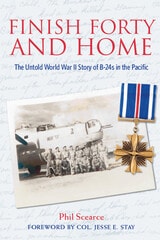
Finish Forty and Home
The Untold World War II Story of B-24s in the PacificPhil Scearce
University of North Texas Press, 2011
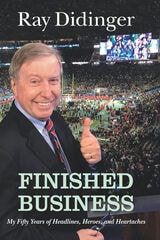
Finished Business
My Fifty Years of Headlines, Heroes, and HeartachesRay Didinger
Temple University Press, 2021
Ray Didinger opens his lively memoir Finished Business with the Philadelphia Eagles’ upset win in Super Bowl LII. When the Eagles finally hoist the Lombardi Trophy, Didinger does his best to straddle the emotions of a working reporter and a long-suffering Philly fan. His ability to do that is why he has built up such a loyal following.
Didinger began following the Eagles as a kid, hanging out in his grandfather’s bar in Southwest Philadelphia. He spent his summers at the team's training camp in Hershey. It was there he met his idol, flanker Tommy McDonald. He would later write a play, Tommy and Me, about their friendship and his efforts to see McDonald enshrined in the Pro Football Hall of Fame.
Didinger has been covering the Eagles as a newspaper columnist or TV analyst since 1970. Over the years, he wrote sports for the Philadelphia Bulletin and the Philadelphia Daily News. He later produced Emmy Award–winning documentaries for NFL Films before transitioning to sports talk radio and TV analysis.
In five decades, across multiple media platforms, he has interviewed everyone from Hank Aaron, Wayne Gretzky, Muhammad Ali, Julius Erving, Jack Nicklaus, to Mike Schmidt, as well as writing film scripts for Hollywood stars such as Bruce Willis and Alec Baldwin. He went to the White House with the U.S. Olympic team and even explored the bizarre world of professional wrestling.
His stories, told in his familiar, breezy style, capture his enthusiasm for sports and his affection for the fans who still mourn the pennant that eluded the Phillies in 1964. Didinger has become synonymous with Philadelphia sports, and his memoir is as passionate as an autumn Sunday at Lincoln Financial Field.
Fireweed
A Political AutobiographyGerda Lerner
Temple University Press, 2003
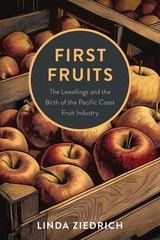
First Fruits
The Lewellings and the Birth of the Pacific Coast Fruit IndustryLinda Ziedrich
Oregon State University Press, 2025
2025 Choice Outstanding Academic Title
First Fruits offers a fascinating look at the lives of Pacific Coast horticulturists Henderson, Jonathan, and Seth Lewelling. Traveling across the Overland Trail—Henderson to Oregon in 1847, with a wagonload of fruit trees, and Seth and John to California three years later—the brothers would establish themselves as pioneers in the West’s growing fruit industry. By recounting how Henderson planted the first orchard of grafted fruit trees in Oregon, how Seth originated the Black Republican and Bing cherries, and how John led the development of the Napa Valley wine industry, First Fruits preserves the Lewellings’ place in history.
However, the Lewellings were not simply planters, grafters, and breeders. They were also adventurers, colonists, gold seekers, reformists, and explorers—experiencing firsthand the westward expansion of the nation. Their stories provide a unique glimpse into the social, economic, and political history of the day. From their Quaker upbringing in North Carolina and Indiana to Henderson’s attempt to start a utopian colony in Honduras, John’s efforts to grow the Grange in California, and Seth’s contribution to democratic reforms in Oregon, the Lewellings’ legacy extends far beyond their agricultural endeavors.
In the first biography to reclaim the brothers’ histories, Linda Ziedrich splendidly captures their dedicated support of one another and their communities, their contributions to the development of the modern fruit industry, and their lasting influence on the cultivation of fruits synonymous with the Pacific Coast region.
First Ladies and the Press
The Unfinished Partnership of the Media AgeMaurine H. Beasley
Northwestern University Press, 2005
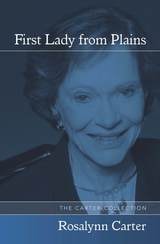
First Lady from Plains
Rosalynn Carter
University of Arkansas Press, 1994
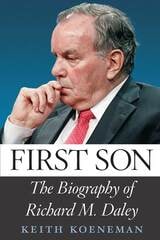
First Son
The Biography of Richard M. DaleyKeith Koeneman
University of Chicago Press, 2013
"Mayor Richard M. Daley dropped the bomb at a routine news conference at City Hall on Tuesday. With no prelude or fanfare, Mr. Daley announced that he would not seek re-election when his term expires next year. 'Simply put, it's time,' he said." New York Times, September 7, 2010
With those four words, an era ended. After twenty-two years, the longest-serving and most powerful mayor in the history of Chicago—and, arguably, America—stepped down, leaving behind a city that was utterly transformed, and a complicated legacy we are only beginning to evaluate.
With Koeneman as our guide, we follow young Daley from his beginnings as an average Bridgeport kid thought to lack his father's talent and charisma to his unlikely transformation into an iron-fisted leader. Daley not only escaped the giant shadow of his father but also transformed Chicago from a gritty, post-industrial Midwestern capital into a beautiful, sophisticated global city widely recognized as a model for innovative metropolises throughout the world.
But in spite of his many accomplishments, Richard M. Daley's record is far from flawless. First Son sets the dramatic improvement of certain parts of the city against the persistent realities of crime, financial stress , failing public housing, and dysfunctional schools. And it reveals that while in many ways Daley broke with the machine politics of his father, he continued to reward loyalty with favors, use the resources of city government to overwhelm opponents, and tolerate political corruption.
A nuanced portrait of a complex man, First Son shows Daley to be sensitive yet tough, impatient yet persistent, a street-smart fighter and detail-driven policy expert who not only ran Chicago, but was Chicago.
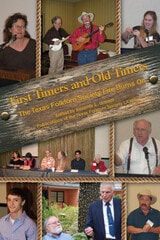
First Timers and Old Timers
Kenneth L. Untiedt
University of North Texas Press, 2012
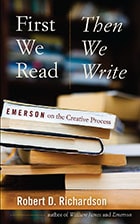
First We Read, Then We Write
Emerson on the Creative ProcessRobert D. Richardson
University of Iowa Press, 2009
Writing was the central passion of Emerson’s life. While his thoughts on the craft are well developed in “The Poet,” “The American Scholar,” Nature, “Goethe,” and “Persian Poetry,” less well known are the many pages in his private journals devoted to the relationship between writing and reading. Here, for the first time, is the Concord Sage’s energetic, exuberant, and unconventional advice on the idea of writing, focused and distilled by the preeminent Emerson biographer at work today.
Emerson advised that “the way to write is to throw your body at the mark when your arrows are spent.” First We Read, Then We Write contains numerous such surprises—from “every word we speak is million-faced” to “talent alone cannot make a writer”—but it is no mere collection of aphorisms and exhortations. Instead, in Robert Richardson’s hands, the biographical and historical context in which Emerson worked becomes clear.
Emerson’s advice grew from his personal experience; in practically every moment of his adult life he was either preparing to write, trying to write, or writing. Richardson shows us an Emerson who is no granite bust but instead is a fully fleshed, creative person disarmingly willing to confront his own failures. Emerson urges his readers to try anything—strategies, tricks, makeshifts—speaking not only of the nuts and bolts of writing but also of the grain and sinew of his determination. Whether a writer by trade or a novice, every reader will find something to treasure in this volume. Fearlessly wrestling with “the birthing stage of art,” Emerson’s counsel on being a reader and writer will be read and reread for years to come.
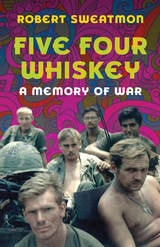
Five Four Whiskey
A Memory of WarRobert Sweatmon
Westholme Publishing, 2014
In late 1969, twenty-year-old Robert Sweatmon received a letter informing him that he had ten days to report to the United States Army. Like thousands of others, he had been drafted. Assigned as a rifleman with a mechanized unit, the author began a year-long odyssey in the Southeast Asian wilderness that would change his and his fellow soldiers’ lives forever.
Taking its title from the nighttime radio code call and response between base camp and those on ambush patrol, Five Four Whiskey: A Memory of War is a moving account of life as a combat soldier in the Vietnam War. Set mostly in the sprawling woods and rubber plantations northwest of Saigon, the author explains what his unit was asked to do and what obstacles they faced, including an elusive but deadly enemy, multiple kinds of booby traps, and antitank mines. The author, a notable television personality following the war, does not sensationalize his account; rather, his book allows a new generation to understand the emotional and physical pressures of the times. Coming of age in the maelstrom of civil rights and the free love culture, the author and his fellow soldiers saw their idealism quickly vaporize in the face of the grim realities of war. Here they learned to compartmentalize their lives as a way to survive, but it was their strong bonds that ultimately kept them from succumbing to the madness that surrounded them. Kept in the field for almost the entire time of his tour, the author was in a unit selected to conduct a clandestine reconnaissance in Cambodia and then lead the 1970 invasion, where he was wounded. Following his convalescence, he was sent to Nui Ba Den, the fabled ghost mountain haunted by the spirit of a Vietnamese princess, until he received his papers that he had completed his combat service. At that moment, his year-long mental wall between soldier and civilian fell away as he counted the last terrifying hours before he was safely out of Vietnam. A tour-de-force of military memoir, written in an objective and often literary prose, Five Four Whiskey perfectly captures how ordinary civilian-soldiers survived an ordeal set in one of the most turbulent times in American history.
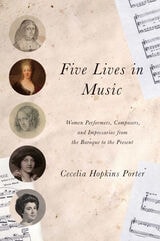
Five Lives in Music
Women Performers, Composers, and Impresarios from the Baroque to the PresentCecelia Hopkins Porter
University of Illinois Press, 2014
Representing a historical cross-section of performance and training in Western music since the seventeenth century, Five Lives in Music brings to light the private and performance lives of five remarkable women musicians and composers. Elegantly guiding readers through the Thirty Years War in central Europe, elite courts in Germany, urban salons in Paris, Nazi control of Germany and Austria, and American musical life today, as well as personal experiences of marriage, motherhood, and widowhood, Cecelia Hopkins Porter provides valuable insights into the culture in which each woman was active.
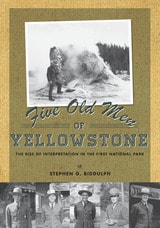
Five Old Men of Yellowstone
The Rise of Interpretation in the First NationalStephen Biddulph
University of Utah Press, 2013
Biddulph’s masterfully woven narrative—part biography, part historical narrative—offers both fascinating factual details about Yellowstone and charming colloquial story telling. The interpretive initiatives of the rangers—nature walks, campfire programs, game stalks, and auto caravans—are enlivened by the colorful personalities of the five men who conducted them. Historians will find that Five Old Men of Yellowstone provides a missing link in the park’s extensive literature, while its humor and sentiment make for an accessible book that will be enjoyed by park history buffs and curious visitors alike.
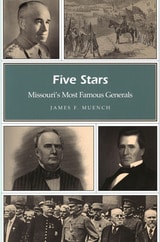
Five Stars
Missouri's Most Famous GeneralsJames F. Muench
University of Missouri Press, 2006
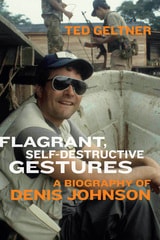
Flagrant, Self-Destructive Gestures
A Biography of Denis JohnsonTed Geltner
University of Iowa Press, 2025
The year was 1988, and Denis Johnson was at a low point. He caught malaria on a reporting trip into the jungles of the Philippines and was nearly pronounced dead. The disease left him unable to write. His second wife left him. He didn’t have enough money to pay his taxes. His publisher was waiting for a book that he hadn’t started. But in the life of Denis Johnson, when things were at their bleakest, something good was usually waiting around the next corner. This time, what emerged from the chaos was his masterpiece Jesus’ Son, a book that would tap into the zeitgeist of the 1990s and become a bible for Generation X and an American classic.
Flagrant, Self-Destructive Gestures tells the complete story of Johnson’s fascinating life, his thrill-seeking trips into war zones as a magazine correspondent, his battles with addiction, his live-it-before-you-write-it style of fiction. It follows the arc of his tremendous body of work as a novelist, journalist, poet, and playwright, and in the process recovers the true stories from the hazy myths that one of our most beloved, yet enigmatic, writers left behind.
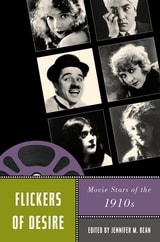
Flickers of Desire
Movie Stars of the 1910sBean, Jennifer M
Rutgers University Press, 2011
Flight Dreams
A Life in the Midwestern LandscapeLisa Knopp
University of Iowa Press, 1998
“When I was eleven the world was filled with birds,”writes Lisa Knopp of her girlhood in Burlington, Iowa. Picking up where she left off in her first book, Field of Vision, Knopp knits together sections of her life story through a pattern of images drawn from nature. The most prevalent of these unifying themes are metaphors of flight—birds, wind, moving upward and outward and across the midwestern landscape from Nebraska and Iowa to southern Illinois.
Reminiscent of Thoreau's introspective nature writing and Dillard's taut, personal prose, each chapter in Flight Dreams stands alone as a distinct narrative, yet each is linked by profoundly personal descriptions of dreams, the natural world, defining experiences, and chance encounters with people that later prove to be fateful. Part Eastern meditation, part dream sequence, part historical reconstruction, Flight Dreams testifies to a deep understanding of how the natural world—its visible and invisible elements—guides our destinies.
Flinders Petrie
A Life in ArchaeologyMargaret S. Drower
University of Wisconsin Press, 1995
Flinders Petrie has been called the “Father of Modern Egyptology”—and indeed he is one of the pioneers of modern archaeological methods. This fascinating biography of Petrie was first published to high acclaim in England in 1985. Margaret S. Drower, a student of Petrie’s in the early 1930s, traces his life from his boyhood, when he was already a budding scholar, through his stunning career in the deserts of Egypt to his death in Jerusalem at the age of eighty-nine. Drower combines her first-hand knowledge with Petrie’s own voluminous personal and professional diaries to forge a lively account of this influential and sometimes controversial figure.
Drower presents Petrie as he was: an enthusiastic eccentric, diligently plunging into the uncharted past of ancient Egypt. She tells not only of his spectacular finds, including the tombs of the first Pharaohs, the earliest alphabetic script, a Homer manuscript, and a collection of painted portraits on mummy cases, but also of Petrie’s important contributions to the science of modern archaeology, such as orderly record-keeping of the progress of a dig and the use of pottery sherds in historical dating. Petrie's careful academic methods often pitted him against such rival archaeologists as Amélineau, who boasted he had smashed the stone jars he could not carry away to be sold, and Maspero and Naville, who mangled a pyramid at El Kula they had vainly tried to break into.
Flowers, Guns, and Money
Joel Roberts Poinsett and the Paradoxes of American PatriotismLindsay Schakenbach Regele
University of Chicago Press, 2023
Joel Roberts Poinsett’s (1779–1851) brand of self-interested patriotism illuminates the paradoxes of the antebellum United States. He was a South Carolina investor and enslaver, a confidant of Andrew Jackson, and a secret agent in South America who fought surreptitiously in Chile’s War for Independence. He was an ambitious Congressman and Secretary of War who oversaw the ignominy of the Trail of Tears and orchestrated America’s longest and costliest war against Native Americans, yet also helped found the Smithsonian. In addition, he was a naturalist, after whom the poinsettia—which he appropriated while he was serving as the first US ambassador to Mexico—is now named.
As Lindsay Schakenbach Regele shows in Flowers, Guns, and Money, Poinsett personified a type of patriotism that emerged following the American Revolution, one in which statesmen served the nation by serving themselves, securing economic prosperity and military security while often prioritizing their own ambitions and financial interests. Whether waging war, opposing states’ rights yet supporting slavery, or pushing for agricultural and infrastructural improvements in his native South Carolina, Poinsett consistently acted in his own self-interest. By examining the man and his actions, Schakenbach Regele reveals an America defined by opportunity and violence, freedom and slavery, and nationalism and self-interest.
Fly in the Buttermilk
The Life Story of Cecil ReedCecil A. Reed
University of Iowa Press, 1993