Results by title
3745 books match the query 'Europe' and 147 start with f
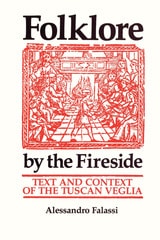
Folklore by the Fireside
Text and Context of the Tuscan VegliaBy Alessandro Falassi
University of Texas Press, 1980
For centuries, social life in rural Tuscany has centered around the veglia, an evening gathering of family and friends at the hearth. Folklore by the Fireside is a thorough and insightful study of this custom—from the tales, riddles, lullabies, and folk prayers performed as the small children are put to bed to the courtship songs and dances later in the evening to the anti-veglia male gossip, card games, and protest songs originating in the tavern.
Alessandro Falassi skillfully correlates the veglia to the rites of passage and family values of an agrarian society. Although the impact of mass media and other factors has tended to weaken the tradition, even today Tuscan children are taught to behave and adolescents are guided along the conventional path to adulthood, courtship, and marriage through veglia folklore.
This is the first work to deal systematically with Tuscan folklore from a semiotic and structural viewpoint and to examine the veglia as a means of handing down traditional values. It is important not only for its careful, detailed description but also for its rigorous methodology and theoretical richness.
Folklore in the Nordic World
Thomas A. DuBois
University of Wisconsin Press, 2024
From methods of preparing suovabiergu (smoked reindeer meat) in Sápmi, to celebrating graduation by “running the falls” at Uppsala University in Sweden, to massive folk music festivals in Finland and tales of supernatural visitors bestowing baby names in Iceland, folklore offers unique insights into the everyday life of Nordic society. The study of Nordic folklore began in the nineteenth century, when early folklorists imagined that the true character of a nation could be found among the tales of the peasantry. Today, the theories, tools, and institutions developed by influential folklorists in the Nordic region continue to lead the way in documentation, preservation, and analysis of folklore.
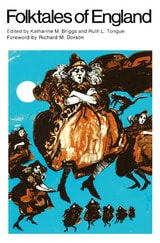
Folktales of England
Edited by Katharine M. Briggs and Ruth L. Tongue
University of Chicago Press, 1968
"This is a fine, homely feast, immediately intelligble. . . ."—Times Educational Supplement
". . . should be of special concern to Americans since many of the tales are parallel to or the source of our own folk stories."—Choice
"This is entertainment, to be sure, but is also part of man's attempts to comprehend his world."—Quartet
"Folktales of England is by all odds the most satisfactory general collection of folktales to come out of England since the advent of modern collection and classification techniques."—Ernest W. Baughman, Journal of American Folklore
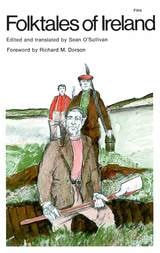
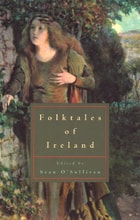
Folktales of Ireland
Edited by Sean O'Sullivan
University of Chicago Press, 1966
Folktales of Ireland
Edited by Sean O'Sullivan
University of Chicago Press, 1966
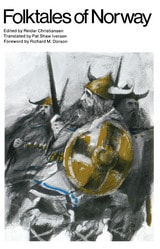
Folktales of Norway
Edited by Reidar Christiansen
University of Chicago Press, 1964
"The translation is excellent, retaining the traditional Norwegian style . . . the tales themselves will also appeal to the interested layman."—Library Journal
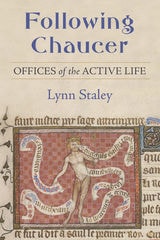
Following Chaucer
Offices of the Active LifeLynn Staley
University of Michigan Press, 2020
Following Chaucer: Offices of the Active Life explores three representative figures—the royal woman, the poet, and the merchant—in relation to the concept of “office,” which Cicero linked to the health of the republic, but Chaucer to that of the common good. Not usually conjoined to the term “office,” these three figures, situated in the active life, were not firmly mapped onto the body politic, which was used to figure a relational and ordered social body ruled by the king, the head. These figures are points of entry into a set of questions rooted in Chaucer’s understanding of his cultural and historical past and in his keen appraisal of the social dynamics of his own time that also reverberate in the centuries after Chaucer’s death.
Following Chaucer does not trace influence but uses Chaucer’s likely reading, circumstances, and literary and social affiliations as guides to understanding his poetry, within the context of late medieval English culture and the reshaping of the concept of these particular offices that suited the needs of a future whose dynamics he anticipated. His understanding of the importance of the Ciceronian concept of office within the active life, his profound cultural awareness, and his probing of the foundations of social change provide him with a keen sense of the persistent tensions and inconsistencies that are fundamental to his poetry.
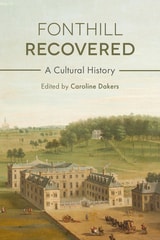
Fonthill Recovered
A Cultural HistoryEdited by Caroline Dakers
University College London, 2018
Fonthill Recovered draws on new research to explore the rich cultural history of this place where little remains today—a tower, a stable block, the ruins of what was once a kitchen, and an indentation in a field. The first half of the book traces the occupation of Fonthill from the Bronze Age to the twenty-first century. Some of the owners surpassed Beckford in terms of their wealth and political power—and even, in one case, their sexual proclivities. They include Charles I’s Chancellor of the Exchequer and the richest British commoner of the nineteenth century. The second half of the book consists of essays on specific topics, examining such crucial areas as the complex history of the designed landscape, the sources of the Beckfords’ wealth and their extensive art collection, and the recent appearance of the Abbey in a video game.
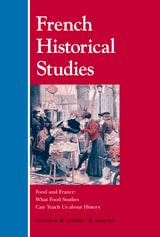
Food and France
What Food Studies Can Teach Us about HistoryErica J. Peters and Bertram M. Gordon, editors
Duke University Press, 0
This special issue offers a broad range of social and cultural insights into the history of French gastronomy. At a moment when French cuisine no longer dominates the world of fine dining, the history of French food has drawn increasing attention in the academic world. The contributors address topics spanning the seventeenth to the twentieth centuries, such as coffee’s relationship to slavery and exoticism; the promotion of terroir to an aspiring middle class; the contrast between the romanticized images of Parisian shop girls and their efforts to survive on street food in the early twentieth century; the "standard meal" imagined by nineteenth-century nutritionists and the divergent reality of meager lunches for the working class; and the inequitable experience of wartime deprivation. The articles in this issue both model how the study of the culture of food can ground our understanding of France’s place in the world and illuminate questions of nationalism, global networks, gender, race, ethnicity, and class.
Contributors: Martin Bruegel, Bertram M. Gordon, Julia Landweber, Philippe Meyzie, Kenneth Mouré, Erica J. Peters, Patricia A. Tilburg
Food for Change
The Politics and Values of Social MovementsJeff Pratt and Pete Luetchford
Pluto Press, 2013
Concern about our food system is growing, from the costs of industrial farming to the dominant role of supermarkets and recurring scandals about the origins and content of what we eat.
Food for Change documents the way alternative food movements respond to these concerns by trying to create more closed economic circuits within which people know where, how, and by whom their food is produced.
Jeff Pratt, Peter Luetchford and other contributors explore the key political and economic questions of food through the everyday experience and vivid insights of farmers and consumers, using fieldwork from case studies in four European countries (France, Spain, Italy and England). Food for Change is an insightful consideration of connections between food and wider economic relations and draws on a rich vein of anthropological writing on the topic.
Footloose in Farm Service
Autobiographical Recollections of John DickieMarjory Harper
Aberdeen University Press, 2013
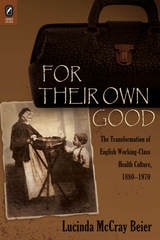
For Their Own Good
The Transformation of English Working-Class Health Culture, 1880–1970Lucinda Mccray Beier
The Ohio State University Press, 2008
For the Dying Calves
Beyond Literature: Oxford LecturesDurs Grünbein
Seagull Books, 2021
In his four Lord Weidenfeld Lectures held in Oxford in 2019, German poet Durs Grünbein dealt with a topic that has occupied his mind ever since he began to perceive his own position within the past of his nation, his linguistic community, and his family: How is it possible that history can determine the individual poetic imagination and segregate it into private niches? Shouldn’t poetry look at the world with its own sovereign eyes instead?
In the form of a collage or “photosynthesis,” in image and text, Grünbein lets the fundamental opposition between poetic license and almost overwhelming bondage to history appear in an exemplary way. From the seeming trifle of a stamp with the portrait of Adolf Hitler, he moves through the phenomenon of the “Führer’s streets” and into the inferno of aerial warfare. In the end, Grünbein argues that we are faced with the powerlessness of writing and the realization, valid to this day, that comes from confronting history. As he muses, “There is something beyond literature that questions all writing.”
For the Love of Cod
A Father and Son's Search for Norwegian HappinessEric Dregni
University of Minnesota Press, 2021
A journey to find Norway’s supposed bliss makes for a comic travelogue that asks, seriously, what makes Norwegians so damn happy—and does it translate?
Norway is usually near or at the top of the World Happiness Report. But is it really one of the happiest countries on Earth? Eric Dregni had his doubts. Years ago he and his wife had lived in this country his great-great-grandfather once fled. When their son Eilif was born there, the Norwegian government paid for the birth, gave them $5,000, and deposited $150 into their bank account every month, but surely happiness was more than a generous health care system. What about all those grim months without sun? When Eilif turned fifteen, father and son decided to go back together and investigate. For the Love of Cod is their droll report on the state of purported Norwegian bliss.
Arriving in May, a month of festivals and eternal sun, the Dregnis are thrust into Norway at its merriest—and into the reality of the astronomical cost of living, which forces them to find lodging with friends and relatives. But this gives them an inside look at the secrets to a better life. It’s not the massive amounts of money flowing from the North Sea oil fields but how these funds are distributed that fuels the Norwegian version of democratic socialism—resulting in miniscule differences between rich and poor. Locals introduce them to the principles underlying their avowed contentment, from an active environmentalism that translates into flyskam (flight shame), which keeps Norwegians in the family cabin for the long vacations prescribed by law and charges a 150 percent tax on gas guzzlers (which, Eilif observes, means more Teslas seen in one hour than in a year in Minnesota!).
From a passion for dugnad or community volunteerism and sakte or “slow,” a rejection of the mad pace of modernity, to the commodification of Viking history and the dark side of Black Metal music that turns the idea of quaint, traditional Norway upside down, this idiosyncratic father and son tour lets readers, free of flyskam, see how, or whether, Norwegian happiness translates.
Foragers and Farmers
Population Interaction and Agricultural Expansion in Prehistoric EuropeSusan Alling Gregg
University of Chicago Press, 1988
Gregg examines anthropological, ecological, and archaeological dimensions of prehistoric population interaction. She then examines the ecological requirements of both crops and livestock and, in order to identify an optimal farming strategy for Early Neolithic populations, develops a computer simulation to examine various resource mixes. Turning to the foragers, she models the effects that interaction with the farmers would have had on the foragers' subsistence-settlement system.
Supporting her model with archaeological, ecological, and ethnobotanical evidence from southwest Germany, Gregg shows that when foragers and farmers occur contemporaneously, both need to be considered before either can be understood. Theoretically and methodologically, her work builds upon earlier studies of optimal diet and foraging strategy, extending the model to food-producing populations. The applicability of Gregg's generalized model for both wild and domestic resources reaches far beyond her case study of Early Neolithic Germany; it will interest both Old and New World archaeologists.
Forbidden History
The State, Society, and the Regulation of Sexuality in Modern EuropeEdited by John C. Fout
University of Chicago Press, 1992
This anthology encompasses a broad range of essays on sexuality spanning European history from the fifteenth century to the present. The topics in this collection of fifteen essays have both historic importance and current relevance. All crucial issues in the regulation of sexuality are addressed, from incest to infanticide, from breast-feeding and women's sexuality to female prostitution, from pornography to reproductive politics, and from the first homosexual rights movement to AIDS.
Contributions from a diverse group of prominent scholars representing a variety of disciplines are included in this anthology. Essays by Randolph Trumbach on "Sex, Gender, and Identity in Modern Culture: Male Sodomy and Female Prostitution in Enlightenment London"; Ruth Perry on "Colonizing the Breast: Sexuality and Maternity in Eighteenth Century England"; Theo van der Meer on "Female Same-Sex Offenders in Late Eighteenth Century Amsterdam"; Robin Ann Sheets on "Pornography, Fairy Tales, and Feminism: Angela Carter's 'The Bloody Chamber'"; and James W. Jones on "Discourses on and of AIDS in West Germany, 1986-1990."
Offering the most up-to-date scholarship from a significant and growing field, this collection is essential for both students and faculty in social history, family history, women's and gender studies, gay studies, sociology and literature.
Forbidden Knowledge
Medicine, Science, and Censorship in Early Modern ItalyHannah Marcus
University of Chicago Press, 2020
Forbidden Knowledge explores the censorship of medical books from their proliferation in print through the prohibitions placed on them during the Counter-Reformation. How and why did books banned in Italy in the sixteenth century end up back on library shelves in the seventeenth? Historian Hannah Marcus uncovers how early modern physicians evaluated the utility of banned books and facilitated their continued circulation in conversation with Catholic authorities.
Through extensive archival research, Marcus highlights how talk of scientific utility, once thought to have begun during the Scientific Revolution, in fact, began earlier, emerging from ecclesiastical censorship and the desire to continue to use banned medical books. What’s more, this censorship in medicine, which preceded the Copernican debate in astronomy by sixty years, has had a lasting impact on how we talk about new and controversial developments in scientific knowledge. Beautiful illustrations accompany this masterful, timely book about the interplay between efforts at intellectual control and the utility of knowledge.

Forbidden Relatives
THE AMERICAN MYTH OF COUSIN MARRIAGEMartin Ottenheimer
University of Illinois Press, 1996
A social anthropologist, Martin Ottenheimer questioned U.S. laws against cousin marriage because his international research into marriage patterns showed no European countries prohibit such unions. He examines the historical development of U.S. laws governing marriage, contrasts them with European laws, and analyzes the genetic implications of first cousin marriage. Modern genetic evidence, Ottenheimer says, doesn't support the concept that children of these unions are at any special risk.
Ottenheimer's book, the only volume available that deals with kinship in this way, will challenge readers and give them much to consider and discuss.
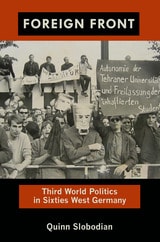
Foreign Front
Third World Politics in Sixties West GermanyQuinn Slobodian
Duke University Press, 2012
Forest Brothers
The Account of an Anti-Soviet Lithuanian Freedom Fighter, 1944–1948Translated and with an Introduction by Laima Vincė
Central European University Press, 2009
Foreword to The Past
A Cultural History of the Baltic PeopleEndre Bojtar
Central European University Press, 2000
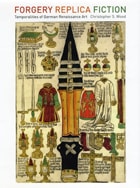
Forgery, Replica, Fiction
Temporalities of German Renaissance ArtChristopher S. Wood
University of Chicago Press, 2008
But Wood shows that over the course of the fifteenth and early sixteenth centuries, emerging replication technologies—such as woodcut, copper engraving, and movable type—altered the relationship between artifacts and time. Mechanization highlighted the artifice, materials, and individual authorship necessary to create an object, calling into question the replica’s ability to represent a history that was not its own. Meanwhile, print catalyzed the new discipline of archaeological scholarship, which began to draw sharp distinctions between true and false claims about the past. Ultimately, as forged replicas lost their value as historical evidence, they found a new identity as the intentionally fictional image-making we have come to understand as art.
Forgetful of Their Sex
Female Sanctity and Society, ca. 500-1100Jane Tibbetts Schulenburg
University of Chicago Press, 1998
"A tremendous piece of scholarship. . . . This journey through more than 2,000 saints is anything but dull. Along the way, Schulenburg informs our ideas regarding the role of saints in the medieval psyche, gender-specific identification, and the heroics of virginity." —Library Journal
"[This book] will be a kind of 'roots' experience for some readers. They will hear the voices, haunted and haunting, of their distant ancestors and understand more about themselves." —Christian Science Monitor
"This fascinating book reaches far beyond the history of Christianity to recreate the 'herstory' of a whole gender." —Kate Saunders, The Independent
Forging Communities
Food and Representation in Medieval and Early Modern Southwestern EuropeMontserrat Piera
University of Arkansas Press, 2018
This interdisciplinary study of food in medieval and early modern communities connects threads of history conventionally examined separately or in isolation. The intersection of foodstuffs with politics, religion, economics, and culture enhances our understanding of historical developments and cultural continuities through the centuries, giving insight that today, as much as in the past, we are what we eat and what we eat is never devoid of meaning.

Forging Deaf Education in Nineteenth-Century France
Biographical Sketches of Bébian, Sicard, Massieu, and ClercFerdinand Berthier
Gallaudet University Press, 2009
In 1811, deaf student Ferdinand Berthier commenced his education at the National Institute for the Deaf in Paris under its director Abbé Sicard and his teachers Auguste Bébian, Jean Massieu, and Laurent Clerc. Their tutelage eventually led Berthier to join the faculty at the Institute and become a life-long proponent of sign language and Deaf culture. Berthier earned fame for instituting the famous silent banquets in Paris in 1834. He also learned to advance his agenda by writing biographies of important figures who advocated sign over oralism to educate deaf French students. Forging Deaf Education in Nineteenth-Century France offers the first translation of Berthier’s biographical sketches of the four men above who influenced him most.
Berthier wrote first about Bébian in 1839, timed to advocate sign language for teaching deaf students after the death of the pro-oralism Institute Director Désiré Ordinaire. Berthier extolled Bébian’s linguistic acumen and his educational philosophy. In later sketches, however, he described Sicard and Massieu in positive terms, but also criticized them for supporting “methodical” signing that conformed to spoken language conventions. In contrast, he lauded Clerc in his portrayal for using “natural” signing to teach deaf students. The clarity of these translations will introduce a brand new audience to Berthier’s biographies shaped by his unswerving beliefs about Deaf French education.

Forging Fraternity in Late Medieval Society
The Palmers' Guild of LudlowRachael Harkes
University of London Press, 2025
Forging Fraternity in Late Medieval Society is the first major study of a national guild and its far-reaching influence. Rachael Harkes outlines the intricate role of the Palmers’ Guild of Ludlow, showing how its membership extended beyond urban centers into rural life and shaped local and regional governance on the eve of the Reformation. Through meticulous analysis of guild records and non-guild sources, this book confronts preconceived notions about these understudied institutions, demonstrating how they functioned as social and political networks that connected villages, households, city officials, and even the Crown.
By shedding light on the complex intersections of faith and community, Forging Fraternity in Late Medieval Society sheds new light on the forces that shaped late medieval England and Wales at a moment when traditional structures of power and belief were on the brink of transformation.

Forging an Integrated Europe
Barry Eichengreen and Jeffry Frieden, Editors
University of Michigan Press, 1998
Formations of Violence
The Narrative of the Body and Political Terror in Northern IrelandAllen Feldman
University of Chicago Press, 1991
"A sophisticated and persuasive late-modernist political analysis that consistently draws the reader into the narratives of the author and those of the people of violence in Northern Ireland to whom he talked. . . . Simply put, this book is a feast for the intellect"—Thomas M. Wilson, American Anthropologist
"One of the best books to have been written on Northern Ireland. . . . A highly imagination and significant book. Formations of Violence is an important addition to the literature on political violence."—David E. Schmitt, American Political Science Review
Forming Humanity
Redeeming the German Bildung TraditionJennifer A. Herdt
University of Chicago Press, 2019
Kant’s proclamation of humankind’s emergence from “self-incurred immaturity” left his contemporaries with a puzzle: What models should we use to sculpt ourselves if we no longer look to divine grace or received authorities? Deftly uncovering the roots of this question in Rhineland mysticism, Pietist introspection, and the rise of the bildungsroman, Jennifer A. Herdt reveals bildung, or ethical formation, as the key to post-Kantian thought. This was no simple process of secularization, in which human beings took responsibility for something they had earlier left in the hands of God. Rather, theorists of bildung, from Herder through Goethe to Hegel, championed human agency in self-determination while working out the social and political implications of our creation in the image of God. While bildung was invoked to justify racism and colonialism by stigmatizing those deemed resistant to self-cultivation, it also nourished ideals of dialogical encounter and mutual recognition. Herdt reveals how the project of forming humanity lives on in our ongoing efforts to grapple with this complicated legacy.
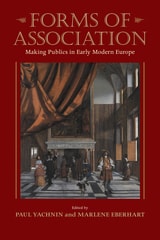
Forms of Association
Making Publics in Early Modern EuropePaul Yachnin
University of Massachusetts Press, 2015
In today's connected and interactive world, it is hard to imagine a time when cultural and intellectual interests did not lead people to associate with others who shared similar views and preoccupations. In this volume of essays, fifteen scholars explore how these kinds of relationships began to transform early modern European culture.
Forms of Association grows out of the “Making Publics: Media, Markets, and Association in Early Modern Europe” (MaPs) project, funded by the Social Sciences and Humanities Research Council of Canada. This scholarly initiative convened an interdisciplinary research team to consider how “publics”—new forms of association built on the shared interests of individuals—developed in Europe from 1500 to 1700. Drawing on a wide array of texts and histories, including the plays of Shakespeare, the legend of Robin Hood, paintings, and music as well as English gossip about France, the contributors develop a historical account of what publics were in early modern Europe. This collaborative study provides a dynamic way of understanding the political dimensions of artistic and intellectual works and opens the way toward a new history of early modernity.
Until his death in 2008, the great Renaissance scholar Richard Helgerson was a key participant in the MaPs project. The scholars featured in this volume originally met in Montreal to engage in a critical, commemorative conversation about Helgerson's work, the issues and questions coming out of the MaPs project, and how Helgerson's thinking advanced and could in turn be advanced by MaPs. This collection represents the fruits of that conversation.
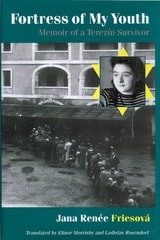
Fortress of My Youth
Memoir of a Terezín SurvivorJana Renée Friesová
University of Wisconsin Press, 2011
Jana Renée Friesová was fifteen when she was imprisoned by the Nazis in the Czech ghetto town of Terezín. Her memoir tells the poignantly familiar story of a young girl who, even under the most abominable circumstances, engages in intense adolescent friendships, worries with her companions over her looks, and falls in love.
Anne Frank’s diary ends with deportation to a concentration camp; Fortress of My Youth, in contrast, takes the reader deep into the horrors of daily life in a camp that were faced by a young girl and her family. But Friesová also tells of love, joy, sacrifice, and the people who shared in the most profound experiences of her life.
Foundations of Feeling
Theorizing Emotions in Late Medieval LiteratureJessica Rosenfeld
University of Chicago Press, 2026
A fresh reading of medieval literature as deeply concerned with thinking about feelings.
Are emotions primarily bodily or cognitive? Do “natural” emotions exist? What is the relationship between emotion and gender? In Foundations of Feeling, Jessica Rosenfeld shows how medieval literature informs contemporary ideas about how emotions operate. Ranging widely from love poetry to pastoral and theological writings, to political satire and more, Rosenfeld reveals a wealth of attention to emotions in both scientific and philosophical discourses of the time. By mining Latin, medieval French, and Middle English traditions, she relates medieval concerns to the most central, current debates (and impasses) in the fields of history of emotion and affect theory today, reframing how we think about and define feelings.

Foundations of the Portuguese Empire, 1415-1580
Bailey W. Diffie and George D. Winius
University of Minnesota Press, 1978
Foundations of the Portuguese Empire, 1415-1580 was first published in 1977. Minnesota Archive Editions uses digital technology to make long-unavailable books once again accessible, and are published unaltered from the original University of Minnesota Press editions.
This account traces the history of the Portuguese overseas discoveries, following the expansion into the Atlantic island, the Madeiras, and the Azores. It continues the account with the history of Portuguese discoveries along the African coast, at Guinea, the Congo, and Good Hope, then follows the voyages of Vasco da Gama to India and to Cabra, Brazil, and the expansion in the early years of the sixteen century to Malacca, China, and the East Indies. The volume presents not only a useful narrative of the spread of Portuguese empire but also new interpretations and analyses of the Portuguese overseas history.
Founders of the Future
The Science and Industry of Spanish ModernizationÓscar Iván Useche
Bucknell University Press, 2022
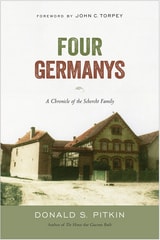
Four Germanys
A Chronicle of the Schorcht FamilyDonald S. Pitkin
Temple University Press, 2016
In this last book by the late Donald Pitkin, author of The House that Giacomo Built, comes a story of the Schorcht family, through whose fortunes and struggles one can see the transformations of Germany through the long twentieth century.
Each chapter of Four Germanys is reflective of generational rather than historical time. In 1922, Edwin Schorcht inherited his family farm, and in Part One, Pitkin traces the derivation of this farmstead. Part Two focuses on Schorcht’s children who came of age in Hitler’s Germany. Part Three has the Schorchts growing up in the Ulbricht years (1950–73) of the German Democratic Republic. The book concludes with the great-granddaughter, Maria, looking back to the past in relation to the new Germany that history had bequeathed her.
Ultimately, Four Germanys reflects the impact of critical historical events on ordinary East Germans while it also reveals how one particular family managed its own historical adaptation to these events.

Four Histories about Early Dutch Football, 1910-1920
Constructing DiscoursesNicholas Piercey
University College London, 2016
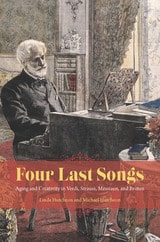
Four Last Songs
Aging and Creativity in Verdi, Strauss, Messiaen, and BrittenLinda Hutcheon and Michael Hutcheon
University of Chicago Press, 2015
Giuseppe Verdi (1813–1901), Richard Strauss (1864–1949), Olivier Messiaen (1908–92), and Benjamin Britten (1913–76) all wrote operas late in life, pieces that reveal unique responses to the challenges of growing older. Verdi’s Falstaff, his only comedic success, combated Richard Wagner’s influence by introducing young Italian composers to a new model of national music. Strauss, on the other hand, struggling with personal and political problems in Nazi Germany, composed the self-reflexive Capriccio, a “life review” of opera and his own legacy. Though it exhausted him physically and emotionally, Messiaen at the age of seventy-five finished his only opera, Saint François d’Assise, which marked the pinnacle of his career. Britten, meanwhile, suffering from heart problems, refused surgery until he had completed his masterpiece, Death in Venice. For all four composers, age, far from sapping their creative power, provided impetus for some of their best accomplishments.
With its deft treatment of these composers’ final years and works, Four Last Songs provides a valuable look at the challenges—and opportunities—that present themselves as artists grow older.

Four Shakespearean Period Pieces
Margreta de Grazia
University of Chicago Press, 2021
Yet recent theoretical work has called for their reappraisal. Anachronisms, previously condemned as errors in the order of time, are being hailed as alternatives to that order. Conversely chronology and periods, its mainstays, are now charged with having distorted the past they have been entrusted to represent, and secularization, once considered the driving force of the modern era, no longer holds sway over the past or the present.
In light of this reappraisal, can Shakespeare studies continue unshaken? This is the question Four Shakespearean Period Pieces takes up, devoting a chapter to each term: on the rise of anachronism, the chronologizing of the canon, the staging of plays “in period,” and the use of Shakespeare in modernity’s secularizing project.
To read these chapters is to come away newly alert to how these fraught concepts have served to regulate the canon’s afterlife. Margreta de Grazia does not entirely abandon them but deftly works around and against them to offer fresh insights on the reading, editing, and staging of the author at the heart of our literary canon.
Fragments and Assemblages
Forming Compilations of Medieval LondonArthur Bahr
University of Chicago Press, 2013
Fragments of Lives
Chronicles of the GulagJacques Rossi
Karolinum Press, 2018
An impassioned reminder to always question one’s beliefs, to have the courage to give up one’s illusions at the risk of one’s life, Fragments of Lives lays bare, with acute observations and biting wit, the falsity of the Soviet utopia that transformed Rossi’s home into a “huge Potemkin village, a farcical sham dissimulating oceans of mud and blood.”
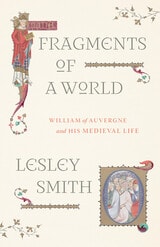
Fragments of a World
William of Auvergne and His Medieval LifeLesley Smith
University of Chicago Press, 2023
Today, William of Auvergne (1180?–1249) is remembered for his scholarship about the afterlife as well as the so-called Trial of the Talmud. But the medieval bishop of Paris also left behind nearly 600 sermons delivered to all manner of people—from the royal court to the poorest in his care. In Fragments of a World, Lesley Smith uses these sermons to paint a vivid picture of this extraordinary cleric, his parishioners, and their bustling world. The first modern biography of the influential teacher, bishop, and theologian, Fragments of a World casts a new image of William of Auvergne for our times—deeply attuned to both the spiritual and material needs of an ever-changing populace in the medieval city.

France and Algeria
A History of Decolonization and TransformationPhillip Naylor
University of Texas Press, 2024
An examination of the complicated history between France and Algeria since the latter’s independence.
While most related studies concentrate on the colonial era and Algeria's War of Independence, France and Algeria details the nations' postcolonial relationship. Phillip Naylor provides a philosophical approach, contending that France reformulated, rather than repudiated, “essential” strategic values during decolonization. It thus continued to pursue grandeur and independence, especially with regard to the Third World and Algeria, an essentialism that expedited France’s postcolonial transformation. But as a new nation, Algeria needed to pursue the “existential” project of self-definition. It became involved in state-building while also promulgating socialism, and it recognized how French oil concessions in the Sahara impeded its independence, leading to the industry's postcolonial decolonization. Finally, the postcolonial relationship has featured a human dimension involving immigrants, pieds-noirs (colonial settlers), and harkis (Algerian soldiers loyal to France), all of them central to bilateral relations.
In this revised and updated edition of his seminal work, first published over twenty years ago, Naylor expands his coverage of the decolonization era, drawing on new information while continuing to study the ever-evolving relationship between the two countries. These new additions expose the continually shifting relations of power, perception, and identity between the two states.
France and her Eastern Allies, 1919-1925
French-Czechoslovak-Polish Relations from the Paris Peace Conference in LocarnoPiotr S. Wandycz
University of Minnesota Press, 1962
France and her Eastern Allies, 1919–1925 was first published in 1962. Minnesota Archive Editions uses digital technology to make long-unavailable books once again accessible, and are published unaltered from the original University of Minnesota Press editions.
Relations between France, Czechoslovakia, and Poland occupied an important position in European diplomacy in the years between World War I and World War II. Beginning with the breakdown of the old political, social, and economic order on the Continent during the first World War, these relations went through many changes. This book deals with the crucial period from the Paris Peace Conference of 1919 to the signing of the Locarno Pact in 1925. During this time France attempted to establish an eastern barrier of buffer states with Poland and Czechoslovakia at the core, with the aim of keeping Germany and Bolshevik Russia apart. This, France hoped, would guarantee European peace and security. Although an effective eastern barrier was never realized, the attempt to create one was a worthy and important undertaking.
Professor Wandycz considers in detail the various aspects of the complex relationship between France and the two western Slav states — geographic, economic, social, and political. In addition, he provides a clear and interesting picture of some of the personalities involved. Through the use of hitherto unpublished source material, he throws new light on many events of general European diplomatic history as well as on Polish, French, and Czechoslovak foreign policy in particular.
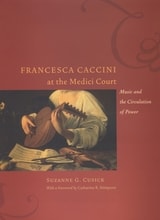
Francesca Caccini at the Medici Court
Music and the Circulation of PowerSuzanne G. Cusick
University of Chicago Press, 2009
Suzanne G. Cusick argues that Caccini’s career depended on the usefulness of her talents to the political agenda of Grand Duchess Christine de Lorraine, Tuscany’s de facto regent from 1606 to 1636. Drawing on Classical and feminist theory, Cusick shows how the music Caccini made for the Medici court sustained the culture that enabled Christine’s power, thereby also supporting the sexual and political aims of its women.
In bringing Caccini’s surprising story so vividly to life, Cusick ultimately illuminates how music making functioned in early modern Italy as a significant medium for the circulation of power.
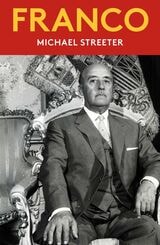
Franco
Michael Streeter
Haus Publishing, 2025
A narrative of the life of Francisco Franco, Spanish general and dictator.
Growing up in the wake of the Spanish military’s shattering defeat at the hands of the United States in 1898 over Cuba and having survived a bullet to the stomach while serving his country in Morocco, Francisco Franco’s fame and notoriety were eventually guaranteed by his ruthless pursuit of victory for the Nationalists in the Spanish Civil War.
Franco played a major role on the world stage until his death in 1975. At once intensely sentimental and affecting cool indifference at times of bad news, he emphasized the need to obey orders, the importance of individual bravery, absolute loyalty to the Fatherland, and the crucial role of the army. Franco was variously courted by the liberal democracies of Britain and France, the Fascist alliance of Hitler and Mussolini, and then by anti-communist administrations in Washington, but the memory of his successful policies, leading to rapid growth during a time of economic depression, is tempered by his government’s extreme repression of political opponents and perpetration of mass violence during the White Terror.
In this updated edition of Franco, featuring a new introduction by the author, Michael Streeter explores the Generalissimo’s legacy as the subject of a cult of personality in one of Europe’s longest-lasting modern dictatorships and considers his genesis, his successes (decades of relative stability and prosperity during a period of great European conflict), and the terrible cost at which they came.
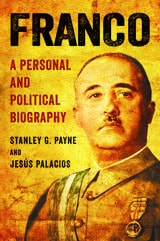
Franco
A Personal and Political BiographyStanley G. Payne and Jesús Palacios
University of Wisconsin Press, 2018
Franco: A Personal and Political Biography depicts his early life, explains his career and rise to prominence as an army officer who became Europe's youngest interwar brigadier general in 1926, and then discusses his role in the affairs of the troubled Second Spanish Republic (1931–36). Stanley G. Payne and Jesús Palacios examine in detail how Franco became dictator and how his leadership led to victory in the Spanish Civil War that consolidated his regime. They also explore Franco's role in the great repression that accompanied the Civil War—resulting in tens of thousands of executions—and examine at length his controversial role in World War II. This masterful biography highlights Franco's metamorphoses and adaptations to retain power as politics, culture, and economics shifted in the four decades of his dictatorship.
Best Books for General Audiences, selected by the American Association of School Librarians
Best Books for General Audiences, selected by the Public Library Reviewers
“An important book, destined to elicit a heated academic debate surrounding the man who ruled Spain for forty years and whose figure still casts a long shadow four decades after his death.”—Journal of Modern History
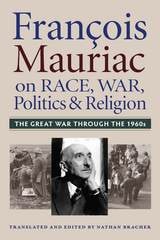
Francois Mauriac on Race, War, Politics and Religion
Nathan Bracher
Catholic University of America Press, 2016
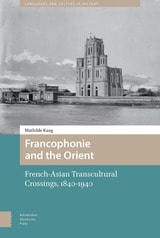
Francophonie and the Orient
French-Asian Transcultural Crossings (1840-1940)Mathilde Kang
Amsterdam University Press, 2018
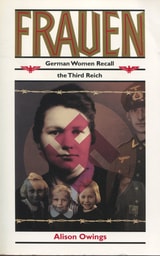
Frauen
German Women Recall the Third ReichOwings, Alison
Rutgers University Press, 1995
What were the women of Germany doing during the Third Reich? What were they thinking? And what do they have to say a half century later?
In Frauen we hear their voices––most for the first time. Alison Owings interviewed and here records the words of twenty-nine German women who were there: Working for the Resistance. Joining the Nazi Party. Outsmarting the Gestapo. Disliking a Jewish neighbor. Hiding a Jewish friend. Witnessing "Kristallnacht." Witnessing the firebombing of Dresden. Shooting at Allied planes. Welcoming Allied troops. Being a prisoner. And being a guard. The women recall their own and others' enthusiasm, doubt, fear, fury, cowardice, guilt, and anguish.
Alison Owings, in her pursuit of such memories, was invited into the homes of these women. Because she is neither Jewish nor German, and because she speaks fluent colloquial German, many of the women she interviewed felt comfortable enough with her to unlock the past. What they have to say will surprise Americans, just as they surprised the women themselves.
Not since Marcel Ophuls's controversial film The Sorrow and the Pity have we been on such intimate terms with "the enemy." In this case, the story is that of the women, those who did not make policy but were forced to participate in its effects and to witness its results. What they did and did not do is not just a reflection on them and their country––it also leads us to question what actions we might have taken in their place. The interviews do not allow for easy, smug answers.

Freaks of History
Two Performance TextsJames MacDonald
Intellect Books, 2017
MacDonald, who is cerebral palsied, recognizes that disability narratives are rarely written by and for disabled people. Therefore his plays, accompanied by critical essays and director’s notes, are a welcome addition to the emerging discourse of Crip theory, and essential reading for disability students and academics alike.