Results by title
3388 books match the query 'Fiction' and 135 start with f
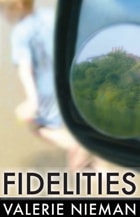
Fidelities
Valerie Nieman
West Virginia University Press, 2004
Fidelities is the first collection of eighteen short stories to be published by this multi-faceted author. The stories in Fidelities, which are mostly set in West Virginia, are both heartrending and beautiful. Nieman published her first novel, Neena Gathering, a post-apocalyptic science fiction novel, in 1988. She has also published two poetry chapbooks, Slipping out of Old Eve and How We Live. Her second fictional work, Survivors, was published in 2000.
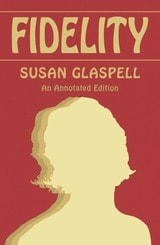
Fidelity
An Annotated EditionSusan Glaspell, edited by Kevin McMullen
Southern Illinois University Press, 2025
Recovering a lost feminist story of scandal and strength for a new generation
Out of print in the United States since its original publication in 1915, Susan Glaspell’s largely forgotten novel Fidelity tells the story of Ruth Holland, a young woman who returns to her small Midwestern hometown after eleven years’ absence. Forced home by the death of her father, Ruth must face a family and community that have largely turned against her following her affair with a married man.
Glaspell, mostly known as a playwright and for her founding of the Provincetown Players, was also an accomplished novelist. Inspired by events in Glaspell’s own life, Fidelity portrays Ruth’s struggle to find fulfillment, love, and purpose in a society that imposes rigid expectations and limitations on how a woman should live. Ruth is a woman torn between love and commitment to her family—and between love and commitment to herself. Glaspell’s narrative shifts between characters, offering glimpses through the community’s eyes of the ways that Ruth’s return forces residents to confront their beliefs and the impact that they have. In the vein of Chopin’s The Awakening and Flaubert’s Madame Bovary, Glaspell’s Fidelity holds an important place in the history of early twentieth-century feminist literature and is long overdue to be back in print.
Students at the University of Nebraska–Lincoln, under the guidance of Kevin McMullen, project manager of the Walt Whitman Archive, have resurrected this neglected novel. The text includes contemporary photographs of Susan Glaspell, a new introduction, and annotations throughout, which provide useful commentary for students and general readers alike.
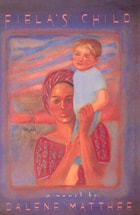
Fiela's Child
Dalene Matthee
University of Chicago Press, 1992
Set in nineteenth-century rural Africa, Fiela's Child tells the gripping story of Fiela Komoetie and a white, three-year old child, Benjamin, whom she finds crying on her doorstep. For nine years Fiela raises Benjamin as one of her own children. But when census takers discover Benjamin, they send him to an illiterate white family of woodcutters who claim him as their son. What follows is Benjamin's search for his identity and the fundamental changes affecting the white and black families who claim him.
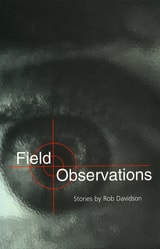
Field Observations
StoriesStories by Rob Davidson
University of Missouri Press, 2001
Field Observations, the debut fiction collection from Rob Davidson, contains stories about people who find themselves at difficult turning points in their lives—times when they are faced with hard choices, broken promises, and the fear of self-destruction. Davidson's characters are diverse: a retired math teacher, an auto repair worker, a technical writer, a nurse living overseas. What connects them is the way Davidson renders each character with essential human dignity, regardless of his or her flaws. This collection addresses such contemporary concerns as love relationships, cultural interaction, divorce, aging, and alcoholism in a lively, sometimes offbeat way.
In "Inventory"—winner of a 1997 AWP Intro Journals Award—the young narrator, fresh out of the army, struggles to take stock of his civilian life and assume responsibility for himself. An estranged wife, in "You Have to Say Something," competes for attention with her husband's manic approach to work, finding both solace and frustration in a new friend, a compulsive gift-giver. "A Private Life" renders a young Peace Corps volunteer grappling with her loneliness in a foreign country, with a sense of exposure and violation. In "What We Leave Behind," a college dropout and onetime golf prodigy finds himself dissatisfied with his current career as a vacuum cleaner salesman; after a quirky encounter with a client, he finds hope for a new beginning.
A recurrent motif in the stories is the presentation of characters who either tend to observe, even spy on, others, or who have the sense that they themselves are being watched. The notion of a passive observer extends to several characters who seem to treat their own lives as subject for observation rather than action, frequently persisting in patterns of behavior that are clearly destructive.
Rendered in clean, smooth prose with sharply observed details and driven by Davidson's fine ear for dialogue, these stories poignantly capture the difficult in-between states that trouble people every day. Fully defined and evocatively written, this collection addresses important real-life issues and concerns.
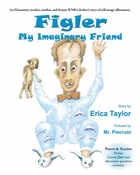
Figler
My Imaginary FriendErica Taylor
Parkhurst Brothers, Inc., 2014
Jeanine Wood - Distance Learning Coordinator Northeast Arkansas Education Cooperative Walnut Ridge, Arkansas
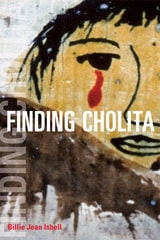
Finding Cholita
Billie Jean Isbell
University of Illinois Press, 2008
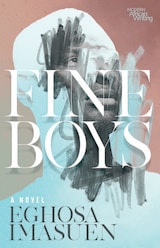
Fine Boys
A NovelEghosa Imasuen
Ohio University Press, 2021
A coming-of-age tale told from the perspective of Nigeria’s Generation X, caught amid the throes of a nascent pro-democracy movement, demoralizing corruption, and campus violence.
Ewaen is a Nigerian teenager, bored at home in Warri and eager to flee from his parents’ unhappy marriage and incessant quarreling. When Ewaen is admitted to the University of Benin, he makes new friends who, like him, are excited about their newfound independence. They hang out in parking lots, trading gibes in pidgin and English and discovering the pleasures that freedom affords them. But when university strikes begin and ruthlessly violent confraternities unleash mayhem on their campus, Ewaen and his new friends must learn to adapt—or risk becoming the confras' next unwilling recruits.
In his trademark witty, colloquial style, critically acclaimed author Eghosa Imasuen presents everyday Nigerian life against the backdrop of the pro-democracy riots of the 1980s and 1990s, the lost hopes of June 12 (Nigeria’s Democracy Day), and the terror of the Abacha years. Fine Boys is a chronicle of time, not just in Nigeria, but also for its budding post-Biafran generation.
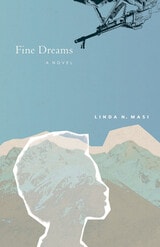
Fine Dreams
Linda N. Masi
University of Massachusetts Press, 2024
Longlisted for the 2025 Nigeria Prize for Literature
A 2024 Foreword INDIES Finalist
Set in a fictional town, at a fictional school, Linda N. Masi’s debut novel, Fine Dreams, rewrites myth and history. Framed by a ghost’s first-person narrative, the book centers on four young friends, the stars of their school’s track team. While studying for exams, they are kidnapped and taken to a terrorist encampment. Two are claimed as “wives” by their captors, one is forced to wear a suicide vest, and each is subjected to appalling violence and terror. While their stories resonate with a widely publicized 2014 abduction, these four young women could have been taken in any of the many incidents that have plagued the Nigerian people for years.
Even though they are abducted and abused by men in power and forced to survive in a dark place like Persephone, Masi’s protagonists offer new endings for Persephone’s story. In Masi’s telling, these resilient young women recover their dreams and hopes to live in daylight once again. No matter where they travel or where they stay, they gain self-determination and reclaim their dreams.
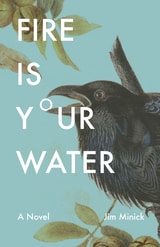
Fire Is Your Water
A NovelJim Minick
Ohio University Press, 2001
Sacred chants are Ada Franklin’s power and her medicine. By saying them, she can remove warts, stanch bleeding, and draw the fire from burns. At age twenty, her reputation as a faith healer defines her in her rural Pennsylvania community. But on the day in 1953 that her family’s barn is consumed by flame, her identity as a healer is upended. The heat, the roar of the blaze, and the bellows of the trapped cows change Ada. For the first time, she fears death and—for the first time—she doubts God. With her belief goes her power to heal. Then Ada meets an agnostic named Will Burk and his pet raven, Cicero.
Fire Is Your Water is acclaimed memoirist Jim Minick’s first novel. Built on magical realism and social observation in equal measure, it never gives way to sentimentality and provides an insider’s glimpse into the culture of Appalachia. A jealous raven, a Greek chorus of one, punctuates the story with its judgments on the characters and their actions, until a tragic accident brings Ada and Will together in a deeper connection.
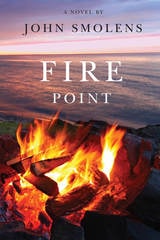
Fire Point
John Smolens
Michigan State University Press, 2017
A story of love, vengeance, and renewal, Fire Point depicts the young couple’s attempt to rebuild their lives. But when Hannah’s former boyfriend Sean Colby returns home after a mysterious early discharge from the army, he cannot accept the fact that she has a new lover and commits a series of increasingly violent acts against Hannah, Martin, and the house that has come to represent their future.
Fire Road
Donald Anderson
University of Iowa Press, 2001
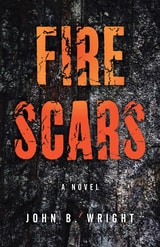
Fire Scars
A NovelJohn B. Wright
University of Nevada Press, 2023
In John B. Wright’s debut environmental mystery, Matt Solberg is charged with discovering who is lighting fires in the forests that surround Missoula, Montana. A geographer with a deep personal need to bring people out of danger, Matt leads a search and rescue team whose job is to head directly into the mouth of hell, hiking into blazing backcountry to find missing residents. Matt and his team not only rely on their hard-won knowledge of Montana’s wild landscape, but also on Matt’s mentor, Dr. Bill Knight, a fire ecologist who understands the burning beast better than anyone.
When a suspicious fire destroys the mansion of a movie star, Matt must hike in to find his missing daughter and save her from the chaos. Then fires begin to explode everywhere as climate change drives temperatures over 100 degrees and rain refuses to fall, threatening thousands of homes. Who is setting these fires? Is it the Montana Tree Monkeys, an eco-radical group determined to scare off the newcomers? Or is it a retired smokejumper with an axe to grind about the encroaching mansions? Could it be Paladin, a shadowy figure leaving strange clues around the state? It’s Matt’s mission to find answers to these questions during a summer of heat, smoke, and unimaginable loss. Weaving together gripping drama and intriguing fire science, Fire Scars reveals the physical and psychological wounds we all carry—and the power we have to overcome.
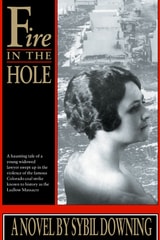
Fire in the Hole
Sybil Downing
University Press of Colorado, 1996
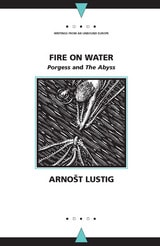
Fire on Water
Porgess and The AbyssArnost Lustig
Northwestern University Press, 2005
It occurred to me why I was able to forgive the Italians, but never the Germans. Was it because the Italians never slept on mattresses stuffed with the hair of Luster Leibling or Weltfeind Flusser?
In this pair of short novels, Arnošt Lustig continues his lifelong project of creating a universe-at once concrete and dreamlike-to examine the horrors of the Holocaust and the impossible burden of living as a survivor.
The Abyss is the fragmented memories of David Wiesenthal, aged twenty, tortured by what he has witnessed and by the knowledge that luck-not skill, not courage, certainly not goodness-separated the survivors from the doomed. He seeks solace remembering the women he's loved or desired, even the one who represents his death.
In Porgess, the narrator recounts the life of the title character, "the most handsome boy in Jewish Prague" who was paralyzed on the last day of World War II. The two discuss their mutual fascinations-women, jazz, the significance of numbers-in sometimes bitter, sometimes sardonic voices, but always with the specters of the dead and the guilt of survival close at hand.
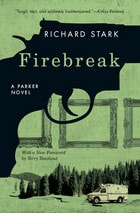
Firebreak
A Parker NovelRichard Stark
University of Chicago Press, 2011
Parker becomes a lover of art (to heist, that is) in this slam-bang entry in the classic hard-boiled crime series
Richard Stark's Parker novels are the hardest of hard-boiled, classic crime novels where the heists are huge, the body counts are high, and the bad guys usually win.
The Parker novels have been a huge influence on countless writers and filmmakers, including Quentin Tarantino, Stephen King, George Pelecanos, Colson Whitehead, Lucy Sante, John Banville, and many more. Their stripped-down language and hard-as-nails amorality create an unforgettable world where the next score could be the big one, but your next mistake could also be your last. There's nothing else like them.
Between Parker’s 1961 debut and his return in the late 1990s, the whole world of crime changed. Now fake IDs and credit cards had to be purchased from specialists; increasingly sophisticated policing made escape and evasion tougher; and, worst of all, money had gone digital—the days of cash-stuffed payroll trucks were long gone.
But cash isn’t everything: Firebreak takes Parker to a palatial Montana “hunting lodge” where a dot-com millionaire hides a gallery of stolen old masters—which will fetch Parker a pretty penny if his team can just get it past the mansion’s tight security. The forests of Montana are an inhospitable place for a heister when well-laid plans fall apart, but no matter how untamed the wilderness, Parker’s guaranteed to be the most dangerous predator around.
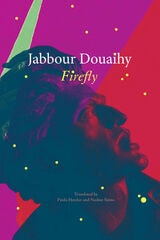
Firefly
Jabbour Douaihy
Seagull Books, 2022
Firefly paints a searing portrait of the city of Beirut at the outbreak of the Lebanese Civil War in the early 1970s, as seen through the eyes of its simple, yet perplexing, protagonist, Nizam al-Alami. On Nizam’s national ID card, no religion is listed. Muslim by birth, he is Christian by baptism. As a young boy, he found his way into an orchard while playing, and its owners, Touma and Rakheema, instantly fell for him and agreed to raise him as their own, as a Christian, without much resistance from his Muslim parents.
When he is grown, Nizam makes his way to Beirut to study law. Unable to bear the confines of the classroom, he abandons college to explore the city as he pleases. His apartment soon becomes a meeting place for his communist comrades, and he falls in love with Janan, the tormented artist whose dark paintings prophesy the city’s bloody future. When Beirut explodes, and the city is divided into a Christian East and a Muslim West, Nizam’s apartment turns into a hideout for armed militiamen, and Burj Square is emptied of everything except the Martyrs’ Statue that bears witness to the city’s most difficult moments. Nizam, too, bears witness, as he sees the corpses of the civil war’s victims pile up.
Jabbour Douaihy takes us through Nizam’s adventures and struggles as he faces stigmatization, homelessness, and violence in a society that considers him an outsider. Like the light-producing, charismatic fireflies that captured his imagination and eluded him as a child, Nizam is the glimmer of hope epitomized by those who reject binary identities in favor of the in-between. But how long, Douaihy asks, can this glimmer of hope truly last?
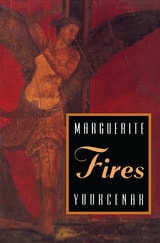
Fires
Marguerite Yourcenar
University of Chicago Press, 1994
"The unwritten novel among the fantasies and aphorisms of Fires is a classic tale."—Stephen Koch, New York Times Book Review
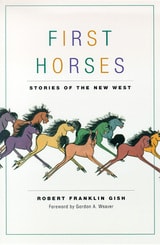
First Horses
Stories Of The WestRobert Franklin Gish
University of Nevada Press, 1993
First World Third Class and Other Tales of the Global Mix
By Regina Rheda
University of Texas Press, 2005
Regina Rheda is a contemporary award-winning Brazilian writer whose original voice and style have won her many admirers. First World Third Class and Other Tales of the Global Mix presents some of her finest and most representative work to an English-speaking readership. Stories from the Copan Building consists of eight tales set in a famous residential building in São Paulo. The stories, like the apartment complex, are a microcosm of modern-day urban Brazil. They are witty, consistently caustic, and never predictable.
Also in this volume is the poignant and often hilarious novel First World Third Class. It depicts young middle-class professionals and artists who, as opportunities in Brazil diminished, opted to leave their country, even if it meant taking menial jobs abroad. At the center of the narrative is Rita, a thirty-year-old aspiring filmmaker who migrates to England, and then Italy. She looks for work and love in all the wrong places, moving from city to city and from bed to bed.
The last three stories in this collection also happen to be among the author's most recent. "The Enchanted Princess" is an ironic title for a postfeminist tale of a South American woman being wooed to marry an old-world gentleman who promises to take care of her every need. "The Sanctuary" concerns the living conditions of immigrant workers and farm animals. Equally piquant in nature, "The Front" deals with ecology, labor environments, and gender politics.
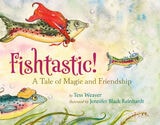
Fishtastic!
A Tale of Magic and FriendshipTess Weaver, illustrated by Jennifer Black Reinhardt
University of Iowa Press, 2021
Inspired by the fish sculptures installed along the walkways welcoming visitors to Hancher, Fishtastic! is a delightful blend of lovable characters and whimsical watercolor illustrations that celebrate the joy of discovering your own path to enchantment.
Fission
Helga Konigsdorf
Northwestern University Press, 2000
Five Days of Bleeding
Ricardo Cortez Cruz
University of Alabama Press, 1995
Taunted by the violent character "Chops," Zu-Zu sings to keep her spirit alive in New York City's Central Park. Zu-Zu and the novel's narrator have a relationship which is transformed into a stormy, dreamlike urban affair. Their oppressive situation is depicted through multiple collages of sound and image, a funky mix of original and sampled cuts, both literary and musical.
The social chaos around them is remixed in a text consisting of street beats, classic breaks, and fresh-cool cadences. Bleeding proves that the loudest noises of moral panic can be gunshots, to be sure, but they can also be the very human sound of the music of hope and despair.
Five Forks
Waterloo of the ConfederacyRobert Alexander
Michigan State University Press, 2003
The Battle of Five Forks was one of the the last battles of the American Civil War. A week later, Lee surrendered. Two weeks later, Lincoln was dead. In this meditation on that battle, Alexander juxtaposes the story of the battle, which he tells through narrative, letters, and journal entries, with his own impressions, viewing the South through Northern eyes. In addition, he views contemporary American society through the story of the Civil War and specifically through the story of Five Forks. If it is true that we meet our past coming to us out of the future, then, Alexander posits, America is still grappling with issues unresolved by the Civil War. Those issues are not just the obvious ones of race and class, or of North vs. South, but also the more ephemeral issues surrounding the mythos Americans live by.
Alexander is not a historian, and this is much more a literary work than a battle story. However, the immediacy with which Alexander tells his tale leads the reader to experience Five Forks—the land, the smells, the cries—as if present there in 1865. Thus, he does not just describe a battle; he captures the spirit of all battles, all wars.
Five Strands of Fictionality
The Institutional Construction of Contemporary American FictionDaniel Punday
The Ohio State University Press, 2010
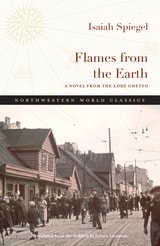
Flames from the Earth
A Novel from the Lódz GhettoIsaiah Spiegel, translated from the Yiddish by Julian Levinson
Northwestern University Press, 2023
Flames from the Earth: A Novel from the Łódź Ghetto is an autobiographical novel written by Isaiah Spiegel, one of the most revered Yiddish authors to survive the Holocaust. Originally published in Israel in 1966, the novel brings together material that Spiegel wrote while imprisoned in the Łódź Ghetto, which he recovered from a cellar when he returned from Auschwitz after the war. The only works by Spiegel previously available to English readers have been short stories.
In this, his first novel, Spiegel explores a complex web of characters in and around the Łódź Ghetto: Vigdor and Gitele, lovers who are involved in the ghetto resistance movement; Nicodem, a Polish priest, who hides a member of the Jewish underground; Stefan Kaczmarek, a Polish tavern keeper who betrays Nicodem to preserve his own smuggling business; Franz Jessike, a Nazi guard who blackmails local Poles for personal gain; and Chaim Vidaver, the heroic leader of the ghetto resistance. Based largely on historical events, the novel’s lyrical style echoes its emotional intensity.
Gripping and atmospheric, Flames from the Earth honors daring acts of heroism and human connections forged amid unthinkable conditions. Spiegel’s novel represents an important contribution to the archive of literary depictions of historical trauma.
Flashfire
A Parker NovelRichard Stark
University of Chicago Press, 2011
Richard Stark's Parker novels are the hardest of hard-boiled, classic crime novels where the heists are huge, the body counts are high, and the bad guys usually win.
The Parker novels have been a huge influence on countless writers and filmmakers, including Quentin Tarantino, Stephen King, George Pelecanos, Colson Whitehead, Lucy Sante, John Banville, and many more. Their stripped-down language and hard-as-nails amorality create an unforgettable world where the next score could be the big one, but your next mistake could also be your last. There's nothing else like them.
Between Parker’s 1961 debut and his return in the late 1990s, the whole world of crime changed. Now fake IDs and credit cards had to be purchased from specialists; increasingly sophisticated policing made escape and evasion tougher; and, worst of all, money had gone digital—the days of cash-stuffed payroll trucks were long gone.
But cash isn’t everything: Flashfire (which was the basis of the Jason Statham and Jennifer Lopez film Parker) finds Parker going after a fortune in jewels in West Palm Beach. He's unexpectedly competing with a crew that has an unhealthy love of explosions, and when things go sour, Parker finds himself shot and trapped—and forced to rely on a civilian to survive.
Flight And Other Stories
José Skinner
University of Nevada Press, 2001

Flight From Fiesta
Frank Waters
Ohio University Press, 1987
Frank Waters, whose work has spanned half a century, has continually attempted to depict the reconciliation of opposites, to heal the national wounds of polarization.
Flight From Fiesta, Waters’ first novel in nearly two decades, is testimony to that aspiration, emerging as a moving and masterfully–told story of two characters who must discover the potential for common ground between their personalities.
Set in Santa Fe in the mid–fifties, the story itself is deceptively simple. Elsie, a spoiled, self–centered ten–year–old Anglo tourist girl, has come to the annual Fiesta with her divorced mother and her mother’s lover. When Elsie runs away from her hotel, she encounters Inocencio, an old alcoholic Pueblo Indian now reduced to selling pottery beneath the portal of the Palace of the Governors. With childish cunning she maneuvers Inocencio into taking her away with him. In the wake of the child’s disappearance, as the local posse–mentality intensifies and Inocencio is suspected of kidnapping and perhaps molesting her, the frightened Indian flees to the hills, taking Elsie with him on a week–long odyssey through the mountains, towns, and pueblos of New Mexico.
Waters’ eye is precise, providing sharp visual detail on very page. His ear is flawless, especially in his rendering of the laconic and stolid Indian speech patterns. All through his book there is an immediacy and a feel for place and culture that cannot be fabricated but must be gained, as Waters himself has gained it, through a lifetime among these people, these towns, and these mountains. The reconciliation of the two fugitives of Flight From Fiesta serves to point, not didactically or allegorically, but emotionally and spiritually, but emotionally and spiritually, to the possibility of the grander reconciliation that Waters envisions.
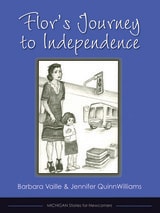
Flor's Journey to Independence
Barbara Vaille and Jennifer QuinnWilliams
University of Michigan Press, 2005
A modified version of this story is also available on our website, www.press.umich.edu/esl/stories.
The MICHIGAN Stories for Newcomers are original fiction written for adult English learners who wish to improve their reading and English skills

Florida
Christine Schutt
Northwestern University Press, 2003
Florida is the portrait of the artist as a young woman, an orphan's story full of loss and wonder, a familiar tale told in original language. Alice Fivey, fatherless at age seven, is left in the care of her relatives at ten when her love-wearied mother loses custody of her and submits to the sanitarium and years of psychiatric care. A namesake daughter locked in the orphan's move-around life, she must hold still while the seamstress pins her into someone not her mother. But they share the same name, so she is her mother, isn't she?
Alice finds consolation in books and she herself is a storyteller who must build a home for herself word by right word. Florida is her story, recalled in brief scenes of spare beauty and strangeness as Alice moves from house to house, ever further from the desolation of her mother's actions, ever closer to the meaning of her experience. In this most elegiac and luminous novel, Schutt gives voice to the feast of memory, the mystery of the mad and missing, and above all, the life-giving power of language.
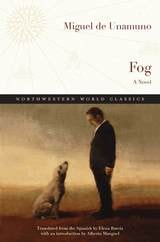
Fog
A NovelMiguel de Unamuno, Translated from the Spanish by Elena Barcia with an introduction by Alberto Manguel
Northwestern University Press, 2017
The novel’s central character, Augusto, is a pampered, aimless young man who falls in love with Eugenia, a woman he randomly spots on the street. Augusto’s absurd infatuation offers an irresistible target for the philosophical ruminations of Unamuno’s characters, including Eugenia’s guardian aunt and “theoretical anarchist” uncle, Augusto’s comical servants, and his best friend, Victor, an aspiring writer who introduces him to a new, groundbreaking type of fiction. In a desperate moment, Augusto consults his creator about his fate, arguing with Unamuno about what it means to be “real.” Even Augusto’s dog, Orfeo, offers his canine point of view, reflecting on the meaning of life and delivering his master’s funeral oration.
Fog is a comedy, a tragic love story, a work of metafiction, and a novel of ideas. After more than a century, Unamuno’s classic novel still moves us, makes us laugh, and invites us to question our assumptions about literature, relationships, and mortality.
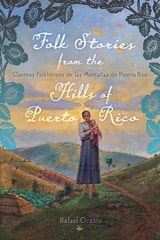
Folk Stories from the Hills of Puerto Rico / Cuentos folklóricos de las montañas de Puerto Rico
Rafael Ocasio
Rutgers University Press, 2021
Some stories provide a distinctive Caribbean twist on classic tales including “Snow White” and “Cinderella.” Others fictionalize the lives of local historical figures, such as infamous pirate Roberto Cofresí, rendered here as a Robin Hood figure who subverts the colonial social order. The collection also introduces such beloved local characters as Cucarachita Martina, the kind cockroach who falls in love with Ratoncito Pérez, her devoted mouse husband who brings her delicious food.
Including a fresh English translation of each folktale as well as the original Spanish version, the collection also contains an introduction from literary historian Rafael Ocasio that highlights the historical importance of these tales and the Jíbaro cultural values they impart. These vibrant, funny, and poignant stories will give readers unique insights into Puerto Rico’s rich cultural heritage.
Esta nueva y emocionante antología reúne cuentos populares puertorriqueños que fueron transmitidos oralmente durante generaciones antes de ser finalmente transcritos comenzando en 1914 por el equipo del famoso antropólogo Franz Boas. Estos encantadores cuentos ofrecen a los lectores un vistazo a la imaginación y las aspiraciones de los jíbaros, los campesinos de Puerto Rico.
Algunas historias brindan un distintivo toque caribeño a cuentos clásicos como "Blanca Nieves" y "Cenicienta". Otros ficcionalizan la vida de personajes históricos locales, como el famoso pirata Roberto Cofresí, representado como una figura al estilo de Robin Hood, quien subvierte el orden social colonial. La colección también presenta personajes locales tan queridos como Cucarachita Martina, la amable cucaracha que se enamora de Ratoncito Pérez, su devoto esposo ratón que le trae deliciosa comida.
Incluyendo una nueva traducción al inglés de estos cuentos populares, así como las versiones originales en español, la colección también contiene una introducción del historiador literario Rafael Ocasio, quien destaca la importancia histórica de estos cuentos y los valores culturales del jíbaro que éstos imparten en los relatos. Estas historias vibrantes, divertidas y conmovedoras brindarán a los lectores una visión única de la rica herencia cultural de Puerto Rico.
Introducción en español (https://d3tto5i5w9ogdd.cloudfront.net/wp-content/uploads/2021/02/03154419/Ocasio_Cuentos_Intro_Espan%CC%83ol.pdf)
Rafael Ocasio will discussing his book, 'Folk Stories from the Hills of Puerto Rico / Cuentos folklóricos de las montañas de Puerto Rico' at Biblioteca Juvenil de Mayagüez in Puerto Rico (https://youtu.be/o6Tub094EoI)
Folktales of India
Edited by Brenda E. F. Beck, Peter J. Claus, Praphulladatta Goswami, and Jawahar
University of Chicago Press, 1986
Folktales of Ireland
Edited by Sean O'Sullivan
University of Chicago Press, 1966
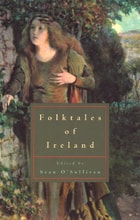
Folktales of Ireland
Edited by Sean O'Sullivan
University of Chicago Press, 1966
Follow My Footprints
Changing Images of Women in American Jewish FictionEdited by Sylvia Barack Fishman
Brandeis University Press, 1992
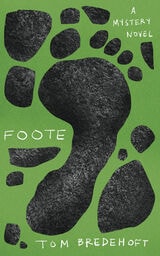
Foote
A Mystery NovelTom Bredehoft
West Virginia University Press, 2022
In the space of one weekend in Morgantown, West Virginia, private investigator Big Jim Foote finds himself at the center of two murder investigations. Suspected of one killing at a local festival, he locates the body of a missing person immediately after. The cops are watching him, and Big Jim has a secret he dares not reveal: he is a bigfoot living in plain sight, charged with keeping his people in the surrounding hills from being discovered. To protect the bigfoot secret, he must solve both murders—and convince himself it wasn’t a bigfoot who pulled the trigger.
Through the course of his investigations, Big Jim is helped by unique and well-rendered characters and friends in both his bigfoot and human communities. Readers are introduced to Appalachian mountain folk and traditional culture in new ways, even while Big Jim experiences the impact of the opioid epidemic on his own bigfoot kin. By centering a mythical creature as the unlikely protagonist in this enchanting literary murder mystery, Foote offers a winsome redefinition of a cryptid “monster” and breathes new life into the PI genre.
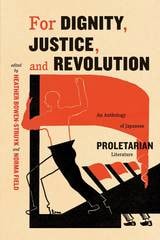
For Dignity, Justice, and Revolution
An Anthology of Japanese Proletarian LiteratureEdited by Heather Bowen-Struyk and Norma Field
University of Chicago Press, 2015
Contextualized by introductory essays, forty expertly translated stories touch on topics like perilous factories, predatory bosses, ethnic discrimination, and the myriad indignities of poverty. Together, they show how even intensely personal issues form a pattern of oppression. Fostering labor consciousness as part of an international leftist arts movement, these writers, lovers of literature, were also challenging the institution of modern literature itself. This anthology demonstrates the vitality of the “red decade” long buried in modern Japanese literary history.
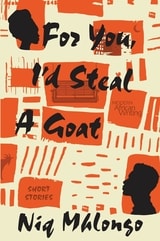
For You, I'd Steal a Goat
Short StoriesNiq Mhlongo
Ohio University Press, 2025
For You, I’d Steal a Goat is a vibrant collection of short stories filled with memorable characters, intriguing plots, and twist endings. It explores a wide range of themes, such as corruption, racial bias, family troubles, and lovers’ spats, to name a few. In his stories about queer relationships, Niq Mhlongo surfaces the complexities of a community whose narratives have been silenced. With his keen observations and insights into human nature, Mhlongo explores the things that people do for each other, but also to each other, including acts of injustice and exploitation as well as of love and desire. Mhlongo’s stories are critical, erudite, and masterfully crafted using satire and careful deliberation to connect to the quotidian lived experiences of readers. With a sense of humor, Mhlongo reflects on some of the greatest transformations South Africans have faced in recent times and engages with crucial matters in the present.

For a New Novel
Essays on FictionAlain Robbe-Grillet
Northwestern University Press, 1989
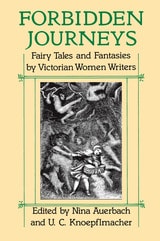
Forbidden Journeys
Fairy Tales and Fantasies by Victorian Women WritersEdited by Nina Auerbach and U. C. Knoepflmacher
University of Chicago Press, 1992
"Forbidden Journeys is not only a darkly entertaining book to read for the fantasies and anti-fantasies told, but also is a significant contribution to nineteenth-century cultural history, and especially feminist studies."—United Press International
"A service to feminists, to Victorian Studies, to children's literature and to children."—Beverly Lyon Clark, Women's Review of Books
"These are stories to laugh over, cheer at, celebrate, and wince at. . . . Forbidden Journeys is a welcome reminder that rebellion was still possible, and the editors' intelligent and fascinating commentary reveals ways in which these stories defied the Victorian patriarchy."—Allyson F. McGill, Belles Lettres
Forbidden Journeys
Fairy Tales and Fantasies by Victorian Women WritersEdited by Nina Auerbach and U. C. Knoepflmacher
University of Chicago Press, 1992
As these eleven dark and wild stories demonstrate, fairy tales by Victorian women constitute a distinct literary tradition, one startlingly subversive of the society that fostered it. From Anne Thackeray Ritchie's adaptations of "The Sleeping Beauty in the Wood" to Christina Rossetti's unsettling antifantasies in Speaking Likenesses, these are breathtaking acts of imaginative freedom, by turns amusing, charming, and disturbing. Besides their social and historical implications, they are extraordinary stories, full of strange delights for readers of any age.
"Forbidden Journeys is not only a darkly entertaining book to read for the fantasies and anti-fantasies told, but also is a significant contribution to nineteenth-century cultural history, and especially feminist studies."—United Press International
"A service to feminists, to Victorian Studies, to children's literature and to children."—Beverly Lyon Clark, Women's Review of Books
"These are stories to laugh over, cheer at, celebrate, and wince at. . . . Forbidden Journeys is a welcome reminder that rebellion was still possible, and the editors' intelligent and fascinating commentary reveals ways in which these stories defied the Victorian patriarchy."—Allyson F. McGill, Belles Lettres
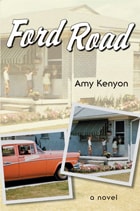
Ford Road
Amy Kenyon
University of Michigan Press, 2012
After the death of her mother, Kay Seger abandons her career as a historical consultant to a Los Angeles film company and returns to her childhood home in Michigan. There, she rekindles a teenage love affair with Joe Chase, now a Vietnam War veteran and Ford auto worker. Afflicted by grief and the mysterious symptoms of an unidentified ailment, Kay, at Joe's urging, begins an investigation of her family's past.
As Kay pores over the boxes of papers, letters, and photo albums her mother left behind, vivid recollections of a bygone Detroit, ragged and teeming at the start of the automotive age, come to life alongside snapshots of Michigan's rural western counties after the settlement of the frontier. In the midst of her searches, Kay comes across the long-forgotten medical history of nostalgia, and it is this new knowledge that helps her to recover the lost histories of her family and find a resolution to her troubled relationship with Joe.
An exploration of memory as both pathology and promise, Ford Roadoffers a moving examination of the injuries we inflict on the people closest to us, the worldly injuries that are often beyond our control, and our astonishing ability to act upon and inhabit our own stories. It is also a meditation on American car culture, the road, and the role of early Hollywood in the creation of America's vision of itself. Written in spare, evocative prose, historian Amy Kenyon's first novel is as heartbreaking as it is thought-provoking.

Forgetfulness
A NovelMichael Mejia
University of Alabama Press, 2005
The second part of the book takes place in Vienna on May 1st, 1986, shortly before the election of Kurt Waldheim as President of the Austrian Republic and shortly after the Chernobyl disaster. The three simultaneous, intertwining monologues of an archivist, a retired opera singer, and the author of the monograph, revisit the themes and events of the first part, commenting on postwar conceptions, analyses, and revisions of the period during which Webern lived, while continuously haunted by the specters of Waldheim and Chernobyl, the persistence of crimes that are immanent, unpaid for, or only dimly, disingenuously recalled.
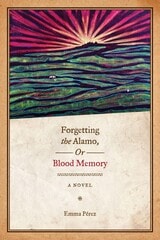
Forgetting the Alamo, Or, Blood Memory
A NovelBy Emma Pérez
University of Texas Press, 2009
Runner-up, Best Historical Fiction in English, Latino Book Awards Competition, 2010
This literary adventure takes place in nineteenth-century Texas and follows the story of a Tejana lesbian cowgirl after the fall of the Alamo. Micaela Campos, the central character, witnesses the violence against Mexicans, African Americans, and indigenous peoples after the infamous battles of the Alamo and of San Jacinto, both in 1836. Resisting an easy opposition between good versus evil and brown versus white characters, the novel also features Micaela's Mexican-Anglo cousin who assists and hinders her progress. Micaela's travels give us a new portrayal of the American West, populated by people of mixed races who are vexed by the collision of cultures and politics. Ultimately, Micaela's journey and her romance with a black/American Indian woman teach her that there are no easy solutions to the injustices that birthed the Texas Republic.
This novel is an intervention in queer history and fiction with its love story between two women of color in mid-nineteenth-century Texas. Pérez also shows how a colonial past still haunts our nation's imagination. The battles of the Alamo and San Jacinto offered freedom and liberty to Texans, but what is often erased from the story is that common people who were Mexican, Indian, and Black did not necessarily benefit from the influx of so many Anglo immigrants to Texas. The social themes and identity issues that Pérez explores—political climate, debates over immigration, and historical revision of the American West—are current today.
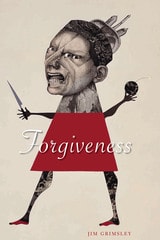
Forgiveness
By Jim Grimsley
University of Texas Press, 2007
"The Lifetime movie of my divorce and crime spree will be entitled Breakdown at Midnight.... Sympathy for my character will be established by my loss of a wildly respectable, lucrative job with Arthur Andersen, a company which turned out to be as crooked as its customers. I will be another orphan of the American Dream gone sour, and eventually I will give in to the so-called dark side of my nature when I strangle Carmine with the strap of her Prada bag, or stab her to death with a survivalist-quality knife, or bludgeon her skull to a bloody pulp with a classic Tiffany lamp; this part of the script will have to wait for the real event to unfold since, though I've decided that tomorrow will be the day I kill her, I have yet to choose how."
—Charley Stranger
Turning headline news into biting social satire, Jim Grimsley exposes the amorality of materialistic America in Forgiveness, a blackly comic tale of a bankrupt accounting executive who dreams of achieving stardom in the only way a pathetic failure can—by murdering his wife. As Charley Stranger imagines the crime, he fantasizes wildly unlikely encounters with celebrities—sharing marital woes with Nicole Kidman over a latte at Starbucks, being interviewed by Barbara Walters—while in real life his wife Carmine incessantly ridicules his inability to perform either in bed or in the marketplace. As Forgiveness veers to its shocking conclusion, it strips bare the corruption of the American Dream—the moral bankruptcy of corporate and political institutions, the hollowness of living in a media-saturated world, the delusion of buying love with luxury goods.

Former Virgin
Cris Mazza
University of Alabama Press, 2026
When innocence becomes history, desire rewrites the story.
In this collection of stories, critically acclaimed writer Cris Mazza shines a kleig light on the dark underside of relationships in a disturbing look at the ambiguous nature of our own desires. From women who foster their own abusive relationships, to failed suicide attempts, to furtive -- and horribly violent -- encounters in steamy basements, Mazza's stories cut to the heart of doomed human relationships, landing squarely in the murky territory between desire and despair, between freedom and loss of control.
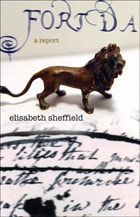
Fort Da
A ReportElisabeth Sheffield
University of Alabama Press, 2009
While working at a sleep lab in northern Germany, Rosemarie Ramee, a 38-year-old American neurologist, falls in love with Aslan, an eleven-year-old Turkish Cypriot. To get closer to the boy, RR undertakes a "marriage of convenience" to the boy's uncle. But when the uncle suddenly disappears, Ramee, alone with Aslan, must take the boy to his relatives in northern Cyprus. A train journey ensues, chronicled in RR's psychological reports and neurological inquiries.
But what begins as an objective "report" breaks down as the story progresses: RR's voice, hitherto suppressed and analytical, emerges hesitantly and then erupts, splintering every conception of inner and outer lives, solipsistic reality, and the irrevocable past. Consistently surprising and unrelenting, Fort Da turns one woman's illicit affair into a riveting exploration of language and the mind.
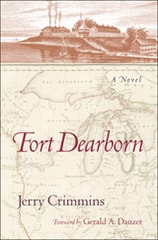
Fort Dearborn
A NovelJerry Crimmins
Northwestern University Press, 2008
In a story that brings to life the founding of one of the world's great cities, Fort Dearborn takes us back to Chicago's early struggle of fire and blood. Through the eyes of two young boys and their fathers—one father a sergeant with the United States First Infantry, the other a Potawatomi warrior—we see the events that lead up to the Fort Dearborn Massacre. Using scores of letters, historical documents and maps, and long-forgotten Native American speeches, Jerry Crimmins breathes life into the little known drama that took place in the vicinity of the fort that once occupied what is now downtown Chicago. A suspenseful narrative, Fort Dearborn is also a remarkable historical account, minutely observed and meticulously documented, preserving a key moment in American history.
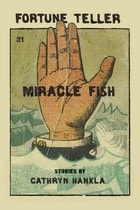
Fortune Teller Miracle Fish
Cathryn Hankla
Michigan State University Press, 2011
A mentally challenged teen in a coma, a WWII veteran weighing his beliefs, an intersexed man anticipating a relationship, a single woman who has kissed far too many frogs, and a first grader suffering at the hands of a family friend. These are just a few of the unforgettable characters in Fortune Teller Miracle Fish, an innovative collection of stories from award-winning novelist and poet Cathryn Hankla. The figures in these stories struggle toward more truthful expressions of themselves, as outsiders whose dilemmas, emotions, and desires make them unmistakably human. As varied as they are vivid, they strive for closer connections of love and community. Through humor and understanding, Hankla intrepidly navigates the transitions that define them—unplanned pregnancy, divorce, death, and gender change, to name a few. Acutely attuned to her subjects’ inner landscapes, Hankla captures the full spectrum of human experience, from childhood to old age, with heart, rare skill, and nerve.