Results by title
8128 books match the query 'Literary Criticism' and 298 start with f

Faulkner, Mississippi
Edouard Glissant
University of Chicago Press, 2000
"A fascinating way to read Faulkner. . . .[Glissant's] case is nothing less than that, no matter how Faulkner's personal Furies twisted his public speech, Faulkner was a great, world-beating multiculturalist."—Jonathan Levi, Los Angeles Times Book Review
"A sharp, challenging, and wholly unique tour of Yoknapatawpha County." —Kirkus Reviews
"Passionate. . . . Glissant's prose sometimes vies with Faulkner's for intricacy and evocative nuance." —Scott McLemee, Newsday
"Glissant tries to engage Faulkner on many fronts simultaneously, positioning himself as a critic, a fellow artist and as a descendant of slaves. . . He makes a convincing case that Faulkner is not just another 'dead white male author.'"—Scott Yarbrough, Raleigh News & Observer
"[An] ambitious and, at times, rambunctious expedition into Yoknapatawpha County." —Christine Schwartz Hartley, New York Times Book Review
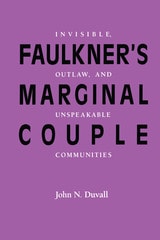
Faulkner’s Marginal Couple
Invisible, Outlaw, and Unspeakable CommunitiesBy John N. Duvall
University of Texas Press, 1990
Is William Faulkner’s fiction built on a fundamental dichotomy of outcast individual versus the healthy agrarian community? The New Critics of the 1930s advanced this view, and it has shaped much Faulkner criticism. However, in Faulkner’s Marginal Couple, John Duvall posits the existence of another possibility, alternative communities formed by “deviant” couples. These couples, who violate “normal” gender roles and behaviors, challenge the either/or view of Faulkner’s world.
The study treats in detail the novels Light in August, The Wild Palms, Sanctuary, Pylon, and Absalom, Absalom!, as well as several of Faulkner’s short stories. In discussing each work, Duvall challenges the traditional view that Faulkner created active men who follow a code of honor and passive women who are close to nature. Instead, he charts the many instances of men who are nurturing and passive and women who are strong and sexually active. These alternative couples undermine a common view of Faulkner as an upholder of Southern patriarchal values, thus countering the argument that Faulkner’s fiction is essentially misogynist.
This new approach, drawing on semiotics, feminism, and Marxism, makes Faulkner more accessible to readers interested in ideological analysis. It also stresses the intertextual connections between Faulkner’s Yoknapatawpha and non-Yoknapatawpha fiction. Perhaps most importantly, it uncovers what the New Criticism concealed, namely, that Faulkner’s fiction traces the full androgynous spectrum of the human condition.

Fault Lines and Controversies in the Study of Seventeenth-Century English Literature
Edited & Intro Claude J. Summers & Ted-Lary Pebworth
University of Missouri Press, 2002

Faust
A Tragedy, Part IEugene Stelzig
Bucknell University Press, 2019
Published by Bucknell University Press. Distributed worldwide by Rutgers University Press.
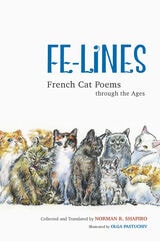
Fe-Lines
French Cat Poems through the AgesCollected and Translated by Norman Shapiro
University of Illinois Press, 2015
Norman R. Shapiro lionizes the feline's limitless allure in this one-of-a-kind collection. Spanning centuries and styles, he draws on she-cats and toms, and an honor roll of French poets, well known and lesser known, who have served as their devoted champions. He reveals the remarkable range of French cat poems, with most works presented here for the first time in English translation. Scrupulously devoted to evoking the meaning and music of the originals, Shapiro also respects the works' formal structures. Pairing Shapiro's translations with Olga Pastuchiv's elegant illustrations, Fe-Lines guides the reader through the marvels and inscrutabilities of the Mystique féline.
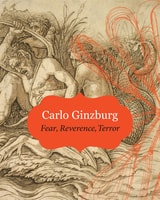
Fear Reverence Terror
Carlo Ginzburg
Seagull Books, 2017
Fear, Reverence, Terror invites us to look at images slowly, with the help of a few examples: Picasso’s Guernica, the “Lord Kitchener Wants You” World War I recruitment poster, Jacques-Louis David’s Marat, the frontispiece of Thomas Hobbes’s Leviathan, and a cup of gilded silver with scenes from the conquest of the New World. Are these political images, Carlo Ginzburg asks? Yes, because every image is, in a sense, political—an instrument of power. Tacitus once wrote, unforgettably, that we are enslaved by lies of which we ourselves are the authors. Is it possible to break this bond? Fear, Reverence, Terror will answer this question.
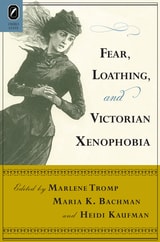
Fear, Loathing, and Victorian Xenophobia
Edited by Marlene Tromp, Maria K. Bachman, and Heidi Kaufman
The Ohio State University Press, 2013

Fearless Wives and Frightened Shrews
The Construction of the Witch in Early Modern GermanyReinharde Brauner
University of Massachusetts Press, 1995
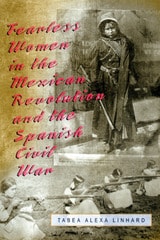
Fearless Women in the Mexican Revolution and the Spanish Civil War
Tabea Alexa Linhard
University of Missouri Press, 2005
Feed-Forward
On the Future of Twenty-First-Century MediaMark B. N. Hansen
University of Chicago Press, 2014
Drawing on the speculative empiricism of philosopher Alfred North Whitehead, Hansen reveals how new media call into play elements of sensibility that greatly affect human selfhood without in any way belonging to the human. From social media to data-mining to new sensor technologies, media in the twenty-first century work largely outside the realm of perceptual consciousness, yet at the same time inflect our every sensation. Understanding that paradox, Hansen shows, offers us a chance to put forward a radically new vision of human becoming, one that enables us to reground the human in a non-anthropocentric view of the world and our experience in it.
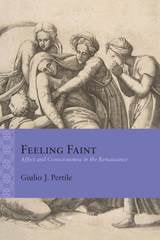
Feeling Faint
Affect and Consciousness in the RenaissanceGiulio J. Pertile
Northwestern University Press, 2019
Such a phenomenon, subsequently obscured by the Enlightenment identification of consciousness and personal identity, is what we discover in scenes of swooning from the Renaissance: consciousness without self, consciousness reconceived as what Fredric Jameson calls "a registering apparatus for transformed states of being." Where the early modern period has often been seen in terms of the rise of self-aware subjectivity, Feeling Faint argues that swoons, faints, and trances allow us to conceive of Renaissance subjectivity in a different guise: as the capacity of the senses and passions to experience, regulate, and respond to their own activity without the intervention of first-person awareness.
In readings of Renaissance authors ranging from Montaigne to Shakespeare, Pertile shows how self-loss affords embodied consciousness an experience of itself in a moment of intimate vitality which precedes awareness of specific objects or thoughts—an experience with which we are all familiar, and yet which is tantalizingly difficult to pin down.

Female Piety and the Invention of American Puritanism
Bryce Traister
The Ohio State University Press, 2016
Uncovering the feminine interiority of New England Protestantism, Female Piety and the Invention of American Puritanism positions itself against prevalent historical arguments about the rise of secularism in the modern West. Traister demonstrates that female spirituality became a principal vehicle through which Puritan identity became both absorbed within and foundational for pre-national secular culture. Engaging broadly with debates about religion and secularization, national origins and transnational unsettlements, and gender and cultural authority, this is a foundational reconsideration both of American Puritanism itself and of “American Puritanism” as it has been understood in relation to secular modernity.
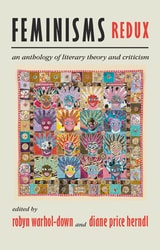
Feminisms Redux
An Anthology of Literary Theory and CriticismWarhol-Down, Robyn
Rutgers University Press, 2009
Now, at the dawn of a new century of thought and action, it is important once again to revisit the canon of feminist literary criticism and theory and re-establish the measure for representing the latest developments in the field. Robyn Warhol-Down and Diane Price Herndl have joined together once more to provide academics and general readers with a newly revised and indispensable collection of essays representing the range of feminist literary criticism.
Feminisms Redux, presented in a concise format, includes many essays from the second edition that continue to speak to current concerns and also provides readers with new contributions that address work in postcolonial studies, queer theory, and disability studies. As in the earlier volumes, the editors have gathered the full text of original articles and book chapters, with no edited excerpts. The range of essays focuses not only on gender and sex, but also on sexuality, race, class, nationality, and (dis)ability, and the intersections among these categories as they play out in writing by and about women. More than a revision of archetypal work, Feminisms Redux represents the dawning of a new classic.

Feminist Biblical Studies in the Twentieth Century
Scholarship and MovementElisabeth Schüssler Fiorenza
SBL Press, 2014
Chart the development of feminist approaches and theories of interpretation during the period when women first joined the ranks of biblical scholars
This collection of essays on feminist biblical studies in the twentieth century seeks to explore four areas of inquiry demanding further investigation. In the first section, articles chart the beginnings and developments of feminist biblical studies as a conversation among feminists around the world. The second section introduces, reviews, and discusses the hermeneutic religious spaces created by feminist biblical studies. The third segment discusses academic methods of reading and interpretation that dismantle androcentric language and kyriarchal authority. The fourth section returns to the first with work that transgresses academic boundaries in order to exemplify the transforming, inspiring, and institutionalizing feminist work that has been and is being done to change religious mindsets of domination and to enable wo/men to engage in critical readings of the Bible.
Features:
- Essays examine the rupture or break in the malestream reception history of the Bible
- Exploration of the term feminism in different social-cultural and theoretical-religious locations
- Authors from around the world present research and future directions for research challenging the next generation of feminist interpreters

Feminist Book Work
Reading with the Women's PressRosy Mack
Duke University Press, 2027
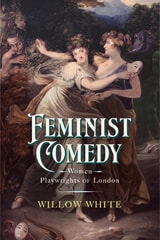
Feminist Comedy
Women Playwrights of LondonWillow White
University of Delaware Press, 2024
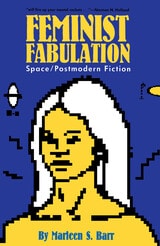
Feminist Fabulation
Space/Postmodern FictionMarleen S. Barr
University of Iowa Press, 1992
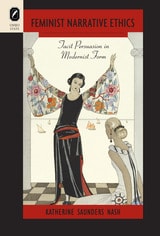
Feminist Narrative Ethics
Tacit Persuasion in Modernist FormKatherine Saunders Nash
The Ohio State University Press, 2014
Despite pronouncements by many theorists about the difficulty—even the impossibility—of doing justice in a single study to both history and form, Feminist Narrative Ethics proves that they can be mutually illuminating. Its approach is not only resolutely rhetorical, but resolutely historical as well. It strikes a felicitous balance between history and form that affords new understanding of the implied author concept.
Feminist Narrative Ethics makes a persuasive case for the necessity of locating authorial agency in the implied (rather than the actual) author and cogently explains why rhetorical theory insists on the concept of an implied (rather than an inferred) author. And it proposes a new facet of agency that rhetorical theorists have heretofore neglected: the ethics of progressive revisions to a project in manuscript.
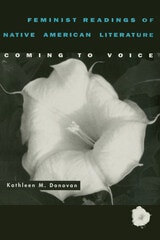
Feminist Readings of Native American Literature
Coming to VoiceKathleen M. Donovan
University of Arizona Press, 1998
The author demonstrates how Canadian women of mixed-blood ancestry achieve a voice through autobiographies and autobiographical novels. Using a framework of feminist reader response theory, she considers an underlying misogyny in the writings of N. Scott Momaday. And in examining commonalities between specific cultures, she discusses how two women of color, Paula Gunn Allen and Toni Morrison, explore representations of femaleness in their respective cultures. By synthesizing a broad spectrum of critical writing that overlaps women's voices and Native American literature, Donovan expands on the frame of dialogue within feminist literary and cultural theory. Drawing on the related fields of ethnography, ethnopoetics, ecofeminism, and post-colonialism, Feminist Readings of Native American Literature offers the first systematic study of the intersection between two dynamic arenas in literary studies today.

Feminist Rereadings of Rabbinic Literature
Inbar Raveh
Brandeis University Press, 2014
Feminist Theories for Dramatic Criticism
Gayle Austin
University of Michigan Press, 1990
Feminist Theories for Dramatic Criticism provides a number of useful approaches for analyzing works for the stage from a feminist perspective. Each chapter outlines key feminist theories in a specific field, covering literary criticisms, anthropology, psychology, and film, and then applies these theories in a detailed criticism of one or two plays. Plays by Eugene O'Neill, Arthur Miller, Lillian Hellman, Jane Bowles, Sam Shepard, and Alice Childress—all produced after World War II—are reexamined through the lenses of feminist theorist Judith Fetterley, Gayle Rubin, Nancy Chodorow, and Laura Mulvey, each a key figure in her respective field.
The introduction provides a framework for the discussion of feminist dramatic criticism by presenting the multiple political perspectives within feminism. The contributions of black and lesbian feminists to the question of theory are explored, as are the evolutionary stages of feminist criticism as they have been occurring in other fields. Theater has been slower than most fields to move through these stages, and its trajectory thus far is briefly traced. For the sake of clarity, each of the central chapters treats theories from a particular discipline, but the conclusion reminds us that in practice the theories are most often combined.
The book will appeal to theater scholars and practitioners interested in finding their way into feminist theory for the first time, or in expanding their knowledge of its insights for use in teaching, research, and production. Those in women's studies and other fields will find it shows ways to include plays among the texts they analyze.
Fetching the Old Southwest
Humorous Writing from Longstreet to TwainJames H. Justus
University of Missouri Press, 2004

Fetter'd or Free?
British Women Novelists, 1670-1815Mary Anne Schofield
Ohio University Press, 1986
Fi-Sci
Avatars of Science in FictionRhona Trauvitch
The Ohio State University Press, 2026
In Fi-Sci, Rhona Trauvitch melds literary and scientific thought to advance a theory of how narrative, and specifically fictionality, is one of the most powerful tools we have for understanding science, particularly those concepts that defy imagination. Centering her argument on a rhetorical approach to fictionality, she proposes that fiction uniquely offers a means of conceptualizing and understanding perplexing and counterintuitive scientific phenomena, such as recombinant DNA or quantum superposition: Through finding analogous patterns in fiction, we can open up new pathways to understanding. Put another way, our abilities to perceive strange and confounding science phenomena are bolstered and even enabled by our experiences with fiction.
Drawing on a range of theorists such as James Phelan, Gérard Genette, Erwin Schrödinger, and others in her analysis of texts by Jorge Luis Borges, Julio Cortázar, Ursula K. Le Guin, Richard Powers, and many more, Trauvitch shows how literary forms—such as metafiction, metalepsis, and recursion—mirror and clarify complex scientific concepts including genetics, spacetime curvature, and quantum mechanics. In this way, she shows us how fiction is key to unlocking conceptual access to the indiscernible and inconceivable.
Fiction Beyond Secularism
Justin Neuman
Northwestern University Press, 2014
Modernist thinkers once presumed a progressive secularity, with the novel replacing religious texts as society’s moral epics. Yet religion—beginning with the Iranian revolution of 1979, through the collapse of communism, and culminating in the singular rupture of September 11, 2001—has not retreated quietly out of sight.
In Fiction Beyond Secularism, Justin Neuman argues that contemporary novelists who are most commonly identified as antireligious—among them Orhan Pamuk, Salman Rushdie, Ian McEwan, Margaret Atwood, Nadine Gordimer, Haruki Murakami, and J. M. Coetzee—have defied assumptions and have instead written some of the most trenchant critiques of secular ideologies, as well as the most exciting and rigorous inquiries into the legacies of the religious imagination. As a result, many readers (or nonreaders) on either side of the religious divide neglect the insights of works like The Satanic Verses, Disgrace, and Snow. Fiction Beyond Secularism serves as a timely corrective.
Fiction Refracts Science
Modernist Writers from Proust to BorgesAllen Thiher
University of Missouri Press, 2005
Fiction Rivals Science
The French Novel from Balzac to ProustAllen Thiher
University of Missouri Press, 2001
In Fiction Rivals Science, Allen Thiher describes the epistemic rivalry that the major nineteenth-century French novelists felt in dealing with science. After brief considerations of Stendhal, Thiher focuses on the four most important "realist" novelists in France: Balzac, Flaubert, Zola, and, going into the twentieth century, Proust. According to Thiher, each of these novelists considered himself to be in competition with science to make the novel an instrument for knowledge.
The first chapter sets forth the understanding of science that dominated the early nineteenth century in order to make it plausible that literary minds, throughout the nineteenth century, thought that they could not only rival science, but even make positive contributions to knowledge. The Newtonian paradigm that had dominated the Enlightenment was slowly being challenged by new developments both in physics and in nonphysical sciences such as biology. Especially in biology the development of a scientific discourse using narrative temporality favored the idea that novelists could also use fiction to construct discourses that advanced knowledge.
Balzac wanted to construct a natural history of society and correct the chemical theory of his time. Flaubert drew upon medicine and physiology for the rhetoric of his realist fiction. Zola used unsuccessful medical paradigms for his doctrine of heredity, and models drawn from thermodynamics to describe the relation of the individual to societal forces. Finally, Proust drew upon thinkers such as Poincar‚ to elaborate an epistemology that put an end to the rivalry novelists might feel with scientists. Proust located certain knowledge within the realm of human subjectivity while granting the power of laws to rule over the contingent realm of physical reality, in which, after Poincar‚, neither mathematics nor Newton was any longer a source of absolute certainty. Proust's novel is thus the last great realist work of the nineteenth century and the first modernist work of consciousness taking itself as the object of knowledge.
By demonstrating that the great French realist novelists dealt with many of the same problems as did the scientists of the nineteenth century, Fiction Rivals Science attempts to show how culture unites literary and scientific inquiry into knowledge. Providing a new interpretation of the development of literary realism, this important new work will be welcomed not only by literary scholars, but by historians of science and culture as well.
Fiction Sets You Free
Literature, Liberty, and Western CultureRussell A. Berman
University of Iowa Press, 2007
In what can only be called a genuine intellectual adventure, Russell Berman raises fundamental questions long ignored by literary scholars: Why does literature command our attention at all? Why would society want to cultivate a sphere of activity devoted to the careful study of literary ?ction? Written as a tonic to what he calls the debilitating cultural relativism of contemporary literary studies, Fiction Sets You Free advances the innovative argument that literature and capitalism, rather than representing merely commercialization, actually belie a long and positive association: literary autonomy is a central part of modern Western culture, thoroughly intertwined with political democracy and free-market capitalism.
Berman particularly challenges the issue of periodization, in which current scholarship emphasizes historical context over the integrity of a literary work and thus neglects the capacity of literature to remain interesting in other times and contexts. By moving from the origins of human language through the development of written alphabets and sacred texts, eventually probing the role of public literature in the creation of community, Berman elegantly and cogently surveys the intellectual landscape of Western societies. By giving us the license to dream and envision other worlds, literature sets us free.
Fiction and the Ways of Knowing
Essays on British NovelsBy Avrom Fleishman
University of Texas Press, 1978
In this highly individual study, Avrom Fleishman explores a wide range of literary references to human culture—the culture of ideas, facts, and images. Each critical essay in Fiction and the Ways of Knowing takes up for sustained analysis a major British novel of the nineteenth or the twentieth century. The novels are analyzed in the light of social, historical, philosophical, and other perspectives that can be grouped under the human sciences.
The diversity of critical contexts in these thirteen essays is organized by Avrom Fleishman's governing belief in the interrelations of literature and other ways of interpreting the world. The underlying assumptions of this approach—as explained in his introductory essay—are that fiction is capable of encompassing even the most recondite facts and recalcitrant ideas; that fiction, though never a mirror of reality, is linked to realities and takes part in the real; and that a critical reading may be informed by scientific knowledge without reducing the literary work to a schematic formula.
Fleishman investigates the matters of fact and belief that make up the designated meanings, the intellectual contexts, and the speculative parallels in three types of novel. Some of the novels discussed make it clear that their authors are informed on matters beyond the nonspecialist's range; these essays help bridge this information gap. Other fictional works are only to be grasped in an awareness of the cultural lore tacitly distributed in their own time; a modern reader must make the effort to fathom their anachronisms. And other novels can be found to open passageways that their authors can only have glimpsed intuitively; these must be pursued with great caution but equal diligence.
The novels discussed include Little Dorrit, The Way We Live Now, Daniel Deronda, he Return of the Native, and The Magus. Also examined are Wuthering Heights, Vanity Fair, Northanger Abbey, To the Lighthouse, Under Western Eyes, Ulysses, and A Passage to India.
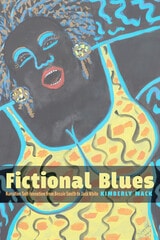
Fictional Blues
Narrative Self-Invention from Bessie Smith to Jack WhiteKimberly Mack
University of Massachusetts Press, 2020
The familiar story of Delta blues musician Robert Johnson, who sold his soul to the devil at a Mississippi crossroads in exchange for guitar virtuosity, and the violent stereotypes evoked by legendary blues “bad men” like Stagger Lee undergird the persistent racial myths surrounding “authentic” blues expression. Fictional Blues unpacks the figure of the American blues performer, moving from early singers such as Ma Rainey and Big Mama Thornton to contemporary musicians such as Amy Winehouse, Rhiannon Giddens, and Jack White to reveal that blues makers have long used their songs, performances, interviews, and writings to invent personas that resist racial, social, economic, and gendered oppression.
Using examples of fictional and real-life blues artists culled from popular music and literary works from writers such as Walter Mosley, Alice Walker, and Sherman Alexie, Kimberly Mack demonstrates that the stories blues musicians construct about their lives (however factually slippery) are inextricably linked to the “primary story” of the narrative blues tradition, in which autobiography fuels musicians' reclamation of power and agency.

Fictional Environments
Mimesis, Deforestation, and Development in Latin AmericaVictoria Saramago
Northwestern University Press, 2021
Winner of the Brazilian Studies Association’s Roberto Reis Book Award for First Monograph • Honorable Mention for the Latin American Studies Association’s Antonio Candido Book Award • Shortlisted for the Association for the Study of Literature and Environment Book Award
Fictional Environments: Mimesis, Deforestation, and Development in Latin America investigates how fictional works have become sites for the production of knowledge, imagination, and intervention in Latin American environments. It investigates the dynamic relationship between fictional images and real places, as the lasting representations of forests, rural areas, and deserts in novels clash with collective perceptions of changes like deforestation and urbanization.
From the backlands of Brazil to a developing Rio de Janeiro, and from the rainforests of Venezuela and Peru to the Mexican countryside, rapid deforestation took place in Latin America in the second half of the twentieth century. How do fictional works and other cultural objects dramatize, resist, and intervene in these ecological transformations? Through analyses of work by João Guimarães Rosa, Alejo Carpentier, Juan Rulfo, Clarice Lispector, and Mario Vargas Llosa, Victoria Saramago shows how novels have inspired conservationist initiatives and offered counterpoints to developmentalist policies, and how environmental concerns have informed the agendas of novelists as essayists, politicians, and public intellectuals. This book seeks to understand the role of literary representation, or mimesis, in shaping, sustaining, and negotiating environmental imaginaries during the deep, ongoing transformations that have taken place from the 1950s to the present.
Fictionality and Literature
Core Concepts RevisitedEdited by Lasse R. Gammelgaard, Stefan Iversen, Louise Brix Jacobsen, James Phelan, Richard Walsh, Henrik Zetterberg-Nielsen, and Simona Zetterberg-Nielsen
The Ohio State University Press, 2022
Contributors:
H. Porter Abbott, Catherine Gallagher, Lasse R. Gammelgaard, Stefan Iversen, Louise Brix Jacobsen, Rikke Andersen Kraglund, Susan S. Lanser, Jakob Lothe, Maria Ma¨kela¨, Greta Olson, Sylvie Patron, James Phelan, Richard Walsh, Wendy Veronica Xin, Henrik Zetterberg-Nielsen, Simona Zetterberg-Nielsen
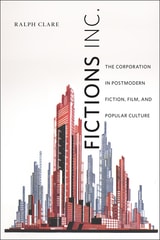
Fictions Inc.
The Corporation in Postmodern Fiction, Film, and Popular CultureClare, Ralph
Rutgers University Press, 2014
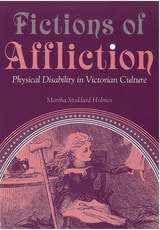
Fictions of Affliction
Physical Disability in Victorian CultureMartha Stoddard Holmes
University of Michigan Press, 2010

Fictions of Consciousness
Mill, Newman, and the Reading of Victorian ProseJonathan Loesberg
Rutgers University Press, 1986
Fictions of Evidence
Witnessing, Literature, and Community in the Late Middle AgesJamie K. Taylor
The Ohio State University Press, 2013
Fictions of God
English Renaissance Literature and the Invention of the Biblical NarratorRaphael Magarik
University of Chicago Press, 2025
We often identify secularization's characteristic literary form as the modern novel: out with divine scripture, in with human fictions. In Fictions of God, Raphael Magarik argues that this story overlooks the cultural upheavals of the Protestant Reformation. Early reformers imagined a Bible that was neither infallible nor inerrant but fictional, composed by a divine counterfactual: God crafted the text, they said, as if it had been written by the prophets. Early modern Protestants now found in their Bibles not a source of foundational truths but a model for unreliable narration, even fiction.
Fictions of God traces how this approach to literature passed from biblical commentators to poets like Abraham Cowley, John Milton, and Lucy Hutchinson amid the violent emergence of a new religious and political order—long before the eighteenth-century rise of the English novel. The result is a transformative account of the Reformation’s effect on imaginative literature and the secularization of the Bible itself.
Fictions of Land and Flesh
Blackness, Indigeneity, SpeculationMark Rifkin
Duke University Press, 2019
Fictions of Migration
Narratives of Displacement in Peru and BoliviaLorena Cuya Gavilano
The Ohio State University Press, 2021

Fictions of Modesty
Women and Courtship in the English NovelRuth Bernard Yeazell
University of Chicago Press, 1991
Combining evidence from conduct books and ladies' magazines with the arguments of influential theorists like Hume, Rousseau, and Wollstonecraft, this book begins by asking why writers were devoted to the anxious remaking of women's "nature" and to codifying rules for their porper behavior. Fictions of Modesty shows how the culture at once tried to regulate young women's desires and effectively opened up new possibilities of subjectivity and individual choice.
Yeazell goes on to demonstrate that modest delaying actions inform a central tradition of English narrative. On the Continent, the English believed, the jeune fille went from the artificial innocence of the convent to an arranged marriage and adultery; the natural modesty of the Englishwoman, however, enabled her to choose her own mate and to marry both prudently and with affection. Rather than taking its narrative impetus from adultery, then, English fiction concentrated on courtship and the consciousness of the young woman choosing. After paired studies of Richardson's Pamela and Cleland's Memoirs of a Woman of Pleasure (even Fanny Hill, Yeazell argues, is a modest English heroine at heart), Yeazell investigates what women novelists made of the virtues of modesty in works by Burney, Austen, Charlotte Bronte, and Gaskell.
A speculative postscript briefly addresses the discourse of late nineteenth-century science in order to show how Darwin's theory of sexual selection and Havelock Ellis's psychology of sex replicate fictions of female modesty. While those who sought to codify modest behavior in previous centuries often appealed to Nature for support, our modern understanding of the natural, Yeazell suggests, owes something to the work of the novelists.
Sharply reasoned and witty, Fictions of Modesty will appeal to all those interested in women's studies, the English novel, and the continuing history of relations between the sexes.
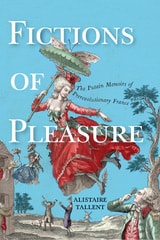
Fictions of Pleasure
The Putain Memoirs of Prerevolutionary FranceAlistaire Tallent
University of Delaware Press, 2024
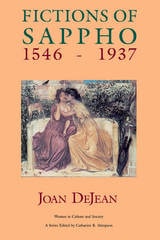
Fictions of Sappho, 1546-1937
Joan DeJean
University of Chicago Press, 1989

Fictions of the Bad Life
The Naturalist Prostitute and Her Avatars in Latin American Literature, 1880–2010Claire Thora Solomon
The Ohio State University Press, 2014
Fictions of the Bad Life illustrates how at very different moments—the turn of the twentieth century, the 1920s–30s, and finally the turn of the twenty-first century—the past is rewritten to accommodate contemporary desires for historical belonging and national identity, even as these efforts inevitably re-inscribe the repressed colonial history they wish to change.
Fidelity
An Annotated EditionSusan Glaspell, edited by Kevin McMullen
Southern Illinois University Press, 2025
Recovering a lost feminist story of scandal and strength for a new generation
Out of print in the United States since its original publication in 1915, Susan Glaspell’s largely forgotten novel Fidelity tells the story of Ruth Holland, a young woman who returns to her small Midwestern hometown after eleven years’ absence. Forced home by the death of her father, Ruth must face a family and community that have largely turned against her following her affair with a married man.
Glaspell, mostly known as a playwright and for her founding of the Provincetown Players, was also an accomplished novelist. Inspired by events in Glaspell’s own life, Fidelity portrays Ruth’s struggle to find fulfillment, love, and purpose in a society that imposes rigid expectations and limitations on how a woman should live. Ruth is a woman torn between love and commitment to her family—and between love and commitment to herself. Glaspell’s narrative shifts between characters, offering glimpses through the community’s eyes of the ways that Ruth’s return forces residents to confront their beliefs and the impact that they have. In the vein of Chopin’s The Awakening and Flaubert’s Madame Bovary, Glaspell’s Fidelity holds an important place in the history of early twentieth-century feminist literature and is long overdue to be back in print.
Students at the University of Nebraska–Lincoln, under the guidance of Kevin McMullen, project manager of the Walt Whitman Archive, have resurrected this neglected novel. The text includes contemporary photographs of Susan Glaspell, a new introduction, and annotations throughout, which provide useful commentary for students and general readers alike.
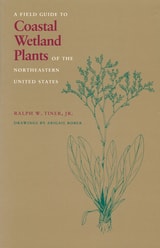
Field Guide to Coastal Wetland Plants of the Northeastern United States
Ralph W. Tiner
University of Massachusetts Press, 1987
Coastal wetlands are among our most important fish and wildlife habitats. For example, over two-thirds of our recreationally and commercially important marine fishes depend on coastal marshes and associated waters for nursery and spawning grounds.
This book is arranged in four major sections: (1) Coastal Wetland Ecology: A General Overview, (2) Identification of Coastal Wetland Plants, (3) Wetland Plant Descriptions and Illustrations, and (4) Places to Observe Coastal Wetlands, and (5) Sources of Other Information. In addition , a list of references used in preparing this book and a glossary of technical terms are provided.
Fieldworks
From Place to Site in Postwar PoeticsLytle Shaw
University of Alabama Press, 2013
Fieldworks offers a historical account of the social, rhetorical, and material attempts to ground art and poetry in the physicality of a site.
Arguing that place-oriented inquiries allowed poets and artists to develop new, experimental models of historiography and ethnography, Lytle Shaw draws out the shifting terms of this practice from World War II to the present through a series of illuminating case studies. Beginning with the alternate national genealogies unearthed by William Carlos Williams in Paterson and Charles Olson in Gloucester, Shaw demonstrates how subsequent poets sought to ground such inquiries in concrete social formations—to in effect live the poetics of place: Gary Snyder in his back-to-the-land familial compound, Kitkitdizze; Amiri Baraka in a black nationalist community in Newark; Robert Creeley and the poets of Bolinas, California, in the capacious “now” of their poet-run town. Turning to the work of Robert Smithson—who called one of his essays an “appendix to Paterson,” and who in turn has exerted a major influence on poets since the 1970s—Shaw then traces the emergence of site-specific art in relation both to the poetics of place and to the larger linguistic turn in the humanities, considering poets including Clark Coolidge, Bernadette Mayer, and Lisa Robertson.
By putting the poetics of place into dialog with site-specificity in art, Shaw demonstrates how poets and artists became experimental explicators not just of concrete locations and their histories, but of the discourses used to interpret sites more broadly. It is this dual sense of fieldwork that organizes Shaw’s groundbreaking history of site-specific poetry.
Fighting Over There
U.S. War Making and Contemporary Refugee LiteratureAlaina Kaus
University of Massachusetts Press, 2023
U.S. foreign policy has long been built on a dichotomy of an irreplaceable “here” and an expendable “there.” In his 2003 announcement of the military campaign in Iraq, George W. Bush declared that we would fight in the Middle East so we wouldn’t have to fight “on the streets of our cities.” But what do the millions of people who live over “there” have to say about U.S. interventions and the displacement they provoke?
In this pathbreaking study, Alaina Kaus analyzes literature by and about refugees who fled Southeast Asia, Central America, the Caribbean, North Africa, and the Middle East, in the wake of U.S. military occupation and economic intervention. Narratives by authors such as Lan Cao, Viet Thanh Nguyen, Demetria Martínez, Héctor Tobar, Dave Eggers, Mohsin Hamid, and Riverbend reveal contradictions in the human rights pledges that undergird U.S. foreign policy, which promote freedom while authorizing intervention and displacement, and favor market-based solutions over social justice and racial equality.
Fighting Theory
Avital Ronell, in conversation with Anne Dufourmantelle
University of Illinois Press, 2010
International interest in the work of Avital Ronell has expressed itself in reviews, articles, essays, and dissertations. For Fighting Theory, psychoanalyst and philosopher Anne Dufourmantelle conducted twelve interviews with Ronell, each focused on a key topic in one of Ronell's books or on a set of issues that run throughout her work.
What do philosophy and literary studies have to learn from each other? How does Ronell place her work within gender studies? What does psychoanalysis have to contribute to contemporary thought? What propels one in our day to Nietzsche, Derrida, Nancy, Bataille, and other philosophical writers? How important are courage and revolt? Ronell's discussions of such issues are candid, thoughtful, and often personal, bringing together elements from several texts, illuminating hints about them, and providing her up-to-date reflections on what she had written earlier.
Intense and often ironic, Fighting Theory is a poignant self-reflection of the worlds and walls against which Avital Ronell crashed.
Fighting Words
Polemics and Social Change in Literary NaturalismIra Wells
University of Alabama Press, 2013

Figurations of France
Literary Nation-Building in Times of Crisis (1550-1650)Marcus Keller
University of Delaware Press, 2011
In Figurations of France: Literary Nation-Building in Times of Crisis (1550-1650), Marcus Keller explores the often indirect and subtle ways in which key texts of early modern French literature, from Joachim Du Bellay’s Défense et illustration de la langue française to Corneille’s Le Cid, contribute to the fiction of France as a nation. Through his fresh take on these and other classics, he shows that they not only create the French as an imaginary community but also provide venues for an incisive critique of the political and cultural construct that underpins the modern nation-state.
Current theories of nationhood, in particular the concepts of the nation form and fictive ethnicity (Étienne Balibar), inform the close readings of Du Bellay’s Défense, Ronsard’s Discours, d’Aubigné’s Tragiques, Montaigne’s Essays, Malherbe’s odes, and Corneille’s Le Cid and Horace. They reveal the imaginary power and unifying force of early modern figurations of France that come to bear in this heteregoneous corpus of French literature, with texts ranging from manifesto and epic poem to essay and tragedy. Situating each author and text in their particular historical context, the study suggests that the literary invention of France in the sixteenth and seventeenth centuries is as abundant as it is conceptually innovative: Du Bellay, for example, develops an idea of France by portraying the French language as a pruned and grafted tree while d’Aubigné proposes to think of the French as a nuclear but fatherless family. Blood functions as a highly charged metaphor of nationhood in all texts.
Opening up new perspectives on these canonical works, the focus on literary nation-building also puts them into unexpected and thought-provoking relationships to each other. Figurations of France deliberately crosses the fictive boundary between the sixteenth and the seventeenth centuries and argues that, in terms of imaginary nation-building, the contours that delineate the early modern period and separate it from what we call the modern era quickly begin to dissolve. Ultimately, the book makes the case for early modern literature as a creative and critical discourse, able to nourish and nuance our thinking about the nation as the postmodern nation-state is increasingly called into question by the economical, political, and cultural effects of globalization.
Published by University of Delaware Press. Distributed worldwide by Rutgers University Press.