Results by title
3576 books match the query 'American' and 135 start with f
Freak Performances
Dissidence in Latin American TheaterAnalola Santana
University of Michigan Press, 2018
Freedom's Empire
Race and the Rise of the Novel in Atlantic Modernity, 1640-1940Laura Doyle
Duke University Press, 2007
Doyle brings together authors often separated by nation, race, and period, including Aphra Behn, Eliza Haywood, Olaudah Equiano, Nathaniel Hawthorne, Harriet Wilson, Pauline Hopkins, George Eliot, and Nella Larsen. In so doing, she reassesses the strategies of early women novelists, reinterprets the significance of rape and incest in the novel, and measures the power of race in the modern English-language imagination.
Frenchtown Chronicles of Prairie du Chien
History and Folklore from Wisconsin's FrontierMary Elise Antoine
Wisconsin Historical Society Press, 2016
Albert Coryer, the grandson of a fur trade voyageur-turned-farmer, had a gift for storytelling. Born in 1877, he grew up in Prairie du Chien hearing tales of days gone by from his parents, grandparents, and neighbors who lived in the Frenchtown area. Throughout his life, Albert soaked up the local oral traditions, including narratives about early residents, local landmarks, interesting and funny events, ethnic customs, myths, and folklore.
Late in life, this lively man who had worked as a farm laborer and janitor drew a detailed illustrated map of the Prairie du Chien area and began to write his stories out longhand, in addition to sharing them in an interview with a local historian and folklore scholar. The map, stories, and interview transcript provide a colorful account of Prairie du Chien in the late nineteenth century, when it was undergoing significant demographic, social, and economic change. With sharp historical context provided by editors Lucy Eldersveld Murphy and Mary Elise Antoine, Coryer’s tales offer an unparalleled window into the ethnic community comprised of the old fur trade families, Native Americans, French Canadian farmers, and their descendants.

From Behind the Veil
A STUDY OF AFRO-AMERICAN NARRATIVERobert B. Stepto
University of Illinois Press, 1991
From Codex to Hypertext
Reading at the Turn of the Twenty-first CenturyAnouk Lang
University of Massachusetts Press, 2012
In From Codex to Hypertext, scholars from multiple disciplines engage with both of these strands. This volume includes essays that consider how changes such as the mounting ubiquity of digital technology and the globalization of structures of publication and book distribution are shaping the way readers participate in the encoding and decoding of textual meaning. Contributors also examine how and why reading communities cohere in a range of contexts, including prisons, book clubs, networks of zinesters, state-funded programs designed to promote active citizenship, and online spaces devoted to sharing one's tastes in books.
As concerns circulate in the media about the ways that reading—for so long anchored in print culture and the codex—is at risk of being irrevocably altered by technological shifts, this book insists on the importance of tracing the historical continuities that emerge between these reading practices and those of previous eras.
In addition to the volume editor, contributors include Daniel Allington, Bethan Benwell, Jin Feng, Ed Finn, Danielle Fuller, David S. Miall, Julian Pinder, Janice Radway, Julie Rak, DeNel Rehberg Sedo, Megan Sweeney, Joan Bessman Taylor, Molly Abel Travis, and David Wright.
From Darkening Porches
PoemsJo McDougall
University of Arkansas Press, 1996

From Gift to Commodity
Capitalism and Sacrifice in Nineteenth-Century American FictionHildegard Hoeller
University of New Hampshire Press, 2012
From Outlaw to Classic
Canons in American PoetryAlan Golding
University of Wisconsin Press, 1995
From Outlaw to Classic presents a sweeping history of the forces that have shaped, and continue to shape, the American poetry canon. Students, scholars, critics, and poets will welcome this enlightening and impressively documented book.
Recent writings by critics and theorists on literary canons have dealt almost exclusively with prose; Alan Golding shows that, like all canons, those of American poetry are characterized by conflict. Choosing a series of varied but representative instances, he analyzes battles and contentions among poets, anthologists, poetry magazine editors, and schools of thought in university English departments. The chapters:
• present a history of American poetry anthologies
• compare competing models of canon-formation, the aesthetic (poet-centered) and the institutional (critic-centered)
• discuss the influence of the New Critics, emphasizing their status as practicing poets, their anti-nationalist reading of American poetry, and the landmark textbook, Understanding Poetry by Cleanth Brooks and Robert Penn Warren
• examine the canonizing effects of an experimental “little magazine,” Origin
• trace how the Language poets address, in both their theory and their method, the canonizing institutions and canonical assumptions of the age.

From Page to Place
American Literary Tourism and the Afterlives of AuthorsJennifer Harris
University of Massachusetts Press, 2017
Literary tourism has existed in the United States since at least the early nineteenth century, and now includes sites in almost every corner of the country. From Page to Place examines how Americans have taken up this form of tourism, offering an investigation of the places and practices of literary tourism from literary scholars, historians, tour guides, and collectors. The essays here begin to trace for the first time the histories of some of these sites, the rituals associated with literary tourism, and the ways readers and visitors consume popular literature through touristic endeavors.
In addition to the editors, contributors include Rebecca Rego Barry, Susann Bishop, Ben de Bruyn, Erin Hazard, Caroline Hellman, Michelle McClellan, Mara Scanlon, and Klara-Stephanie Szlezák.
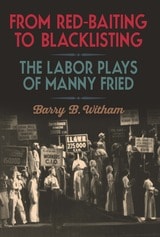
From Red-Baiting to Blacklisting
The Labor Plays of Manny FriedBarry B. Witham
Southern Illinois University Press, 2020
Author Barry B. Witham reclaims the work of Manny Fried, an essential American playwright so thoroughly blacklisted after he defied the House Committee on Un-American Activities in 1954, and again in 1964, that his work all but completely disappeared from the canon. Witham details Manny Fried’s work inside and outside the theatre and examines his three major labor plays and the political climate that both nurtured and disparaged their productions. Drawing on never-before-published interview materials, Witham reveals the details of how the United States government worked to ruin Fried’s career.
From Red-Baiting to Blacklisting includes the complete text of Fried’s major labor plays, all long out of print. In Elegy for Stanley Gorski, Fried depicts one of the many red-baiting campaigns that threatened countless unions in the wake of the Taft-Hartley Act and the collusion of the Catholic Church with these activities. In Drop Hammer, Fried tackles the issues of union dues, misappropriation, and potential criminal activities. In the third play, The Dodo Bird, perhaps his most popular, Fried achieves a remarkable character study of a man outsourced from his job by technology and plant closures.
Manny Fried’s plays portray the hard edges of capitalism and government power and illuminate present-day struggles with hostility to labor unions and the passage in several states of right-to-work laws. Fried had no illusions about the government’s determination to destroy communism and unionism—causes to which he was deeply committed.
From Walden Pond to Jurassic Park
Activism, Culture, and American StudiesPaul Lauter
Duke University Press, 2001
With anecdote peppered discussions ranging from specific literary texts and movies to the future of higher education and the efficacy of unions, From Walden Pond to Jurassic Park entertains even as it offers a twenty-first century account of how and why Americanists at home and abroad now do what they do. Drawing on his forty-five years of teaching and research as well as his experience as a political activist and a cultural radical, Lauter shows how a multifaceted increase in the United States’ global dominion has infused a particular political urgency into American Studies. With its military and economic influence, its cultural and linguistic reach, the United States is—for better or for worse—too formidable and potent not to be understood clearly and critically.
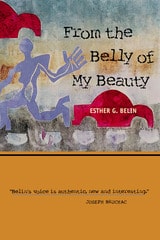
From the Belly of My Beauty
Esther G. Belin
University of Arizona Press, 1999
In this bold new collection of poems, Belin presents a startling vision of urban California—particularly Los Angeles—contrasted with Navajo life in the Four Corners region. She presents aspects of Diné life and history not normally seen by readers accustomed to accounts written by Navajos brought up on the reservation.
Her work reveals a difference in experience but a similarity in outlook. Belin's poems put familiar cultural forms in a new context, as Coyote "struts down east 14th / feeling good / looking good / feeling the brown." Her character Ruby dramatizes the gritty reality of a Native woman's life ("I laugh / sit / smoke a Virginia Slim / and talk to the spirits"). Her use of Diné language and poignant descriptions of family life will remind some of Joy Harjo's work, but with every turn of the page, readers will know that Belin is making her own mark on Native American literature.
From the Belly of My Beauty is also a ceremony of affirmation and renewal for those Native Americans affected by the Federal Indian Relocation Program of the 1950s and '60s, with its attempts to "assimilate" them into the American mainstream. They have survived by remembering who they were and where they came from. And they have survived so that they might bear witness, as Esther Belin so powerfully does. Belin holds American culture accountable for failing to treat its indigenous peoples with respect, but speaks for the ability of Native culture to survive and provide hope, even for mixed-blood or urban Indians. She is living proof that Native culture thrives wherever its people are found.
From the Book of Giants
Joshua Weiner
University of Chicago Press, 2006
Song
for Thom Gunn
There is no east or west
in the wood you fear and seek,
stumbling past a gate of moss
and what you would not take.
And what you thought you had
(the Here that is no rest)
you make from it an aid
to form no east, no west.
No east. No west. No need
for given map or bell,
vehicle, screen, or speed.
Forget the house, forget the hill.
Taking its title from a set of writings found in the Dead Sea Scrolls, From the Book of Giants retunes the signal broadcast from these ancient fragments, transmitting a new sound in the shape of a Roman drain cover, in imitations of Dante and Martial, in the voice of a cricket and the hard-boiled American photographer Weegee, in elegies both public and personal, and in poems that range from the social speech of letters to the gnomic language of riddles. Out of poetry’s “complex of complaint and praise,” Joshua Weiner discovers, in one poem, his own complicity in Empire during his son’s baseball game at the White House. In another, an embroidered parrot sings a hermetic nursery rhyme to an infant after 9/11.

From the Civil War to the Apocalypse
Postmodern History and American FictionTimothy Parrish
University of Massachusetts Press, 2008
In addressing the postmodernist claim that history works no differently than fiction, Timothy Parrish rejects the implication that history is dead or hopelessly relativistic. Rather, he shows how the best postmodern novelists compel their readers to accept their narratives as true in the same way that historians expect their readers to accept their narratives as true. These novelists write history as a form of fiction.
If the great pre-modernist American historians are Francis Parkman, George Bancroft, and Henry Adams, who are the great modernist or postmodernist historians? In the twentieth century, Parrish argues, the most powerful works of American history were written by William Faulkner, Toni Morrison, Thomas Pynchon, Don DeLillo, Joan Didion, and Cormac McCarthy. What survives a reading of these novels is the sense that writers otherwise identified as multicultural or postmodern share the view that nothing matters more than history and what one believes its possibilities to be. In other words, Parrish concludes, history, not identity, is the ground of postmodern American fiction.
From the Fire Hills
Chad Davidson
Southern Illinois University Press, 2014
In From the Fire Hills, poet Chad Davidson shows us an Italy that is far from the romanticized notions of sun-drenched fields and self-discovery. Instead we see a maelstrom of chaos and contradiction, a place where the frenetic pace of modernity is locked in a daily struggle with recalcitrant history.
This autobiographical collection explores the myriad ways in which Italian culture survives its own parodies and evokes a modern ferocity that harkens back to Italy’s barbarian past. As the narrator, rendered vulnerable by language, embarks on his journey, lines of location, time, and perception blur. From the siren song of Dante’s grave to the heights of San Luca, from streets where policemen with Uzis tread a hair’s breadth away from the macabre remains of Capuchin monks, Davidson’s Italy is a study in contrast between the contemporary and the classical, the sacred and the profane. Within these poems sensual and savage revelations unfold, exposing new, uncanny, and often uncomfortable spaces to explore in this well-traveled realm of Western imagination.
Throughout the volume loom “the fire hills”: the scorched mountains of Sicily in summer; the memories of Italians living near the Gothic Line outside Bologna, where the Germans dug in and received heavy bombing at the close of World War II; even the wildfires igniting the San Gabriel foothills in southern California; all the way back to the burning city of Carthage in Virgil’s Aeneid. As the ash settles and the smoke clears, we realize that what we remember is often just remains, shells, and burned out wreckage, as if there were another type of memory.
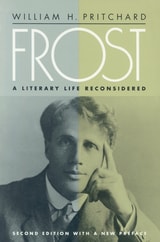
Frost
A Literary Life ReconsideredWilliam H. Pritchard
University of Massachusetts Press, 1993
Although this book does not attempt to revive the image of Frost as a benign, white-haired sage, it does present him in a strikingly different light than did Lawrence Thompson’s controversial three-volume biography. William H. Pritchard sees Frost whole, demonstrating the complex interaction between the poet’s life and work. Based not only on the poetry, but on letters, notebooks, recorded interviews, and public appearances as well, Frost: A Literary Life Reconsidered examines the most interesting and significant aspects of Frost’s life and poetry and offers an attentive, sensitive portrait of an artist whose critical reputation continues to grow.
Fruit
Bruce Snider
University of Wisconsin Press, 2020

Fuchsia in Cambodia
PoemsRoy Jacobstein
Northwestern University Press, 2008
Fugitive Dreams
An Anthology of Dutch Colonial LiteratureE. M. Beekman
University of Massachusetts Press, 1988
Fugitive Texts
Slave Narratives in Antebellum Print CultureMichaël Roy, translated by Susan Pickford
University of Wisconsin Press, 2024
In Fugitive Texts, Michaël Roy offers the first book-length study of the slave narrative as a material artifact. Drawing on a wide range of sources, he reconstructs the publication histories of a number of famous and lesser-known narratives, placing them against the changing backdrop of antebellum print culture. Slave narratives, he shows, were produced through a variety of print networks. Remarkably few were published under the full control of white-led antislavery societies; most were self-published and distributed by the authors, while some were issued by commercial publishers who hoped to capitalize on the success of Harriet Beecher Stowe’s Uncle Tom’s Cabin. The material lives of these texts, Roy argues, did not end within the pages. Antebellum slave narratives were “fugitive texts” apt to be embodied in various written, oral, and visual forms.
Published to rave reviews in French, Fugitive Texts illuminates the heterogeneous nature of a genre often described in monolithic terms and ultimately paves the way for a redefinition of the literary form we have come to recognize as “the slave narrative.”
Full Catastrophe Living
Zach Savich
University of Iowa Press, 2009
In meditations, songs, slapstick sequences, sonnets, narratives, and tightly carved fragments, Savich explores the conflicts between romance and reality, between inventing a new world and staying true to this one. Relishing both traditional and experimental poetics, he takes refreshing, ecumenical risks to show the “strange grace / of bells that ring with a rag’s polishing.” Like a Fourth of July band conductor guiding planes to land, his poetic wit alters what’s real. This book will change the ways that readers think about poetry, language’s expressive capacity, and the robust world around us.
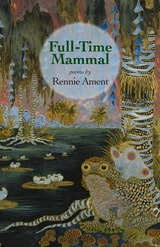
Full-Time Mammal
Rennie Ament
University of Iowa Press, 2026
In Full-Time Mammal, perception becomes both subject and site of excavation. Rennie Ament wrestles with what it means to be awake and aware in a disorienting world. How are you supposed to know what you don’t know? As ancient defense mechanisms fail, the brain must be retrained, and poetry becomes a divination tool, a game, a portal, a potential weapon, a way through fog.
Survival requires becoming a poet-cum-scientist. Drool becomes data. Ants carry thoughts to rot beneath earth. Animals, plants, and objects are not symbols but companionate presences. This collection feels its way through the failure of imagination at the heart of preordained systems, turning to the natural world not for refuge, but reinvention.
Function Of Criticism
Problems and ExercisesYvor Winters
Ohio University Press, 1957
The Function of Criticism: Problems and Exercises brings together five essays by Yvor Winters: “Problems for the Modern Critic of Literature,” “The Audible Reading of Poetry,” “The Poetry of Gerard Manley Hopkins,” “Robert Frost, Or the Spiritual Drifter as Poet,” and “English Literature in the Sixteenth Century.”
Funny
Jennifer Michael Hecht
University of Wisconsin Press, 2005

Furious Cooking
Maureen Seaton
University of Iowa Press, 1996
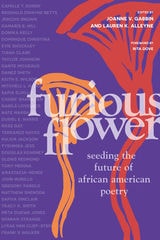
Furious Flower
Seeding the Future of African American PoetryEdited by Joanne V. Gabbin and Lauren K. Alleyne; Foreword by Rita Dove
Northwestern University Press, 2020
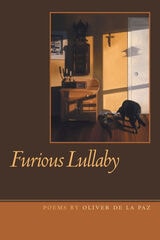
Furious Lullaby
Oliver de la Paz
Southern Illinois University Press, 2007
Furious Lullaby is both a celebration of and a eulogy to the body in the twenty-first century. The collection, which examines the larger concepts of salvation and temptation in a world of blossoming strife, includes a series of aubades – dramatic poems culminating with the separation of lovers at dawn. The lovers suffer a metaphysical crisis, seeking to know what is good, what is evil, and how to truly know the difference. Knowing, however, invites the terrible into their world. The Devil, a seductive trickster, haunts the landscape as a voice who dares each inquisitor to learn about mortality, morality, the beautiful, and the unspeakable through direct experience. Furious Lullaby offers a departure from the lighter prose poetry of de la Paz’s Names above Houses and preserves the author’s concern with the nature of human grace.
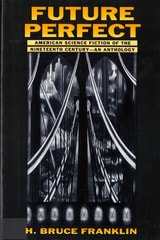
Future Perfect
American Science Fiction of the Nineteenth Century: An AnthologyFranklin, H. Bruce
Rutgers University Press, 1995
This selection of unusual storeis by important American writers-Hawthorne, Melville, Poe, Bellamy and Twain-and by less well-known tellers such as Ambrose Bierce, S. Weir Mitchell and Fitz-James O'Brien, challenges the commonly held belief that science fiction is a twenthiethcentury phenomenon, or that it began with Jule Verne and H,. G. Wells. Here are tales of marvelous inventions, automanta, biolgocial and psychological experiments, utopias, extra-sensory perception and time and space travel. Many of them have been out of print since before World War I, but they remain high in intrinsic interest of the general reader and for the specialist.
The accompanying critical essays explore the relationships between science fiction and other financial modes, and illuminate the nataure of the bonds betwen science and society and fantasies and social aspirations. Professor Franklin also offers an original, theoretical definition of science ficiton. This book comes as a revelatin. One of the best-edited anthologies I have ever encountered...Mr. Franklin's critical introductions, containing much valuable information about many works not included in this book, are as interesting as the stories he prints.
Future of Modernism
Hugh Witemeyer, Editor
University of Michigan Press, 1997
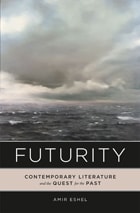
Futurity
Contemporary Literature and the Quest for the PastAmir Eshel
University of Chicago Press, 2012
Fyodor Dostoevsky, Walker Percy, and the Age of Suicide
John F. Desmond
Catholic University of America Press, 2019
fretwork
Glazer, Michele
University of Iowa Press, 2021
Fretwork hazards a response to its dilemma by turning, skeptically and resiliently, toward the materials of lyric poetry and empathetic action, however fragmented and fragile. Glazer’s poems are sculpted word by word, their forms evoking both organic process and machined exactness. Their voice blends command and humility, openness and terseness, generosity and rigor, gravity and mordant humor.
from Sand Creek
Simon J. Ortiz
University of Arizona Press, 2000
Originally published in a small-press edition, from Sand Creek makes a large statement about injustices done to Native peoples in the name of Manifest Destiny. It also makes poignant reference to the spread of that ambition in other parts of the world—notably in Vietnam—as Ortiz asks himself what it is to be an American, a U.S. citizen, and an Indian. Indian people have often felt they have had no part in history, Ortiz observes, and through his work he shows how they can come to terms with this feeling. He invites Indian people to examine the process they have experienced as victims, subjects, and expendable resources—and asks people of European heritage to consider the motives that drive their own history and create their own form of victimization.
Through the pages of this sobering work, Ortiz offers a new perspective on history and on America. Perhaps more important, he offers a breath of hope that our peoples might learn from each other:
This America
has been a burden
of steel and mad
death,
but, look now,
there are flowers
and new grass
and a spring wind
rising
from Sand Creek.
from unincorporated territory [guma’]
Craig Santos Perez
Omnidawn, 2014

from unincorporated territory [saina]
Craig Santos Perez
Omnidawn, 2010