Results by title
8812 books match the query 'Political Science' and 329 start with f
Fighting from a Distance
How Filipino Exiles Helped Topple a DictatorJose V. Fuentecilla
University of Illinois Press, 2013

Fights, Games, and Debates
Anatol Rapoport
University of Michigan Press, 1974
Figurations of Modernity
Global and Local Representations in Comparative PerspectiveEdited by Vincent Houben and Mona Schrempf
Campus Verlag, 2008
Filibustering
A Political History of Obstruction in the House and SenateGregory Koger
University of Chicago Press, 2010
In the modern Congress, one of the highest hurdles for major bills or nominations is gaining the sixty votes necessary to shut off a filibuster in the Senate. But this wasn’t always the case. Both citizens and scholars tend to think of the legislative process as a game played by the rules in which votes are the critical commodity—the side that has the most votes wins. In this comprehensive volume,Gregory Koger shows, on the contrary, that filibustering is a game with slippery rules in which legislators who think fast and try hard can triumph over superior numbers.
Filibustering explains how and why obstruction has been institutionalized in the U.S. Senate over the last fifty years, and how this transformation affects politics and policymaking. Koger also traces the lively history of filibustering in the U.S. House during the nineteenth century and measures the effects of filibustering—bills killed, compromises struck, and new issues raised by obstruction. Unparalleled in the depth of its theory and its combination of historical and political analysis, Filibustering will be the definitive study of its subject for years to come.

Filipino Crosscurrents
Oceanographies of Seafaring, Masculinities, and GlobalizationKale Bantigue Fajardo
University of Minnesota Press, 2011
Filipino seamen currently compose approximately twenty percent of the 1.2 million international maritime transportation workers. Ninety percent of the world’s goods and commodities are transported by ship. Taken together, these statistics attest to the critical role Filipino seamen play in worldwide maritime trade. In Filipino Crosscurrents, an interdisciplinary ethnography, Kale Bantigue Fajardo examines the cultural politics of seafaring, Filipino maritime masculinities, and globalization in the Philippines and the Filipino diaspora.
Drawing on fieldwork conducted on ships and in the ports of Manila and Oakland, as well as on an industrial container ship that traveled across the Pacific, Fajardo argues that Filipino seamen have become key figures through which the Philippine state and economic elites promote Filipino masculinity and neoliberal globalization. From government officials to working-class seamen and seafarers’ advocates, Fajardo’s wide-ranging analysis exposes the gaps in dominant narratives of Filipino seamen in national, regional, and global contexts.
Writing in a hybrid style that weaves together ethnographic description, cultural critique, travelogue, and autobiography, Fajardo invites readers to reconsider the meanings of masculinity and manhood.

Film and the Anarchist Imagination
Expanded Second EditionRichard Porton
University of Illinois Press, 2020

Film in the Middle East and North Africa
Creative DissidenceEdited by Josef Gugler
University of Texas Press, 2011
This is the first study to cover cinemas from Iran to Morocco. Nine essays present the region's major national cinemas, devoting special attention to the work of directors who have given image and voice to dissent from political regimes, from patriarchal customs, from fundamentalist movements, and from the West. These country essays are complemented by in-depth discussions of eighteen films that have been selected for both their excellence and their critical engagement with pressing current issues. The introduction provides a comprehensive overview of filmmaking throughout the region, including important films produced outside the national cinemas. The long history of Iranian cinema, its international renown, and the politics of directors confronting the state, earns it a special place in this volume. The other major emphasis is on the Israel/Palestine conflict, featuring films by Palestinian directors, Israelis, and an Egyptian working in Syria.
Nineteen authors collaborated on this book, among them Walter Armbrust, Roy Armes, Kevin Dwyer, Eric Egan, Nurith Gertz, Lina Khatib, Florence Martin, and Nadia Yaqub. About half of the contributors are film scholars; the others range across literary studies and the social sciences to two film directors and a novelist. Beyond differences in disciplinary orientation, there is considerable variation among contributors in the perspectives that inform their writing. They offer an illuminating range of approaches to the cinemas of the region.
The book is richly illustrated with posters of the featured films, photos of their directors at work, and stills illustrating critical arguments in the film essays.
Finance Capitalism Unveiled
Banks and the German Political EconomyRichard Deeg
University of Michigan Press, 1999

Financing Local Government in Indonesia
Mis Sea#84Nick Devas
Ohio University Press, 1989
Not surprisingly in view of the country's great size, vast regional differences, and cultural diversity, local government in Indonesia is on a massive scale. The task of managing and financing a system of local government is a troublesome one; the development needs of different regions are vast and the tasks facing local government are generally far beyond their limited resources. It is the purpose of this book not only to describe the existing system of local government but also to analyze it, identify weaknesses and problems with the present arrangement, and to propose realistic lines of reform. This collection of essays will provide a useful and constructive contribution to the discussion of issues central to the system of local government in Indonesia.

Financing Medicaid
Federalism and the Growth of America's Health Care Safety NetShanna Rose
University of Michigan Press, 2013
Conventional wisdom holds that programs for the poor are vulnerable to instability and retrenchment. Medicaid, however, has grown into the nation’s largest intergovernmental grant program, accounting for nearly half of all federal funding to state and local governments. Medicaid’s generous open-ended federal matching grants have given governors a powerful incentive to mobilize on behalf of its maintenance and expansion, using methods ranging from lobbying and negotiation to creative financing mechanisms and waivers to maximize federal financial assistance. Perceiving federal retrenchment efforts as a threat to states’ finances, governors, through the powerful National Governors’ Association, have repeatedly worked together in bipartisan fashion to defend the program against cutbacks.
Financing Medicaidengagingly intertwines theory, historical narrative, and case studies, drawing on sources including archival materials from the National Governors’ Association and gubernatorial and presidential libraries, Centers for Medicare and Medicaid Services data, the Congressional Record, and interviews.

Finding Turtle Farm
My Twenty-Acre Adventure in Community-Supported AgricultureAngela Tedesco
University of Minnesota Press, 2022
The story of starting and running an organic farm—told by the woman who owned one of the first Community-Supported Agriculture operations in the Upper Midwest
On a twenty-acre farm in Iowa in 1995, Angela Tedesco planted the seeds (quite literally) of a quiet revolution. While American agriculture had strayed so far afield, her farm would raise food that served the earth and the community as well as the palate. In Finding Turtle Farm, Tedesco recounts this adventure in all its down-and-dirty work and wonder, from plan and plot to harvest, with nods along the way to the vagaries of weather, pests, and human nature.
Introducing Community-Supported Agriculture to Iowa, Tedesco’s Turtle Farm educated its customers along with providing seasonal boxes of produce—an undertaking that continues here, as Tedesco describes what it takes to establish and run an organic operation, bringing to bear all her experience growing up on a family farm, studying chemistry and horticulture, and shepherding a religious education program. From ordering seeds and tending greenhouses to surviving floods and a personal health crisis, Tedesco tells a story of transforming a piece of land and the life within it. She includes practical information about harvesting and preserving food, the discoveries of research conducted on the farm and bonds established between farmers, and even recipes to make delicious use of the produce in your CSA box.
Looking forward to a healthier, happier future when crops are more than mere commodities and food feeds the soul of a community, Finding Turtle Farm is an enlightening, hard-won, and ultimately hopeful account of what it means to meet the most basic of human needs.
Finding the Lost Year
What Happened When Little Rock Closed Its Public SchoolsSondra Gordy
University of Arkansas Press, 2009
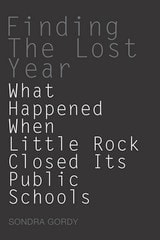
Much has been written about the Little Rock School Crisis of 1957, but very little has been devoted to the following year—the Lost Year, 1958–59—when Little Rock schools were closed to all students, both black and white. Finding the Lost Year is the first book to look at the unresolved elements of the school desegregation crisis and how it turned into a community crisis, when policymakers thwarted desegregation and challenged the creation of a racially integrated community and when competing groups staked out agendas that set Arkansas’s capital on a path that has played out for the past fifty years.
In Little Rock in 1958, 3,665 students were locked out of a free public education. Teachers’ lives were disrupted, but students’ lives were even more confused. Some were able to attend schools outside the city, some left the state, some joined the military, some took correspondence courses, but fully 50 percent of the black students went without any schooling. Drawing on personal interviews with over sixty former teachers and students, black and white, Gordy details the long-term consequences for students affected by events and circumstances over which they had little control.
“Fifty years ago segregationists trying to keep black students out of Little Rock Central High inadvertently broke up one of the country’s greatest football dynasties. . . . Wait a minute. . . . Who said you can’t have a high school football team just because you don’t have a high school? Canceling football, Faubus decreed, would be ‘a cruel and unnecessary blow to the children.’ O.K. then, everyone agreed. Play ball!”
—“Blinded by History,” Sports Illustrated
Fire on the Prairie
Harold Washington, Chicago Politics, and the Roots of the Obama PresidencyGary Rivlin
Temple University Press, 2012
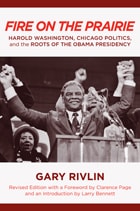
Harold Washington’s historic and improbable victory over the vaunted Chicago political machine shook up American politics. The election of the enigmatic yet engaging Washington led to his serving five tumultuous years as the city’s first black mayor. He fashioned an uneasy but potent multiracial coalition that today still stands as a model for political change.
In this revised edition of Fire on the Prairie, acclaimed reporter Gary Rivlin chronicles Washington’s legacy—a tale rich in character and intrigue. He reveals the cronyism of Daley’s government and Washington’s rivalry with Jesse Jackson. Rivlin also shows how Washington’s success inspired a young community organizer named Barack Obama to turn to the electoral arena as a vehicle for change. While the story of a single city, , this political biography is anything but parochial.

First Amendment Studies in Arkansas
The Richard S. Arnold Prize EssaysStephen Smith
University of Arkansas Press, 2016
This collection of fourteen essays written by young communication scholars at the University of Arkansas presents unique insights into how First Amendment issues have played out in the state. Rather than exploring the particular legal issues and the constitutional principles enunciated by the courts, First Amendment Studies tells the stories of actual people expressing challenged or unpopular points of view and reveals the ways that constitutional controversies arise from the actions of local officials and individual citizens.
Drawing on public documents as well as extensive interviews with participants, these essays demonstrate the dynamics of democratic dissent—on college campuses, in public schools, in churches, on the streets, in the forests and on the farms, and in legislative chambers and courtrooms.
Each essay was selected for the Richard S. Arnold Prize in First Amendment Studies, an endowed fund established in 1999 to encourage University of Arkansas graduate students in communication and the liberal arts to explore and examine questions about freedom of speech and freedom of religion.
First Do No Harm
Humanitarian Intervention and the Destruction of YugoslaviaDavid N. Gibbs
Vanderbilt University Press, 2009
The book focuses on the 1991-99 breakup of Yugoslavia, which helped forge the idea that the United States and its allies could stage humanitarian interventions that would end ethnic strife. It is widely believed that NATO bombing campaigns in Bosnia and Kosovo played a vital role in stopping Serb-directed aggression, and thus resolving the conflict.
Gibbs challenges this view, offering an extended critique of Samantha Power's Pulitzer Prize-winning book, A Problem from Hell: America in the Age of Genocide. He shows that intervention contributed to the initial breakup of Yugoslavia, and then helped spread the violence and destruction. Gibbs also explains how the motives for U.S. intervention were rooted in its struggle for continued hegemony in Europe.
First Do No Harm argues for a new, noninterventionist model for U.S. foreign policy, one that deploys nonmilitary methods for addressing ethnic violence.
First Nationalism Then Identity
On Bosnian Muslims and Their Bosniak IdentityMirsad Kriještorac
University of Michigan Press, 2022
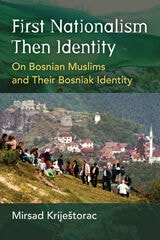
First Nationalism Then Identity focuses on the case of Bosnian Muslims, a rare historic instance of a new nation emerging. Although for Bosnian Muslims the process of national emergence and the assertion of a new salient identity have been going on for over two decades, Mirsad Kriještorac is the first to explain the significance of the whole process and how the adoption of their new Bosniak identity occurred. He provides a historical overview of Yugoslav and Bosnian Slavic Muslims’ transformation into a full-fledged distinct and independent national group as well as addresses the important question in the field of nationalism studies about the relationship between and workings of nationalism and identity. While this book is noteworthy for ordinary readers interested in the case of Bosnian Muslims, it is an important contribution to the scholarly debate on the role of nationalism in the political life of a group and adds an interdisciplinary perspective to comparative politics scholarship by drawing from anthropology, history, geography, and sociology.
First Son
The Biography of Richard M. DaleyKeith Koeneman
University of Chicago Press, 2013
"Mayor Richard M. Daley dropped the bomb at a routine news conference at City Hall on Tuesday. With no prelude or fanfare, Mr. Daley announced that he would not seek re-election when his term expires next year. 'Simply put, it's time,' he said." New York Times, September 7, 2010
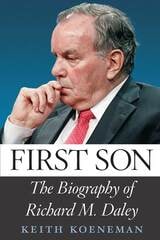
With those four words, an era ended. After twenty-two years, the longest-serving and most powerful mayor in the history of Chicago—and, arguably, America—stepped down, leaving behind a city that was utterly transformed, and a complicated legacy we are only beginning to evaluate.
With Koeneman as our guide, we follow young Daley from his beginnings as an average Bridgeport kid thought to lack his father's talent and charisma to his unlikely transformation into an iron-fisted leader. Daley not only escaped the giant shadow of his father but also transformed Chicago from a gritty, post-industrial Midwestern capital into a beautiful, sophisticated global city widely recognized as a model for innovative metropolises throughout the world.
But in spite of his many accomplishments, Richard M. Daley's record is far from flawless. First Son sets the dramatic improvement of certain parts of the city against the persistent realities of crime, financial stress , failing public housing, and dysfunctional schools. And it reveals that while in many ways Daley broke with the machine politics of his father, he continued to reward loyalty with favors, use the resources of city government to overwhelm opponents, and tolerate political corruption.
A nuanced portrait of a complex man, First Son shows Daley to be sensitive yet tough, impatient yet persistent, a street-smart fighter and detail-driven policy expert who not only ran Chicago, but was Chicago.

First the Transition, then the Crash
Eastern Europe in the 2000sEdited by Gareth Dale
Pluto Press, 2011
The 1989-91 upheavals in Eastern Europe sparked a turbulent process of social and economic transition. Two decades on, with the global economic crisis of 2008-10, a new phase has begun.
This book explores the scale and trajectory of the crisis through case studies of the Czech Republic, Hungary, Latvia, Poland, Russia, Ukraine and the former Yugoslavia. The contributors focus upon the relationships between geopolitics, the world economy and class restructuring.
The book covers the changing relationship between business and states; foreign capital flows; financialisation and asset price bubbles; austerity and privatisation; and societal responses, in the form of reactionary populism and progressive social movements.
Challenging neoliberal interpretations that envisage the transition as a process of unfolding liberty, the dialectic charted in these pages reveals uneven development, attenuated freedoms and social polarisation.
Fiscal Federalism
Quantitative StudiesEdited by Harvey S. Rosen
University of Chicago Press, 1988
The first three papers study the distribution of power and responsibilities among the various levels of government. John Joseph Wallis and Wallace E. Oates look at the extend and evolution of decentralization in the state and local sector; Robert P. Inman examines the growth of federal grants and the structure of congressional decision making; and Jeffrey S. Zax investigates the effects of the number of government jurisdictions on aggregate local public debt and expenditures. The next three papers look at the deductibility of state and local taxes on federal tax returns. Using an econometric analysis, Douglas Holtz-Eakin and Harvey S. Rosen examine the effects of deductibility on revenue sources and level of expenditures. Lawrence B. Lindsey looks at how deductibility affects the level and type of taxation. George R. Zodrow uses a two-sector general equilibrium model to investigate revenue effects of deductibility. Finally, Charles R. Hulten and Robert M. Schwab analyze the problem of developing an accurate estimate of income for the state and local sector, finding that conventional accounting procedures have underestimated the income generated by a startling $100 billion.
Fiscal Institutions and Fiscal Performance
Edited by James M. Poterba and Jürgen von Hagen
University of Chicago Press, 1999
Fiscal Institutions and Fiscal Performance shifts emphasis away from narrow economic factors to more broadly defined political and institutional factors that affect government policy and national debt. This collection brings together new theoretical models, empirical evidence, and a series of in-depth case studies to analyze the effect of political institutions, fiscal regulations, and policy decisions on accumulating deficits. It provides a fascinating overview of the political and economic issues involved and highlights the role of budgetary institutions in the formation of budget deficits.
Fixing Illinois
Politics and Policy in the Prairie StateJim Nowlan and J. Thomas Johnson
University of Illinois Press, 2014
- An overhaul of state pension systems that includes more reasonable benefits and raising of the retirement age, among other changes;
- Broadening of the tax base to include services and reductions in rates;
- Raising funds with capital construction bonds to update and integrate the antiquated information systems used by state agencies;
- Uprooting the state's entrenched culture of corruption via public financing of elections, redistricting reform, and revolving door prohibitions for lawmakers
Pointed, honest, and pragmatic, Fixing Illinois is a plan for effective and honest government that seeks an even nobler end: restoring our faith in Illinois's institutions and reviving a sense of citizenship and state pride.
Flatlined
Resuscitating American MedicineClifton, Guy L
Rutgers University Press, 2008
Flatlined lifts the veil of secrecy on twenty-first century health care and delves into the realities of good people caught in a bad medical system. Dr. Guy L. Clifton, a practitioner as well as a policy advocate, reveals first-hand accounts of needless tragedy, such as the young man who died after a car wreck for lack of a bed in a qualified hospital and the surgeon who was dejected by the scarcity of resources needed to enable him to perform heart surgery on an uninsured man.
Arguing that a lack of coordinated care and quality medical practice benchmarks result in high levels of redundancy and ineffectiveness, Clifton proposes that the key to reducing health care costs, improving quality, and financially protecting the uninsured, is to reduce wastefulness, and offers a solution for achieving success.
Flatlined sounds the warning call: By 2018 Medicare and Medicaid will consume about one-third of the federal budget. American businesses now pay three times as much of their payroll for health care as global competitors, expected to worsen as health care grows at twice the rate of the U.S. economy. Based on his years of experience in policy and medicine, Clifton offers an attainable solution through the development of an American Medical Quality System.

Flaubert's Landscape Descriptions
Benjamin F. Bart
University of Michigan Press, 1956

Floating Power
Energy, Infrastructure, and South-South RelationsGökçe Günel
Duke University Press, 2026
Flooded
Development, Democracy, and Brazil’s Belo Monte DamPeter Taylor Klein
Rutgers University Press, 2022
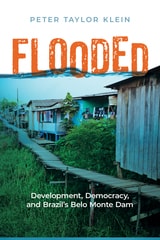
In the middle of the twentieth century, governments ignored the negative effects of large-scale infrastructure projects. In recent decades, many democratic countries have continued to use dams to promote growth, but have also introduced accompanying programs to alleviate these harmful consequences of dams for local people, to reduce poverty, and to promote participatory governance. This type of dam building undoubtedly represents a step forward in responsible governing. But have these policies really worked?
Flooded provides insights into the little-known effects of these approaches through a close examination of Brazil’s Belo Monte hydroelectric facility. After three decades of controversy over damming the Xingu River, a tributary of the Amazon, the dam was completed in 2019 under the left-of-center Workers’ Party, becoming the world’s fourth largest. Billions of dollars for social welfare programs accompanied construction. Nonetheless, the dam brought extensive social, political, and environmental upheaval to the region. The population soared, cost of living skyrocketed, violence spiked, pollution increased, and already overextended education and healthcare systems were strained. Nearly 40,000 people were displaced and ecosystems were significantly disrupted. Klein tells the stories of dam-affected communities, including activists, social movements, non-governmental organizations, and public defenders and public prosecutors. He details how these groups, as well as government officials and representatives from private companies, negotiated the upheaval through protests, participating in public forums for deliberation, using legal mechanisms to push for protections for the most vulnerable, and engaging in myriad other civic spaces. Flooded provides a rich ethnographic account of democracy and development in the making. In the midst of today’s climate crisis, this book showcases the challenges and opportunities of meeting increasing demands for energy in equitable ways.
Florentine Essays
Selected Writings of Marvin B. BeckerMarvin B. Becker
University of Michigan Press, 2002
In the capital of humanism, he initiated what was to be a lifelong examination of the Western civil tradition. In Florence he could study the interplay of ideas and action in what he was to call the "public world." The rise of this world out of the private, feudal and corporate structures of the medieval commune, its functioning and its eventual subversion by the authoritarian structures of the early modern state were, he thought, valuable information for modern political cultures. In the 1950s and 1960s, Becker produced approximately twenty papers dealing with a wide variety of themes and issues raised by the work of other scholars such as Davidson, Salvemini, Ottokar, Panella, Rodolico, Barbadoro, Baron, and others. He also introduced his own formulations on a range of subjects including the political role of Florence's minor guilds, usury, taxation, public debt, popular heresy, church-state relations, the city's chroniclers, the influence of "new men" upon Florentine government and changing mentalities.
These papers, in their originality, their richness of documentation and their suggestiveness, are still relevant for current scholarship. The editors of this volume have chosen the papers for the convenience of readers who may know Becker only through his books, or from the myriad of footnotes of other scholars who have drawn so much from his work. This volume will be of interest to scholars, students, and others interested in Renaissance history, whether it be social or political.
Marvin B. Becker is Professor Emeritus in the Department of History, University of Michigan. James Banker is Professor of History, North Carolina State University. Carol Lansing is Professor of History, University of California, Santa Barbara.
Floundering Stability
US Foreign Policy in EgyptAmir Magdy Kamel
University of Michigan Press, 2023
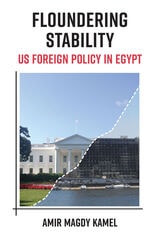
The US commitment to stability—both domestically and abroad—has been a consistent feature in the way Washington, DC carries out international relations. This commitment is complimented by the increased overlap between the economic and political spheres in international affairs. Consequently, this US approach to foreign interaction is informed by an assumption that foreign policy tools can influence global stability for the better. In order to investigate this assumption, this book details the foundations of what Amir Magdy Kamel refers to as the US Stability Policy—how it evolved over time and how it was implemented in Egypt. He finds that domestic and global forces were left unaccounted for by the Stability Policy, ultimately leading to a failure to achieve the self-stated stability goals.
Kamel’s analysis is informed through a unique mixed-method approach that sheds light on how and why this policy fared so poorly under Mubarak’s Egypt. He develops and tests a unique and particular way of examining the Stability Policy and presents a framework for future work to replicate and build on in the quest to understand other state-on-state relationships and the effectiveness of other foreign economic policies in achieving stability goals. Floundering Stability reflects on what Kamel’s findings mean for the relationship between the US and Egypt, as well as specific US foreign policy suggestions on how the same mistakes can be avoided in the future.

Flourishing Thought
Democracy in an Age of Data HoardsRuth A. Miller
University of Michigan Press, 2016
Miller’s argument has shattering implications for the debates over the proper use and disposal of embryonic tissue, alarms about data gathering by the state and corporations, and other major ethical, social, and security issues.

Flows of Violence
Water, Infrastructures, and the State in Buenaventura, ColombiaFelipe Fernández
University of Arizona Press, 2025
Flows of Violence offers a profound ethnographic exploration of the intricate relationship between violence and water infrastructure in one of Colombia’s most marginalized cities. This groundbreaking work engages with the concept of “infrastructural violence,” revealing how the Colombian state’s neglect and inadequate provision of water services perpetuate inequality and suffering among Buenaventura’s residents. Through extensive fieldwork, Fernández provides rich empirical data and firsthand accounts that bring to light the daily struggles and resilience of the city’s inhabitants.
The book critically examines how everyday crime and state neglect intersect, altering the improvised practices of water storage and access among the population. It also highlights the innovative mechanisms employed by social movements and ordinary citizens to cope with and resist these challenges.
Flows of Violence is an essential read for scholars in anthropology, geography, and Latin American studies, offering valuable insights into the sociopolitical impacts of infrastructure. This timely contribution underscores the urgent need for equitable infrastructure development and social justice, making it a pivotal text for understanding urban poverty and state dynamics in Latin America and beyond.
Fluid Geographies
Water, Science, and Settler Colonialism in New MexicoK. Maria D. Lane
University of Chicago Press, 2024
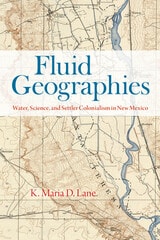
Maria Lane’s Fluid Geographies traces New Mexico’s transition from a community-based to an expert-led system of water management during the pre-statehood era. To understand this major shift, Lane carefully examines the primary conflict of the time, which pitted Indigenous and Nuevomexicano communities, with their long-established systems of irrigation management, against Anglo-American settlers, who benefitted from centralized bureaucratic management of water. The newcomers’ system eventually became settled law, but water disputes have continued throughout the district courts of New Mexico’s Rio Grande watershed ever since.
Using a fine-grained analysis of legislative texts and nearly two hundred district court cases, Lane analyzes evolving cultural patterns and attitudes toward water use and management in a pivotal time in New Mexico’s history. Illuminating complex themes for a general audience, Fluid Geographies helps readers understand how settler colonialism constructed a racialized understanding of scientific expertise and legitimized the dispossession of nonwhite communities in New Mexico.
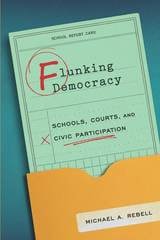
Flunking Democracy
Schools, Courts, and Civic ParticipationMichael A. Rebell
University of Chicago Press, 2018
In Flunking Democracy, Michael A. Rebell makes the case that this is not a recent problem, but rather that for generations now, America’s schools have systematically failed to prepare students to be capable citizens. Rebell analyzes the causes of this failure, provides a detailed analysis of what we know about how to prepare students for productive citizenship, and considers examples of best practices. Rebell further argues that this civic decline is also a legal failure—a gross violation of both federal and state constitutions that can only be addressed by the courts. Flunking Democracy concludes with specific recommendations for how the courts can and should address this deficiency, and is essential reading for anyone interested in education, the law, and democratic society.
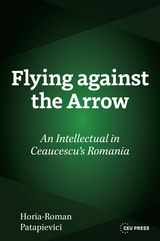
Flying Against the Arrow
An Intellectual in Ceausescu's RomaniaHoria-Roman Patapievici
Central European University Press, 2003
The ‘unbearable 80s’, as the last decade of the Ceauşescu era has been called in Romania, are in the focus of this quasi-autobiographical work. The book vividly portrays the difficulties encountered by a young intellectual trying to shape himself under the oppressive regime and provides a stark depiction of a man’s intellectual suffocation under hard-line socialist rule.

Folklore from the Schoharie Hills, New York
Emelyn Elizabeth Gardner
University of Michigan Press, 1937
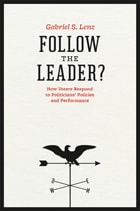
Follow the Leader?
How Voters Respond to Politicians' Policies and PerformanceGabriel S. Lenz
University of Chicago Press, 2012
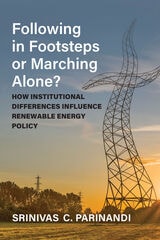
Following in Footsteps or Marching Alone?
How Institutional Differences Influence Renewable Energy PolicySrinivas C. Parinandi
University of Michigan Press, 2023
In recent years, the federal government’s increasing inability to address major societal challenges has arguably hampered America’s commitment to renewable energy initiatives. Individual U.S. states have stepped into this void and adopted their own policies, leading some to believe that the states can propel America’s renewable energy industry forward. However, we know little about how legislative and regulatory dynamics within America’s states might accelerate or hinder renewable energy policy creation.
In Following in Footsteps or Marching Alone?, Srinivas Parinandi explores how states have devised their own novel policies, and how the political workings of legislatures and public utilities commissions have impacted state renewable energy policy design. Through the meticulous study of nearly three decades of state-level renewable energy policy-making, he finds that their creation is primarily driven by legislatures, and that ideologically liberal legislatures largely push the envelope. The book suggests that having a predominantly state-driven renewable energy effort can lead to uneven and patchwork-based policy development outcomes, and a possible solution is to try to more successfully federalize these issues. Parinandi urges readers, scholars, and policy practitioners to consider whether a state-led effort is adequate enough to handle the task of building momentum for renewable energy in one of the world’s largest electricity markets.

Following the Ball
The Migration of African Soccer Players across the Portuguese Colonial Empire, 1949–1975Todd Cleveland
Ohio University Press, 2017
With Following the Ball, Todd Cleveland incorporates labor, sport, diasporic, and imperial history to examine the extraordinary experiences of African football players from Portugal’s African colonies as they relocated to the metropole from 1949 until the conclusion of the colonial era in 1975. The backdrop was Portugal’s increasingly embattled Estado Novo regime, and its attendant use of the players as propaganda to communicate the supposed unity of the metropole and the colonies.
Cleveland zeroes in on the ways that players, such as the great Eusébio, creatively exploited opportunities generated by shifts in the political and occupational landscapes in the waning decades of Portugal’s empire. Drawing on interviews with the players themselves, he shows how they often assumed roles as social and cultural intermediaries and counters reductive histories that have depicted footballers as mere colonial pawns.
To reconstruct these players’ transnational histories, the narrative traces their lives from the informal soccer spaces in colonial Africa to the manicured pitches of Europe, while simultaneously focusing on their off-the-field challenges and successes. By examining this multi-continental space in a single analytical field, the book unearths structural and experiential consistencies and contrasts, and illuminates the components and processes of empire.
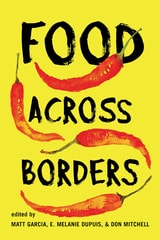
Food Across Borders
Garcia, Matt
Rutgers University Press, 2017
The stories told in Food Across Borders highlight the contiguity between the intimate decisions we make as individuals concerning what we eat and the social and geopolitical processes we enact to secure nourishment, territory, and belonging.
Published in cooperation with the William P. Clements Center for Southwest Studies, Southern Methodist University.

Food Allergy Advocacy
Parenting and the Politics of CareDanya Glabau
University of Minnesota Press, 2022
A detailed exploration of parents’ fight for a safe environment for their kids, interrogating how race, class, and gender shape health advocacy
The success of food allergy activism in highlighting the dangers of foodborne allergens shows how illness communities can effectively advocate for the needs of their members. In Food Allergy Advocacy, Danya Glabau follows parents and activists as they fight for allergen-free environments, accurate labeling, the fair application of disability law, and access to life-saving medications for food-allergic children in the United States. At the same time, she shows how this activism also reproduces the culturally dominant politics of personhood and responsibility, based on an idealized version of the American family, centered around white, middle-class, and heteronormative motherhood.
By holding up the threat of food allergens to the white nuclear family to galvanize political and scientific action, Glabau shows, the movement excludes many, including Black women and disabled adults, whose families and health have too often been marginalized from public health and social safety net programs. Further, its strategies are founded on the assumption that market-based solutions will address issues of social exclusion and equal access to healthcare.
Sharing the personal experiences of a wide spectrum of people, including parents, support group leaders, physicians, entrepreneurs, and scientists, Food Allergy Advocacy raises important questions about who controls illness activism. Using critical, intersectional feminism to interrogate how race, class, and gender shape activist priorities and platforms, it shows the way to new, justice-focused models of advocacy.

Food Fight!
Millennial Mestizaje Meets the Culinary MarketplacePaloma Martinez-Cruz
University of Arizona Press, 2019
In Food Fight! author Paloma Martinez-Cruz takes us on a Chicanx gastronomic journey that is powerful and humorous. Martinez-Cruz tackles head on the real-world politics of food production from the exploitation of farmworkers to the appropriation of Latinx bodies and culture, and takes us right into transformative eateries that offer a homegrown, mestiza consciousness.
The hard-hitting essays in Food Fight! bring a mestiza critique to today’s pressing discussions of labeling, identity, and imaging in marketing and dining. Not just about food, restaurants, and coffee, this volume employs a decolonial approach and engaging voice to interrogate ways that mestizo, Indigenous, and Latinx peoples are objectified in mainstream ideology and imaginary.

Food Instagram
Identity, Influence, and NegotiationEdited by Emily J. H. Contois and Zenia Kish
University of Illinois Press, 2022
Image by image and hashtag by hashtag, Instagram has redefined the ways we relate to food. Emily J. H. Contois and Zenia Kish edit contributions that explore the massively popular social media platform as a space for self-identification, influence, transformation, and resistance. Artists and journalists join a wide range of scholars to look at food’s connection to Instagram from vantage points as diverse as Hong Kong’s camera-centric foodie culture, the platform’s long history with feminist eateries, and the photography of Australia’s livestock producers. What emerges is a portrait of an arena where people do more than build identities and influence. Users negotiate cultural, social, and economic practices in a place that, for all its democratic potential, reinforces entrenched dynamics of power.
Interdisciplinary in approach and transnational in scope, Food Instagram offers general readers and experts alike new perspectives on an important social media space and its impact on a fundamental area of our lives.
Contributors: Laurence Allard, Joceline Andersen, Emily Buddle, Robin Caldwell, Emily J. H. Contois, Sarah E. Cramer, Gaby David, Deborah A. Harris, KC Hysmith, Alex Ketchum, Katherine Kirkwood, Zenia Kish, Stinne Gunder Strøm Krogager, Jonathan Leer, Yue-Chiu Bonni Leung, Yi-Chieh Jessica Lin, Michael Z. Newman, Tsugumi Okabe, Rachel Phillips, Sarah Garcia Santamaria, Tara J. Schuwerk, Sarah E. Tracy, Emily Truman, Dawn Woolley, and Zara Worth
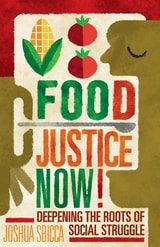
Food Justice Now!
Deepening the Roots of Social StruggleJoshua Sbicca
University of Minnesota Press, 2018
A rallying cry to link the food justice movement to broader social justice debates
The United States is a nation of foodies and food activists, many of them progressives, and yet their overwhelming concern for what they consume often hinders their engagement with social justice more broadly. Food Justice Now! charts a path from food activism to social justice activism that integrates the two. It calls on the food-focused to broaden and deepen their commitment to the struggle against structural inequalities both within and beyond the food system.
In an engrossing, historically grounded, and ethnographically rich narrative, Joshua Sbicca argues that food justice is more than just a myopic focus on food, allowing scholars and activists alike to investigate the causes behind inequities and evaluate and implement political strategies to overcome them. Focusing on carceral, labor, and immigration crises, Sbicca tells the stories of three California-based food movement organizations, showing that when activists use food to confront neoliberal capitalism and institutional racism, they can creatively expand how to practice and achieve food justice.
Sbicca sets his central argument in opposition to apolitical and individual solutions, discussing national food movement campaigns and the need for economically and racially just food policies—a matter of vital public concern with deep implications for building collective power across a diversity of interests.
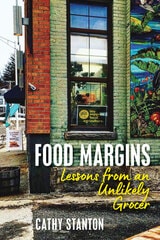
Food Margins
Lessons from an Unlikely GrocerCathy Stanton
University of Massachusetts Press, 2024
Winner of the 2025 New England Society Book Award for Specialty Titles
Winner of the 2024 Readable Feast Award for Social Consciousness
Named one of Food Tank's 20 Food Systems Reads that Will Inspire You this Summer
In a food industry shaped by the abundance, cheapness, and convenience that giant corporations can offer, small-scale ventures struggle to survive, as anthropologist Cathy Stanton discovered when she joined the effort to save a small food co-op in a former mill town in western Massachusetts. On the margins of the dominant system, Stanton found herself reckoning with its deep racial and class inequities, and learning that making real change requires a fierce commitment to community and a willingness to change herself as well.
Part memoir and part history lesson, Food Margins traces the tangled economic and political histories of the plantation, the factory, and the supermarket through the life of one New England town. Stanton tells a complex and compelling story of a rural community imagining and creating a viable alternative to the mainstream in a time of increasingly urgent need to build a more socially and ecologically just food system.
Food Margins
Lessons from an Unlikely GrocerCathy Stanton
University of Massachusetts Press, 2024
Winner of the 2025 New England Society Book Award for Specialty Titles
Winner of the 2024 Readable Feast Award for Social Consciousness
Named one of Food Tank's 20 Food Systems Reads that Will Inspire You this Summer
In a food industry shaped by the abundance, cheapness, and convenience that giant corporations can offer, small-scale ventures struggle to survive, as anthropologist Cathy Stanton discovered when she joined the effort to save a small food co-op in a former mill town in western Massachusetts. On the margins of the dominant system, Stanton found herself reckoning with its deep racial and class inequities, and learning that making real change requires a fierce commitment to community and a willingness to change herself as well.
Part memoir and part history lesson, Food Margins traces the tangled economic and political histories of the plantation, the factory, and the supermarket through the life of one New England town. Stanton tells a complex and compelling story of a rural community imagining and creating a viable alternative to the mainstream in a time of increasingly urgent need to build a more socially and ecologically just food system.

Food Studies in Latin American Literature
Perspectives on the GastronarrativeRocío del Aguila
University of Arkansas Press, 2021
Food Studies in Latin American Literature presents a timely collection of essays analyzing a wide array of Latin American narratives through the lens of food studies. Topics explored include potato and maize in colonial and contemporary global narratives; the role of cooking in Sor Juana Inés de la Cruz’s poetics; the centrality of desire in twentieth-century cooking writing by women; the relationship among food, recipes, and national identity; the role of food in travel narratives; and the impact of advertisements on domestic roles.
The contributors included here—experts in Latin American history, literature, and cultural studies—bring a novel, interdisciplinary approach to these explorations, presenting new perspectives on Latin American literature and culture.
Food Systems in an Unequal World
Pesticides, Vegetables, and Agrarian Capitalism in Costa RicaRyan E. Galt
University of Arizona Press, 2014
Food Systems in an Unequal World examines the agrochemical-dependent agriculture of Costa Rica and how its uneven regulation in export versus domestic markets affects Costa Rican vegetable farmers. Examining pesticide-dependent vegetable production within two food systems, the author shows that pesticide use is shaped by three main forces: agrarian capitalism, the governance of food systems throughout the commodity chain, and ecological dynamics driving local food production. Those processes produce unequal outcomes that disadvantage less powerful producers who have more limited choices than larger farmers, who usually have access to better growing environments and thereby can reduce pesticide use and production costs.
Food Waste, Food Insecurity, and the Globalization of Food Banks
Daniel N. Warshawsky
University of Iowa Press, 2023
Based on fifteen years of in-depth fieldwork on four continents, Daniel Warshawsky illustrates how and why food banks proliferate across the globe even though their impacts may be limited. He suggests that we need to reformulate the role of food banks. The mission of food banks needs to be more realistic, as food surpluses cannot reduce food insecurity on a significant scale. Food banks need to regain their institutional independence from the state and corporations, and incorporate the knowledge and experiences of the food insecure in the daily operations of the food system. These collective changes can contribute to a future where food banks play a smaller but more targeted role in food systems.
Food and Poverty
Food Insecurity and Food Sovereignty among America's PoorLeslie Hossfeld
Vanderbilt University Press, 2018
Food for Dissent
Natural Foods and the Consumer Counterculture since the 1960sMaria McGrath
University of Massachusetts Press, 2019
In the 1960s and early 1970s, countercultural rebels decided that, rather than confront the system, they would create the world they wanted. The natural foods movement grew out of this contrarian spirit. Through a politics of principled shopping, eating, and entrepreneurship, food revolutionaries dissented from corporate capitalism and mainstream America.
In Food for Dissent, Maria McGrath traces the growth of the natural foods movement from its countercultural fringe beginning to its twenty-first-century “food revolution” ascendance, focusing on popular natural foods touchstones—vegetarian cookbooks, food co-ops, and health advocates. Guided by an ideology of ethical consumption, these institutions and actors spread the movement's oppositionality and transformed America's foodscape, at least for some. Yet this strategy proved an uncertain instrument for the advancement of social justice, environmental defense, and anti-corporatism. The case studies explored in Food for Dissent indicate the limits of using conscientious eating, shopping, and selling as tools for civic activism.

Food for Thought
Understanding Older Food InsecurityColleen M. Heflin
Russell Sage Foundation, 2025
Through analysis of national data sets and interviews with lower income older adults, Heflin and Harrington Meyer describe why many older adults do not have enough money to afford food and other essentials. As a result of chronic economic disadvantage, food insecure older adults are often forced to make budget trade-offs between food and other expenses. In these trade-offs, food typically ranks below housing and energy costs and competes with other household bills, such as medical costs, transportation, and phone and internet coverage. While finances play a large role, nonfinancial factors, such as poor physical, cognitive, and mental health, access to healthy food, and transportation challenges, also contribute to food insecurity in old age. In the face of these difficulties, food insecure older adults may go hungry, skip meals, or eat unhealthy foods to help make ends meet.
While SNAP and community-based programs, such as food pantries and home delivered meals, are intended to help address the issue of food insecurity, they are typically inadequate to address the needs of food insecure older adults. SNAP has enrollment and maintenance procedures that are particularly difficult for older adults to navigate, pays out an insufficient amount of money to cover food costs, and varies greatly by state. Availability of community programs varies by municipality, often lacks nutritious foods that are complementary to health conditions common among older adults, and can be difficult to access due to a lack of reliable transportation, disability, or cost. Heflin and Harrington Meyer advocate for addressing all the issues that increase older adults’ risk of food insecurity, not just financial barriers. They suggest updating food insecurity screening tools to include these factors, increasing SNAP benefits and income support for older adults, and other policies to help combat food insecurity in older adults.
Food for Thought highlights the increasingly important issue of food insecurity in old age and lays bare the overlooked challenges faced by food insecure older adults.
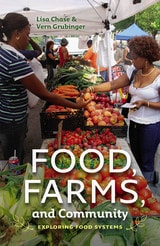
Food, Farms, and Community
Exploring Food SystemsLisa Chase
University of New Hampshire Press, 2014
Throughout the United States, people are increasingly concerned about where their food comes from, how it is produced, and how its production affects individuals and their communities. The answers to these questions reveal a complex web of interactions. While large, distant farms and multinational companies dominate at national and global levels, innovative programs including farmers' markets, farm-to-school initiatives, and agritourism are forging stronger connections between people and food at local and regional levels. At all levels of the food system, energy use, climate change, food safety, and the maintenance of farmland for the future are critical considerations. The need to understand food systems—what they are, who's involved, and how they work (or don't)—has never been greater.
Food, Farms, and Community: Exploring Food Systems takes an in-depth look at critical issues, successful programs, and challenges for improving food systems spanning a few miles to a few thousand miles. Case studies that delve into the values that drive farmers, food advocates, and food entrepreneurs are interwoven with analysis supported by the latest research. Examples of entrepreneurial farms and organizations working together to build sustainable food systems are relevant to the entire country—and reveal results that are about much more than fresh food.