4743 books match the query 'Religion' and 151 start with f
cover of Formerly God: Rethinking God after God

Formerly God

Rethinking God after God

Rick Benjamins

Amsterdam University Press, 2026

God is and remains a meaningful term, even after “the death of God,” but its meaning is by no means clear or unambiguous. Clearly and with a broad perspective, this book challenges classical theology with the criticism that “onto-theology” is no longer possible today and shows in what drastically changed way it might “survive.” It shows how the academic theological conversation about God after God has developed over time and in different places.
This book begins with the controversial work of Dutch theologian Harry Kuitert, who bid farewell to old representations of God but got stuck finding new ones. It turns back to the important and indispensable insights of Hegel and Heidegger. It presents contemporary post-theistic thinking about God, using German, French, and American thinkers, distinguishing interpretive theologians, deconstructionists, and constructive theologians, finally formulating a new position.
[more]
cover of Forming Humanity: Redeeming the German Bildung Tradition

Forming Humanity

Redeeming the German Bildung Tradition

Jennifer A. Herdt

University of Chicago Press, 2019

Now in paperback, Forming Humanity reveals bildung, or ethical formation, as the key to post-Kantian thought.

Kant’s proclamation of humankind’s emergence from “self-incurred immaturity” left his contemporaries with a puzzle: What models should we use to sculpt ourselves if we no longer look to divine grace or received authorities?  Deftly uncovering the roots of this question in Rhineland mysticism, Pietist introspection, and the rise of the bildungsroman, Jennifer A. Herdt reveals bildung, or ethical formation, as the key to post-Kantian thought. This was no simple process of secularization, in which human beings took responsibility for something they had earlier left in the hands of God.  Rather, theorists of bildung, from Herder through Goethe to Hegel, championed human agency in self-determination while working out the social and political implications of our creation in the image of God.  While bildung was invoked to justify racism and colonialism by stigmatizing those deemed resistant to self-cultivation, it also nourished ideals of dialogical encounter and mutual recognition.  Herdt reveals how the project of forming humanity lives on in our ongoing efforts to grapple with this complicated legacy.
[more]
cover of Forms of Knowledge in Early Modern Asia: Explorations in the Intellectual History of India and Tibet, 1500-1800

Forms of Knowledge in Early Modern Asia

Explorations in the Intellectual History of India and Tibet, 1500-1800

Sheldon Pollock, ed.

Duke University Press, 2011

In the past two decades, scholars have transformed our understanding of the interactions between India and the West since the consolidation of British power on the subcontinent around 1800. While acknowledging the merits of this scholarship, Sheldon Pollock argues that knowing how colonialism changed South Asian cultures, particularly how Western modes of thought became dominant, requires knowing what was there to be changed. Yet little is known about the history of knowledge and imagination in late precolonial South Asia, about what systematic forms of thought existed, how they worked, or who produced them. This pioneering collection of essays helps to rectify this situation by addressing the ways thinkers in India and Tibet responded to a rapidly changing world in the three centuries prior to 1800. Contributors examine new forms of communication and conceptions of power that developed across the subcontinent; changing modes of literary consciousness, practices, and institutions in north India; unprecedented engagements in comparative religion, autobiography, and ethnography in the Indo-Persian sphere; and new directions in disciplinarity, medicine, and geography in Tibet. Taken together, the essays in Forms of Knowledge in Early Modern Asia inaugurate the exploration of a particularly complex intellectual terrain, while gesturing toward distinctive forms of non-Western modernity.

Contributors. Muzaffar Alam, Imre Bangha, Aditya Behl, Allison Busch, Sumit Guha, Janet Gyatso, Matthew T. Kapstein, Françoise Mallison, Sheldon Pollock, Velcheru Narayana Rao, Kurtis R. Schaeffer, Sunil Sharma, David Shulman, Sanjay Subrahmanyam, Mohamad Tavakoli-Targhi
[more]
cover of Forms of Worship: How Orisa Worship Became Religion in Nigeria and Brazil

Forms of Worship

How Orisa Worship Became Religion in Nigeria and Brazil

Ayodeji Ogunnaike

Duke University Press, 2026
The worship of Yoruba deities known as oriṣa is commonly understood as an indigenous African religion, but Ayodeji Ogunnaike argues that these traditions initially differed from the modern Western concept of religion. In Forms of Worship, Ogunnaike analyzes how the configuration of oriṣa worship has changed across the Yoruba diaspora and homeland. As the meaning of the Yoruba word ẹsin, usually translated as “religion,” is closer to “form of worship,” he examines how reorienting understandings of oriṣa traditions as multiple forms of worship changes how religious identity, practice, and dynamics can be understood in contemporary and historical perspectives. By developing indigenous models for religious phenomena, Ogunnaike accounts for Yoruba cultural dynamics, including the high degree of religious harmony, syncretism, and interaction prevalent both in Nigeria and Brazil. Furthermore, he tracks the subtle and largely unperceived shift in oriṣa worship toward a more modern, closed, and rigid conception of religion and its resulting complications. Forms of Worship demonstrates how the advent of Western religious rigidity regarding practice and identity has led to rising religious tensions and fragmentation.
[more]
cover of Fort Limhi: The Mormon Adventure in Oregon Territory, 1855-1858

Fort Limhi

The Mormon Adventure in Oregon Territory, 1855-1858

David L. Bigler

Utah State University Press, 2004

In May 1855 twenty-seven men set out from the young Mormon settlements in Utah to establish the northernmost colony of the Kingdom of God, "the Northern Mission to the Remnants of the House of Jacob"-American Indians. More colonists, including families, would join them later. Building a fort in the Limhi Valley, four hundred miles to the north and at the foot of the pass by which Lewis and Clark had crossed the Continental Divide, they began to proselyte among Sacagawea's Shoshone relatives as well as members of the Bannock, Nez Percé, and other tribes. Three years later, some of their expected and actual Indian converts violently drove the colonists out and destroyed Fort Limhi.

In Fort Limhi: The Mormon Adventure in Oregon Territory, 1855-1858, David Bigler shows that the colony, known as the Salmon River Mission, played a pivotal role in the Utah War of 1857-1858 and that the catastrophic end of the mission was critical in keeping that conflict from becoming an all out war between Mormon Utah and the United States. In the process, he uses a multitude of primary sources, many newly uncovered or previously overlooked, to reconstruct a dramatic and compelling story involving stalwart Mormon frontiersmen, Brigham Young, a variety of Native American individuals and groups, the U. S. Army, and "mountaineers," as the surviving fur trade veterans now commonly known as "mountain men" called themselves.
[more]
cover of Foucault and the Kamasutra: The Courtesan, the Dandy, and the Birth of Ars Erotica as Theater in India

Foucault and the Kamasutra

The Courtesan, the Dandy, and the Birth of Ars Erotica as Theater in India

Sanjay K. Gautam

University of Chicago Press, 2016

The Kamasutra is best known in the West for its scandalous celebration of unbridled sensuality. Yet, there is much, much more to it; embedded in the text is a vision of the city founded on art and aesthetic pleasure. In Foucault and the "Kamasutra", Sanjay K. Gautam lays out the nature and origin of this iconic Indian text and engages in the first serious reading of its relationship with Foucault.

Gautam shows how closely intertwined the history of erotics in Indian culture is with the history of theater-aesthetics grounded in the discourse of love, and Foucault provides the framework for opening up an intellectual horizon of Indian thought. To do this, Gautam looks to the history of three inglorious characters in classical India: the courtesan and her two closest male companions—her patron, the dandy consort; and her teacher and advisor, the dandy guru. Foucault’s distinction between erotic arts and the science of sexuality drives Gautam’s exploration of the courtesan as a symbol of both sexual-erotic and aesthetic pleasure. In the end, by entwining together Foucault’s works on the history of sexuality in the West and the classical Indian texts on eros, Gautam transforms our understanding of both, even as he opens up new ways of investigating erotics, aesthetics, gender relations, and subjectivity.
[more]
cover of Foundations for Sociorhetorical Exploration: A Rhetoric of Religious Antiquity Reader

Foundations for Sociorhetorical Exploration

A Rhetoric of Religious Antiquity Reader

Vernon K. Robbins

SBL Press, 2016

Engaging resources for understanding the importance of bodies and spaces in producing and interpreting persuasive language

This volume collects essays that represent intellectual milestones that are informing sociorhetorical interpretation during the twenty-first century. The essays are arranged into five parts: (1) Topos; (2) Cultural Geography and Critical Spatiality; (3) Rhetorolects and Conceptual Blending; (4) Rhetography; and (5) Rhetorical Force.

Features:

  • Tools for integrating multiple approaches to biblical interpretation
  • Resources that emphasize the importance of language that prompts mental pictures in effective rhetoric
  • Essays from classicists, rhetoricians, and biblical scholars
[more]
cover of Four Anti-Pelagian Writings

Four Anti-Pelagian Writings

Saint Augustine

Catholic University of America Press, 1992
No description available
[more]
cover of Four Classic Mormon Village Studies

Four Classic Mormon Village Studies

Howard M. Bahr

University of Utah Press, 2014
Saints Observed: Studies of Mormon Village Life, 1850–2005 serves as a comprehensive introduction to this second volume, which makes available four of the best Mormon village studies, all previously unpublished. These postwar village studies differ substantially from earlier village studies initiated by Nelson’s work and offer in-depth investigations by observers who lived and participated in village life. Together, they capture in rich detail the dayto- day life of mid-century Mormon villagers. Editor Howard Bahr’s afterword highlights changes in the four villages across the past half-century, drawing upon recent site visits, interviews, and texts.

[more]
cover of Fragile Dignity: Intercontextual Conversations on Scriptures, Family, and Violence

Fragile Dignity

Intercontextual Conversations on Scriptures, Family, and Violence

L. Juliana Claassens

SBL Press, 2013

Human dignity insists that every human deserves respect and a safe place to live. For many, this is not a reality. The essays collected here analyze the background of this problem in contemporary family life and society at large, with special emphasis on the role of women and on the Bible as a source of inspiration and transformation. The collection is the product of a six-year conversation on family, violence, and human dignity between the Protestant Theological University in Kampen, The Netherlands, and the Faculty of Theology at Stellenbosch University, South Africa, a North-South dialogue that included annual conferences, a series of responsive letters, and additional external responses. The contributors are Cheryl B. Anderson, Hendrik Bosman, Gerrit Brand, Athalya Brenner, L. Juliana Claassens, Dorothea Erbele-Küster, Leo J. Koffeman, Frits de Lange, Monica Jyotsna Melanchthon, Magda Misset-van de Weg, Beverly Eileen Mitchell, Anne-Claire Mulder, Ian Nell, Mary-Anne Plaatjies-van Huffel, Jeremy Punt, Petruschka Schaafsma, D. Xolile Simon, Lee-Ann J. Simon, Gé Speelman, Klaas Spronk, Ciska Stark, Elsa Tamez, Charlene van der Walt, Robert Vosloo, and Yusef Waghid.
[more]
cover of Fragile Finitude: A Jewish Hermeneutical Theology

Fragile Finitude

A Jewish Hermeneutical Theology

Michael Fishbane

University of Chicago Press, 2021

The world we engage with is a vibrant collage brought to consciousness by language and our creative imagination. It is through the symbolic forms of language that the human world of value is revealed—this is where religious scholar Michael Fishbane dwells in his latest contribution to Jewish thought.

In Fragile Finitude, Fishbane clears new ground for a theological life through a novel reinterpretation of the Book of Job. On this basis, he offers a contemporary engagement with the four classical types of Jewish Scriptural exegesis. The first focuses on worldly experience, the second on communal forms of practice and thought in the rabbinical tradition, the third on personal development, and the fourth on transcendent, cosmic orientations. Through these four modes, Fishbane manages to transform Jewish theology from within, at once reinvigorating a long tradition and moving beyond it. What he offers is nothing short of a way to reorient our lives in relation to the divine and our fellow humans. Written from within the Jewish tradition, Fragile Finitude is intended for readers across the religious spectrum.
[more]
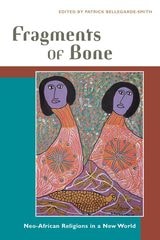
cover of Fragments of Bone: Neo-African Religions in a New World

Fragments of Bone

Neo-African Religions in a New World

Edited by Patrick Bellegarde-Smith

University of Illinois Press, 2005

In Fragments of Bone, thirteen essayists discuss African religions as forms of resistance and survival in the face of Western cultural hegemony and imperialism. The collection presents scholars working outside of the Western tradition with backgrounds in a variety of disciplines, genders, and nationalities. These experts draw on research, fieldwork, personal interviews, and spiritual introspection to support a provocative thesis: that fragments of ancestral traditions are fluidly interwoven into New World African religions as creolized rituals, symbolic systems, and cultural identities.

Contributors: Osei-Mensah Aborampah, Niyi Afolabi, Patrick Bellegarde-Smith, Randy P. Conner, T. J. Desch-Obi, Ina Johanna Fandrich, Kean Gibson, Marilyn Houlberg, Nancy B. Mikelsons, Roberto Nodal, Rafael Ocasio, Miguel "Willie" Ramos, and Denise Ferreira da Silva
[more]
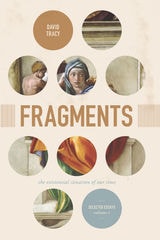
cover of Fragments: The Existential Situation of Our Time: Selected Essays, Volume 1

Fragments

The Existential Situation of Our Time: Selected Essays, Volume 1

David Tracy

University of Chicago Press, 2020

Two volumes of selected essays from the most important Catholic theologian in North America.
 
David Tracy is widely considered one of the most important religious thinkers in North America, known for his pluralistic vision and disciplinary breadth. His first books in more than twenty years, Fragments and Filaments reflect Tracy’s range and erudition, collecting essays from the 1980s to 2018 into a two-volume work.

In the first volume, Fragments, Tracy gathers his most important essays on broad theological questions, beginning with the problem of suffering across Greek tragedy, Christianity, and Buddhism. The volume goes on to address the Infinite, and the many attempts to categorize and name it by Plato, Aristotle, Rilke, Heidegger, and others. In the remaining essays, he reflects on questions of the invisible, contemplation, hermeneutics, and public theology. Throughout, Tracy evokes the potential of fragments (understood both as concepts and events) to shatter closed systems and open us to difference and Infinity. Covering science, literature, philosophy, psychoanalysis, and non-Western religious traditions, Tracy provides in Fragments a guide for any open reader to rethink our fragmenting contemporary culture.
[more]
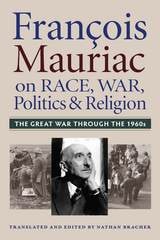
cover of Francois Mauriac on Race, War, Politics and Religion

Francois Mauriac on Race, War, Politics and Religion

Nathan Bracher

Catholic University of America Press, 2016
Nathan Bracher's François Mauriac on Race, War, Politics, and Religion: The Great War Through the 1960s consists of a selection of some ninety editorials penned by the Catholic novelist and intellectual François Mauriac, who received the Nobel Prize for literature and who was admitted to the Académie Française in 1933. As is often the case for prominent writers and intellectuals in France, Mauriac became active in political punditry early in his career, at the time of the First World War. Intensifying notably in the tumultuous years of the 1930s on, this activity continues to expand over the next five decades. After 1952, Mauriac's editorials came to represent the most important dimension of his intellectual activity. He was, to cite the prominent journalist and intellectual Jean Daniel of Le Nouvel Observateur, France’s most distinguished and formidable editorialist of the twentieth century.
[more]
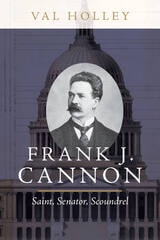
cover of Frank J. Cannon: Saint, Senator, Scoundrel

Frank J. Cannon

Saint, Senator, Scoundrel

Val Holley

University of Utah Press, 2020

Utah’s path to statehood was the most tortuous in U.S. history, due in no small part to the Mormon practice of polygamy. Frank J. Cannon, newspaperman, Congressional delegate, and senator, guided Utah toward becoming the forty-fifth state in the Union in 1896. But when he lost favor with the LDS Church, his contributions fell into obscurity. In the 1880s, Congress dealt with the intransigence of the Church of Jesus Christ of Latter-day Saints over polygamy by enacting punitive new laws. Mormon lobbyists who pleaded for relief in Washington came home empty-handed before Cannon finally broke the logjam. He persuaded President Grover Cleveland to appoint judges who would deal mercifully with convicted polygamists and dissuaded Congress from disenfranchising all members by pledging that the church would abandon polygamy. But when Utah elected Mormon apostle Reed Smoot to the U.S. Senate in 1903, Cannon condemned what he called the reneging of LDS Church pledges to stay out of politics. He wrote scathing denunciations of Smoot and Mormon president Joseph F. Smith, co-authored the exposé Under the Prophet in Utah, and spearheaded the National Reform Association’s anti-Mormon crusade. Utah’s subsequent displeasure with Cannon ensured that his critical role in its statehood would be buried by omission.
[more]
cover of Fraternal Critique: The Politics of Muslim Community in France

Fraternal Critique

The Politics of Muslim Community in France

Kirsten Wesselhoeft

University of Chicago Press, 2025

An exploration of ways that discord binds rather than divides communal life, through an ethnography of French Muslim activism.
 
The conversation about Islam in France is framed by the presumption that Muslim communities are a threat to secular solidarity or fraternité. In the face of state repression, French Muslims have not closed ranks around a narrow range of voices; instead, Kirsten Wesselhoeft finds that young Muslim activists have continued to purposefully spark debate about the values that anchor community life. Wesselhoeft argues that such disagreements, far from dividing communities, actually constitute a form of belonging. Some activists call this ethic “fraternal critique,” and Wesselhoeft finds in it profound insights about the place for critique in civic life. The French state has reacted to Muslim solidarity with repression, but Wesselhoeft argues that unity need not come at the expense of dissent. Instead, fraternal critique can teach us how to build communities that are worth fighting over and fighting for.

[more]
cover of Freedom Made Manifest

Freedom Made Manifest

Peter Joseph Fritz

Catholic University of America Press, 2019
Freedom Made Manifest explicates Rahner’s theology of freedom by elucidating its configuration and sources. Much of its inquiry centers on the fundamental option: each human person’s eternal decision made, paradoxically, in time, as a definitive answer to God’s personally-tailored call to salvation. This idea stems from three principal sources: Catholic conversations with transcendental-idealist philosophy, penitential theology and practice, and Ignatian spirituality. Rahner’s unique redeployment of these sources inflects the fundamental option with theologies of concupiscence, mercy and forgiveness (especially as ecclesially mediated), and devotion to Jesus Christ. Awareness of these inflections can show how Rahner’s theology of freedom may assist in theological reflection on freedom’s susceptibility to injury and trauma.
[more]
cover of Freedom and Despair: Notes from the South Hebron Hills

Freedom and Despair

Notes from the South Hebron Hills

David Shulman

University of Chicago Press, 2018

Lately, it seems as if we wake up to a new atrocity each day. Every morning is now a ritual of scrolling through our Twitter feeds or scanning our newspapers for the latest updates on fresh horrors around the globe. Despite the countless protests we attend, the phone calls we make, or the streets we march, it sometimes feels like no matter how hard we fight, the relentless crush of injustice will never abate.
 
David Shulman knows intimately what it takes to live your beliefs, to return, day after day, to the struggle, despite knowing you are often more likely to lose than win. Interweaving powerful stories and deep meditations, Freedom and Despair offers vivid firsthand reports from the occupied West Bank in Palestine as seen through the eyes of an experienced Israeli peace activist who has seen the Israeli occupation close up as it impacts on the lives of all Palestinian civilians.
 
Alongside a handful of beautifully written and often shocking tales from the field, Shulman meditates deeply on how to understand the evils around him, what it means to persevere as an activist decade after decade, and what it truly means to be free. The violent realities of the occupation are on full display. We get to know and understand the Palestinian shepherds and farmers and Israeli volunteers who face this situation head-on with nonviolent resistance. Shulman does not hold back on acknowledging the daily struggles that often leave him and his fellow activists full of despair. Inspired by these committed individuals who are not prepared to be silent or passive, Shulman suggests a model for ordinary people everywhere. Anyone prepared to take a risk and fight their oppressive political systems, he argues, can make a difference—if they strive to act with compassion and to keep hope alive.
 
This is the moving story of a man who continues to fight for good in the midst of despair. An indispensable book in our era of reactionary politics and refugee crises, political violence and ecological devastation, Freedom and Despair is a gripping memoir of struggle, activism, and hope for peace.
 
[more]
cover of Freedom and Necessity: St. Augustine's Teaching on Divine Power and Human Freedom

Freedom and Necessity

St. Augustine's Teaching on Divine Power and Human Freedom

Gerald Bonner

Catholic University of America Press, 2007

This book seeks to explain this paradox in Augustine's theology by tracing how these different emphases arose in his thought, and speculating as to why he endorsed, in the end, his theology of predestination. T
[more]
cover of Freeing Black Girls: A Black Feminist Bible on Racism and Revolutionary Mothering

Freeing Black Girls

A Black Feminist Bible on Racism and Revolutionary Mothering

Tamura Lomax

Duke University Press, 2025
In Freeing Black Girls, Tamura Lomax offers an insurgent feminist love letter to Black girls, women, mothers, and othermothers. Exploring what it means to mother Black children in the twenty-first century, Lomax shares her journey from her traditionalist Black girlhood to finding the path to revolutionary Black motherhood. Along the way, she shows how all Black people are endangered by white supremacist capitalist heteropatriarchal dominance and emphasizes the power of looking and talking back. Lomax insists on Black feminist ways of living that value and nourish whole persons, sketching a radical dream that will allow Black women and girls to survive America while being able to love themselves, others, and collective Black freedom. Ultimately, Lomax declares that Black women and girls are emphatically not defective, second-class, or immanent nurturers; they are sacred and revolutionary beings who deserve to live a life free of predation, patriarchy, misrecognition, misogynoir, and violence.
[more]
cover of French Women Authors: The Significance of the Spiritual, 1400–2000

French Women Authors

The Significance of the Spiritual, 1400–2000

Kelsey L. Haskett

University of Delaware Press, 2013

French Women Authors examines the importance afforded the spiritual in the lives and works of French women authors over the centuries, thereby highlighting both the significance of spiritually informed writings in French literature in general, as well as the specific contribution made by women writers. Eleven different authors have been selected for this collection, representing major literary periods from the medieval to the (post)modern. Each author is examined in the light of a Christian worldview, creating an approach which both validates and interrogates the spiritual dimension of the works under consideration. At the same time, the book as a whole presents a broad perspective on French women writers, showing how they reflect or stand in opposition to their times. The chronological order of the chapters reveals an evolution in the modes of spirituality expressed by these authors and in the role of spiritual belief or religion in French society over time. From the overwhelmingly Christian culture of the Middle Ages and pre-Enlightenment France to the wide diversity prevalent in (post)modern times, including the rise of Islam within French borders, a radical shift has permeated French society, a shift that is reflected in the writers chosen for this book. Moreover, the sensitivity of women writers to the individual side of spiritual life, in contrast with the practices of organized religion, also emerges as a major trend in this book, with women often being seen as a voice for social and religious change, or for a more meaningful, personal faith. Lastly, despite a blatant rejection of God and religion, spiritual threads still run through the works of one of France’s most celebrated contemporary writers (Marguerite Duras), whose cry for an absolute in the midst of a spiritual vacuum only reiterates the quest for transcendence or for some form of spiritual expression, as voiced in the works of her female predecessors and contemporaries in France, and as demonstrated in this book.

Published by University of Delaware Press. Distributed worldwide by Rutgers University Press.
 
[more]
cover of Friars, Nobles and Burghers – Sermons, Images and Prints: Studies of Culture and Society in Early-Modern Europe - In Memoriam István György Tóth

Friars, Nobles and Burghers – Sermons, Images and Prints

Studies of Culture and Society in Early-Modern Europe - In Memoriam István György Tóth

László Kontler

Central European University Press, 2010

The essays in this volume reflect the broader interpretation of culture as a system of shared meanings, values, attitudes and symbolic forms in any sphere of human life. Although thematically diverse, all these studies adhere to the concept of what is sometimes termed the new cultural history or socio-cultural history. The work opens with a cluster of methodological and historiographical reflections. Topics covered by the thematic sections include confessional and religious life in early modern Europe, symbolism and representation, strife and accommodation among different denominations compelled to live in a common space, order and hierarchy, cracks in the machinery of authority and the threat of disintegration as well as the history of alphabetization, literacy and reading and writing practices. This book pays tribute to István György Tóth (1956–2005), Head of the Department of Early-Modern History at the Institute of History of the Hungarian Academy of Sciences, and Professor of History at Central European University (both in Budapest), until his premature death in 2005.
[more]
cover of Friends of the Unrighteous Mammon: Northern Christians and Market Capitalism, 1815-1860

Friends of the Unrighteous Mammon

Northern Christians and Market Capitalism, 1815-1860

Stewart Davenport

University of Chicago Press, 2008

What did Protestants in America think about capitalism when capitalism was first something to be thought about? The Bible told antebellum Christians that they could not serve both God and mammon, but in the midst of the market revolution most of them simultaneously held on to their faith while working furiously to make a place for themselves in a changing economic landscape. In Friends of the Unrighteous Mammom, Stewart Davenport explores this paradoxical partnership of transcendent religious values and earthly, pragmatic objectives, ultimately concluding that religious and ethical commitments, rather than political or social forces, shaped responses to market capitalism in the northern states in the antebellum period.

Drawing on diverse primary sources, Davenport identifies three distinct Christian responses to market capitalism: assurance from clerical economists who believed in the righteousness of economic development; opposition from contrarians who resisted the changes around them; and adaptation by the pastoral moralists who modified their faith to meet the ethical challenges of the changing economy. Delving into the minds of antebellum Christians as they considered themselves, their God, and their developing American economy, Friends of the Unrighteous Mammon is an ambitious intellectual history of an important development in American religious and economic life.
[more]
cover of Friendship and Benefaction in James

Friendship and Benefaction in James

Alicia J. Batten

SBL Press, 2017

Now available from SBL Press

Employing social description, social scientific models, and rhetorical analysis, Alicia J. Batten argues that the letter of James is conversant with the topic of friendship within Greek and Roman literature, as well as within various texts of early Christianity. She illustrates how James drew upon some of the language and concepts related to friendship with an intriguing density to advocate resistance to wealth, avoidance of rich patrons, and reliance upon God.

Features:

  • Use of friendship, benefaction, and patronage as lenses through which James and related texts can be viewed
  • A strong case for how the letter appels to the language and ideas of friendship with regard to God's relationships with humans
  • Exploration of the relationship between the book of James and the teachings of Jesus
[more]
cover of Friendship in Islamic Ethics and World Politics

Friendship in Islamic Ethics and World Politics

Edited by Mohammad Jafar Amir Mahallati

University of Michigan Press, 2019

Based on a decade of direct diplomatic engagement with the United Nations, a decade of teaching on international relations, and another decade of research and teaching on Islamic and comparative peace studies, this book offers a friendship-related academic framework that examines shared moral concepts, philosophical paradigms, and political experiences that can develop and expand multidisciplinary conversations between the Christian West and the Muslim East. By advancing multicultural and interreligious discourses on friendship, this book helps promote actual friendships among diverse cultures and peoples.

This is not a monologue. It provides a model of conversations among scholars and political actors who come from diverse international and interreligious backgrounds. The word “Islamic” should not mislead the reader to suspect that this edited volume delves only into religious discourses. Rather, it provides a forum for conversations within and between religious and philosophical perspectives. It sparks friendship conversations thematically and through disciplinary and cultural diversity. The result of the work of many prominent international scholars and diplomats over many years, it conveys at least one message clearly: friendship matters for not only our happiness but also for our survival.

[more]
cover of From Dark Night to Gentle Surrender: On the Ethics and Spirituality of Hospice Care

From Dark Night to Gentle Surrender

On the Ethics and Spirituality of Hospice Care

Patricia Kobielus Thompson

University of Scranton Press, 2010

Drawing from her many years of experience as a hospice nurse and her training as a theologian, Patricia Kobielus Thompson offers in The Dark Night of the Soul instruction to those providing care for terminally ill patients. Thompson finds in the poetry and other writings of Spanish mystic Saint John of the Cross a wisdom that she argues will assist caregivers in comforting their patients through the trying times just before death. Though much has been written on Saint John of the Cross, Thompson’s application of these works is wholly new and rooted in deep empathy.
[more]
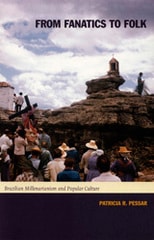
cover of From Fanatics to Folk: Brazilian Millenarianism and Popular Culture

From Fanatics to Folk

Brazilian Millenarianism and Popular Culture

Patricia R. Pessar

Duke University Press, 2004

From Fanatics to Folk rejects conventional understandings of Brazilian millenarianism as exceptional and self-defeating. Considering millenarianism over the long sweep of Brazilian history, Patricia R. Pessar shows it to have been both dominant discourse and popular culture—at different times the inspiration for colonial conquest, for backlanders’ resistance to a modernizing church and state, and for the nostalgic appropriation by today’s elites in pursuit of “traditional” folklore and “authentic” expressions of faith. Pessar focuses on Santa Brígida, a Northeast Brazilian millenarian movement begun in the 1930s. She examines the movement from its founding by Pedro Batista—initially disparaged as a charlatan by the backland elite and later celebrated as a modernizer, patriot, and benefactor—through the contemporary struggles of its followers to maintain their transgressive religious beliefs in the face of increased attention from politicians, clergy, journalists, filmmakers, researchers, and museum curators.

Pessar combines cultural history spanning the colonial period to the present; comparative case studies of the Canudos, Contestado, Juazeiro, and Santa Brígida movements; and three decades of ethnographic research in the Brazilian Northeast. Highlighting the involvement of a broad range of individuals and institutions, the cross-fertilization between movements, contestation and accommodation vis-à-vis the church and state, and matters of spirituality and faith, From Fanatics to Folk reveals Brazilian millenarianism as long-enduring and constantly in flux.
[more]
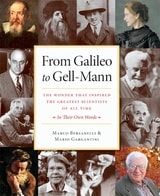
cover of From Galileo to Gell-Mann: The Wonder that Inspired the Greatest Scientists of All Time: In Their Own Words

From Galileo to Gell-Mann

The Wonder that Inspired the Greatest Scientists of All Time: In Their Own Words

Marco Bersanelli

Templeton Press, 2009

From time to time, the diligent science student huddled over dense volumes of research findings and highly technical data will stumble upon a truly rare treasure: the author’s answer to the question of, “Why?” Why did the authors of these volumes commit themselves so ardently to life in the laboratory? What was it that motivated them to keep their eye to microscope for years on end? Why did the world’s greatest scientists devote their lives to research—an endeavor where failure is the exponentially more likely outcome than success? In their new anthology, From Galileo to Gell-Mann, Marco Bersanelli and Mario Gargantini have gathered the answers to these fascinating questions from over one hundred of the brightest scientific minds from our past and our present. It is a goldmine of insight that previously could only to be found hidden deep within thousands of scattershot pages of footnotes from out-of-print journals, rare books, and unpublished papers. Throughout the work, Bersanelli and Gargantini also offer insightful commentary and discussion on the readings. Among the most remarkable similarities that emerge when one considers together these writings from the likes of Albert Einstein, Gregor Mendel, Marie Curie, and others, is the sense of wonder and outright awe at what the study of the natural world can reveal. From Galileo to Gell-Mann makes it clear that science and all parallel attempts to understand our human existence—including fields like philosophy to theology—are viewed as nothing less than grand adventures to those that are probing the limits of what we know.
[more]
cover of From Hate to Hallows: Reframing Black Church Arson

From Hate to Hallows

Reframing Black Church Arson

Todne Thomas

Duke University Press, 2026

From Hate to Hallows intervenes in the public discourse surrounding the burning of Black churches in the United States—conversations largely dominated by white, conservative political imaginaries—to provide a critical account of the anti-Black racism and economic exploitation animating these acts of violence. Todne Thomas centers an ethnographic examination of a Knoxville, Tennessee, church that was burned in 2015 as the primary case study of this intervention. By exploring the congregants’ experiences and perspectives on the event, Thomas privileges Black meaning-making as a primary source of social and political analysis. She draws on their explanations for the arson to explore the social, historical, and religious contexts of white supremacy, vandalism, gentrification and urban redevelopment, and the End Times as each relate to church burning. From Hate to Hallows challenges the dominant picture of Black church arson as episodic and aberrant events and instead foregrounds them as central moments in the construction of a twenty-first-century United States steeped in racial and economic domination.
[more]
cover of From Mission to Madness: LAST SON OF THE MORMON PROPHET

From Mission to Madness

LAST SON OF THE MORMON PROPHET

Valeen Tippetts Avery

University of Illinois Press, 1998

Brilliant and charismatic, David Hyrum Smith was a poet, painter, singer, philosopher, naturalist, and highly effective missionary for the Reorganized Church of Jesus Christ of Latter Day Saints. In this richly detailed biography, Valeen Tippetts Avery chronicles the life of the last son of Joseph Smith and his first wife, Emma. Avery draws on a large body of correspondence for details of David's life and on his poetry to reveal his personality and emotional struggles. She tells of his mental deterioration, starting with a probable breakdown early in 1870 and ending with his death in 1904 in the Northern Illinois Hospital and Asylum for the Insane in Elgin, where he had been confined for twenty-seven years.

"This is an astonishing accomplishment which not only tells the reader about a neglected historical figure, but about myriad neglected dimensions of both Mormon history and the history of religion in general." -- Jan Shipps, author of Mormonism: The Story of a New Religious Tradition
"This will stand alone as a biography of David H. Smith. . . . But it is also an insightful look at the times and environment from which the Smith family, and its ideas, emerged." -- Paul M. Edwards, author of Our Legacy of Faith: A Brief History of the Reorganized Church
 
[more]
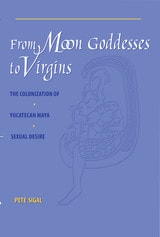
cover of From Moon Goddesses to Virgins: The Colonization of Yucatecan Maya Sexual Desire

From Moon Goddesses to Virgins

The Colonization of Yucatecan Maya Sexual Desire

By Pete Sigal

University of Texas Press, 2000

For the preconquest Maya, sexuality was a part of ritual discourse and performance, and all sex acts were understood in terms of their power to create, maintain, and destroy society. As postconquest Maya adapted to life under colonial rule, they neither fully abandoned these views nor completely adopted the formulation of sexuality prescribed by Spanish Catholicism. Instead, they evolved hybridized notions of sexual desire, represented in the figure of the Virgin Mary as a sexual goddess, whose sex acts embodied both creative and destructive components.

This highly innovative book decodes the process through which this colonization of Yucatan Maya sexual desire occurred. Pete Sigal frames the discussion around a series of texts, including the Books of Chilam Balam and the Ritual of the Bacabs, that were written by seventeenth and eighteenth century Maya nobles to elucidate the history, religion, and philosophy of the Yucatecan Maya communities. Drawing on the insights of philology, discourse analysis, and deconstruction, he analyzes the sexual fantasies, fears, and desires that are presented, often unintentionally, in the "margins" of these texts and shows how they illuminate issues of colonialism, power, ritual, and gender.

[more]
cover of From Politics to the Pews: How Partisanship and the Political Environment Shape Religious Identity

From Politics to the Pews

How Partisanship and the Political Environment Shape Religious Identity

Michele F. Margolis

University of Chicago Press, 2018

One of the most substantial divides in American politics is the “God gap.” Religious voters tend to identify with and support the Republican Party, while secular voters generally support the Democratic Party. Conventional wisdom suggests that religious differences between Republicans and Democrats have produced this gap, with voters sorting themselves into the party that best represents their religious views.

Michele F. Margolis offers a bold challenge to the conventional wisdom, arguing that the relationship between religion and politics is far from a one-way street that starts in the church and ends at the ballot box. Margolis contends that political identity has a profound effect on social identity, including religion. Whether a person chooses to identify as religious and the extent of their involvement in a religious community are, in part, a response to political surroundings. In today’s climate of political polarization, partisan actors also help reinforce the relationship between religion and politics, as Democratic and Republican elites stake out divergent positions on moral issues and use religious faith to varying degrees when reaching out to voters.
 
[more]
cover of From Popular to Insurgent Intellectuals: Peasant Catechists in the Salvadoran Revolution

From Popular to Insurgent Intellectuals

Peasant Catechists in the Salvadoran Revolution

Leigh Binford

Rutgers University Press, 2023

From Popular to Insurgent Intellectuals explains how a group of Catholic lay catechists educated in liberation theology came to take up arms and participate on the side of the rebel FMLN during El Salvador’s revolutionary war (1980-92). In the process they became transformed from popular intellectuals to insurgent intellectuals who put their organizational and cognitive skills at the service of a collective effort to create a more egalitarian and democratic society. The book highlights the key roles that peasant catechists in northern Morazán played in disseminating liberation theology before the war and supporting the FMLN during it—as quartermasters, political activists, and musicians, among other roles. Throughout, From Popular to Insurgent Intellectuals highlights the dialectical nature of relations between Catholic priests and urban revolutionaries, among others, in which the latter learned from the former and vice-versa. Peasant catechists proved capable at making independent decisions based on assessment of their needs and did not simply follow the dictates of those with superior authority, and played an important role for the duration of the twelve-year military conflict. 
[more]
cover of From Single to Serious: Relationships, Gender, and Sexuality on American Evangelical Campuses

From Single to Serious

Relationships, Gender, and Sexuality on American Evangelical Campuses

Malone, Dana M.

Rutgers University Press, 2018

College students hook up and have sex. That is what many students expect to happen during their time at university—it is part of growing up and navigating the relationship scene on most American campuses today. But what do you do when you’re a student at an evangelical university? Students at these schools must negotiate a barrage of religiously imbued undercurrents that impact how they think about relationships, in addition to how they experience and evaluate them. As they work to form successful unions, students at evangelical colleges balance sacred ideologies of purity, holiness, and godliness, while also dealing with more mainstream notions of popularity, the online world, and the appeal of sexual intimacy. 

In From Single to Serious, Dana M. Malone shines a light on friendship, dating, and, sexuality, in both the ideals and the practical experiences of heterosexual students at U. S. evangelical colleges. She examines the struggles they have in balancing their gendered and religious presentations of self, the expectations of their campus community, and their desire to find meaningful romantic relationships. 
 
[more]
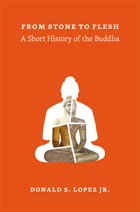
cover of From Stone to Flesh: A Short History of the Buddha

From Stone to Flesh

A Short History of the Buddha

Donald S. Lopez Jr.

University of Chicago Press, 2013
We have come to admire Buddhism for being profound but accessible, as much a lifestyle as a religion. The credit for creating Buddhism goes to the Buddha, a figure widely respected across the Western world for his philosophical insight, his teachings of nonviolence, and his practice of meditation. But who was this Buddha, and how did he become the Buddha we know and love today?
 
Leading historian of Buddhism Donald S. Lopez Jr. tells the story of how various idols carved in stone—variously named Beddou, Codam, Xaca, and Fo—became the man of flesh and blood that we know simply as the Buddha. He reveals that the positive view of the Buddha in Europe and America is rather recent, originating a little more than a hundred and fifty years ago. For centuries, the Buddha was condemned by Western writers as the most dangerous idol of the Orient. He was a demon, the murderer of his mother, a purveyor of idolatry.
 
Lopez provides an engaging history of depictions of the Buddha from classical accounts and medieval stories to the testimonies of European travelers, diplomats, soldiers, and missionaries. He shows that centuries of hostility toward the Buddha changed dramatically in the nineteenth century, when the teachings of the Buddha, having disappeared from India by the fourteenth century, were read by European scholars newly proficient in Asian languages. At the same time, the traditional view of the Buddha persisted in Asia, where he was revered as much for his supernatural powers as for his philosophical insights. From Stone to Flesh follows the twists and turns of these Eastern and Western notions of the Buddha, leading finally to his triumph as the founder of a world religion.

[more]
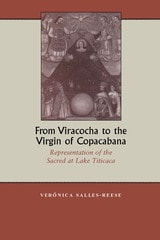
cover of From Viracocha to the Virgin of Copacabana: Representation of the Sacred at Lake Titicaca

From Viracocha to the Virgin of Copacabana

Representation of the Sacred at Lake Titicaca

By Verónica Salles-Reese

University of Texas Press, 1997

Surrounded by the peaks of the Andean cordillera, the deep blue waters of Lake Titicaca have long provided refreshment and nourishment to the people who live along its shores. From prehistoric times, the Andean peoples have held Titicaca to be a sacred place, the source from which all life originated and the site where the divine manifests its presence.

In this interdisciplinary study, Verónica Salles-Reese explores how Andean myths of cosmic and ethnic origins centered on Lake Titicaca evolved from pre-Inca times to the enthronement of the Virgin of Copacabana in 1583. She begins by describing the myths of the Kolla (pre-Inca) people and shows how their Inca conquerors attempted to establish legitimacy by reconciling their myths of cosmic and ethnic origin with the Kolla myths. She also shows how a similar pattern occurred when the Inca were conquered in turn by the Spanish.

This research explains why Lake Titicaca continues to occupy a central place in Andean thought despite the major cultural disruptions that have characterized the region's history. This book will be a touchstone in the field of Colonial literature and an important reference for Andean religious and intellectual history.
[more]
cover of From Yahweh to Yahoo!: The Religious Roots of the Secular Press

From Yahweh to Yahoo!

The Religious Roots of the Secular Press

Doug Underwood

University of Illinois Press, 2001

Presenting religion as journalism's silent partner, From Yahweh to Yahoo!provides a fresh and surprising view of the religious impulses at work in contemporary newsrooms. Focusing on how the history of religion in the United States entwines with the growth of the media, Doug Underwood argues that American journalists draw from the nation's moral and religious heritage and operate, in important ways, as personifications of the old religious virtues. 

Underwood traces religion's influence on mass communication from the biblical prophets to the Protestant Reformation, from the muckraker and Social Gospel campaigns of the late nineteenth and early twentieth centuries to the modern age of mass media. While forces have pushed journalists away from identifying themselves with religion, they still approach such secular topics as science, technology, and psychology in reverential ways. Underwood thoughtful analysis covers the press's formulaic coverage of spiritual experience, its failure to cover new and non-Christian religions in America, and the complicity of the mainstream media in launching the religious broadcasting movement.
[more]
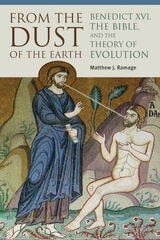
cover of From the Dust of the Earth: Benedict XVI, the Bible , and the Theory of Evolution

From the Dust of the Earth

Benedict XVI, the Bible , and the Theory of Evolution

Matthew J. Ramage

Catholic University of America Press, 2022

The claim that evolution undermines Christianity is standard fare in our culture. Indeed, many today have the impression that the two are mutually exclusive and that a choice must be made between faith and reason—rejecting Christianity on the one hand or evolutionary theory on the other. Is there a way to square advances in this field of study with the Bible and Church teaching? In this book—his fourth dedicated to applying Joseph Ratzinger/Benedict XVI’s wisdom to pressing theological difficulties—Matthew Ramage answers this question decidedly in the affirmative. Distinguishing between evolutionary theory properly speaking and the materialist attitude that is often conflated with it, Ramage’s work meets the challenge of evolutionary science to Catholic teaching on human origins, guided by Ratzinger’s conviction that faith and evolutionary theory mutually enrich one another. Pope Benedict gifted the Church with many pivotal yet often-overlooked resources for engaging evolution in the light of faith, especially in those instances where he addressed the topic in connection with the Book of Genesis. Ramage highlights these contributions and also makes his own by applying Ratzinger’s principles to such issues as the meaning of man’s special creation, the relationship between sin and death, and the implications of evolution for eschatology. Notably, Ramage shows that many apparent conflicts between Christianity and evolutionary theory lose their force when we interpret creation in light of the Paschal Mystery and fix our gaze on Jesus, the New Adam who reveals man to himself. Readers of this text will find that it does more than merely help to resolve apparent contradictions between faith and modern science. Ramage’s work shows that discoveries in evolutionary biology are not merely difficulties to be overcome but indeed gifts that yield precious insight into the mystery of God’s saving plan in Christ.
[more]
cover of From the Enemy's Point of View: Humanity and Divinity in an Amazonian Society

From the Enemy's Point of View

Humanity and Divinity in an Amazonian Society

Eduardo Viveiros de Castro

University of Chicago Press, 1992

The Araweté are one of the few Amazonian peoples who have maintained their cultural integrity in the face of the destructive forces of European imperialism. In this landmark study, anthropologist Eduardo Viveiros de Castro explains this phenomenon in terms of Araweté social cosmology and ritual order. His analysis of the social and religious life of the Araweté—a Tupi-Guarani people of Eastern Amazonia—focuses on their concepts of personhood, death, and divinity.

Building upon ethnographic description and interpretation, Viveiros de Castro addresses the central aspect of the Arawete's concept of divinity—consumption—showing how its cannibalistic expression differs radically from traditional representations of other Amazonian societies. He situates the Araweté in contemporary anthropology as a people whose vision of the world is complex, tragic, and dynamic, and whose society commands our attention for its extraordinary openness to exteriority and transformation. For the Araweté the person is always in transition, an outlook expressed in the mythology of their gods, whose cannibalistic ways they imitate. From the Enemy's Point of View argues that current concepts of society as a discrete, bounded entity which maintains a difference between "interior" and "exterior" are wholly inappropriate in this and in many other Amazonian societies.

 
[more]
cover of From the Far Right to the Mainstream: Islamophobia in Party Politics and the Media

From the Far Right to the Mainstream

Islamophobia in Party Politics and the Media

Edited by Humayun Ansari and Farid Hafez

Campus Verlag, 2012
This volume focuses on how the far right’s views of Islam have been increasingly co-opted by both liberal and conservative parties and woven into the policies of Western governments over the past two decades. The unprecedented influence of xenophobic and Islamophobic parties, whether in coalition with governments or recipients of the popular vote, reflects a major realignment of forces and a danger to the Western core values of human rights and equality. From the Far Right to the Mainstream explores how Islamophobia has moved to the mainstream of Western policy making, and the role that the media has played.
[more]
cover of From the Inside Out: The Rural Worlds of Mennonite Diarists

From the Inside Out

The Rural Worlds of Mennonite Diarists

Royden Loewen

University of Manitoba Press, 1999
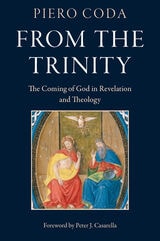
Historian Royden Loewen has brought together selections from diaries kept by 21 Mennonites in Canada between 1863 and 1929, some translated from German for the first time. By skillfully comparing and contrasting a wide cross-section of lives, Loewen shows how these diaries often turn the hidden contours of household and community "inside out." The writers featured were ordinary rural people: young women and grandmothers, rural preachers and landless householders. They include a teenaged boy who immigrated from Russia to Manitoba in 1875 as well as a successful merchant, a traveling evangelist, and a devout, conservative church elder. An elderly grandfather recounted the daily circuit of his children's homes, while 19-year-old Marie Schoeder wrote of her literary aspirations, her "secret hope" that some day she would "write things that have a real worth, things that are worth printing, and things that other folks would love to read and pay for." From the Inside Out also contrasts diaries from two distinct Mennonite communities in Canada. The Swiss-American Mennonites in Waterloo County, Ontario, faced rapid urbanization, while the Dutch-Russian Mennonites in southern Manitoba maintained their more rural environment. The diaries mirror their writers' preoccupations with work and weather, but they also reveal a communityís social structure and round of activities such as weddings, funerals, and worship services. In the process of diary-keeping, the writers sought to make sense of a dynamic and often unpredictable world. Reading what they chose to record is to learn much about their culture. Their writings provide glimpses of their lives, their collective mindset, and their history as a people.
[more]
cover of From the Trinity : The Coming of God in Revelation and Theology

From the Trinity

The Coming of God in Revelation and Theology

Piero Coda

Catholic University of America Press, 2020

From the Trinity provides an overall view of the history and the philosophical and theological significance of God the Trinity, not only from a religious point of view but from an anthropological and socio-cultural view as well. The perspective is that of Christian doctrine, specifically Catholic, in dialogue with the cultural sensitivity of our times and with the religious pluralism that characterizes it. Following the generative-progressive method proposed by Vatican II, the book begins with a phenomenological reading of the signs of the times, with special focus upon the performative aspect of the announcement and the doctrine of faith. In particular, constant attention to the contribution made by the mystics and great charisms (from Augustine of Hippo to Francis of Assisi and Theresa of Avila up until Therese of Lisieux, Edith Stein and Chaira Lubich) toward a deeper understanding of the Trinitarian truth. From the Trinity is unique in what it offers not only for Trinitarian theology, but also for other theological disciplines (Christology, Pneumatology, Anthropology, Ecclesiology, etc.) – in which the Trinity shines forth as the central and enlightening truth – as well as for philosophy, the humanities and the natural sciences. This perspective is especially developed in terms of a Trinitarian ontology (see Part V) by which reality is understood in light of the revelation of the Trinity. The implications of the incarnation of the Son of God and the gift of the Holy Spirit are taken seriously in studying the truth of all things as they are perceived in the space created by living and thinking “in” Jesus, united to the Father in the Spirit, as suggested by the title of the book, looking upon reality “From the Trinity.”
[more]
cover of Frozen Embryos: A Catholic Moral Evaluation of Embryo Adoption, Cryopreservation, Rehydration & Artifical Wombs

Frozen Embryos

A Catholic Moral Evaluation of Embryo Adoption, Cryopreservation, Rehydration & Artifical Wombs

Irene Alexander

Catholic University of America Press, 2027
In the decades following the rise of in vitro fertilization, hundreds of thousands of human embryos have been cryopreserved and ultimately abandoned, raising urgent and largely unresolved ethical questions. What moral responsibilities are owed to these embryonic human lives, and what courses of action remain open to those seeking to act with integrity in the face of this technological legacy? In this work, Irene Alexander offers a careful and rigorous examination of the ethical possibilities surrounding abandoned frozen embryos. Drawing on philosophical reasoning, theological insight, and contemporary bioethical debate, she evaluates a range of proposed responses, including embryo adoption, indefinite cryopreservation, thawing without transfer, and the emerging prospect of artificial wombs. Each option is assessed not only for its practical implications but also for its coherence with a robust account of human dignity and moral responsibility. Rather than offering simplistic solutions, Alexander clarifies the moral principles at stake, illuminating the tensions between compassion, justice, and the limits of technological intervention. She situates the problem within a broader cultural and scientific context, showing how developments in reproductive technology have outpaced the ethical frameworks needed to guide them. Accessible to educated readers while grounded in serious scholarship, this book provides a much-needed framework for thinking clearly about one of the most complex bioethical dilemmas of our time. It will be of particular interest to scholars, students, and practitioners in bioethics, theology, philosophy, and medicine, as well as to anyone seeking to understand the moral contours of life in an age of unprecedented technological power.
[more]
cover of Fundamental Soteriology: On the Fullness of Life

Fundamental Soteriology

On the Fullness of Life

Michal Paluch

Catholic University of America Press, 2026
Fullness of Life is a basic introduction to the Catholic understanding of salvation. It begins with a presentation of the background against which the teaching on salvation must be situated (the contemporary context of the question of salvation, the positions of other religions, the teaching of the magisterium) (chapter one), and a concise sketch on the history of soteriology (chapter two). The following chapters are a discussion of models for interpreting salvation relating to Christ's death on the cross (chapter three) and the totality of His life (chapter four). These considerations are concluded with a presentation of St. Thomas Aquinas' interpretative proposal (chapter five), which proves to be an apt way to synthesize the discussions presented earlier. The model of salvific mediation eventually turns out to be a higher-order model that allows to close the entire presentation (chapter six). The body of the text is supplemented by appendices that discuss a chosen set of particular problems related to the reflections in the corpus, that is, the “scapegoat” as a figure of Christ, the salvific function of other religions, substitution in Aquinas, and salutary suffering. The entire text ends with a selection of relevant sources. With the help of such a structure, the book proposes a basic explanation of (sometimes distorted) interpretations of sacrifice, substitution, satisfaction, divinization. It helps to bring readers from their first steps of soteriological reflection to Aquinas’ synthesis and to help them to discover that – taking into account the contemporary discussions and problems – Aquinas’ account can still offer a very convincing way for synthesizing soteriology. The book is addressed primarily to students of theology. However, it has been written in such a way that any Christian properly motivated to deepen their faith can benefit from reading it. And since it may serve as an aid in learning how to interpret the whole of soteriology, professional theologians may also find themselves inspired by it.
[more]
cover of Fundamental Theology

Fundamental Theology

Guy Mansini, OSB

Catholic University of America Press, 2018

Fundamental Theology examines the light by which the mysteries of Christ and the Church, the Trinity and the Sacraments, are revealed to us. That light we call "revelation," and fundamental theology examines in the first place what this light shows about itself, and how it is sustained in the world. Or again, fundamental theology considers what the word of God has to say both about itself and what it has to say about where in the world it is to be heard. So, first it is a theology of Revelation (chapter 1), and second, a theology of the transmission of Revelation in Tradition, Scripture, and the Church (chapters 2, 3, and 4). Why must Revelation have the shape it does, and why must it be constituted by both word and event? Why is Tradition prior to Scripture, why must the word of God be written down, and why must Scripture come to us in two testaments? And why must the message conveyed in Tradition and Scripture have a living interpreter in the Church?

Since no word is spoken unless it is heard, fundamental theology also investigates the conditions of hearing the word of God, the very hearing itself in the assent of faith, and a necessary consequence of this hearing. The remote conditions of hearing are also what theology calls our ability to come to the knowledge of the preambula fidei- the things about God than can be known by the natural light (chapter 5). The immediate condition of hearing is the credibility of the word (chapter 6). Hearing is faith (chapter 7). And true hearing gives the hearer to recapitulate what is heard in his own wondering and thankful voice in theology (chapter 8). The introduction to theology in the last chapter is by way of considering the history of Catholic theology in the 20th century.
[more]
cover of Fundamental Theology According to Newman: The Principles of Christianity

Fundamental Theology According to Newman

The Principles of Christianity

Fernando Maria Cavaller

Catholic University of America Press, 2026
Although Newman certainly did not write the Essay on the Development of Christian Doctrine with the intention to do systematic theology, his ten principles serve as a framework for ordering the content of the essay with reference to Newman's other works. The result in this present book is a systematic analysis of the theological themes considered by Newman throughout his writing career. Newman’s writings were circumstantial in nature, written in response to controversies or needs of the moment. Nevertheless, he was able to shed light on those specific situations by appealing to timeless theological insights. The originality of this book consists in placing these insights in a systematic context. The arrangement is structured as a fundamental theology, following the usual discourse on God's revelation and faith as a response, with a brief intermediate exposition of fundamental Christology and ecclesiology. In order to give it Newman's own imprint, the author has provided only brief introductions or comments, as well as references to other authors, giving priority to Newman's own texts. In this way the work serves as an introduction to the thought and even to the life of John Henry Newman, whose literary style denotes the union of theological questions with a living faith.
[more]
cover of Fundamentalisms Comprehended

Fundamentalisms Comprehended

Edited by Martin E. Marty and R. Scott Appleby

University of Chicago Press, 1995
In this fifth volume of the Fundamentalism Project, Fundamentalisms Comprehended, the distinguished contributors return to and test the endeavor's beginning premise: that fundamentalisms in all faiths share certain "family resemblances." Several of the essays reconsider the project's original definition of fundamentalism as a reactive, absolutist, and comprehensive mode of anti-secular religious activism. The book concludes with a capstone statement by R. Scott Appleby, Emmanuel Sivan, and Gabriel Almond that builds upon the entire Fundamentalism Project. Identifying different categories of fundamentalist movements, and delineating four distinct patterns of fundamentalist behavior toward outsiders, this statement provides an explanatory framework for understanding and comparing fundamentalisms around the world.
[more]
cover of Fundamentalisms Observed

Fundamentalisms Observed

Edited by Martin E. Marty and R. Scott Appleby

University of Chicago Press, 1991

This volume is an encyclopedic introduction to movements of religious reaction in the twentieth century. The fourteen chapters are thematically linked by a common set of concerns: the social, political, cultural, and religious contexts in which these movements were born; the particular world-views, systems of thought, and beliefs that govern each movement; the ways in which leaders and group members make sense of and respond to the challenges of the modern, postcolonial era in world history.

The contributors include sociologists, cultural anthropologists, and historians, some of whom have been participant-observers in the groups under consideration. As an analysis of the global resurgence of religion, Fundamentalisms Observed sheds new light on current religious movements and cultures from North America to the Far East.
[more]
cover of Fundamentalisms and Society: Reclaiming the Sciences, the Family, and Education

Fundamentalisms and Society

Reclaiming the Sciences, the Family, and Education

Edited by Martin E. Marty and R. Scott Appleby

University of Chicago Press, 1993

The Fundamentalism Project
Edited by Martin E. Marty and R. Scott Appleby

Around the world, fundamentalist movements are profoundly
affecting the way we live. Misinformation and misperception
about fundamentalism exacerbate conflicts at home and abroad.
Yet policymakers, journalists, students, and others have
lacked any comprehensive resource on the explosive phenomenon
of fundamentalism. Now the Fundamentalism Project has
assembled an international team of scholars for a multivolume
assessment of the history, scope, sources, character, and
impact of fundamentalist movements within the world's major
religious traditions.

Fundamentalisms and Society shows how fundamentalist
movements have influenced human relations, education, women's
rights, and scientific research in over a dozen nations and
within the traditions of Islam, Judaism, Christianity,
Buddhism, and Hinduism. Drawn from the fields of
anthropology, sociology, history of religion, and history of
science, the contributors cover topics such as the
educational structures of Hindu revivalism, women in
fundamentalist Iran and Pakistan, and the creationist cosmos
of Protestant fundamentalism. In a concluding essay, William
H. McNeill situates contemporary fundamentalisms within a
world historical context.
The Fundamentalism Project, Volume 2

Martin E. Marty and R. Scott Appleby direct the
Fundamentalism Project. Marty, the Fairfax M. Cone
Distinguished Service Professor of the History of Modern
Christianity at the University of Chicago, is the senior
editor of the Christian Century and the author of
numerous books, including the multivolume Modern American
Religion, also published by the University of
Chicago Press. Appleby, a research associate at the
University of Chicago, is the author of “Church and
Age Unite!” The Modernist Impulse in American
Catholicism.
[more]
cover of Fundamentalisms and the State: Remaking Polities, Economies, and Militance

Fundamentalisms and the State

Remaking Polities, Economies, and Militance

Edited by Martin E. Marty and R. Scott Appleby

University of Chicago Press, 1996

Do fundamentalisms tend toward political activism, and how
successful have they been in remaking political structures?
To answer this question, the contributors to this volume—
political scientists, historians of religion,
anthropologists, and sociologists—discuss the anti-
abortion movement, Operation Rescue in the United States, the
Islamic war of resistance in Afghanistan, Shi'ite
jurisprudence in Iran, and other issues. The volume
considers the effect that antisecular religious movements
have had over the past twenty-five years on national
economies, political parties, constitutional issues, and
international relations on five continents and within the
traditions of Islam, Christianity, Judaism, Buddhism,
Hinduism, and Sikhism. Marty and Appleby conclude with a
synthetic statement on the fundamentalist impact on polities,
economies, and state security.
The Fundamentalism Project, Volume 3

Martin E. Marty and R. Scott Appleby direct the
Fundamentalism Project. Marty, the Fairfax M. Cone
Distinguished Service Professor of the History of Modern
Christianity at the University of Chicago, is the senior
editor of the Christian Century and the author of
numerous books, including the multivolume Modern American
Religion, also published by the University of
Chicago Press. Appleby, a research associate at the
University of Chicago, is the author of “Church and
Age Unite!” The Modernist Impulse in American
Catholicism.
[more]