Results by title
4413 books match the query 'Anthropology' and 182 start with f

From Hospitality to Grace
A Julian Pitt-Rivers OmnibusJulian Pitt-Rivers
HAU, 2015
Holding Pitt-Rivers’s diversity of subjects and ethnographic foci in the same gaze, this book reveals a theoretical unity that ran through his work and highlights his iconic wit and brilliance. Striking at the heart of anthropological theory, the pieces here explore the relationship between the mental and the material, between what is thought and what is done. Classic, definitive, and yet still extraordinarily relevant for contemporary anthropology, Pitt-Rivers’s lifetime contribution will provide a new generation of anthropologists with an invaluable resource for reflection on both ethnographic and theoretical issues.
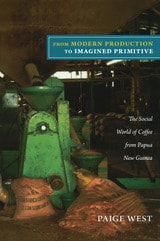
From Modern Production to Imagined Primitive
The Social World of Coffee from Papua New GuineaPaige West
Duke University Press, 2012

From Mountain Top to Valley Bottom
Understanding Past Land Use in the Northern Rio Grande Valley, New MexicoBradley J. Vierra
University of Utah Press, 2013
The essays in this collection are unified by three specific themes: landscape, movement, and technology. Landscape involves the ecological backdrop of the northern Rio Grande valley, including past and present environments. Movement refers to the positioning of people across the landscape along with the dynamic and fluid nature with which people—past and present—view their relationship with the “above” and “below.” Technology not only refers to the tools and facilities that past people may have used but to the organization of labor needed to cooperatively exploit a variety of subsistence resources and the exchange of products across the region. This volume provides both a cross section of current research from expert scholars and a broad perspective that seeks to integrate new data from lowland and upland contexts. From Mountain Top to Valley Bottom will appeal to those interested in obsidian source studies, geoarchaeology, past climatic regimes, foraging societies, early agriculture, ceramic technology, subsistence, early village formation, ethnogenesis, and historic multiethnic economies.

From North Africa to France
Family Migration in Text and FilmIsabel Hollis-Touré
University of London Press, 2015
From Notes to Narrative
Writing Ethnographies That Everyone Can ReadKristen Ghodsee
University of Chicago Press, 2016
From Notes to Narrative picks up where methodological training leaves off. Kristen Ghodsee, an award-winning ethnographer, addresses common issues that arise in ethnographic writing. Ghodsee works through sentence-level details, such as word choice and structure. She also tackles bigger-picture elements, such as how to incorporate theory and ethnographic details, how to effectively deploy dialogue, and how to avoid distracting elements such as long block quotations and in-text citations. She includes excerpts and examples from model ethnographies. The book concludes with a bibliography of other useful writing guides and nearly one hundred examples of eminently readable ethnographic books.
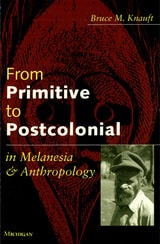
From Primitive to Postcolonial in Melanesia and Anthropology
Bruce M. Knauft
University of Michigan Press, 1999
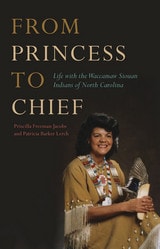
From Princess to Chief
Life with the Waccamaw Siouan Indians of North CarolinaPriscilla Freeman Jacobs
University of Alabama Press, 2013

From Quarry to Cornfield
The Political Economy of Mississippian Hoe ProductionCharles Richard Cobb
University of Alabama Press, 2001
An innovative model for examining the technology of hoe production and its contribution to the agriculture of Mississippian communities.
Lithic specialist Charles Cobb examines the political economy in Mississippian communities through a case study of raw material procurement and hoe production and usage at the Mill Creek site on Dillow Ridge in southwest Illinois. Cobb outlines the day-to-day activities in a Mississippian chiefdom village that flourished from about A.D. 1250 to 1500. In so doing, he provides a fascinating window into the specialized tasks of a variety of "day laborers" whose contribution to the community rested on their production of stone hoes necessary in the task of feeding the village. Overlooked in most previous studies, the skills and creativity of the makers of the hoes used in village farming provide a basis for broader analysis of the technology of hoe use in Mississippian times.
Although Cobb's work focuses on Mill Creek, his findings at this site are representative of the agricultural practices of Mississippian communities throughout the eastern United States. The theoretical underpinnings of Cobb's study make a clear case for a reexamination of the accepted definition of chiefdom, the mobilization of surplus labor, and issues of power, history, and agency in Mississippian times. In a well-crafted piece of writing, Cobb distinguishes himself as one of the leaders in the study of lithic technology. From Quarry to Cornfield will find a well-deserved place in the ongoing discussions of power and production in the Mississippian political economy.

From Quebradita to Duranguense
Dance in Mexican American Youth CultureSydney Hutchinson
University of Arizona Press, 2007
Quebradita, meaning “little break,” is a modern Mexican American dance style that became hugely popular in Los Angeles and across the southwestern United States during the early to mid 1990s. Over the decade of its popularity, this dance craze offered insights into the social and cultural experience of Mexican American youth. Accompanied by banda, an energetic brass band music style, quebradita is recognizable by its western clothing, hat tricks, and daring flips. The dance’s combination of Mexican, Anglo, and African American influences represented a new sensibility that appealed to thousands of young people. Hutchinson argues that, though short-lived, the dance filled political and sociocultural functions, emerging as it did in response to the anti-immigrant and English-only legislation that was then being enacted in California. Her fieldwork and interviews yield rich personal testimony as to the inner workings of the quebradita’s aesthetic development and social significance. The emergence of pasito duranguense, a related yet distinct style originating in Chicago, marks the evolution of the Mexican American youth dance scene.
Like the quebradita before it, pasito duranguense has picked up the task of demonstrating the relevance of regional Mexican music and dance within the U.S. context.

From Racism to Genocide
Anthropology in the Third ReichGretchen E. Schafft
University of Illinois Press, 2007
In paperback for the first time, From Racism to Genocide is an explosive, richly detailed account of how Nazi anthropologists justified racism, developed practical applications of racist theory, and eventually participated in every phase of the Holocaust.
Using original sources and previously unpublished documentation, Gretchen E. Schafft shows the total range of anti-human activity from within the confines of a particular discipline. Based on seven years of archival research in the United States and abroad, the work includes many original photos and documents, most of which have never before been published. It uses primary data and original texts whenever possible, including correspondence written by perpetrators. The book also reveals that the United States was not merely a bystander in this research, but instead contributed professional and financial support to early racial research that continued through the first five years of Hitler’s regime.

From Russia with Code
Programming Migrations in Post-Soviet TimesMario Biagioli and Vincent Antonin Lepinay, editors
Duke University Press, 2019
Contributors. Irina Antoschyuk, Mario Biagioli, Ksenia Ermoshina, Marina Fedorova, Andrey Indukaev, Alina Kontareva, Diana Kurkovsky, Vincent Lépinay, Alexandra Masalskaya, Daria Savchenko, Liubava Shatokhina, Alexandra Simonova, Ksenia Tatarchenko, Zinaida Vasilyeva, Dimitrii Zhikharevich

From San Francisco Eastward
Victorian Theater in the American WestCarolyn Grattan Eichin
University of Nevada Press, 2020
Finalist for the 2021 Will Rogers Medallion Award in Western Non-Fiction
Carolyn Grattan Eichin’s From San Francisco Eastward explores the dynamics and influence of theater in the West during the Victorian era. San Francisco, Eichin argues, served as the nucleus of the western theatrical world, having attained prominence behind only New York and Boston as the nation’s most important theatrical center by 1870. By focusing on the West’s hinterland communities, theater as a capitalist venture driven by the sale of cultural forms is illuminated against the backdrop of urbanization.
Using the vagaries of the West’s notorious boom-bust economic cycles, Eichin traces the fiscal, demographic, and geographic influences that shaped western theater. With an emphasis on the 1860s and 70s, this thoroughly researched work uses distinct notions of ethnicity, class, and gender to examine a cultural institution driven by a market economy. From San Francisco Eastward is a thorough analysis of the ever-changing theatrical personalities and strategies that shaped Victorian theater in the West, and the ways in which theater as a business transformed the values of a region.

From Small Talk to Microaggression
A History of ScaleMichael Lempert
University of Chicago Press, 2024
In this ambitious, wide-ranging book, anthropologist Michael Lempert offers a conceptual history that explores how, why, and with what effects we have come to think of interactions as “scaled.” Focusing on the sciences of interaction in midcentury America, Lempert traces how they harnessed diverse tools and media technologies, from dictation machines to 16mm film, to study communication “microscopically.” In looking closely, many hoped to transform interaction: to improve efficiency, grow democracy, curb racism, and much else. Yet their descent into a microworld created troubles, with some critics charging that these scientists couldn’t see the proverbial forest for the trees. Exploring talk therapy and group dynamics studies, social psychology and management science, conversation analysis, “micropolitics,” and more, Lempert shows how scale became a defining problem across the behavioral sciences.
Ultimately, he argues, if we learn how our objects of study have been scaled in advance, we can better understand how we think and interact with them—and with each other—across disciplinary and ideological divides. Even as once-fierce debates over micro and macro have largely subsided, Lempert shows how scale lives on and continues to affect the ethics and politics of language and communication today.
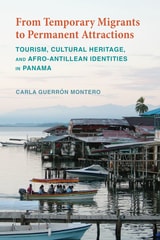
From Temporary Migrants to Permanent Attractions
Tourism, Cultural Heritage, and Afro-Antillean Identities in PanamaCarla Guerrón Montero
University of Alabama Press, 2020
A new reading of Panama’s nation-building process, interpreted through a lens of transnational tourism
Based on long-term ethnographic and archival research, From Temporary Migrants to Permanent Attractions: Tourism, Cultural Heritage, and Afro-Antillean Identities in Panama considers the intersection of tourism, multiculturalism, and nation building. Carla Guerrón Montero analyzes the ways in which tourism becomes a vehicle for the development of specific kinds of institutional multiculturalism and nation-building projects in a country that prides itself on being multiethnic and racially democratic.
The narrative centers on Panamanian Afro-Antilleans who arrived in Panama in the nineteenth century from the Greater and Leeward Antilles as a labor force for infrastructural projects and settled in Panama City, Colón, and the Bocas del Toro Archipelago. The volume discusses how Afro-Antilleans, particularly in Bocas del Toro, have struggled since their arrival to become part of Panama’s narrative of nationhood and traces their evolution from plantation workers for the United Fruit Company to tourism workers. Guerrón Montero notes that in the current climate of official tolerance, they have seized the moment to improve their status within Panamanian society, while also continuing to identify with their Caribbean heritage in ways that conflict with their national identity.
From Tribalism to Nationalism
The Anthropological Turn in Laos – A Tribute to Grant EvansEdited by Yves Goudineau and Vanina Bouté
National University of Singapore Press, 2022
From Tribute to Communal Sovereignty
The Tarascan and Caxcan Territories in TransitionEdited by Andrew Roth-Seneff, Robert V. Kemper, and Julie Adkins
University of Arizona Press, 2015
The continuities elucidated concern ancestral territorial claims that date back centuries and reflect the stable geographic locations occupied by core populations of indigenous language–speakers in or near their pre-Columbian territories since the Postclassical period, from the thirteenth to late fifteenth centuries. A common theme of this volume is the strong cohesive forces present, not only in the colonial construction of Christian village communities in Purhépecha and Nahuatl groups in Michoacán but also in the demographically less inclusive Huichol (Wixarika), Cora, and Tepehuan groups, whose territories were more extensive.
The authors review a cluster of related themes: settlement patterns of the last five centuries in central western Mexico, language distribution, ritual representation of territoriality, processes of collective identity, and the forms of participation and resistance during different phases of Mexican state formation. From such research, the question arises: does the village community constitute a unique level of organization of the experience of the original peoples of central western Mexico? The chapters address this question in rich and complex ways by first focusing on the past configurations and changes in lifeways during the transition from pre-Columbian to Spanish rule in tributary empires, then examining the long-term postcolonial process of Mexican independence that introduced the emerging theme of the communal sovereignty.
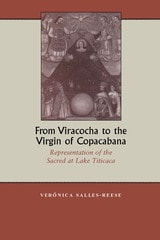
From Viracocha to the Virgin of Copacabana
Representation of the Sacred at Lake TiticacaBy Verónica Salles-Reese
University of Texas Press, 1997
Surrounded by the peaks of the Andean cordillera, the deep blue waters of Lake Titicaca have long provided refreshment and nourishment to the people who live along its shores. From prehistoric times, the Andean peoples have held Titicaca to be a sacred place, the source from which all life originated and the site where the divine manifests its presence.
In this interdisciplinary study, Verónica Salles-Reese explores how Andean myths of cosmic and ethnic origins centered on Lake Titicaca evolved from pre-Inca times to the enthronement of the Virgin of Copacabana in 1583. She begins by describing the myths of the Kolla (pre-Inca) people and shows how their Inca conquerors attempted to establish legitimacy by reconciling their myths of cosmic and ethnic origin with the Kolla myths. She also shows how a similar pattern occurred when the Inca were conquered in turn by the Spanish.
This research explains why Lake Titicaca continues to occupy a central place in Andean thought despite the major cultural disruptions that have characterized the region's history. This book will be a touchstone in the field of Colonial literature and an important reference for Andean religious and intellectual history.

From a Shattered Sun
Hierarchy, Gender, and Alliance in the Tanimbar IslandsSusan Mckinnon
University of Wisconsin Press, 1991
Among a growing number of ethnographies of eastern Indonesia that deal with cosmology, exchange, and kinship, From a Shattered Sun is the first to address squarely issues originally broached by Edmund Leach and Claude Lévi-Strauss concerning the relation between hierarchy and equality in asymmetric systems of marriage.
On the basis of extensive fieldwork in the Tamimbar islands, Susan McKinnon analyzes the simultaneous presence of both closed, asymmetric cycles and open, asymmetric pathways of alliance—of both egalitarian and hierarchical configurations. In addition, Tamimbarese society is marked by the existence of multiple, differentially valued forms of marriage, affiliation, and residence. Rather than seeing these various forms as analytically separable types, McKinnon demonstrates that it is only by viewing them as integrally related—in terms of culturally specific understandings of "houses," gender, and exchange—that one can perceive the processes through which hierarchy and equality are created.
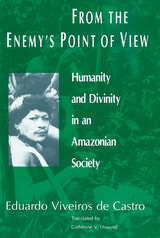
From the Enemy's Point of View
Humanity and Divinity in an Amazonian SocietyEduardo Viveiros de Castro
University of Chicago Press, 1992
Building upon ethnographic description and interpretation, Viveiros de Castro addresses the central aspect of the Arawete's concept of divinity—consumption—showing how its cannibalistic expression differs radically from traditional representations of other Amazonian societies. He situates the Araweté in contemporary anthropology as a people whose vision of the world is complex, tragic, and dynamic, and whose society commands our attention for its extraordinary openness to exteriority and transformation. For the Araweté the person is always in transition, an outlook expressed in the mythology of their gods, whose cannibalistic ways they imitate. From the Enemy's Point of View argues that current concepts of society as a discrete, bounded entity which maintains a difference between "interior" and "exterior" are wholly inappropriate in this and in many other Amazonian societies.

From the Land of Ever Winter to the American Southwest
Athapaskan Migrations, Mobility, and EthnogenesisDeni J. Seymour
University of Utah Press, 2012
The Athapaskan departure from the Canadian Subarctic centuries ago and their subsequent arrival in the American Southwest has remained the subject of continuous debate in anthropological research. This book examines archaeological, genetic, linguistic, and traditional oral history data and brings them together in fresh ways, in many cases for the first time. With a backdrop of these new and interrelated lines of evidence, each subfield must now reevaluate its approach and the forms of evidence it uses to construct arguments.
The contributors here include the most knowledgeable scholars in each of the above fields, collectively providing the most up-to-date research on early Athapaskans and their movements and migrations. Each chapter approaches Athapaskan migration with data obtained from different regions, providing clarity as to the basis for individual arguments. Often, entrenched regional visualizations and localized conventions are clarified only when placed in juxtaposition to those of other regions. Because of this, conclusions rest on sometimes widely divergent theoretical and methodological underpinnings, thus expressing preference for and conveying weight to certain types of evidence and lines of reasoning. The goal of this volume is to expose these arguments in order to clarify appropriate directions for future research, making advances possible.
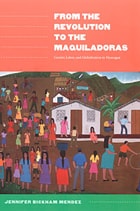
From the Revolution to the Maquiladoras
Gender, Labor, and Globalization in NicaraguaJennifer Bickham Mendez
Duke University Press, 2005
Mendez draws on interviews with leaders and program participants, including maquiladora workers; her participant observation while she worked as a volunteer within the organization; and analysis of the public statements, speeches, and texts written by mec members. She provides a sense of the day-to-day operations of the group as well as its strategies. By exploring the tension between mec and transnational feminist, labor, and solidarity networks, she illustrates how mec women’s outlooks are shaped by both their revolutionary roots within the Sandinista regime and their exposure to global discourses of human rights and citizenship. The complexities of the women’s labor movement analyzed in From the Revolution to the Maquiladoras speak to social and economic justice movements in the many locales around the world.

Frontier Intimacies
Ayoreo Women and the Sexual Economy of the Paraguayan ChacoBy Paola Canova
University of Texas Press, 2020
Until the 1960s, the Ayoreo people of Paraguay's Chaco region had remained uncontacted by the world. But as development encroached on their territory, the Ayoreo began to experience rapid cultural change. Paola Canova looks at one aspect of this change in Frontier Intimacies: the sexual practices of Ayoreo women, specifically the curajodie, or single women who exchange sex for money or material goods with non-Ayoreo men, often Mennonite settlers.
Weaving personal anecdotes into her extensive research, Canova shows how the advancement of economic and missionary frontiers has reconfigured gender roles, sexual ethics, and notions of desire in the region. Ayoreo women, she shows, have reappropriated their sexual practices, approaching intimate liaisons on their own terms and seeing the involvement of money not as morally problematic but as constitutive of sexual encounters. By using their sexuality to construct an intimate frontier operating according to their own logics, Canova reveals, Ayoreo women expose the fractured workings of frontier capitalism in spaces of rapid transformation. Inviting broader examination of the ways in which contemporary frontier economies are constructed and experienced, Frontier Intimacies brings a captivating new perspective to the economic development of the Chaco region.

Frontier Romance
Environment, Culture, and Alaska IdentityJudith Kleinfeld
University of Alaska Press, 2012

Frontiers of Capital
Ethnographic Reflections on the New EconomyMelissa S. Fisher and Greg Downey, eds.
Duke University Press, 2006
Some contributors highlight how expedited flows of information allow business professionals to develop new knowledge practices. They analyze dynamics ranging from the decision-making processes of the Federal Reserve Board to the legal maneuvering necessary to buttress a nascent Japanese market in over-the-counter derivatives. Others focus on the social consequences of globalization and new modes of communication, evaluating the introduction of new information technologies into African communities and the collaborative practices of open-source computer programmers. Together the essays suggest that social relations, rather than becoming less relevant in the high-tech age, have become more important than ever. This finding dovetails with the thinking of many corporations, which increasingly employ anthropologists to study and explain the “local” cultural practices of their own workers and consumers. Frontiers of Capital signals the wide-ranging role of anthropology in explaining the social and cultural contours of the New Economy.
Contributors. Jean Comaroff, John L. Comaroff, Greg Downey, Melissa S. Fisher, Douglas R. Holmes, George E. Marcus, Siobhán O’Mahony, Aihwa Ong, Annelise Riles, Saskia Sassen, Paul A. Silverstein, AbdouMaliq Simone, Neil Smith, Caitlin Zaloom

Fugitive Anthropology
Embodying Activist ResearchEdited by Shanya Cordis, Maya J. Berry, Claudia Chávez Argüelles, Sarah Ihmoud, and R. Elizabeth Velásquez Estrada
University of Texas Press, 2026
A personal, provocative, and boundary-breaking volume on the power relations that racialized, gendered, and sexualized researchers grapple with while conducting activist research.
Fugitive Anthropology is a transnational, intergenerational engagement that extends feminist theory, activist research methodologies, and the discipline of anthropology in new directions. Contributors examine the tensions that arise from conducting politically engaged, collaborative research alongside communities in struggle, in particular theorizing from the experiences of racialized women, queer, trans, and gender nonconforming researchers across distinct geographies. Essays contend with the matrices of colonial, imperial, and patriarchal violence that afflict the researchers and communities with which they seek political alignment.
Articulating an ethnographic practice grounded in Black and Indigenous political struggles and committed to collective liberation, the volume reflects on what it means to navigate violent relations of power, systemic inequities, and current onslaughts shaping field research and US academia. Ultimately, Fugitive Anthropology argues that a feminist ethos—one that embraces embodied knowledges and fugitive sensibilities—forges liberatory spaces that break from dominant masculinist frames of the “political” and challenge colonial regimes within and beyond the neoliberal university.
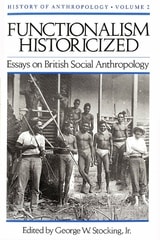
Functionalism Historicized
Essays on British Social AnthopologyEdited by George W. Stocking, Jr.
University of Wisconsin Press, 1988
" This volume is likely to prove indispensable to historians of anthropology in general and of British anthropology in particular. There are a wide range of historical skills on display, from traditional textual analysis to historical sociology of the most sophisticated sort, and there is a more or less thorough chronological coverage from the era of classical evolutionism virtually up to the present. One can only hope that historicizing anthropologists will sample some of these wares."—Journal of the History of the Behavioral Sciences

Functions of Victorian Culture at the Present Time
Christine L. Krueger
Ohio University Press, 2002

Fundamental Development of the Social Sciences
Rockefeller Philanthropy and the United States Social Science Research CouncilDonald Fisher
University of Michigan Press, 1993
The United States Social Science Research Council (SSRC), founded in 1923, was the first national social science institution in the world and might be said to represent the creation of a "science of society." In Fundamental Development of the Social Sciences , Donald Fisher shows how this institution, under the considerable influence of Rockefeller philanthropy, shaped an entire discipline.
Fisher demonstrates that the creation and growth of the SSRC during the 1920s and 1930s is essential to our understanding of the major developments in the social sciences since World War II. He shows that during this period, the place of social science and social scientists in American society was fixed in a way that has had substantial, lasting impact.
The author weaves a number of larger, related issues into his account of the wide-ranging influence of the SSRC: the role of social scientists in the political life of the societies in which they live; the way in which knowledge systems develop and change; the role of philanthropy in industrialized societies; and the formation and preservation of the modern capitalist state.
Donald Fisher's discussion of how an American institution sculpted an entire discipline will be of interest to all social scientists and historians of social science.

Fungible Life
Experiment in the Asian City of LifeAihwa Ong
Duke University Press, 2016
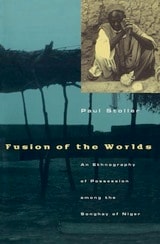
Fusion of the Worlds
An Ethnography of Possession among the Songhay of NigerPaul Stoller
University of Chicago Press, 1989
"Stoller brilliantly recreates the reality of spirit presence; hosts are what they mediate, and spirits become flesh and blood in the 'fusion' with human existence. . . . An excellent demonstration of the benefits of a new genre of ethnographic writing. It expands our understanding of the harsh world of Songhay mediums and sorcerers."—Bruce Kapferer, American Ethnologist
"A vivid story that will appeal to a wide audience. . . . The voices of individual Songhay are evident and forceful throughout the story. . . . Like a painter, [Stoller] is concerned with the rich surface of things, with depicting images, evoking sensations, and enriching perceptions. . . . He has succeeded admirably." —Michael Lambek, American Anthropologist
"Events (ceremonies and life histories) are evoked in cinematic style. . . . [This book is] approachable and absorbing—it is well written, uncluttered by jargon and elegantly structured."—Richard Fardon, Times Higher Education Supplement
"Compelling, insightful, rich in ethnographic detail, and worthy of becoming a classic in the scholarship on Africa."—Aidan Southall, African Studies Review

Futureproof
Security Aesthetics and the Management of LifeD. Asher Ghertner, Daniel M. Goldstein, and Hudson McFann, editors
Duke University Press, 2020
Contributors. Victoria Bernal, Jon Horne Carter, Alexandra Demshock, Zaire Z. Dinzey-Flores, Didier Fassin, D. Asher Ghertner, Daniel M. Goldstein, Rachel Hall, Rivke Jaffe, Ieva Jusionyte, Catherine Lutz, Alejandra Leal Martínez, Hudson McFann, Limor Samimian-Darash, AbdouMaliq Simone, Austin Zeiderman
Futures after Progress
Hope and Doubt in Late Industrial BaltimoreChloe Ahmann
University of Chicago Press, 2024
Factory fires, chemical explosions, and aerial pollutants have inexorably shaped South Baltimore into one of the most polluted places in the country. In Futures after Progress, anthropologist Chloe Ahmann explores the rise and fall of industrial lifeways on this edge of the city and the uncertainties that linger in their wake. Writing from the community of Curtis Bay, where two hundred years of technocratic hubris have carried lethal costs, Ahmann also follows local efforts to realize a good future after industry and the rifts competing visions opened between neighbors.
Examining tensions between White and Black residents, environmental activists and industrial enthusiasts, local elders and younger generations, Ahmann shows how this community has become a battleground for competing political futures whose stakes reverberate beyond its six square miles in a present after progress has lost steam. And yet—as one young resident explains—“that’s not how the story ends.” Rigorous and moving, Futures after Progress probes the deep roots of our ecological predicament, offering insight into what lies ahead for a country beset by dreams deferred and a planet on the precipice of change.