Results by title
18284 books match the query 'United States' and 783 start with f
Fighting for Their Lives
Inside the Experience of Capital Defense AttorneysSusannah Sheffer
Vanderbilt University Press, 2013
Through vivid interviews amplified by the author's responses and commentary, these attorneys reveal aspects of their internal experience that they have never talked about until now. How do capital defenders manage the weight of the responsibility they carry? To what extent do they experience symptoms of trauma in the aftermath of losing a client to execution or as a result of the cumulative effects of engaging in capital defense work? What motivates them, and what do they draw upon, in order to keep engaging in such emotionally demanding work? Have they considered practicing other types of law? What can we learn from capital defenders not only about the deep and long-term effects of the death penalty but also about broader human questions of hope, effectiveness, success, failure, strength, fragility, and perseverance?
Fighting for Total Person Unionism
Harold Gibbons, Ernest Calloway, and Working-Class CitizenshipRobert Bussell
University of Illinois Press, 2015
Fighting for a Free Missouri
German Immigrants, African Americans, and the Issue of SlaverySydney J. Norton
University of Missouri Press, 2023
Fighting from a Distance
How Filipino Exiles Helped Topple a DictatorJose V. Fuentecilla
University of Illinois Press, 2013
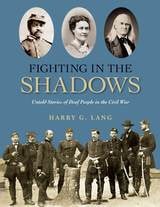
Fighting in the Shadows
Untold Stories of Deaf People in the Civil WarHarry G. Lang
Gallaudet University Press, 2017
Lang pieces together hundreds of stories, accompanied by numerous historical images, to reveal a powerful new perspective on the Civil War. These soldiers and civilians were not “disabled” by their deafness. On the contrary, despite the marginalization and paternalism they experienced in society, they were able to apply their skills and knowledge to support the causes in which they ardently believed.
Fighting in the Shadows is a story of how deaf civilians and soldiers put aside personal concerns about deafness, in spite of the discrimination they faced daily, in order to pursue a cause larger than themselves. Yet their stories have remained in the shadows, leaving most Americans, hearing and deaf, largely unaware of the deaf people who made significant contributions to the events that changed the course of our nation’s history. This book provides new insights into Deaf history as well as into mainstream interpretations of the Civil War.
Fighting the Death Penalty
A Fifty-Year Journey of Argument and PersuasionEugene G. Wanger
Michigan State University Press, 2019
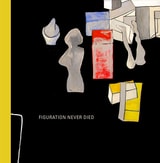
Figuration Never Died
New York Painterly Painting, 1950–1970Karen Wilkin
The Artist Book Foundation, 2020
By 1950, forward-looking New York painting was seen as synonymous with abstraction, especially charged, gestural Abstract Expressionism. But there was also a strong group of dissenters; artists, all born in the 1920s and many of them students of Hans Hofmann, who never lost their enthusiasm for recognizable imagery, without rejecting Abstract Expressionism's love of malleable oil paint. Although most of them began as abstract artists, they all evolved into painters working from observation, using a fluid, urgent touch to translate their perceptions into eloquent, highly individualized visual languages, almost always informed by the hand; that is, unlike the Color Field and Minimalist artists, these artists remained, for the most part, "painterly" painters. In light of their important contributions to twentieth-century American art, The Artist Book Foundation presents the cataloge for the Brattleboro Museum & Art Center's eponymous 2020 exhibition, Figuration Never Died: New York Painterly Painting, 1950–1970.
These rebellious artists include Lois Dodd, Jane Freilicher, Paul Georges, Grace Hartigan, Wolf Kahn, Alex Katz, Albert Kresch, Robert de Niro Sr., Paul Resika, and Anne Tabachnick. The compelling figurative work they made between about 1950 and 1970, in contrast to the prevailing Abstract Expressionism of the time, constitutes a significat chapter in the history of recent American Modernism. Their work not only greatly expands our conception of the story of New York painting, but it also presages and contextualizes today's multiplicity of artistic concepts and processes. Given both the aesthetic diversity of today's New York art world and the dependence of many younger artists on digital media or the appearance of digital media, it seems an appropriate moment to reconsider the work of these daring pioneers, as both precursor and opposition to current norms.
Figures of Time
Affect and the Television of PreemptionToni Pape
Duke University Press, 2019
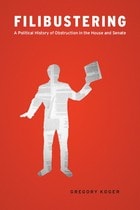
Filibustering
A Political History of Obstruction in the House and SenateGregory Koger
University of Chicago Press, 2010
In the modern Congress, one of the highest hurdles for major bills or nominations is gaining the sixty votes necessary to shut off a filibuster in the Senate. But this wasn’t always the case. Both citizens and scholars tend to think of the legislative process as a game played by the rules in which votes are the critical commodity—the side that has the most votes wins. In this comprehensive volume,Gregory Koger shows, on the contrary, that filibustering is a game with slippery rules in which legislators who think fast and try hard can triumph over superior numbers.
Filibustering explains how and why obstruction has been institutionalized in the U.S. Senate over the last fifty years, and how this transformation affects politics and policymaking. Koger also traces the lively history of filibustering in the U.S. House during the nineteenth century and measures the effects of filibustering—bills killed, compromises struck, and new issues raised by obstruction. Unparalleled in the depth of its theory and its combination of historical and political analysis, Filibustering will be the definitive study of its subject for years to come.
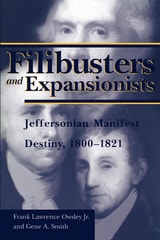
Filibusters and Expansionists
Jeffersonian Manifest Destiny, 1800-1821Frank L. Owsley
University of Alabama Press, 2004
Uncover the untold story of America’s 19th-century adventurers and their quest for empire.
The first two decades of the 19th century found many Americans eager to move away from the crowded eastern seaboard and into new areas where their goals of landownership might be realized. Such movement was encouraged by Presidents Jefferson, Madison, and Monroe—collectively known as the Jeffersonians—who believed that the country's destiny was to have total control over the entire North American continent. Migration patterns during this time changed the country considerably and included the roots of the slavery controversy that ultimately led to the Civil War. By the end of the period, although expansionists had not succeeded in moving into British Canada, they had obtained command of large areas from the Spanish South and Southwest, including acreage previously controlled by Native Americans.
Utilizing memoirs, diaries, biographies, newspapers, and vast amounts of both foreign and domestic correspondence, Frank Lawrence Owsley Jr. and Gene A. Smith reveal an insider’s view of the filibusters and expansionists, the colorful—if not sometimes nefarious—characters on the front line of the United States’s land grab. Owsley and Smith describe in detail the actions and characters involving both the successful and the unsuccessful efforts to expand the United States during this period—as well as the outspoken opposition to expansion, found primarily among the Federalists in the Northeast.
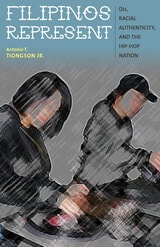
Filipinos Represent
DJs, Racial Authenticity, and the Hip-hop NationAntonio T. Tiongson Jr.
University of Minnesota Press, 2013
The “Hip-hop Nation” has been scouted, staked out, and settled by journalists and scholars alike. Antonio T. Tiongson Jr. steps into this well-mapped territory with questions aimed at interrogating how nation is conceptualized within the context of hip-hop. What happens, Tiongson asks, to notions of authenticity based on hip-hop’s apparent blackness when Filipino youth make hip-hop their own?
Tiongson draws on interviews with Bay Area–based Filipino American DJs to explore the authenticating strategies they rely on to carve out a niche within DJ culture. He shows how Filipino American youth involvement in DJing reconfigures the normal boundaries of Filipinoness predicated on nostalgia and cultural links with an idealized homeland. Filipinos Represent makes the case that while the engagement of Filipino youth with DJ culture speaks to the broadening racial scope of hip-hop—and of what it means to be Filipino—such involvement is also problematic in that it upholds deracialized accounts of hip-hop and renders difference benign.
Looking at the ways in which Filipino DJs legitimize their place in an expressive form historically associated with African Americans, Tiongson examines what these complex forms of identification reveal about the contours and trajectory of contemporary U.S. racial formations and discourses in the post–civil rights era.

Fill 'er Up
The Glory Days of Wisconsin Gas StationsJim Draeger
Wisconsin Historical Society Press, 2008
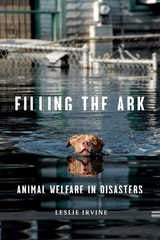
Filling the Ark
Animal Welfare in DisastersLeslie Irvine
Temple University Press, 2009
When disasters strike, people are not the only victims. Hurricane Katrina raised public attention about how disasters affect dogs, cats, and other animals considered members of the human family. In this short but powerful book, noted sociologist Leslie Irvine goes beyond Katrina to examine how disasters like oil spills, fires, and other calamities affect various animal populations—on factory farms, in research facilities, and in the wild.
Filling the Ark argues that humans cause most of the risks faced by animals and urges for better decisions about the treatment of animals in disasters. Furthermore, it makes a broad appeal for the ethical necessity of better planning to keep animals out of jeopardy. Irvine not only offers policy recommendations and practical advice for evacuating animals, she also makes a strong case for rethinking our use of animals, suggesting ways to create more secure conditions.
Film Blackness
American Cinema and the Idea of Black FilmMichael Boyce Gillespie
Duke University Press, 2016
Film Nation
Hollywood Looks at U.S. HistoryRobert Burgoyne
University of Minnesota Press, 1997

Film Nation
Hollywood Looks at U.S. History, Revised EditionRobert Burgoyne
University of Minnesota Press, 2010
Film Noir and the Cinema of Paranoia
Dixon, Wheeler Winston
Rutgers University Press, 2009
Wheeler Winston Dixon's comprehensive work engages readers in an overview of noir and fatalist film from the mid-twentieth century to the present, ending with a discussion of television, the Internet, and dominant commercial cinema. Beginning with the 1940s classics, Film Noir and the Cinema of Paranoia moves to the "Red Scare" and other ominous expressions of the 1950s that contradicted an American split-level dream of safety and security. The dark cinema of the 1960s hosted films that reflected the tensions of a society facing a new and, to some, menacing era of social expression. From smaller studio work to the vibrating pulse of today's "click and kill" video games, Dixon boldly addresses the noir artistry that keeps audiences in an ever-consumptive stupor.
Film and Television After 9/11
Edited by Wheeler Winston Dixon
Southern Illinois University Press, 2004
In Film and Television After 9/11, editor Wheeler Winston Dixon and eleven other distinguished film scholars discuss the production, reception, and distribution of Hollywood and foreign films after the terrorist attacks of September 11, 2001, and examine how moviemaking has changed to reflect the new world climate.
While some contemporary films offer escapism, much of mainstream American cinema since 9/11 is centered on the desire for a “just war” in which military reprisals and escalation of warfare appear to be both inevitable and justified. Films of 2002 such as Black Hawk Down, Collateral Damage, and We Were Soldiers demonstrate a renewed audience appetite for narratives of conflict, reminiscent of the wave of filmmaking that surrounded American involvement in World War II.
The attacks on the World Trade Center and the Pentagon galvanized the American public initially, yet film critics wonder how this will play out over time. Film and Television After 9/11 is the first book to provide original insights into topics ranging from the international reception of post-9/11 American cinema, re-viewing films of our shared cinematic past in light of the attacks, and exploring parallels between post-9/11 cinema and World War II-era productions.
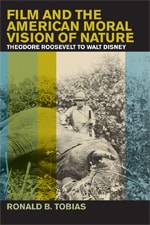
Film and the American Moral Vision of Nature
Theodore Roosevelt to Walt DisneyRonald B. Tobias
Michigan State University Press, 2011
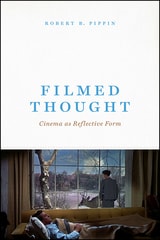
Filmed Thought
Cinema as Reflective FormRobert B. Pippin
University of Chicago Press, 2020
Filmed Thought examines questions of morality in Almodóvar’s Talk to Her, goodness and naïveté in Hitchcock’s Shadow of a Doubt, love and fantasy in Sirk’s All That Heaven Allows, politics and society in Polanski’s Chinatown and Malick’s The Thin Red Line, and self-understanding and understanding others in Nicholas Ray’s In a Lonely Place and in the Dardennes brothers' oeuvre. In each reading, Pippin pays close attention to what makes these films exceptional as technical works of art (paying special attention to the role of cinematic irony) and as intellectual and philosophical achievements. Throughout, he shows how films offer a view of basic problems of human agency from the inside and allow viewers to think with and through them. Captivating and insightful, Filmed Thought shows us what it means to take cinema seriously not just as art, but as thought, and how this medium provides a singular form of reflection on what it is to be human.
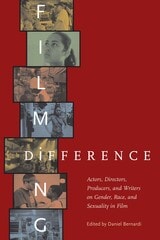
Filming Difference
Actors, Directors, Producers, and Writers on Gender, Race, and Sexuality in FilmEdited by Daniel Bernardi
University of Texas Press, 2009
Addressing representation and identity in a variety of production styles and genres, including experimental film and documentary, independent and mainstream film, and television drama, Filming Difference poses fundamental questions about the ways in which the art and craft of filmmaking force creative people to confront stereotypes and examine their own identities while representing the complexities of their subjects.
Selections range from C. A. Griffith's "Del Otro Lado: Border Crossings, Disappearing Souls, and Other Transgressions" and Celine Perreñas Shimizu's "Pain and Pleasure in the Flesh of Machiko Saito's Experimental Movies" to Christopher Bradley's "I Saw You Naked: 'Hard' Acting in 'Gay' Movies," along with Kevin Sandler's interview with Paris Barclay, Yuri Makino's interview with Chris Eyre, and many other perspectives on the implications of film production, writing, producing, and acting.
Technical aspects of the craft are considered as well, including how contributors to filmmaking plan and design films and episodic television that feature difference, and how the tools of cinema—such as cinematography and lighting—influence portrayals of gender, race, and sexuality. The struggle between economic pressures and the desire to produce thought-provoking, socially conscious stories forms another core issue raised in Filming Difference. Speaking with critical rigor and creative experience, the contributors to this collection communicate the power of their media.
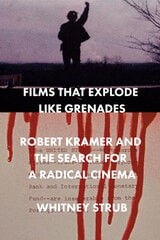
Films That Explode Like Grenades
Robert Kramer and the Search for a Radical CinemaWhitney Strub
University of Chicago Press, 2026
Robert Kramer (1939–99) was the emblematic filmmaker of the late-1960s New Left in the United States. Yet because most of his three dozen films have been out of circulation for decades, he has long been neglected by film historians and the Left. Kramer was the cofounder of the leftist documentary collective Newsreel and the director of underground films such as Ice (1970), Milestones (1975), and Route One/USA (1989). His films provide distinctive insights into how America’s political terrain has changed over time, capturing each era’s revolutionary ethos and its contradictions. Whitney Strub’s Films That Explode Like Grenades tracks the histories of leftist film and global revolutionary movements via Kramer’s life and travels. Moving among New York City, Chicago, North Vietnam, Paris, Portugal, Angola, and other crucial flashpoints, Kramer left a major and influential body of work in his wake that has fundamentally shaped the work of radical filmmakers across the globe.
For Strub, Kramer’s career is a key thread in an intimate history of the 1960s New Left, one that emphasizes the complexities of the movement’s internal tensions and its legacies. Drawing on visual analysis, extensive archival research across the United States and France, and myriad interviews with Kramer contemporaries, including Bernardine Dohrn, Tom Hayden, Jonas Mekas, and Kramer’s relatives, Strub transforms Kramer’s life story into a dynamic and engaging social history of 1960s radicalism and its generational legacies.
With detailed mapping of Robert Kramer’s many social and artistic contexts, Films That Explode Like Grenades restores him to a place of global importance in leftist cinema.
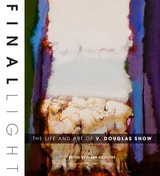
Final Light
The Life and Art of V. Douglas SnowFrank McEntire
University of Utah Press, 2013
A nationally recognized artist, Snow chose to stay in Utah where, when not teaching at the University of Utah, he roamed the southern Utah desert gaining inspiration from the red rock formations, especially the Cockscomb outside his studio near Capitol Reef National Park. Snow said, “Every artist probably wonders if he or she made the right decision to dig in to a certain place.” He dug into the landscape in and around Southern Utah and never regretted it. Just as “Tennessee Williams’s South, William Faulkner’s Mississippi, [or] John Steinbeck’s West Coast, formed their work,” the desert lands of the Colorado Plateau formed Snow’s. Their sense of place, “without provincialism,” said Snow “is what gives their art its enduring power.” Final Light will appeal to art historians and art lovers, especially those interested in abstract expressionism and the art of Utah, the West, and the Southwest.
Chosen by 15 Bytes, Utah's art magazine, as the most exceptional art book for 2014.
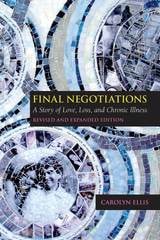
Final Negotiations
A Story of Love, Loss, and Chronic IllnessCarolyn Ellis
Temple University Press, 2018
Taking an autoethnographic perspective, Ellis focuses on her feeling and thinking self in relationships, narrating particular lived experiences that offer a gateway into understanding interpersonal and cultural life. In her new epilogue, “From New Endings to New Beginnings,” Ellis describes her changed identity and how Final Negotiations informs her life and her understanding of how she and her current partner grow older together. She hopes her book provides companionship and comfort to readers who also will suffer loss in their lives.

Final Negotiations
A Story of Love, and Chronic IllnessCarolyn Ellis
Temple University Press, 1995
When Carolyn Ellis, a graduate student, and Gene Weinstein, her Professor, fell in love, he was experiencing the first stages of emphysema. As he became increasingly disabled and immobile, these two intensely connected partners fought to maintain their love and to live a meaningful life. They learned to negotiate their daily lives in a way that enabled each of them to feel sufficiently autonomous—him not always like a patient and her not always like a caretaker. Writing as a sociologist, Ellis protrays their life together as a way to understand the complexities of romance, of living with a progressive illness, and, in the final negotiation and reversal of positions, of coping with the loss of a loved one.
This rare memoir full of often raw details and emotions becomes an intimate conversation about the intricacies of feeling and relating in a relationship. What Ellis calls experimental ethnography is a finely crafted, forthright, and daring story framed by the author's reflections on writing about and analyzing one's own life. Casting off the safe distance of most social science inquiry, she surrenders the private shroud of a complex relationship to bring sociology closer to literature.
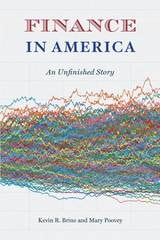
Finance in America
An Unfinished StoryKevin R. Brine and Mary Poovey
University of Chicago Press, 2017
To understand finance, however, we have to learn its history, and this book fills that need. Kevin R. Brine, an industry veteran, and Mary Poovey, an acclaimed historian, show that finance as we know it today emerged gradually in the late nineteenth century and only coalesced after World War II, becoming ever more complicated—and ever more central to the American economy. The authors explain the models, regulations, and institutions at the heart of modern finance and uncover the complex and sometimes surprising origins of its critical features, such as corporate accounting standards, the Federal Reserve System, risk management practices, and American Keynesian and New Classic monetary economics. This book sees finance through its highs and lows, from pre-Depression to post-Recession, exploring the myriad ways in which the practices of finance and the realities of the economy influenced one another through the years.
A masterwork of collaboration, Finance in America lays bare the theories and practices that constitute finance, opening up the discussion of its role and risks to a broad range of scholars and citizens.
Financial Aspects of the United States Pension System
Edited by Zvi Bodie and John B. Shoven
University of Chicago Press, 1984
-What is the current financial status of the elderly, and how vulnerable are they to inflation?
-What is the impact of inflation on the private pension system, and what are the effects of alternative indexing schemes?
-What roles can the social security system play in the provision of retirement income?
-What is the effect of the tax code and the Employee Retirement Income Security Act of 1974 (ERISA) on corporate pension policy?
-How well funded are corporate pension plans, and is a firm's unfunded pension liability fully reflected in the market value of its common stock?
Many of the conclusions these experts reach contradict and challenge popular views, thus providing fertile ground for innovation in pension planning.

Financial Basics
A Money-Management Guide for Students, 2nd EditionSusan Knox
The Ohio State University Press, 2016
This 2nd edition updates changes in online banking, smartphone apps, credit cards, and student loans but retains basic financial information that ensures students won’t learn about money the hard way. A chapter for parents has been added so they can help their students become financially knowledgeable, and it includes advice for parents about making decisions related to college costs. In addition, a chapter for grandparents contains suggestions on how to help college-bound grandchildren—financially and in other ways—without endangering their own financial security. A basic investments chapter is included for first-time investors.
The intent of Financial Basics is to enhance student readers’ financial knowledge and provide money-management options for finding their own best way to become masters of their money.
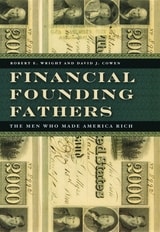
Financial Founding Fathers
The Men Who Made America RichRobert E. Wright and David J. Cowen
University of Chicago Press, 2006
Robert E. Wright and David J. Cowen here chronicle how a different group of founding fathers forged the wealth and institutions necessary to transform the American colonies from a diffuse alliance of contending business interests into one cohesive economic superpower. From Alexander Hamilton to Andrew Jackson, the authors focus on the lives of nine Americans in particular—some famous, some unknown, others misunderstood, but all among our nation’s financial founding fathers. Such men were instrumental in creating and nurturing a financial system that drove economic growth in the nascent United States because they were quick to realize that wealth was as crucial as the Constitution in securing the blessings of liberty and promoting the general welfare. The astonishing economic development made possible by our financial founding fathers was indispensable to the preservation of national unity and of support for a government that was then still a profoundly radical and delicate political experiment.
Grand in scope and vision, Financial Founding Fathers is an entertaining and inspiring history of the men who made America rich and steered her toward greatness.
Financial Management for Libraries
William W. Sannwald
American Library Association, 2018
Presenting financial management principles and best practices applicable to both public and academic libraries, this comprehensive text elucidates a broad array of issues crucial for those entering a managerial position. Both thorough and straightforward, Sannwald's treatment
- gives readers a solid grounding in the basics of accounting and finance, with an emphasis on applicability to library management and operations;
- ties budgets and strategic planning to library vision, mission, goals, and objectives;
- discusses the roles of stakeholders such as boards, governmental/municipal bodies, the university, and the community;
- looks at a variety of funding sources, from tax revenue to gifts and donations, and presents sound strategies for including them when projecting income and expenses;
- articulates and discusses the pros and cons of various budget strategies;
- includes sample budgets and forms that can be customized as needed;
- offers expert guidance on modifying budgets for windfalls and shortfalls;
- explains operating ratios, fiscal benchmarking, and metrics, demonstrating how to use these to effectively create and manage a budget and assess the fiscal health of the library; and
- advises on how to effectively prepare and present a budget and annual financial statements to a library's governing agency.
Financial Markets and Financial Crises
Edited by R. Glenn Hubbard
University of Chicago Press, 1991
Using both historical and contemporary episodes of breakdowns in financial trade, contributors to this volume draw insights from theory and empirical data, from the experience of closed and open economies worldwide, and from detailed case studies. They explore the susceptibility of American corporations to economic downturns; the origins of banking panics; and the behavior of financial markets during periods of crisis. Sever papers specifically address the current thrift crisis—including a detailed analysis of the over 500 FSLIC-insured thrifts in the southeast—and seriously challenge the value of recent measures aimed at preventing future collapse in that industry. Government economists and policy makers, scholars of industry and banking, and many in the business community will find these timely papers an invaluable reference.
Financial Missionaries to the World
The Politics and Culture of Dollar Diplomacy, 1900-1930Emily S. Rosenberg
Duke University Press, 2003
Financial Missionaries to the World establishes the broad scope and significance of "dollar diplomacy"—the use of international lending and advising—to early-twentieth-century U.S. foreign policy. Combining diplomatic, economic, and cultural history, the distinguished historian Emily S. Rosenberg shows how private bank loans were extended to leverage the acceptance of American financial advisers by foreign governments. In an analysis striking in its relevance to contemporary debates over international loans, she reveals how a practice initially justified as a progressive means to extend “civilization” by promoting economic stability and progress became embroiled in controversy. Vocal critics at home and abroad charged that American loans and financial oversight constituted a new imperialism that fostered exploitation of less powerful nations. By the mid-1920s, Rosenberg explains, even early supporters of dollar diplomacy worried that by facilitating excessive borrowing, the practice might induce the very instability and default that it supposedly worked against.
Financialization Of Daily Life
Randy Martin
Temple University Press, 2002
Financing Corporate Capital Formation
Edited by Benjamin M. Friedman
University of Chicago Press, 1986
Addressing these questions, the contributors focus chiefly on three themes: the actual use of debt and equity financing by corporations in recent years; the factors that drive the financial markets' pricing of debt and equity securities; and the relationship between corporations' real investment decisions and their financial decisions. While some of the papers are primarily expository, others break new ground. Extending his previous work, Robert Taggart finds a closer relationship between corporate and government debt than has been supposed. Zvi Bodie, Alex Kane, and Robert McDonald conclude in their study that the volatility of interest rates under the Volcker regime has led to a rise in real interest rates because of investors' demand for a greater risk premium. All of the papers present empirical findings in a useful analytical framework.
For its new findings and for its expert overview of issues central to an understanding of the U.S. economy, Financing Corporate Capital Formation should be of both historical and practical interest to students of economics and practitioners in the corporate and financial community.
Financing Institutions of Higher Education
Edited by John Y. Campbell and Kaye Husbands Fealing
University of Chicago Press, 2026
An insightful, wide-ranging analysis of the economic hurdles facing America’s higher education system.
The US higher education sector faces numerous economic challenges, including the stagnating number of college-age domestic students, geographic mismatch between population growth and the location of colleges and universities, financial pressures, including cutbacks in government support, growing student debt burdens, sticker prices that deter prospective applicants, and the risk of low capital market returns on endowment portfolios. This volume analyzes the responses of students, families, and the financial managers of higher education institutions to these challenges. It presents new insights into the substantial disparities in the financial structure of, and the financial challenges facing, different types of institutions. The volume draws together contributions from financial economics, public finance, and industrial organization, as well as the economics of education.
Financing Low Income Communities
Julia Sass Rubin
Russell Sage Foundation, 2007
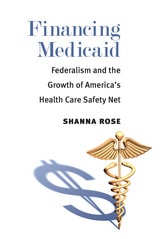
Financing Medicaid
Federalism and the Growth of America's Health Care Safety NetShanna Rose
University of Michigan Press, 2013
Conventional wisdom holds that programs for the poor are vulnerable to instability and retrenchment. Medicaid, however, has grown into the nation’s largest intergovernmental grant program, accounting for nearly half of all federal funding to state and local governments. Medicaid’s generous open-ended federal matching grants have given governors a powerful incentive to mobilize on behalf of its maintenance and expansion, using methods ranging from lobbying and negotiation to creative financing mechanisms and waivers to maximize federal financial assistance. Perceiving federal retrenchment efforts as a threat to states’ finances, governors, through the powerful National Governors’ Association, have repeatedly worked together in bipartisan fashion to defend the program against cutbacks.
Financing Medicaidengagingly intertwines theory, historical narrative, and case studies, drawing on sources including archival materials from the National Governors’ Association and gubernatorial and presidential libraries, Centers for Medicare and Medicaid Services data, the Congressional Record, and interviews.
Financing State and Local Economic Development
Michael Barker, ed.
Duke University Press, 1983

Finding Betty Crocker
The Secret Life of America’s First Lady of FoodSusan Marks
University of Minnesota Press, 2007
While Betty Crocker is often associated with 1950s happy homemaking, she originally belonged to a different generation. Created in 1921 as a “friend to homemakers” for the Washburn Crosby Company (a forerunner to General Mills) in Minneapolis, her purpose was to answer consumer mail. “She” was actually the women of the Home Service Department who signed Betty’s name. Eventually, Betty Crocker’s local radio show on WCCO expanded, and audiences around the nation tuned her in, tried her money-saving recipes, and wrote Betty nearly 5,000 fan letters per day. In Finding Betty Crocker, Susan Marks offers an utterly unique look at the culinary and marketing history of America’s First Lady of Food.
Susan Marks is a writer/producer/director with her own production company, Lazy Susan Productions.
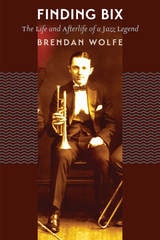
Finding Bix
The Life and Afterlife of a Jazz LegendBrendan Wolfe
University of Iowa Press, 2017
A native of Beiderbecke’s hometown of Davenport, Iowa, Wolfe grew up seeing Bix’s iconic portrait on everything from posters to parking garages. He never heard his music, though, until cast to play a bit part in an Italian biopic filmed in Davenport. Then, after writing a newspaper review of a book about Beiderbecke, Wolfe unexpectedly received a letter from the late musician's nephew scolding him for getting a number of facts wrong. This is where Finding Bix begins: in Wolfe's good-faith attempt to get the facts right.
What follows, though, is anything but straightforward, as Wolfe discovers Bix Beiderbecke to be at the heart of furious and ever-timely disputes over addiction, race and the origins of jazz, sex, and the influence of commerce on art. He also uncovers proof that the only newspaper interview Bix gave in his lifetime was a fraud, almost entirely plagiarized from several different sources. In fact, Wolfe comes to realize that the closer he seems to get to Bix, the more the legend retreats.
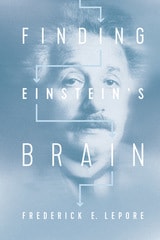
Finding Einstein's Brain
Lepore, Frederick E
Rutgers University Press, 2018
Following his death in 1955, Einstein’s brain was removed and preserved, but has never been fully or systematically studied. In fact, the sections are not even all in one place, and some are mysteriously unaccounted for! In this compelling tale, Frederick E. Lepore delves into the strange, elusive afterlife of Einstein’s brain, the controversy surrounding its use, and what its study represents for brain and/or intelligence studies.
Carefully reacting to the skepticism of 21st century neuroscience, Lepore more broadly examines the philosophical, medical, and scientific implications of brain-examination. Is the brain simply a computer? If so, how close are we to artificially creating a human brain? Could scientists create a second Einstein? This “biography of a brain” attempts to answer these questions, exploring what made Einstein’s brain anatomy exceptional, and how “found” photographs--discovered more than a half a century after his death--may begin to uncover the nature of genius.
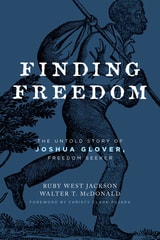
Finding Freedom
The Untold Story of Joshua Glover, Freedom SeekerRuby West Jackson
Wisconsin Historical Society Press, 2022
Finding Freedom
The Untold Story of Joshua Glover, Runaway SlaveWalter T. McDonald
Wisconsin Historical Society Press, 2007
"Shall a man be dragged back to Slavery from our Free Soil, without an open trial of his right to Liberty?" —Handbill circulated in Milwaukee on March 11, 1854
In Finding Freedom, Ruby West Jackson and Walter T. McDonald provide readers with the first narrative account of the life of Joshua Glover, the runaway slave who was famously broken out of jail by thousands of Wisconsin abolitionists in 1854. Employing original research, the authors chronicle Glover's days as a slave in St. Louis, his violent capture and thrilling escape in Milwaukee, his journey on the Underground Railroad, and his 33 years of freedom in rural Canada.
While Jackson and McDonald demonstrate how the catalytic "Glover incident" captured national attention—pitting the proud state of Wisconsin against the Supreme Court and adding fuel to the pre-Civil War fire—their primary focus is on the ordinary citizens, both black and white, with whom Joshua Glover interacted. A bittersweet story of bravery and compassion, Finding Freedom provides the first full picture of the man for whom so many fought, and around whom so much history was made.
Finding Freedom
The Untold Story of Joshua Glover, Runaway SlaveWalter T. McDonald
Wisconsin Historical Society Press, 2012
"Shall a man be dragged back to Slavery from our Free Soil, without an open trial of his right to Liberty?" —Handbill circulated in Milwaukee on March 11, 1854
In Finding Freedom, Ruby West Jackson and Walter T. McDonald provide readers with the first narrative account of the life of Joshua Glover, the runaway slave who was famously broken out of jail by thousands of Wisconsin abolitionists in 1854. Employing original research, the authors chronicle Glover's days as a slave in St. Louis, his violent capture and thrilling escape in Milwaukee, his journey on the Underground Railroad, and his 33 years of freedom in rural Canada.
While Jackson and McDonald demonstrate how the catalytic "Glover incident" captured national attention—pitting the proud state of Wisconsin against the Supreme Court and adding fuel to the pre-Civil War fire—their primary focus is on the ordinary citizens, both black and white, with whom Joshua Glover interacted. A bittersweet story of bravery and compassion, Finding Freedom provides the first full picture of the man for whom so many fought, and around whom so much history was made.
Finding Freedom
The Untold Story of Joshua Glover, Runaway SlaveWalter T. McDonald
Wisconsin Historical Society Press, 2012
"Shall a man be dragged back to Slavery from our Free Soil, without an open trial of his right to Liberty?" —Handbill circulated in Milwaukee on March 11, 1854
In Finding Freedom, Ruby West Jackson and Walter T. McDonald provide readers with the first narrative account of the life of Joshua Glover, the runaway slave who was famously broken out of jail by thousands of Wisconsin abolitionists in 1854. Employing original research, the authors chronicle Glover's days as a slave in St. Louis, his violent capture and thrilling escape in Milwaukee, his journey on the Underground Railroad, and his 33 years of freedom in rural Canada.
While Jackson and McDonald demonstrate how the catalytic "Glover incident" captured national attention—pitting the proud state of Wisconsin against the Supreme Court and adding fuel to the pre-Civil War fire—their primary focus is on the ordinary citizens, both black and white, with whom Joshua Glover interacted. A bittersweet story of bravery and compassion, Finding Freedom provides the first full picture of the man for whom so many fought, and around whom so much history was made.
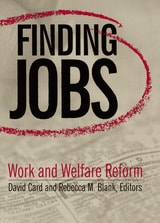
Finding Jobs
Work and Welfare ReformDavid Card
Russell Sage Foundation, 2000
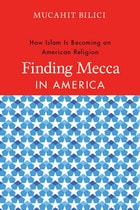
Finding Mecca in America
How Islam Is Becoming an American ReligionMucahit Bilici
University of Chicago Press, 2012
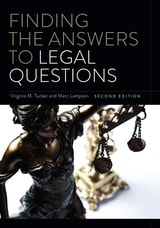
Finding the Answers to Legal Questions
Virginia M. Tucker
American Library Association, 2017

Finding the Answers to Legal Questions
A How-To-Do-It ManualAmerican Library Association, 2011

Finding the Arctic
History and Culture Along a 2,500-Mile Snowmobile Journey from Alaska to Hudson’s BayMatthew Sturm
University of Alaska Press, 2012