Results by title
788 books match the query 'Caribbean & Latin American' and 23 start with g
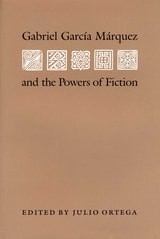
Gabriel Garcia Marquez and the Powers of Fiction
By Julio Ortega
University of Texas Press, 1988
Together with the late Jorge Luis Borges, Gabriel García Márquez, the 1982 Nobel laureate, stands at the pinnacle of Latin American literature. His work, in the words of Julio Ortega, "contains its own 'deconstructive' force—a literary power capable of reshaping natural order and rhetorical tradition in order to 'carnivalize' the Borges' library and allow us to hear the voices—and the laughter—of a culture, that of Latin America." This reshaping force invites us to read the works of García Márquez in a new way, one that bypasses the traditional, inadequate approaches through Latin American politics, history, and "magical realism."
In Gabriel García Márquez and the Powers of Fiction, noted scholars Julio Ortega, Ricardo Gutiérrez Mouat, Michael Palencia-Roth, Aníbal González, and Gonzalo Díaz-Migoyo offer English-speaking readers a new approach to García Márquez's work. Their poststructuralist readings focus on the peculiar sign-system, formal configuration, intradiscursivity, and unfolding representation in the novels One Hundred Years of Solitude, No One Writes to the Colonel, In Evil Hour, The Autumn of the Patriarch, and Chronicle of a Death Foretold and in several of the author's short stories. Also included as an appendix is a translation of García Márquez's Nobel Prize acceptance speech, "The Solitude of Latin America."
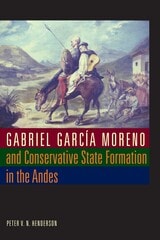
Gabriel García Moreno and Conservative State Formation in the Andes
By Peter V. N. Henderson
University of Texas Press, 2008
This book explores the life and times of Ecuador's most controversial politician within the broader context of the new political history, addressing five major themes of nineteenth-century Latin American history: the creation of political networks, the divisiveness of regionalism, the bitterness of the liberal-conservative ideological divide, the complicating problem of caudillismo, and the quest for progress and modernization.
Two myths traditionally associated with García Moreno's rule are debunked. The first is that he created a theocracy in Ecuador. Instead, the book argues that he negotiated a concordat with the Papacy giving the national government control over the church's secular responsibilities, and subordinated the clergy, many of whom were highly critical of García Moreno, to the conservative state. A second, frequently repeated generalization is that he created a conservative dictatorship out of touch with the liberal age in which he lived. Instead, the book argues that moderates held sway during the first nine years of García Moreno's period of influence, and only during his final term did he achieve the type of conservative state he thought necessary to advance his progressive nation-building agenda.
In sum, this book enriches our understanding of many of the notions of state formation by suggesting that conservatives like García Moreno envisioned a program of material progress and promoting national unity under a very different formula from that of nineteenth-century liberals.
Games of Inheritance
Kabbalah, Tradition, and Authorship in Jorge Luis BorgesYitzhak Lewis
Rutgers University Press, 2025
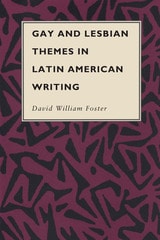
Gay and Lesbian Themes in Latin American Writing
By David William Foster
University of Texas Press, 1991
A taboo subject in many cultures, homosexuality has been traditionally repressed in Latin America, both as a way of life and as a subject for literature. Yet numerous writers have attempted to break the cultural silence surrounding homosexuality, using various strategies to overtly or covertly discuss lesbian and gay themes. In this study, David William Foster examines more than two dozen texts that deal with gay and lesbian topics, drawing from them significant insights into the relationship between homosexuality and society in different Latin American countries and time periods.
Foster's study includes works both sympathetic and antagonistic to homosexuality, showing the range of opinion on this topic. The preponderance of his examples come from Argentina, Brazil, and Mexico, countries with historically active gay communities, although he also includes material on other countries. Noteworthy among the authors covered are Reinaldo Arenas, Adolfo Caminha, Isaac Chocrón, José Donoso, Sylvia Molloy, Alejandra Pizarnik, and Luis Zapata.
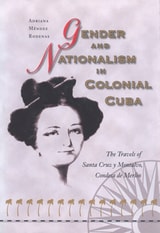
Gender and Nationalism in Colonial Cuba
The Travels of Santa Cruz y Montalvo, Condesa de MerlinAdriana Mendez Rodenas
Vanderbilt University Press, 1998
Born in colonial Havana to an aristocratic Creole family, the future countess of Merlin left Cuba for Spain at an early age. Later, her marriage to the French count Antoine Christophe Merlin and the invasion of French Napoleonic troops precipitated another move to France, where she became one of the belle dames of Paris and began her literary career. She returned only once to Cuba after the death of her husband in 1840, a journey that produced Viaje a la Habana. Upon her return to Paris, Merlin expanded this into La Havane, an ambitious three-volume account of the political, social, and economic organization of the island.
From the viewpoint of feminist and psychoanalytical theory, Gender and Nationalism in Colonial Cuba brilliantly explores the many ways in which issues of gender have contributed to Merlin's virtual absence from the canons of literature and from the discourses on Cuban national identity. Merlin's double identity as both Cuban and French is symbolic of the Cuban exiled condition, a fact taken up by contemporary exiled Cuban writers who see the countess as an alter-ego.
Mendez Rodenas seeks to restore Merlin as the first woman writer in Cuban literary history to articulate a sense of national identity, as well as being Cuba's first female historian. She focuses on Merlin's travel writings because they examine such issues as slavery, independence, nationhood, the role of women, education, and local literature. Together her writings construct an alternative, gendered history of nineteenth-century Cuba that must be acknowledged as both functional and authentic.
By situating Merlin at the intersection of the discourses of gender and nationalism, Mendez Rodenas reveals not only her pioneering role but also the need to expand current critical categories to account for the specificity of the Latin American literary tradition. In the process of restoring Merlin to her appropriate place in the canon of Latin American literature, she broadens our understanding of colonial Cuban history and expands our knowledge of the ways in which travel writing can influence a country's national literature .
Generation X Rocks
Contemporary Peninsular Fiction, Film, and Rock CultureChristine Henseler
Vanderbilt University Press, 2007
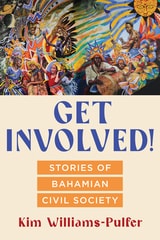
Get Involved!
Stories of Bahamian Civil SocietyKim Williams-Pulfer
Rutgers University Press, 2024
Junkanoo is the national cultural festival of The Bahamas. It fosters a sense of community pride, identity, companionship, spirituality and unity. Watch a video about Junknoo:
https://www.youtube.com/watch?v=tnMpMesNb1Q&t=14s
Glissant and the Middle Passage
Philosophy, Beginning, AbyssJohn E. Drabinski
University of Minnesota Press, 2019
A reevaluation of Édouard Glissant that centers on the catastrophe of the Middle Passage and creates deep, original theories of trauma and Caribbeanness
While philosophy has undertaken the work of accounting for Europe’s traumatic history, the field has not shown the same attention to the catastrophe known as the Middle Passage. It is a history that requires its own ideas that emerge organically from the societies that experienced the Middle Passage and its consequences firsthand. Glissant and the Middle Passage offers a new, important approach to this neglected calamity by examining the thought of Édouard Glissant, particularly his development of Caribbeanness as a critical concept rooted in the experience of the slave trade and its aftermath in colonialism.
In dialogue with key theorists of catastrophe and trauma—including Aimé Césaire, Frantz Fanon, George Lamming, Gilles Deleuze, Félix Guattari, Derek Walcott, as well as key figures in Holocaust studies—Glissant and the Middle Passage hones a sharp sense of the specifically Caribbean varieties of loss, developing them into a transformative philosophical idea. Using the Plantation as a critical concept, John E. Drabinski creolizes notions of rhizome and nomad, examining what kinds of aesthetics grow from these roots and offering reconsiderations of what constitutes intellectual work and cultural production.
Glissant and the Middle Passage establishes Glissant’s proper place as a key theorist of ruin, catastrophe, abyss, and memory. Identifying his insistence on memories and histories tied to place as the crucial geography at the heart of his work, this book imparts an innovative new response to the specific historical experiences of the Middle Passage.
Globalizing the Caribbean
Political Economy, Social Change, and the Transnational Capitalist ClassJeb Sprague
Temple University Press, 2019
The beautiful Caribbean basin is fertile ground for a study of capitalism past and present. Transnational corporations move money and labor around the region, as national regulations are reworked to promote conditions benefiting private capital. Globalizing the Caribbean offers a probing account of the region’s experience of economic globalization while considering gendered and racialized social relations and the frequent exploitation of workers.
Jeb Sprague focuses on the social and material nature of this new era in the history of world capitalism. He combines an historical overview of capitalism in the region with theoretical analysis backed by case studies. Sprague elaborates upon the role of class formation and the restructuring of local states. He considers both U.S. hegemony, and how various upsurges from below and crises occur. He examines the globalization of the cruise ship and mining businesses, looks at the growth of migrant labor and reverse flow of remittances, and describes the evolving role of export processing and supranational associations. In doing so, Sprague shows how transnationally oriented elites have come to rule the Caribbean, and how capitalist globalization in the region occurs alongside shifting political, institutional, and organizational dynamics.
Gombrowicz, Borges, and the Fictional Cosmos
Max Ubelaker Andrade
Bucknell University Press, 2027
Polish author Witold Gombrowicz’s famously chaotic masterpiece, Cosmos, was profoundly influenced by Jorge Luis Borges—particularly by three key stories from Ficciones. Drawing on evidence that Gombrowicz read Ficciones in 1960, as well as handwritten marginalia in Gombrowicz’s copy of Adolfo Bioy Casares’s La invención de Morel, this groundbreaking study argues that Cosmos responded to Borges’s literary transformations of cartography, mathematical combinatorics, and Miguel de Cervantes’s Don Quijote. Along the way, it introduces the concept of “immaterial bibliography” to analyze imaginary texts appearing in literary works. Finally, it examines the tension between Borges’s explicit racism and the ethical and aesthetic vision suggested by his fiction, revealing how rumor, rebellion, and literary inheritance shaped Gombrowicz’s reading of Borges, which in turn influenced the composition of his prizewinning last novel.
Published by Bucknell University Press. Distributed worldwide by Rutgers University Press.
Gothic Geoculture
Nineteenth-Century Representations of Cuba in the Transamerican ImaginaryIvonne M. García
The Ohio State University Press, 2019
Governing Maya Communities and Lands in Belize
Indigenous Rights, Markets, and SovereigntiesLaurie Kroshus Medina
Rutgers University Press, 2024
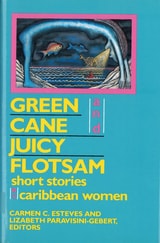
Green Cane and Juicy Flotsam
Short Stories by Caribbean WomenEsteves, Carmen C
Rutgers University Press, 1991

Gringolandia
Lifestyle Migration under Late CapitalismMatthew Hayes
University of Minnesota Press, 2018
A telling look at today’s “reverse” migration of white, middle-class expats from north to south, through the lens of one South American city
Even as the “migration crisis” from the Global South to the Global North rages on, another, lower-key and yet important migration has been gathering pace in recent years—that of mostly white, middle-class people moving in the opposite direction. Gringolandia is that rare book to consider this phenomenon in all its complexity.
Matthew Hayes focuses on North Americans relocating to Cuenca, Ecuador, the country’s third-largest city and a UNESCO World Heritage Site. Many began relocating there after the 2008 economic crisis. Most are self-professed “economic refugees” who sought offshore retirement, affordable medical care, and/or a lower–cost location. Others, however, sought adventure marked by relocation to an unfamiliar cultural environment and to experience personal growth through travel, illustrative of contemporary cultures of aging. These life projects are often motivated by a desire to escape economic and political conditions in North America.
Regardless of their individual motivations, Hayes argues, such North–South migrants remain embedded in unequal and unfair global social relations. He explores the repercussions on the host country—from rising prices for land and rent to the reproduction of colonial patterns of domination and subordination. In Ecuador, heritage preservation and tourism development reflect the interests and culture of European-descendent landowning elites, who have most to benefit from the new North–South migration. In the process, they participate in transnational gentrification that marginalizes popular traditions and nonwhite mestizo and indigenous informal workers. The contrast between the migration experiences of North Americans in Ecuador and those of Ecuadorians or others from such regions of the Global South in North America and Europe demonstrates that, in fact, what we face is not so much a global “migration crisis” but a crisis of global social justice.
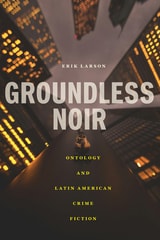
Groundless Noir
Ontology and Latin American Crime FictionErik Larson
Bucknell University Press, 2026
This philosophical study of Latin American noir fiction poses the question, What if precarity and uncertainty aren’t just themes of the genre but ways of being in the world? Emerging from a region immersed in violence, trauma, and political instability, the novela negra reveals not just disillusionment but a desire to adapt to, even dwell within, chaos. In the hands of writers like Ricardo Piglia, Roberto Bolaño, and Patricia Melo, savvy detectives and antiheroes navigate a world in which meaning constantly shifts and certainty is elusive. Blending literary analysis with philosophical inquiry, Larson draws on Heideggerian ontology to demonstrate how the noir novel becomes a mode of existence—grounded in its very groundlessness. Rather than offering resolution, these novels embody a paradoxical desire: to engage crisis while also adapting to it. In doing so, they become both ideological and pedagogical—existential fiction for an uncertain world.
Published by Bucknell University Press. Distributed worldwide by Rutgers University Press.
Growth, Equality, and the Mexican Experience
By Morris Singer
University of Texas Press, 1969
Central to the research that went into the preparation of this monograph is the relationship between economic development and equality. To determine and characterize that relationship Morris Singer focuses on the various components of equality at different stages of development. The author particularly explores the behavior of income distribution, together with its bearing on the components of aggregate demand.
Mexico provided an excellent case to examine in depth because of its impressive growth and the fact that it experienced Latin America’s first successful twentieth-century revolution.
Although the Revolution of 1910 hastened social equality and introduced other changes that stimulated Mexico’s economic growth, it could not prevent a serious increase in the inequality of income distribution. By the early 1960s the government found it necessary to rectify this increasing imbalance through a program of expenditures designed to counteract widespread poverty and weak aggregate demand. To ward off inflation, this program in turn could be implemented only by tax reform.
In discussing the relationship between development and equality in its various dimensions, noneconomic as well as economic, this monograph points out that, at the time of this study, government policies in Mexico were dictated by an elite concerned primarily with the country’s economic advancement. Singer concludes that if programs of government expenditure and tax reform succeed in remedying the inequalities of income distribution, this could gradually make possible the development of a more genuine political as well as economic democracy.
This book reflects Singer’s interest in the relationship between equality and development. It is the result of five months of intensive in-residence study in Mexico, financed in part by a grant from the Social Science Research Council.
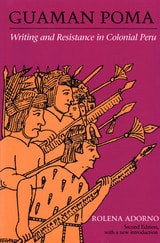
Guaman Poma
Writing and Resistance in Colonial PeruBy Rolena Adorno
University of Texas Press, 2000
In the midst of native people's discontent following Spanish conquest, a native Andean born after the fall of the Incas took up the pen to protest Spanish rule. Felipe Guaman Poma de Ayala wrote his Nueva corónica y buen gobierno to inform Philip III of Spain about the evils of colonialism and the need for governmental and societal reform. By examining Guaman Poma's verbal and visual engagement with the institutions of Western art and culture, Rolena Adorno shows how he performed a comprehensive critique of the colonialist discourse of religion, political theory, and history. She argues that Guaman Poma's work chronicles the emergence of a uniquely Latin American voice, characterized by the articulation of literary art and politics.
Following the initial appearance of Guaman Poma: Writing and Resistance in Colonial Peru, the 1990s witnessed the creation of a range of new studies that underscore the key role of the Nueva corónica y buen gobierno in facilitating our understanding of the Andean and Spanish colonial pasts. At the same time, the documentary record testifying to Guaman Poma's life and work has expanded dramatically, thanks to the publication of long-known but previously inaccessible drawings and documents. In a new, lengthy introduction to this second edition, Adorno shows how recent scholarship from a variety of disciplinary perspectives sheds new light on Guaman Poma and his work, and she offers an important new assessment of his biography in relation to the creation of the Nueva corónica y buen gobierno.
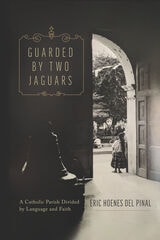
Guarded by Two Jaguars
A Catholic Parish Divided by Language and FaithEric Hoenes del Pinal
University of Arizona Press, 2022
In Guarded by Two Jaguars, Eric Hoenes del Pinal tells the story of this dramatic split and in so doing addresses the role that language and gesture have played in the construction of religious identity. Drawing on a range of methods from linguistic and cultural anthropology, the author examines how the introduction of the Catholic Charismatic Renewal movement in the parish produced a series of debates between parishioners that illustrate the fundamentally polyvocal nature of Catholic Christianity. This work examines how intergroup differences are produced through dialogue, contestation, and critique. It shows how people’s religious affiliations are articulated not in isolation but through interaction with each other.
Although members of these two congregations are otherwise socially similar, their distinct interpretations of how to be a “good Catholic” led them to adopt significantly different norms of verbal and nonverbal communication. These differences became the idiom through which the two groups contested the meaning of being Catholic and Indigenous in contemporary Guatemala, addressing larger questions about social and religious change.
Guatemaltecas
The Women's Movement, 1986–2003By Susan A. Berger
University of Texas Press, 2006
After thirty years of military rule and state-sponsored violence, Guatemala reinstated civilian control and began rebuilding democratic institutions in 1986. Responding to these changes, Guatemalan women began organizing to gain an active role in the national body politic and restructure traditional relations of power and gender. This pioneering study examines the formation and evolution of the Guatemalan women's movement and assesses how it has been affected by, and has in turn affected, the forces of democratization and globalization that have transformed much of the developing world.
Susan Berger pursues three hypotheses in her study of the women's movement. She argues that neoliberal democratization has led to the institutionalization of the women's movement and has encouraged it to turn from protest politics to policy work and to helping the state impose its neoliberal agenda. She also asserts that, while the influences of dominant global discourses are apparent, local definitions of femininity, sexuality, and gender equity and rights have been critical to shaping the form, content, and objectives of the women's movement in Guatemala. And she identifies a counter-discourse to globalization that is slowly emerging within the movement. Berger's findings vigorously reveal the manifold complexities that have attended the development of the Guatemalan women's movement.
Guidebooks for the Dead
Cynthia Cruz
Four Way Books, 2020
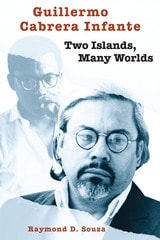
Guillermo Cabrera Infante
Two Islands, Many WorldsBy Raymond D. Souza
University of Texas Press, 1996
A native Cuban who has lived in London since 1966, Guillermo Cabrera Infante is, in every sense, a multilingual and multicultural author. Equally at ease in both Spanish and English, he has distinguished himself with daring and innovative novels, essays, short stories, and film scripts written in both languages. His work has won major literary awards in France, Italy, and Spain, as well as a Guggenheim fellowship in the United States.
This biography is the first comprehensive exploration of the life and works of Guillermo Cabrera Infante. Drawing on wide-ranging interviews with the author and his family and friends, as well as extensive study of both published and unpublished works, Raymond D. Souza creates an intimate portrait of Cabrera Infante and the cultural and political milieus that shaped his writing, including Three Trapped Tigers (Tres tristes tigres), View of Dawn in the Tropics (Vista del amanecer en el trópico), Infante's Inferno (La Habana para un Infante difunto), Holy Smoke, A Twentieth Century Job (Un oficio del siglo XX), Writes of Passage (Así en la paz como en la guerra), and Mea Cuba.
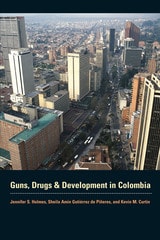
Guns, Drugs, and Development in Colombia
By Jennifer S. Holmes, Sheila Amin Gutiérrez de Piñeres, and Kevin M. Curtin
University of Texas Press, 2009
For decades, Colombia has contended with a variety of highly publicized conflicts, including the rise of paramilitary groups in response to rebel insurgencies of the 1960s, the expansion of an illegal drug industry that has permeated politics and society since the 1970s, and a faltering economy in the 1990s. An unprecedented analysis of these struggles, Guns, Drugs, and Development in Colombia brings together leading scholars from a variety of fields, blending previously unseen quantitative data with historical analysis for an impressively comprehensive assessment. Culminating in an inspiring plan for peace, based on Four Cornerstones of Pacification, this landmark work is sure to spur new calls for change in this corner of Latin America and beyond.
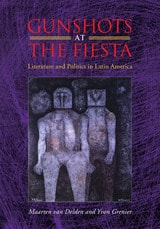
Gunshots at the Fiesta
Literature and Politics in Latin AmericaMaarten van Delden
Vanderbilt University Press, 2009
Yet the authors of this book argue that the relationship between the two realms is much more complex and fraught with tension than is nowadays recognized. In examining these tensions, and in revealing the diverse ways in which literature and politics intersect in the Latin American cultural tradition, Gunshots at the Fiesta offers a lively challenge to the current tendency--especially strong in the U.S. academy--to read Latin American literature through a narrowly political prism.
The authors argue that one can only understand the nature of the dialogue between literature and politics if one begins by recognizing the different logics that operate in these different domains. Using this idea of the different logics of politics and literature as a guiding thread, Van Delden and Grenier offer bold new readings of major authors such as José Martí, Octavio Paz, Carlos Fuentes, Gabriel García Márquez, and Mario Vargas Llosa, as well as compelling interpretations of works by less-frequently-discussed figures such as Claribel Alegría, Marisol Martín del Campo and Víctor Hugo Rascón Banda.