Results by title
1031 books match the query 'Intellectual life' and 17 start with g
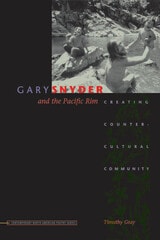
Gary Snyder and the Pacific Rim
Creating Countercultural CommunityTimothy Gray
University of Iowa Press, 2006
Gray’s introduction tracks the increased use of “Pacific Rim discourse” by politicians and business leaders following World War II. Ensuing chapters analyze Snyder’s countercultural invocation of this regional idea, concentrating on the poet’s migratory or “creaturely” sensibility, his gift for literary translation, his physical embodiment of trans-Pacific ideals, his role as tribal spokesperson for Haight-Ashbury hippies, and his burgeoning interest in environmental issues. Throughout, Gray’s citations of such writers as Allen Ginsberg, Philip Whalen, and Joanne Kyger shed light on Snyder’s communal role, providing an amazingly intimate portrait of the west coast counterculture. An interdisciplinary project that utilizes models of ecology, sociology, and comparative religion to supplement traditional methods of literary biography, Gary Snyder and the Pacific Rim offers a unique perspective on Snyder’s life and work.
This book will fascinate literary and Asian studies scholars as well as the general reader interested in the Beat movement and multicultural influences on poetry.
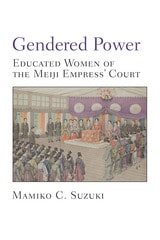
Gendered Power
Educated Women of the Meiji Empress' CourtMamiko C. Suzuki
University of Michigan Press, 2019
Gente Decente
A Borderlands Response to the Rhetoric of DominanceBy Leticia Magda Garza-Falcón
University of Texas Press, 1998
In his books The Great Plains, The Great Frontier, and The Texas Rangers, historian Walter Prescott Webb created an enduring image of fearless, white, Anglo male settlers and lawmen bringing civilization to an American Southwest plagued with "savage" Indians and Mexicans. So popular was Webb's vision that it influenced generations of historians and artists in all media and effectively silenced the counter-narratives that Mexican American writers and historians were concurrently producing to claim their standing as "gente decente," people of worth.
These counter-narratives form the subject of Leticia M. Garza-Falcón's study. She explores how prominent writers of Mexican descent-such as Jovita González, Américo Paredes, María Cristina Mena, Fermina Guerra, Beatriz de la Garza, and Helena María Viramontes -have used literature to respond to the dominative history of the United States, which offered retrospective justification for expansionist policies in the Southwest and South Texas. Garza-Falcón shows how these counter-narratives capture a body of knowledge and experience excluded from "official" histories, whose "facts" often emerged more from literary techniques than from objective analysis of historical data.
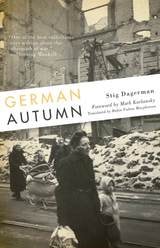
German Autumn
Stig Dagerman
University of Minnesota Press, 2011
In late 1946, Stig Dagerman was assigned by the Swedish newspaper Expressen to report on life in Germany immediately after the fall of the Third Reich. First published in Sweden in 1947, German Autumn, a collection of the articles written for that assignment, was unlike any other reporting at the time. While most Allied and foreign journalists spun their writing on the widely held belief that the German people deserved their fate, Dagerman disagreed and reported on the humanness of the men and women ruined by the war—their guilt and suffering. Dagerman was already a prominent writer in Sweden, but the publication and broad reception of German Autumn throughout Europe established him as a compassionate journalist and led to the long-standing international influence of the book.
Presented here in its first American edition with a compelling new foreword by Mark Kurlansky, Dagerman’s essays on the tragic aftermath of war, suffering, and guilt are as hauntingly relevant today amid current global conflict as they were sixty years ago.
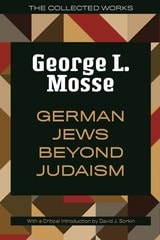
German Jews Beyond Judaism
George L. Mosse, With a critical introduction by David J. Sorkin
University of Wisconsin Press, 2025
German Jews Beyond Judaism was, in Mosse’s own estimation, his “most personal book, almost a confession of faith.” David J. Sorkin’s new critical introduction illustrates how Mosse’s life and values both shaped and exemplified his historical analysis and offers potential meanings of his intellectual legacy for the present day.
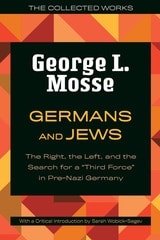
Germans and Jews
The Right, the Left, and the Search for a "Third Force" in Pre-Nazi GermanyGeorge L. Mosse
University of Wisconsin Press, 2023
This innovative perspective has implications for understanding not only the rise of fascism and Nazism in Germany but also the rise and fall of the New Left in the United States and Europe, which was occurring at the time of Mosse’s writing. A new critical introduction by Sarah Wobick-Segev, research associate at the University of Hamburg, places Mosse’s work in its historical and intellectual contexts and draws lessons for students and scholars today.
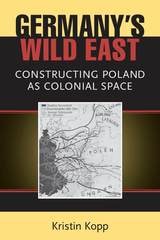
Germany's Wild East
Constructing Poland as Colonial SpaceKristin Kopp
University of Michigan Press, 2012
While conventional definitions locate colonial space overseas, Kristin Kopp argues that it was possible to understand both distant continents and adjacent Eastern Europe as parts of the same global periphery dependent upon Western European civilizing efforts. However, proximity to the source of aid translated to greater benefits for Eastern Europe than for more distant regions.
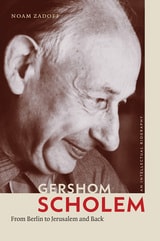
Gershom Scholem
From Berlin to Jerusalem and BackNoam Zadoff
Brandeis University Press, 2017
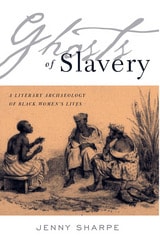
Ghosts Of Slavery
A Literary Archaeology of Black Women’s LivesJenny Sharpe
University of Minnesota Press, 2002
Questions traditional assumptions about power and agency in slave women’s everyday lives.
Through their open defiance, women like Harriet Tubman and Sojourner Truth had a significant impact on the institution of slavery. But what of the countless other women who did not commit public or even private acts of resistance? Are their stories worthy of our attention? While some scholars imply that only the struggle for freedom was legitimate, Jenny Sharpe complicates the linear narrative-from slavery to freedom and literacy-that emerged from the privileging of autobiographical accounts like that of Frederick Douglass. She challenges a paradigm that equates agency with resistance and self-determination, and introduces new ways to examine negotiations for power within the constraints of slavery.
In Ghosts of Slavery, Sharpe introduces a wider range of everyday practices by examining the lives of three distinctive Caribbean women: a maroon leader, a mulatto concubine, and a fugitive slave. Through them she explains how the diasporic experience of slavery enabled black women to claim an authority that they didn’t possess in Africa, how concubines empowered themselves through their mimicry of white women, and how less-privileged slave women manipulated situations that they were powerless to change. Finding the highly mediated portrayal of slave women in the historical records limited and sometimes misleading, Sharpe turns to unconventional sources for investigating these women’s lives. In this fascinating and historically rich account, she calls for new strategies of reading that question traditional narratives of history, and she finds alternative ways to integrate oral storytelling, slave songs, travel writing, court documents, proslavery literature, and contemporary literature into black history. Ultimately, this layered approach not only produces a more complex picture of the slave women’s agency than conventional readings, it encourages a more nuanced understanding of the roles of slaves in the history of slavery.
Ghosts of Fascism
Italian Intellectuals After MussoliniSimon Levis Sullam, Translated by Stuart Oglethorpe
University of Wisconsin Press, 2026
While public intellectuals are typically thought of as inherently nonconformist and critical of established power, in practice many adapt themselves to the views of the majority—particularly in the context of repressive governments and dictatorships. When the political winds change, such figures often refashion themselves to fit the new paradigm. Ghosts of Fascism follows the trajectories of four major Italian intellectuals who, despite their passivity and at times collaboration with Fascist institutions, became some of postwar Italy’s iconic anti-Fascists: Federico Chabod, a prominent historian who would join the Resistance; the jurist Piero Calamandrei, who later participated in drafting the Italian democratic constitution; the influential literary critic Luigi Russo, who presided over the prestigious Scuola Normale Superiore in Pisa; and Alberto Moravia, the internationally renowned novelist. Simon Levis Sullam weaves together their histories to show how postwar Italian intellectuals quietly revised their previous political positions, redefining themselves—and their recent pasts, together with that of the entire nation—as consistently anti-Fascist.
Glamorous Sorcery
Magic and Literacy in the High Middle AgesDavid Rollo
University of Minnesota Press, 2000
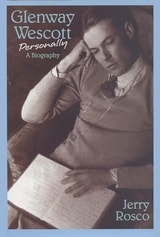
Glenway Wescott Personally
A BiographyJerry Rosco
University of Wisconsin Press, 2002
As a writer, Glenway Wescott (1901–1987) left behind several novels, including The Grandmothers and The Pilgrim Hawk, noted for their remarkable lyricism. As a literary figure, Wescott also became a symbol of his times. Born on a Wisconsin farm in 1901, he associated as a young writer with Hemingway, Stein, and Fitzgerald in 1920s Paris and subsequently was a central figure in New York’s artistic and gay communities. Though he couldn’t finish a novel after the age of forty-five, he was just as famous as an arts impresario, as a diarist, and for the company he kept: W. H. Auden, Christopher Isherwood, Marianne Moore, Somerset Maugham, E. M. Forster, Joseph Campbell, and scores of other luminaries.
In Glenway Wescott Personally, Jerry Rosco chronicles Wescott’s long and colorful life, his early fame and later struggles to write, the uniquely privileged and sometimes tortured world of artistic creation. Rosco sensitively and insightfully reveals Wescott’s private life, his long relationship with Museum of Modern Art curator Monroe Wheeler, his work with sex researcher Alfred Kinsey that led to breakthrough findings on homosexuality, and his kinship with such influential artists as Jean Cocteau, George Platt-Lynes, and Paul Cadmus.

God In The Street
New York Writing from The Penny Press to MelvilleHans Bergmann
Temple University Press, 1995
In the fast changing culture of antebellum New York, writers of every stripe celebrated "the City" as a stage for the daily urban encounter between the familiar and the inexplicable. Probing into these richly varied texts, Hans Bergmann uncovers the innovations in writing that accompanied the new market society— the penny newspapers' grandiose boastings, the poetic catalogues of Walt Whitman, the sentimental realism of charity workers, the sensationalism of slum visitors, and the complex urban encounters of Herman Melville's fiction.
The period in which New York, the city itself, became firmly established as a subject invented a literary form that attempts to capture the variety of the teeming city and the flaneur, the walking observer. But Bergmann does not simply lead a parade of images and themes; he explores the ways in which these observers understood what was happening around them and to them, always attentive to class struggle and race and gender issues.
God in the Street shows how the penny press and Whitman's New York poetry create a new mass culture hero who interprets and dignifies the city's confusions. New York writers, both serious and sensationalist, meditate upon street encounters with tricksters and confidence-men and explore the meanings of encounters. Melville's "Bartleby, the Scrinever" underlines the unrelenting isolation and inability to control the interpreter. Bergmann reinterprets Melville's The Confidence Man as an example of how a complex literary form arises directly from its own historical materials and is itself socially symbolic. Bergmann sees Melville as special because he recognizes his inability to make sense of the surface of chaotic images and encounters. In mid-century New York City, Melville believes God is in the street, unavailable and unrecognizable, rather than omnipresent and guiding.
Goin' Viral
Uncontrollable Black PerformanceGabriel A. Peoples
University of Illinois Press, 2025
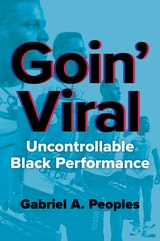
Peoples’s analysis ranges from abolitionist and proslavery visual culture to Do the Right Thing to “Bed Intruder Song” and the cellphone video of Derrion Albert’s murder. After identifying these moments, he considers how performances go viral in Black ways. He also thinks through the ways Black virality circulates ideas that materially affect Black life. As he shows, an interacting person’s vulnerability to racialized gender and racialized sexuality knowledge inspires how they spread a performance. Non-iconic elements of viral moments reveal hard-to-find nuances of Black life while the artists and others represented in viral moments promote both collective and individual liberation by harnessing their visibility and audibility.
Rigorous and expansive, Goin’ Viral uses Black virality as a new way to understand and frame Black performances.
Going Underground
Race, Space, and the Subterranean in the Nineteenth-Century United StatesLara Langer Cohen
Duke University Press, 2023
Going to Boston
Harriet Robinson's Journey to New WomanhoodClaudia L. Bushman
University Press of New England, 2017
Going to the Countryside
The Rural in the Modern Chinese Cultural Imagination, 1915-1965Yu Zhang
University of Michigan Press, 2020
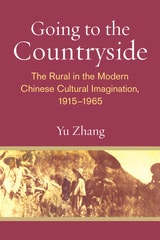
Since the beginning of the twentieth century, modern Chinese intellectuals, reformers, revolutionaries, leftist journalists, and idealistic youth had often crossed the increasing gap between the city and the countryside, which made the act of “going to the countryside” a distinctively modern experience and a continuous practice in China. Such a spatial crossing eventually culminated in the socialist state program of “down to the villages” movements during the 1960s and 1970s. What, then, was the special significance of “going to the countryside” before that era? Going to the Countryside deals with the cultural representations and practices of this practice between 1915 and 1965, focusing on individual homecoming, rural reconstruction, revolutionary journeys to Yan’an, the revolutionary “going down to the people” as well as going to the frontiers and rural hometowns for socialist construction. As part of the larger discourses of enlightenment, revolution, and socialist industrialization, “going to the countryside” entailed new ways of looking at the world and ordinary people, brought about new experiences of space and time, initiated new means of human communication and interaction, generated new forms of cultural production, revealed a fundamental epistemic shift in modern China, and ultimately created a new aesthetic, social, and political landscape.
As a critical response to the “urban turn” in the past few decades, this book brings the rural back to the central concern of Chinese cultural studies and aims to bridge the city and the countryside as two types of important geographical entities, which have often remained as disparate scholarly subjects of inquiry in the current state of China studies. Chinese modernity has been characterized by a dual process that created problems from the vast gap between the city and the countryside but simultaneously initiated constant efforts to cope with the gap personally, collectively, and institutionally. The process of “crossing” two distinct geographical spaces was often presented as continuous explorations of various ways of establishing the connectivity, interaction, and relationship of these two imagined geographical entities. Going to the Countryside argues that this new body of cultural productions did not merely turn the rural into a constantly changing representational space; most importantly, the rural has been constructed as a distinct modern experiential and aesthetic realm characterized by revolutionary changes in human conceptions and sentiments.