Results by title
527 books match the query 'Labor' and 11 start with g
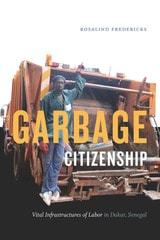
Garbage Citizenship
Vital Infrastructures of Labor in Dakar, SenegalRosalind Fredericks
Duke University Press, 2018
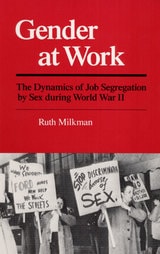
Gender at Work
The Dynamics of Job Segregation by Sex during World War IIRuth Milkman
University of Illinois Press, 1987
Women's entry into so-called men's work during World War II sparked conflicts at the time and when men returned at war's end. Ruth Milkman delves into the issues in play and the prewar origins of traditional patterns of gender segregation in the workplace. Ranging from the dynamics on the shop floor to hiring patterns, Milkman pays particular attention to automobile and electrical manufacturing. She analyzes a number of persistent questions, including management's decision to re-embrace gender segregation after the war; women's lack of protest; the failure of unions to protect women; and how related employer strategies helped control labor by maintaining women's place as workers paid less than men.

Gendered Tradeoffs
Women, Family, and Workplace Inequality in Twenty-One CountriesBecky Pettit
Russell Sage Foundation, 2009
Generating Jobs
How to Increase Demand for Less-Skilled WorkersRichard B. Freeman
Russell Sage Foundation, 1998

Getting Away from It All
Vacations and IdentityKaren Stein
Temple University Press, 2019
Vacations are a delimited period during which social rules and responsibilities are eased, removed, or shifted, and people have increased autonomy over what they choose to do. Recent trends in the travel industry emphasize the appeal of vacations for voluntary identity changes—when bankers can become bikers for a week or when “Momcations” allow mothers to leave their families behind. But how do our vacations allow us to shape our identity?
Getting Away from It All is a study of individuality and flexibility and the intersection of self-definition and social constraint. Karen Stein interviews vacationers about their travels and down time, focusing on “identity transitions.” She shows how objects, settings, temporal environments and social interactions limit or facilitate identity shifts, and how we arrange our vacations to achieve the shifts we desire. Stein also looks at the behavior, values, attitudes, and worldview of individuals to illuminate how people engage in either identity work or identity play.
Vacations say a lot about individuals. They signal class and economic standing and reveal aspirations and goals. Getting Away from It All insists that vacations are about more than just taking time off to relax and rejuvenate—they are about having some time to work on the person one wants to be.
Global Decisions, Local Collisions
Urban Life In The New World OrderDavid Ranney
Temple University Press, 2002
Global Production
The Apparel Industry in the Pacific Rimedited by Edna Bonacich, Lucie Cheng, Norma Chinchilla, Nora Hamilton and Paul Ong
Temple University Press, 1994
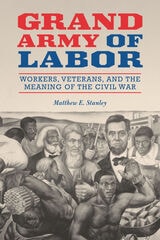
Grand Army of Labor
Workers, Veterans, and the Meaning of the Civil WarMatthew E. Stanley
University of Illinois Press, 2021
From the Gilded Age through the Progressive era, labor movements reinterpreted Abraham Lincoln as a liberator of working people while workers equated activism with their own service fighting for freedom during the war. Matthew E. Stanley explores the wide-ranging meanings and diverse imagery used by Civil War veterans within the sprawling radical politics of the time. As he shows, a rich world of rituals, songs, speeches, and newspapers emerged among the many strains of working class cultural politics within the labor movement. Yet tensions arose even among allies. Some people rooted Civil War commemoration in nationalism and reform, and in time, these conservative currents marginalized radical workers who tied their remembering to revolution, internationalism, and socialism.
An original consideration of meaning and memory, Grand Army of Labor reveals the complex ways workers drew on themes of emancipation and equality in the long battle for workers’ rights.

Grand Designs
Labor, Empire, and the Museum in Victorian CultureLara Kriegel
Duke University Press, 2007
Drawing on a wide range of sources, including museum guidebooks, design manuals, illustrated newspapers, pattern books, and government reports, Kriegel brings to life the many Victorians who claimed a stake in aesthetic reform during the middle years of the nineteenth century. The aspiring artists who attended the Government School of Design, the embattled provincial printers who sought a strengthened industrial copyright, the exhibition-going millions who visited the Crystal Palace, the lower-middle-class consumers who learned new principles of taste in metropolitan museums, and the working men of London who critiqued the city’s art and design collections—all are cast by Kriegel as leading cultural actors of their day. Grand Designs shows how these Victorians vied to upend aesthetic hierarchies in an imperial age and, in the process, to refashion London’s public culture.
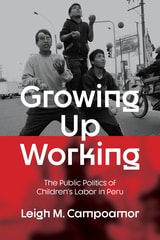
Growing Up Working
The Public Politics of Children's Labor in PeruLeigh M. Campoamor
University of Texas Press, 2026
A deep ethnography on children who work in Lima, Peru, and a critique of the global anti-child labor effort.
Children juggling at traffic lights and selling candy from car to car are ubiquitous in Lima, Peru’s capital, making the country a hotspot for child labor reformers. Even when the intentions behind the anti-child labor movement are benevolent, in practice this effort affects children and their families in unexpected and often harmful ways.
Anthropologist Leigh Campoamor argues that the concept of child labor is stuck in an industrial-era framing that fails to capture the reality of working youth in the global south today. Following children who work on Lima’s streets through their daily routines, Campoamor shows how these youth—and often their mothers—become subjects of moral intervention by state institutions, NGOs, and the general public. Arguing that reformers reinforce hierarchies of race, class, gender and age in the name of children's rights, Growing Up Working shows how working youth assert agency while also performing invisible caring and affective labor that doesn't count as work under neoliberal capitalism. Campoamor follows the children at the center of her ethnography into adulthood, providing an intimate and dynamic portrait of their lives while critiquing the ways anti–child labor discourses imagine working children’s futures.
Guest Workers and Resistance to U.S. Corporate Despotism
Immanuel Ness
University of Illinois Press, 2011
Political scientist Immanuel Ness thoroughly investigates the use of guest workers in the United States, the largest recipient of migrant labor in the world. Ness argues that the use of migrant labor is increasing in importance and represents despotic practices calculated by key U.S. business leaders in the global economy to lower labor costs and expand profits under the guise of filling a shortage of labor for substandard or scarce skilled jobs.
Drawing on ethnographic field research, government data, and other sources, Ness shows how worker migration and guest worker programs weaken the power of labor in both sending and receiving countries. His in-depth case studies of the rapid expansion of technology and industrial workers from India and hospitality workers from Jamaica reveal how these programs expose guest workers to employers' abuses and class tensions in their home countries while decreasing jobs for American workers and undermining U.S. organized labor.
Where other studies of labor migration focus on undocumented immigrant labor and contend immigrants fill jobs that others do not want, this is the first to truly advance understanding of the role of migrant labor in the transformation of the working class in the early twenty-first century. Questioning why global capitalists must rely on migrant workers for economic sustenance, Ness rejects the notion that temporary workers enthusiastically go to the United States for low-paying jobs. Instead, he asserts the motivations for improving living standards in the United States are greatly exaggerated by the media and details the ways organized labor ought to be protecting the interests of American and guest workers in the United States.