Results by title
3258 books match the query 'Performing Arts' and 65 start with g
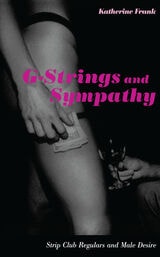
G-Strings and Sympathy
Strip Club Regulars and Male DesireKatherine Frank
Duke University Press, 2002
Frank’s ethnography draws on her work as an exotic dancer in five clubs, as well as on her interviews with over thirty regular customers—middle-class men in their late-twenties to mid-fifties. Reflecting on the customers’ dual desires for intimacy and visibility, she explores their paradoxical longings for "authentic" interactions with the dancers, the ways these aspirations are expressed within the highly controlled and regulated strip clubs, and how they relate to beliefs and fantasies about social class and gender. She considers how regular visits to strip clubs are not necessarily antithetical to marriage or long-term heterosexual relationships, but are based on particular beliefs about marriage and monogamy that make these clubs desirable venues. Looking at the relative "classiness" of the clubs where she worked—ranging from the city’s most prestigious clubs to some of its dive bars—she reveals how the clubs are differentiated by reputations, dress codes, cover charges, locations, and clientele, and describes how these distinctions become meaningful and erotic for the customers. Interspersed throughout the book are three fictional interludes that provide an intimate look at Frank’s experiences as a stripper—from the outfits to the gestures, conversations, management, coworkers, and, of course, the customers.
Focusing on the experiences of the male clients, rather than those of the female sex workers, G-Strings and Sympathy provides a nuanced, lively, and tantalizing account of the stigmatized world of strip clubs.
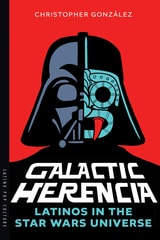
Galactic Herencia
Latinos in the Star Wars UniverseChristopher González
University of Arizona Press, 2027
In 1977, George Lucas created a galaxy far, far away that somehow contained no Latinos. Forty-seven years later, Diego Luna’s Cassian Andor speaks unapologetically accented English as he leads a rebel cell against the Empire, Pedro Pascal’s Din Djarin anchors Disney’s flagship series, and Oscar Isaac’s Poe Dameron commands X-wing squadrons with a confidence that refuses to apologize for difference. The transformation didn’t happen by accident—it was fought for character by character, film by film, against resistance both corporate and cultural.
In Galactic Herencia, Christopher González uses personal, historical, and critical reflection to trace this long arc from erasure to visibility, examining how Latinx actors bring cultural resonance to roles in a fictional universe that never explicitly acknowledges their heritage—and what it means when so few performers must carry the hopes of so many. The book moves from the painful absences of the original trilogy through the breakthrough moments of Rogue One and The Mandalorian, to the current struggles over authentic representation in an era of franchise expansion and toxic fandom. By centering Latinx perspectives on a globally dominant franchise, Galactic Herencia makes visible the cultural work that representation does—demonstrating that genuine inclusion isn’t about quotas but about empowering stories that affirm our full humanity.
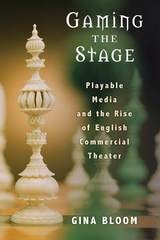
Gaming the Stage
Playable Media and the Rise of English Commercial TheaterGina Bloom
University of Michigan Press, 2018
Gaming the Stage also introduces a new archive for game studies: scenes of onstage gaming, which appear at climactic moments in dramatic literature. Bloom reveals plays to be systems of information for theater spectators: games of withholding, divulging, speculating, and wagering on knowledge. Her book breaks new ground through examinations of plays such as The Tempest, Arden of Faversham, A Woman Killed with Kindness, and A Game at Chess; the histories of familiar games such as cards, backgammon, and chess; less familiar ones, like Game of the Goose; and even a mixed-reality theater videogame.
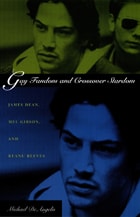
Gay Fandom and Crossover Stardom
James Dean, Mel Gibson, and Keanu ReevesMichael DeAngelis
Duke University Press, 2001
DeAngelis examines a variety of cultural documents, including studio publicity and promotional campaigns, star biographies, scandal magazines, and film reviews, as well as gay political and fan literature that ranges from the closeted pages of One and Mattachine Review in the 1950s to the very “out” dish columns, listserv postings, and on-line star fantasy narratives of the past decade. At the heart of this close historical study are treatments of particular film narratives, including East of Eden, Rebel Without a Cause, The Road Warrior, Lethal Weapon, My Own Private Idaho, and Speed. Using theories of fantasy and melodrama, Gay Fandom and Crossover Stardom demonstrates how studios, agents, and even stars themselves often actively facilitate an audience’s strategic blurring of the already tenuous distinction between the heterosexual mainstream and the gay margins of American popular culture.
In addition to fans of James Dean, Mel Gibson, and Keanu Reeves, those interested in film history, cultural studies, popular culture, queer theory, gender studies, sociology, psychoanalytic theory, melodrama, fantasy, and fandom will enjoy this book.
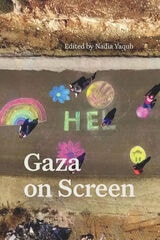
Gaza on Screen
Nadia Yaqub, editor
Duke University Press, 2023
Contributors. Nayrouz Abu Hatoum, Shahd Abusalama, Samirah Alkassim, Basma Alsharif, Hadeel Assali, Azza El-Hassan, Hatim El-Hibri, Mohamed Jabaly, Ahmed Mansour, Arab Nasser, Tarzan Nasser, Kamran Rastegar, Viviane Saglier, Abdelsalam Shehada, Yaron Shemer, Rebecca L. Stein, Helga Tawil-Souri, Shaira Vadasaria, Nadia Yaqub
Gender Meets Genre in Postwar Cinemas
Edited by Christine Gledhill
University of Illinois Press, 2012
This remarkable collection uses genre as a fresh way to analyze the issues of gender representation in film theory, film production, spectatorship, and the contexts of reception. With a uniquely global perspective, these essays examine the intersection of gender and genre in not only Hollywood films but also in independent, European, Indian, and Hong Kong cinemas. Working in the area of postcolonial cinema, contributors raise issues dealing with indigenous and global cinemas and argue that contemporary genres have shifted considerably as both notions of gender and forms of genre have changed. The volume addresses topics such as the history of feminist approaches to the study of genre in film, issues of female agency in postmodernity, changes taking place in supposedly male-dominated genres, concepts of genre and its use of gender in global cinema, and the relationship between gender and sexuality in film.
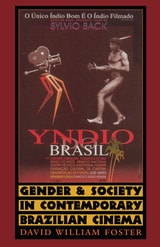
Gender and Society in Contemporary Brazilian Cinema
By David William Foster
University of Texas Press, 1999
"Gender is an absolute ground zero for most human societies," writes David William Foster, "an absolute horizon of social subjectivity." In this book, he examines gender issues in thirteen Brazilian films made (with one exception) after the 1985 return to constitutional democracy and elimination of censorship to show how these issues arise from and comment on the sociohistorical reality of contemporary Brazilian society.
Foster organizes his study around three broad themes: construction of masculinity, constructions of feminine and feminist identities, and same-sex positionings and social power. Within his discussions of individual films ranging from Jorge um brasileiro to A hora da estrela to Beijo no asfalto, he offers new ways of understanding national ideals and stereotypes, sexual dissidence (homoeroticism and transgenderism), heroic models, U.S./Brazilian relations, revolutionary struggle, and human rights violations. As the first study of Brazilian cinematic representations of gender ideology in English or Portuguese, this book will be important reading in film and cultural studies.
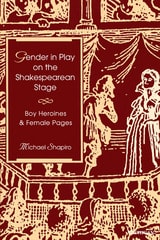
Gender in Play on the Shakespearean Stage
Boy Heroines and Female PagesMichael Shapiro
University of Michigan Press, 1996
Shapiro's study centers on the five plays in which Shakespeare employed the figure of the "female page": The Two Gentlemen of Verona, The Merchant of Venice, As You Like It, Twelfth Night, and Cymbeline. Combining theater and social history, Shapiro locates Shakespeare's work in relation to controversies over gender roles and cross-dressing in Elizabethan England.
The popularity of the "female page" is examined as a playful literary and theatrical way of confronting, avoiding, or merely exploiting issues such as the place of women in a patriarchal culture and the representation of women on stage. Looking beyond and behind the stage for the cultural anxieties that found their way into Shakespearean drama, Shapiro considers such cases as cross-dressing women in London being punished as prostitutes and the alleged homoerotic practices of the apprentices who played female roles in adult companies. Shapiro also traces other Elizabethan dramatists' varied uses of the cross-dressing motif, especially as they were influenced by Shakespeare's innovations.
"Shapiro's engaging study is distinguished by the scope of interrelated topics it draws together and the balance of critical perspectives it brings to bear on them." --Choice
Michael Shapiro is Professor of English, University of Illinois, Urbana.

Gender in Play on the Shakespearean Stage
Boy Heroines and Female PagesMichael Shapiro
University of Michigan Press, 0

Gender, Sex, and Sexuality in Musical Theatre
He/She/They Could Have Danced All NightEdited by Kelly Kessler
Intellect Books, 2023
Critics and fans alike often mistake theatrical song and dance as simplistic, heteronormative, and traditional. This collection troubles this over-idealized notion of musical theatre, tackling divas, chorus boys, and the Rockettes; hit shows such as Hamilton and Spring Awakening; and lesser-known but groundbreaking gems like Erin Markey’s A Ride on The Irish Cream and Kirsten Childs’s Bella: An American Tall Tale.
The book takes a broad look at musical theater across a range of intersecting lenses including race, nation, form, dance, casting, marketing, pedagogy, industry, stardom, politics, and platform. Undermining the musical form’s conservative façade, scholars drive home the fact that gender and desire have long been at the heart of the musical. This exciting and vibrant collection of articles takes sex, sexuality, and gendered complexity out of the musical’s liner notes and back above the marquee.
Gendering Bodies/Performing Art
Dance and Literature in Early Twentieth-Century British CultureAmy Koritz
University of Michigan Press, 1995
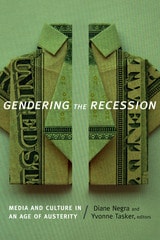
Gendering the Recession
Media and Culture in an Age of AusterityDiane Negra and Yvonne Tasker, eds.
Duke University Press, 2014
Contributors. Sarah Banet-Weiser, Hamilton Carroll, Hannah Hamad, Anikó Imre, Suzanne Leonard, Isabel Molina-Guzmán, Sinéad Molony, Elizabeth Nathanson, Diane Negra, Tim Snelson, Yvonne Tasker, Pamela Thoma
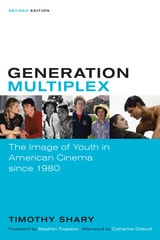
Generation Multiplex
The Image of Youth in American Cinema since 1980By Timothy Shary
University of Texas Press, 2014
Generation Multiplex (2002) was the first comprehensive study of the representation of teenagers in American cinema since David Considine’s Cinema of Adolescence in 1985. This updated and expanded edition reaffirms the idea that films about youth constitute a legitimate genre worthy of study on its own terms. Identifying four distinct subgenres—school, delinquency, horror, and romance—Timothy Shary explores hundreds of representative films while offering in-depth discussion of movies that constitute key moments in the genre, including Fast Times at Ridgemont High, A Nightmare on Elm Street, The Breakfast Club, Say Anything . . . , Boyz N the Hood, Scream, American Pie, Napoleon Dynamite, Superbad, The Twilight Saga, and The Hunger Games. Analyzing developments in teen films since 2002, Shary covers such topics as the increasing availability of movies on demand, which has given teens greater access to both popular and lesser-seen films; the recent dominance of supernatural and fantasy films as a category within the genre; and how the ongoing commodification of teen images in media affects real-life issues such as school bullying, athletic development, sexual identity, and teenage pregnancy.
Geographies of Relation
Diasporas and Borderlands in the AmericasTheresa Delgadillo
University of Michigan Press, 2024
Not only does Delgadillo offer a rare extended analysis of Black Latinidades in Chicanx literature and theory, but she also considers over a century’s worth of literary, cinematic, and performative texts to support her argument about the significance of these cultural sites and overlaps. Chapters illuminate the significance of Toña La Negra in the Golden Age of Mexican cinema, reconsider feminist theorist Gloria Anzaldúa’s work in revising exclusionary Latin American ideologies of mestizaje, delve into the racial and gender frameworks Sandra Cisneros attempts to rewrite, unpack encounters between African Americans and Black Puerto Ricans in texts by James Baldwin and Marta Moreno Vega, explore the African diaspora in colonial and contemporary Peru through Daniel Alarcón’s literature and the documentary Soy Andina, and revisit the centrality of Black power in ending colonialism in Cuban narratives. Geographies of Relation demonstrates the long histories of networks and exchanges across the Americas as well as the interrelationships among Indigenous, Black, African American, mestizx, Chicanx, and Latinx peoples. It offers a compelling argument that geographies of relation are as significant as national frameworks in structuring cultural formation and change in this hemisphere.
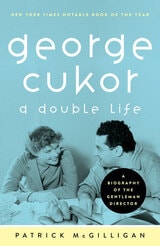
George Cukor
A Double LifePatrick McGilligan
University of Minnesota Press, 2013
One of the highest-paid studio contract directors of his time, George Cukor was nominated five times for an Academy Award as Best Director. In publicity and mystique he was dubbed the “women’s director” for guiding the most sensitive leading ladies to immortal performances, including Greta Garbo, Ingrid Bergman, Judy Garland, and—in ten films, among them The Philadelphia Story and Adam’s Rib—his lifelong friend and collaborator Katharine Hepburn. But behind the “women’s director” label lurked the open secret that set Cukor apart from a generally macho fraternity of directors: he was a homosexual, a rarity among the top echelon. Patrick McGilligan’s biography reveals how Cukor persevered within a system fraught with bigotry while becoming one of Hollywood’s consummate filmmakers.
George Gershwin
An Intimate PortraitWalter Rimler
University of Illinois Press, 2009
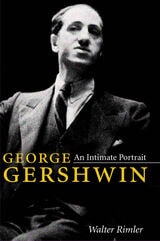
He and his siblings received little love from their mother and no direction from their father. Older brother and lyricist Ira managed to create a home when he married Leonore Strunsky, a hard-edged woman who lived for wealth and status. The closest George came to domesticity was through his longtime relationship with Kay Swift. She was his lover, musical confidante, and fellow composer. But she remained married to another man while he went endlessly from woman to woman. Only in the final hours of his life, when they were separated by a continent, did he realize how much he needed her. Fatally ill, unprotected by (and perhaps estranged from) Ira, he was exiled by Leonore from the house she and the brothers shared, and he died horribly and alone at the age of thirty-eight.
Nor was Gershwin able to find a satisfying musical harbor. For years his songwriting genius could be expressed only in the ephemeral world of show business, as his brilliance as a composer of large-scale works went unrecognized by highbrow music critics. When he resolved this quandary with his opera Porgy and Bess, the critics were unable to understand or validate it. Decades would pass before this, his most ambitious composition, was universally regarded as one of music's lasting treasures and before his stature as a great composer became secure.
In George Gershwin: An Intimate Portrait, Walter Rimler makes use of fresh sources, including newly discovered letters by Kay Swift as well as correspondence between and interviews with intimates of Ira and Leonore Gershwin. It is written with spirited prose and contains more than two dozen photographs.
George's Run
A Writer's Journey through the Twilight ZoneHenry Chamberlain
Rutgers University Press, 2023
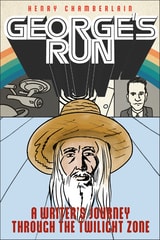
Later in life, Johnson befriended comics journalist and artist Henry Chamberlain, and the two had long chats about his amazing life and career. Now Chamberlain pays tribute to his late friend in the graphic novel George’s Run, which brings Johnson’s creative milieu to life in vividly illustrated color panels. The result feels less like reading a conventional biography and more like sitting in on an intimate conversation between friends as they recollect key moments in pop culture history, as well as the colorful band of writers known as the “Rat Pack of Science Fiction.”
Germaine Dulac
A Cinema of SensationsTami Williams
University of Illinois Press, 2014
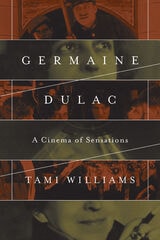
Best known for directing the Impressionist classic The Smiling Madame Beudet and the first Surrealist film The Seashell and the Clergyman, Germaine Dulac, feminist and pioneer of 1920s French avant-garde cinema, made close to thirty fiction films as well as numerous documentaries and newsreels. Through her filmmaking, writing, and cine-club activism, Dulac’s passionate defense of the cinema as a lyrical art and social practice had a major influence on twentieth century film history and theory.
In Germaine Dulac: A Cinema of Sensations, Tami Williams makes unprecedented use of the filmmaker's personal papers, production files, and archival film prints to produce the first full-length historical study and critical biography of Dulac. Williams's analysis explores the artistic and sociopolitical currents that shaped Dulac's approach to cinema while interrogating the ground breaking techniques and strategies she used to critique conservative notions of gender and sexuality. Moving beyond the director’s work of the 1920s, Williams examines Dulac's largely ignored 1930s documentaries and newsreels establishing clear links with the more experimental impressionist and abstract works of her early period.
This vivid portrait will be of interest to general readers, as well as to scholars of cinema and visual culture, performance, French history, women’s studies, queer cinema, in addition to studies of narrative avant-garde, experimental, and documentary film history and theory.
German Film after Germany
Toward a Transnational AestheticRandall Halle
University of Illinois Press, 2007

German Ways of War
The Affective Geographies and Generic Transformations of German War FilmsJaimey Fisher
Rutgers University Press, 2022

Get Real
Crafting Race in the Reality Television IndustryEva Hageman
Duke University Press, 2027
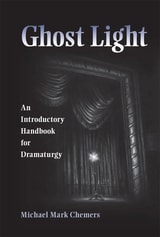
Ghost Light
An Introductory Handbook for DramaturgyMichael Mark Chemers
Southern Illinois University Press, 2010
Ghost Light: An Introductory Handbook for Dramaturgy offers useful and entertaining answers to the confounding questions: “What, exactly, is dramaturgy, and what does a dramaturg do?” According to Michael Mark Chemers, dramaturgs are the scientists of the theater world—their primary responsibility is to query the creative possibilities in every step of the production process, from play selection to costume design, and then research the various options and find ways to transform that knowledge into useful ideas. To say that dramaturgs are well-rounded is an understatement: those who choose this profession must possess an acute aesthetic sensibility in combination with an extensive knowledge of theater history and practice, world history, and critical theory, and they must be able to collaborate with every member of the creative team and theater administration.
Ghost Light is divided into three sections. Part 1, “Philosophy,” describes what dramturgs do, presents a detailed history of dramaturgy, and summarizes many of the critical theories needed to analyze and understand dramatic texts. “Analysis” teaches the two essential skills of a dramaturg: reading and writing. It includes a “12-step program for script analysis” along with suggestions about how to approach various genres and play structures. “Practice,” the third part, delves into the relationships that dramaturgs forge and offers useful advice about collaborating with other artists. It also includes ideas for audience outreach initiatives such as marketing and publicity plans, educational programs, talkbacks, blogs, and program notes and lobby displays, all of which are often the responsibility of the dramaturg.
Ghost Light was written with undergraduate students in mind and is perfectly suited for the classroom (each chapter concludes with a series of practical exercises that can be used as course assignments). However, dramaturgy is a skill that is essential to all theater practitioners, not just professional or aspiring dramaturgs, making Ghost Light a valuable addition to all theater libraries.
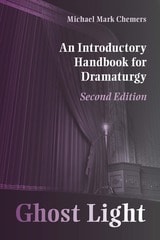
Ghost Light
An Introductory Handbook for DramaturgyMichael Mark Chemers, with a foreword by Faedra Chatard Carpenter
Southern Illinois University Press, 2023
Since its release in 2010, Ghost Light: An Introductory Handbook for Dramaturgy has become the international standard for dramaturgy training and practice. The first textbook introduced students to the “ghost light” model of dramaturgy—a creatively engaged, artistically vibrant approach that draws on extensive knowledge of theatre history, practice, and theory—and this second edition brings the conversation up to the present.
Over three parts, author and theory creator Michael Mark Chemers helps students explore the world of the dramaturg. Part 1 describes what dramaturgs do, presents a detailed history of dramaturgy, and summarizes many of the critical theories needed to analyze and understand dramatic texts. Part 2 teaches students to read, write, and analyze scripts through a twelve-step program with suggestions about how to approach various genres and play structures. The final part delves into the relationships dramaturgs forge and offers useful advice about collaborating with other artists. It also includes ideas for audience outreach initiatives such as marketing and publicity plans, educational programs, program notes and lobby displays, and more.
Perfectly suited for the undergraduate theatre classroom, this holistic guide includes chapter exercises for students to practice the skills as they learn. The new edition also incorporates recent theory and new resources on multimedia performance and dramaturgy in the digital age. As the field of dramaturgy continues to shift and change, this new edition of Ghost Light: An Introductory Handbook for Dramaturgy prepares theatre students and practitioners to create powerful, relevant performances of all types.

Ghostlife of Third Cinema
Asian American Film and VideoGlen M. Mimura
University of Minnesota Press, 2009
An interpretive history of Asian American independent media since the 1960s
Asian American filmmakers and video artists have created a substantial, diverse, and challenging body of work that reimagines the cultural and political representation of Asian Americans. Yet much of this work remains unknown.
For Glen M. Mimura, Asian American cinema is the spectral, ghostly return of the international film movement known as Third Cinema. Tracing contemporary Asian American cinema as a continuation of Third Cinema’s radical enterprise of making marginalized subjects visible in the First World, Ghostlife of Third Cinema examines such potent issues as diasporic identity, historical memory, and queer sexuality through sophisticated readings of a wide range of film and video projects, including Trinh T. Minh-ha’s experimental documentary Surname Viet Given Name Nam; avant-garde works by Japanese American filmmakers Rea Tajiri, Lise Yasui, and Janice Tanaka; and queer videos exploring the intersection of race, nation, and sexuality by Pablo Bautista, Ming-Yuen Ma, and Nguyen Tan Hoang. In Ghostlife of Third Cinema, Mimura confronts the ongoing erasure of Asian American independent media andilluminates its cultural and political significance today.
Ghostly Desires
Queer Sexuality and Vernacular Buddhism in Contemporary Thai CinemaArnika Fuhrmann
Duke University Press, 2016
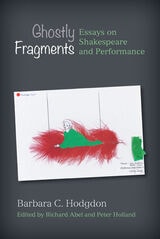
Ghostly Fragments
Essays on Shakespeare and PerformanceBarbara C. Hodgdon
University of Michigan Press, 2021
Ghostly Fragments gathers the essays of the late Barbara C. Hodgdon, a renowned scholar of Shakespeare and performance studies. Her influential publications over thirty years reflected a remarkable intelligence, wit, and originality, as did her lectures and conference papers. Richard Abel and Peter Holland have selected essays that represent the wide sweep of Hodgdon’s scholarship, including unpublished pieces and those from hard-to-access sources. The essays reveal a thinker and writer who grows more self-reflective over time, with a distinctive, engaging, often wryly humorous voice that is accessible even to nonspecialist readers.
Following a general introduction by Peter Holland, the book’s five subsections (Teaching Shakespeare, Analyzing Stage Performances, Editing Shakespeare Texts, Analyzing Shakespeare Films, and “Shopping” in the Archives) are introduced in turn by scholars Miriam Gilbert, W.B. Worthen, Margaret Jane Kidnie, Richard Abel, and Pascale Aebischer. Collectively, the pieces confirm the originality and élan of Hodgdon’s thinking and writing over time, and reveal her as a natural essayist and stylist, with a distinctive engaging voice. The collection is unique in not only bringing together so much of Hodgdon's work in one place (with an extensive bibliography of her published work) but also in demonstrating how groundbreaking and influential that work has been in the field.
Ghosts
Death’S Double And The Phenomena Of TheatreAlice Rayner
University of Minnesota Press, 2006
In Ghosts, Alice Rayner examines theatre as a memorial practice that is haunted by the presence of loss, looking at how aspects of stagecraft turn familiar elements into something uncanny. Citing examples from the works of Shakespeare, Beckett, and Suzan-Lori Parks as well as the films Vertigo, Gaslight, and The Sixth Sense, she begins by describing time as it is employed by theatre with multiple aspects of presence, duration, and passage. Suggesting that objects connect past to present through the sense of touch, she explores how props are suspended backstage between motion and meaning. Her final chapters consider the curtain as theatre’s means for attempting to divide real and imaginary worlds.
If ghosts hover where secrets—secrets of the past, secrets from oneself, secrets of life and death—are kept, then, according to Rayner, “theatre is where ghosts best make their appearances and let communities and individuals know that we live amid secrets hiding in plain sight.”
Alice Rayner is associate professor of drama at Stanford University and author of, most recently, To Act, To Do, To Perform: Drama and the Phenomenology of Action.
Ghouls, Gimmicks, and Gold
Horror Films and the American Movie Business, 1953–1968Kevin Heffernan
Duke University Press, 2004
Heffernan argues that major cultural and economic shifts in the production and reception of horror films began at the time of the 3-d film cycle of 1953–54 and ended with the 1968 adoption of the Motion Picture Association of America’s ratings system and the subsequent development of the adult horror movie—epitomized by Rosemary’s Baby. He describes how this period presented a number of daunting challenges for movie exhibitors: the high costs of technological upgrade, competition with television, declining movie attendance, and a diminishing number of annual releases from the major movie studios. He explains that the production and distribution branches of the movie industry responded to these trends by cultivating a youth audience, co-producing features with the film industries of Europe and Asia, selling films to television, and intensifying representations of sex and violence. Shining through Ghouls, Gimmicks, and Gold is the delight of the true horror movie buff, the fan thrilled to find The Brain that Wouldn’t Die on television at 3 am.
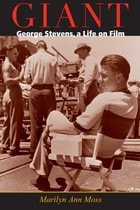
Giant
George Stevens, a Life on FilmMarilyn Ann Moss
University of Wisconsin Press, 2015
Moss documents Stevens’s role as a powerful director who often had to battle the heads of major studios to get his films made his way. She traces the four decades Stevens was a major Hollywood player and icon, from his earliest days at the Hal Roach Studios—where he learned to be a cameraman, writer, and director for Laurel and Hardy features—up to when his films made millions at the box office and were graced by actors such as Elizabeth Taylor, James Dean, Alan Ladd, and Montgomery Clift.
Gilbert Austin's "Chironomia" Revisited
Sympathy, Science, and the Representation of MovementSara Newman and Sigrid Streit
Southern Illinois University Press, 2020
Austin did not simply categorize gesture mechanically, separating delivery from rhetoric and the discipline’s overall goals, but instead he provided a theoretical framework of written descriptions and illustrations that positions delivery as central to effective rhetoric and civic interactions. Balancing the variable physical elements of human interactions as well as the demands of communication, Austin’s system fortuitously anticipated contemporary inquiries into embodied and nonverbal communication. Enlightenment rhetoricians, scientists, and physicians relied on sympathy and its attendant vivacious and lively ideas to convey feelings and facts to their varied audiences. During the seventeenth and eighteenth-centuries, as these disciplines formed increasingly distinct, specialized boundaries, they repurposed existing, shared communication conventions to new ends. While the emerging standards necessarily diverged, each was grounded in the subjective, embodied bedrock of the sympathetic, magical tradition.

Gilles Deleuze's Time Machine
D. N. Rodowick
Duke University Press, 1997
Rodowick illuminates the connections between Deleuze’s writings on visual and scientific texts and describes the formal logic of his theory of images and signs. Revealing how Deleuzian views on film speak to the broader network of philosophical problems addressed in Deleuze’s other books—including his influential work with Félix Guattari—Rodowick shows not only how Deleuze modifies the dominant traditions of film theory, but also how the study of cinema is central to the project of modern philosophy.

Gillioz "Theatre Beautiful"
Celebrating Springfield's Theatre History, 1926-2006James Baumlin
Moon City Press, 2006
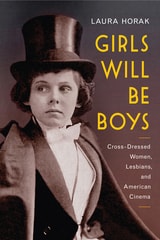
Girls Will Be Boys
Cross-Dressed Women, Lesbians, and American Cinema, 1908-1934Horak, Laura
Rutgers University Press, 2016
Finalist for 2016 Richard Wall Memorial Award from the Theatre Library Association
Long-listed for the 2017 Best Photography Book Award from the Kraszna-Krausz Foundation
Marlene Dietrich, Greta Garbo, and Katharine Hepburn all made lasting impressions with the cinematic cross-dressing they performed onscreen. What few modern viewers realize, however, is that these seemingly daring performances of the 1930s actually came at the tail end of a long wave of gender-bending films that included more than 400 movies featuring women dressed as men.
Laura Horak spent a decade scouring film archives worldwide, looking at American films made between 1908 and 1934, and what she discovered could revolutionize our understanding of gender roles in the early twentieth century. Questioning the assumption that cross-dressing women were automatically viewed as transgressive, she finds that these figures were popularly regarded as wholesome and regularly appeared onscreen in the 1910s, thus lending greater respectability to the fledgling film industry. Horak also explores how and why this perception of cross-dressed women began to change in the 1920s and early 1930s, examining how cinema played a pivotal part in the representation of lesbian identity.
Girls Will Be Boys excavates a rich history of gender-bending film roles, enabling readers to appreciate the wide array of masculinities that these actresses performed—from sentimental boyhood to rugged virility to gentlemanly refinement. Taking us on a guided tour through a treasure-trove of vintage images, Girls Will Be Boys helps us view the histories of gender, sexuality, and film through fresh eyes.
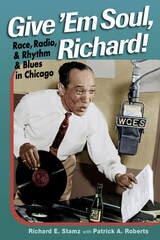
Give 'Em Soul, Richard!
Race, Radio, and Rhythm and Blues in ChicagoRichard E. Stamz with Patrick A. Roberts, Foreword by Robert Pruter
University of Illinois Press, 2010
As either observer or participant, radio deejay and political activist Richard E. Stamz witnessed every significant period in the history of blues and jazz in the last century. From performing first-hand as a minstrel in the 1920s to broadcasting Negro League baseball games in a converted 1934 Chrysler to breaking into Chicago radio and activist politics and hosting his own television variety show, the remarkable story of his life also is a window into milestones of African American history throughout the twentieth century.
Dominating the airwaves with his radio show "Open the Door, Richard" on WGES in Chicago, Stamz cultivated friendships with countless music legends, including Willie Dixon, Sonny Boy Williamson, Little Walter, Howlin' Wolf, Memphis Slim, and Leonard Chess. The pioneering Chicago broadcaster and activist known as "The Crown Prince of Soul" died in 2007 at the age of 101, but not before he related the details of his life and career to college professor Patrick A. Roberts. Give 'Em Soul, Richard! surrounds Stamz's memories of race records, juke joints, and political action in Chicago's Englewood neighborhood with insights on the larger historical trends that were unfolding around him in radio and American history.
Narrated by Stamz, this entertaining and insightful chronicle includes commentary by Roberts as well as reflections on the unlikely friendship and collaboration between a black radio legend and a white academic that resulted in one of the few existing first-hand accounts of Chicago's post-war radio scene.
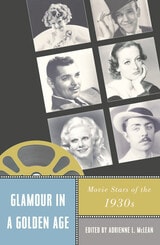
Glamour in a Golden Age
Movie Stars of the 1930sMcLean, Adrienne L
Rutgers University Press, 2010
Stardom is approached as an effect of, and influence on, the particular historical and industrial contexts that enabled these actors and actresses to be discovered, featured in films, publicized, and to become recognized and admired-sometimes even notorious-parts of the cultural landscape. Using archival and popular material, including fan and mass market magazines, other promotional and publicity material, and of course films themselves, contributors also discuss other artists who were incredibly popular at the time, among them Ann Harding, Ruth Chatterton, Nancy Carroll, Kay Francis, and Constance Bennett.
Glasnost—Soviet Cinema Responds
By Nicholas Galichenko
University of Texas Press, 1991
With the coming of glasnost to the Soviet Union, filmmakers began to explore previously forbidden themes, and distributors released films that were suppressed by pre-glasnost-era censors. Soviet cinema underwent a revolution, one that mirrors and helps interpret the social revolution that took place throughout the USSR. Glasnost—Soviet Cinema Responds is the first overall survey of the effects of this revolution on the work of Soviet filmmakers and their films.
The book is structured as a series of three essays and a filmography of the directors of glasnost cinema. The first essay, "The Age of Perestroika," describes the changes that occurred in Soviet cinema as it freed itself from the legacy of Stalinism and socialist realism. It also considers the influence of film educator and director Mikhail Romm. "Youth in Turmoil" takes a sociological look at films about youth, the most dynamic and socially revealing of glasnost-era productions. "Odysseys in Inner Space" charts a new direction in Soviet cinema as it focuses on the inner world of individuals.
The filmography includes thirty-three of the most significant glasnost-era directors, including Tengiz Abuladze, Karen Shakhnazarov, and Sergei Soloviev, with a comprehensive list of their films. Discussions of many individual films, such as Repentance, The Messenger Boy, and The Wild Pigeon, and interviews with the directors reveal the effects that glasnost and perestroika have had on the directors' lives and art.
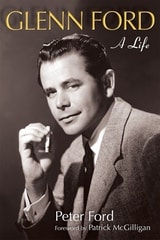
Glenn Ford
A LifePeter Ford
University of Wisconsin Press, 2011
Glenn Ford: A Life chronicles the volatile life, relationships, and career of the renowned actor, beginning with his move from Canada to California and his initial discovery of theater. It follows Ford’s career in diverse media—from film to television to radio—and shows how Ford shifted effortlessly between genres, playing major roles in dramas, noir, westerns, and romances.
This biography by Glenn Ford’s son, Peter Ford, offers an intimate view of a star’s private and public life. Included are exclusive interviews with family, friends, and professional associates, and snippets from the Ford family collection of diaries, letters, audiotapes, unpublished interviews, and rare candid photos. This biography tells a cautionary tale of Glenn Ford’s relentless infidelities and long, slow fade-out, but it also embraces his talent-driven career. The result is an authentic Hollywood story that isn’t afraid to reveal the truth.
Best Books for General Audiences, selected by the American Association of School Librarians
Best Books for General Audiences, selected by the Public Library Reviewers
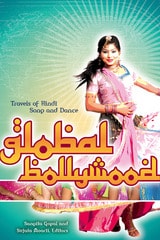
Global Bollywood
Travels of Hindi Song and DanceSangita Gopal
University of Minnesota Press, 2008
Bollywood movies and their signature song-and-dance spectacles are an aesthetic familiar to people around the world, and Bollywood music now provides the rhythm for ads marketing goods such as computers and a beat for remixes and underground bands. These musical numbers have inspired scenes in Western films such as Vanity Fair and Moulin Rouge.
Global Bollywood shows how this currency in popular culture and among diasporic communities marks only the latest phase of the genre’s world travels. This interdisciplinary collection describes the many roots and routes of the Bollywood song-and-dance spectacle. Examining the reception of Bollywood music in places as diverse as Indonesia and Israel, the essays offer a stimulating redefinition of globalization, highlighting the cultural influence of Hindi film music from its origins early in the twentieth century to today.
Contributors: Walter Armbrust, Oxford U; Anustup Basu, U of Illinois, Urbana-Champaign; Nilanjana Bhattacharjya, Colorado College; Edward K. Chan, Kennesaw State U; Bettina David, Hamburg U; Rajinder Dudrah, U of Manchester; Shanti Kumar, U of Texas, Austin; Monika Mehta, Binghamton U; Anna Morcom, Royal Holloway College; Ronie Parciack, Tel Aviv U; Biswarup Sen, U of Oregon; Sangita Shrestova; Richard Zumkhawala-Cook, Shippensburg U.
Sangita Gopal is assistant professor of English at the University of Oregon. Sujata Moorti is professor of women’s and gender studies at Middlebury College.
Global Cinema Networks
Gorfinkel, Elena
Rutgers University Press, 2018
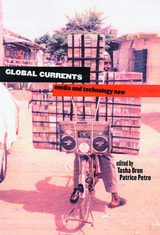
Global Currents
Media and Technology NowOren, Tasha G
Rutgers University Press, 2004
Rhetoric about media technology tends to fall into two extreme categories: unequivocal celebration or blanket condemnation. This is particularly true in debate over the clash of values when first world media infiltrate third world audiences.
Bringing together the best new work on contemporary media practices, technologies, and policies, the essayists in Global Currents argue that neither of these extreme views accurately represents the role of media technology today. New ways of thinking about film, television, music, and the internet demonstrate that it is not only media technologies that affect the cultures into which they are introduced—it is just as likely that the receiving culture will change the media.
Topics covered in the volume include copyright law and surveillance technology, cyber activism in the African Diaspora, transnational monopolies and local television industries, the marketing and consumption of “global music,” “click politics” and the war on Afghanistan, the techno-politics of distance education, artificial intelligence and global legal institutions, and traveling and “squatting” in digital space. Balanced between major theoretical positions and original field research, the selections address the political and cultural meanings that surround and configure new technologies.
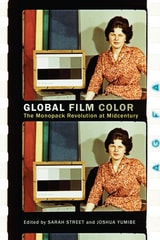
Global Film Color
The Monopack Revolution at MidcenturySarah Street
Rutgers University Press, 2024

Global Indigenous Media
Cultures, Poetics, and PoliticsPamela Wilson and Michelle Stewart, eds.
Duke University Press, 2008
Global Indigenous Media addresses Indigenous self-representation across many media forms, including feature film, documentary, animation, video art, television and radio, the Internet, digital archiving, and journalism. The volume’s sixteen essays reflect the dynamism of Indigenous media-making around the world. One contributor examines animated films for children produced by Indigenous-owned companies in the United States and Canada. Another explains how Indigenous media producers in Burma (Myanmar) work with NGOs and outsiders against the country’s brutal regime. Still another considers how the Ticuna Indians of Brazil are positioning themselves in relation to the international community as they collaborate in creating a CD-ROM about Ticuna knowledge and rituals. In the volume’s closing essay, Faye Ginsburg points out some of the problematic assumptions about globalization, media, and culture underlying the term “digital age” and claims that the age has arrived. Together the essays reveal the crucial role of Indigenous media in contemporary media at every level: local, regional, national, and international.
Contributors: Lisa Brooten, Kathleen Buddle, Cache Collective, Michael Christie, Amalia Córdova,
Galina Diatchkova, Priscila Faulhaber, Louis Forline, Jennifer Gauthier, Faye Ginsburg, Alexandra Halkin, Joanna Hearne, Ruth McElroy, Mario A. Murillo, Sari Pietikäinen, Juan Francisco Salazar,
Laurel Smith, Michelle Stewart, Pamela Wilson
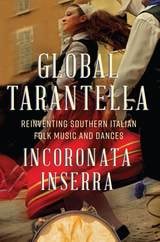
Global Tarantella
Reinventing Southern Italian Folk Music and DancesIncoronata Inserra
University of Illinois Press, 2017
Global Television
Co-Producing CultureBarbara J. Selznick
Temple University Press, 2008
The face of U.S. television broadcasting is changing in ways that are both profound and subtle. Global Television uncovers the particular processes by which the international circulation of culture takes place, while addressing larger cultural issues such as identity formation.
Focusing on how the process of internationally made programming such as Highlander: The Series and The Odyssey—amusingly dubbed “Europudding” and “commercial white bread”—are changing television into a transnational commodity, Barbara Selznick considers how this mode of production—as a means by which transnational television is created—has both economic rewards and cultural benefits as well as drawbacks.
Global Television explores the ways these international co-productions create a “global” culture as well as help form a national identity. From British “brand” programming (e.g, Cracker) that airs on A&E in the U.S. to children’s television programs such as Plaza Sesamo, and documentaries, Selznick indicates that while the style, narrative, themes and ideologies may be interesting, corporate capitalism ultimately affects and impacts these programs in significant ways.
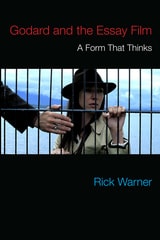
Godard and the Essay Film
A Form That ThinksRick Warner
Northwestern University Press, 2018
The essay film has often been understood by scholars as an eccentric development within documentary, but Warner shows how an essayistic process of thinking can materialize just as potently within narrative fiction films, through self-critical investigations into the aesthetic, political, and philosophical resources of the medium. Studying examples by Godard and other directors, such as Orson Welles, Chris Marker, Agnès Varda, and Harun Farocki, Warner elaborates a fresh account of essayistic reflection that turns on the imaginative, constructive role of the viewer.
Through fine-grained analyses, this book contributes the most nuanced description yet of the relational interface between viewer and screen in the context of the essay film. Shedding new light on Godard’s work, from the 1960s to the 2010s, in film, television, video, and digital stereoscopy, Warner distills an understanding of essayistic cinema as a shared exercise of critical rumination and perceptual discovery.
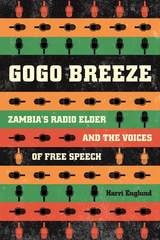
Gogo Breeze
Zambia’s Radio Elder and the Voices of Free SpeechHarri Englund
University of Chicago Press, 2018
Harri Englund provides a masterfully detailed study of this popular radio personality that addresses broad questions of free speech in Zambia and beyond. By drawing on ethnographic insights into political communication, Englund presents multivocal morality as an alternative to dominant Euro-American perspectives, displacing the simplistic notion of voice as individual personal property—an idea common in both policy and activist rhetoric. Instead, Englund focuses on the creativity and polyphony of Zambian radio while raising important questions about hierarchy, elderhood, and ethics in the public sphere.
A lively, engaging portrait of an extraordinary personality, Gogo Breeze will interest Africanists, scholars of radio and mass media, and anyone interested in the history and future of free speech.
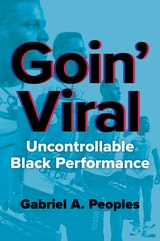
Goin' Viral
Uncontrollable Black PerformanceGabriel A. Peoples
University of Illinois Press, 2025
Peoples’s analysis ranges from abolitionist and proslavery visual culture to Do the Right Thing to “Bed Intruder Song” and the cellphone video of Derrion Albert’s murder. After identifying these moments, he considers how performances go viral in Black ways. He also thinks through the ways Black virality circulates ideas that materially affect Black life. As he shows, an interacting person’s vulnerability to racialized gender and racialized sexuality knowledge inspires how they spread a performance. Non-iconic elements of viral moments reveal hard-to-find nuances of Black life while the artists and others represented in viral moments promote both collective and individual liberation by harnessing their visibility and audibility.
Rigorous and expansive, Goin’ Viral uses Black virality as a new way to understand and frame Black performances.

Going Viral
Zombies, Viruses, and the End of the WorldSchweitzer, Dahlia
Rutgers University Press, 2018
In Going Viral, Dahlia Schweitzer probes outbreak narratives in film, television, and a variety of other media, putting them in conversation with rhetoric from government authorities and news organizations that have capitalized on public fears about our changing world. She identifies three distinct types of outbreak narrative, each corresponding to a specific contemporary anxiety: globalization, terrorism, and the end of civilization. Schweitzer considers how these fears, stoked by both fictional outbreak narratives and official sources, have influenced the ways Americans relate to their neighbors, perceive foreigners, and regard social institutions.
Looking at everything from I Am Legend to The X Files to World War Z, this book examines how outbreak narratives both excite and horrify us, conjuring our nightmares while letting us indulge in fantasies about fighting infected Others. Going Viral thus raises provocative questions about the cost of public paranoia and the power brokers who profit from it.
Supplemental Study Materials for "Going Viral": https://www.rutgersuniversitypress.org/going-viral-dahlia-schweitzer
Dahlia Schweitzer- Going Viral: https://www.youtube.com/watch?v=5xF0V7WL9ow
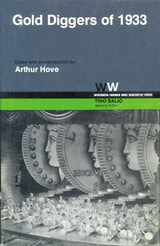
Gold Diggers of 1933
Edited, with an introduction by Arthur Hove; Tino T. Balio, Series Editor
University of Wisconsin Press, 1980
Gold Diggers of 1933, a lavish and glittering showcase for Busby Berkeley's musical production talent, was designed and produced as a Depression tonic. As Berkeley said, "In an era of breadlines, Depression, and wars, I tried to help people get away from all the misery . . . to turn their minds away to something else. I wanted to make people happy, if only for an hour.
This book contains the full shooting script of Erwin Gelsey and James Seymour, based on the Avery Hopwood play of 1919, as well as the lyrics to the five songs of the film. Arthur Hove's introduction outlines the story concept from its initial Broadway form, through the 1923 silent movie, the 1929 talkie, and including several post-1933 versions. The concept of the good-hearted chorus girl with a penchant for separating wealthy men from some of their money has long been popular with both theatre and movie audiences.
Hove tells much about the relationship between the story line and musical segments of the movie, about how far a writer can go before passing the baton to the director, and about how a film is actually put together.
The film is remembered for Berkeley's musical and visual extravaganza. In the opening number, "We're in the Money," his sumptuous corps de ballet, numbering fifty-four, appeared in costumes made of fifty-four thousand "silver" coins. Five silver dollars, twenty-eight feet in diameter formed the background for the chorus.
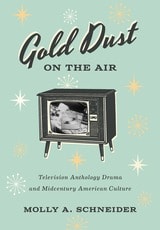
Gold Dust on the Air
Television Anthology Drama and Midcentury American CultureMolly A. Schneider
University of Texas Press, 2024
2025 Broadcast Historian Award, Library of American Broadcasting Foundation
How mid-century television anthologies reflected and shaped US values and identities.
From the late 1940s to the early 1960s, anthology dramas presented “quality” television programming in weekly stand-alone television plays meant to entertain and provide cultural uplift to American society. Programs such as Playhouse 90, Studio One, and The Twilight Zone became important emblems of American creative potential on television. But their propensity for addressing matters of major social concern also meant that they often courted controversy. Although the anthology’s tenure would be brief, its importance in the television landscape would be great, and the ways the format negotiated ideas about “Americanness” at midcentury would be a crucial facet of its significance.
In Gold Dust on the Air, Molly Schneider traces a cultural history of the “Golden Age” anthology, addressing topics such as the format’s association with Method acting and debates about “authentic” American experience, its engagement with ideas about “conformity” in the context of Cold War pressures, and its depictions of war in a medium sponsored by defense contractors. Drawing on archival research, deep textual examination, and scholarship on both television history and broader American culture, Schneider posits the anthology series as a site of struggle over national meaning.