Results by title
3785 books match the query 'Poetry' and 82 start with g

GREAT BIRD OF LOVE
POEMSPaul Zimmer
University of Illinois Press, 1989
"The Great Bird of Love brims with a life so intense that it
must be told quietly. The pages are quirky, full of surprise, variety,
humor, and the sustaining reliable voice of a worthy guide to experience.
These poems come from perception informed by sympathy, and the language
is alive with verbal adventure."
-- William Stafford
A book in the National Poetry Series
Gagaan X'usyee/Below the Foot of the Sun
PoemsX'unei Lance Twitchell
University of Alaska Press, 2023
The collection is divided into four sections based on how the Lingít talk about g̱agaan—the sun. Featuring some poems in English, some in Lingít, and some that combine the beauty of the two, Gagaan Xʼusyee / Beneath the Foot of the Sun displays an equal dignity in both languages that transcends monolingual constrictions.
Gagaan X'usyee/Below the Foot of the Sun
PoemsX'unei Lance Twitchell
University of Alaska Press, 2023
The collection is divided into four sections based on how the Lingít talk about g̱agaan—the sun. Featuring some poems in English, some in Lingít, and some that combine the beauty of the two, Gagaan Xʼusyee / Beneath the Foot of the Sun displays an equal dignity in both languages that transcends monolingual constrictions.
Game Poems
Videogame Design as Lyric PracticeJordan Magnuson
Amherst College Press, 2023
Scholars, critics, and creators describe certain videogames as being “poetic,” yet what that means or why it matters is rarely discussed. In Game Poems: Videogame Design as Lyric Practice, independent game designer Jordan Magnuson explores the convergences between game making and lyric poetry and makes the surprising proposition that videogames can operate as a kind of poetry apart from any reliance on linguistic signs or symbols.
This rigorous and accessible short book first examines characteristics of lyric poetry and explores how certain videogames can be appreciated more fully when read in light of the lyric tradition—that is, when read as “game poems.” Magnuson then lays groundwork for those wishing to make game poems in practice, providing practical tips and pointers along with tools and resources. Rather than propose a monolithic framework or draw a sharp line between videogame poems and poets and their nonpoetic counterparts, Game Poems brings to light new insights for videogames and for poetry by promoting creative dialogue between disparate fields. The result is a lively account of poetic game-making praxis.
“Everyone who loves the true power of games will benefit from the treasure trove of insights in Game Poems.” — Jesse Schell, author of The Art of Game Design
“Magnuson shines a sensitive and incisive light on small, often moving, videogames.” — D. Fox Harrell, Ph.D., Professor of Digital Media, Computing, and Artificial Intelligence, MIT
“[Game Poems] tells a new story about games— that games can be lyrical, beautiful, emotionally challenging—to inspire creators and critics alike.” —Noah Wardrip-Fruin, author of How Pac-Man Eats
“Even as the news swells with impending doom for creativity, writing, and text itself, this literate and crafty book pursues poetry not through implacable algorithms but in concrete and personal play. It should be an indispensable guide for anyone who aims to maintain the true, human promise of technical poetics.”—Stuart Moulthrop, coauthor of Twining: Critical and Creative Approaches to Hypertext Narratives
“For far too long videogames have flourished – and commanded both capital and attention – in a kind of counterculture that they seem to have created as if ex nihilo for themselves and their players. But we are these players, and their culture has always been integrated with all of our own. In this evenhanded artist-scholar’s ars poetica Jordan Magnuson respects the material cultural specificity of videogames while regarding them through the ‘lens of poetry’ in order to discover – and help create – a practice and an art of Game Poems within the wider field. Magnuson formally, int(erv)entionally embraces this art as lyrically poetic.”—John Cayley, Brown University
“In Game Poems, Magnuson listens carefully to videogames, and hears them speak to questions of art, language, and meaning that connect our written past to our software future. Read this book and you will hear it too.”—Frank Lantz, Director, NYU Game Center
“Jordan Magnuson has created a work that ties together the worlds of poetry and videogames in a deep and enlightening way. For those of us who care about the potential of poetic games, Jordan greatly improves the language of how we talk about them and expands our ability to see what this unique form can become. This is one of my favorite books on game design and I apologize in advance to those whom I will end up cornering and not being able to stop talking to about it.”—Benjamin Ellinger, Game Design Program Director, DigiPen Institute of Technology
“A groundbreaking and accessible book that helps us think about games as poems. With patient tenacity, Magnuson teases out what he felt for years as he engaged in his own practice of making videogames. His mission to help us apply a ‘lyric reading’ to games so that our engagement with, and appreciation of, games can be enhanced feels deeply personal. Drawing from a wide range of games and computational media scholars, poetry scholars, game creators, and poets, Magnuson provides a rigorous, balanced, and unique interdisciplinary contribution. A must-read for videogame scholars, practicing game makers, and anyone interested in the potential of ‘game poems.’”—Susana Ruiz, University of California, Santa Cruz
“This book tenaciously wrenches videogame hermeneutics from the insatiable maws of rhetoric and narratology—to the cheers of poets everywhere. In elucidating the lyric characteristics of the "game poem," Magnuson demonstrates not just that poetry is a useful lens for understanding videogames, but also that videogames can be a useful lens for understanding poetry. A rewarding text for scholars, game designers, poets, and anyone in between.”—Allison Parrish, Interactive Telecommunications Program and Interactive Media Arts, NYU
“A concise, passionate articulation - and defense! - of an artistic space between poems and videogames. If game scholars wish to prove that they are not engaged merely in an apologetics for violent pornography, they need only to teach this book.”—Chris Bateman, author of Imaginary Games and 21st Century Game Design
“I feel I've found a kindred spirit in Jordan Magnuson and his practical recommendations for creating distilled, compelling, personal videogames – throw out the conventions of game design one at a time? Yes, please! The revelation for me in this book, however, is the heat and power of the language of poets and poetry brought close to videogame design. There's much in here worth pursuing to kindle the fires of new and exciting videogame poems, and Jordan is a capable and delightfully humble guide.”—Pippin Barr, author of How to Play a Video Game and The Stuff Games Are Made Of
“With Game Poems, Jordan Magnuson lays to rest any last vestige of the notion that the implicit limits of games are as ‘entertainment products’. By taking games seriously as successors of the lyric poetry tradition, he opens up new avenues for how game designers can think about what they do, how critical game theorists can approach their many-faceted object of study, and how players can more fully engage with videogames.”—Soraya Murray, author of On Video Games
“Game Poems shines an important light on a neglected area of videogame theory and provides unique guidance for those interested in exploring the poetic potential of videogames.”—Jenova Chen, designer of Flow, Flower, Journey, and Sky: Children of the Light
“Popular frameworks for video game scholarship consistently fail to account for the most avant-garde and affective works of interactive art. With Game Poems, Jordan Magnuson provides not only a lens to understand these diverse and important titles but also a guide to constructing the next generation of personal and incisive games. With numerous examples from decades of experimental games, including Magnuson's own minimalist and insightful work, this book is an excellent introduction to the form for neophytes as well as finally providing words to describe a movement that many experienced game poets previously understood only intuitively.”—Gregory Avery-Weir, creator of The Majesty of Colors and Looming
“Jordan Magnuson is one of a surprisingly small group of artists who see in the technology of videogames a versatile medium capable of expressing much more than conventional games.”—Michaël Samyn, co-founder, Tale of Tales; co-creator of Sunset, The Graveyard, and The Path
“So much has been written about what games are, and yet there’s always a new way of thinking about them. In Jordan Magnuson’s Game Poems we discover that games are also a lyrical form of art; that games can be understood as poetry, and that the making games as poetry creates new modes of artistic expression. Jordan Magnuson’s book is a fascinating exploration of games as poetry, and the poetry of play.”—Miguel Sicart, author of Play Matters, Beyond Choices: The Design of Ethical Gameplay, and Playing Software
“In Game Poems, I found a new perspective on the kind of videogames that are dearest to me: short, personal, poetic games. By looking at games through the lens of lyric poetry, Jordan Magnuson puts into focus the workings of that mysterious hodgepodge of audio, visuals, and interactivity: the language of videogames. Both experienced and novice game makers will find approachable, practical advice on the craft of videogames. And anyone who plays short games will find new ways of appreciating and talking about them. I know I will be returning to it for inspiration when making my own small games!”—Adam Le Doux, creator of Bitsy
“As a creator and researcher, Jordan Magnuson has been able to demonstrate through the utmost visual simplicity, by enhancing basic geometric forms, the empathetic capacity of the videogame medium. Game Poems explores this idea and the reconfiguration of the videogame beyond its ludic component, highlighting the artistic and poetic potential of games.”—Antonio César Moreno Cantano, University Complutense of Madrid
“Poems ask us to slow down, pay attention, and take the time to appreciate our experiences. Emerging from Magnuson's need to find ways to talk about his own creative practice, this book is all about discovering ways to do this with videogames. Magnuson explores what it means to view videogames as poetry, and provides insight, as a practitioner, on how to make game poems that enable and encourage this type of reflection. Drawing on a wide range of sources, from literature and philosophy to game studies and game design, this book covers a lot of material, but always remains grounded in concrete examples and solid theory. The book ends with a call to “go make some game poems!” After reading the book, I was keen to do exactly that. I urge you to do the same!”—Alex Mitchell, National University of Singapore
“To many, poetry is a dying – or dead – art form. Few people sit down at night to open their favorite poet’s chapbook with the latest streaming service at hand or their favorite videogame console sitting nearby. Spectacle seems to be the cultural norm, and this can be no more evident than in videogames: when the latest and greatest offers 60+ hours of spine-tingling excitement, why would someone want to launch a smaller-form game about expressions such as love, death, loneliness, or even God? But, as Jordan Magnuson, in his new book Games Poems, shows, poems have always been an integral piece of forming human culture. Poems have the ability to get right to the heart of the matter and, in fact, pierce the heart of the reader. Poems can be a form of cultural resistance, and even launch revolutions. Magnuson’s book highlights what it means to use the medium of game design as poetry. Magnuson presents several examples of the intricacies of poetry in general, as well as work that fuses the ideals of poetry with game design. Magnuson succinctly examines how the imagination, rhythm, intensity, style – and brevity – of poetry can enlighten the game design process in order to form possibility spaces within videogames that are pointed and powerful.”—Tim Samoff, Games and Interactive Media Program Director, Azusa Pacific University
Ganbatte
Sarah Kortemeier
University of Wisconsin Press, 2019

Garden Theology
Seán Mac Falls
Tupelo Press, 2022
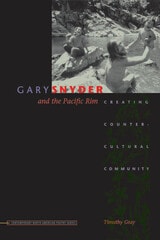
Gary Snyder and the Pacific Rim
Creating Countercultural CommunityTimothy Gray
University of Iowa Press, 2006
Gray’s introduction tracks the increased use of “Pacific Rim discourse” by politicians and business leaders following World War II. Ensuing chapters analyze Snyder’s countercultural invocation of this regional idea, concentrating on the poet’s migratory or “creaturely” sensibility, his gift for literary translation, his physical embodiment of trans-Pacific ideals, his role as tribal spokesperson for Haight-Ashbury hippies, and his burgeoning interest in environmental issues. Throughout, Gray’s citations of such writers as Allen Ginsberg, Philip Whalen, and Joanne Kyger shed light on Snyder’s communal role, providing an amazingly intimate portrait of the west coast counterculture. An interdisciplinary project that utilizes models of ecology, sociology, and comparative religion to supplement traditional methods of literary biography, Gary Snyder and the Pacific Rim offers a unique perspective on Snyder’s life and work.
This book will fascinate literary and Asian studies scholars as well as the general reader interested in the Beat movement and multicultural influences on poetry.
Gathering Ground
A Reader Celebrating Cave Canem's First DecadeToi Derricotte and Cornelius Eady, Editors
University of Michigan Press, 2006
To mark the first decade of this pathbreaking project, Gathering Ground presents more than one hundred poems by Cave Canem participants and faculty. It embraces an impressive and eclectic gathering of forms, including sonnets, a bop (a new form created by a Cave Canem faculty member), blues, sestinas, prose poems, centos, free verse, and more. The roster of distinguished contributors includes Lucille Clifton, Yusef Komunyakaa, Marilyn Nelson, Sonya Sanchez, Al Young, and many others.
For newcomers and aficionados alike, Gathering Ground assembles in one place the most innovative voices in contemporary African American poetry and boldly attests to the important position it holds in verse-making today.
Toi Derricotte is author of the memoir The Black Notebooks and of four books of poetry: Tender, Captivity, Natural Birth, and The Empress of the Death House. She is Professor of English at the University of Pittsburgh. Cornelius Eady is the author of Brutal Imagination, Autobiography of a Jukebox, You Don't Miss Your Water, The Gathering of My Name, and Victims of the Latest Dance Craze. He is Associate Professor of English at the University of Notre Dame.
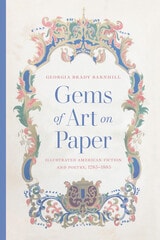
Gems of Art on Paper
Illustrated American Fiction and Poetry, 1785–1885Georgia Brady Barnhill
University of Massachusetts Press, 2021
In the immediate aftermath of the Revolutionary War, only the wealthiest Americans could afford to enjoy illustrated books and prints. But, by the end of the next century, it was commonplace for publishers to load their books with reproductions of fine art and beautiful new commissions from amateur and professional artists.
Georgia Brady Barnhill, an expert on the visual culture of this period, explains the costs and risks that publishers faced as they brought about the transition from a sparse visual culture to a rich one. Establishing new practices and investing in new technologies to enhance works of fiction and poetry, bookmakers worked closely with skilled draftsmen, engravers, and printers to reach an increasingly literate and discriminating American middle class. Barnhill argues that while scholars have largely overlooked the efforts of early American illustrators, the works of art that they produced impacted readers' understandings of the texts they encountered, and greatly enriched the nation's cultural life.
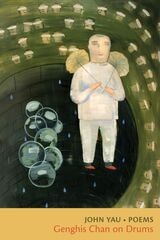
Genghis Chan on Drums
John Yau
Omnidawn, 2021
At once comic and cantankerous, tender and discomfiting, piercing and irreverent, Genghis Chan on Drums is a shape-shifting book of percussive poems dealing with aging, identity, PC culture, and stereotypes about being Chinese. Employing various forms, John Yau’s poems traverse a range of subjects, including the 1930s Hollywood actress Carole Lombard, the Latin poet Catullus, the fantastical Renaissance painter Piero di Cosimo’s imaginary sister, and a nameless gumshoe. Yau moves effortlessly from using the rhyme scheme of a sixteenth-century Edmund Spenser sonnet to riffing on a well-known poem-rant by the English poet Sean Bonney, and to immersing himself in the words of condolence sent by a former president to the survivors of a school massacre. Yau’s poems are conduits through which many different, conflicting, and unsavory voices strive to be heard.
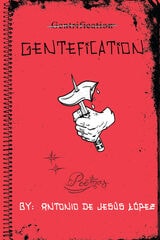
Gentefication
Antonio de Jesús López
Four Way Books, 2021
“Gentefication” nuances Latinidad as not just an immigration question, but an academic one. It deals with Latinx death not as the literal passing
of bodies, but as first tied with language. It asks, what are the hauntings of a tongue that is repeatedly told, ‘one must learn English in order to succeed in this country’? What is the psychological trauma deployed not by right-wing bigots, but of white liberal institutions that give scholarships to Latinx students, but nevertheless prop up white supremacy by viewing their payments as charity? How do Latinx students become complicit in this tokenizing? “Gentefication” wrestles with this ‘survivor’s guilt’ of higher education, of feeling as if you’re the only one among your homies that ‘made it.’ And in an American moment dealing with scandals across multiple universities this work is a timely intervention that advocates for first-generation audiences, for readers of color, and for all those vested in the protracted struggle for our fair shot.
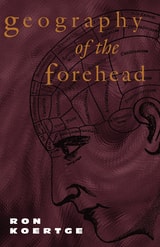
Geography of the Forehead
Ron Koertge
University of Arkansas Press, 2000
From short, acerbic lyrics to hilarious prose poems about nutty German professors and Dracula’s teenage girlfriend, readers laugh out loud at simple turns of phrase before they are jerked sober by startling insights into the way we live—and Koertge knows how we live.
Nothing in American culture is safe from the scythe of his irony—not Joan Crawford, not Superman, nor Frank Sinatra. He lampoons our literary heroes and historical giants with the gentlest touch, and we find ourselves grinning before we realize that Koertge is redefining what we thought we knew. His poems are alternately funny or poignantly sad because they are always true, and that truth lingers long after the reading is over.
In Geography of the Forehead, Ron Koertge offers us nearly sixty poems, each a brilliant testament to the human condition. “Though he has been writing his influential and highly original poems for many years,” Charles Harper Webb declares, “he is still something of a secret: a poet of dazzling wit, and surprising sweetness. With this collection, however, the secret is out.”
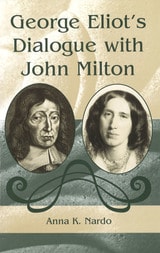
George Eliot's Dialogue with John Milton
Anna K. Nardo
University of Missouri Press, 2003
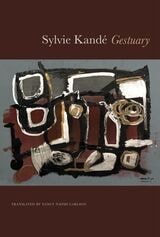
Gestuary
Sylvie Kandé
Seagull Books, 2026
Sylvie Kandé’s Gestuary offers a collection of gestures—of death and life, of tenderness and brutality—that fractures the flow of time. Senegalese riflemen from World War I are juxtaposed with migrants at borders who sew their lips shut in protest over immigration policies. In dream-like sequences, the dead refuse to stay underground and “push against the fence / that swings between our realm and theirs.” Inspired by unexpected sources, including jazz, sculpture, the legacy of the slave trade, proverbs, and elements of Diola culture, Kandé’s poems are rich in musicality and sophisticated syntax, rendered into a lyrical and luminous English by Nancy Naomi Carlson.
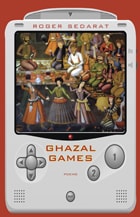
Ghazal Games
PoemsRoger Sedarat
Ohio University Press, 2011
As an Iranian American poet, Roger Sedarat fuses Western and Eastern traditions to reinvent the classicalPersian form of the ghazal. For its humor as well as its spirituality, the poems in this collection can perhapsbest be described as “Wallace Stevens meets Rumi.” Perhaps most striking is the poet’s use of the ancient ghazal form in the tradition of the classical masters like Hafez and Rumi to politically challenge the Islamic Republic of Iran’s continual crackdown on protesters. Not since the late Agha Shahid Ali has a poet translated the letter as well as the spirit of this form into English, using musicality and inventive rhyme to extend the reach of the ghazal in a new language and tradition.
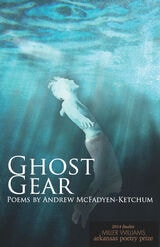
Ghost Gear
PoemsAndrew McFadyen-Ketchum
University of Arkansas Press, 2014
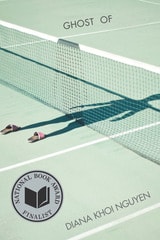
Ghost Of
Diana Khoi Nguyen
Omnidawn, 2018
Ghost Of was selected by Terrance Hayes to win Omnidawn’s Open Poetry Book Contest. It was also a finalist for the National Book Award and L.A. Times Book Prize.
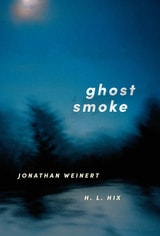
Ghost Smoke
Jonathan Weinert and H. L. Hix
Bridwell Press, 2026
“Every atom belonging to me as good belongs to you,” wrote Walt Whitman. Poets H. L. Hix and Jonathan Weinert adopted Whitman’s declaration as a guiding principle for Ghost Smoke. In this “Song of Themself,” Hix and Weinert merge their voices to create a spirited book-length hybrid poem that meditates on distance, listening, finitude, and different kinds of love. Fabricated of material collected from over two decades of correspondence and collaboration, Ghost Smoke borrows the structure of a crown of sonnets, completing a circuit that seeks to defeat the standard distinctions between question and answer, presence and absence, self and other. Is it possible to find a language that can allow us to become more porous to one another, to listen more deeply to one another and to respond in kind? Can we become each other’s ghosts, open to and inhabited by one another? What happens to us, and what happens between us, if we do?
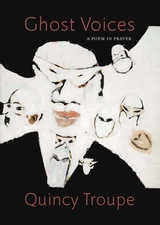
Ghost Voices
A Poem in PrayerQuincy Troupe
Northwestern University Press, 2019
we are crossing, / we are / crossing, / we are crossing in big salt water, // we are crossing, // crossing under a sky of no guilt / we have left home // though we know we will go back / someday, / see our people / as we knew them . . .
Troupe re-creates the history of lost voices between the waters of Africa, Cuba, and the United States. His daring poetics drenched in new forms-notably the seven-elevens-clench transformative narratives spurred on by a relentless, rhythmic language that mimics the foaming waves of the Atlantic Ocean and the Caribbean Sea. His personae speak quantum litanies within one epic, sermonic-gospel to articulate our most ancient ways of storytelling and survival.
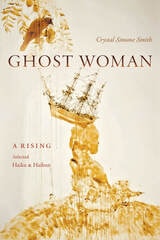
Ghost Woman
A RisingCrystal Simone Smith
Duke University Press, 2026
Ghostly Figures
Memory and Belatedness in Postwar American PoetryAnn Keniston
University of Iowa Press, 2015
Ghostly Figures contends that this poetics of belatedness, along with the way it is bound to questions of poetic making, is a central, if critically neglected, force in postwar American poetry. Discussing works by Sylvia Plath, Adrienne Rich, Jorie Graham, Susan Howe, and a group of poets responding to the AIDS epidemic, Ann Keniston draws on and critically assesses trauma theory and psychoanalysis, as well as earlier discussions of witness, elegy, lyric trope and figure, postmodernism, allusion, and performance, to define the ghosts that clearly dramatize poetics of belatedness throughout the diverse poetry of post–World War II America.
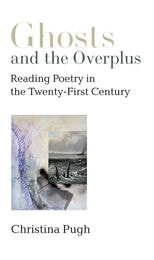
Ghosts and the Overplus
Reading Poetry in the Twenty-First CenturyChristina Pugh
University of Michigan Press, 2024
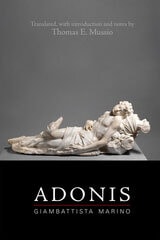
Giambattista Marino
AdonisThomas E. Mussio
Arizona Center for Medieval and Renaissance Studies, 2019
Translated, with introduction and notes by Thomas E. Mussio.
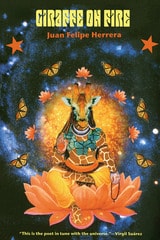
Giraffe on Fire
Juan Felipe Herrera
University of Arizona Press, 2001
A poetic collage of voices, genres, and time-spaces. A display of power over language and rhythm. A postmodern performance of naked figures hanging in the nebulae of a militarized universe. A new millennium cubist manifesto against decrepit political machines. A mystic song in search of birth and love. In this new collection of poems, Juan Felipe Herrera's natural talent for capturing the raw dimensions of reality merges with his wild imagination and technical prowess.
Things, names, places, histories, herstories, desires, wills, minds, and their effects and progeny are re-mixed, re-mastered, and re-cast into a new narrative theater. Characters in a constant and stubborn rush, appearance, disappearance, and flow—with, against, and for each other—create the fire and give birth to the hallucinatory spotted and leaf-eating, long-necked child. Exciting and original, cutting-edge and risk-taking, Giraffe on Fire is a breathtaking addition to a respected body of work by a poet not afraid to speak out about how poetry reflects the raw beauty and truth of life.
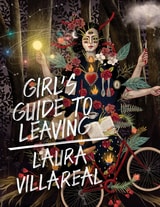
Girl's Guide to Leaving
Laura Villareal
University of Wisconsin Press, 2022
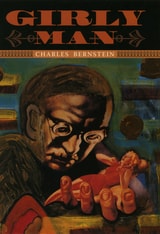
Girly Man
Charles Bernstein
University of Chicago Press, 2006
After 9/11, postmodernism and irony were declared dead. Charles Bernstein here proves them alive and well in poems elegiac, defiant, and resilient to the point of approaching song. Heir to the democratic and poetic sensibilities of Walt Whitman and Allen Ginsberg, Bernstein has always crafted verse that responds to its historical moment, but no previous collection of his poems so specifically addresses the events of its time as Girly Man, whichfeatures works written on the evening of September 11, 2001, and in response to the war in Iraq. Here, Bernstein speaks out, combining self-deprecating humor with incisive philosophical and political thinking.
Composed of works of very different forms and moods—etchings from moments of acute crisis, comic excursions, formal excavations, confrontations with the cultural illogics of contemporary political consciousness—the poems work as an ensemble, each part contributing something necessary to an unrealizable and unrepresentable whole. Indeed, representation—and related claims to truth and moral certainty—is an active concern throughout the book. The poems of Girly Man may be oblique, satiric, or elusive, but their sense is emphatic. Indeed, Bernstein’s poetry performsits ideas so that they can be experienced as well as understood.
A passionate defense of contingency, resistance, and multiplicity, Girly Man is a provocative and aesthetically challenging collection of radical verse from one of America’s most controversial poets.
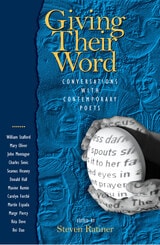
Giving Their Word
Conversations with Contemporary PoetsSteven Ratiner
University of Massachusetts Press, 2002
Based on a three-year series of interviews conducted by Steven Ratiner for the Christian Science Monitor, this book offers extended conversations with twelve of the most influential poets writing today. Their comments are wonderfully detailed, refreshingly honest, and provide the sort of intimate introduction to both poet and text that readers are rarely privileged to enjoy. Included are conversations with William Stafford, Mary Oliver, John Montague, Charles Simic, Seamus Heaney, Donald Hall, Maxine Kumin, Carolyn Forché, Martín Espada, Marge Piercy, Rita Dove, and Bei Dao. In the book's closing interview, Steven Ratiner makes a return visit to Donald Hall's New Hampshire farm shortly before the publication of Hall's collection Without, which focused on the death of his wife, poet Jane Kenyon.
Giving their word is what poets do; it is their stock-in-trade, their daily bread. In the hands of the most accomplished, a poet's words are transformed into a kind of window: looking inward toward the territory of memory, dream, personal mythology and opening out onto the landscape of the shared world where life and work are rooted. For each poet there is an intricate relationship between these two realms and poetry's third domain, the language that bridges both experiences and becomes the body of the poem. Giving Their Word shows us that the poet's fidelity to that relationship sustains his or her development over time, urges the writing toward new levels of discovery, and bestows on readers that most prized of commodities: a feeling of the authentic.
For poets, students of poetry, and that far-flung community of readers for whom the contemporary poem still provides a journey worth taking, this book will present a host of pleasures. Giving Their Word enlarges the frame through which we view the poet's text and yields significant insights into the craft and character of each of these writers.
Glaciology
Jeffrey Skinner
Southern Illinois University Press, 2013
At the center of the book, the eighteen-part title poem “Glaciology” takes readers to the core of misunderstandings as it juxtaposes the work of a glaciologist with fractured language, misread cues, and a literalness that defies conventional explanation. The lives of the glaciers are reported with a careful, scientific language that keeps readers emotionally at bay from the effects of their demise, and the speaker comments, “I consider language / mistreated these days, asked to explain itself / to justify at the same time it bears / meaning, to own up / to creation at the moment of use / only, and only that meaning.”
Glass Bikini
Kristin Bock
Tupelo Press, 2021
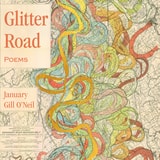
Glitter Road
January Gill O’Neil
CavanKerry Press, 2024
“My poems brought me to Oxford, Mississippi a.k.a. the velvet ditch: / a place you can fall into, get comfortable among confederate rebels,” writes January Gill O’Neil in her stunning new collection, Glitter Road. The poems in this book look back at the end of a marriage, a heartbreaking loss, and a new relationship against the backdrop of a Mississippi season. O’Neil reflects on the history and legacy of Emmett Till, how his story is intertwined with her own, and wades through the incredible grief she feels for herself, her children, and the Black children who won’t come home tonight. These poems reclaim the vulnerable, intimate parts of a life in transition and celebrate womanhood through awakenings, landscapes, meanders, and possibilities. She declares, with both self-love and conviction, “I am done telling the kinder story. I am a myth of my own making.”
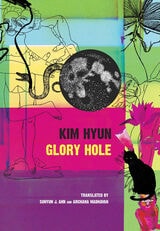
Glory Hole
Kim Hyun
Seagull Books, 2022
Kim Hyun’s Glory Hole is the first Korean queer poetry collection. Featuring gay teens, elders, cats, caterpillars, robots, and other unexpected characters, Kim’s fifty-one eccentric poems trace themes of love, sexual desire, abandonment, destitution, and death. In recounting the splendid yet tragic journeys of his speakers, Kim defies meaningful sense-making. His poems are a mishmash of dystopian sci-fi and pornography, storytelling and poetry, fictive references, and real figures. They are not embellished with elegant imagery; in fact, they are antithetical to it, opting instead for incoherent tense, unidiomatic expressions, and never-ending puns. After all, like LGBTQ+ people in many cultures, Korean queers live in this site of violence. Bewilderment, deliberately, is Kim Hyun’s form. Glory Hole invites readers into a very queer world.
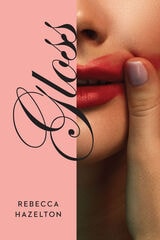
Gloss
Rebecca Hazelton
University of Wisconsin Press, 2019
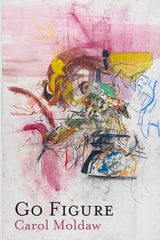
Go Figure
Carol Moldaw
Four Way Books, 2024
In Go Figure, Carol Moldaw demonstrates an incandescent mastery of figuration in its many forms. As the title suggests, these poems invite readers to draw their own conclusions. Observing, inquiring, and delving, Moldaw brings the intertwined strands of life and art to light at their most intimate. A wife-muse who interrogates the role, a mother hard-pressed by motherhood, a daughter whose own mother’s decline causes her to probe their connection, and an artist with an exacting eye and ear who contemplates the creative mysteries, Moldaw is driven to understand and articulate the self in all its manifestations. Like a skater cutting first lines in ice, Moldaw displays lyric immediacy and lyric expanse in her poems with an unswerving command. Complex and inviting, with deft wit, the poems engage public and private life and voice a necessary and resounding affirmation of the feminine and of language emerging through silence.
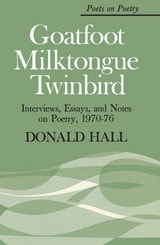
Goatfoot Milktongue Twinbird
Interviews, Essays, and Notes on Poetry, 1970-76Donald Hall
University of Michigan Press, 1978
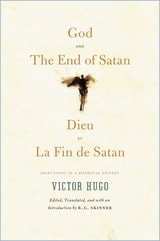
God and The End of Satan / Dieu and La Fin de Satan
Selections: In a Bilingual EditionVictor Hugo
Swan Isle Press, 2014
This book brings together abbreviated editions of these two book-length poems—unfinished and unpublished at the time of the author’s death—comprised of selections that capture their visionary and mystical essence. The poems are accompanied by an introduction framing them within the author’s experience as an exile and tracing their publication history.
Victor Hugo is one of the most important figures in the history of French literature, and this beautifully rendered translation brings two of his lesser-known works deservedly to the forefront.
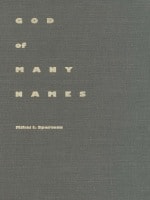
God of Many Names
Play, Poetry and Power in Hellenic Thought, From Homer to AristotleMihai I. Spariosu
Duke University Press, 1991
Building upon the scholarship of an earlier volume, Dionysus Reborn, Spariosu her continues to draw on Dionysus—the “God of many names,” of both poetic play and sacred power—as a mythical embodiment of the two sides of the classical Greek mentality. Combining philosophical reflection with close textual analysis, the author examines the divided nature of the Hellenic mentality in such primary canonic texts as the Iliad, the Odyssey, the Theogony, Works and Days, the most well-known of the Presocratic fragments, Euripides’ Bacchae, Aristophanes’ The Frogs, Plato’s Republic and Laws, and Aristotle’s Poetics and Politics.
Spariosu’s model illuminates the many of the most enduring questions in contemporary humanistic study and addresses modern questions about the nature of the interrelation of poetry, ethics, and politics.
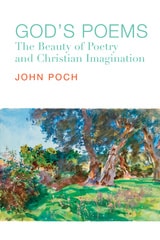
God's Poems
The Beauty of Poetry and the Christian ImaginationJohn Poch
St. Augustine's Press, 2021
But that is not all. Poch as a well-established and regarded poet, turns his eye to contemporary poetry and vindicates its function in a “created and creative world.” Today many have abandoned the genre as a wasteland of misguided voice that really has nothing to say. The poet is a truth-teller, and Poch as devoted writer, teacher, and believer sends out a renewed call to turn to verse as a means of seeing oneself as God’s poeima, or poem (Letter to Ephesians). The depth of self-knowing relates directly to an aptitude to engage the category of poetry at some level. A tragic void is filled with Poch’s effort to exhort the reader to patiently reconnect with poetry even though it has been hijacked by persons who want to be heard more than speak well. (This book is essential, therefore, for aspiring poets.)
For faithful readers or those seeking to return, Poch is a place to begin to understand contemporary writers worth knowing and which poets of the past must remain with us. In Virgilian fashion, he can see the panorama behind him and that which lies immediately ahead and instills a recovered love of an eternal medium that will be restored to a state of coherency and enlightened perspective. If Poch has faith in poetry it is because poetry is indeed a source of faith. If Justin Martyr claimed that everything that is true belongs to Christians, Poch shows us that everyone who speaks truth is to some degree a poet. Even God with his revealed wisdom chooses poetry as medium par excellence. It is essential to know how poetry works. “Great poems that we consider literature give us what we never expected. They go beyond the usefulness of conveying a feeling and unveiling beauty; and they tell us who we are.”
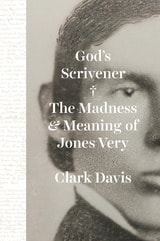
God's Scrivener
The Madness and Meaning of Jones VeryClark Davis
University of Chicago Press, 2023
In September of 1838, a few months after Ralph Waldo Emerson delivered his controversial Divinity School address, a twenty-five-year-old tutor and divinity student at Harvard named Jones Very stood before his beginning Greek class and proclaimed himself “the second coming.” Over the next twenty months, despite a brief confinement in a mental hospital, he would write more than three hundred sonnets, many of them in the voice of a prophet such as John the Baptist or even of Christ himself—all, he was quick to claim, dictated to him by the Holy Spirit.
Befriended by the major figures of the Transcendentalist movement, Very strove to convert, among others, Elizabeth and Sophia Peabody, Bronson Alcott, Nathaniel Hawthorne, and most significantly, Emerson himself. Though shocking to some, his message was simple: by renouncing the individual will, anyone can become a “son of God” and thereby usher in a millennialist heaven on earth. Clark Davis’s masterful biography shows how Very came to embody both the full radicalism of Emersonian ideals and the trap of isolation and emptiness that lay in wait for those who sought complete transcendence.
God’s Scrivener tells the story of Very’s life, work, and influence in depth, recovering the startling story of a forgotten American prophet, a “brave saint” whose life and work are central to the development of poetry and spirituality in America.
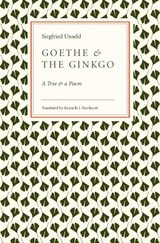
Goethe and the Ginkgo
A Tree and a PoemSiegfried Unseld
University of Chicago Press, 2003
In this beautiful little book, renowned Goethe scholar Siegfried Unseld considers what this episode means to our estimation of a writer many consider nearly godlike in stature. Unseld begins by exploring the botanical and medical lore of the ginkgo, including the use of its nut as an aphrodisiac and anti-aging serum. He then delves into Goethe's writings for the light they shed on his relationship with Marianne. Unseld reveals Goethe as a great yet human being, subject, as any other man, to the vagaries of passion.
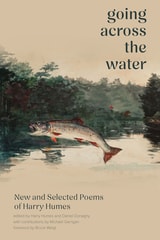
Going Across the Water
New and Selected Poems of Harry HumesHarry Humes
Ohio University Press, 2026
Harry Humes carved out a unique place in American literature by chronicling Appalachian working-class life, natural landscapes, and disappearing rural traditions in Appalachian Pennsylvania with rare lyricism, humility, and precision. He wrote unflinchingly about the austerity and horrors of extraction as well as his deep connection with family and the area mountains and valleys not gutted by the anthracite coal industry.
This volume of Humes’s new and selected poems not only preserves the work of a significant American poet, offering scholars, teachers, and general readers a generous overview of the clarity, beauty, craft, and emotional depth of his substantial body of work. It allows future generations to rediscover poetry that deepens our understanding of how our labor, our landscapes, and our love shape us and change the ways we live and what we care about.
Going to the Moon
Sally Ashton
Duke University Press, 2026
In 2022, poet Sally Ashton learned that one of her poems would be included in a time capsule to be sent to the Moon via Astrobotic’s 2024 Griffin/VIPER as part of the Lunar Codex project. For her, this event seemed like the high point in a life spent chasing the Moon, from a childhood inspired by the space race of the 1960s to an adulthood spent in contemplation and conversation with the sky. In Going to the Moon, Ashton marvels at the Moon’s powerful influence since the dawn of humanity—how we have, in our own ways, gone to the Moon, and what we have found. Contemplating lunar settlement in the light of history, culture, the rise of the space industry, and geopolitical conflict, Ashton shares her sense of wonder at the simple beauty of our unchanged Moon and reveals what is at stake in our contemporary attempts to colonize it.
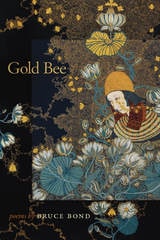
Gold Bee
Bruce Bond
Southern Illinois University Press, 2016
Blending humor and pathos, Bond examines the absurdities of contemporary life: “The modern air so full of phantom wires, / hard to tell the connected from the confused / who yak out loud to their beleaguered angels.” At other times, his intricately crafted lyrics weave together myth and history to explore the various roles music and art play in the human experience, as when Bond’s poems meditate on Orphean themes, descending to the underworld of loneliness, commercialism, or death and emerging with hard (and hard-won) truths.
Addressing broadly ranging topics—from a retelling of the story of Artephius, the fabled father of alchemy, to a meditation on a fashion ad’s wind machine—Bond’s voice is always penetrating in its examination, yet wondering in the face of beauty, conjuring for the reader a world where music has “the power / to move stones, not far, but far enough.”
Gold Country
Vanesha Pravin
The Ohio State University Press, 2026
In Gold Country, Vanesha Pravin crafts indelible vignettes of labor, race, and contemporary existence that together offer a panoramic view of today’s United States. Through each life that she conveys line by startling line, she traces the disparity between aspiration and reality when it comes to the American dream: an undocumented worker waits on a celebrity, a government contractor compromises his integrity to secure the future of his children, a career waiter is haunted by the contrast between his inner life and reality, and an orderly steals credit cards for a fix. Wistful and weary, her protagonists wrestle with thwarted dreams and personal shame, but in stitching together a patchwork from their lives, Pravin asks us all to confront the wider realities of deprivation, greed, and their insidious influence on how we function as a society. Gold Country offers a gorgeously nuanced portrait of working life in a supposedly democratic country, airing hard truths about labor, complicity, and the rifts between us.
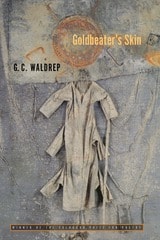
Goldbeater's Skin
G. C. Waldrep
University Press of Colorado, 2003
Published by the Center for Literary Publishing at Colorado State University
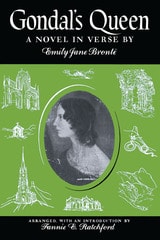
Gondal's Queen
A Novel in VerseBy Emily Jane Brontë
University of Texas Press, 1955
In Gondal’s Queen, Fannie Elizabeth Ratchford presents a cycle of eighty-four poems by Emily Jane Brontë, for the first time arranged in logical sequence, to re-create the “novel in verse” which Emily wrote about their beloved mystical kingdom of Gondal and its ruler, Augusta Geraldine Almeda, who brought tragedy to those who loved her.
Thanks to previous publications by Ratchford, the imaginative world of Gondal is well known not only to Brontë scholars but also to general readers. Only in the present book, however, with Emily’s lovely poems restored to the setting which gave them being, can the full impact of this extraordinary literary creation be realized.
The life story of Gondal’s Queen, from portentous birth to tragic death, is set in a world compounded of dark Gothic romance and Byronic extravagance; yet out of it emerges not only a real country of wild moor sheep and piercingly beautiful nights but also the portrait of a real woman, whose doom was wrought not by the stars but by the clashing complications of her own nature.
In A.G.A. (the appellation most usually applied to the Queen), Emily Brontë created a personality, not a puppet reciting lovely lines. And Ratchford, in reconstructing her story, has re-affirmed the dignity, beauty, and richness of Emily’s poetry.
Gondal’s Queen is the end of a long trail of research and literary detection which has led Ratchford to all known Brontë documentary sources. This quest was originally stimulated by curiosity over a tiny booklet signed, “C. Brontë, June 29th, 1837,” in the Wrenn Library at the University of Texas at Austin. Ratchford’s intense and astonishingly fruitful interest in the Brontës had its origin in her attempt to unravel the fascinating puzzle presented by this little book, which seemed to be merely a series of childish vignettes held together by “a shadow of a common character” and a “tendency toward a unified plot.”
Bit by bit, Ratchford assembled clues from manuscripts and obscure publications until the significance of the play world of the Brontë children began to emerge. In spite of the fact that the Brontës had been the subject of the liveliest literary speculation since their deaths, it remained for Ratchford to establish the importance of their juvenile writings to the later writings of Charlotte. In successive publications she presented the accumulating evidence. For a time her curiosity was centered on Charlotte and the group, but it finally became focused on Emily through a manuscript journal fragment which fortunately came to hand.
Unlike Charlotte, Emily left no prose works from her childhood. But it is apparent from journal entries and birthday notes written by Emily and Anne (whose shared creation Gondal was) not only that the two younger Brontës lived in and sustained daily an imaginary world which had evolved from the earlier play of the four children together, but also that they had written separately voluminous histories and “novels” about it. Of Emily’s vast Gondal literature, only a small body of verse has survived, poems originally intended for no eye but her own and possibly Anne’s. But it is clear that Gondal was not only Emily Brontë’s childhood dream world but also the major preoccupation of her adult creative life.
Gone Gone
Todd Meyers
Duke University Press, 2025
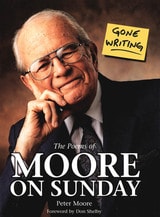
Gone Writing
The Poems of Moore on SundayPeter Moore
University of Minnesota Press, 1999
Humorous poetry from the television program hosted by a beloved Minnesota news anchor.
In the 1950s, Dave Moore, a young actor born and raised in Minneapolis, accepted a newscaster position with the local CBS affiliate, WCCO-TV-a job Walter Cronkite turned down. For the next three decades, until his death in 1998, he delivered the evening news with integrity, conviction, humor, and flair, making him a fixture in Minnesota living rooms.
At the end of his weekly news-in-review program, Moore on Sunday (or, as he liked to call it, “Moron Sunday”), Moore often signed off by reciting a poem. These poems, composed by Moore’s son Peter and collected here for the first time, offer a fresh and funny take on the common and not-so-common stuff of our everyday lives. Reminiscent of Ogden Nash and Tom Lehrer, with a dash of Dr. Seuss, Peter Moore’s verse captures the essence of his father’s wit, common sense, honesty, and warmth.
Good Bones
Maggie Smith
Tupelo Press, 2017
Good Bones is a collection of modern poetry that speaks to the world we live in. Maggie Smith contemplates the past and our future, life and death, childhood and motherhood. She writes out of the experience of motherhood, inspired by watching her own children read the world like a book they’ve just opened, knowing nothing of the characters or plot. Smith takes in the dark world around her with a critical eye, always searching for the hidden goodness: compassion, empathy, honesty. “There is a light,” she tells us, “and the light is good.” Smith skillfully reveals the layers of the world around us through lyric language and vivid imagery: “For every bird there is a stone thrown at a bird. / For every loved child, a child broken, bagged, / sunk in a lake.” These poems stare down darkness while cultivating and sustaining possibility and addressing a larger world. We come away from this collection hopeful about making the world a better place, a place to share with future generations. As Smith tells us in Good Bones, “This place could be beautiful, right? You could make this place beautiful.”
Good Morning and Good Night
David Wagoner
University of Illinois Press, 2005
Good Morning and Good Night features poems previously published in American Poetry Review, The American Scholar, Atlantic Monthly, Hudson Review, The Kenyon Review, New Letters, The New Republic, Poetry, Shenandoah, Southern Review, The Yale Review, and other leading literary journals.
Good night the pleasure was ours
David Grubbs
Duke University Press, 2022