Results by title
1861 books match the query 'Social life and customs' and 44 start with g
Gaining Daylight
Life on Two IslandsSara Loewen
University of Alaska Press, 2013
Loewen’s writing is richly descriptive; readers can almost feel heat from wood stoves, smell smoking salmon, and spot the ways the ocean blues change with the season. With honesty and humor, Loewen easily draws readers into her world, sharing the rewards of subsistence living and the peace brought by miles of crisp solitude.

Gambling Life
DEALING IN CONTINGENCY IN A GREEK CITYThomas M. Malaby
University of Illinois Press, 2003
Backgammon cafés, card clubs, and hidden gambling rooms in the city of Chania provide the context for Thomas M. Malaby to examine the ways in which people confront uncertainty in their lives. He shows how the dynamics of gambling -- risk, fate, uncertainty, and luck -- are reflected in other aspects of gamblers’ lives from courtship and mortality to state bureaucracy and national identity.
By moving beyond risk and fate as unexamined analytical categories, Malaby presents a new model for research concerning indeterminacy, seeing it as arising from stochastic, performative, and other sources. Gambling Life questions the longstanding valorization of order and pattern in the social sciences.
Gandydancer's Children
A Railroad MemoirFrank Wendell Call
University of Nevada Press, 2000
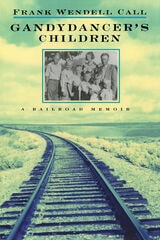
The late Frank Wendell Call is very much alive in these pages as he relates the fascinating tale of the rich, adventuresome existence he lived as a child in the Nevada desert along the Southern Pacific railroad line. In November 1928, Frank E. Call moved his young family from a comfortable home in Ogden, Utah to a tiny two-room shanty in an isolated railroad station in northeastern Nevada. He went to work as a gandydancer, a track laborer.
Meanwhile, Frank and Johanne Call's six lively children adapted to living alongside the tracks in primitive houses without electricity or indoor plumbing. The colorful narrative by the family's oldest child includes commentaries on railroading and the railroaders' language and describes social conditions and customs existing in tiny-town Nevada in the early twentieth century, from the viewpoint of the children themselves.

Gas Mask Nation
Visualizing Civil Air Defense in Wartime JapanGennifer Weisenfeld
University of Chicago Press, 2023
Airplanes, gas masks, and bombs were common images in wartime Japan. Yet amid these emblems of anxiety, tasty caramels were offered to children with paper gas masks as promotional giveaways, and magazines featured everything from attractive models in the latest civil defense fashion to futuristic weapons.
Gas Mask Nation explores the multilayered construction of an anxious yet perversely pleasurable visual culture of Japanese civil air defense—or bōkū—through a diverse range of artworks, photographs, films and newsreels, magazine illustrations, postcards, cartoons, advertising, fashion, everyday goods, government posters, and state propaganda. Gennifer Weisenfeld reveals the immersive aspects of this culture, in which Japan’s imperial subjects were mobilized to regularly perform highly orchestrated civil air defense drills throughout the country.
The war years in Japan are often portrayed as a landscape of privation and suppression under the censorship of the war machine. But alongside the horrors, pleasure, desire, wonder, creativity, and humor were all still abundantly present in a period before air raids went from being a fearful specter to a deadly reality.
Gender and Power in Prehispanic Mesoamerica
By Rosemary A. Joyce
University of Texas Press, 2001
Gender was a fluid potential, not a fixed category, before the Spaniards came to Mesoamerica. Childhood training and ritual shaped, but did not set, adult gender, which could encompass third genders and alternative sexualities as well as "male" and "female." At the height of the Classic period, Maya rulers presented themselves as embodying the entire range of gender possibilities, from male through female, by wearing blended costumes and playing male and female roles in state ceremonies.
This landmark book offers the first comprehensive description and analysis of gender and power relations in prehispanic Mesoamerica from the Formative Period Olmec world (ca. 1500-500 BC) through the Postclassic Maya and Aztec societies of the sixteenth century AD. Using approaches from contemporary gender theory, Rosemary Joyce explores how Mesoamericans created human images to represent idealized notions of what it meant to be male and female and to depict proper gender roles. She then juxtaposes these images with archaeological evidence from burials, house sites, and body ornaments, which reveals that real gender roles were more fluid and variable than the stereotyped images suggest.
Gender and the Boundaries of Dress in Contemporary Peru
By Blenda Femenías
University of Texas Press, 2005
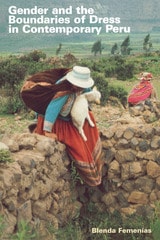
Set in Arequipa during Peru's recent years of crisis, this ethnography reveals how dress creates gendered bodies. It explores why people wear clothes, why people make art, and why those things matter in a war-torn land. Blenda Femenías argues that women's clothes are key symbols of gender identity and resistance to racism.
Moving between metropolitan Arequipa and rural Caylloma Province, the central characters are the Quechua- and Spanish-speaking maize farmers and alpaca herders of the Colca Valley. Their identification as Indians, whites, and mestizos emerges through locally produced garments called bordados. Because the artists who create these beautiful objects are also producers who carve an economic foothold, family workshops are vital in a nation where jobs are as scarce as peace. But ambiguity permeates all practices shaping bordados' significance. Femenías traces contemporary political and ritual applications, not only Caylloma's long-standing and violent ethnic conflicts, to the historical importance of cloth since Inca times.
This is the only book about expressive culture in an Andean nation that centers on gender. In this feminist contribution to ethnography, based on twenty years' experience with Peru, including two years of intensive fieldwork, Femenías reflects on the ways gender shapes relationships among subjects, research, and representation.
Gender, Law, and Resistance in India
Erin P. Moore
University of Arizona Press, 1988
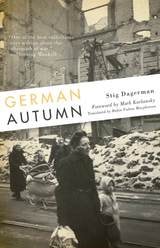
German Autumn
Stig Dagerman
University of Minnesota Press, 2011
In late 1946, Stig Dagerman was assigned by the Swedish newspaper Expressen to report on life in Germany immediately after the fall of the Third Reich. First published in Sweden in 1947, German Autumn, a collection of the articles written for that assignment, was unlike any other reporting at the time. While most Allied and foreign journalists spun their writing on the widely held belief that the German people deserved their fate, Dagerman disagreed and reported on the humanness of the men and women ruined by the war—their guilt and suffering. Dagerman was already a prominent writer in Sweden, but the publication and broad reception of German Autumn throughout Europe established him as a compassionate journalist and led to the long-standing international influence of the book.
Presented here in its first American edition with a compelling new foreword by Mark Kurlansky, Dagerman’s essays on the tragic aftermath of war, suffering, and guilt are as hauntingly relevant today amid current global conflict as they were sixty years ago.

German Pop Culture
How "American" Is It?Agnes C Mueller, Editor
University of Michigan Press, 2004
Surrounding this indisputable phenomena, questions of the role and place of a "popular" German culture continue to trigger heated debate. Embraced by some as a welcome means to break out of the German monocultural mind-set, American-shaped "pop" culture is rejected by others as "polluting" established values, leveling necessary differentiation, and ultimately being driven by a capitalist consumer society rather than by moral or aesthetic standards.
This collaborative volume addresses a number of intriguing questions: What do Germans envisage when they speak of the "Americanization" of their literature and music? How do artists respond to today's media culture? What does this mean for the current political dimension of German-American relations? Can one speak meaningfully of an "Americanized" German culture? In addressing these and other questions, this work fills a gap in existing scholarship by investigating German popular culture from a multidisciplinary, international perspective.
Contributors to this volume:
Winfried Fluck, Gerd Gemünden, Lutz Koepnick, Barbara Kosta, Sara Lennox, Thomas Meinecke, Uta Poiger, Matthias Politycki, Thomas Saunders, Eckhard Schumacher, Marc Silberman, Frank Trommler, Sabine von Dirke
Get Out of My Room!
A History of Teen Bedrooms in AmericaJason Reid
University of Chicago Press, 2016
Even in our era of Snapchat and hoverboards, bedrooms remain a key part of teenage life, one of the only areas where a teen can exert control and find some privacy. And while these separate bedrooms only became commonplace after World War II, the idea of the teen bedroom has been around for a long time. With Get Out of My Room!, Jason Reid digs into the deep historical roots of the teen bedroom and its surprising cultural power. He starts in the first half of the nineteenth century, when urban-dwelling middle-class families began to consider offering teens their own spaces in the home, and he traces that concept through subsequent decades, as social, economic, cultural, and demographic changes caused it to become more widespread. Along the way, Reid shows us how the teen bedroom, with its stuffed animals, movie posters, AM radios, and other trappings of youthful identity, reflected the growing involvement of young people in American popular culture, and also how teens and parents, in the shadow of ongoing social changes, continually negotiated the boundaries of this intensely personal space.
Richly detailed and full of surprising stories and insights, Get Out of My Room! is sure to offer insight and entertainment to anyone with wistful memories of their teenage years. (But little brothers should definitely keep out.)

Getting Loose
Lifestyle Consumption in the 1970sSam Binkley
Duke University Press, 2007
Through a sociological analysis of the countercultural print culture of the 1970s, Sam Binkley investigates the dissemination of these self-loosening narratives and their widespread appeal to America’s middle class. He describes the rise of a genre of lifestyle publishing that emerged from a network of small offbeat presses, mostly located on the West Coast. Amateurish and rough in production quality, these popular books and magazines blended Eastern mysticism, Freudian psychology, environmental ecology, and romantic American pastoralism as they offered “expert” advice—about how to be more in touch with the natural world, how to release oneself into trusting relationships with others, and how to delve deeper into the body’s rhythms and natural sensuality. Binkley examines dozens of these publications, including the Whole Earth Catalog, Rainbook, the Catalog of Sexual Consciousness, Celery Wine, Domebook, and Getting Clear.
Drawing on the thought of Pierre Bourdieu, Zygmunt Bauman, and others, Binkley explains how self-loosening narratives helped the middle class confront the modernity of the 1970s. As rapid social change and political upheaval eroded middle-class cultural authority, the looser life provided opportunities for self-reinvention through everyday lifestyle choice. He traces this ethos of self-realization through the “yuppie” 1980s to the 1990s and today, demonstrating that what originated as an emancipatory call to loosen up soon evolved into a culture of highly commercialized consumption and lifestyle branding.
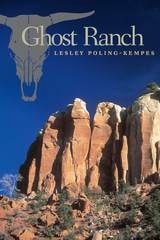
Ghost Ranch
Lesley Poling-Kempes
University of Arizona Press, 2005
Building on the history of the Abiquiu region that she told in Valley of Shining Stone, Ghost Ranch historian Lesley Poling-Kempes now unfolds the story of this celebrated retreat. She traces its transformation from el Rancho de los Brujos, a hideout for legendary outlaws, to a renowned cultural mecca and one of the Southwest’s premier conference centers.
First a dude ranch, Ghost Ranch became a magical sanctuary where the veil between heaven and earth seemed almost transparent. Focusing on those who visited from the 1920s and ’30s until the 1990s, Poling-Kempes tells how O’Keeffe and others—from Boston Brahmin Carol Bishop Stanley to paleontologist Edwin H. Colbert, Los Alamos physicists to movie stars—created a unique community that evolved into the institution that is Ghost Ranch today. For this book, Poling-Kempes has drawn on information not available when Valley of Shining Stone was written. The biography of Juan de Dios Gallegos has been enhanced and definitively corrected. The Robert Wood Johnson (of Johnson & Johnson) years at Ghost Ranch are recounted with reminiscences from family members. And the memories of David McAlpin Jr. shed light on how the Princeton circle that included the Packs, the Johnson brothers, the Rockefellers, and the McAlpins ended up as summer neighbors on the high desert of New Mexico.
After Arthur Pack’s gift of the ranch to the Presbyterian Church in 1955, Ghost Ranch became a spiritual home for thousands of people still awestruck by the landscape that O’Keeffe so lovingly committed to canvas; yet the care taken to protect Ghost Ranch’s land and character has preserved its sense of intimacy. By relating its remarkable story, Poling-Kempes invites all visitors to better appreciate its place as an honored wilderness—and to help safeguard its future.
Ghost of the Ozarks
Murder and Memory in the Upland SouthBrooks Blevins
University of Illinois Press, 2012

Ghosts and The Japanese
Cultural Experience in Japanese Death LegendsMichiko Iwasaka & Barre Toelken
Utah State University Press, 1994
The Japanese have ambivalent attitudes toward death, deeply rooted in pre-Buddhist traditions. In this scholarly but accessible work, authors Iwasaka and Toelken show that everyday beliefs and customs--particularly death traditions--offer special insight into the living culture of Japan.
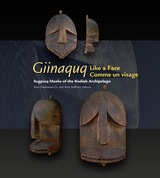
Giinaquq
Like a Face: Suqpiaq Masks of the Kodiak ArchipelagoEdited by Sven D. Haakanson, Jr. and Amy F. Steffian
University of Alaska Press, 2009
Masks are an ancient tradition of the Alutiiq people on the southern coast of Alaska. Alutiiq artists carved the masks from wood or bark into images of ancestors, animal spirits, and other mythological forces; these extraordinary creations have been an essential tool for communicating with the spirit world and have played an important role in dances and hunting festivities for centuries. Giinaquq: Like a Face presents thirty-three full-color images of these fantastic and eye-catching masks, which have been preserved for more than a century as part of the Pinart Collection in a small French museum.
These masks, collected in 1871 by a young French scholar of indigenous cultures, are presented for the first time in their complete cultural context, celebrating the rich history of the Alutiiq people and their artistic traditions. In addition to the stunning photographs, Giinaquq—Like a Face includes an informative text in three languages—English, Alutiiq, and French—in order to provide a cross-cultural understanding of the masks’ traditional meaning and use. This captivating and revealing book will be an essential resource for anyone interested in indigenous art and culture.
Giovanna's 86 Circles
And Other StoriesPaola Corso
University of Wisconsin Press, 2007
These ten magical stories are primarily set in Pittsburgh-area river towns, where Italian American women and girls draw from their culture and folklore to bring life and a sense of wonder to a seemingly barren region of the Rust Belt. Each story catapults the ordinary into something original and unpredictable.
A skeptical journalist scopes out the bar where the town mayor, in seemingly perfect health, is drinking with his buddies and celebrating what he claims is the last day of his life. A woman donates her dead mother’s clothes to a thrift shop but learns that their destiny is not what she expected. A ten-year-old girl wrestles with the facts of life as she watches her neighbor struggle to get pregnant while her teenage sister finds it all too easy. A high school girl hallucinates in a steamy hospital laundry room and discovers she can see her coworkers’ futures. A developer’s wrecking ball is no match for the legend of Giovanna’s green thumb in the title story “Giovanna’s 86 Circles.”
Quirky and profound, Corso’s magical leaps uncover the everyday poetry of these women’s lives.
Finalist for the John Gardner Fiction Book Award
Selected for “Best Short Stories of 2005” in Montserrat Review
Best Books for Regional Special Interests, selected by the American Association of School Librarians, and Best Books for General Audiences, selected by the Public Library Association
Sons of Italy National Book Club Selection

Go-Go Live
The Musical Life and Death of a Chocolate CityNatalie Hopkinson
Duke University Press, 2012
Go-Go Live is a social history of black Washington told through its go-go music and culture. Encompassing dance moves, nightclubs, and fashion, as well as the voices of artists, fans, business owners, and politicians, Natalie Hopkinson's Washington-based narrative reflects the broader history of race in urban America in the second half of the twentieth century and the early twenty-first. In the 1990s, the middle class that had left the city for the suburbs in the postwar years began to return. Gentrification drove up property values and pushed go-go into D.C.'s suburbs. The Chocolate City is in decline, but its heart, D.C.'s distinctive go-go musical culture, continues to beat. On any given night, there's live go-go in the D.C. metro area.

Gods and Vampires
Return to ChipayaNathan Wachtel
University of Chicago Press, 1994
Wachtel discovered that a series of recent deaths and misfortunes in Chipaya had been attributed to the evil powers of the Urus, a group usually regarded with suspicion by the other ethnic groups. Those incarcerated were believed to be the chief sorcerers and vampires whose paganistic practices had brought death to Chipaya by upsetting the social order. Wachtel's investigation, told in Gods and Vampires: Back to Chipaya, reveals much about relations between the Urus and the region's dominant ethnic groups and confronts some of the most trenchant issues in contemporary anthropology. His analysis shows that the Urus had become victims of the same set of ideals the Spanish had used, centuries before, to establish their hegemony in the region.
Presented as a personal detective story, Gods and Vampires is Wachtel's latest work in a series studying the ongoing impact of the Spanish conquest on the Andean consciousness and social system. Its insight into Bolivian society and the legacy of hegemony confronts some of the most trenchant issues in contemporary anthropologyand will be of great interest to scholars of anthropology, Latin American studies, and Native American studies.

Goin' Railroading
Two Generations of Colorado StoriesMargaret Coel
University Press of Colorado, 1998
Goin' Railroading is the story of two generations of such men, four members of the Speas family who, from the open cabs of narrow-gauge steam engines, watched Colorado grow.
Sam Speas tells the story of his father, Sam Speas Sr., who left Missouri in 1883 to become an engineer in Colorado, and recounts his own experiences and those of his brothers and fellow railroaders on the Colorado and Southern Railway, from the golden era of the narrow-gauge lines in South Park to the final days of steam power on the Front Range and the coming of the diesel engine.
His stories are a profound document of a vanished way of life, a testament to the courage and tenacity of the early citizens of Colorado, and a tribute to the rough-hewn, often gallant men who took the trains through incredible, almost unbelievable, hazards. Funny, tragic, bittersweet, and poignant, Goin' Railroading is a remarkable book that brings a portion of the history and people of an earlier Colorado to vibrant life.
Going to Boston
Harriet Robinson's Journey to New WomanhoodClaudia L. Bushman
University Press of New England, 2017
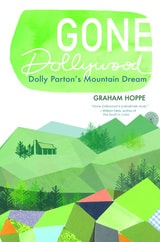
Gone Dollywood
Dolly Parton’s Mountain DreamGraham Hoppe
Ohio University Press, 2018
Dolly Parton isn’t just a country music superstar. She has built an empire. At the heart of that empire is Dollywood, a 150-acre fantasy land that hosts three million people a year. Parton’s prodigious talent and incredible celebrity have allowed her to turn her hometown into one of the most popular tourist destinations in America. The crux of Dollywood’s allure is its precisely calibrated Appalachian image, itself drawn from Parton’s very real hardscrabble childhood in the mountains of east Tennessee.
What does Dollywood have to offer besides entertainment? What do we find if we take this remarkable place seriously? How does it both confirm and subvert outsiders’ expectations of Appalachia? What does it tell us about the modern South, and in turn what does that tell us about America at large? How is regional identity molded in service of commerce, and what is the interplay of race, gender, and class when that happens?
In Gone Dollywood, Graham Hoppe blends tourism studies, celebrity studies, cultural analysis, folklore, and the acute observations and personal reflections of longform journalism into an unforgettable interrogation of Southern and American identity.
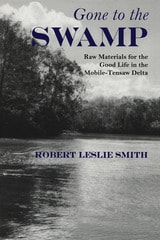
Gone to the Swamp
Raw Materials for the Good Life in the Mobile-Tensaw DeltaRobert Leslie Smith
University of Alabama Press, 2008
Normal0falsefalsefalseMicrosoftInternetExplorer4Normal0falsefalsefalseMicrosoftInternetExplorer4
To make a living here, one had to be capable, confident, clever and inventive, know a lot about survival, be able to fashion and repair tools, navigate a boat, fell a tree, treat a snakebite, make a meal from whatever was handy without asking too many questions about it, and get along with folks.
This fascinating and instructive book is the careful and unpretentious account of a man who was artful in all the skills needed to survive and raise a family in an area where most people would be lost or helpless. Smith’s story is an important record of a way of life beginning to disappear, a loss not fully yet realized. We are lucky to have a work that is both instructive and warm-hearted and that preserves so much hard-won knowledge.

Good Boat Speaks For Itself
Isle Royale Fisherman and Their BoatsTimothy Cochrane
University of Minnesota Press, 2002
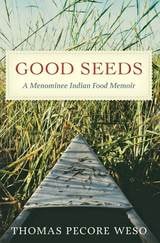
Good Seeds
A Menominee Indian Food MemoirThomas Pecore Weso
Wisconsin Historical Society Press, 2027
To the Menominee people, the "good seeds” of life are the manomin, or wild rice, that also gives the tribe its name. In this unique food memoir, Tribal member Thomas Pecore Weso takes readers on a cook’s journey through Wisconsin’s North Woods tribal lands, connecting Menominee food—beaver, trout, blackberry, wild rice, maple sugar, partridge—to the colorful individuals who taught him Indigenous values and traditions. Featuring more than forty recipes, Good Seeds keeps those traditions alive for future generations.
With a rare perspective as a Native American anthropologist and artist, Weso mixes a poignant personal story with the seeds of Menominee cooking traditions. He tells of the foods and the people who helped shape the person he became. His grandfather Moon was a medicine man, whose morning prayers formed the foundation for all the day’s meals. His grandmother Jennie “made fire” each morning in a wood-burning stove and oversaw huge breakfasts of wild game, fish, and fruit pies. His uncles taught him to hunt bear, deer, squirrels, raccoons, and skunks for the daily larder. Along with authentic family recipes, Weso recalls favorite foods served at the Menominee fair and at local diners.
In Good Seeds, adventurous cooks will gain insight and inspiration from Weso’s recipes, and readers of all stripes will appreciate the often-humorous stories about reservation life during the mid-twentieth century.

Good Water
Kevin Holdsworth
University Press of Colorado, 2016
In essays that combine memoir with biography of place, Kevin Holdsworth creates a public history of the land he calls home: Good Water, Utah. The high desert of south-central Utah is at the heart of the stories he tells here—about the people, the “survivors and casualties” of the small, remote town—and is at the heart of his own story.
Holdsworth also explores history at a personal level: how Native American history is preserved by local park officials; how Mormon settlers adapted to remote, rugged places; how small communities attract and retain those less likely to thrive closer to population centers; and how he became involved in local politics. He confronts the issues of land use and misuse in the West, from the lack of water to greed and corruption over natural resources, but also considers life’s simple pleasures like the value of scenery and the importance of occasionally tossing a horseshoe.
Good Water’s depiction of modern-day Utah and exploration of friendships and bonding on the Western landscape will fascinate and entice readers in the West and beyond.
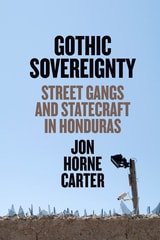
Gothic Sovereignty
Street Gangs and Statecraft in HondurasJon Horne Carter
University of Texas Press, 2022
Gang-related violence has forced thousands of Hondurans to flee their country, leaving behind everything as refugees and undocumented migrants abroad. To uncover how this happened, Jon Carter looks back to the mid-2000s, when neighborhood gangs were scrambling to survive state violence and mass incarceration, locating there a critique of neoliberal globalization and state corruption that foreshadows Honduras’s current crises.
Carter begins with the story of a thirteen-year-old gang member accused in the murder of an undercover DEA agent, asking how the nation’s seductive criminal underworld has transformed the lives of young people. He then widens the lens to describe a history of imperialism and corruption that shaped this underworld—from Cold War counterinsurgency to the “War on Drugs” to the near-impunity of white-collar crime—as he follows local gangs who embrace new trades in the illicit economy. Carter describes the gangs’ transformation from neighborhood groups to sprawling criminal societies, even in the National Penitentiary, where they have become political as much as criminal communities. Gothic Sovereignty reveals not only how the revolutionary potential of gangs was lost when they merged with powerful cartels but also how close analysis of criminal communities enables profound reflection on the economic, legal, and existential discontents of globalization in late liberal nation-states.
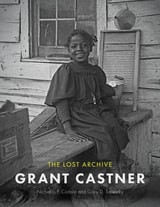
Grant Castner
The Lost ArchiveNicholas P. Ciotola
Rutgers University Press, 2026
Castner’s glass plate negatives are a visual record of New Jersey’s social and cultural history. His many human subjects are rich and poor, young and old, Black and white. They are at work, at play, at home, and in the community. Castner also documented social change brought about by electricity, engineering, education, industry, and transportation. He captured the excitement of public amusements such as parades and fairs. He recorded the aftermath of floods, fires and other disasters. Castner also had a fondness for the outdoors. He used his camera to reflect on the beauty and tranquility that he found in the natural landscapes of New Jersey.
This book presents the collective work of Grant Castner, an amateur artist whose place in New Jersey history was, until now, completely unknown. His photographic negatives forever preserve pinpoint moments in the past. They are time machines to another era. Let this long lost archive transport you on a visual journey into a New Jersey of days gone by.

Grant Park
The Evolution of Chicago's Front YardDennis H. Cremin
Southern Illinois University Press, 2013
2014 Illinois State Historical Society Book of the Year
Grass Widow
Making My Way in Depression AlabamaViola Goode Liddell
University of Alabama Press, 2004
An engaging account of one woman’s overcoming the Depression and small town mores.
Viola Goode Liddell’s short memoir tells the story of her return to Alabama in search of a husband and a new life. Thirty years old and recently divorced, Liddell comes back to her home state—with her young son—determined to survive, during the depths of the Depression. Liddell narrates the obstacles she faces as a single mother in the 1930s Deep South with self-deprecating humor and a confessional tone that reveal both her intelligence and her unapologetic ambitions.
Unable to earn, borrow, or beg enough money to support herself and her child, Liddell uses her family connections to secure a teaching position in Camden, Alabama. Even though an older sister’s status within the community helps her land the job, Liddell is warned that she must be very careful as she navigates the tricky social terrain of small town life, particularly when it comes to men. A commentary on the plight of women of the time is woven into the narrative as Liddell recounts her experience of being refused a loan at the local bank by her own brother-in-law.
Despite all the restrictions on her behavior and the crushing reality that she has become "the biggest nuisance in the family" because of her past, Liddell cheerfully and successfully builds a new life of respectability and hope.
Gravity Hill
A MemoirMaximilian Werner
University of Utah Press, 2013
“The sound of parenthood is the sigh.” So begins Gravity Hill, written from the perspective of a new father seeking hope, beauty, and meaning in an uncertain world. Many memoirs recount the author’s experiences of growing up and struggling with demons; Werner’s shows how old demons sometimes return on the heels of something as beautiful as children. Werner’s memoir is about growing up, getting older, looking back, and wondering what lies ahead—a process that becomes all the more complicated and intense when parenting is involved. Moving backward and forward between past, present, and future, Gravity Hill does not delineate time so much as collapse it.
Werner narrates his struggle growing up in suburban Utah as anon-Mormon and what it took for him, his siblings, and his friends to feel like they belonged. Bonding in separation, they indulged in each other, in natural and urban landscapes, and sometimes in the destructive behaviors that are the native resort of outsidersincluding promiscuous and occasionally violent sexual behavior—and for some, paths to death and suicide. Gravity Hill is the story of the author’s descent into and eventual emergence from his dysfunction and into a newfound life. Infused with humor, honesty, and reflection, this literary memoir will resonate with readers young and old.
Great Basin Indians
An Encyclopedic HistoryMichael Hittman
University of Nevada Press, 2024
Great Basin Indians is an essential resource for any reader interested in the Native peoples of the American West and in western history in general.

Green Cane and Juicy Flotsam
Short Stories by Caribbean WomenEsteves, Carmen C
Rutgers University Press, 1991
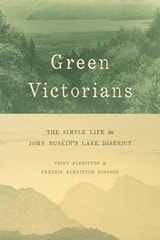
Green Victorians
The Simple Life in John Ruskin's Lake DistrictVicky Albritton and Fredrik Albritton Jonsson
University of Chicago Press, 2016
At the center of their social experiment was the charismatic art critic and political economist John Ruskin. Albritton and Albritton Jonsson show how Ruskin’s followers turned his theory into practice in a series of ambitious local projects ranging from hand spinning and woodworking to gardening, archaeology, and pedagogy. This is a lively yet unsettling story, for there was a dark side to Ruskin’s community as well—racist thinking, paternalism, and technophobia. Richly illustrated, Green Victorians breaks new ground, connecting the ideas and practices of Ruskin’s utopian community with the problems of ethical consumption then and now.

Greening China
The Benefits of Trade and Foreign Direct InvestmentKa Zeng and Joshua Eastin
University of Michigan Press, 2011
“The authors make some very critical interventions in this debate and scholars engaged in the environmental ‘pollution haven’ and ‘race to the bottom’ debates will need to take the arguments made here seriously, re-evaluating their own preferred theories to respond to the insightful theorizing and empirically rigorous testing that Zeng and Eastin present in the book.”
—Ronald Mitchell, University of Oregon
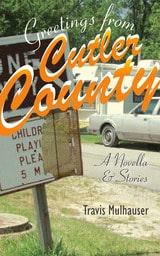
Greetings from Cutler County
A Novella and StoriesTravis Mulhauser
University of Michigan Press, 2005
In one northern Michigan community the lives of desperate small-town dreamers are examined through an ensemble cast as earnest as they are outrageous, and as compelling as they are heartbreaking. The lovers, crooks, failures, and survivors of Cutler County are so flawed and genuine you can't help rooting for them-no matter how foolish or hopeless their pursuits may seem.
The stories take place in Cutler County, Michigan. Most of the characters are young men who think of themselves as losers and outsiders. Short on cash, popularity, and the ambition needed for success, they nevertheless are able to examine their failings with the self-knowing humor and resignation of the perpetually thwarted ne'er-do-well.
The stories are inseparable from the stark shoreline of their Lake Michigan settings-the cavernous woods and vast inland lakes that shape life in northern Michigan-and create a landscape as rugged and dramatic as youth itself. Greetings from Cutler County explores the common triumphs and tragedies of coming of age, while providing a rationale and humor that is uniquely and unforgettably its own.
Greetings from New Nashville
How a Sleepy Southern Town Became "It" CitySteve Haruch
Vanderbilt University Press, 2020
In that span of two decades, the boundaries of Nashville did not change. But something did. Or rather, many somethings changed, and kept changing, until many who lived in Nashville began to feel they no longer recognized their own city. And some began to feel it wasn't their own city at all anymore as they were pushed to its fringes by rising housing costs. Between 1998 and 2018, the population of Nashville grew by 150,000. On some level, Nashville has always packaged itself for consumption, but something clicked and suddenly everyone wanted a taste. But why Nashville? Why now? What made all this change possible?
This book is an attempt to understand those transformations, or, if not to understand them, exactly, then to at least grapple with the question: What happened?
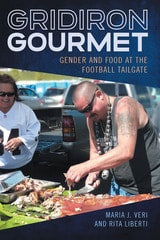
Gridiron Gourmet
Gender and Food at the Football TailgateMaria J. Veri
University of Arkansas Press, 2019
Tailgating, which began in the early 1900s as a quaint picnic lunch outside of the stadium, has evolved into a massive public social event with complex menus, extravagant creative fare, and state-of-art grilling equipment. Unlike traditional notions of the home kitchen, the blacktop is a highly masculine culinary environment in which men and the food they cook are often the star attractions.
Gridiron Gourmet examines tailgating as shown in television, film, advertising, and cookbooks, and takes a close look at the experiences of those tailgaters who are as serious about their brisket as they are about cheering on their favorite team, demonstrating how and why the gendered performances on the football field are often matched by the intensity of the masculine displays in front of grills, smokers, and deep fryers.
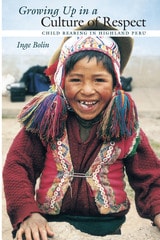
Growing Up in a Culture of Respect
Child Rearing in Highland PeruBy Inge Bolin
University of Texas Press, 2006
Far from the mainstream of society, the pastoral community of Chillihuani in the high Peruvian Andes rears children who are well-adjusted, creative, and curious. They exhibit superior social and cognitive skills and maintain an attitude of respect for all life as they progress smoothly from childhood to adulthood without a troubled adolescence. What makes such child-rearing success even more remarkable is that "childhood" is not recognized as a distinct phase of life. Instead, children assume adult rights and responsibilities at an early age in order to help the community survive in a rugged natural environment and utter material poverty.
This beautifully written ethnography provides the first full account of child-rearing practices in the high Peruvian Andes. Inge Bolin traces children's lives from birth to adulthood and finds truly amazing strategies of child rearing, as well as impressive ways of living that allow teenagers to enjoy the adolescent stage of their lives while contributing significantly to the welfare of their families and the community. Throughout her discussion, Bolin demonstrates that traditional practices of respect, whose roots reach back to pre-Columbian times, are what enable the children of the high Andes to mature into dignified, resilient, and caring adults.
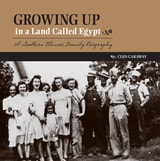
Growing Up in a Land Called Egypt
A Southern Illinois Family BiographyCleo Caraway
Southern Illinois University Press, 2010
In Growing Up in a Land Called Egypt: A Southern Illinois Family Biography,author Cleo Caraway fondly recalls how she and her siblings came of age on the family farm in the 1930s and 1940s. Like many others, the Caraways were affected by the economic hardships of the Great Depression, but Cleo’s parents strived to shelter her and her six siblings from the dire circumstances affecting the nation and their home and allowed them to bask in their idealistic existence. Her love for her family clearly shines from every page as she writes of a simpler time, before World War II divided the family.
Caraway revels in the life her family lived on a southern Illinois hilltop in Murphysboro township, marveling at the mix of commonplace and adventure she experienced in her childhood. She remembers her first day of school, walking three miles to the wondrous one-room building with her siblings; reminisces about strolling through the countryside with her mother, investigating the various plants and flowers, fruits and nuts; and recollects her fascination with the Indian relics she found buried near her home, a hobby she shared with her father. She also writes of seeing Gone with the Wind on the big screen at the Hippodrome in Murphysboro, of learning to sew dresses for her dolls, and of idyllic life on the farm—milking cows, hatching chicks, feeding pigs. Along with her personal memories Caraway includes interviews with neighbors and many fascinating photographs with detailed captions that make the images come alive.
A delightful follow-up to her father’s popular Foothold on a Hillside: Memories of a Southern Illinoisan,Caraway’s book is a pleasant change from the typical accounts of southern Illinois before, during, and after the Great Depression. Instead of hardscrabble grit, Growing Up in a Land Called Egypt offers a refreshingly different view of the period and is certain to be embraced by southern Illinois natives as well as anyone interested in the experiences of a rural family that thrived despite the difficult times. The author’s lighthearted prose, self-deprecating humor, and genuine affection for her family make reading this book a rich and memorable experience.
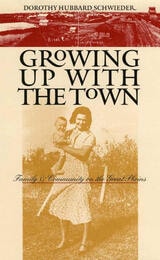
Growing Up with the Town
Family and Community on the Great PlainsDorothy Hubbard Schwieder
University of Iowa Press, 2002
Growing up in Minnesota
Ten Writers Remember Their ChildhoodsChester Anderson
University of Minnesota Press, 1976
Guarded by Two Jaguars
A Catholic Parish Divided by Language and FaithEric Hoenes del Pinal
University of Arizona Press, 2022
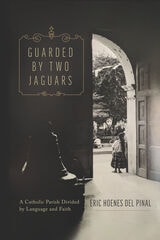
In Guarded by Two Jaguars, Eric Hoenes del Pinal tells the story of this dramatic split and in so doing addresses the role that language and gesture have played in the construction of religious identity. Drawing on a range of methods from linguistic and cultural anthropology, the author examines how the introduction of the Catholic Charismatic Renewal movement in the parish produced a series of debates between parishioners that illustrate the fundamentally polyvocal nature of Catholic Christianity. This work examines how intergroup differences are produced through dialogue, contestation, and critique. It shows how people’s religious affiliations are articulated not in isolation but through interaction with each other.
Although members of these two congregations are otherwise socially similar, their distinct interpretations of how to be a “good Catholic” led them to adopt significantly different norms of verbal and nonverbal communication. These differences became the idiom through which the two groups contested the meaning of being Catholic and Indigenous in contemporary Guatemala, addressing larger questions about social and religious change.
Gusto for Things
A History of Objects in Seventeenth-Century RomeRenata Ago
University of Chicago Press, 2013
Gypsy World
The Silence of the Living and the Voices of the DeadPatrick Williams
University of Chicago Press, 2003
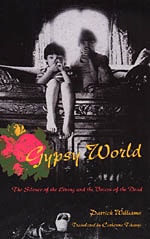
In Gypsy World, Patrick Williams argues that these customs are at the center of how Manuš see the world and their place in it. The Manuš inhabit a world created by the "Gadzos" (non-Gypsies), who frequently limit or even prohibit Manuš movements within it. To claim this world for themselves, the Manuš employ a principle of cosmological subtraction: just as the dead seem to be absent from Manuš society, argues Williams, so too do the Manuš absent themselves from Gadzo society—and in so doing they assert and preserve their own separate culture and identity.
Anyone interested in Gypsies, death rituals, or the formation of culture will enjoy this fascinating and sensitive ethnography.