Results by title
661 books match the query 'South America' and 14 start with g
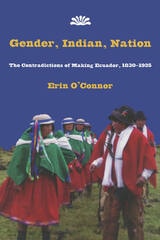
Gender, Indian, Nation
The Contradictions of Making Ecuador, 1830–1925Erin O'Connor
University of Arizona Press, 2007
O’Connor begins her investigations by examining the multilayered links between gender and Indian-state relations in nineteenth-century Ecuador. Disentangling issues of class and culture from issues of gender, she uncovers overlapping, conflicting, and ever-evolving patriarchies within both indigenous communities and the nation’s governing bodies. She finds that gender influenced sociopolitical behavior in a variety of ways, mediating interethnic struggles and negotiations that ultimately created the modern nation. Her deep research into primary sources—including congressional debates, ministerial reports, court cases, and hacienda records—allows a richer, more complex, and better informed national history to emerge.
Examining gender during Ecuadorian state building from “above” and “below,” O’Connor uncovers significant processes of interaction and agency during a critical period in the nation’s history. On a larger scale, her work suggests the importance of gender as a shaping force in the formation of nation-states in general while it questions recountings of historical events that fail to demonstrate an awareness of the centrality of gender in the unfolding of those events.
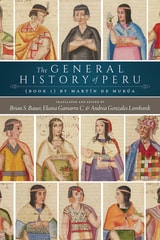
General History of Peru
Book 1Martín de Murúa
University Press of Colorado, 2024
Book 1 covers both the history of the Inca Empire and the first forty years of the Spanish occupation, up to and including the fall of Vilcabamba in 1572. While the J. Paul Getty Museum produced a digital facsimile of Murúa’s full Historia in 2008, it remained underused and, until now, untranslated. This translation revitalizes the momentous early volume with an introduction offering a window into Murúa’s life and the writing of his Historia, and extensive footnotes that provide the scholarly context of Murúa’s work.
This edition of The General History of Peru: Book 1 provides long-awaited access to Murúa’s contribution to Indigenous Andean history and early colonial Peru. The book is valuable for English-speaking students and scholars of pre-Hispanic Andean history, especially those interested in the ancient Andean world and colonial Peru’s literary production.
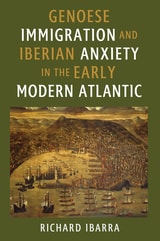
Genoese Immigration and Iberian Anxiety in the Early Modern Atlantic
Richard Ibarra
University of Delaware Press, 2027
This book explores the experiences of Genoese immigrants in the sixteenth-century Iberian Atlantic, focusing on how they navigated issues of identity and community membership across generations and transnational movement. Moving to cities like Seville, as well as Santo Domingo and Mexico City, Genoese families encountered both tremendous opportunities and significant challenges in establishing their lives, reaching a communal apogee—the “Genoese Century”—while they faced increasing Iberian anxieties. While some found ways to integrate into Iberian society through religious and charitable activities, retaining references to their Genoese past, others dissimulated or renounced their Genoese identity. Through a combination of notarial and inquisition records, litigation to prove nobility (hidalguía) and purity of blood (limpieza de sangre), literary narratives, and funerary monuments, Richard Ibarra provides insights into the changing identity claims of Genoese families and the broader attitudes toward foreigners in Iberian society that reached beyond perceived religious and ethnic difference.
German Buenos Aires, 1900–1933
Social Change and Cultural CrisisBy Ronald C. Newton
University of Texas Press, 1977
This study of the German community of early twentieth-century Buenos Aires is a major contribution to the literature on Argentine history and on the New World immigrant experience. Beginning with the first wave of immigration in the late nineteenth century and continuing to the outbreak of World War II, Ronald C. Newton reconstructs the growth, development, and influence of a powerful foreign population in what was then the largest city in South America.
In the three decades before World War I, Argentina became a major food-producing and exporting country. Through the port of Buenos Aires was funneled the bulk of the Pampas’ foodstuff and fiber in one direction and Europe’s capital, technology, and surplus labor in the other. The German speakers made up one of the smaller Western European communities within the Argentine metropolis, but their cultural and economic influence was far out of proportion to their numbers. Based in a large and occupationally diverse middle class, the German community was represented at all social levels. Newton analyzes the experience of this well-demarcated group during a period of rapid demographic growth and increasing pressure to assimilate. He constructs working hypotheses that may be applied and refined in further investigations.
The book draws substantially on materials from within the Buenos Aires German community—newspapers, memoirs, the records of associations and welfare agencies—to reconstruct its intense daily life. The author highlights, for instance, the sharp economic reversals German-speaking residents suffered during World War I and shows how their fortunes declined further after continued Germanic immigration in the 1920s. Especially significant is his finding that the German community, which until 1914 had seemed impervious to the currents of Argentine nationalism, became susceptible to assimilation into Argentine society. In concluding chapters Newton demonstrates the way the German economic elite came to terms with the Nazis for opportunistic reasons; thus, the volume also serves as an introduction to the question of Nazism’s diffusion in Argentina.
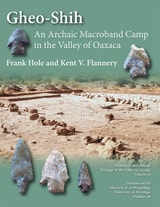
Gheo-Shih
An Archaic Macroband Camp in the Valley of OaxacaFrank Hole and Kent V. Flannery
University of Michigan Press, 2024
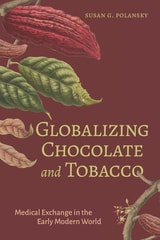
Globalizing Chocolate and Tobacco
Medical Exchange in the Early Modern WorldSusan G. Polansky
Bucknell University Press, 2026
This groundbreaking volume explores two early and opposing Spanish medical perspectives on chocolate and other New World substances. In the early 1600s, doctors Bartolomé Marradón and Antonio Colmenero de Ledesma returned from travels to the Americas with starkly different views: Marradón cautioned against tobacco and offered only limited approval of chocolate, while Colmenero vigorously defended chocolate’s health benefits. Their writings, translated and circulated across Europe, helped transform chocolate from a medicinal drink into a global commodity. Featuring the first bilingual edition of Marradón’s Dialogue (1618)—in full Spanish and English—and a new bilingual presentation of Colmenero’s influential Curious Treatise (1631), this book provides rare insight into early modern medical thought, cultural exchange, and the globalization of taste. Essential for readers of food history, early modern medicine, and transatlantic interchange, it uniquely reveals how debates over health, culture, and commerce brewed in a cup of chocolate.
Published by Bucknell University Press. Distributed worldwide by Rutgers University Press.
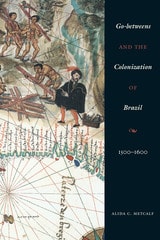
Go-betweens and the Colonization of Brazil
1500–1600By Alida C. Metcalf
University of Texas Press, 2006
Doña Marina (La Malinche) ...Pocahontas ...Sacagawea—their names live on in historical memory because these women bridged the indigenous American and European worlds, opening the way for the cultural encounters, collisions, and fusions that shaped the social and even physical landscape of the modern Americas. But these famous individuals were only a few of the many thousands of people who, intentionally or otherwise, served as "go-betweens" as Europeans explored and colonized the New World.
In this innovative history, Alida Metcalf thoroughly investigates the many roles played by go-betweens in the colonization of sixteenth-century Brazil. She finds that many individuals created physical links among Europe, Africa, and Brazil—explorers, traders, settlers, and slaves circulated goods, plants, animals, and diseases. Intercultural liaisons produced mixed-race children. At the cultural level, Jesuit priests and African slaves infused native Brazilian traditions with their own religious practices, while translators became influential go-betweens, negotiating the terms of trade, interaction, and exchange. Most powerful of all, as Metcalf shows, were those go-betweens who interpreted or represented new lands and peoples through writings, maps, religion, and the oral tradition. Metcalf's convincing demonstration that colonization is always mediated by third parties has relevance far beyond the Brazilian case, even as it opens a revealing new window on the first century of Brazilian history.

Gods and Vampires
Return to ChipayaNathan Wachtel
University of Chicago Press, 1994
Wachtel discovered that a series of recent deaths and misfortunes in Chipaya had been attributed to the evil powers of the Urus, a group usually regarded with suspicion by the other ethnic groups. Those incarcerated were believed to be the chief sorcerers and vampires whose paganistic practices had brought death to Chipaya by upsetting the social order. Wachtel's investigation, told in Gods and Vampires: Back to Chipaya, reveals much about relations between the Urus and the region's dominant ethnic groups and confronts some of the most trenchant issues in contemporary anthropology. His analysis shows that the Urus had become victims of the same set of ideals the Spanish had used, centuries before, to establish their hegemony in the region.
Presented as a personal detective story, Gods and Vampires is Wachtel's latest work in a series studying the ongoing impact of the Spanish conquest on the Andean consciousness and social system. Its insight into Bolivian society and the legacy of hegemony confronts some of the most trenchant issues in contemporary anthropologyand will be of great interest to scholars of anthropology, Latin American studies, and Native American studies.
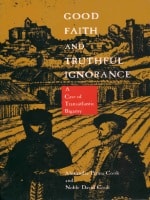
Good Faith and Truthful Ignorance
A Case of Transatlantic BigamyAlexandra Parma Cook and Noble David Cook
Duke University Press, 1991
So begins the labyrinthine legal tale and engrossing drama of an explorer and his two wives, skillfully reconstructed through the expert and original archival research of Alexandra Parma Cook and Noble David Cook. Drawing on the remarkable records from the trial, the narrative of Francisco’s adventures provides a window into daily life in sixteenth-century Spain, as well as the mentalité and experience of conquest and settlement of the New World. Told from the point of view of the conquerors, Francisco’s story reveals not only the lives of the middle class and minor nobility but also much about those at the lower rungs of the social order and relations between the sexes.
In the tradition of Carlo Ginzberg’s The Cheese and the Worms and Natalie Zemon Davis’ The Return of Martin Guerre, Good Faith and Truthful Ignorance illuminates an historical period—the world of sixteenth-century Spain and Peru—through the wonderful and unusual story of one man and his two wives.

Goodbye, Brazil
Émigrés from the Land of Soccer and SambaMaxine L. Margolis
University of Wisconsin Press, 2013
Goodbye, Brazil is the first book to provide a global perspective on Brazilian emigration. Drawing and synthesizing data from a host of sociological and anthropological studies, preeminent Brazilian immigration scholar Maxine L. Margolis surveys and analyzes this greatly expanded Brazilian diaspora, asking who these immigrants are, why they left home, how they traveled abroad, how the Brazilian government responded to their exodus, and how their host countries received them. Margolis shows how Brazilian immigrants, largely from the middle rungs of Brazilian society, have negotiated their ethnic identity abroad. She argues that Brazilian society abroad is characterized by the absence of well-developed, community-based institutions—with the exception of thriving, largely evangelical Brazilian churches.
Margolis looks to the future as well, asking what prospects at home and abroad await the new generation, children of Brazilian immigrants with little or no familiarity with their parents' country of origin. Do Brazilian immigrants develop such deep roots in their host societies that they hesitate to return home despite Brazil's recent economic boom—or have they become true transnationals, traveling between Brazil and their adopted lands but feeling not quite at home in either one?
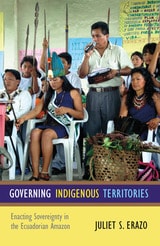
Governing Indigenous Territories
Enacting Sovereignty in the Ecuadorian AmazonJuliet S. Erazo
Duke University Press, 2013
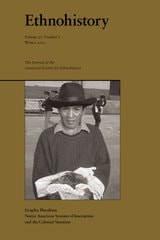
Graphic Pluralism, Volume 57
Frank L. Salomon
Duke University Press, 0
One contributor shows how the Spanish colonial powers and the traditional Maya nobility in the Yucatán struggled over alphabetic literacy and the continued use of hieroglyphics. Another contributor documents how the Natick speakers of Martha’s Vineyard adopted alphabetic literacy for their own purposes in the seventeenth and eighteenth centuries, incorporating writing as a tool of traditional governance. In another article, a Spanish translation is compared to the original Nahua text to show how the two versions provide very different views of the Spanish conquest of the city-state of Mexico-Tenochtitlán. Yet another contributor examines how competing language ideologies in the Andes were used to characterize khipus (Andean knotted strings) and alphabetic script.
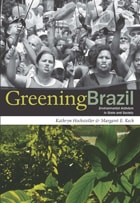
Greening Brazil
Environmental Activism in State and SocietyKathryn Hochstetler and Margaret E. Keck
Duke University Press, 2007
The authors present a multilevel analysis encompassing institutions and individuals within the government—at national, state, and local levels—as well as the activists, interest groups, and nongovernmental organizations that operate outside formal political channels. They emphasize the importance of networks linking committed actors in the government bureaucracy with activists in civil society. Portraying a gradual process marked by periods of rapid advance, Hochstetler and Keck show how political opportunities have arisen from major political transformations such as the transition to democracy and from critical events, including the well-publicized murders of environmental activists in 1988 and 2004. Rather than view foreign governments and organizations as the instigators of environmental policy change in Brazil, the authors point to their importance at key moments as sources of leverage and support.

Guerrilla Auditors
The Politics of Transparency in Neoliberal ParaguayKregg Hetherington
Duke University Press, 2011