Results by title
22279 books match the query 'Social Science' and 583 start with g

Greek Ostraca in the University of Michigan Collection
Part I - TextsLeiv Amundsen
University of Michigan Press, 1935

Greek Prostitutes in the Ancient Mediterranean, 800 BCE–200 CE
Allison Glazebrook
University of Wisconsin Press, 2011
Greek Prostitutes in the Ancient Mediterranean, 800 BCE–200 CE challenges the often-romanticized view of the prostitute as an urbane and liberated courtesan by examining the social and economic realities of the sex industry in Greco-Roman culture. Departing from the conventional focus on elite society, these essays consider the Greek prostitute as displaced foreigner, slave, and member of an urban underclass.
The contributors draw on a wide range of material and textual evidence to discuss portrayals of prostitutes on painted vases and in the literary tradition, their roles at symposia (Greek drinking parties), and their place in the everyday life of the polis. Reassessing many assumptions about the people who provided and purchased sexual services, this volume yields a new look at gender, sexuality, urbanism, and economy in the ancient Mediterranean world.
Green Band in a Parched and Burning Land
Sobaipuri O’odham Landscapesby Deni J. Seymour
University Press of Colorado, 2022
First and foremost irrigation farmers, the Sobaipuri O’odham permanently occupied verdant strips along all the major rivers in the region—including the headwaters of the San Pedro and various other areas thought to be beyond their domain. Seymour draws on career-spanning fieldwork, conversations with direct descendants (the O’odham residents of Wa:k), and recent breakthroughs in archaeological, ethnographic, and ethnohistorical research to shed light on their unique forms of landscape use, settlement patterns, and way of life. She details the building materials, linear site layout, and other elements of their singular archaeological signature; newly established dating for individual sites, complex building episodes, and occupational sequences; and evidence of cumulative village occupation as well as the habitation of river valleys and other locales long after supposed abandonment. The book also explains the key relationships between site distributions and landscape characteristics.
Addressing some of the longest-standing archaeological and historical questions about the Sobaipuri O’odham, A Green Band in a Parched and Burning Land reorients the discussion of their crucial place in the history of the region in constructive new directions.

Green Cane and Juicy Flotsam
Short Stories by Caribbean WomenEsteves, Carmen C
Rutgers University Press, 1991
Green Corn Ceremonialism in the Eastern Woodlands
John Witthoft
University of Michigan Press, 1949
Green, Fair, and Prosperous
Paths to Sustainable IowaCharles Connerly
University of Iowa Press, 2020
At the center of what was once the tallgrass prairie, Iowa has stood out for clearing the land and becoming one of the most productive agricultural states in the nation. But its success is challenged by multiple issues including but not limited to a decline in union representation of meatpacking workers; lack of demographic diversity; the advent of job-replacing mechanization; growing income inequality; negative contributions to and effects of climate change and environmental hazards.
To become green, fair, and prosperous, Connerly argues that Iowa must reckon with its past and the fact that its farm economy continues to pollute waterways, while remaining utterly unprepared for climate change. Iowa must recognize ways in which it can bolster its residents’ standard of living and move away from its demographic tradition of whiteness. For development to be sustainable, society must balance it with environmental protection and social justice. Connerly provides a crucial roadmap for how Iowans can move forward and achieve this balance.

Greener Pastures
Politics, Markets, and Community among a Migrant Pastoral PeopleArun Agrawal
Duke University Press, 1999
Agrawal analyzes the institutions developed by the shepherds to solve livelihood problems. First, by focusing on the relations of the shepherds with their landholder neighbors, he explains why the shepherds migrate. He shows that struggles between these two groups led to a sociopolitical squeeze on the access of shepherds to the fodder resources they need to feed their sheep. Then, in an examination of why the shepherds migrate in groups, he demonstrates how their migratory lives depend on market exchanges and points to the social and political forces that influence prices and determine profits. Finally, he looks at decision-making processes such as division of labor and the delegation of power. Politics is ubiquitous in the interactions of the shepherds with their neighbors and with state officials, in their exchanges in markets and with farmers, and in their internal relations as a community.
Interspersing the words of the Raikas themselves with a sophisticated deployment of political theory, Agrawal has produced a volume that will interest scholars in a broad range of academic disciplines, including Asian studies, political science, human ecology, anthropology, comparative politics, rural sociology, and environmental studies and policy.
Greening Africana Studies
Linking Environmental Studies with Transforming Black ExperiencesRubin Patterson
Temple University Press, 2014
In his original work, Patterson demonstrates the ways in which black communities are harmed by local environmental degradation and global climate change. He shows that many local unwanted land use sites (LULUs), such as brownfields and toxic release inventory facilities, are disproportionately located in close proximity to neighborhoods of color, but also to colleges and universities with Africana studies programs. Arguing that such communities are not aggressively engaging in environmental issues, Greening Africana Studies also provides examples of how Africana studies students as well as members of black communities can prepare for green careers.
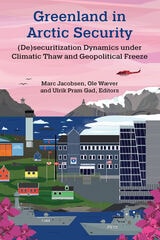
Greenland in Arctic Security
(De)securitization Dynamics under Climatic Thaw and Geopolitical FreezeMarc Jacobsen, Ole Wæver, and Ulrik Pram Gad, Editors
University of Michigan Press, 2024
By combining these different analyses, Greenland in Arctic Security provides new, theoretically informed discussions on how security politics can manifest across different scales and territorial borders. At times, these politics can have consequences beyond their original intent. With Greenland geopolitics and securitization theory of current interest to political and academic debates, this book offers timely insights for readers.
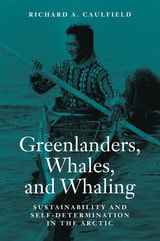
Greenlanders, Whales, and Whaling
Sustainability and Self-Determination in the ArcticRichard A. Caulfield
Dartmouth College Press, 2000
Greetings from New Nashville
How a Sleepy Southern Town Became "It" CitySteve Haruch
Vanderbilt University Press, 2020
In that span of two decades, the boundaries of Nashville did not change. But something did. Or rather, many somethings changed, and kept changing, until many who lived in Nashville began to feel they no longer recognized their own city. And some began to feel it wasn't their own city at all anymore as they were pushed to its fringes by rising housing costs. Between 1998 and 2018, the population of Nashville grew by 150,000. On some level, Nashville has always packaged itself for consumption, but something clicked and suddenly everyone wanted a taste. But why Nashville? Why now? What made all this change possible?
This book is an attempt to understand those transformations, or, if not to understand them, exactly, then to at least grapple with the question: What happened?

Gregg Bordowitz
I Wanna Be WellEdited by Robyn Farrell and Solveig Nelson
University of Chicago Press, 0
The first monograph to trace artist and activist Gregg Bordowitz’s visual practice.
For over four decades, Gregg Bordowitz has been a force in contemporary art, recognized for his work as an AIDS activist and an artist working in video, conceptual art, and institutional critique. During the 1980s, Bordowitz made vital contributions in the early years of ACT UP (AIDS Coalition to Unleash Power) in New York, where he cofounded video collectives including Testing the Limits and DIVA (Damn Interfering Video Activists). His collaborative activist work formed the foundation of his art practice—a sprawling, diverse, and deeply human endeavor that has explored his gay and Jewish identities within the context of the ongoing AIDS crisis.
Despite his expansive artistic production, activism, and influence, there has yet to be a full monographic exploration of Bordowitz’s work. This landmark volume serves as the first publication dedicated exclusively to his visual work, offering a comprehensive portrait of an artist in constant motion. I Wanna Be Well—named after the 1977 Ramones song—traces the emergence of his visual art practice. Developed in close collaboration with Bordowitz and a team of art historians, curators, scholars, poets, and artists who have worked with him over the years, this book reveals Bordowitz’s practice as an evolving investigation of how to live, teach, and make art through sustained acts of care, critique, and remembrance. Lavishly illustrated with color throughout, the essays, interviews, poetry, and other writings gathered here present a rich look at Bordowitz’s life and career.
Grenville Goodwin Among the Western Apache
Letters from the FieldEdited by Morris E. Opler
University of Arizona Press, 1973
During this same period, Morris Opler was studying the Chiricahua and Mescalero Apache in New Mexico. In order to exchange information about their studies, Goodwin and Opler began corresponding. Both men were convinced that a long-overdue, systematic comparison of Apachean cultures would yield significant results.

Grey Area
Regulating Amsterdam's CoffeeshopsScott Jacques
University College London, 2019
In Grey Area, Scott Jacques examines the policy surrounding coffeeshops with a huge stash of data, which he collected during two years of fieldwork in Amsterdam. How do coffeeshop owners and staff obey the rules? How are the rules broken, and why? The stories and statistics show that order in the midst of smoke is key to Dutch drug policy, vaporizing the idea that prohibition is better than regulation. Grey Area is a timely contribution in light of the recent reforms to cannabis policy worldwide.

Gridiron Capital
How American Football Became a Samoan GameLisa Uperesa
Duke University Press, 2022
Duke University Press Scholars of Color First Book Award recipient
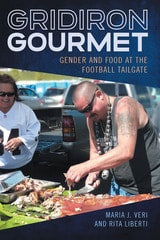
Gridiron Gourmet
Gender and Food at the Football TailgateMaria J. Veri
University of Arkansas Press, 2019
Tailgating, which began in the early 1900s as a quaint picnic lunch outside of the stadium, has evolved into a massive public social event with complex menus, extravagant creative fare, and state-of-art grilling equipment. Unlike traditional notions of the home kitchen, the blacktop is a highly masculine culinary environment in which men and the food they cook are often the star attractions.
Gridiron Gourmet examines tailgating as shown in television, film, advertising, and cookbooks, and takes a close look at the experiences of those tailgaters who are as serious about their brisket as they are about cheering on their favorite team, demonstrating how and why the gendered performances on the football field are often matched by the intensity of the masculine displays in front of grills, smokers, and deep fryers.
Grievance
In FragmentsGrant Farred
Prickly Paradigm Press, 2024
Grievance is an American mode of being that can be traced back to the Declaration of Independence, that is at the root of the Civil War and accounts in large measure for the failure of Reconstruction, that runs through the Civil Rights moment, and that showed itself again in the events of January 6, 2021. Grievance, in America, always concatenates with racism and evinces itself most violently in those moments when white supremacy, fallaciously, presents itself as being under attack. This book explores this elemental yet destructive thread of the American character.

Grieving Pregnancy
Memorializing Loss in Japanese Buddhism and American CatholicismMaureen L. Walsh
Rutgers University Press, 2025

Grime, Glitter, and Glass
The Body and the Sonic in Contemporary Black ArtNikki A. Greene
Duke University Press, 2024

Gringo Gulch
Sex, Tourism, and Social Mobility in Costa RicaMegan Rivers-Moore
University of Chicago Press, 2016
Rivers-Moore situates her ethnography at the intersections of gender, race, class, and national dimensions in the sex industry. Instead of casting sex workers as hapless victims and sex tourists as neoimperialist racists, she reveals each group as involved in a complicated process of class mobility that must be situated within the sale and purchase of leisure and sex. These interactions operate within an almost entirely unregulated but highly competitive market beyond the reach of the state—bringing a distinctly neoliberal cast to the market. Throughout the book, Rivers-Moore introduces us to remarkable characters—Susan, a mother of two who doesn’t regret her career of sex work; Barry, a teacher and father of two from Virginia who travels to Costa Rica to escape his loveless, sexless marriage; Nancy, a legal assistant in the Department of Labor who is shocked to find out that prostitution is legal and still unregulated. Gringo Gulch is a fascinating and groundbreaking look at sex tourism, Latin America, and the neoliberal state.

Gringolandia
Lifestyle Migration under Late CapitalismMatthew Hayes
University of Minnesota Press, 2018
A telling look at today’s “reverse” migration of white, middle-class expats from north to south, through the lens of one South American city
Even as the “migration crisis” from the Global South to the Global North rages on, another, lower-key and yet important migration has been gathering pace in recent years—that of mostly white, middle-class people moving in the opposite direction. Gringolandia is that rare book to consider this phenomenon in all its complexity.
Matthew Hayes focuses on North Americans relocating to Cuenca, Ecuador, the country’s third-largest city and a UNESCO World Heritage Site. Many began relocating there after the 2008 economic crisis. Most are self-professed “economic refugees” who sought offshore retirement, affordable medical care, and/or a lower–cost location. Others, however, sought adventure marked by relocation to an unfamiliar cultural environment and to experience personal growth through travel, illustrative of contemporary cultures of aging. These life projects are often motivated by a desire to escape economic and political conditions in North America.
Regardless of their individual motivations, Hayes argues, such North–South migrants remain embedded in unequal and unfair global social relations. He explores the repercussions on the host country—from rising prices for land and rent to the reproduction of colonial patterns of domination and subordination. In Ecuador, heritage preservation and tourism development reflect the interests and culture of European-descendent landowning elites, who have most to benefit from the new North–South migration. In the process, they participate in transnational gentrification that marginalizes popular traditions and nonwhite mestizo and indigenous informal workers. The contrast between the migration experiences of North Americans in Ecuador and those of Ecuadorians or others from such regions of the Global South in North America and Europe demonstrates that, in fact, what we face is not so much a global “migration crisis” but a crisis of global social justice.
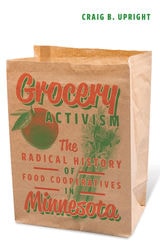
Grocery Activism
The Radical History of Food Cooperatives in MinnesotaCraig B. Upright
University of Minnesota Press, 2020
A key period in the history of food cooperatives that continues to influence how we purchase organic food today
Our notions of food co-ops generally don’t include images of baseball bat–wielding activists in the aisles. But in May 1975, this was the scene as a Marxist group known as the Co-op Organization took over the People’s Warehouse, a distribution center for more than a dozen small cooperative grocery stores in the Minneapolis area. The activist group’s goal: to curtail the sale of organic food. The People’s Warehouse quickly became one of the principal fronts in the political and social battle that Craig Upright explores in Grocery Activism. The story of the fraught relationship of new-wave cooperative grocery stores to the organic food industry, this book is an instructive case study in the history of activists intervening in capitalist markets to promote social change.
Focusing on Minnesota, a state with both a long history of cooperative enterprise and the largest number of surviving independent cooperative stores, Grocery Activism looks back to the 1970s, when the mission of these organizations shifted from political activism to the promotion of natural and organic foods. Why, Upright asks, did two movements—promoting cooperative enterprise and sustainable agriculture—come together at this juncture? He analyzes the nexus of social movements and economic sociology, examining how new-wave cooperatives have pursued social change by imbuing products they sell with social values. Rather than trying to explain the success or failure of any individual cooperative, his work shows how members of this fraternity of organizations supported one another in their mutual quest to maintain fiscal solvency, promote better food-purchasing habits, support sustainable agricultural practices, and extol the virtues of cooperative organizing. A foundational chapter in the history of organic food, Grocery Activism clarifies the critical importance of this period in transforming the politics and economics of the grocery store in America.

Groove Tube
Sixties Television and the Youth RebellionAniko Bodroghkozy
Duke University Press, 2001
Bodroghkozy argues that, in order to woo an increasingly lucrative baby boomer audience, television had to appeal to the social and political values of a generation of young people who were enmeshed in the hippie counterculture, the antiwar movement, campus protests, urban guerilla action—in general, a culture of rebellion. She takes a close look at the compromises and negotiations that were involved in determining TV content, as well as the ideological difficulties producers and networks faced in attempting to appeal to a youthful cohort so disaffected from dominant institutions. While programs that featured narratives about hippies, draft resisters, or revolutionaries are examined under this lens, Groove Tube doesn’t stop there: it also examines how the nation’s rebellious youth responded to these representations. Bodroghkozy explains how, as members of the first “TV generation,” some made sense of their societal disaffection in part through their childhood experience with this powerful new medium.
Groove Tube will interest sociologists, American historians, students and scholars of television and media studies, and others who want to know more about the 1960s.
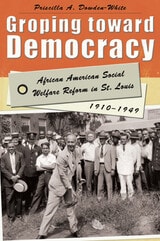
Groping toward Democracy
African American Social Welfare Reform in St. Louis, 1910-1949Priscilla A. Dowden-White
University of Missouri Press, 2011
In Groping toward Democracy: African American Social Welfare Reform in St. Louis, 1910–1949, historian Priscilla A. Dowden-White presents an on-the-ground view of local institution building and community organizing campaigns initiated by African American social welfare reformers. Through extensive research, the author places African American social welfare reform efforts within the vanguard of interwar community and neighborhood organization, reaching beyond the “racial uplift” and “behavior” models of the studies preceding hers. She explores one of the era’s chief organizing principles, the “community as a whole” idea, and deliberates on its relationship to segregation and the St. Louis black community’s methods of reform. Groping toward Democracy depicts the dilemmas organizers faced in this segregated time, explaining how they pursued the goal of full, uncontested black citizenship while still seeking to maximize the benefits available to African Americans in segregated institutions. The book’s nuanced mapping of the terrain of social welfare offers an unparalleled view of the progress brought forth by the early-twentieth-century crusade for democracy and equality.
By delving into interrelated developments in health care, education, labor, and city planning, Dowden-White deftly examines St. Louis’s African American interwar history. Her in-depth archival research fills a void in the scholarship of St. Louis’s social development, and her compelling arguments will be of great interest to scholars and teachers of American urban studies and social welfare history.

Gross Misbehavior and Wickedness
A Notorious Divorce in Early Twentieth-Century AmericaJean Elson
Temple University Press, 2017
Gross Misbehavior and Wickedness—the charges Nina levied at James for his adultery (with the family governess) and extreme cruelty—recounts the protracted legal proceedings in juicy detail.
Jean Elson uses court documents, correspondence, journals, and interviews with descendants to recount the salacious case. In the process, she underscores how divorce—in an era when women needed husbands for economic support—was associated with women’s aspirations for independence and rights. The Walkers’ dispute, replete with plot twists and memorable characters, sheds light on a critical period in the evolution of American culture.
Ground Stone Analysis
A Technological ApproachJenny L Adams
University of Utah Press, 2002
Archaeologists refer to stone artifacts that are altered by or used to alter other items through abrasion, pecking, or polishing as "ground stone." This includes mortars, and pestles used to process vegetal materials, pigments, clays, and tempers; abraders, polishing stones, and hammerstones for manufacturing other artifacts; and artifacts shaped by abrasion or pecking, such as axes, pipes, figurines, ornaments, and architectural pieces. Because there is a fuzzy line between flaked and ground stone artifacts, some analysts state that ground stone includes any stone item not considered flaked.
This manual presents a flexible yet structured method for analyzing stone artifacts and classifying them in meaningful categories. The analysis techniques record important attributes based on design, manufacture, and use.
Part I contains discussions on determining function, classification, attributes of grinding technology, use-wear analysis, modeling tool use, utilization of ethnographic and experimental resources, and research suggestions. Part II contains definitions and descriptions of artifact types. Here the author also seeks to unravel the knot that has developed around conflicting application of terms.
A significant reference for any archaeological fieldworker or student who encounters such artifacts.
Ground Stone Analysis
A Technological ApproachJenny L. Adams
University of Utah Press, 2014
Archaeologists define stone artifacts that are altered by or used to alter other items through abrasion, pecking, or polishing as “ground stone.” This includes mortars and pestles, abraders, polishers stones, and hammerstones, and artifacts shaped by abrasion or pecking, such as axes, pipes, figurines, ornaments, and architectural pieces.
The first edition of Ground Stone Analysis sparked interest around the world. In the decade following its publication, there have been many advances in scientific technology and developments in ethnographic and experimental research. The second edition incorporates these advances, including examples of international research that have utilized a technological approach to ground stone analysis. This study presents a flexible yet structured method for analyzing and classifying stone artifacts. These techniques record important attributes based on design, manufacturing, and use and are applicable to any collection in the world.
The methods presented guide quantitative and qualitative assessments of artifacts and assemblages. Recording forms and instructions for completing them will be available on the University of Utah Press’s open access portal at www.UofUpress.com. Ground Stone Analysis is an important, useful reference for any archaeological field worker or student who encounters ground stone artifacts and is interested in learning more about the people who used them.
Click here to view Appendices A-F
Grounded Authority
The Algonquins of Barriere Lake against the StateShiri Pasternak
University of Minnesota Press, 2017
Western Political Science Association's Clay Morgan Award for Best Book in Environmental Political Theory
Canadian Studies Network Prize for the Best Book in Canadian Studies
Nominated for Best First Book Award at NAISA
Honorable Mention: Association for Political and Legal Anthropology Book Prize
Since Justin Trudeau’s election in 2015, Canada has been hailed internationally as embarking on a truly progressive, post-postcolonial era—including an improved relationship between the state and its Indigenous peoples. Shiri Pasternak corrects this misconception, showing that colonialism is very much alive in Canada. From the perspective of Indigenous law and jurisdiction, she tells the story of the Algonquins of Barriere Lake, in western Quebec, and their tireless resistance to federal land claims policy.
Grounded Authority chronicles the band’s ongoing attempts to restore full governance over its lands and natural resources through an agreement signed by settler governments almost three decades ago—an agreement the state refuses to fully implement. Pasternak argues that the state’s aversion to recognizing Algonquin jurisdiction stems from its goal of perfecting its sovereignty by replacing the inherent jurisdiction of Indigenous peoples with its own, delegated authority. From police brutality and fabricated sexual abuse cases to an intervention into and overthrow of a customary government, Pasternak provides a compelling, richly detailed account of rarely documented coercive mechanisms employed to force Indigenous communities into compliance with federal policy.
A rigorous account of the incredible struggle fought by the Algonquins to maintain responsibility over their territory, Grounded Authority provides a powerful alternative model to one nation’s land claims policy and a vital contribution to current debates in the study of colonialism and Indigenous peoples in North America and globally.

Grounded
Perpetual Flight . . . and Then the PandemicChristopher Schaberg
University of Minnesota Press, 2020
As commercial flight is changing dramatically and its future remains unclear, a look at how we got here
Grounded: Perpetual Flight . . . and Then the Pandemic considers the time leading up to the COVID-19 pandemic and the ensuing global plummet in commercial flight. Mobility studies scholar Christopher Schaberg tours the newly opened airport terminal outside of New Orleans (MSY) in late 2019, and goes on to survey the broad cultural landscape of empty airports and grounded planes in the early months of the novel coronavirus’s spread in 2020. The book culminates in a reflection on the future of air travel: what may unfold, and what parts of commercial flight are almost certainly relics of the past. Grounded blends journalistic reportage with cultural theory and philosophical inquiry in order to offer graspable insights as well as a stinging critique of contemporary air travel.

Grounding Practice
Dancing Haiti on Tè GliseDasha A. Chapman
University of Michigan Press, 2027
Grounding Practice: Dancing Haiti on Tè Glise tracks the responsive physical techniques Haitian dancers devised for navigating precarity, making place, and igniting repair in the decade following the 2010 earthquake. Via the concept “grounding practice,” which connotes the powerful community building and placemaking made possible by the teaching and practice of Haitian folkloric dance, this interdisciplinary study illustrates how the embodied labor of revitalizing traditions took on increasing relevance as vital reparative worldmaking amidst instability, or tè glise–—Haitian Creole for sliding land or slippery ground.
The dancers in Grounding Practice regenerate understandings of Haitian dance’s potential for fomenting decolonial consciousness, meaningfully sustaining African-derived culture, birthing new social relations, activating the queer potentials of tradition, and ultimately making place. Through ethnography and vivid descriptions, Dasha A. Chapman’s attention to embodied knowledge illuminates how movement practice operates as a site of theorization—wherein not just subjectivity, but also concepts of sovereignty, relation, and futurity, are articulated through the body. Paying homage to important forebears yet moving us beyond static narratives, this study brings our understanding of Haitian dance—and Haiti—through expansive landscapes into the contemporary.
Grounding the Cloud
Urbanism in the Shadow of DataAli Fard
University of Minnesota Press, 2026
A detailed foray into the material and spatial realities of cloud computing
Since the 1990s, technologists have promoted a vision of the “cloud” as a shapeless and intangible entity. Grounding the Cloud peers through this hazy façade to reveal the earthly material foundations of global computing and data extraction. Tracing the historical and technological development of the cloud computing paradigm, Ali Fard exposes an ever-evolving project in which ideologies, economic models, and marketing images collude to shape our shared urban environments.
Demonstrating how technology’s spatial footprint now stretches to nearly every corner of the globe, Grounding the Cloud analyzes the often-hidden infrastructures that facilitate platform capitalism—from the mines extracting rare earth minerals in remote regions to the vast global network of fiber-optic cables at the bottom of the oceans to the nondescript data centers that sit on the peripheries of major urban areas. Meanwhile, with compelling examples of smart-city initiatives and corporate campuses, Fard shows how the future of urbanism is deeply intertwined with the growing economies of data extraction.
Breaking down the myth of a clean and efficient tech urbanism, this book makes visible the complex material geographies and geopolitics that undergird today’s most powerful and omnipresent corporations. A timely critique of the growing agency of tech platforms in determining the future of urban space, Grounding the Cloud offers an essential framework for understanding the shifting relationship between technology and urbanization.
Retail e-book files for this title are screen-reader friendly with images accompanied by short alt text and/or extended descriptions.
Grounds of Engagement
Apartheid-Era African-American and South African WritingStephane Robolin
University of Illinois Press, 2019
Grow Food, Cook Food, Share Food
Perspectives on Eating from the Past and a Preliminary Agenda for the FutureKen Albala
Oregon State University Press, 2013
Albala considers what the traditions we have needlessly lost have to offer us today: a serious appreciation for the generative power of the earth, the great pleasures of cooking food, and the joy of sharing food with family, friends, and even strangers. In Albala’s compelling book, obscure seventeenth-century Italian farmer-nobles, Roman statesmen, and quirky cheesemakers from the fifteenth and sixteenth centuries all offer lessons about our relationship with the food we eat.
A rare form of historical activism, Grow Food, Cook Food, Share Food is written for anyone who likes to eat, loves to cook, and knows how to throw a great dinner party.
An OSU Press Horning Visiting Scholars Publication.

Grow Up, Will You?
Maturity, Development, and Behavior through LifeMichael Rocque
Temple University Press, 2027
Maturation is a way we evaluate others and ourselves. It serves as a guidepost for our own behavior, often starting in adolescence. In Grow Up, Will You? Michael Rocque considers maturation across the life-course, providing a cultural and scholarly history of maturation before demonstrating how components of maturation develop, how they can be influenced, and their consequences for behavior and other life outcomes. He shows how biology and psychology propel us towards adulthood, but also how milestones, like graduating or getting married, produce a point of maturation.
Looking at examples from pop cultural movies, such as Juno, where a pregnant teenager faces numerous challenges and is forced to grow up quickly, Rocque explains how maturity has been defined and how it evolves. Such examples address key issues related to maturation, including timing and social expectations. He also introduces scientific conceptualizations and breaks down ways of measuring.
Ultimately, Grow Up, Will You? offers practical knowledge, programs, and approaches that can positively influence human development while also protecting a sense of childhood. Now grow up, will you?
Growing Gardens, Building Power
Food Justice and Urban Agriculture in BrooklynJustin Sean Myers
Rutgers University Press, 2023
Growing Girls
The Natural Origins of Girls' Organizations in AmericaMiller, Susan A
Rutgers University Press, 2007
Surprisingly, the "girl problem"?a crisis caused by the transition from a sheltered, family-centered Victorian childhood to modern adolescence where self-control and a strong democratic spirit were required of reliable citizens?was also solved by way of traditionally masculine, adventurous, outdoor activities, as practiced by the Girl Scouts, the Camp Fire Girls, and many other similar organizations.
Susan A. Miller explores these girls' organizations that sprung up in the first half of the twentieth century from a socio-historical perspective, showing how the notions of uniform identity, civic duty, "primitive domesticity," and fitness shaped the formation of the modern girl.
Growing Old in a New China
Transitions in Elder CareRose K. Keimig
Rutgers University Press, 2021
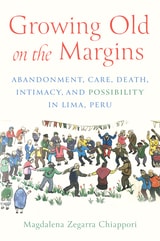
Growing Old on the Margins
Abandonment, Care, Death, Intimacy, and Possibility in Lima, PeruMagdalena Zegarra Chiappori
Rutgers University Press, 2027
Growing Old on the Margins is a moving portrait of aging at the edge of social life. Set in a state-run shelter for older adults in urban Lima, Peru, the book traces the everyday lives of men and women who have been left behind by family, institutions, and the promises of care. Based on more than two years of close ethnographic engagement, it follows residents as they navigate loneliness, illness, intimacy, and the quiet anticipation of death. Through small gestures—shared silences, requests for affection, moments of tenderness and conflict—the book reveals how people strive to remain present in a world that offers them little reason to hope. Care appears here not as a simple act of kindness, but as a fragile and uneven practice, shaped by scarcity, power, and moral ambiguity. Attentive to suffering without romanticizing it, Growing Old on the Margins reflects on what it means to age, endure, and remain human when one’s life is no longer considered worthy of attention.
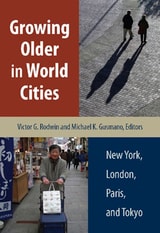
Growing Older in World Cities
New York, London, Paris, and TokyoVictor G. Rodwin
Vanderbilt University Press, 2006
New York, London, Paris, and Tokyo are the four largest cities among the wealthiest, most developed nations of the world. The essays commissioned for this volume compare what it is like to grow older in these cities with respect to health care, quality of life, housing, and long-term care. The contributors look beyond aggregate national data to highlight the importance of how local authorities implement policies.

Growing Up Abolitionist
The Story of the Garrison ChildrenHarriet Hyman Alonso
University of Massachusetts Press, 2002
Much has been written about the life of abolitionist William Lloyd Garrison (1805–1879), but relatively little attention has been paid to his wife, Helen Benson Garrison, and their seven children. In Growing Up Abolitionist, Garrison's public image recedes into the background and the family's private world takes center stage.
The lives of the Garrison children were shaped within the context of the great nineteenth-century campaigns against slavery, racism, violence, war, imperialism, and the repression of women. As children, they became apprentices of these movements and grew up adoring their dissident parents. Collectively and individually, they carried on their parents' values in distinctive ways.
Their path was not always easy. When the Civil War erupted, the entire family had to come to grips with a basic contradiction in their lives. While each member passionately yearned for the end of slavery, all but the eldest son, George, who served as an officer with the 55th Massachusetts Colored Regiment, opposed military participation.
The Civil War years also brought four marriage partners into the Garrisons' lives-Ellen Wright, Lucy McKim, and Annie Anthony (all abolitionist daughters) and Henry Villard, a German-born journalist who later became a railroad magnate and publisher of the New York Evening Post and the Nation.
Raised by loving parents to be political activists, the Garrison children, as adults, assumed positions as leaders or participants in those radical causes of their day that most closely reflected their upbringing: racial justice, women's rights, anti-imperialism, and peace.

Growing Up American
How Vietnamese Children Adapt to Life in the United StatesMin Zhou
Russell Sage Foundation, 1998
Growing Up Ethnic
Nationalism and the Bildungsroman in African American and Jewish American FictionJaptok, Martin
University of Iowa Press, 2005
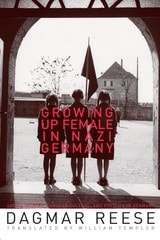
Growing Up Female in Nazi Germany
Dagmar Reese, Translated by William Templer
University of Michigan Press, 2010
Dagmar Reese, however, depicts another picture of life in the BDM. She explores how and in what way the National Socialists were successful in linking up with the interests of contemporary girls and young women and providing them a social life of their own. The girls in the BDM found latitude for their own development while taking on responsibilities that integrated them within the folds of the National Socialist state.
"At last available in English, this pioneering study provides fresh insights into the ways in which the Nazi regime changed young 'Aryan' women's lives through appeals to female self-esteem that were not obviously defined by Nazi ideology, but drove a wedge between parents and children. Thoughtful analysis of detailed interviews reveals the day-to-day functioning of the Third Reich in different social milieus and its impact on women's lives beyond 1945. A must-read for anyone interested in the gendered dynamics of Nazi modernity and the lack of sustained opposition to National Socialism."
--Uta Poiger, University of Washington
"In this highly readable translation, Reese provocatively identifies Nazi girls league members' surprisingly positive memories and reveals significant implications for the functioning of Nazi society. Reaching across disciplines, this work is for experts and for the classroom alike."
--Belinda Davis, Rutgers University
Dagmar Reese is The Moses Mendelssohn Zentrum Potsdam researcher on the DFG-project "Georg Simmels Geschlechtertheorien im ‚fin de siecle' Berlin", 2004
William Templer is a widely published translator from German and Hebrew and is on the staff of Rajamangala University of Technology Srivijaya.
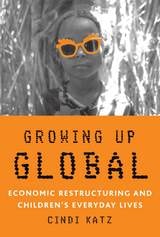
Growing Up Global
Economic Restructuring and Children’s Everyday LivesCindi Katz
University of Minnesota Press, 2004
Growing Up Global examines the processes of development and global change through the perspective of children’s lives in two seemingly disparate places: New York City and a village in northern Sudan. At the book’s core is a longitudinal ethnographic study of children growing up in a Sudanese village that was included in a large state-sponsored agricultural program in the year they were born. It follows a small number of children intermittently from ten years of age to early adulthood, concentrating particularly on their work and play, which together trained the children for an agrarian life centered around the family, a life that was quickly becoming obsolete.
Shifting her focus to largely working-class families in New York City in the 1980s and 1990s, Katz is able to expose unsuspected connections with the Sudanese experience in the effects on children of a constantly changing, capitalist environment—the decline of manufacturing jobs and the increase in knowledge-based jobs—in which young people with few skills and stunted educations face bleak employment prospects. In teasing out how “development” transforms the grounds on which these young people come of age, Cindi Katz provides a textured analysis of the importance of knowledge in the ability of people, families, and communities to reproduce themselves and their material social practices over time.
Growing Up Nisei
Race, Generation, and Culture among Japanese Americans of California, 1924-49David K. Yoo
University of Illinois Press, 2000
The place occupied by Japanese Americans within the annals of United States history often begins and ends with their cameo appearance as victims of incarceration after the bombing of Pearl Harbor. In this provocative work, David K. Yoo broadens the scope of Japanese American history to examine how the second generation—the Nisei—shaped its identity and negotiated its place within American society.
Tracing the emergence of a dynamic Nisei subculture, Yoo shows how the foundations laid during the 1920s and 1930s helped many Nisei adjust to the upheaval of the concentration camps. Schools, racial-ethnic churches, and the immigrant press served not merely as waystations to assimilation but as tools by which Nisei affirmed their identity in connection with both Japanese and American culture. The Nisei who came of age during World War II formed identities while negotiating complexities of race, gender, class, generation, economics, politics, and international relations.
A thoughtful consideration of the gray area between accommodation and resistance, Growing Up Nisei reveals the struggles and humanity of a forgotten generation of Japanese Americans.
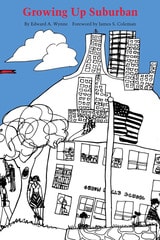
Growing Up Suburban
By Edward A. Wynne
University of Texas Press, 1977
The prosperous, comfortable, and homogeneous American suburb is a relatively recent institution in American history. Edward Wynne was one of the first to take a serious look at the quality of suburban childhood, where, he contends, we have ignored the developments affecting the largest pool of children and parents in America. This provocative volume argues that the total environment of the suburban youth—the school, the community, the family, and the workplace—is in need of drastic reform.
Wynne advances a forthright argument for the preservation of traditional moral values and criticizes excessive individualism in fragmented modern society. Focusing on the schools and extending his discussion to the larger community, he pleads for more attention to such goals as honesty, persistence, patriotism, and loyalty.
Post-industrial suburban environments, Wynne argues, do not provide the diversity of experience children must have to become successful adults. Strong community ties to the schools are basic to Wynne's thesis. Within the schools, he recommends changes in grading systems, student responsibilities and assignments, selection and training of teachers and administrators, structuring and evaluation of programs, and the socioeconomic and age mix of pupils. A feeling of cooperation and unity within the school itself is a major goal. Wynne also suggests steps for moving toward more heterogeneous, close-knit communities, where citizens have greater local control. For example, community members could restrict movement into the community and should aim for a mix of blue- and white-collar residents.
Wynne's arguments clearly run counter to fashion and are sure to provoke a high level of debate among educators of differing philosophic persuasions. Civil libertarians, feminists, civil rights advocates, and others are bound to make spirited replies to many of Wynne's contentions. Growing Up Suburban will be of interest to educators, public school administrators, parents, and suburban dwellers.
Growing Up With Television
Everyday Learning Among Young AdolescentsJoellen Fisherkeller
Temple University Press, 2002
Growing Up Working
The Public Politics of Children's Labor in PeruLeigh M. Campoamor
University of Texas Press, 2026
A deep ethnography on children who work in Lima, Peru, and a critique of the global anti-child labor effort.
Children juggling at traffic lights and selling candy from car to car are ubiquitous in Lima, Peru’s capital, making the country a hotspot for child labor reformers. Even when the intentions behind the anti-child labor movement are benevolent, in practice this effort affects children and their families in unexpected and often harmful ways.
Anthropologist Leigh Campoamor argues that the concept of child labor is stuck in an industrial-era framing that fails to capture the reality of working youth in the global south today. Following children who work on Lima’s streets through their daily routines, Campoamor shows how these youth—and often their mothers—become subjects of moral intervention by state institutions, NGOs, and the general public. Arguing that reformers reinforce hierarchies of race, class, gender and age in the name of children's rights, Growing Up Working shows how working youth assert agency while also performing invisible caring and affective labor that doesn't count as work under neoliberal capitalism. Campoamor follows the children at the center of her ethnography into adulthood, providing an intimate and dynamic portrait of their lives while critiquing the ways anti–child labor discourses imagine working children’s futures.
Growing Up in a Culture of Respect
Child Rearing in Highland PeruBy Inge Bolin
University of Texas Press, 2006
Far from the mainstream of society, the pastoral community of Chillihuani in the high Peruvian Andes rears children who are well-adjusted, creative, and curious. They exhibit superior social and cognitive skills and maintain an attitude of respect for all life as they progress smoothly from childhood to adulthood without a troubled adolescence. What makes such child-rearing success even more remarkable is that "childhood" is not recognized as a distinct phase of life. Instead, children assume adult rights and responsibilities at an early age in order to help the community survive in a rugged natural environment and utter material poverty.
This beautifully written ethnography provides the first full account of child-rearing practices in the high Peruvian Andes. Inge Bolin traces children's lives from birth to adulthood and finds truly amazing strategies of child rearing, as well as impressive ways of living that allow teenagers to enjoy the adolescent stage of their lives while contributing significantly to the welfare of their families and the community. Throughout her discussion, Bolin demonstrates that traditional practices of respect, whose roots reach back to pre-Columbian times, are what enable the children of the high Andes to mature into dignified, resilient, and caring adults.
Growing Up in a Land Called Honalee
The Sixties in the Lives of American ChildrenJoel P. Rhodes
University of Missouri Press, 2017
Because the preadolescent years are, according to the child development researchers, the most formative, Joel P. Rhodes focuses on the cohort born between 1956 and 1970 who have never been quantitatively defined as a generation, but whose preadolescent world was nonetheless quite distinct from that of the “baby boomers.” Rhodes examines how this group understood the historical forces of the 1960s as children, and how they made meaning of these forces based on their developmental age. He is concerned not only with the immediate imprint of the 1960s on their young lives, but with how their perspective on the era influenced them as adults.