Results by title
5159 books match the query 'Biography' and 142 start with g
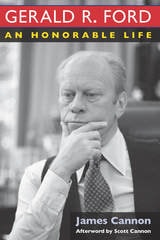
Gerald R. Ford
An Honorable LifeJames Cannon
University of Michigan Press, 2013
“Not since Harry Truman succeeded Franklin D. Roosevelt twenty-nine years earlier had the American people known so little about a man who had stepped forward from obscurity to take the oath of office as President of the United States.”
—from Chapter 4
This is a comprehensive narrative account of the life of Gerald Ford written by one of his closest advisers, James Cannon. Written with unique insight and benefiting from personal interviews with President Ford in his last years, Gerald R. Ford: An Honorable Lifeis James Cannon’s final look at the simple and honest man from the Midwest.
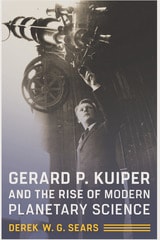
Gerard P. Kuiper and the Rise of Modern Planetary Science
Derek W. G. Sears
University of Arizona Press, 2019
Kuiper was an acclaimed astronomer of binary stars and white dwarfs when he accidentally discovered that Titan, the massive moon of Saturn, had an atmosphere. This turned our understanding of planetary atmospheres on its head, and it set Kuiper on a path of staggering discoveries: Pluto was not a planet, planets around other stars were common, some asteroids were primary while some were just fragments of bigger asteroids, some moons were primary and some were captured asteroids or comets, the atmosphere of Mars was carbon dioxide, and there were two new moons in the sky, one orbiting Uranus and one orbiting Neptune.
He produced a monumental photographic atlas of the Moon at a time when men were landing on our nearest neighbor, and he played an important part in that effort. He also created some of the world’s major observatories in Hawai‘i and Chile. However, most remarkable was that the keys to his success sprang from his wartime activities, which led him to new techniques. This would change everything.
Sears shows a brilliant but at times unpopular man who attracted as much dislike as acclaim. This in-depth history includes some of the twentieth century’s most intriguing scientists, from Harold Urey to Carl Sagan, who worked with—and sometimes against—the father of modern planetary science. Now, as NASA and other space agencies explore the solar system, they take with them many of the ideas and concepts first described by Gerard P. Kuiper.
Gerda Walther
A Life in PhenomenologyAntonio Calcagno
Northwestern University Press, 2027
Exploring the rich phenomenological and psychological insights of Gerda Walther
This is the first major study of Gerda Walther (1897–1977), an important but underappreciated figure in the early phenomenological movement and one of the founding members of the coeducational Freiburg Phenomenological Society. Walther saw herself, along with Hedwig Conrad Martius and Edith Stein, as a student of the phenomenological movement charged with the preservation of its philosophical legacy and the extension of its practice. As Antonio Calcagno elucidates in this learned but accessible biographical account, she served as an important bridge between the Freiburg school of phenomenology, marked by Edmund Husserl’s idealism, and the realist branch that emerged in Munich, where she completed her studies with Alexander Pfänder. Her work has remained little known, however, especially to English-language readers.
Calcagno provides a comprehensive picture of Walther’s philosophical corpus and ideas, from her early investigations to her later writings, while highlighting the originality of her own phenomenological work. He shows how she challenged certain key claims of phenomenology and provided unique solutions to the problems she encountered. The phenomenology that Walther leaves us with is deeply marked by her emphasis on the importance of psyche, spirit, and personhood for achieving a phenomenological methodology and understanding. We find in her work a rich phenomenological psychology that explores not only the limit phenomena of the discipline but also the deep structure of inner psychic life framed in personalist terms.

Gerrard Winstanley
The Digger's Life and LegacyJohn Gurney
Pluto Press, 2012
John Gurney reveals the hidden history of Winstanley and his movement. As part of the radical ferment which swept England at the time of the civil war, Winstanley led the Diggers in taking over land and running it as 'a common treasury for all' – provoking violent opposition from landowners. Gurney also guides us through Winstanley's writings, which are among the most remarkable prose writings of his age.
Gerrard Winstanley: The Digger's Life and Legacy is a must read for students of English history and all those seeking to re-claim the commons today.
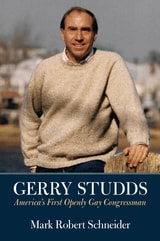
Gerry Studds
America's First Openly Gay CongressmanMark Robert Schneider
University of Massachusetts Press, 2017
The defining moment of his career, however, came in 1983, when he was censured by the House for having had an affair with a page ten years previously. On the floor of Congress, Studds confessed to having behaved inappropriately and then courageously declared that he was a gay man—becoming the country's first openly gay member of Congress. Defying all expectations, Studds won reelection in a bruising campaign. For the rest of his career, he remained loyal to his constituents' concerns while also championing AIDS research and care, leading the effort in Congress to allow gays and lesbians to serve in the military, and opposing the Defense of Marriage Act. Once a deeply conflicted man, he ultimately found a balance between his public service and his private life, which included a happy, legally recognized marriage.
Gershom Scholem
An Intellectual BiographyAmir Engel
University of Chicago Press, 2017
As Engel shows, in his search for the truth of Jewish mysticism Scholem molded the vast literature of Jewish mystical lore into a rich assortment of stories that unveiled new truths about the modern condition. Positioning Scholem’s work and life within early twentieth-century Germany, Palestine, and later the state of Israel, Engel intertwines Scholem’s biography with his historiographical work, which stretches back to the Spanish expulsion of Jews in 1492, through the lives of Rabbi Isaac Luria and Sabbatai Zevi, and up to Hasidism and the dawn of the Zionist movement. Through parallel narratives, Engel touches on a wide array of important topics including immigration, exile, Zionism, World War One, and the creation of the state of Israel, ultimately telling the story of the realizations—and failures—of a dream for a modern Jewish existence.
Gershom Scholem
From Berlin to Jerusalem and BackNoam Zadoff
Brandeis University Press, 2017
Gertrud Kolmar
A Literary LifeDieter Kühn
Northwestern University Press, 2013
Linda Marianiello here translates into English for the first time Dieter Kühn’s highly praised and definitive biography of one of Germany’s greatest poets, Gertrud Kolmar. Kolmar carried German-language poetry to new heights, speaking truth in a time when many poets collapsed in the face of increasing Nazi repression. Born Gertrud Käthe Chodziesner in Berlin in 1894, she completed her first collection, Poems, in 1917. She took her pen name, Kolmar, from the name of the town where her family originated.
Kolmar’s third collection of poems appeared in 1938 but soon disappeared in the wake of the overall repression of Jewish authors. At the time, she served as secretary to her father, Ludwig Chodziesner, a prominent lawyer. In 1941, the Nazis compelled her to work in a German armaments factory. Even as a forced laborer, the strength of her poetic voice grew, perhaps reaching its highest level before her deportation to Auschwitz. From gentle nature verses to stirring introspection, these are poems in which we can still find ourselves today. Both she and her father died in Nazi concentration camps, he in 1942, she the following year. The translation of Dieter Kühn’s biography conveys the tragic, yet courageous, life of a great poet to an English-speaking audience.
Get Your Elbow Off the Horn
Stories through the YearsJack R. Gannon
Gallaudet University Press, 2020
Many of his recollections are brief sketches that reveal much about being Deaf—and about being human. From reflecting on the difficult choices parents must make for their children, to recounting awkward communication exchanges, Gannon marries good humor with a poignant advocacy for sign language rights. His stories preserve and share Deaf American life and culture as he experienced it.
Get a Shot of Rhythm and Blues
The Arthur Alexander StoryRichard Younger
University of Alabama Press, 2000
The first book-length biography of an influential country/soul legend whose songs have been recorded by the Beatles, the Rolling Stones, and Bob Dylan.
Get a Shot of Rhythm and Blues chronicles the rise, fall, and rebirth of Arthur Alexander, an African American singer-songwriter whose music influenced many of the rock and soul musicians of the 1960s. Although his name is not well known today, Alexander's musical legacy is vast. His 1962 song "You Better Move On" was the first hit to emerge from the fledgling Muscle Shoals FAME studio in Alabama, and his fusion of country and soul and his heartfelt vocals on such songs as "Anna (Go to Him)" and "Every Day I Have to Cry" were revered by musicians including the Beatles, the Rolling Stones, and Bob Dylan, all of whom recorded his songs.
Alexander's story is a tragic one, with a brief, redemptive finale. His meteoric rise after the release of "You Better Move On" gave way to lean years caused both by his drug and alcohol abuse and by the mishandling of his career by producers and managers. In 1977, he quit the music business, but his music lived on. In 1992, Alexander returned to
the studio and recorded the critically praised album Lonely Just Like Me. Just three months after the album's release in March 1993, he suffered a heart attack in the offices of his music publisher in Nashville and died three days later.
In telling Alexander's story, Richard Younger captures the burgeoning music scenes in Muscle Shoals and Nashville during the 1960s and 1970s and recovers the life of a fascinating musician whose influence was international. Younger's account is enriched by his interviews with more than 200 artists, family members, and friends--such as Rick Hall, Billy Sherrill, Charlie McCoy, Chuck Jackson, Gerry Marsden, and Kris Kristofferson--and includes an abundance of never-before-seen photographs.
Get the Picture
A Personal History of PhotojournalismJohn G. Morris
University of Chicago Press, 2002
Find out in Get the Picture, a personal history of fifty years of photojournalism by one of the top journalists of the twentieth century. John G. Morris brought us many of the images that defined our era, from photos of the London air raids and the D-Day landing during World War II to the assassination of Robert Kennedy. He tells us the inside stories behind dozens of famous pictures like these, which are reproduced in this book, and provides intimate and revealing portraits of the men and women who shot them, including Robert Capa, Henri Cartier-Bresson, and W. Eugene Smith. A firm believer in the power of images to educate and persuade, Morris nevertheless warns of the tremendous threats posed to photojournalists today by increasingly chaotic wars and the growing commercialism in publishing, the siren song of money that leads editors to seek pictures that sell copies rather than those that can change the way we see the world.
Getting Used to Being Shot At
Mark K. Christ
University of Arkansas Press, 2002

Ghost Ranch
Lesley Poling-Kempes
University of Arizona Press, 2005
Building on the history of the Abiquiu region that she told in Valley of Shining Stone, Ghost Ranch historian Lesley Poling-Kempes now unfolds the story of this celebrated retreat. She traces its transformation from el Rancho de los Brujos, a hideout for legendary outlaws, to a renowned cultural mecca and one of the Southwest’s premier conference centers.
First a dude ranch, Ghost Ranch became a magical sanctuary where the veil between heaven and earth seemed almost transparent. Focusing on those who visited from the 1920s and ’30s until the 1990s, Poling-Kempes tells how O’Keeffe and others—from Boston Brahmin Carol Bishop Stanley to paleontologist Edwin H. Colbert, Los Alamos physicists to movie stars—created a unique community that evolved into the institution that is Ghost Ranch today. For this book, Poling-Kempes has drawn on information not available when Valley of Shining Stone was written. The biography of Juan de Dios Gallegos has been enhanced and definitively corrected. The Robert Wood Johnson (of Johnson & Johnson) years at Ghost Ranch are recounted with reminiscences from family members. And the memories of David McAlpin Jr. shed light on how the Princeton circle that included the Packs, the Johnson brothers, the Rockefellers, and the McAlpins ended up as summer neighbors on the high desert of New Mexico.
After Arthur Pack’s gift of the ranch to the Presbyterian Church in 1955, Ghost Ranch became a spiritual home for thousands of people still awestruck by the landscape that O’Keeffe so lovingly committed to canvas; yet the care taken to protect Ghost Ranch’s land and character has preserved its sense of intimacy. By relating its remarkable story, Poling-Kempes invites all visitors to better appreciate its place as an honored wilderness—and to help safeguard its future.

Ghost Riders of Baghdad
Soldiers, Civilians, and the Myth of the SurgeDaniel A. Sjursen
University Press of New England, 2015
Ghosts Of Slavery
A Literary Archaeology of Black Women’s LivesJenny Sharpe
University of Minnesota Press, 2002
Questions traditional assumptions about power and agency in slave women’s everyday lives.
Through their open defiance, women like Harriet Tubman and Sojourner Truth had a significant impact on the institution of slavery. But what of the countless other women who did not commit public or even private acts of resistance? Are their stories worthy of our attention? While some scholars imply that only the struggle for freedom was legitimate, Jenny Sharpe complicates the linear narrative-from slavery to freedom and literacy-that emerged from the privileging of autobiographical accounts like that of Frederick Douglass. She challenges a paradigm that equates agency with resistance and self-determination, and introduces new ways to examine negotiations for power within the constraints of slavery.
In Ghosts of Slavery, Sharpe introduces a wider range of everyday practices by examining the lives of three distinctive Caribbean women: a maroon leader, a mulatto concubine, and a fugitive slave. Through them she explains how the diasporic experience of slavery enabled black women to claim an authority that they didn’t possess in Africa, how concubines empowered themselves through their mimicry of white women, and how less-privileged slave women manipulated situations that they were powerless to change. Finding the highly mediated portrayal of slave women in the historical records limited and sometimes misleading, Sharpe turns to unconventional sources for investigating these women’s lives. In this fascinating and historically rich account, she calls for new strategies of reading that question traditional narratives of history, and she finds alternative ways to integrate oral storytelling, slave songs, travel writing, court documents, proslavery literature, and contemporary literature into black history. Ultimately, this layered approach not only produces a more complex picture of the slave women’s agency than conventional readings, it encourages a more nuanced understanding of the roles of slaves in the history of slavery.
Giant in the Shadows
The Life of Robert T. LincolnJason Emerson
Southern Illinois University Press, 2012
University Press Books for Public and Secondary Schools, 2013 edition
Book of the Year by the Illinois State historical Society, 2013
Although he was Abraham and Mary Lincoln’s oldest and last surviving son, the details of Robert T. Lincoln’s life are misunderstood by some and unknown to many others. Nearly half a century after the last biography about Abraham Lincoln’s son was published, historian and author Jason Emerson illuminates the life of this remarkable man and his achievements in Giant in the Shadows: The Life of Robert T. Lincoln. Emerson, after nearly ten years of research, draws upon previously unavailable materials to offer the first truly definitive biography of the famous lawyer, businessman, and statesman who, much more than merely the son of America’s most famous president, made his own indelible mark on one of the most progressive and dynamic eras in United States history.
Born in a boardinghouse but passing his last days at ease on a lavish country estate, Robert Lincoln played many roles during his lifetime. As a president’s son, a Union soldier, an ambassador to Great Britain, and a U.S. secretary of war, Lincoln was indisputably a titan of his age. Much like his father, he became one of the nation’s most respected and influential men, building a successful law practice in the city of Chicago, serving shrewdly as president of the Pullman Car Company, and at one time even being considered as a candidate for the U.S. presidency.
Along the way he bore witness to some of the most dramatic moments in America’s history, including Robert E. Lee’s surrender at Appomattox Courthouse; the advent of the railroad, telephone, electrical, and automobile industries; the circumstances surrounding the assassinations of three presidents of the United States; and the momentous presidential election of 1912. Giant in the Shadows also reveals Robert T. Lincoln’s complex relationships with his famous parents and includes previously unpublished insights into their personalities. Emerson reveals new details about Robert’s role as his father’s confidant during the brutal years of the Civil War and his reaction to his father’s murder; his prosecution of the thieves who attempted to steal his father’s body in 1876 and the extraordinary measures he took to ensure it would never happen again; as well as details about the painful decision to have his mother committed to a mental facility. In addition Emerson explores the relationship between Robert and his children, and exposes the actual story of his stewardship of the Lincoln legacy—including what he and his wife really destroyed and what was preserved. Emerson also delves into the true reason Robert is not buried in the Lincoln tomb in Springfield but instead was interred at Arlington National Cemetery.
Meticulously researched, full of never-before-seen photographs and new insight into historical events, Giant in the Shadows is the missing chapter of the Lincoln family story. Emerson’s riveting work is more than simply a biography; it is a tale of American achievement in the Gilded Age and the endurance of the Lincoln legacy.
Giant
George Stevens, a Life on FilmMarilyn Ann Moss
University of Wisconsin Press, 2015
Moss documents Stevens’s role as a powerful director who often had to battle the heads of major studios to get his films made his way. She traces the four decades Stevens was a major Hollywood player and icon, from his earliest days at the Hal Roach Studios—where he learned to be a cameraman, writer, and director for Laurel and Hardy features—up to when his films made millions at the box office and were graced by actors such as Elizabeth Taylor, James Dean, Alan Ladd, and Montgomery Clift.
Gichigami Hearts
Stories and Histories from MisaabekongLinda LeGarde Grover
University of Minnesota Press, 2021
Award-winning author Linda LeGarde Grover interweaves family and Ojibwe history with stories from Misaabekong (the place of the giants) on Lake Superior
Long before there was a Duluth, Minnesota, the massive outcropping that divides the city emerged from the ridge of gabbro rock running along the westward shore of Lake Superior. A great westward migration carried the Ojibwe people to this place, the Point of Rocks. Against this backdrop—Misaabekong, the place of the giants—the lives chronicled in Linda LeGarde Grover’s book unfold, some in myth, some in long-ago times, some in an imagined present, and some in the author’s family history, all with a deep and tenacious bond to the land, one another, and the Ojibwe culture.
Within the larger history, Grover tells the story of her ancestors’ arrival at the American Fur Post in far western Duluth more than two hundred years ago. Their fortunes and the family’s future are inextricably entwined with tales of marriages to voyageurs, relocations to reservation lands, encounters with the spirits of the lake and wood creatures, the renewal of life—in myth and in art, the search for meaning in the transformations of our day is always vital. Finally, in one man’s struggles, age-old tribulations, the intergenerational traumas of extended families and communities, and a uniquely Ojibwe appreciation for the natural and spiritual worlds converge, forging the Ojibwe worldview and will to survive as his legacy to his descendants.
Blending the seen and unseen, the old and the new, the amusing and the tragic and the hauntingly familiar, this lyrical work encapsulates a way of life forever vibrant at the Point of Rocks.
Gideon Lincecum, 1793-1874
A BiographyBy Lois Wood Burkhalter
University of Texas Press, 1965
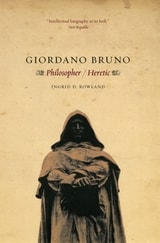
Giordano Bruno
Philosopher / HereticIngrid D. Rowland
University of Chicago Press, 2009
Giordano Bruno (1548–1600) is one of the great figures of early modern Europe, and one of the least understood. Ingrid D. Rowland’s biography establishes him once and for all as a peer of Erasmus, Shakespeare, and Galileo—a thinker whose vision of the world prefigures ours.
Writing with great verve and erudition, Rowland traces Bruno’s wanderings through a sixteenth-century Europe where every certainty of religion and philosophy has been called into question, and reveals how he valiantly defended his ideas to the very end, when he was burned at the stake as a heretic on Rome’s Campo de’ Fiori.
“A loving and thoughtful account of [Bruno’s] life and thought, satires and sonnets, dialogues and lesson plans, vagabond days and star-spangled nights. . . . Ingrid D. Rowland has her reasons for preferring Bruno to Copernicus, Tycho Brahe, Johannes Kepler, even Galileo and Leonardo, and they’re good ones.”—John Leonard, Harper’s
“Whatever else Bruno was, he was wild-minded and extreme, and Rowland communicates this, together with a sense of the excitement that his ideas gave him. . . . It’s that feeling for the explosiveness of the period, and [Rowland’s] admiration of Bruno for participating in it—indeed, dying for it—that is the central and most cherishable quality of the biography.”—Joan Acocella, New Yorker
“Rowland tells this great story in moving, vivid prose, concentrating as much on Bruno’s thought as on his life. . . . His restless mind, as she makes clear, not only explored but transformed the heavens.”—Anthony Grafton, New York Review of Books
“[Bruno] seems to have been an unclassifiable mixture of foul-mouthed Neapolitan mountebank, loquacious poet, religious reformer, scholastic philosopher, and slightly wacky astronomer.”—Anthony Gottlieb, New York Times Book Review
“A marvelous feat of scholarship. . . . This is intellectual biography at its best.”—Peter N. Miller, New Republic
“An excellent starting point for anyone who wants to rediscover the historical figure concealed beneath the cowl on Campo de’ Fiori.”—Paula Findlen, Nation
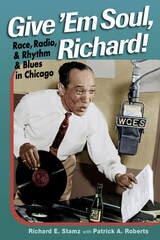
Give 'Em Soul, Richard!
Race, Radio, and Rhythm and Blues in ChicagoRichard E. Stamz with Patrick A. Roberts, Foreword by Robert Pruter
University of Illinois Press, 2010
As either observer or participant, radio deejay and political activist Richard E. Stamz witnessed every significant period in the history of blues and jazz in the last century. From performing first-hand as a minstrel in the 1920s to broadcasting Negro League baseball games in a converted 1934 Chrysler to breaking into Chicago radio and activist politics and hosting his own television variety show, the remarkable story of his life also is a window into milestones of African American history throughout the twentieth century.
Dominating the airwaves with his radio show "Open the Door, Richard" on WGES in Chicago, Stamz cultivated friendships with countless music legends, including Willie Dixon, Sonny Boy Williamson, Little Walter, Howlin' Wolf, Memphis Slim, and Leonard Chess. The pioneering Chicago broadcaster and activist known as "The Crown Prince of Soul" died in 2007 at the age of 101, but not before he related the details of his life and career to college professor Patrick A. Roberts. Give 'Em Soul, Richard! surrounds Stamz's memories of race records, juke joints, and political action in Chicago's Englewood neighborhood with insights on the larger historical trends that were unfolding around him in radio and American history.
Narrated by Stamz, this entertaining and insightful chronicle includes commentary by Roberts as well as reflections on the unlikely friendship and collaboration between a black radio legend and a white academic that resulted in one of the few existing first-hand accounts of Chicago's post-war radio scene.
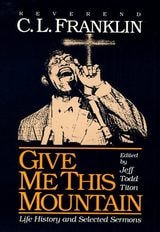
Give Me This Mountain
LIFE HISTORY AND SELECTED SERMONSReverend C. L. Franklin
University of Illinois Press, 1989
Few black preachers have been better known that the Reverend C. L. Franklin; none has been considered a better preacher. This collection of twenty of Franklin's best sermons shows the development of his style. A learned man, Franklin had attended both seminary and college, yet in his sermons used the old-fashioned, extemporaneous style of preaching, "whooping" or chanting, combining oratory and intoned poetry to reach both head and heart.
Dozens of Franklin's sermons were released on record albums, and he went on preaching tours with gospel groups that included his daughter, Aretha Franklin, reaching virtually every corner of the United States.
This volume begins with Franklin's life history, told in his own words.
In an afterword, Jeff Titon reviews the African-American sermon tradition
and Franklin's place in it.
Given Up for You
A Memoir of Love, Belonging, and BeliefErin O. White
University of Wisconsin Press, 2018
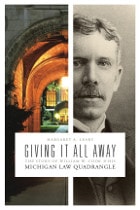
Giving It All Away
The Story of William W. Cook and His Michigan Law QuadrangleMargaret A. Leary
University of Michigan Press, 2011
“Margaret Leary's carefully researched book illuminates a complex man who marked his university in a truly enduring way."
---Francis X. Blouin Jr., Director, Bentley Historical Library, and Professor, School of Information and Department of History, University of Michigan
“Generations of Michigan Law grads have passed on myths about their generous but eccentric benefactor. . . . Now Margaret Leary has given us the real story, and it reads like a gripping whodunit."
---Theodore J. St. Antoine, James E. and Sarah A. Degan Professor Emeritus of Law and Past Dean, University of Michigan Law School
“In an absorbing book, Margaret Leary unstintingly investigates unpublished, archival material to unravel enigmas surrounding William Wilson Cook. She brings to life Cook's brilliant interactions with powerful moguls of the early twentieth century as she traces his lofty, philanthropic mission to elevate the legal profession."
---Ilene H. Forsyth, Arthur F. Thurnau Professor of the History of Art, emerita, University of Michigan
William W. Cook, born in 1858 and a graduate of the University of Michigan and of its law school, made his fortune by investing in the burgeoning telegraph and communications industry, as well as in representing the Mackay Company in their frequent tumultuous battles with Western Union and the U.S. government. Though Cook entered New York society and never returned to Michigan after receiving his law degree, he decided not just to give his alma mater the finest physical facility of any existing law school, but to donate permanent resources that would permit the law school to engage in groundbreaking legal research. However, his generosity proved controversial and eventually very litigious. Margaret A. Leary places Cook's story in the rich social and cultural context of his time and paints a fascinating portrait of a complex figure whose legacy continues to shape the University of Michigan.
Cover photographs: (left) Gregory Fox Photography; (right) Ann B. Cook collection, photo by Russell R. Serbay
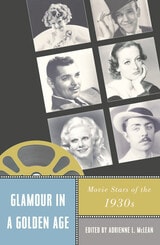
Glamour in a Golden Age
Movie Stars of the 1930sMcLean, Adrienne L
Rutgers University Press, 2010
Stardom is approached as an effect of, and influence on, the particular historical and industrial contexts that enabled these actors and actresses to be discovered, featured in films, publicized, and to become recognized and admired-sometimes even notorious-parts of the cultural landscape. Using archival and popular material, including fan and mass market magazines, other promotional and publicity material, and of course films themselves, contributors also discuss other artists who were incredibly popular at the time, among them Ann Harding, Ruth Chatterton, Nancy Carroll, Kay Francis, and Constance Bennett.
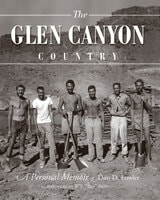
Glen Canyon Country, The
A Personal MemoirDon D Fowler
University of Utah Press, 2011
In his new book, The Glen Canyon Country, archaeologist Don D. Fowler shares the history of a place and the peoples who sojourned there over the course of several thousand years. To tell this story, he weaves his personal experience as a student working on the Glen Canyon Salvage Project with accounts of early explorers, geologists, miners, railroad developers, settlers, river runners, and others who entered this magical place. The book details the canyon’s story via historical and scientific summaries, biographical sketches, personal memoir, and previously unpublished photos of the land and its explorers.
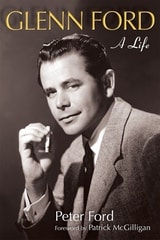
Glenn Ford
A LifePeter Ford
University of Wisconsin Press, 2011
Glenn Ford: A Life chronicles the volatile life, relationships, and career of the renowned actor, beginning with his move from Canada to California and his initial discovery of theater. It follows Ford’s career in diverse media—from film to television to radio—and shows how Ford shifted effortlessly between genres, playing major roles in dramas, noir, westerns, and romances.
This biography by Glenn Ford’s son, Peter Ford, offers an intimate view of a star’s private and public life. Included are exclusive interviews with family, friends, and professional associates, and snippets from the Ford family collection of diaries, letters, audiotapes, unpublished interviews, and rare candid photos. This biography tells a cautionary tale of Glenn Ford’s relentless infidelities and long, slow fade-out, but it also embraces his talent-driven career. The result is an authentic Hollywood story that isn’t afraid to reveal the truth.
Best Books for General Audiences, selected by the American Association of School Librarians
Best Books for General Audiences, selected by the Public Library Reviewers
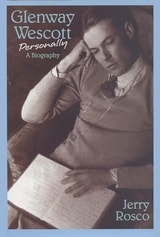
Glenway Wescott Personally
A BiographyJerry Rosco
University of Wisconsin Press, 2002
As a writer, Glenway Wescott (1901–1987) left behind several novels, including The Grandmothers and The Pilgrim Hawk, noted for their remarkable lyricism. As a literary figure, Wescott also became a symbol of his times. Born on a Wisconsin farm in 1901, he associated as a young writer with Hemingway, Stein, and Fitzgerald in 1920s Paris and subsequently was a central figure in New York’s artistic and gay communities. Though he couldn’t finish a novel after the age of forty-five, he was just as famous as an arts impresario, as a diarist, and for the company he kept: W. H. Auden, Christopher Isherwood, Marianne Moore, Somerset Maugham, E. M. Forster, Joseph Campbell, and scores of other luminaries.
In Glenway Wescott Personally, Jerry Rosco chronicles Wescott’s long and colorful life, his early fame and later struggles to write, the uniquely privileged and sometimes tortured world of artistic creation. Rosco sensitively and insightfully reveals Wescott’s private life, his long relationship with Museum of Modern Art curator Monroe Wheeler, his work with sex researcher Alfred Kinsey that led to breakthrough findings on homosexuality, and his kinship with such influential artists as Jean Cocteau, George Platt-Lynes, and Paul Cadmus.
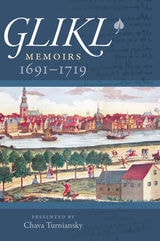
Glikl
Memoirs 1691-1719Annotated by and with an Introduction by Chava Turniansky
Brandeis University Press, 2019
These words from the memoirs Glikl bas Leib wrote in Yiddish between 1691 and 1719 shed light on the life of a devout and worldly woman. Writing initially to seek solace in the long nights of her widowhood, Glikl continued to record the joys and tribulations of her family and community in an account unique for its impressive literary talents and strong invocation of self. Through intensely personal recollections, Glikl weaves stories and traditional tales that express her thoughts and beliefs. While influenced by popular Yiddish moral literature, Glikl’s frequent use of first person and the significance she assigns her own life experience set the work apart. Informed by fidelity to the original Yiddish text, this authoritative new translation is fully annotated to explicate Glikl’s life and times, offering readers a rich context for appreciating this classic work.
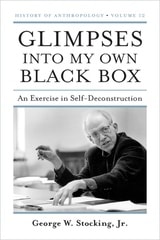
Glimpses into My Own Black Box
An Exercise in Self-DeconstructionGeorge W. Stocking
University of Wisconsin Press, 2010
George W. Stocking, Jr., has spent a professional lifetime exploring the history of anthropology, and his findings have shaped anthropologists’ understanding of their field for two generations. Through his meticulous research, Stocking has shown how such forces as politics, race, institutional affiliations, and personal relationships have influenced the discipline from its beginnings. In this autobiography, he turns his attention to a subject closer to home but no less challenging. Looking into his own “black box,” he dissects his upbringing, his politics, even his motivations in writing about himself. The result is a book systematically, at times brutally, self-questioning.
An interesting question, Stocking says, is one that arouses just the right amount of anxiety. But that very anxiety may be the ultimate source of Stocking’s remarkable intellectual energy and output. In the first two sections of the book, he traces the intersecting vectors of his professional and personal lives. The book concludes with a coda, “Octogenarian Afterthoughts,” that offers glimpses of his life after retirement, when advancing age, cancer, and depression changed the tenor of his reflections about both his life and his work.
This book is the twelfth and final volume of the influential History of Anthropology series.
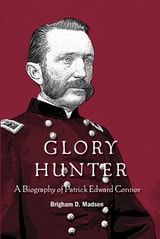
Glory Hunter
A Biography of Patric Edward ConnorBrigham Madsen
University of Utah Press, 1990
The life of Patrick Edward Connor serves as a half-century slice of western American history. After leaving New York City, where he had arrived at the age of twelve as a poor Irish immigrant, the nineteen-year-old youth joined the U.S. Army in 1839. He fought in the war with Mexico and then joined the gold rush in California until marrying and settling down in Stockton in 1854.
The Civil War found him volunteering again, this time as colonel of California troops sent to the Utah Territory to protect the mail lines from Indian attacks. Bitterly anti-Mormon, Connor spent the war years alternately engaging in a war of words with Brigham Young or in fighting Indians in northern Utah and present-day Wyoming. After the Civil War, ex-Major General Connor began mining operations in Utah and Nevada, ventures that went from boom to bust. He spent his final years in straitened financial circumstances.
Patrick Edward Connor was a “Man of the West,” possessing both its prejudices and its democratic, independent spirit. His greatest success lay as a military leader, and he would have agreed that he was made for war, not peace. He left an imprint on the history of the American West, remembered as the founder of Fort Douglas, as the “first gentile in Utah,” the “father of Utah mining,” and the “father of the Liberal Party in Utah.”
Glorying in Tribulation
The Lifework of Sojourner TruthErlene Stetson
Michigan State University Press, 1994
In Glorying in Tribulation, Stetson presents a new dimension of Sojourner Truth's character. Much of the information regarding this oft-quoted African American woman is either the stuff of legend or is in dispute. This important new biography takes both legend and fact and sets them into a larger historical context. The authors utilize archival sources, and other forms of direct and indirect evidence to create a better understanding of Truth. We see her victories as well as her defeats--we see her as a real person. Truth comes alive in the pages of this book through her poignant, prophetic words and we realize that what she spoke of in the nineteenth century is just as relevant to us today.
Glorying in Tribulation offers students, scholars, and teachers of American history and culture studies a comprehensive look and a new perspective on Truth's contribution to American history. It is a long-overdue, exciting interpretation of the meaning of Sojourner Truth's life.

Go Ahead in the Rain
Notes to A Tribe Called QuestBy Hanif Abdurraqib
University of Texas Press, 2019
A New York Times Best Seller
2019 National Book Award Longlist, Nonfiction
2019 Kirkus Book Prize Finalist, Nonfiction
A February IndieNext Pick
Named A Most Anticipated Book of 2019 by Buzzfeed, Nylon, The A. V. Club, CBC Books, and The Rumpus, and a Winter's Most Anticipated Book by Vanity Fair and The Week
Starred Reviews: Kirkus and Booklist
"Warm, immediate and intensely personal."—New York Times
How does one pay homage to A Tribe Called Quest? The seminal rap group brought jazz into the genre, resurrecting timeless rhythms to create masterpieces such as The Low End Theory and Midnight Marauders. Seventeen years after their last album, they resurrected themselves with an intense, socially conscious record, We Got It from Here . . . Thank You 4 Your Service, which arrived when fans needed it most, in the aftermath of the 2016 election. Poet and essayist Hanif Abdurraqib digs into the group’s history and draws from his own experience to reflect on how its distinctive sound resonated among fans like himself. The result is as ambitious and genre-bending as the rap group itself.
Abdurraqib traces the Tribe's creative career, from their early days as part of the Afrocentric rap collective known as the Native Tongues, through their first three classic albums, to their eventual breakup and long hiatus. Their work is placed in the context of the broader rap landscape of the 1990s, one upended by sampling laws that forced a reinvention in production methods, the East Coast–West Coast rivalry that threatened to destroy the genre, and some record labels’ shift from focusing on groups to individual MCs. Throughout the narrative Abdurraqib connects the music and cultural history to their street-level impact. Whether he’s remembering The Source magazine cover announcing the Tribe’s 1998 breakup or writing personal letters to the group after bandmate Phife Dawg’s death, Abdurraqib seeks the deeper truths of A Tribe Called Quest; truths that—like the low end, the bass—are not simply heard in the head, but felt in the chest.
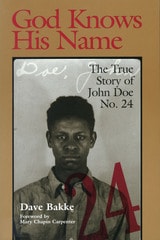
God Knows His Name
The True Story of John Doe No. 24David Bakke. Foreword by Mary Chapin Carpenter
Southern Illinois University Press, 2000
Police found John Doe No. 24 in the early morning hours of October 11, 1945, in Jacksonville, Illinois. Unable to communicate, the deaf and mute teenager was labeled “feeble minded” and sentenced by a judge to the nightmarish jumble of the Lincoln State School and Colony in Jacksonville. He remained in the Illinois mental health care system for over thirty years and died at the Sharon Oaks Nursing Home in Peoria on November 28, 1993.
Deaf, mute, and later blind, the young black man survived institutionalized hell: beatings, hunger, overcrowding, and the dehumanizing treatment that characterized state institutions through the 1950s. In spite of his environment, he made friends, took on responsibilities, and developed a sense of humor. People who knew him found him remarkable.
Award-winning journalist Dave Bakke reconstructs the life of John Doe No. 24 through research into a half-century of the state mental health system, personal interviews with people who knew him at various points during his life, and sixteen black-and-white illustrations. After reading a story about John Doe in the New York Times, acclaimed singer-songwriter Mary Chapin Carpenter wrote and recorded “John Doe No. 24” and purchased a headstone for his unmarked grave. She contributes a foreword to this book.
As death approached for the man known only as John Doe No. 24, his one-time nurse Donna Romine reflected sadly on his mystery. “Ah, well,” she said, “God knows his name.”
God's Scrivener
The Madness and Meaning of Jones VeryClark Davis
University of Chicago Press, 2023
In September of 1838, a few months after Ralph Waldo Emerson delivered his controversial Divinity School address, a twenty-five-year-old tutor and divinity student at Harvard named Jones Very stood before his beginning Greek class and proclaimed himself “the second coming.” Over the next twenty months, despite a brief confinement in a mental hospital, he would write more than three hundred sonnets, many of them in the voice of a prophet such as John the Baptist or even of Christ himself—all, he was quick to claim, dictated to him by the Holy Spirit.
Befriended by the major figures of the Transcendentalist movement, Very strove to convert, among others, Elizabeth and Sophia Peabody, Bronson Alcott, Nathaniel Hawthorne, and most significantly, Emerson himself. Though shocking to some, his message was simple: by renouncing the individual will, anyone can become a “son of God” and thereby usher in a millennialist heaven on earth. Clark Davis’s masterful biography shows how Very came to embody both the full radicalism of Emersonian ideals and the trap of isolation and emptiness that lay in wait for those who sought complete transcendence.
God’s Scrivener tells the story of Very’s life, work, and influence in depth, recovering the startling story of a forgotten American prophet, a “brave saint” whose life and work are central to the development of poetry and spirituality in America.

Gogol
V. V. Gippius
Duke University Press, 1989
Goin' Railroading
Two Generations of Colorado StoriesMargaret Coel
University Press of Colorado, 1998
Goin' Railroading is the story of two generations of such men, four members of the Speas family who, from the open cabs of narrow-gauge steam engines, watched Colorado grow.
Sam Speas tells the story of his father, Sam Speas Sr., who left Missouri in 1883 to become an engineer in Colorado, and recounts his own experiences and those of his brothers and fellow railroaders on the Colorado and Southern Railway, from the golden era of the narrow-gauge lines in South Park to the final days of steam power on the Front Range and the coming of the diesel engine.
His stories are a profound document of a vanished way of life, a testament to the courage and tenacity of the early citizens of Colorado, and a tribute to the rough-hewn, often gallant men who took the trains through incredible, almost unbelievable, hazards. Funny, tragic, bittersweet, and poignant, Goin' Railroading is a remarkable book that brings a portion of the history and people of an earlier Colorado to vibrant life.

Going for Wisconsin Gold
Stories of Our State OlympiansJessie Garcia
Wisconsin Historical Society Press, 2016
U-S-A , U-S-A is a familiar refrain heard in every Olympics, but truly it could be Wis-con-sin! Since pioneering hurdler Alvin Kraenzlein got his start here in the 1890s, the Badger State has nurtured, trained, or schooled more than 400 Olympic athletes in a vast array of sports. Wisconsin’s varied landscape and climate accommodate serious athletes whether they compete on ice, on snow, in the water, or on terra firma. We tend to bring a Midwestern work ethic to our endeavors, and our Olympians have often been hailed in the press and in public as being among the most humble and down-to-earth people around. Our state boasts a thriving youth sports culture where many homegrown athletes get their start; others are drawn here by our world-class universities, athletic facilities, and coaching talent. No matter how an athlete comes to Wisconsin, the state becomes part of his or her Olympic story. In Going for Wisconsin Gold, author Jessie Garcia provides insights into the lives of athletes who grew up or spent time in Wisconsin on their journey to the Olympic Games. She shares some of our competitors most captivating tales—from those that have become legend, like Dan Jansen’s heartbreaking falls and subsequent magical gold, to unlikely brushes with glory (do you know which Green Bay Packer was almost an Olympic high jumper?). Featuring the athletes’ personal stories, many of them told here in detail for the first time, plus pictures from their private collections, Going for Wisconsin Gold provides a new and deeper understanding of the sacrifices, joy, pain, heartbreak, and complete dedication it takes to reach the world’s grandest sporting competition.
Gone to the Swamp
Raw Materials for the Good Life in the Mobile-Tensaw DeltaRobert Leslie Smith
University of Alabama Press, 2008
Normal0falsefalsefalseMicrosoftInternetExplorer4Normal0falsefalsefalseMicrosoftInternetExplorer4
To make a living here, one had to be capable, confident, clever and inventive, know a lot about survival, be able to fashion and repair tools, navigate a boat, fell a tree, treat a snakebite, make a meal from whatever was handy without asking too many questions about it, and get along with folks.
This fascinating and instructive book is the careful and unpretentious account of a man who was artful in all the skills needed to survive and raise a family in an area where most people would be lost or helpless. Smith’s story is an important record of a way of life beginning to disappear, a loss not fully yet realized. We are lucky to have a work that is both instructive and warm-hearted and that preserves so much hard-won knowledge.
Good Company
A Mining Family in Fairbanks, AlaskaSarah Isto
University of Alaska Press, 2006
With grace and perception, Good Company celebrates the joys and challenges of family life on the Alaska frontier.
Good Medicine, Hard Times
Memoir of a Combat Physician in IraqEdward P. Horvath, MD
The Ohio State University Press, 2022
Good Morning Blues
The Autobiography of Count BasieCount Basie
University of Minnesota Press, 2016
Count Basie was one of America’s pre-eminent and influential jazz pianists, bandleaders, and composers, known for such classics as “Jumpin’ at the Woodside,” “Goin’ to Chicago Blues,” “Sent for You Yesterday and Here You Come Today,” and “One O’Clock Jump.” In Good Morning Blues, Basie recounts his life story to Albert Murray, from his childhood years playing ragtime with his own pickup band at dances and pig roasts, to his years in New York City in search of opportunity, to rollicking anecdotes of Basie’s encounters with Fats Waller, Frank Sinatra, Fred Astaire, Sammy Davis Jr., Quincy Jones, Billie Holliday, and Tony Bennett. In this classic of jazz autobiography that was ten years in the making, Albert Murray brings the voice of Count Basie to the printed page in what is both testimony and tribute to an incredibly rich life.
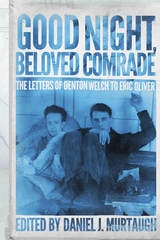
Good Night, Beloved Comrade
The Letters of Denton Welch to Eric OliverEdited and with an introduction by Daniel J. Murtaugh
University of Wisconsin Press, 2017
Though German bombs were ravaging Britain, Welch wrote in his published work about the idyllic landscapes and local people he observed in Kent. There, in 1943, he met and fell in love with Eric Oliver, a handsome, intelligent, but rather insecure "landboy"—an agricultural worker with the wartime Land Army. Oliver would become a companion, comrade, lover, and caretaker during the last six years of Welch's life. All fifty-one letters that Welch wrote to Oliver are collected and annotated here for the first time. They offer a historical record of life amidst the hardship, deprivation, and fear of World War II, and also are a timeless testament of one young man's tender and intimate emotions, his immense courage in adversity, and his continual struggle for love and creative existence.
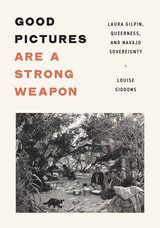
Good Pictures Are a Strong Weapon
Laura Gilpin, Queerness, and Navajo SovereigntyLouise Siddons
University of Minnesota Press, 2024
What are the limits of political solidarity, and how can visual culture contribute to social change?
A fundamental dilemma exists in documentary photography: can white artists successfully portray Indigenous lives and communities in a manner that neither appropriates nor romanticizes them? With an attentive and sensitive eye, Louise Siddons examines lesbian photographer Laura Gilpin’s classic 1968 book The Enduring Navaho to illuminate the intersectional politics of photography, Navajo sovereignty, and queerness over the course of the twentieth century.
Gilpin was a New York–trained fine arts photographer who started working with Navajo people when her partner accepted a job as a nurse in Arizona. She spent more than three decades documenting Navajo life and creating her book in collaboration with Navajo friends and colleagues. Framing her lesbian identity and her long relationship with the Navajo people around questions of allyship, Good Pictures Are a Strong Weapon addresses the long and problematic history of White photographers capturing images of Native life. Simultaneously, Siddons uses Gilpin’s work to explore the limitations of White advocacy in a political moment that emphasized the need for Indigenous visibility and voices.
Good Pictures Are a Strong Weapon introduces contemporary Diné (Navajo) artists as interlocutors, critics, and activists whose work embodies and extends the cultural sovereignty politics of earlier generations and makes visible the queerness often left implicit in Gilpin’s photographs. Siddons puts their work in conversation with Gilpin’s, taking up her mandate to viewers and readers of The Enduring Navajo to address Navajo aesthetics, traditions, politics, and people on their own terms.
Retail e-book files for this title are screen-reader friendly with images accompanied by short alt text and/or extended descriptions.
Good Roots
Writers Reflect on Growing Up in OhioLisa Watts
Ohio University Press, 2007
Winner of the Ohioana Library’s 2008 Ohio Legacy Citation
2014-2015 Choose to Read Ohio selection
“A good place to be from.” That’s how some people might characterize the Buckeye State. The writings in Good Roots: Writers Reflect on Growing Up in Ohio, are testimony to the truth of that statement. By prominent writers such as P. J. O’Rourke, Susan Orlean, and Alix Kates Shulman, these contributions are alternately nostalgic, irreverent, and sincere, and offer us a personal sense of place. Their childhoods are as varied as their work. Some were raised in urban Cleveland, Akron, and Cincinnati, others in the small Ohio towns that typify the Midwest, and still others in the countryside. Yet what they have to tell us about their roots resonates with a shared heritage, a sense of what is universal and enduring about growing up in the heartland.
Their collective résumé reads like a literary Who’s Who, including four Pulitzer Prizes, several National Book Awards, and many prestigious fellowships. Good Roots is also plain good reading from some of our country’s most accomplished contemporary writers.
Contributors include: Jill Bialosky, Dan Cryer, Michael Dirda, Elizabeth Dodd, Anthony Doerr, Rita Dove, Ian Frazier, Dale Keiger, Andrea Louie, Kathleen Dean Moore, Mary Oliver, Susan Orlean, P. J. O’Rourke, Julie Salamon, Scott Russell Sanders, Alix Kates Shulman, Jeffery Smith, James Toedtman, and Mark Winegardner.
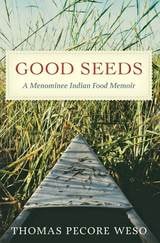
Good Seeds
A Menominee Indian Food MemoirThomas Pecore Weso
Wisconsin Historical Society Press, 2027
To the Menominee people, the "good seeds” of life are the manomin, or wild rice, that also gives the tribe its name. In this unique food memoir, Tribal member Thomas Pecore Weso takes readers on a cook’s journey through Wisconsin’s North Woods tribal lands, connecting Menominee food—beaver, trout, blackberry, wild rice, maple sugar, partridge—to the colorful individuals who taught him Indigenous values and traditions. Featuring more than forty recipes, Good Seeds keeps those traditions alive for future generations.
With a rare perspective as a Native American anthropologist and artist, Weso mixes a poignant personal story with the seeds of Menominee cooking traditions. He tells of the foods and the people who helped shape the person he became. His grandfather Moon was a medicine man, whose morning prayers formed the foundation for all the day’s meals. His grandmother Jennie “made fire” each morning in a wood-burning stove and oversaw huge breakfasts of wild game, fish, and fruit pies. His uncles taught him to hunt bear, deer, squirrels, raccoons, and skunks for the daily larder. Along with authentic family recipes, Weso recalls favorite foods served at the Menominee fair and at local diners.
In Good Seeds, adventurous cooks will gain insight and inspiration from Weso’s recipes, and readers of all stripes will appreciate the often-humorous stories about reservation life during the mid-twentieth century.

Good Water
Kevin Holdsworth
University Press of Colorado, 2016
In essays that combine memoir with biography of place, Kevin Holdsworth creates a public history of the land he calls home: Good Water, Utah. The high desert of south-central Utah is at the heart of the stories he tells here—about the people, the “survivors and casualties” of the small, remote town—and is at the heart of his own story.
Holdsworth also explores history at a personal level: how Native American history is preserved by local park officials; how Mormon settlers adapted to remote, rugged places; how small communities attract and retain those less likely to thrive closer to population centers; and how he became involved in local politics. He confronts the issues of land use and misuse in the West, from the lack of water to greed and corruption over natural resources, but also considers life’s simple pleasures like the value of scenery and the importance of occasionally tossing a horseshoe.
Good Water’s depiction of modern-day Utah and exploration of friendships and bonding on the Western landscape will fascinate and entice readers in the West and beyond.

Good-Bye to Old Peking
The Wartime Letters Of U.S. Marine Captain John Seymour Letcher, 1937-1939John Seymour Letcher
Ohio University Press, 1998
Captain Letcher describes the flavor of life in pre-Communist China — the food, servants, cold Peking winters and torrid summers, hunting, and excursions to the major tourist sites.
But his letters also tell of the Japanese slaughter of Chinese troops in the opening days of the Sino-Japanese War. He wrote about life in a city under Japanese occupation and the stirring story of the Chinese guerrillas rebounding from devastating defeat.
These letters and accompanying introduction, preface, and notes, draw attention to the Western experience in a place and time largely overlooked by military historians and modern China specialists.

Good-bye to the Mermaids
A Childhood Lost in Hitler's BerlinKarin Finell
University of Missouri Press, 2026

Goodbye, My Tribe
An Evangelical ExodusVic Sizemore
University of Alabama Press, 2020
Sizemore began writing these essays with the aim of exploring and understanding what happened when the mythology of his “tribe” crumbled from beneath his feet. He draws heavily on his upbringing and his family history as a framework for how his “tribe” of white evangelicals have found ways to reconcile Christianity with what the author finds to be troubling stances on many social issues, among them race, gender, sexuality, materialism, anti-intellectualism, and white supremacy.
In a clear-eyed and eloquent voice, Sizemore grapples movingly with his own bewilderment and chagrin as he struggles to reconcile the essential philosophical and moral decay that he believes many evangelicals have come to embrace. His insights, arranged topically and thematically and told through graceful and accessible prose, toggle between memoir and literary journalism, along a spectrum that touches on history, philosophy, theology, and personal reflections.
.