Results by title
3064 books match the query 'Social conditions' and 86 start with g
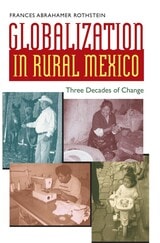
Globalization in Rural Mexico
Three Decades of ChangeBy Frances Abrahamer Rothstein
University of Texas Press, 2007
Winner, Society of the Anthropology of Work Book Prize, 2010
When the ever-intensifying global marketplace "modernizes" rural communities, who stands to gain? Can local residents most impacted by changes to their social fabric ever recover or even identify what has been lost?
Frances Abrahamer Rothstein uses thirty years of sustained anthropological fieldwork in the rural Mexican community of San Cosme Mazatecochco to showcase globalization's complexities and contradictions.
Rothstein's lucid work chronicles the changes in production, consumption, and social relations during three distinct periods: the Mexican "miracle," when economic development fueled mobility for a large segment of the population, including San Cosme's worker-peasants; the lost decade of the 1980s, when much of what had been gained was lost; and the recent period of trade liberalization and globalization, considered by many in Mexico and beyond as a panacea and a disaster at the same time.
After Mexico's textile industry decline in the late 1980s, some families of former textile workers in San Cosme opened home workshops—talleres—and a small-scale, textile-based economy took root. These families, who managed to prosper through their own trade and industry, demonstrate that those who rely on consumer demand for their livelihood need not always follow the dictate of the marketplace, but rather can position themselves assertively to influence alternative economic possibilities held close to their culture.
Employing rich ethnography and broad analysis, Rothstein focuses on how everyday life has been transformed by these processes, but shows also how important continuities with the past persist. She strikes a delicate balance between firmly grounded scientific study and a deep compassion for the subjects of her work, while challenging contemporary views of globalization and consumption.
Globalizing Afghanistan
Terrorism, War, and the Rhetoric of Nation BuildingZubeda Jalalzai and David Jefferess, eds.
Duke University Press, 2011
Contributors. Gwen Bergner, Maliha Chishti, Cheshmak Farhoumand-Sims, Nigel C. Gibson, Zubeda Jalalzai, David Jefferess, Altaf Ullah Khan, Kamran Rastegar, Rodney J. Steward, Imre Szeman
Globalizing the Caribbean
Political Economy, Social Change, and the Transnational Capitalist ClassJeb Sprague
Temple University Press, 2019
The beautiful Caribbean basin is fertile ground for a study of capitalism past and present. Transnational corporations move money and labor around the region, as national regulations are reworked to promote conditions benefiting private capital. Globalizing the Caribbean offers a probing account of the region’s experience of economic globalization while considering gendered and racialized social relations and the frequent exploitation of workers.
Jeb Sprague focuses on the social and material nature of this new era in the history of world capitalism. He combines an historical overview of capitalism in the region with theoretical analysis backed by case studies. Sprague elaborates upon the role of class formation and the restructuring of local states. He considers both U.S. hegemony, and how various upsurges from below and crises occur. He examines the globalization of the cruise ship and mining businesses, looks at the growth of migrant labor and reverse flow of remittances, and describes the evolving role of export processing and supranational associations. In doing so, Sprague shows how transnationally oriented elites have come to rule the Caribbean, and how capitalist globalization in the region occurs alongside shifting political, institutional, and organizational dynamics.

Globetrotting
African American Athletes and Cold War PoliticsDamion L. Thomas
University of Illinois Press, 2012

Gods and Vampires
Return to ChipayaNathan Wachtel
University of Chicago Press, 1994
Wachtel discovered that a series of recent deaths and misfortunes in Chipaya had been attributed to the evil powers of the Urus, a group usually regarded with suspicion by the other ethnic groups. Those incarcerated were believed to be the chief sorcerers and vampires whose paganistic practices had brought death to Chipaya by upsetting the social order. Wachtel's investigation, told in Gods and Vampires: Back to Chipaya, reveals much about relations between the Urus and the region's dominant ethnic groups and confronts some of the most trenchant issues in contemporary anthropology. His analysis shows that the Urus had become victims of the same set of ideals the Spanish had used, centuries before, to establish their hegemony in the region.
Presented as a personal detective story, Gods and Vampires is Wachtel's latest work in a series studying the ongoing impact of the Spanish conquest on the Andean consciousness and social system. Its insight into Bolivian society and the legacy of hegemony confronts some of the most trenchant issues in contemporary anthropologyand will be of great interest to scholars of anthropology, Latin American studies, and Native American studies.
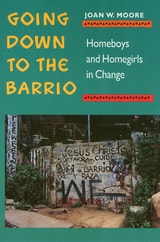
Going Down To The Barrio
Homeboys and Homegirls in ChangeJoan W. Moore
Temple University Press, 1991
In this illuminating look at two Chicano gangs in East Los Angeles, Joan W. Moore examines the changes and continuities among three generations of barrio gangs. As a sequel to the author's award-winning study, Homeboys (Temple, 1979), this book returns to the same neighborhoods to chart the development of gang behavior, especially in terms of violence and drug use, and to compare experiences of male and female gang members.
In a remarkable research collaborative effort, Moore and gang members worked together to develop an understanding of both male and female gangs and an internal vision of gang members' lives. By using excerpts from individual interviews, the author depicts more about the gangs than simply their life together as a unit; she gives them a voice. Gang members discuss their personal reaction to violence, drug using and selling, family relations and intra-gang dating; they share intimacies that reveal varying levels of loyalty to and dependency on their affiliations, which often become a family substitute.
After maintaining neighborhood ties for 17 years, Moore's research group has established a relationship with these communities that gives her a rare perspective. This is a fascinating and informative book for anyone interested in sociology, criminology, youth behavior and deviance, and ethnic studies.
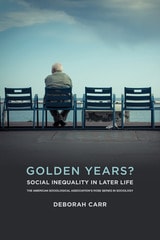
Golden Years?
Social Inequality in Later LifeDeborah Carr
Russell Sage Foundation, 2019
Carr connects research in sociology, psychology, epidemiology, gerontology, and other fields to explore the well-being of older adults. On many indicators of physical health, such as propensity for heart disease or cancer, black seniors fare worse than whites due to lifetimes of exposure to stressors such as economic hardships and racial discrimination and diminished access to health care. In terms of mental health, Carr finds that older women are at higher risk of depression and anxiety than men, yet older men are especially vulnerable to suicide, a result of complex factors including the rigid masculinity expectations placed on this generation of men. Carr finds that older adults’ physical and mental health are also closely associated with their social networks and the neighborhoods in which they live. Even though strong relationships with spouses, families, and friends can moderate some of the health declines associated with aging, women—and especially women of color—are more likely than men to live alone and often cannot afford home health care services, a combination that can be isolating and even fatal. Finally, social inequalities affect the process of dying itself, with white and affluent seniors in a better position to convey their end-of-life preferences and use hospice or palliative care than their disadvantaged peers.
Carr cautions that rising economic inequality, the lingering impact of the Great Recession, and escalating rates of obesity and opioid addiction, among other factors, may contribute to even greater disparities between the haves and the have-nots in future cohorts of older adults. She concludes that policies, such as income supplements for the poorest older adults, expanded paid family leave, and universal health care could ameliorate or even reverse some disparities.
A comprehensive analysis of the causes and consequences of later-life inequalities, Golden Years? demonstrates the importance of increased awareness, strong public initiatives, and creative community-based programs in ensuring that all Americans have an opportunity to age well.
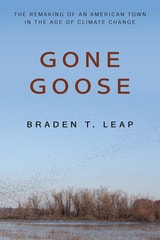
Gone Goose
The Remaking of an American Town in the Age of Climate ChangeBraden T. Leap
Temple University Press, 2019
Sumner, MO, pop. 102, near the Swan Lake National Wildlife Refuge, proclaims itself “The Wild Goose Capital of the World.” It even displays Maxie, the World’s largest goose: a 40-foot tall fiberglass statue with a wingspan stretching more than 60 feet. But while the 200,000 Canada geese that spent their falls and winters at Swan Lake helped generate millions of dollars for the local economy—with hunting and the annual Goose Festival—climate change, as well as environmental and land use issues, have caused the birds to disappear. The economic loss of the geese and the activities they inspired served as key building blocks in the rural identities residents had developed and treasured.
In his timely and topical book, Gone Goose, Braden Leap observes how members of this rural town adapted, reorganized, and reinvented themselves in the wake of climate change—and how they continued to cultivate respect and belonging in their community. Leap conducted interviews with residents and participated in various community events to explore how they reimagine their relationships with each other as well as their community’s relationship with the environment, even as they wish the geese would return.

Gone Missing in Harlem
A NovelKarla FC Holloway
Northwestern University Press, 2021
The family arrives as Harlem staggers under the flu pandemic that follows the First World War. DeLilah Mosby and her daughter, Selma, meet difficulties with backbone and resolve to make a home for themselves in the city, and Selma has a baby, Chloe. As the Great Depression creeps across the world at the close of the twenties, however, the farsighted see hard times coming.
The panic of the early thirties is embodied in the kidnapping and murder of the infant son of the nation’s dashing young aviator, Charles Lindbergh. A transfixed public follows the manhunt in the press and on the radio. Then Chloe goes missing—but her disappearance does not draw the same attention. Wry and perceptive Weldon Haynie Thomas, the city’s first “colored” policeman, takes the case.
The urgent investigation tests Thomas’s abilities to draw out the secrets Harlem harbors, untangling the color-coded connections and relationships that keep company with greed, ghosts, and grief. With nuanced characters, lush historical detail, and a lyrical voice, Gone Missing in Harlem affirms the restoring powers of home and family.

Goodbye, My Tribe
An Evangelical ExodusVic Sizemore
University of Alabama Press, 2020
Sizemore began writing these essays with the aim of exploring and understanding what happened when the mythology of his “tribe” crumbled from beneath his feet. He draws heavily on his upbringing and his family history as a framework for how his “tribe” of white evangelicals have found ways to reconcile Christianity with what the author finds to be troubling stances on many social issues, among them race, gender, sexuality, materialism, anti-intellectualism, and white supremacy.
In a clear-eyed and eloquent voice, Sizemore grapples movingly with his own bewilderment and chagrin as he struggles to reconcile the essential philosophical and moral decay that he believes many evangelicals have come to embrace. His insights, arranged topically and thematically and told through graceful and accessible prose, toggle between memoir and literary journalism, along a spectrum that touches on history, philosophy, theology, and personal reflections.
.
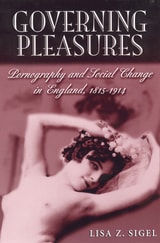
Governing Pleasures
Pornography and Social Change in England, 1815-1914Sigel, Lisa Z.
Rutgers University Press, 2002
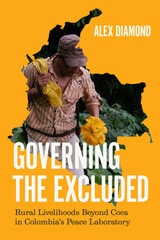
Governing the Excluded
Rural Livelihoods Beyond Coca in Colombia's Peace LaboratoryAlex Diamond
University of Chicago Press, 2026
The Colombian village of Briceño might, at first glimpse, look like many communities in the rural Global South. Many of the people living there rely on small-scale farming, even as a newly constructed hydroelectric dam threatens traditional livelihoods. Yet after decades where Briceño suffered from a bloody conflict, the village has more recently become central to the nation’s hopes for peace. In Governing the Excluded, sociologist Alex Diamond shares a closer look at Briceño and offers unique insight not only into the contemporary Colombian state but to how people across the Global South are struggling to maintain rural livelihoods amid economic dispossession.
Governing the Excluded describes a landmark peace process between the Colombian government and the radical FARC guerrillas from the perspective of Colombian farmers, drawing links between economic transformation, drug economies, and armed conflict. Exclusion from global markets for traditional crops like coffee first pushed farmers to grow coca, the raw material for cocaine. This ushered in an era of violent conflict for control of the illicit economy, while farmers continued to be priced out of legal markets. In exchange for peace and state protection, farmers ultimately agreed to sacrifice profitable coca. But with its disappearance, they now find themselves dependent on the state: for machinery to maintain the roads they need to get legal harvests to market, municipal jobs that are the only decent work available, and for public resources to subsidize food crops with razor-thin profit margins. Ongoing economic struggles in the legal sector make the state’s newfound authority tenuous, as some villagers replant coca, abandon the village for uncertain urban futures, or join a rearmed guerrilla group.
Informed by deep ethnographic research and firsthand stories from Briceño residents, Governing the Excluded shows that when it comes to the forces driving dispossession—be they international corporate megaprojects, global food prices, or national initiatives to replace coca cultivation—state authority goes only so far as its ability to sustain local livelihoods.
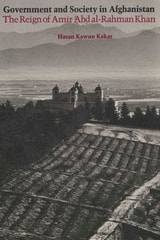
Government and Society in Afghanistan
The Reign of Amir ‘Abd al-Rahman KhanBy Hasan Kawun Kakar
University of Texas Press, 1979
This is an authoritative study of the administrative, social, and economic structure of Afghanistan during a decisive stage in its history. The period covered—the reign of the "Iron" Amir Rahman Khan—was in many ways the beginning of modern Afghanistan as a cohesive nation. Although Afghanistan had emerged as an entity in 1747, it was actually under the Amir that its borders were established, its internal unification completed, and the modern concept of nationhood implanted.
Kakar approaches this complex process by taking into consideration both the internal and the external forces that influenced its development. Thus, modernization, centralization, and nationalization are seen as both defensive reactions to European imperialism and necessary preconditions to capital formation and, consequently, industrialization.
The first part of the book covers the government of the Amir, from the personality of the ruler down to the operation of his new bureaucrats at the local level. Here Kakar presents a comprehensive treatment of the Afghan system of taxation and local government. The second part views these economic and social institutions from the perspective of the major segments of the populace—nomads, townsmen, tribes, women, slaves, landowners, mullahs, merchants, and so forth.
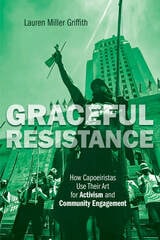
Graceful Resistance
How Capoeiristas Use Their Art for Activism and Community EngagementLauren Miller Griffith
University of Illinois Press, 2023
Capoeira began as a martial art developed by enslaved Afro-Brazilians. Today, the practice incorporates song, dance, acrobatics, and theatrical improvisation—and leads many participants into activism.
Lauren Miller Griffith’s extensive participant observation with multiple capoeira groups informs her ethnography of capoeiristas--both individuals and groups--in the United States. Griffith follows practitioners beyond their physical training into social justice activities that illuminate capoeira’s strong connection to resistance and subversion. As both individuals and communities of capoeiristas, participants march against racial discrimination, celebrate Martin Luther King Jr. Day and Juneteenth, organize professional clothing drives for job seekers, and pursue economic and environmental justice in their neighborhoods. For these people, capoeira becomes a type of serious leisure that contributes to personal growth, a sense of belonging, and an overall sense of self, while also imposing duties and obligations.
An innovative look at capoeira in America, Graceful Resistance reveals how the practicing of an art can catalyze action and transform communities.
Grandmotherhood
The Evolutionary Significance of the Second Half of Female LifeVoland, Eckart
Rutgers University Press, 2014
By the year 2030, the average life expectancy of women in industrialized countries could reach ninety—exceeding that of men by about ten years. At the present time, postmenopausal women represent more than fifteen percent of the world’s population and this figure is likely to grow.
From an evolutionary perspective, these demographic numbers pose some intriguing questions. Darwinian theory holds that a successful life is measured in terms of reproduction. How is it, then, that a woman’s lifespan can greatly exceed her childbearing and childrearing years? Is this phenomenon simply a byproduct of improved standards of living, or do older women—grandmothers in particular—play a measurable role in increasing their family members’ biological success?
Until now, these questions have not been examined in a thorough and comprehensive manner. Bringing togethertheoretical and empirical work byinternationally recognized scholars in anthropology, psychology, ethnography, and the social sciences, Grandmotherhood explores the evolutionary purpose and possibilities of female post-generative life. Students and scholars of human evolution, anthropology, and even gerontology will look to this volume as a major contribution to the current literature in evolutionary studies.
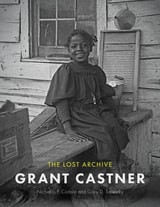
Grant Castner
The Lost ArchiveNicholas P. Ciotola
Rutgers University Press, 2026
Castner’s glass plate negatives are a visual record of New Jersey’s social and cultural history. His many human subjects are rich and poor, young and old, Black and white. They are at work, at play, at home, and in the community. Castner also documented social change brought about by electricity, engineering, education, industry, and transportation. He captured the excitement of public amusements such as parades and fairs. He recorded the aftermath of floods, fires and other disasters. Castner also had a fondness for the outdoors. He used his camera to reflect on the beauty and tranquility that he found in the natural landscapes of New Jersey.
This book presents the collective work of Grant Castner, an amateur artist whose place in New Jersey history was, until now, completely unknown. His photographic negatives forever preserve pinpoint moments in the past. They are time machines to another era. Let this long lost archive transport you on a visual journey into a New Jersey of days gone by.
Grassroots Economies
Living with Austerity in Southern EuropeSusana Narotzky
Pluto Press, 2020
Grassroots Economies interrogates the effects of the economic crisis on the livelihood of working people, providing insight into their anxieties. Drawing on a rich seam of ethnographic material, it is a distinctive comparative analysis that explores the contradictions of their coping mechanisms and support structures.
With a focus on gender, the book explores values and ideologies, including dispossession and accumulation. Ultimately it demonstrates that everyday interactions on the local scale provide a significant sense of the global.
Grassroots at the Gateway
Class Politics and Black Freedom Struggle in St. Louis, 1936-75Clarence Lang
University of Michigan Press, 2010
"This is a theoretically sophisticated and thoroughly documented historical case study of the movements for African American liberation in St. Louis. Through detailed analysis of black working class mobilization from the depression years to the advent of Black Power, award-winning historian Clarence Lang describes how the advances made in earlier decades were undermined by a black middle class agenda that focused on the narrow aims of black capitalists and politicians. The book is a major contribution to our understanding of the black working class insurgency that underpinned the civil rights and Black Power campaigns of the twentieth century."
---V. P. Franklin, University of California, Riverside
"A major work of scholarship that will transform historical understanding of the pivotal role that class politics played in both civil rights and Black Power activism in the United States. Clarence Lang's insightful, engagingly written, and well-researched study will prove indispensable to scholars and students of postwar American history."
---Peniel Joseph, Brandeis University
Breaking new ground in the field of Black Freedom Studies, Grassroots at the Gateway reveals how urban black working-class communities, cultures, and institutions propelled the major African American social movements in the period between the Great Depression and the end of the Great Society. Using the city of St. Louis in the border state of Missouri as a case study, author Clarence Lang undermines the notion that a unified "black community" engaged in the push for equality, justice, and respect. Instead, black social movements of the working class were distinct from---and at times in conflict with---those of the middle class. This richly researched book delves into African American oral histories, records of activist individuals and organizations, archives of the black advocacy press, and even the records of the St. Louis' economic power brokers whom local black freedom fighters challenged. Grassroots at the Gateway charts the development of this race-class divide, offering an uncommon reading of not only the civil rights movement but also the emergence and consolidation of a black working class.
Clarence Lang is Assistant Professor in African American Studies and History at the University of Illinois at Urbana-Champaign.
Photo courtesy Western Historical Manuscript Collection, University of Missouri, St. Louis

Gravity Hill
A MemoirMaximilian Werner
University of Utah Press, 2013
“The sound of parenthood is the sigh.” So begins Gravity Hill, written from the perspective of a new father seeking hope, beauty, and meaning in an uncertain world. Many memoirs recount the author’s experiences of growing up and struggling with demons; Werner’s shows how old demons sometimes return on the heels of something as beautiful as children. Werner’s memoir is about growing up, getting older, looking back, and wondering what lies ahead—a process that becomes all the more complicated and intense when parenting is involved. Moving backward and forward between past, present, and future, Gravity Hill does not delineate time so much as collapse it.
Werner narrates his struggle growing up in suburban Utah as anon-Mormon and what it took for him, his siblings, and his friends to feel like they belonged. Bonding in separation, they indulged in each other, in natural and urban landscapes, and sometimes in the destructive behaviors that are the native resort of outsidersincluding promiscuous and occasionally violent sexual behavior—and for some, paths to death and suicide. Gravity Hill is the story of the author’s descent into and eventual emergence from his dysfunction and into a newfound life. Infused with humor, honesty, and reflection, this literary memoir will resonate with readers young and old.
Gray Matters
Finding Meaning in the Stories of Later LifeEllyn Lem
Rutgers University Press, 2020
Finalist for the 2021 American Book Fest Best Book Awards
Aging is one of the most compelling issues today, with record numbers of seniors over sixty-five worldwide. Gray Matters: Finding Meaning in the Stories of Later Life examines a diverse array of cultural works including films, literature, and even art that represent this time of life, often made by people who are seniors themselves. These works, focusing on important topics such as housing, memory loss, and intimacy, are analyzed in dialogue with recent research to explore how “stories” illuminate the dynamics of growing old by blending fact with imagination. Gray Matters also incorporates the life experiences of seniors gathered from over two hundred in-depth surveys with a range of questions on growing old, not often included in other age studies works. Combining cultural texts, gerontology research, and observations from older adults will give all readers a fuller picture of the struggles and pleasures of aging and avoids over-simplified representations of the process as all negative or positive.
Great American City
Chicago and the Enduring Neighborhood EffectRobert J. Sampson
University of Chicago Press, 2012
Great American City
Chicago and the Enduring Neighborhood EffectRobert J. Sampson
University of Chicago Press, 2024
Based on one of the most ambitious studies in the history of social science, Robert J. Sampson’s Great American City presents the fruits of over a decade’s research to support an argument that we all feel and experience every day: life is decisively shaped by your neighborhood.
Engaging with the streets and neighborhoods of Chicago, Sampson, in this new edition, reflects on local and national changes that have transpired since his book’s initial publication, including a surge in gun violence and novel forms of segregation despite an increase in diversity. New research, much of it a continuation of the influential discoveries in Great American City, has followed, and here, Sampson reflects on its meaning and future directions. Sampson invites readers to see the status of the research initiative that serves as the foundation of the first edition—the Project on Human Development in Chicago Neighborhoods (PHDCN)—and outlines the various ways other scholars have continued his work. Both accessible and incisively thorough, Great American City is a must-read for anyone interested in cutting-edge urban sociology and the study of crime.

Great Expectations
Marriage and Divorce in Post-Victorian AmericaElaine Tyler May
University of Chicago Press, 1983
Great Maya Droughts in Cultural Context
Case Studies in Resilience and VulnerabilityGyles Iannone
University Press of Colorado, 2014
The Great Maya Droughts in Cultural Context offers new insights into the complicated series of events that impacted the decline of Maya civilization. This significant contribution to our increasingly comprehensive understanding of ancient Maya culture will be of interest to students and scholars of archaeology, anthropology, geography, and environmental studies.
Greater Ethiopia
The Evolution of a Multiethnic SocietyDonald N. Levine
University of Chicago Press, 2000
Donald Levine's interdisciplinary study makes a substantial contribution both to Ethiopian interpretive history and to sociological analysis. In his new preface, Levine examines Ethiopia since the overthrow of the monarchy in the 1970s.
"Ethiopian scholarship is in Professor Levine's debt. . . . He has performed an important task with panache, urbanity, and learning."—Edward Ullendorff, Times Literary Supplement
"Upon rereading this book, it strikes the reader how broad in scope, how innovative in approach, and how stimulating in arguments this book was when it came out. . . . In the past twenty years it has inspired anthropological and historical research, stimulated theoretical debate about Ethiopia's cultural and historical development, and given the impetus to modern political thinking about the complexities and challenges of Ethiopia as a country. The text thus easily remains an absolute must for any Ethiopianist scholar to read and digest."-J. Abbink, Journal of Modern African Studies
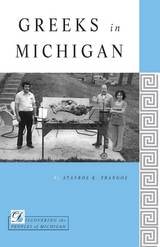
Greeks in Michigan
Stavros K. Frangos
Michigan State University Press, 2004
The influence of Greek culture on Michigan began long before the first Greeks arrived. The American settlers of the Old Northwest Territory had definite notions of Greeks and Greek culture. America and its developing society and culture were to be the "New Athens," a locale where the resurgence in the values and ideals of classical Greece were to be reborn. Stavros K. Frangos describes how such preconceptions and the competing desires to retain heritage and to assimilate have shaped the Greek experience in Michigan. From the padrone system to the church communities, Greek institutions have both exploited and served Greek immigrants, and from scattered communities across the state to enclaves in Detroit, Greek immigrants have retained and celebrated Greek culture.

Gringo Gulch
Sex, Tourism, and Social Mobility in Costa RicaMegan Rivers-Moore
University of Chicago Press, 2016
Rivers-Moore situates her ethnography at the intersections of gender, race, class, and national dimensions in the sex industry. Instead of casting sex workers as hapless victims and sex tourists as neoimperialist racists, she reveals each group as involved in a complicated process of class mobility that must be situated within the sale and purchase of leisure and sex. These interactions operate within an almost entirely unregulated but highly competitive market beyond the reach of the state—bringing a distinctly neoliberal cast to the market. Throughout the book, Rivers-Moore introduces us to remarkable characters—Susan, a mother of two who doesn’t regret her career of sex work; Barry, a teacher and father of two from Virginia who travels to Costa Rica to escape his loveless, sexless marriage; Nancy, a legal assistant in the Department of Labor who is shocked to find out that prostitution is legal and still unregulated. Gringo Gulch is a fascinating and groundbreaking look at sex tourism, Latin America, and the neoliberal state.

Groove Tube
Sixties Television and the Youth RebellionAniko Bodroghkozy
Duke University Press, 2001
Bodroghkozy argues that, in order to woo an increasingly lucrative baby boomer audience, television had to appeal to the social and political values of a generation of young people who were enmeshed in the hippie counterculture, the antiwar movement, campus protests, urban guerilla action—in general, a culture of rebellion. She takes a close look at the compromises and negotiations that were involved in determining TV content, as well as the ideological difficulties producers and networks faced in attempting to appeal to a youthful cohort so disaffected from dominant institutions. While programs that featured narratives about hippies, draft resisters, or revolutionaries are examined under this lens, Groove Tube doesn’t stop there: it also examines how the nation’s rebellious youth responded to these representations. Bodroghkozy explains how, as members of the first “TV generation,” some made sense of their societal disaffection in part through their childhood experience with this powerful new medium.
Groove Tube will interest sociologists, American historians, students and scholars of television and media studies, and others who want to know more about the 1960s.
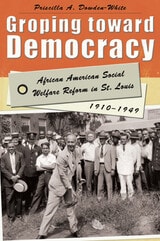
Groping toward Democracy
African American Social Welfare Reform in St. Louis, 1910-1949Priscilla A. Dowden-White
University of Missouri Press, 2011
In Groping toward Democracy: African American Social Welfare Reform in St. Louis, 1910–1949, historian Priscilla A. Dowden-White presents an on-the-ground view of local institution building and community organizing campaigns initiated by African American social welfare reformers. Through extensive research, the author places African American social welfare reform efforts within the vanguard of interwar community and neighborhood organization, reaching beyond the “racial uplift” and “behavior” models of the studies preceding hers. She explores one of the era’s chief organizing principles, the “community as a whole” idea, and deliberates on its relationship to segregation and the St. Louis black community’s methods of reform. Groping toward Democracy depicts the dilemmas organizers faced in this segregated time, explaining how they pursued the goal of full, uncontested black citizenship while still seeking to maximize the benefits available to African Americans in segregated institutions. The book’s nuanced mapping of the terrain of social welfare offers an unparalleled view of the progress brought forth by the early-twentieth-century crusade for democracy and equality.
By delving into interrelated developments in health care, education, labor, and city planning, Dowden-White deftly examines St. Louis’s African American interwar history. Her in-depth archival research fills a void in the scholarship of St. Louis’s social development, and her compelling arguments will be of great interest to scholars and teachers of American urban studies and social welfare history.

Gross Misbehavior and Wickedness
A Notorious Divorce in Early Twentieth-Century AmericaJean Elson
Temple University Press, 2017
Gross Misbehavior and Wickedness—the charges Nina levied at James for his adultery (with the family governess) and extreme cruelty—recounts the protracted legal proceedings in juicy detail.
Jean Elson uses court documents, correspondence, journals, and interviews with descendants to recount the salacious case. In the process, she underscores how divorce—in an era when women needed husbands for economic support—was associated with women’s aspirations for independence and rights. The Walkers’ dispute, replete with plot twists and memorable characters, sheds light on a critical period in the evolution of American culture.
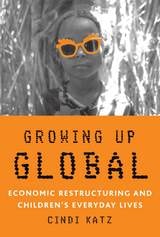
Growing Up Global
Economic Restructuring and Children’s Everyday LivesCindi Katz
University of Minnesota Press, 2004
Growing Up Global examines the processes of development and global change through the perspective of children’s lives in two seemingly disparate places: New York City and a village in northern Sudan. At the book’s core is a longitudinal ethnographic study of children growing up in a Sudanese village that was included in a large state-sponsored agricultural program in the year they were born. It follows a small number of children intermittently from ten years of age to early adulthood, concentrating particularly on their work and play, which together trained the children for an agrarian life centered around the family, a life that was quickly becoming obsolete.
Shifting her focus to largely working-class families in New York City in the 1980s and 1990s, Katz is able to expose unsuspected connections with the Sudanese experience in the effects on children of a constantly changing, capitalist environment—the decline of manufacturing jobs and the increase in knowledge-based jobs—in which young people with few skills and stunted educations face bleak employment prospects. In teasing out how “development” transforms the grounds on which these young people come of age, Cindi Katz provides a textured analysis of the importance of knowledge in the ability of people, families, and communities to reproduce themselves and their material social practices over time.
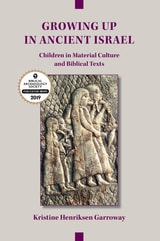
Growing Up in Ancient Israel
Children in Material Culture and Biblical TextsKristine Henriksen Garroway
SBL Press, 2018
The first expansive reference examining the texts and material culture related to children in ancient Israel
Growing Up in Ancient Israel uses a child-centered methodology to investigate the world of children in ancient Israel. Where sources from ancient Israel are lacking, the book turns to cross-cultural materials from the ancient Near East as well as archaeological, anthropological, and ethnographic sources. Acknowledging that childhood is both biologically determined and culturally constructed, the book explores conception, birth, infancy, dangers in childhood, the growing child, dress, play, and death. To bridge the gap between the ancient world and today’s world, Kristine Henriksen Garroway introduces examples from contemporary society to illustrate how the Hebrew Bible compares with a Western understanding of children and childhood.
Features:
- More than fifty-five illustrations illuminating the world of the ancient Israelite child
- An extensive investigation of parental reactions to the high rate of infant mortality and the deaths of infants and children
- An examination of what the gendering and enculturation process involved for an Israelite child
Guatemala-U.S. Migration
Transforming RegionsBy Susanne Jonas and Nestor Rodríguez
University of Texas Press, 2015
Guatemala-U.S. Migration: Transforming Regions is a pioneering, comprehensive, and multifaceted study of Guatemalan migration to the United States from the late 1970s to the present. It analyzes this migration in a regional context including Guatemala, Mexico, and the United States. This book illuminates the perilous passage through Mexico for Guatemalan migrants, as well as their settlement in various U.S. venues. Moreover, it builds on existing theoretical frameworks and breaks new ground by analyzing the construction and transformations of this migration region and transregional dimensions of migration.
Seamlessly blending multiple sociological perspectives, this book addresses the experiences of both Maya and ladino Guatemalan migrants, incorporating gendered as well as ethnic and class dimensions of migration. It spans the most violent years of the civil war and the postwar years in Guatemala, hence including both refugees and labor migrants. The demographic chapter delineates five phases of Guatemalan migration to the United States since the late 1970s, with immigrants experiencing both inclusion and exclusion very dramatically during the most recent phase, in the early twenty-first century. This book also features an innovative study of Guatemalan migrant rights organizing in the United States and transregionally in Guatemala/Central America and Mexico. The two contrasting in-depth case studies of Guatemalan communities in Houston and San Francisco elaborate in vibrant detail the everyday experiences and evolving stories of the immigrants’ lives.
Guatemalan Indians and the State
1540 to 1988Edited by Carol A. Smith
University of Texas Press, 1990
Violence in Central America, especially when directed against Indian populations, is not a new phenomenon. Yet few studies of the region have focused specifi cally on the relationship between Indians and the state, a relationship that may hold the key to understanding these conflicts. In this volume, noted historians and anthropologists pool their considerable expertise to analyze the situation in Guatemala, working from the premise that the Indian/state relationship is the single most important determinant of Guatemala’s distinctive history and social order. In chapters by such respected scholars as Robert Cormack, Ralph Lee Woodward, Christopher Lutz, Richard Adams, and Arturo Arias, the history of Indian activism in Guatemala unfolds. The authors reveal that the insistence of Guatemalan Indians on maintaining their distinctive cultural practices and traditions in the face of state attempts to eradicate them appears to have fostered the development of an increasingly oppressive state.
This historical insight into the forces that shaped modern Guatemala provides a context for understanding the extraordinary level of violence that enveloped the Indians of the western highlands in the 1980s, the continued massive assault on traditional religious and secular culture, the movement from a militarized state to a militarized civil society, and the major transformations taking place in Guatemala’s traditional export-oriented economy. In this sense, Guatemalan Indians and the State, 1540 to 1988 provides a revisionist social history of Guatemala.
Guatemaltecas
The Women's Movement, 1986–2003By Susan A. Berger
University of Texas Press, 2006
After thirty years of military rule and state-sponsored violence, Guatemala reinstated civilian control and began rebuilding democratic institutions in 1986. Responding to these changes, Guatemalan women began organizing to gain an active role in the national body politic and restructure traditional relations of power and gender. This pioneering study examines the formation and evolution of the Guatemalan women's movement and assesses how it has been affected by, and has in turn affected, the forces of democratization and globalization that have transformed much of the developing world.
Susan Berger pursues three hypotheses in her study of the women's movement. She argues that neoliberal democratization has led to the institutionalization of the women's movement and has encouraged it to turn from protest politics to policy work and to helping the state impose its neoliberal agenda. She also asserts that, while the influences of dominant global discourses are apparent, local definitions of femininity, sexuality, and gender equity and rights have been critical to shaping the form, content, and objectives of the women's movement in Guatemala. And she identifies a counter-discourse to globalization that is slowly emerging within the movement. Berger's findings vigorously reveal the manifold complexities that have attended the development of the Guatemalan women's movement.
Guerrillas, Unionists, and Violence on the Confederate Home Front
Daniel E. Sutherland
University of Arkansas Press, 1999