Results by title
28164 books match the query 'History' and 628 start with g
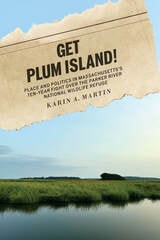
Get Plum Island!
Place and Politics in Massachusetts's Ten-Year Fight Over the Parker River National Wildlife RefugeKarin A. Martin
University of Massachusetts Press, 2026
An environmental history of resistance, negotiation, and conservation on the Massachusetts coast
An hour north of Boston, Parker River National Wildlife Refuge occupies the southern three-quarters of Plum Island, a barrier island off the Massachusetts coast. Parker River is a nationally renowned birding destination and the second most-visited wildlife refuge in the Northeast, drawing over 300,000 visitors annually. Today, environmentally minded Massachusetts barely remembers the decade-long fight that reduced the refuge to half its original size. Get Plum Island! tells the forgotten story of how six small towns in Essex County (Newbury, West Newbury, Rowley, Ipswich, Groveland, and Georgetown) fought the establishment of the refuge in the 1940s. Through political organizing across local, state, and federal levels, the opposition nearly abolished the refuge and ultimately succeeded in making it smaller.
The conflict was deeply shaped by class, geography, and competing visions of land use. On one side were elite conservationists—sportsmen, ornithologists, and preservation advocates from Boston, Cambridge, and Newton—who envisioned a federally protected habitat. On the other side of the conflict, a group of mostly middle- and working-class men, farmers, and local hunters organized a resistance to the establishment of a refuge. Through protests, public hearings, and even aggression toward visiting federal officials, local opposition made the case that their communities had clammed, farmed, and hunted the disputed lands before there even was a United States government. They recounted a version of their history as founders of the nation that made them, in their view, entitled to the land that was given to them by the English Crown. In telling this story, Get Plum Island! reveals how ordinary citizens can challenge—and reshape—federal authority, and offers a timely case study in the politics of land, class, and conservation.
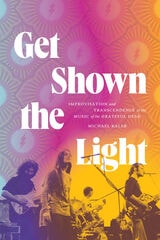
Get Shown the Light
Improvisation and Transcendence in the Music of the Grateful DeadMichael Kaler
Duke University Press, 2023

Get the Picture
A Personal History of PhotojournalismJohn G. Morris
University of Chicago Press, 2002
Find out in Get the Picture, a personal history of fifty years of photojournalism by one of the top journalists of the twentieth century. John G. Morris brought us many of the images that defined our era, from photos of the London air raids and the D-Day landing during World War II to the assassination of Robert Kennedy. He tells us the inside stories behind dozens of famous pictures like these, which are reproduced in this book, and provides intimate and revealing portraits of the men and women who shot them, including Robert Capa, Henri Cartier-Bresson, and W. Eugene Smith. A firm believer in the power of images to educate and persuade, Morris nevertheless warns of the tremendous threats posed to photojournalists today by increasingly chaotic wars and the growing commercialism in publishing, the siren song of money that leads editors to seek pictures that sell copies rather than those that can change the way we see the world.

Getting Loose
Lifestyle Consumption in the 1970sSam Binkley
Duke University Press, 2007
Through a sociological analysis of the countercultural print culture of the 1970s, Sam Binkley investigates the dissemination of these self-loosening narratives and their widespread appeal to America’s middle class. He describes the rise of a genre of lifestyle publishing that emerged from a network of small offbeat presses, mostly located on the West Coast. Amateurish and rough in production quality, these popular books and magazines blended Eastern mysticism, Freudian psychology, environmental ecology, and romantic American pastoralism as they offered “expert” advice—about how to be more in touch with the natural world, how to release oneself into trusting relationships with others, and how to delve deeper into the body’s rhythms and natural sensuality. Binkley examines dozens of these publications, including the Whole Earth Catalog, Rainbook, the Catalog of Sexual Consciousness, Celery Wine, Domebook, and Getting Clear.
Drawing on the thought of Pierre Bourdieu, Zygmunt Bauman, and others, Binkley explains how self-loosening narratives helped the middle class confront the modernity of the 1970s. As rapid social change and political upheaval eroded middle-class cultural authority, the looser life provided opportunities for self-reinvention through everyday lifestyle choice. He traces this ethos of self-realization through the “yuppie” 1980s to the 1990s and today, demonstrating that what originated as an emancipatory call to loosen up soon evolved into a culture of highly commercialized consumption and lifestyle branding.
Getting Medieval
Sexualities and Communities, Pre- and PostmodernCarolyn Dinshaw
Duke University Press, 1999
In her pursuit of historical analyses that embrace the heterogeneity and indeterminacy of sex and sexuality, Dinshaw examines canonical Middle English texts such as the Canterbury Tales and TheBook of Margery Kempe. She examines polemics around the religious dissidents known as the Lollards as well as accounts of prostitutes in London to address questions of how particular sexual practices and identifications were normalized while others were proscribed. By exploring contemporary (mis)appropriations of medieval tropes in texts ranging from Quentin Tarantino’s Pulp Fiction to recent Congressional debates on U.S. cultural production, Dinshaw demonstrates how such modern media can serve to reinforce constrictive heteronormative values and deny the multifarious nature of history. Finally, she works with and against the theories of Michel Foucault, Homi K. Bhabha, Roland Barthes, and John Boswell to show how deconstructionist impulses as well as historical perspectives can further an understanding of community in both pre- and postmodern societies.
This long-anticipated volume will be indispensable to medieval and queer scholars and will be welcomed by a larger cultural studies audience.
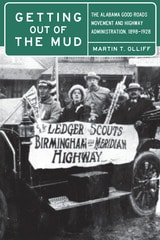
Getting Out of the Mud
The Alabama Good Roads Movement and Highway Administration, 1898–1928Martin T. Olliff, Foreword by David O. Whitten
University of Alabama Press, 2017
Recounts the history of the Good Roads Movement that arose in progressive-era Alabama, how it used the power of the state to achieve its objectives of improving market roads for farmers and highways for automobiles
Getting Out of the Mud: The Alabama Good Roads Movement and Highway Administration, 1898–1928 explores the history of the Good Roads Movement and investigates the nature of early twentieth-century progressivism in the state. Martin T. Olliff reveals how middle-class reformers secured political, economic, and social power not only by fighting against corporate domination and labor recalcitrance but also by proposing alternative projects like road improvement and identifying the interests of the rising middle class as being the most important to public interest.
With the development of national markets in the late nineteenth and early twentieth centuries, Americans began to regard the nation as a whole, rather than their state or region, as the most important political entity. Many Alabamians wished to travel beyond their local communities in all seasons without getting stuck in the mud of rudimentary rutted dirt roads. The onset of the automobile age bolstered the need for roadmaking, alerting both automobilists and good roads advocates to the possibility of a new transportation infrastructure. The Good Roads Movement began promoting farm-to-market roads, then highways that linked cities, then those that connected states. Federal matching funds for road construction after 1916 led state and federal governments to supplant the Good Roads Movement, building and administering the highway system that emerged by the late 1920s.
Olliff’s study of how Alabamians dealt with strained resources and overcame serious political obstacles in order to construct a road system that would accommodate economic growth in the twentieth century may offer clues to the resurrection of a similar strategy in our modern era. Many problems are unchanged over the hundred years between crises: Alabamians demand good roads and a government that has the capacity to build and maintain such an infrastructure while, at the same time, citizens are voting into office men and women who promise lower taxes and smaller government.
Getting Rich in Late Antique Egypt
Ryan E. McConnell
University of Michigan Press, 2017
Ryan E. McConnell connects the family’s rise in wealth and status to its role in tax collection on behalf of the Byzantine state, rather than a reliance on productive surpluses. Close analysis of low- and high-level accounts from the Apion estate, as well as documentation from comparable Roman and Byzantine Egyptian estates, corroborate this conclusion. Additionally, McConnell offers a third way into the ongoing debate over whether the Apions’ relationship with the state was antagonistic or cooperative, concluding that the relationship was that of parties in a negotiation, with each side seeking to maximize its own benefit. The application of modern economic concepts—as well as comparisons to the economies of Athens, Rome, Ptolemaic Egypt, and Early Modern France—further illuminate the structure and function of the estate in Late Antique Egypt.
Getting Rich in Late Antique Egypt will be a valuable resource for philologists, archaeologists, papyrologists, and scholars of Late Antiquity. It will also interest scholars of agricultural, social, and economic history.
Getting Right With God
Southern Baptists and Desegregation, 1945-1995Mark Newman
University of Alabama Press, 2001
This groundbreaking study finds Southern Baptists more diverse in their attitudes toward segregation than previously assumed
Focusing on the eleven states of the old Confederacy, Getting Right with God examines the evolution of Southern Baptists’ attitudes toward African Americans during a tumultuous period of change in the United States. Mark Newman not only offers an in-depth analysis of Baptist institutions from the Southern Baptist Convention (SBC) and state conventions to colleges and churches but also probes beyond these by examining the response of pastors and lay people to changing race relations.The SBC long held that legal segregation was in line with biblical teachings, but after the Supreme Court's 1954 Brown vs. Board of Education decision in favor of desegregating public institutions, some Southern Baptists found an inconsistency in their basic beliefs. Newman identifies three major blocs of Baptist opinion about race relations: a hard-line segregationist minority that believed God had ordained slavery in the Bible; a more moderate majority that accepted the prevailing social order of racial segregation; and a progressive group of lay people, pastors, and denominational leaders who criticized and ultimately rejected discrimination as contrary to biblical teachings.
According to Newman, the efforts of the progressives to appeal to Baptists’ primary commitments and the demise of de jure segregation caused many moderate and then hard-line segregationists to gradually relinquish their views, leading to the 1995 apology by the SBC for its complicity in slavery and racism. Comparing Southern Baptists with other major white denominations, Newman concludes that lay Baptists differed little from other white southerners in their response to segregation.
Getting There
The Epic Struggle between Road and Rail in the American CenturyStephen B. Goddard
University of Chicago Press, 1996
"This is a riveting story: of mighty railroads hamstrung almost overnight by government bureaucrats; of road interests led by General Motors Corp. conspiring in city after city to destroy efficient trolley systems . . . and of freeways that are far from free."—Bill Laitner, Detroit Free Press
"The combination of forces and fates that turned America into a giant parking lot from sea to shining sea is the subject of Stephen B. Goddard's lively pop history. . . . As Mr. Goddard ably points out, road-building and the creation of car-dependent suburbs have become ends in themselves."—James Howard Kunstler, Wall Street Journal
"The strength of Goddard's book is that he understands the complexities of manipulating public opinion to influence legislatures."—David Young, Chicago Tribune
"[Goddard's] book is a deft and easily read history of how transportation has shaped the nation and its economy, and ultimately, how a federation of truck and car interests drastically tilted national policies. . . . For many reasons this is an exceptionally important work."—Jim Dwyer, New York Newsday

Getting Used to Being Shot At
Mark K. Christ
University of Arkansas Press, 2002
Getting around Brown
Desegregation, Development, and the Columbus Public SchoolsGregory S. Jacobs
The Ohio State University Press, 1998
Getting Around Brown is both the first history of school desegregation in Columbus, Ohio, and the first case study to explore the interplay of desegregation, business, and urban development in America.
Drawing on a broad range of sources, including over sixty interviews, the book details the causes and consequences of Penick v. Columbus Board of Education (1977). Gregory S. Jacobs argues that school desegregation in Columbus failed to produce equal educational opportunity, not because it was inherently detrimental to learning, but because it was incompatible with urban development. As a consequence, the long-term health of the city school district was sacrificed to preserve the growth of the city itself. The resulting middle-class abandonment of urban education in Columbus produced an increasingly poor, African-American city school system and a powerful form of defensive activism within the overwhelmingly white suburban systems.
The title of the book refers not only to the elaborate tools used to circumvent the spirit of the Supreme Court’s landmark 1954 Brown v. Board of Education decision but also to the need to move beyond the flawed dichotomies and failed policies that have come to define desegregation. The book calls for a reconsideration of the complicated relationship race, class, and housing patterns have with city school reform efforts, a relationship obscured by this country’s vitriolic and occasionally violent battle over busing. Jacobs concludes his study with a “modest proposal,” in which he recommends the abolition of the Columbus Public School District, the dispersal of its students throughout surrounding suburban systems, and the creation of a choice-based “experimental education zone” within the old city school district boundaries.
Readable and relevant, Getting around Brownis essential reading for scholars of recent American history, urban studies, civil rights and race relations, and educational policy, as well as anyone interested in public education and politics.
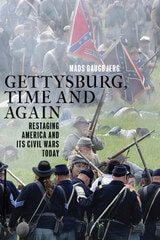
Gettysburg, Time and Again
Restaging America and Its Civil Wars TodayMads Daugbjerg
University of Massachusetts Press, 2027
Tracing how the Civil War continues to shape the landscapes, politics, and culture of today
Every year, thousands of Americans don Civil War uniforms and restage the bloodiest battle ever fought on American soil. In Gettysburg, Time and Again, Mads Daugbjerg explores how the Civil War continues to inhabit the present. Bringing together reenactors, National Park Service rangers, ghost hunters, tourists, and local residents, this study examines how Americans across social and political divides engage the past through the landscapes, institutions, and everyday practices of public history.
At once historically grounded and urgently contemporary, this book speaks directly to current struggles over the meaning of America and its values. Rather than treating time and history as abstract concepts, Daugbjerg approaches them as lived, material forces produced through commemorative landscapes, interpretive labor, and the relentless restaging of 1863 for contemporary audiences. Studying reenactment illuminates not only a distinctive cultural practice but also the broader processes through which the past is continuously reshaped, repeated, and felt in the present. He argues that present-day American unrest can be understood, in part, as a conflict over how the past is curated. He further suggests that Americans today often occupy profoundly different temporal worlds.
Daugbjerg traces these tensions through landscapes, material culture, tourism infrastructures, and social life at Gettysburg. Challenging the commonsense notion of history as linear progression, Gettysburg, Time and Again reveals repetition as a defining feature of American historical experience. By offering a finely grained anthropology of the “present past,” Daugbjerg shows how history’s afterlives remain powerfully out of sync and why those temporal disjunctions matter now.
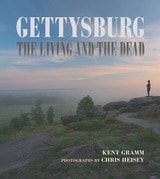
Gettysburg
The Living and the DeadKent Gramm. Photographs by Chris Heisey
Southern Illinois University Press, 2019
Creative nonfiction, fiction, dramatic dialogue, and poetry combine with full-color photographs to convey the essential reality of the famous battlefield as a place both terrible and beautiful. The living and the dead contained here include Confederates and Yankees, soldiers and civilians, male and female, young and old. Visitors to the battlefield after 1863, both well known and obscure, provide the voices of the living. They include a female admiral in the U.S. Navy and a man from rural Virginia who visits the battlefield as a way of working through the death of his son in Iraq. The ghostly voices of the dead include actual participants in the battle, like a fiery colonel and a girl in Confederate uniform, as well as their representatives, such as a grieving widow who has come to seek her husband.
Utilizing light as a central motif and fourscore and seven voices to evoke how Gettysburg continues to draw visitors and resound throughout history, alternately wounding and stitching the lives it touches, Gramm’s words and Heisey’s photographs meld for a historical experience unlike any other. Gettysburg: The Living and the Dead offers a panoramic view wherein the battle and battlefield of Gettysburg are seen through the eyes of those who lived through it and died on it as well as those who have sought meaning at the site ever since.
Gewirth's Ethical Rationalism
Critical Essays with a Reply by Alan GewirthEdited by Edward Regis Jr.
University of Chicago Press, 1984
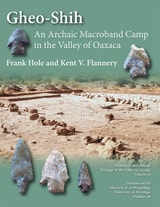
Gheo-Shih
An Archaic Macroband Camp in the Valley of OaxacaFrank Hole and Kent V. Flannery
University of Michigan Press, 2024

Ghetto Kingdom
Tales of the Lodz GhettoIsaiah Spiegel
Northwestern University Press, 1998
The stories examine the relationship between inmates and their families, their friends, their Christian former neighbors, the German soldiers, and, ultimately, the world of hopelessness and desperation that surrounded them. In using his creative powers to transform the suffering and death of his people into stories that preserve their memory, Spiegel succeeds in affirming the humanity and dignity the Germans were so intent on destroying.
Originally published as Malchut geto (Malkhes geto) in Yiddish.
Ghost Protocol
Development and Displacement in Global ChinaCarlos Rojas and Ralph A. Litzinger, editors
Duke University Press, 2016
Contributors. Yomi Braester, Alexander Des Forges, Kabzung, Rachel Leng, Ralph A. Litzinger, Lisa Rofel, Carlos Rojas, Bryan Tilt, Robin Visser, Biao Xiang, Emily T. Yeh

Ghost Ranch
Lesley Poling-Kempes
University of Arizona Press, 2005
Building on the history of the Abiquiu region that she told in Valley of Shining Stone, Ghost Ranch historian Lesley Poling-Kempes now unfolds the story of this celebrated retreat. She traces its transformation from el Rancho de los Brujos, a hideout for legendary outlaws, to a renowned cultural mecca and one of the Southwest’s premier conference centers.
First a dude ranch, Ghost Ranch became a magical sanctuary where the veil between heaven and earth seemed almost transparent. Focusing on those who visited from the 1920s and ’30s until the 1990s, Poling-Kempes tells how O’Keeffe and others—from Boston Brahmin Carol Bishop Stanley to paleontologist Edwin H. Colbert, Los Alamos physicists to movie stars—created a unique community that evolved into the institution that is Ghost Ranch today. For this book, Poling-Kempes has drawn on information not available when Valley of Shining Stone was written. The biography of Juan de Dios Gallegos has been enhanced and definitively corrected. The Robert Wood Johnson (of Johnson & Johnson) years at Ghost Ranch are recounted with reminiscences from family members. And the memories of David McAlpin Jr. shed light on how the Princeton circle that included the Packs, the Johnson brothers, the Rockefellers, and the McAlpins ended up as summer neighbors on the high desert of New Mexico.
After Arthur Pack’s gift of the ranch to the Presbyterian Church in 1955, Ghost Ranch became a spiritual home for thousands of people still awestruck by the landscape that O’Keeffe so lovingly committed to canvas; yet the care taken to protect Ghost Ranch’s land and character has preserved its sense of intimacy. By relating its remarkable story, Poling-Kempes invites all visitors to better appreciate its place as an honored wilderness—and to help safeguard its future.

Ghost Riders of Baghdad
Soldiers, Civilians, and the Myth of the SurgeDaniel A. Sjursen
University Press of New England, 2015
Ghost Signs of Arkansas
Cynthia Haas
University of Arkansas Press, 1997
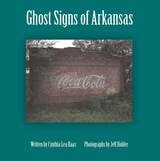
From the late 1800s to the early 1950s, painted wall signs were a major mode of advertisement for both national companies and local businesses across America. Many of these artistic messages, now faded, peeling, and partially covered, still peek out from the storefronts, barns, alleyways, warehouses, theaters, and even stagecoach stops they once decorated.
Photographer Jeff Holder and author Cynthia Haas explore this often overlooked art form in Arkansas and show us signs that appear mysteriously in the rain, signs that are curiously painted in remote places, images and words now only half decipherable. From Coca-Cola, Dr. Pepper, and Grapette Soda to Kis-Me-Gum, Uneeda Biscuit, and Snowdrift Flour, the logos and slogans are at once familiar and enigmatic. Archival photographs reference the time
when these brightly colored messages covered the facades of downtown buildings. Of particular interest in this book are the profiles of three “wall dogs,” or sign painters, who remember the difficulties and joys of their unusual profession.
Ghost Signs of Arkansas ties us to a gentler past, a time when Main Street was the center of a community’s life, before mass media forced grand-scale advertising from brick walls to the television screen. In documenting a fading but valuable traditional art form, this book fills a gap in both the cultural fabric of Arkansas towns and the history of American art.
Ghost Towns of the American West
Robert Silverberg
Ohio University Press, 1990
The story of the American mining frontier can be traced through the ghost towns that dot the western landscape to this day, from the camps of California’s forty-niners to the twentieth-century ruins in the Nevada desert. These abandoned towns mark an epoch of high adventure, of quick wealth and quicker poverty, of gambling and gunslinging and hell-raising. Those who have seen the Old West movies sometimes think that the legends of the Wild West were invented by screenwriters. The ghost towns remain, and their battered ruins testify that the legends are true. Behind the tall tales is a history where a fortune could be made in a week and lost over the course of an evening.
With a historian’s attention to fact and a novelist’s gift for dramatic storytelling, celebrated science fiction author Robert Silverberg brings these adventures back to life in the rowdy splendor of their heyday in Ghost Towns of the American West. History and travelers’ tales are woven together with clarity and wit to create a lively account of a fascinating era in our history. Lorence Bjorklund’s illustrations, rich in detail, portray the ghost towns in their glory and in their dusty decline.
Ghost of the Ozarks
Murder and Memory in the Upland SouthBrooks Blevins
University of Illinois Press, 2012
Ghostly Communion
Cross-Cultural Spiritualism in Nineteenth-Century American LiteratureJohn J. Kucich
Dartmouth College Press, 2015
Ghostly Desires
Queer Sexuality and Vernacular Buddhism in Contemporary Thai CinemaArnika Fuhrmann
Duke University Press, 2016

Ghostly Figures
Memory and Belatedness in Postwar American PoetryAnn Keniston
University of Iowa Press, 2015
Ghostly Figures contends that this poetics of belatedness, along with the way it is bound to questions of poetic making, is a central, if critically neglected, force in postwar American poetry. Discussing works by Sylvia Plath, Adrienne Rich, Jorie Graham, Susan Howe, and a group of poets responding to the AIDS epidemic, Ann Keniston draws on and critically assesses trauma theory and psychoanalysis, as well as earlier discussions of witness, elegy, lyric trope and figure, postmodernism, allusion, and performance, to define the ghosts that clearly dramatize poetics of belatedness throughout the diverse poetry of post–World War II America.
Ghostly Past, Capitalist Presence
A Social History of Fear in Colonial BengalTithi Bhattacharya
Duke University Press, 2024
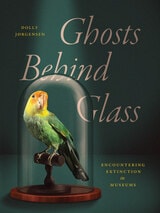
Ghosts Behind Glass
Encountering Extinction in MuseumsDolly Jørgensen
University of Chicago Press, 2025
While it’s no longer possible to encounter a dodo in the wild, we can still come face-to-face with them in museums. The remains of extinct species—whether taxidermied, skeletal, drawn, or sculpted—stare back at us from display cases.
In this moving meditation on what’s lost and what endures, environmental historian Dolly Jørgensen visits natural history collections worldwide—from Shanghai to Philadelphia, from Edinburgh to Hobart, Australia—to understand the many ways that museums tell stories about extinction. She encounters extinct animals that are framed as cultural artifacts and as rare valuables, that are memorialized with lists, and that are brought to life through augmented reality. She draws our attention to creatures with prominent afterlives—passenger pigeons, giant moas, thylacines—as well as those that are less likely to be discussed or displayed. Throughout, Jørgensen examines the relationship between museums and the natural world, so readers can look more closely at exhibits about extinction, studying the displays for what is there, as well as what is missing. During a period of rapid species loss driven by humanity’s environmental impact, Ghosts Behind Glass asks what we can learn about our world from the presence of the extinct.
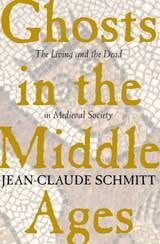
Ghosts in the Middle Ages
The Living and the Dead in Medieval SocietyJean-Claude Schmitt
University of Chicago Press, 1998
"Valuable and highly readable. . . . [Ghosts in the Middle Ages] will be of interest to many students of medieval thought and culture, but especially to those seeking a general overview of this particularly conspicuous aspect of the medieval remembrance of the dead."—Hans Peter Broedel, Medieval Review
"A fascinating study of the growing prevalence of ghost imagery in ecclesiastical and popular writing from the fifth to the fifteenth century."—Choice
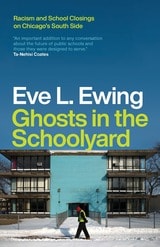
Ghosts in the Schoolyard
Racism and School Closings on Chicago's South SideEve L. Ewing
University of Chicago Press, 2018
That’s how Eve L. Ewing opens Ghosts in the Schoolyard: describing Chicago Public Schools from the outside. The way politicians and pundits and parents of kids who attend other schools talk about them, with a mix of pity and contempt.
But Ewing knows Chicago Public Schools from the inside: as a student, then a teacher, and now a scholar who studies them. And that perspective has shown her that public schools are not buildings full of failures—they’re an integral part of their neighborhoods, at the heart of their communities, storehouses of history and memory that bring people together.
Never was that role more apparent than in 2013 when Mayor Rahm Emanuel announced an unprecedented wave of school closings. Pitched simultaneously as a solution to a budget problem, a response to declining enrollments, and a chance to purge bad schools that were dragging down the whole system, the plan was met with a roar of protest from parents, students, and teachers. But if these schools were so bad, why did people care so much about keeping them open, to the point that some would even go on a hunger strike?
Ewing’s answer begins with a story of systemic racism, inequality, bad faith, and distrust that stretches deep into Chicago history. Rooting her exploration in the historic African American neighborhood of Bronzeville, Ewing reveals that this issue is about much more than just schools. Black communities see the closing of their schools—schools that are certainly less than perfect but that are theirs—as one more in a long line of racist policies. The fight to keep them open is yet another front in the ongoing struggle of black people in America to build successful lives and achieve true self-determination.
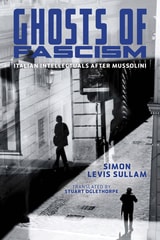
Ghosts of Fascism
Italian Intellectuals After MussoliniSimon Levis Sullam, Translated by Stuart Oglethorpe
University of Wisconsin Press, 2026
While public intellectuals are typically thought of as inherently nonconformist and critical of established power, in practice many adapt themselves to the views of the majority—particularly in the context of repressive governments and dictatorships. When the political winds change, such figures often refashion themselves to fit the new paradigm. Ghosts of Fascism follows the trajectories of four major Italian intellectuals who, despite their passivity and at times collaboration with Fascist institutions, became some of postwar Italy’s iconic anti-Fascists: Federico Chabod, a prominent historian who would join the Resistance; the jurist Piero Calamandrei, who later participated in drafting the Italian democratic constitution; the influential literary critic Luigi Russo, who presided over the prestigious Scuola Normale Superiore in Pisa; and Alberto Moravia, the internationally renowned novelist. Simon Levis Sullam weaves together their histories to show how postwar Italian intellectuals quietly revised their previous political positions, redefining themselves—and their recent pasts, together with that of the entire nation—as consistently anti-Fascist.
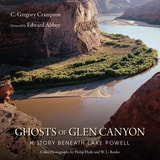
Ghosts of Glen Canyon
History beneath Lake PowellC Gregory Crampton
University of Utah Press, 2009
Author Gregory Crampton led the historical investigations of Glen and San Juan Canyons from 1957 to 1963 under contract with the National Park Service. The objective was to locate and record historical sites that would be lost to the rising waters of the reservoir. This book records that effort.
First published in 1986, this edition has been revised to include several new “ghosts” of Glen Canyon, including a never-before-published foreword by Edward Abbey. It also showcases stunning color photographs by Philip Hyde and includes hundreds of black-and-white photographs taken by the original salvage crews.
This informative guide to the historic treasures of Glen Canyon includes numbered maps keyed to each location. It is a book for both the armchair traveler and the lake enthusiast eager for a journey through the past to a place few had the privilege to know.
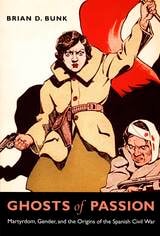
Ghosts of Passion
Martyrdom, Gender, and the Origins of the Spanish Civil WarBrian D. Bunk
Duke University Press, 2007
In commemorating the uprising, revolutionaries and conservatives used the same methods to promote radically different political agendas: they deployed religious imagery to characterize the political situation as a battle between good and evil, with the fate of the nation hanging in the balance, and exploited traditional gender stereotypes to portray themselves as the defenders of social order against chaos. The resulting atmosphere of polarization combined with increasing political violence to plunge the country into civil war.
Ghosts of the Colorado Plains
Perry Eberhart
Ohio University Press, 1996
Since the second quarter of the nineteenth century, changing conditions have built and emptied small and large towns across the Colorado plain. At the time when Denver was little more than an overpopulated campsite along Cherry Creek there were numerous other settlements to the east and south, each with its own dreams of growth, gold or silver strikes, railroad connections, and rising influence over the surrounding territory. In Ghosts of the Colorado Plains, Eberhart traces some 150 of these ill-fated settlements, providing accounts of their birth, peak activity, and ultimate demise.
As early trapping, mining, cattle, farming, and transportation industries brought successive waves of “easterners” into the territory, they created some of the most colorful communities of their time. The trail towns Boston and Trail City were reputed to be two of the roughest towns in the entire west. Real estate schemers and promoters offered dreams of civilization and respectability in the “cow towns.” Elsewhere, the stage stations, side of the road settlements, and farm centers arose out of the basic necessities of commerce and from a simple desire of far-flung settlers, trappers, and others for a place to congregate, celebrate, trade, brawl, and receive news from the east. Though the personalities and events which animated these communities are all but forgotten, the towns themselves are the legacy of the competing forces that opened and developed the Colorado territory.
Readers of Guide to Colorado Ghost Towns and Mining Camps will welcome Ghosts of the Colorado Plains as an extension of Eberhart’s colorful blend of history and on-site information to a larger and much neglected area of the state. Through historical records, vignettes of personalities, and over 250 photos and 80 maps, Eberhart provides ready access to the towns and settlment sites of eastern Colorado’s past. For travelers, Ghosts of the Colorado Plains offers numerous pleasant excursions and investigations; for those less inclined to take to the field in search of artifacts and sites, the book offers fascinating glimpses of Colorado’s disappearing past.
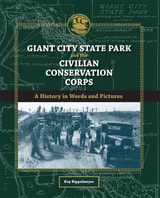
Giant City State Park and the Civilian Conservation Corps
A History in Words and PicturesKay Rippelmeyer
Southern Illinois University Press, 2010
Many recognize Giant City State Park as one of the premier recreation spots in southern Illinois, with its unspoiled forests, glorious rock formations, and famous sandstone lodge. But few know the park’s history or are aware of the remarkable men who struggled to build it. Giant City State Park and the Civilian Conservation Corps: A History in Words and Pictures provides the first in-depth portrait of the park’s creation, drawing on rarely seen photos, local and national archival research, and interviews to present an intriguing chapter in Illinois history.
Kay Rippelmeyer traces the geological history of the park, exploring the circumstances that led to the breathtaking scenery for which Giant City is so well known, and providing insightful background on and cultural history of the area surrounding the park. Rippelmeyer then outlines the effects of the Great Depression and the New Deal on southern Illinois, including relief efforts by the Civilian Conservation Corps, which began setting up camps at Giant City in 1933. The men of the CCC, most of them natives of southern and central Illinois, are brought to life through vividly detailed, descriptive prose and hundreds of black-and-white photographs that lavishly illustrate life in the two camps at the park. This fascinating book not only documents the men’s hard work—from the clearing of the first roads and building of stone bridges, park shelters, cabins, and hiking and bridle trails, to quarry work and the raising of the lodge’s famous columns—it also reveals the more personal side of life in the two camps at the park, covering topics ranging from education, sports, and recreation, to camp newspapers, and even misbehavior and discipline.
Supplementing the photographs and narrative are engaging conversations with alumni and family members of the CCC, which give readers a rich oral history of life at Giant City in the 1930s. The book is further enhanced by maps, rosters of enrollees and officers, and a list of CCC camps in southern Illinois. The culmination of three decades of research, Giant City State Park and the Civilian Conservation Corps provides the most intimate history ever of the park and its people, honoring one of Illinois’s most unforgettable places and the men who built it.

Giant Sloths and Sabertooth Cats
Extinct Mammals and the Archaeology of the Ice Age Great BasinDonald K. Grayson
University of Utah Press, 2016
Were these animals abundant in the Great Basin? A detailed analysis of the distinctive assemblages of plants that now live in this region leads to a surprising, and perhaps controversial, conclusion about those abundances.
If you are interested in Ice Age mammals or in the Ice Age archaeology of North America, if you are interested in the natural history of the Great Basin or the ways in which the plants of today’s landscapes might be used to understand the deeper past, you will be fascinated by this book.
Giant Steps
Suffragettes and SoldiersMary Blair Immel
Indiana Historical Society Press, 2017
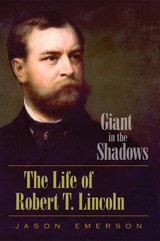
Giant in the Shadows
The Life of Robert T. LincolnJason Emerson
Southern Illinois University Press, 2012
University Press Books for Public and Secondary Schools, 2013 edition
Book of the Year by the Illinois State historical Society, 2013
Although he was Abraham and Mary Lincoln’s oldest and last surviving son, the details of Robert T. Lincoln’s life are misunderstood by some and unknown to many others. Nearly half a century after the last biography about Abraham Lincoln’s son was published, historian and author Jason Emerson illuminates the life of this remarkable man and his achievements in Giant in the Shadows: The Life of Robert T. Lincoln. Emerson, after nearly ten years of research, draws upon previously unavailable materials to offer the first truly definitive biography of the famous lawyer, businessman, and statesman who, much more than merely the son of America’s most famous president, made his own indelible mark on one of the most progressive and dynamic eras in United States history.
Born in a boardinghouse but passing his last days at ease on a lavish country estate, Robert Lincoln played many roles during his lifetime. As a president’s son, a Union soldier, an ambassador to Great Britain, and a U.S. secretary of war, Lincoln was indisputably a titan of his age. Much like his father, he became one of the nation’s most respected and influential men, building a successful law practice in the city of Chicago, serving shrewdly as president of the Pullman Car Company, and at one time even being considered as a candidate for the U.S. presidency.
Along the way he bore witness to some of the most dramatic moments in America’s history, including Robert E. Lee’s surrender at Appomattox Courthouse; the advent of the railroad, telephone, electrical, and automobile industries; the circumstances surrounding the assassinations of three presidents of the United States; and the momentous presidential election of 1912. Giant in the Shadows also reveals Robert T. Lincoln’s complex relationships with his famous parents and includes previously unpublished insights into their personalities. Emerson reveals new details about Robert’s role as his father’s confidant during the brutal years of the Civil War and his reaction to his father’s murder; his prosecution of the thieves who attempted to steal his father’s body in 1876 and the extraordinary measures he took to ensure it would never happen again; as well as details about the painful decision to have his mother committed to a mental facility. In addition Emerson explores the relationship between Robert and his children, and exposes the actual story of his stewardship of the Lincoln legacy—including what he and his wife really destroyed and what was preserved. Emerson also delves into the true reason Robert is not buried in the Lincoln tomb in Springfield but instead was interred at Arlington National Cemetery.
Meticulously researched, full of never-before-seen photographs and new insight into historical events, Giant in the Shadows is the missing chapter of the Lincoln family story. Emerson’s riveting work is more than simply a biography; it is a tale of American achievement in the Gilded Age and the endurance of the Lincoln legacy.
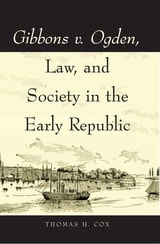
Gibbons v. Ogden, Law, and Society in the Early Republic
Thomas H. Cox
Ohio University Press, 2009
Gibbons v. Ogden, Law, and Society in the Early Republic examines a landmark decision in American jurisprudence, the first Supreme Court case to deal with the thorny legal issue of interstate commerce.
Decided in 1824, Gibbons v. Ogden arose out of litigation between owners of rival steamboat lines over passenger and freight routes between the neighboring states of New York and New Jersey. But what began as a local dispute over the right to ferry the paying public from the New Jersey shore to New York City soon found its way into John Marshall’s court and constitutional history. The case is consistently ranked as one of the twenty most significant Supreme Court decisions and is still taught in constitutional law courses, cited in state and federal cases, and quoted in articles on constitutional, business, and technological history.
Gibbons v. Ogden initially attracted enormous public attention because it involved the development of a new and sensational form of technology. To early Americans, steamboats were floating symbols of progress—cheaper and quicker transportation that could bring goods to market and refinement to the backcountry. A product of the rough-and-tumble world of nascent capitalism and legal innovation, the case became a landmark decision that established the supremacy of federal regulation of interstate trade, curtailed states’ rights, and promoted a national market economy. The case has been invoked by prohibitionists, New Dealers, civil rights activists, and social conservatives alike in debates over federal regulation of issues ranging from labor standards to gun control. This lively study fills in the social and political context in which the case was decided—the colorful and fascinating personalities, the entrepreneurial spirit of the early republic, and the technological breakthroughs that brought modernity to the masses.

Gibson's Last Stand
The Rise, Fall, and Near Misses of the St. Louis Cardinals, 1969-1975Doug Feldmann
University of Missouri Press, 2013

Gichigami Hearts
Stories and Histories from MisaabekongLinda LeGarde Grover
University of Minnesota Press, 2021
Award-winning author Linda LeGarde Grover interweaves family and Ojibwe history with stories from Misaabekong (the place of the giants) on Lake Superior
Long before there was a Duluth, Minnesota, the massive outcropping that divides the city emerged from the ridge of gabbro rock running along the westward shore of Lake Superior. A great westward migration carried the Ojibwe people to this place, the Point of Rocks. Against this backdrop—Misaabekong, the place of the giants—the lives chronicled in Linda LeGarde Grover’s book unfold, some in myth, some in long-ago times, some in an imagined present, and some in the author’s family history, all with a deep and tenacious bond to the land, one another, and the Ojibwe culture.
Within the larger history, Grover tells the story of her ancestors’ arrival at the American Fur Post in far western Duluth more than two hundred years ago. Their fortunes and the family’s future are inextricably entwined with tales of marriages to voyageurs, relocations to reservation lands, encounters with the spirits of the lake and wood creatures, the renewal of life—in myth and in art, the search for meaning in the transformations of our day is always vital. Finally, in one man’s struggles, age-old tribulations, the intergenerational traumas of extended families and communities, and a uniquely Ojibwe appreciation for the natural and spiritual worlds converge, forging the Ojibwe worldview and will to survive as his legacy to his descendants.
Blending the seen and unseen, the old and the new, the amusing and the tragic and the hauntingly familiar, this lyrical work encapsulates a way of life forever vibrant at the Point of Rocks.
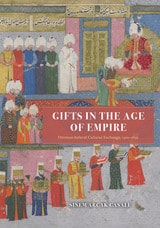
Gifts in the Age of Empire
Ottoman-Safavid Cultural Exchange, 1500–1639Sinem Arcak Casale
University of Chicago Press, 2023
When the Safavid dynasty, founded in 1501, built a state that championed Iranian identity and Twelver Shi'ism, it prompted the more established Ottoman Empire to align itself definitively with Sunni legalism. The political, religious, and military conflicts that arose have since been widely studied, but little attention has been paid to their diplomatic relationship. Sinem Arcak Casale here sets out to explore these two major Muslim empires through a surprising lens: gifts. Countless treasures—such as intricate carpets, gilded silver cups, and ivory-tusk knives—flowed from the Safavid to the Ottoman Empire throughout the sixteenth century. While only a handful now survive, records of these gifts exist in court chronicles, treasury records, poems, epistolary documents, ambassadorial reports, and travel narratives. Tracing this elaborate archive, Casale treats gifts as representative of the complicated Ottoman-Safavid coexistence, demonstrating how their rivalry was shaped as much by culture and aesthetics as it was by religious or military conflict. Gifts in the Age of Empire explores how gifts were no mere accessories to diplomacy but functioned as a mechanism of competitive interaction between these early modern Muslim courts.
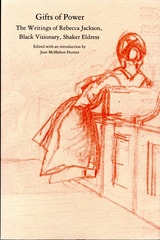
Gifts of Power
The Writings of Rebecca Jackson, Black Visionary, Shaker EldressJean M. Humez
University of Massachusetts Press, 1981
A free black woman in antebellum America, Rebecca Cox Jackson (1795–1871) was an independent itinerant preacher and religious visionary who founded a Shaker community in Philadelphia that survived her death by twenty-five years. Gifts of Power contains her complete extant writings, covering the period 1830 to 1864.
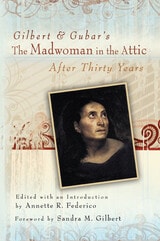
Gilbert and Gubar's The Madwoman in the Attic after Thirty Years
Edited by Annette R. Federico, Foreward by Sandra M. Gilbert
University of Missouri Press, 2011
When it was published in 1979, Sandra M. Gilbert and Susan Gubar's The Madwoman in the Attic: The Woman Writer and the Nineteenth-Century Literary Imaginationwas hailed as a pathbreaking work of criticism, changing the way future scholars would read Jane Austen, Mary Shelley, the Brontës, George Eliot, and Emily Dickinson. This thirtieth-anniversary collection adds both valuable reassessments and new readings and analyses inspired by Gilbert and Gubar’s approach. It includes work by established and up-and-coming scholars, as well as retrospective accounts of the ways in which The Madwoman in the Attic has influenced teaching, feminist activism, and the lives of women in academia.
These contributions represent both the diversity of today’s feminist criticism and the tremendous expansion of the nineteenth-century canon. The authors take as their subjects specific nineteenth- and twentieth-century women writers, the state of feminist theory and pedagogy, genre studies, film, race, and postcolonialism, with approaches ranging from ecofeminism to psychoanalysis. And although each essay opens Madwoman to a different page, all provocatively circle back—with admiration and respect, objections and challenges, questions and arguments—to Gilbert and Gubar's groundbreaking work.

Gillioz "Theatre Beautiful"
Celebrating Springfield's Theatre History, 1926-2006James Baumlin
Moon City Press, 2006
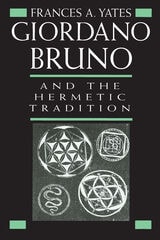
Giordano Bruno and the Hermetic Tradition
Frances A. Yates
University of Chicago Press, 1990
"Among those who have explored the intellectual world of the sixteenth century no one in England can rival Miss Yates. Wherever she looks, she illuminates. Now she has looked on Bruno. This brilliant book takes time to digest, but it is an intellectual adventure to read it. Historians of ideas, of religion, and of science will study it. Some of them, after reading it, will have to think again. . . . For Miss Yates has put Bruno, for the first time, in his tradition, and has shown what that tradition was."—Hugh Trevor-Roper, New Statesman
"A decisive contribution to the understanding of Giordano Bruno, this book will probably remove a great number of misrepresentations that still plague the tormented figure of the Nolan prophet."—Giorgio de Santillana, American Historical Review
"Yates's book is an important addition to our knowledge of Giordano Bruno. But it is even more important, I think, as a step toward understanding the unity of the sixteenth century."—J. Bronowski, New York Review of Books

Giordano Bruno
Philosopher / HereticIngrid D. Rowland
University of Chicago Press, 2009
Giordano Bruno (1548–1600) is one of the great figures of early modern Europe, and one of the least understood. Ingrid D. Rowland’s biography establishes him once and for all as a peer of Erasmus, Shakespeare, and Galileo—a thinker whose vision of the world prefigures ours.
Writing with great verve and erudition, Rowland traces Bruno’s wanderings through a sixteenth-century Europe where every certainty of religion and philosophy has been called into question, and reveals how he valiantly defended his ideas to the very end, when he was burned at the stake as a heretic on Rome’s Campo de’ Fiori.
“A loving and thoughtful account of [Bruno’s] life and thought, satires and sonnets, dialogues and lesson plans, vagabond days and star-spangled nights. . . . Ingrid D. Rowland has her reasons for preferring Bruno to Copernicus, Tycho Brahe, Johannes Kepler, even Galileo and Leonardo, and they’re good ones.”—John Leonard, Harper’s
“Whatever else Bruno was, he was wild-minded and extreme, and Rowland communicates this, together with a sense of the excitement that his ideas gave him. . . . It’s that feeling for the explosiveness of the period, and [Rowland’s] admiration of Bruno for participating in it—indeed, dying for it—that is the central and most cherishable quality of the biography.”—Joan Acocella, New Yorker
“Rowland tells this great story in moving, vivid prose, concentrating as much on Bruno’s thought as on his life. . . . His restless mind, as she makes clear, not only explored but transformed the heavens.”—Anthony Grafton, New York Review of Books
“[Bruno] seems to have been an unclassifiable mixture of foul-mouthed Neapolitan mountebank, loquacious poet, religious reformer, scholastic philosopher, and slightly wacky astronomer.”—Anthony Gottlieb, New York Times Book Review
“A marvelous feat of scholarship. . . . This is intellectual biography at its best.”—Peter N. Miller, New Republic
“An excellent starting point for anyone who wants to rediscover the historical figure concealed beneath the cowl on Campo de’ Fiori.”—Paula Findlen, Nation

Giorgione's Tempest
Interpreting the Hidden SubjectSalvatore Settis
University of Chicago Press, 1990

Girl Power?
A History of Girl-Focused Development from NairobiSarah Bellows-Blakely
University of Chicago Press, 2025
Girl-focused education programs have long been at the heart of international policymaking—when girls’ access to education is ensured, the reasoning goes, they are more likely to turn into productive adults who can drive economic growth. These ideas combine strands of feminism and capitalism that have a specific and understudied origin. In this book, historian Sarah Bellows-Blakely shows how a doctored study of girls’ education in East and Southern Africa led to the creation of international norms in the United Nations that would go on to guide policymaking on women’s rights and economic growth, promoting neoliberal feminist policy at the expense of other forms of gender-based justice.
Focusing on the growth of free-market feminism and girl-focused economic development planning through the relationship between UNICEF and the Nairobi-based NGO FEMNET, Bellows-Blakely reveals how their joint efforts set the blueprints for linked movements of economic development and women’s rights that are still ongoing. Through a narrative of the UNICEF-FEMNET lobbying campaign, Bellows-Blakely shows how multiple, contested girl-focused visions of economic programming and gender justice became selectively erased in favor of an approach to global policy centered on the free-market construction and strategic deployment of the African “girl child.”
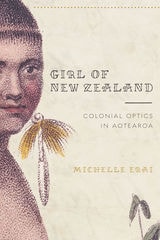
Girl of New Zealand
Colonial Optics in AotearoaMichelle Erai
University of Arizona Press, 2020
Viewed through Māori, feminist, queer, and film theories, Erai shows how images such as Girl of New Zealand (1793) and later images, cartoons, and travel advertising created and deployed a colonial optic. Girl of New Zealand reveals how the phantasm of the Māori woman has shown up in historical images, how such images shape our imagination, and how impossible it has become to maintain the delusion of the “innocent eye.” Erai argues that the process of ascribing race, gender, sexuality, and class to imagined bodies can itself be a kind of violence.
In the wake of the Me Too movement and other feminist projects, Erai’s timely analysis speaks to the historical foundations of negative attitudes toward Indigenous Māori women in the eyes of colonial “others”—outsiders from elsewhere who reflected their own desires and fears in their representations of the Indigenous inhabitants of Aotearoa, New Zealand. Erai resurrects Māori women from objectification and locates them firmly within Māori whānau and communities.