Results by title
22279 books match the query 'Social Science' and 583 start with g
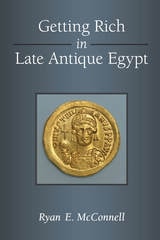
Getting Rich in Late Antique Egypt
Ryan E. McConnell
University of Michigan Press, 2017
Ryan E. McConnell connects the family’s rise in wealth and status to its role in tax collection on behalf of the Byzantine state, rather than a reliance on productive surpluses. Close analysis of low- and high-level accounts from the Apion estate, as well as documentation from comparable Roman and Byzantine Egyptian estates, corroborate this conclusion. Additionally, McConnell offers a third way into the ongoing debate over whether the Apions’ relationship with the state was antagonistic or cooperative, concluding that the relationship was that of parties in a negotiation, with each side seeking to maximize its own benefit. The application of modern economic concepts—as well as comparisons to the economies of Athens, Rome, Ptolemaic Egypt, and Early Modern France—further illuminate the structure and function of the estate in Late Antique Egypt.
Getting Rich in Late Antique Egypt will be a valuable resource for philologists, archaeologists, papyrologists, and scholars of Late Antiquity. It will also interest scholars of agricultural, social, and economic history.
Getting Screwed
Sex Workers and the LawAlison Bass
University Press of New England, 2015
Getting Your Way
Strategic Dilemmas in the Real WorldJames M. Jasper
University of Chicago Press, 2006
Getting other people to do what we want is a useful skill for anyone. Whether you’re seeking a job, negotiating a deal, or angling for that big promotion, you’re engaged in strategic thought and action. In such moments, you imagine what might be going on in another person’s head and how they’ll react to what you do or say. At the same time, you also try to pick the best way to realize your goals, both with and without the other person’s cooperation. Getting Your Way teaches us how to win that game by offering a fuller understanding of how strategy works in the real world.
As we all know, rules of strategy are regularly discovered and discussed in popular books for business executives, military leaders, and politicians. Those works with their trendy lists of pithy maxims and highly effective habits can help people avoid mistakes or even think anew about how to tackle their problems. But they are merely suggestive, as each situation we encounter in the real world is always more complex than anticipated, more challenging than we had hoped. James M. Jasper here shows us how to anticipate those problems before they actually occur—by recognizing the dilemmas all strategic players must negotiate, with each option accompanied by a long list of costs and risks. Considering everyday dilemmas in a broad range of familiar settings, from business and politics to love and war, Jasper explains how to envision your goals, how to make the first move, how to deal with threats, and how to employ strategies with greater confidence.
Alexander the Great, Genghis Khan, Rosa Parks, Hugo Chávez, and David Koresh all come into play in this smart and engaging book, one that helps us recognize and prepare for the many dilemmas inherent in any strategic action.
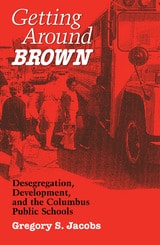
Getting around Brown
Desegregation, Development, and the Columbus Public SchoolsGregory S. Jacobs
The Ohio State University Press, 1998
Getting Around Brown is both the first history of school desegregation in Columbus, Ohio, and the first case study to explore the interplay of desegregation, business, and urban development in America.
Drawing on a broad range of sources, including over sixty interviews, the book details the causes and consequences of Penick v. Columbus Board of Education (1977). Gregory S. Jacobs argues that school desegregation in Columbus failed to produce equal educational opportunity, not because it was inherently detrimental to learning, but because it was incompatible with urban development. As a consequence, the long-term health of the city school district was sacrificed to preserve the growth of the city itself. The resulting middle-class abandonment of urban education in Columbus produced an increasingly poor, African-American city school system and a powerful form of defensive activism within the overwhelmingly white suburban systems.
The title of the book refers not only to the elaborate tools used to circumvent the spirit of the Supreme Court’s landmark 1954 Brown v. Board of Education decision but also to the need to move beyond the flawed dichotomies and failed policies that have come to define desegregation. The book calls for a reconsideration of the complicated relationship race, class, and housing patterns have with city school reform efforts, a relationship obscured by this country’s vitriolic and occasionally violent battle over busing. Jacobs concludes his study with a “modest proposal,” in which he recommends the abolition of the Columbus Public School District, the dispersal of its students throughout surrounding suburban systems, and the creation of a choice-based “experimental education zone” within the old city school district boundaries.
Readable and relevant, Getting around Brownis essential reading for scholars of recent American history, urban studies, civil rights and race relations, and educational policy, as well as anyone interested in public education and politics.
Getting into Print
The Decision-Making Process in Scholarly PublishingWalter W. Powell
University of Chicago Press, 1985
Throughout, the sociology of organizations and of culture serves as Powell's interpretive framework. Powell shows how scholarly publishers help define what is "good" social science research and how the history and tradition of a publishing house contribute to the development of an organizational identity. Powell's review of actual correspondence, from outside letters proposing projects to internal "kill" letters of rejection, suggests that editors and authors at times form their own quasi-organization with external allegiances and bonds beyond those of the publishing house.
"This is a welcome addition to the literature on the life of the organizations that produce our science and our culture. Powell's intimate look at two scholarly publishing companies has an insider's appreciation of the book business and an outsider's eye for questions the editors are not asking themselves."—Michael Schudson, University of California at San Diego
"Getting Into Print will long be the book about how academic editors choose the titles they sponsor. Even experienced editors and authors will find new insights here and revealing comparisons with decision-making in other kinds of organizations."—Edward Tenner, Los Angeles Times Book Review
"Getting Into Print is an unusually outstanding ethnographic study in that it reflects the evocative richness of detail associated with the ethnographic approach while simultaneously maintaining a clear-headed, analytical distance from the subject that allows for a meaningful theoretical contribution. Powell is an astute ethnographer who presents a vital and compelling 'insider's view' of the decision-making process in scholarly publishing, making this book fascinating reading for all those involved in the 'publish-or-perish' syndrome."—Barbara Levitt, American Journal of Sociology

Gettysburg, Time and Again
Restaging America and Its Civil Wars TodayMads Daugbjerg
University of Massachusetts Press, 2027
Tracing how the Civil War continues to shape the landscapes, politics, and culture of today
Every year, thousands of Americans don Civil War uniforms and restage the bloodiest battle ever fought on American soil. In Gettysburg, Time and Again, Mads Daugbjerg explores how the Civil War continues to inhabit the present. Bringing together reenactors, National Park Service rangers, ghost hunters, tourists, and local residents, this study examines how Americans across social and political divides engage the past through the landscapes, institutions, and everyday practices of public history.
At once historically grounded and urgently contemporary, this book speaks directly to current struggles over the meaning of America and its values. Rather than treating time and history as abstract concepts, Daugbjerg approaches them as lived, material forces produced through commemorative landscapes, interpretive labor, and the relentless restaging of 1863 for contemporary audiences. Studying reenactment illuminates not only a distinctive cultural practice but also the broader processes through which the past is continuously reshaped, repeated, and felt in the present. He argues that present-day American unrest can be understood, in part, as a conflict over how the past is curated. He further suggests that Americans today often occupy profoundly different temporal worlds.
Daugbjerg traces these tensions through landscapes, material culture, tourism infrastructures, and social life at Gettysburg. Challenging the commonsense notion of history as linear progression, Gettysburg, Time and Again reveals repetition as a defining feature of American historical experience. By offering a finely grained anthropology of the “present past,” Daugbjerg shows how history’s afterlives remain powerfully out of sync and why those temporal disjunctions matter now.
Gheo-Shih
An Archaic Macroband Camp in the Valley of OaxacaFrank Hole and Kent V. Flannery
University of Michigan Press, 2024
Ghetto at the Center of the World
Chungking Mansions, Hong KongGordon Mathews
University of Chicago Press, 2011
But as Ghetto at the Center of the World shows us, a trip to Chungking Mansions reveals a far less glamorous side of globalization. A world away from the gleaming headquarters of multinational corporations, Chungking Mansions is emblematic of the way globalization actually works for most of the world’s people. Gordon Mathews’s intimate portrayal of the building’s polyethnic residents lays bare their intricate connections to the international circulation of goods, money, and ideas. We come to understand the day-to-day realities of globalization through the stories of entrepreneurs from Africa carting cell phones in their luggage to sell back home and temporary workers from South Asia struggling to earn money to bring to their families. And we see that this so-called ghetto—which inspires fear in many of Hong Kong’s other residents, despite its low crime rate—is not a place of darkness and desperation but a beacon of hope.
Gordon Mathews’s compendium of riveting stories enthralls and instructs in equal measure, making Ghetto at the Center of the World not just a fascinating tour of a singular place but also a peek into the future of life on our shrinking planet.
Ghost Protocol
Development and Displacement in Global ChinaCarlos Rojas and Ralph A. Litzinger, editors
Duke University Press, 2016
Contributors. Yomi Braester, Alexander Des Forges, Kabzung, Rachel Leng, Ralph A. Litzinger, Lisa Rofel, Carlos Rojas, Bryan Tilt, Robin Visser, Biao Xiang, Emily T. Yeh
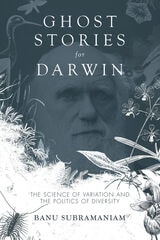
Ghost Stories for Darwin
The Science of Variation and the Politics of DiversityBanu Subramaniam
University of Illinois Press, 2014
Subramaniam reveals the histories of eugenics and genetics and their impact on the metaphorical understandings of difference and diversity that permeate common understandings of differences among people exist in contexts that seem distant from the so-called objective hard sciences. Journeying into interdisciplinary areas that range from the social history of plants to speculative fiction, Subramaniam uncovers key relationships between the life sciences, women's studies, evolutionary and invasive biology, and the history of ecology, and how ideas of diversity and difference emerged and persist in each field.
Ghost Woman
A RisingCrystal Simone Smith
Duke University Press, 2026

Ghostbodies
Towards a New Theory of InvalidismMaia Dolphin-Krute
Intellect Books, 2017

Ghostlife of Third Cinema
Asian American Film and VideoGlen M. Mimura
University of Minnesota Press, 2009
An interpretive history of Asian American independent media since the 1960s
Asian American filmmakers and video artists have created a substantial, diverse, and challenging body of work that reimagines the cultural and political representation of Asian Americans. Yet much of this work remains unknown.
For Glen M. Mimura, Asian American cinema is the spectral, ghostly return of the international film movement known as Third Cinema. Tracing contemporary Asian American cinema as a continuation of Third Cinema’s radical enterprise of making marginalized subjects visible in the First World, Ghostlife of Third Cinema examines such potent issues as diasporic identity, historical memory, and queer sexuality through sophisticated readings of a wide range of film and video projects, including Trinh T. Minh-ha’s experimental documentary Surname Viet Given Name Nam; avant-garde works by Japanese American filmmakers Rea Tajiri, Lise Yasui, and Janice Tanaka; and queer videos exploring the intersection of race, nation, and sexuality by Pablo Bautista, Ming-Yuen Ma, and Nguyen Tan Hoang. In Ghostlife of Third Cinema, Mimura confronts the ongoing erasure of Asian American independent media andilluminates its cultural and political significance today.
Ghostly Communion
Cross-Cultural Spiritualism in Nineteenth-Century American LiteratureJohn J. Kucich
Dartmouth College Press, 2015
Ghostly Desires
Queer Sexuality and Vernacular Buddhism in Contemporary Thai CinemaArnika Fuhrmann
Duke University Press, 2016
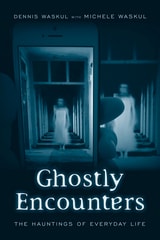
Ghostly Encounters
The Hauntings of Everyday LifeDennis Waskul
Temple University Press, 2016
“In the top corner of the window a pale, milky-white wisp is rising almost to the top of our ten-foot ceiling…. I am startled but not afraid…. Mostly, I am engrossed; I have never seen anything like this before (or since) and it fascinates me.”
Dennis Waskul writes these lines—about his first-hand experience with the supernatural—in the introduction to his beguiling book Ghostly Encounters. Based on two years of fieldwork and interviews with 71 midwestern Americans, the Waskuls’ book is a reflexive ethnography that examines how people experience ghosts and hauntings in everyday life. The authors explore how uncanny happenings become ghosts, and the reasons people struggle with or against a will to believe. They present the variety and character of hauntings and ghostly encounters, outcomes of people telling haunted legends, and the nested consequences of ghostly experiences.
Through these stories, Ghostly Encounters seeks to understand the persistence of uncanny experiences and beliefs in ghosts in an age of reason, science, education, and technology—as well as how those beliefs and experiences both reflect and serve important social and cultural functions.
Ghostly Matters
Haunting and the Sociological ImaginationAvery F. Gordon
University of Minnesota Press, 1996
Ghostly Matters
Haunting and the Sociological ImaginationAvery F. Gordon
University of Minnesota Press, 2008
“Avery Gordon’s stunningly original and provocatively imaginative book explores the connections linking horror, history, and haunting. ” —George Lipsitz
“The text is of great value to anyone working on issues pertaining to the fantastic and the uncanny.” —American Studies International
“Ghostly Matters immediately establishes Avery Gordon as a leader among her generation of social and cultural theorists in all fields. The sheer beauty of her language enhances an intellectual brilliance so daunting that some readers will mark the day they first read this book. One must go back many more years than most of us can remember to find a more important book.” —Charles Lemert
Drawing on a range of sources, including the fiction of Toni Morrison and Luisa Valenzuela (He Who Searches), Avery Gordon demonstrates that past or haunting social forces control present life in different and more complicated ways than most social analysts presume. Written with a power to match its subject, Ghostly Matters has advanced the way we look at the complex intersections of race, gender, and class as they traverse our lives in sharp relief and shadowy manifestations.
Avery F. Gordon is professor of sociology at the University of California, Santa Barbara.
Janice Radway is professor of literature at Duke University.
Ghosts Of Slavery
A Literary Archaeology of Black Women’s LivesJenny Sharpe
University of Minnesota Press, 2002
Questions traditional assumptions about power and agency in slave women’s everyday lives.
Through their open defiance, women like Harriet Tubman and Sojourner Truth had a significant impact on the institution of slavery. But what of the countless other women who did not commit public or even private acts of resistance? Are their stories worthy of our attention? While some scholars imply that only the struggle for freedom was legitimate, Jenny Sharpe complicates the linear narrative-from slavery to freedom and literacy-that emerged from the privileging of autobiographical accounts like that of Frederick Douglass. She challenges a paradigm that equates agency with resistance and self-determination, and introduces new ways to examine negotiations for power within the constraints of slavery.
In Ghosts of Slavery, Sharpe introduces a wider range of everyday practices by examining the lives of three distinctive Caribbean women: a maroon leader, a mulatto concubine, and a fugitive slave. Through them she explains how the diasporic experience of slavery enabled black women to claim an authority that they didn’t possess in Africa, how concubines empowered themselves through their mimicry of white women, and how less-privileged slave women manipulated situations that they were powerless to change. Finding the highly mediated portrayal of slave women in the historical records limited and sometimes misleading, Sharpe turns to unconventional sources for investigating these women’s lives. In this fascinating and historically rich account, she calls for new strategies of reading that question traditional narratives of history, and she finds alternative ways to integrate oral storytelling, slave songs, travel writing, court documents, proslavery literature, and contemporary literature into black history. Ultimately, this layered approach not only produces a more complex picture of the slave women’s agency than conventional readings, it encourages a more nuanced understanding of the roles of slaves in the history of slavery.
Ghosts Over the Boiler
Voices from Alabama's Death RowProject Hope to Abolish the Death Penalty; Edited by Katie Owens-Murphy
Vanderbilt University Press, 2023
Ghosts Over the Boiler is a curated collection of poetry, visual art, photographs, essays, creative writings, and other archival materials that have emerged from Alabama's death row from the organization Project Hope to Abolish the Death Penalty (PHADP). This group was founded at Holman Correctional Facility and has been operating autonomously since 1989 toward its mission to abolish the death penalty in Alabama and in the nation.

Ghosts and The Japanese
Cultural Experience in Japanese Death LegendsMichiko Iwasaka & Barre Toelken
Utah State University Press, 1994
The Japanese have ambivalent attitudes toward death, deeply rooted in pre-Buddhist traditions. In this scholarly but accessible work, authors Iwasaka and Toelken show that everyday beliefs and customs--particularly death traditions--offer special insight into the living culture of Japan.
Ghosts in the Schoolyard
Racism and School Closings on Chicago's South SideEve L. Ewing
University of Chicago Press, 2018
That’s how Eve L. Ewing opens Ghosts in the Schoolyard: describing Chicago Public Schools from the outside. The way politicians and pundits and parents of kids who attend other schools talk about them, with a mix of pity and contempt.
But Ewing knows Chicago Public Schools from the inside: as a student, then a teacher, and now a scholar who studies them. And that perspective has shown her that public schools are not buildings full of failures—they’re an integral part of their neighborhoods, at the heart of their communities, storehouses of history and memory that bring people together.
Never was that role more apparent than in 2013 when Mayor Rahm Emanuel announced an unprecedented wave of school closings. Pitched simultaneously as a solution to a budget problem, a response to declining enrollments, and a chance to purge bad schools that were dragging down the whole system, the plan was met with a roar of protest from parents, students, and teachers. But if these schools were so bad, why did people care so much about keeping them open, to the point that some would even go on a hunger strike?
Ewing’s answer begins with a story of systemic racism, inequality, bad faith, and distrust that stretches deep into Chicago history. Rooting her exploration in the historic African American neighborhood of Bronzeville, Ewing reveals that this issue is about much more than just schools. Black communities see the closing of their schools—schools that are certainly less than perfect but that are theirs—as one more in a long line of racist policies. The fight to keep them open is yet another front in the ongoing struggle of black people in America to build successful lives and achieve true self-determination.
Ghosts of Organizations Past
Communities of Organizations as Settings for ChangeDan Ryan
Temple University Press, 2015
Ryan draws on concepts from the study of organizations, social capital, and social networks to re-think questions such as “What kind of thing is a community?” and “Why is it so difficult to build community initiatives out of organizations?” He provides a social organizational explanation for problems familiar to anyone who has been involved in community programs, issues that are usually understood as personal incompetence, turf wars, greed, or corruption.
Ghosts of Organizations Past describes the challenges of using organizations to create change in places in dire need of it.

Gichigami Hearts
Stories and Histories from MisaabekongLinda LeGarde Grover
University of Minnesota Press, 2021
Award-winning author Linda LeGarde Grover interweaves family and Ojibwe history with stories from Misaabekong (the place of the giants) on Lake Superior
Long before there was a Duluth, Minnesota, the massive outcropping that divides the city emerged from the ridge of gabbro rock running along the westward shore of Lake Superior. A great westward migration carried the Ojibwe people to this place, the Point of Rocks. Against this backdrop—Misaabekong, the place of the giants—the lives chronicled in Linda LeGarde Grover’s book unfold, some in myth, some in long-ago times, some in an imagined present, and some in the author’s family history, all with a deep and tenacious bond to the land, one another, and the Ojibwe culture.
Within the larger history, Grover tells the story of her ancestors’ arrival at the American Fur Post in far western Duluth more than two hundred years ago. Their fortunes and the family’s future are inextricably entwined with tales of marriages to voyageurs, relocations to reservation lands, encounters with the spirits of the lake and wood creatures, the renewal of life—in myth and in art, the search for meaning in the transformations of our day is always vital. Finally, in one man’s struggles, age-old tribulations, the intergenerational traumas of extended families and communities, and a uniquely Ojibwe appreciation for the natural and spiritual worlds converge, forging the Ojibwe worldview and will to survive as his legacy to his descendants.
Blending the seen and unseen, the old and the new, the amusing and the tragic and the hauntingly familiar, this lyrical work encapsulates a way of life forever vibrant at the Point of Rocks.
Gift Giving
A Research AnthologyCele Otnes
University of Wisconsin Press, 1996
Gift Giving brings together 21 scholars from a variety of disciplines—including consumer behavior, communications, and sociology—who are dedicated to the understanding of what motivates gift selection, presentation, and incorporation of a gift into a person's life.
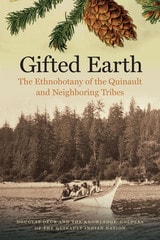
Gifted Earth
The Ethnobotany of the Quinault and Neighboring TribesDouglas Deur
Oregon State University Press, 2022
Gifted Earth features traditional Native American plant knowledge, detailing the use of plants for food, medicines, and materials. It presents a rich and living tradition of plant use within the Quinault Indian Nation in a volume collaboratively developed and endorsed by that tribe.
The Quinault Reservation on the Olympic Peninsula of Washington state is a diverse tribal community, embodying the traditional knowledge of tribes along the entire Pacific Northwest coast. Its membership consists of descendants of many tribes—from the northwestern Olympic Peninsula to the northern Oregon coast—including the Quinault, but also many others who were relocated to the reservation in the nineteenth and early twentieth centuries. Individuals descended from these tribal communities, including Chinook, Chehalis, Hoh, Quileute, Queets, Cowlitz, Tillamook, Clatsop, and others, have contributed to Gifted Earth, giving it remarkable breadth and representation.
A celebration of enduring Native American knowledge, this book will help non-specialists as they discover the potential of the region’s wild plants, learning how to identify, gather, and use many of the plants that they encounter in the Northwestern landscape. Part ethnobotanical guide and part “how-to” manual, Gifted Earth also prepares plant users for the minor hazards and pitfalls that accompany their quest—from how to avoid accidentally eating a bug hidden within a salal berry to how to prevent blisters when peeling the tender stalks of cow parsnip.
As beautiful as it is informative, Gifted Earth sets the standard for a new generation of ethnobotanical guides informed by the values, vision, and voice of Native American communities eager to promote a sustainable, balanced relationship between plant users and the rich plant communities of traditional tribal lands.
Gifts and Commodities
C. A. Gregory
HAU, 2015
Christopher A. Gregory’s Gifts and Commodities is one of the undisputed classics of economic anthropology. On its publication in 1982, it spurred intense, ongoing debates about gifts and gifting, value, exchange, and the place of political economy in anthropology.
Gifts and Commodities is, at once, a critique of neoclassical economics and development theory, a critical history of colonial Papua New Guinea, and a comparative ethnography of exchange in Melanesian societies. This new edition includes a foreword by anthropologist Marilyn Strathern and a new preface by the author that discusses the ongoing response to the book and the debates it has engendered, debates that have become more salient in our evermore neoliberal and globalized era.
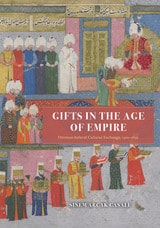
Gifts in the Age of Empire
Ottoman-Safavid Cultural Exchange, 1500–1639Sinem Arcak Casale
University of Chicago Press, 2023
When the Safavid dynasty, founded in 1501, built a state that championed Iranian identity and Twelver Shi'ism, it prompted the more established Ottoman Empire to align itself definitively with Sunni legalism. The political, religious, and military conflicts that arose have since been widely studied, but little attention has been paid to their diplomatic relationship. Sinem Arcak Casale here sets out to explore these two major Muslim empires through a surprising lens: gifts. Countless treasures—such as intricate carpets, gilded silver cups, and ivory-tusk knives—flowed from the Safavid to the Ottoman Empire throughout the sixteenth century. While only a handful now survive, records of these gifts exist in court chronicles, treasury records, poems, epistolary documents, ambassadorial reports, and travel narratives. Tracing this elaborate archive, Casale treats gifts as representative of the complicated Ottoman-Safavid coexistence, demonstrating how their rivalry was shaped as much by culture and aesthetics as it was by religious or military conflict. Gifts in the Age of Empire explores how gifts were no mere accessories to diplomacy but functioned as a mechanism of competitive interaction between these early modern Muslim courts.

Gilbert and Gubar's The Madwoman in the Attic after Thirty Years
Edited by Annette R. Federico, Foreward by Sandra M. Gilbert
University of Missouri Press, 2011
When it was published in 1979, Sandra M. Gilbert and Susan Gubar's The Madwoman in the Attic: The Woman Writer and the Nineteenth-Century Literary Imaginationwas hailed as a pathbreaking work of criticism, changing the way future scholars would read Jane Austen, Mary Shelley, the Brontës, George Eliot, and Emily Dickinson. This thirtieth-anniversary collection adds both valuable reassessments and new readings and analyses inspired by Gilbert and Gubar’s approach. It includes work by established and up-and-coming scholars, as well as retrospective accounts of the ways in which The Madwoman in the Attic has influenced teaching, feminist activism, and the lives of women in academia.
These contributions represent both the diversity of today’s feminist criticism and the tremendous expansion of the nineteenth-century canon. The authors take as their subjects specific nineteenth- and twentieth-century women writers, the state of feminist theory and pedagogy, genre studies, film, race, and postcolonialism, with approaches ranging from ecofeminism to psychoanalysis. And although each essay opens Madwoman to a different page, all provocatively circle back—with admiration and respect, objections and challenges, questions and arguments—to Gilbert and Gubar's groundbreaking work.

Gilles Deleuze
Vitalism and MultiplicityJohn Marks
Pluto Press, 1998
In the first comprehensive English-language introduction to Deleuze, John Marks offers a lucid reading of a complex, abstract and often perplexing body of work. Marks examines Deleuze’s philosophical writings – as well as the political and aesthetic preoccupations which underpinned his thinking – and provides a rigorous and illuminating reading of Deleuze’s early studies of Hume, Nietzsche, Kant, Bergson and Spinoza, his collaborations with Felix Guattari, and the development of a distinctively ‘Deleuzian’ conceptual framework. Marks focuses on the philosophical friendship that developed between Deleuze and Foucault and considers the full range of Deleuze’s fascinating writings on literature, art and cinema. This is a clear and concise guide to the work of one of the twentieth century’s most influential thinkers.

Girl Power?
A History of Girl-Focused Development from NairobiSarah Bellows-Blakely
University of Chicago Press, 2025
Girl-focused education programs have long been at the heart of international policymaking—when girls’ access to education is ensured, the reasoning goes, they are more likely to turn into productive adults who can drive economic growth. These ideas combine strands of feminism and capitalism that have a specific and understudied origin. In this book, historian Sarah Bellows-Blakely shows how a doctored study of girls’ education in East and Southern Africa led to the creation of international norms in the United Nations that would go on to guide policymaking on women’s rights and economic growth, promoting neoliberal feminist policy at the expense of other forms of gender-based justice.
Focusing on the growth of free-market feminism and girl-focused economic development planning through the relationship between UNICEF and the Nairobi-based NGO FEMNET, Bellows-Blakely reveals how their joint efforts set the blueprints for linked movements of economic development and women’s rights that are still ongoing. Through a narrative of the UNICEF-FEMNET lobbying campaign, Bellows-Blakely shows how multiple, contested girl-focused visions of economic programming and gender justice became selectively erased in favor of an approach to global policy centered on the free-market construction and strategic deployment of the African “girl child.”
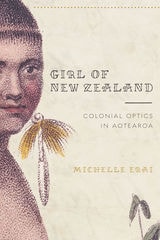
Girl of New Zealand
Colonial Optics in AotearoaMichelle Erai
University of Arizona Press, 2020
Viewed through Māori, feminist, queer, and film theories, Erai shows how images such as Girl of New Zealand (1793) and later images, cartoons, and travel advertising created and deployed a colonial optic. Girl of New Zealand reveals how the phantasm of the Māori woman has shown up in historical images, how such images shape our imagination, and how impossible it has become to maintain the delusion of the “innocent eye.” Erai argues that the process of ascribing race, gender, sexuality, and class to imagined bodies can itself be a kind of violence.
In the wake of the Me Too movement and other feminist projects, Erai’s timely analysis speaks to the historical foundations of negative attitudes toward Indigenous Māori women in the eyes of colonial “others”—outsiders from elsewhere who reflected their own desires and fears in their representations of the Indigenous inhabitants of Aotearoa, New Zealand. Erai resurrects Māori women from objectification and locates them firmly within Māori whānau and communities.

Girlhood and the Plastic Image
Heather Warren-Crow
Dartmouth College Press, 2014
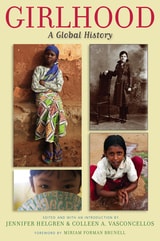
Girlhood
A Global HistoryHelgren, Jennifer
Rutgers University Press, 2010
Spanning a broad time frame from 1750 to the present, essays illuminate the various continuities and differences in girls' lives across culture and region--girls on all continents except Antarctica are represented. Case studies and essays are arranged thematically to encourage comparisons between girls' experiences in diverse locales, and to assess how girls were affected by historical developments such as colonialism, political repression, war, modernization, shifts in labor markets, migrations, and the rise of consumer culture.

Girls Who Went Wrong
Prostitutes in American Fiction, 1885–1917Laura Hapke
University of Wisconsin Press, 1989
The period 1885 to 1917 saw thousands of American crusaders working hard to “save the fallen women,” but little on the part of American social protest writers. In this first work on the subject, Laura Hapke examines how writers attempted to turn an outcast into a heroine in a literature otherwise known for its puritanical attitude toward the fallen woman. She focuses on how these authors (all male) expressed late-Victorian conflicts about female sexuality. If, as they all maintained, women have an innate preference for chastity, how could they account for the prostitute? Was she a sinner, suggesting the potential waywardness of all women? Or, if she was a victim, what of her “depravity”?

Girls Who Wore Black
Women Writing the Beat GenerationJohnson, Ronna C
Rutgers University Press, 2002

Girls Will Be Boys
Cross-Dressed Women, Lesbians, and American Cinema, 1908-1934Horak, Laura
Rutgers University Press, 2016
Finalist for 2016 Richard Wall Memorial Award from the Theatre Library Association
Long-listed for the 2017 Best Photography Book Award from the Kraszna-Krausz Foundation
Marlene Dietrich, Greta Garbo, and Katharine Hepburn all made lasting impressions with the cinematic cross-dressing they performed onscreen. What few modern viewers realize, however, is that these seemingly daring performances of the 1930s actually came at the tail end of a long wave of gender-bending films that included more than 400 movies featuring women dressed as men.
Laura Horak spent a decade scouring film archives worldwide, looking at American films made between 1908 and 1934, and what she discovered could revolutionize our understanding of gender roles in the early twentieth century. Questioning the assumption that cross-dressing women were automatically viewed as transgressive, she finds that these figures were popularly regarded as wholesome and regularly appeared onscreen in the 1910s, thus lending greater respectability to the fledgling film industry. Horak also explores how and why this perception of cross-dressed women began to change in the 1920s and early 1930s, examining how cinema played a pivotal part in the representation of lesbian identity.
Girls Will Be Boys excavates a rich history of gender-bending film roles, enabling readers to appreciate the wide array of masculinities that these actresses performed—from sentimental boyhood to rugged virility to gentlemanly refinement. Taking us on a guided tour through a treasure-trove of vintage images, Girls Will Be Boys helps us view the histories of gender, sexuality, and film through fresh eyes.
Girls at a Vocational High
Henry Joseph Meyer
Russell Sage Foundation, 1965

Girls in Trouble with the Law
Schaffner, Laurie
Rutgers University Press, 2006
Offering a critical assessment of what she describes as a gender-insensitive juvenile legal system, Schaffner makes a compelling argument that current policies do not go far enough to empower disadvantaged girls so that communities can assist them in overcoming the social limitations and gender, sexual, and racial/ethnic discrimination that continue to plague young women growing up in contemporary United States.
Girls! Girls! Girls! In Contemporary Art
Edited by Catherine Grant and Lori Waxman
Intellect Books, 2011
Give a Man a Fish
Reflections on the New Politics of DistributionJames Ferguson
Duke University Press, 2015
Given Up for You
A Memoir of Love, Belonging, and BeliefErin O. White
University of Wisconsin Press, 2018
Given World and Time
Temporalities in ContextTyrus Miller
Central European University Press, 2008
Given to the Goddess
South Indian Devadasis and the Sexuality of ReligionLucinda Ramberg
Duke University Press, 2014
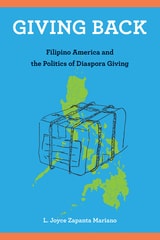
Giving Back
Filipino America and the Politics of Diaspora GivingL. Joyce Zapanta Mariano
Temple University Press, 2021
Many Filipino Americans feel obligated to give charitably to their families, their communities, or social development projects and organizations back home. Their contributions provide relief to poor or vulnerable Filipinos, and address the forces that maintain poverty, vulnerability, and exploitative relationships in the Philippines. This philanthropy is a result of both economic globalization and the migration of Filipino professionals to the United States. But it is also central to the moral economies of Filipino migration, immigration, and diasporic return. Giving-related practices and concerns—and the bonds maintained through giving—infuse what it means to be Filipino in America.
Giving Back shows how integral this system is for understanding Filipino diaspora formation. Joyce Mariano “follows the money” to investigate the cultural, social, economic, and political conditions of diaspora giving. She takes an interdisciplinary approach to reveal how power operates through this charity and the ways the global economic and cultural dimensions of this practice reinforce racial subordination and neocolonialism. Giving Back explores how this charity can stabilize overlapping systems of inequality as well as the contradictions of corporate social responsibility programs in diaspora.
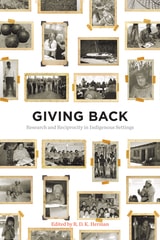
Giving Back
Research and Reciprocity in Indigenous SettingsR. D. K. Herman
Oregon State University Press, 2018
Over the past several decades—and especially since the evolution of feminist methodologies, participatory research, and the post-colonial turn in the 1990s—there have been calls for research to be less exploitative, but also for researchers and for the research itself to give something back. Giving Back: Research and Reciprocity in Indigenous Settings addresses the need for reciprocity in the research process, especially (though not exclusively) in regard to Indigenous Communities.
The twelve case studies in this volume demonstrate that giving back can happen through the research itself – through the careful framing of questions, co-production of knowledge, and dissemination of results – but also through the day-to-day actions and attitudes of researchers that inevitably occur in the field. It can range from everyday give and take, to the sharing of research materials, to larger and longer-term engagements.
As practitioners of community-based research gain greater awareness of these issues, scholars and institutions need guidance and strategies for ensuring reciprocity in the research process. This volume presents a variety of situations from a wide range of research contexts, discussing what has and hasn’t worked, and exploring what issues remain.
Giving Life, Giving Death
Psychoanalysis, Anthropology, PhilosophyLucien Scubla
Michigan State University Press, 2016

Giza and the Pyramids
The Definitive HistoryMark Lehner and Zahi Hawass
University of Chicago Press, 2017
The celebrated Great Pyramid of Khufu, or Cheops, is the only one of the seven wonders of the ancient world still standing, but there is much more to Giza. Though we imagine the pyramids of Khufu, Khafre, and Menkaure and the Sphinx rising from the desert, isolated and enigmatic, they were once surrounded by temples, noble tombs, vast cemeteries, and even harbors and teeming towns. This unparalleled account describes that past life in vibrant detail, along with the history of exploration, the religious and social function of the pyramids, how the pyramids were built, and the story of Giza before and after the Old Kingdom. Hundreds of illustrations, including vivid photographs of the monuments, excavations, and objects, as well as plans, reconstructions, and images from remote-controlled cameras and laser scans, help bring these monuments to life.
Through the ages, Giza and the pyramids have inspired extraordinary speculations and wild theories, but here, in this definitive account, is the in-depth story as told by the evidence on the ground and by the leading authorities on the site.
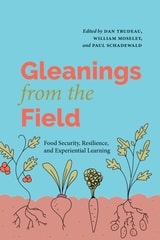
Gleanings from the Field
Food Security, Resilience, and Experiential LearningEdited by Dan Trudeau, William Moseley, and Paul Schadewald
Lever Press, 2025
This timely essay collection frames our food security challenges as “wicked problems,” puzzles without clear solutions that are characterized by evolving complexities and divergent stakeholder priorities. In classroom settings, they argue for the usage of experiential learning to cultivate “wicked problem-solving skills” among students. Gleanings from the Field exemplifies this approach, offering pedagogical interventions to prepare students for tackling these wicked problems, while advocating for high-impact learning experiences that enable students to grapple with the interconnected systems influencing food security. Through hands-on experiences and reflective practice, students gain a deeper understanding of these systems and their societal implications. Importantly, the contributions outlined in this volume underscore the need for a multidimensional view of food security, thus examining the intersections of economic interests, government policies, and social movements. By contextualizing food security within broader political-economic arrangements, educators can empower students to enact meaningful change.
Gleanings from the Field argues for a holistic approach to food security education, one that acknowledges the fraught nature of wicked problems and equips students with the skills and knowledge needed for effective action. By integrating experiential learning, conceptual frameworks about food security and resilience, and real-world engagement, educators can cultivate a new generation of resilient problem-solvers committed to addressing food insecurity and other wicked problems.
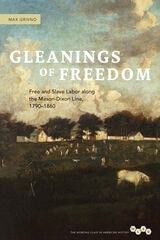
Gleanings of Freedom
Free and Slave Labor along the Mason-Dixon Line, 1790-1860Max Grivno
University of Illinois Press, 2014