Results by title
18284 books match the query 'United States' and 433 start with g
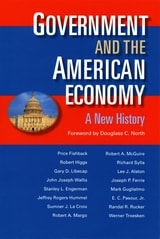
Government and the American Economy
A New HistoryPrice V. Fishback et al.
University of Chicago Press, 2007
The American economy has provided a level of well-being that has consistently ranked at or near the top of the international ladder. A key source of this success has been widespread participation in political and economic processes. In The Government and the American Economy, leading economic historians chronicle the significance of America’s open-access society and the roles played by government in its unrivaled success story.
America’s democratic experiment, the authors show, allowed individuals and interest groups to shape the structure and policies of government, which, in turn, have fostered economic success and innovation by emphasizing private property rights, the rule of law, and protections of individual freedom. In response to new demands for infrastructure, America’s federal structure hastened development by promoting the primacy of states, cities, and national governments. More recently, the economic reach of American government expanded dramatically as the populace accepted stronger limits on its economic freedoms in exchange for the increased security provided by regulation, an expanded welfare state, and a stronger national defense.
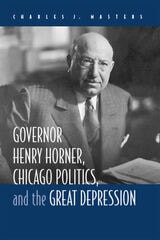
Governor Henry Horner, Chicago Politics, and the Great Depression
Charles J. Masters
Southern Illinois University Press, 2007
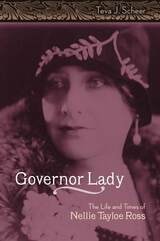
Governor Lady
The Life and Times of Nellie Tayloe RossTeva J. Scheer
University of Missouri Press, 2005
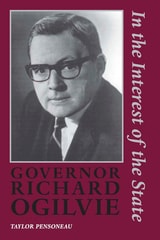
Governor Richard Ogilvie
In the Interest of the StateTaylor Pensoneau
Southern Illinois University Press, 2009
Although serious scandal erupted in Illinois Governor Richard Ogilvie’s administration— eight hundred thousand dollars mysteriously appearing in Secretary of State Paul Powell’s shoe boxes and other hiding places, the downfall of two Supreme Court justices for questionable stock dealings, corruption surrounding the Illinois State Fair— Ogilvie’s accomplishments, as Taylor Pensoneau demonstrates, rank him among the best governors in Illinois history.
Perhaps the most important of Ogilvie’s accomplishments during his single term in office (1969–1973) was the passage of the state’s first income tax in 1969. Supporting the income tax took political courage on the part of the new governor, but in doing so he saved the financially crippled state from economic disaster. He also looked far into the future; at a time when few politicians expressed concern with the environment, Ogilvie created an exemplary and hard-hitting antipollution program. He was in office during the Illinois Constitutional Convention in 1970 and was instrumental in the widespread restructuring of Illinois government.
Viewing Ogilvie as a pivotal figure in Illinois politics during a time of great social and political turmoil, Pensoneau provides a complete political biography. He sheds light on Ogilvie’s military heroics, his political career, and the Illinois elections of 1968, 1970, and 1972.
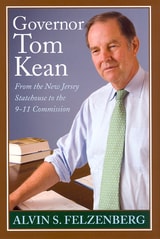
Governor Tom Kean
From the New Jersey Statehouse to the 911 CommissionFelzenberg, Alvin S
Rutgers University Press, 2006
In this first political biography of one of the nation's most popular and successful governors, Alvin S. Felzenberg tells the story of a remarkable career that culminated in an unexpected and crucial contribution to the country-chairmanship of the 9/11 Commission. Felzenberg describes how, early in his political career, Kean worked to transform New Jersey's legislature in the aftermath of court rulings that mandated redistricting in accordance with the "one man, one vote" principle. He discusses Kean's efforts to relieve the urban crisis that followed in the wake of the 1967 Newark riots. He relates how Kean was able to use the New Jersey governorship-purportedly the strongest in the country-to transform a so-called "rust belt" state into a leader in education, environmental responsibility, and economic growth.
Kean's successes in these and other areas caused leaders outside New Jersey to follow in his path. Together with his fellow governors, Kean forged a national consensus on domestic policy between Democratic congresses and Republican presidents, in the process winning for himself a leadership role in his own party. Kean's story serves as an uncommon case of how a Republican loyal to the historic roots and principles of his party can not only win election in a "blue state" but effectively govern it.
Starting from the example the governor set on the state level, Felzenberg's account traces Kean's career to positions of trusted authority on the national stage. After several years of advising presidents, Kean was appointed chairman of the 9/11 Commission. In this role, he made the bipartisan, Congressionally mandated commission one of the most successful in American history.
Drawing on interviews with Kean as well as with state and national leaders, including former presidents Gerald Ford and Bill Clinton and former New York City mayor Ed Koch, Felzenberg not only provides a marvelous biography, but also offers a unique look at American politics during the last four decades of the twentieth century.
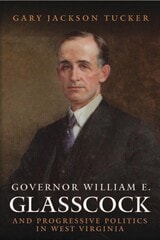
Governor William Glasscock and Progressive Politics in West Virginia
Gary Jackson Tucker
West Virginia University Press, 2008
From 1909 to 1913, Governor William Glasscock served the state of West Virginia as an ardent progressive and reformer. In his inaugural address he proclaimed government "the machinery invoked and devised by man for his benefit and protection” and good government the guarantor of the happiness, prosperity, success, and welfare of the people. Governor William Glasscock and Progressive Politics in West Virginia recounts the life and work of West Virginia’s thirteenth governor. Born during the Civil War, Glasscock witnessed a country torn by sectional, fratricidal war become a powerful industrial nation by the turn of the twentieth century. Author Gary Jackson Tucker demonstrates how Glasscock, along with others during the Progressive Era, railed against large and powerful political and economic machines to enact legislation protecting free and fair elections, just taxation, regulation of public utilities, and workmen’s compensation laws. Never hesitating to use the power of the state to stand firm against racism and mob rule, and placing his own personal safety in jeopardy, Glasscock won the praise and admiration of average people. Glasscock’s four years in office took his own health and financial security from him, but left behind a better government—a good government—for the people of West Virginia.
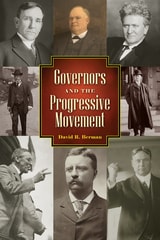
Governors and the Progressive Movement
David R. Berman
University Press of Colorado, 2019
Governors and the Progressive Movement is the first comprehensive overview of the Progressive movement’s unfolding at the state level, covering every state in existence at the time through the words and actions of state governors. It explores the personalities, ideas, and activities of this period’s governors, including lesser-known but important ones who deserve far more attention than they have previously been given.
During this time of greedy corporations, political bosses, corrupt legislators, and conflict along racial, class, labor/management, urban/rural, and state/local lines, debates raged over the role of government and issues involving corporate power, racism, voting rights, and gender equality—issues that still characterize American politics. Author David R. Berman describes the different roles each governor played in the unfolding of reform around these concerns in their states. He details their diverse leadership qualities, governing styles, and accomplishments, as well as the sharp regional differences in their outlooks and performance, and finds that while they were often disposed toward reform, governors held differing views on issues—and how to resolve them.
Governors and the Progressive Movement examines a time of major changes in US history using relatively rare and unexplored collections of letters, newspaper articles, and government records written by and for minority group members, labor activists, and those on both the far right and far left. By analyzing the governors of the era, Berman presents an interesting perspective on the birth and implementation of controversial reforms that have acted as cornerstones for many current political issues. This book will be of interest to students and scholars of US history, political science, public policy, and administration.
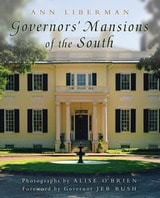
Governors' Mansions of the South
Ann Liberman & Photos by Alise O'Brien
University of Missouri Press, 2008
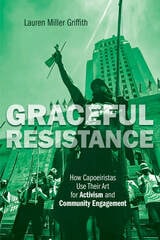
Graceful Resistance
How Capoeiristas Use Their Art for Activism and Community EngagementLauren Miller Griffith
University of Illinois Press, 2023
Capoeira began as a martial art developed by enslaved Afro-Brazilians. Today, the practice incorporates song, dance, acrobatics, and theatrical improvisation—and leads many participants into activism.
Lauren Miller Griffith’s extensive participant observation with multiple capoeira groups informs her ethnography of capoeiristas--both individuals and groups--in the United States. Griffith follows practitioners beyond their physical training into social justice activities that illuminate capoeira’s strong connection to resistance and subversion. As both individuals and communities of capoeiristas, participants march against racial discrimination, celebrate Martin Luther King Jr. Day and Juneteenth, organize professional clothing drives for job seekers, and pursue economic and environmental justice in their neighborhoods. For these people, capoeira becomes a type of serious leisure that contributes to personal growth, a sense of belonging, and an overall sense of self, while also imposing duties and obligations.
An innovative look at capoeira in America, Graceful Resistance reveals how the practicing of an art can catalyze action and transform communities.
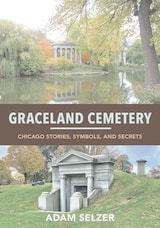
Graceland Cemetery
Chicago Stories, Symbols, and SecretsAdam Selzer
University of Illinois Press, 2022
Chosen for the 2024 Illinois Reads Program by the Illinois Reading Council
One of Chicago’s landmark attractions, Graceland Cemetery chronicles the city’s sprawling history through the stories of its people. Local historian and Graceland tour guide Adam Selzer presents ten walking tours covering almost the entirety of the cemetery grounds. While nodding to famous Graceland figures from Marshall Field to Ernie Banks to Ludwig Mies van der Rohe, Selzer also leads readers past the vaults, obelisks, and other markers that call attention to less recognized Chicagoans like:
- Jessie Williams de Priest, the Black wife of a congressman whose 1929 invitation to a White House tea party set off a storm of controversy;
- Engineer and architect Fazlur Khan, the Bangladeshi American who revived the city's skyscraper culture;
- The still-mysterious Kate Warn (listed as Warn on her tombstone), the United States’ first female private detective.
Filled with photographs and including detailed maps of each tour route, Graceland Cemetery is an insider's guide to one of Chicago's great outdoor destinations for city lore and history.
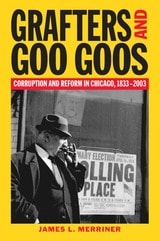
Grafters and Goo Goos
Corruption and Reform in ChicagoJames L. Merriner
Southern Illinois University Press, 2008
Chicago’s reputation for corruption is the basis of local and national folklore and humor. Grafters and Goo Goos: Corruption and Reform in Chicago, 1833–2003 unfolds the city’s notorious history of corruption and the countervailing reform struggles that largely failed to clean it up. More than a regional history of crime in politics, this wide-ranging account of governmental malfeasances traces ongoing public corruption and reform to its nineteenth-century democratic roots. Former Chicago journalist James L. Merriner reveals the battles between corrupt politicos and ardent reformers to be expressions of conflicting class, ethnic, and religious values.
From Chicago’s earliest years in the 1830s, the city welcomed dollar-chasing businessmen and politicians, swiftly followed by reformers who strived to clean up the attendant corruption. Reformers in Chicago were called “goo goos,” a derisive epithet short for “good-government types.” Grafters and Goo Goos contends a certain synergy defined the relationship between corruption and reform. Politicians and reformers often behaved similarly, their separate ambitions merging into a conjoined politics of interdependency wherein the line between heroes and villains grew increasingly faint. The real story, asserts Merriner, has less to do with right against wrong than it does with the ways the cultural backgrounds of politicians and reformers steered their own agendas, animating and defining each other by their opposition.
Drawing on original and archival research, Merriner identifies constants in the struggle between corruption and reform amid a welter of changing social circumstances and customs—decades of alternating war and peace, hardships and prosperity. Three areas of reform and resistance are identified: structural reform of the political system to promote honesty and efficiency, social reform to provide justice to the lower classes, and moral reform to combat vice. “In the matter of corruption and reform, the constants might be stronger than the variables,” writes Merriner in the Preface. “The players, rules, and scorekeepers change, but not the essential game.”
Complemented by eighteen illustrations, Grafters and Goo Goos is rife with shocking and amusing anecdotes and peppered with the personalities of famous muckrakers, bootleggers, mayors, and mobsters. While other studies have profiled infamous Chicago corruption cases and figures such as Al Capone and Richard J. Daley, this is the first to provide an overview appropriate for historians and general readers alike. In examining Chicago’s notorious saga of corruption and reform against a backdrop of social history, Merriner calls attention to our constant problems of both civic and national corruption and contributes to larger discussions about the American experiment of democratic self-government.
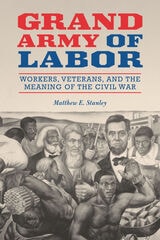
Grand Army of Labor
Workers, Veterans, and the Meaning of the Civil WarMatthew E. Stanley
University of Illinois Press, 2021
From the Gilded Age through the Progressive era, labor movements reinterpreted Abraham Lincoln as a liberator of working people while workers equated activism with their own service fighting for freedom during the war. Matthew E. Stanley explores the wide-ranging meanings and diverse imagery used by Civil War veterans within the sprawling radical politics of the time. As he shows, a rich world of rituals, songs, speeches, and newspapers emerged among the many strains of working class cultural politics within the labor movement. Yet tensions arose even among allies. Some people rooted Civil War commemoration in nationalism and reform, and in time, these conservative currents marginalized radical workers who tied their remembering to revolution, internationalism, and socialism.
An original consideration of meaning and memory, Grand Army of Labor reveals the complex ways workers drew on themes of emancipation and equality in the long battle for workers’ rights.
Grand Canyon Place Names
Byrd H. Granger
University of Arizona Press, 1960
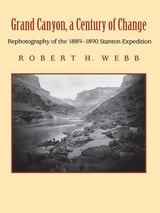
Grand Canyon, A Century of Change
Rephotography of the 1889-1890 Stanton ExpeditionRobert H. Webb
University of Arizona Press, 1996
Grand Canyon, a Century of Change assembles the most dramatic of these paired photographs to demonstrate both the persistence of nature and the presence of humanity. Unexpected longevity of some plant species, effects of animal grazing, and expansion of cacti are all captured by the replicate photographs. More telling is evidence of the impact of Glen Canyon Dam: increased riparian vegetation, new marshes, aggraded debris fans, and eroded sand bars. In the accompanying text, Webb provides a thorough analysis of what each pair of photographs shows and places the project in its historical context. Complementing his narrative are six sidebar articles by authorities on Canyon natural history that further attest to a century of change. The level of detail obtained from the photographs represents one of the most extensive long-term monitoring efforts ever conducted in a national park; it is the most detailed documentation effort ever performed using repeat photography.
Much more than simply a picture book, Grand Canyon, a Century of Change is an environmental history of the river corridor, a fascinating book that clearly shows the impact of human influence on Grand Canyon and warns us that its future is very much in our hands.
Grand Canyon
A History of a Natural Wonder and National ParkDon Lago
University of Nevada Press, 2015
The Grand Canyon became a microcosm of the history and evolving values of the
National Park Service, long conflicted between encouraging tourism and protecting nature. Many vivid characters shaped the canyon’s past. Its largest story is one of cultural history and changing American visions of the land.
Grand Canyon: A History of a Natural Wonder and National Park is a mixture of great storytelling, unlikely characters, and important ideas. The book will appeal to both general readers and scholars interested in seeking a broader understanding of the canyon.
Grand Excursions on the Upper Mississippi River
Places, Landscapes, and Regional Identity after 1854Curtis C. & Elizabeth M. Roseman & Roseman
University of Iowa Press, 2004
One hundred and fifty years later, the thirteen essays in this volume examine the activities and environments of the 1854 Grand Excursion and place them in the context of an evolving regional identity for the Upper Mississippi River Valley based on the economy, culture, geography, and history of the area. In a series of “excursions,” the contributors explore the building of the Chicago and Rock Island Railroad, eastern newspaper accounts of the 1854 excursion, steamboating, the area’s pictorial landscape, passenger trains along the scenic river, the genesis and features of river towns, the control of the river for navigation, the development of preserves, parks, and recreation areas, the lumber industry, and commercial fishing. The book concludes by examining the resurgence of river-oriented development, as river towns are once again embracing the Mississippi.
Generously illustrated with maps, engravings, ephemera, and historic and present-day photographs, Grand Excursions on the Upper Mississippi River will be of interest to tourists and residents of the area, river aficionados, railroad and steamboat history buffs, as well as academics interested in the history, geography, and regional development of the area.
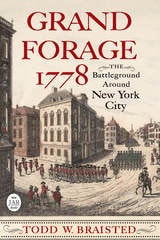
Grand Forage 1778
The Battleground Around New York CityTodd W. Braisted
Westholme Publishing, 2016
After two years of defeats and reverses, 1778 had been a year of success for George Washington and the Continental Army. France had entered the war as the ally of the United States, the British had evacuated Philadelphia, and the redcoats had been fought to a standstill at the Battle of Monmouth. While the combined French-American effort to capture Newport was unsuccessful, it lead to intelligence from British-held New York that indicated a massive troop movement was imminent. British officers were selling their horses and laying in supplies for their men. Scores of empty naval transports were arriving in the city. British commissioners from London were offering peace, granting a redress of every grievance expressed in 1775. Spies repeatedly reported conversations of officers talking of leaving. To George Washington, and many others, it appeared the British would evacuate New York City, and the Revolutionary War might be nearing a successful conclusion. Then, on September 23, 1778, six thousand British troops erupted into neighboring Bergen County, New Jersey, followed the next day by three thousand others surging northward into Westchester County, New York. Washington now faced a British Army stronger than Burgoyne’s at Saratoga the previous year. What, in the face of all intelligence to the contrary, had changed with the British?
Through period letters, reports, newspapers, journals, pension applications, and other manuscripts from archives in the United States, Canada, United Kingdom, and Germany, the complete picture of Britain’s last great push around New York City can now be told. The strategic situation of Britain’s tenuous hold in America is intermixed with the tactical views of the soldiers in the field and the local inhabitants, who only saw events through their narrow vantage points. This is the first publication to properly narrate the events of this period as one campaign. Grand Forage 1778: The Battleground Around New York City by historian Todd W. Braisted explores the battles, skirmishes, and maneuvers that left George Washington and Sir Henry Clinton playing a deadly game of chess in the lower Hudson Valley as a prelude to the British invasion of the Southern colonies.
Grand Strategy from Truman to Trump
Benjamin Miller with Ziv Rubinovitz
University of Chicago Press, 2020
American foreign policy is the subject of extensive debate. Many look to domestic factors as the driving forces of bad policies. Benjamin Miller instead seeks to account for changes in US international strategy by developing a theory of grand strategy that captures the key security approaches available to US decision-makers in times of war and peace.
Grand Strategy from Truman to Trump makes a crucial contribution to our understanding of competing grand strategies that accounts for objectives and means of security policy. Miller puts forward a model that is widely applicable, based on empirical evidence from post-WWII to today, and shows that external factors—rather than internal concerns—are the most determinative.
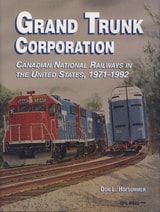
Grand Trunk Corporation
Canadian National Railways in the United States, 1971-1992Don L. Hofsommer
Michigan State University Press, 1995
The Detroit, Michigan-based Grand Trunk Corporation was established more than two decades ago by Canadian National to oversee and maximize the potential of its railroad holdings in the United States. By making use of corporate records, oral histories, and archival material, Hofsommer uncovers the interesting and complex history of Grand Trunk from its inception in 1971 through 1992.
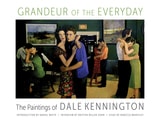
Grandeur of the Everyday
The Paintings of Dale KenningtonDale Kennington, Introduction by Daniel White, Conversation with Kristen Miller Zohn, Essay by Rebecca Brantley
University of Alabama Press, 2017
Grandeur of the Everyday is the first full-length volume dedicated to the life and work of Dale Kennington—an accomplished master of contemporary American realism. Kennington’s works often hold a strange familiarity, even for those coming to her work for the first time. Her paintings are at once familiar and yet defy specificity of place, clear and lucid while also dense in content. These effects derive from her unique ability to capture the essence of everyday living, the ordinary “in between” moments we often overlook in our day-to-day habits and transactions.
Kennington referred to her paintings as “merged memories.” Combining elements of photography, memory, and imagination, Kennington’s art is an entrancing blend of contemporary and magical realism, with themes ranging from loneliness to community and culture, from class and race relations to the juxtaposition of private and public life. Rather than study the spectacular, she concentrated on commonplace moments of human interaction, inviting observers of her paintings to ponder their significance and to complete their implicit narratives. Often relying on local subjects for her paintings—barbershops, bars, restaurants, gospel concerts, motel rooms, nursing homes—she presented a diversity of local experience.
Grandeur of the Everyday is a treasure trove of her most accomplished creations and includes more than eighty-five examples of both Kennington’s easel paintings on canvas and her freestanding wooden folding screens. The volume also offers an original interview with the artist conducted by Kristen Miller Zohn, an introduction by art historian Daniel White, and a critical essay by the director of the Wiregrass Museum of Art, Rebecca Brantley.
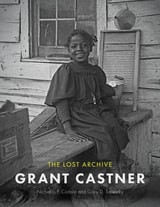
Grant Castner
The Lost ArchiveNicholas P. Ciotola
Rutgers University Press, 2026
Castner’s glass plate negatives are a visual record of New Jersey’s social and cultural history. His many human subjects are rich and poor, young and old, Black and white. They are at work, at play, at home, and in the community. Castner also documented social change brought about by electricity, engineering, education, industry, and transportation. He captured the excitement of public amusements such as parades and fairs. He recorded the aftermath of floods, fires and other disasters. Castner also had a fondness for the outdoors. He used his camera to reflect on the beauty and tranquility that he found in the natural landscapes of New Jersey.
This book presents the collective work of Grant Castner, an amateur artist whose place in New Jersey history was, until now, completely unknown. His photographic negatives forever preserve pinpoint moments in the past. They are time machines to another era. Let this long lost archive transport you on a visual journey into a New Jersey of days gone by.

Grant Money Through Collaborative Partnerships
Nancy Kalikow American Library Association
American Library Association, 2012
Grant Park
The Evolution of Chicago's Front YardDennis H. Cremin
Southern Illinois University Press, 2013
2014 Illinois State Historical Society Book of the Year
Grant Wood’s Secrets
Sue Taylor
University of Delaware Press, 2011
Published by University of Delaware Press. Distributed worldwide by Rutgers University Press.
Grant at Vicksburg
The General and the SiegeMichael B. Ballard
Southern Illinois University Press, 2013
After an overview of Grant’s early Civil War career from his first battle through the early stages of the attacks on Vicksburg, Ballard describes in detail how Grant conducted the siege, examining his military decisions, placement of troops, strategy and tactics, engineering objectives, and relationships with other officers. Grant’s worried obsession with a perceived danger of a rear attack by Joseph Johnston’s Confederate army, Ballard shows, affected his decision making, and shows how threats of Confederate action occupied more of Grant’s time than did the siege itself.
In addition, Ballard soundly dispels a false story about Grant’s alleged drinking binge early in the siege that has been taken as truthful by many historians, examines how racism in Grant’s army impacted the lives of freed black people and slaves in the Vicksburg area, and explores Grant’s strained relationship with John McClernand, a politically appointed general from Illinois. The book concludes with the surrender of Vicksburg on July 4, 1863, the expulsion of Johnston and his army from the region, and demonstrates the impact of the siege on the outcome on the short and long-terms of Grant’s military career.
By analyzing Grant’s personality during the siege and how he dealt with myriad issues as both a general and an administrator, Grant at Vicksburg offers a revealing rendering of the legendary general.
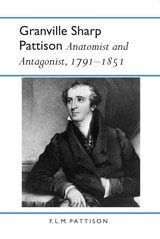
Granville Sharp Pattison
Anatomist and Antagonist, 1791-1851F. L. M. Pattison
University of Alabama Press, 1987
The stormy life of one of the most colorful and complex characters in early 19th-century medicine
Graphic Memories of the Civil Rights Movement
Reframing History in ComicsBy Jorge J. Santos, Jr.
University of Texas Press, 2019
Winner, Charles Hatfield Book Prize, Comic Studies Society, 2020
A CHOICE Outstanding Academic Title, 2019
The history of America’s civil rights movement is marked by narratives that we hear retold again and again. This has relegated many key figures and turning points to the margins, but graphic novels and graphic memoirs present an opportunity to push against the consensus and create a more complete history. Graphic Memories of the Civil Rights Movement showcases five vivid examples of this:
Ho Che Anderson's King (2005), which complicates the standard biography of Martin Luther King Jr.; Congressman John Lewis's three-volume memoir, March (2013–2016); Darkroom (2012), by Lila Quintero Weaver, in which the author recalls her Argentinian father’s participation in the movement and her childhood as an immigrant in the South; the bestseller The Silence of Our Friends, by Mark Long, Jim Demonakos, and Nate Powell (2012), set in Houston's Third Ward in 1967; and Howard Cruse's Stuck Rubber Baby (1995), whose protagonist is a closeted gay man involved in the movement.
In choosing these five works, Jorge Santos also explores how this medium allows readers to participate in collective memory making, and what the books reveal about the process by which history is (re)told, (re)produced, and (re)narrativized. Concluding the work is Santos’s interview with Ho Che Anderson.
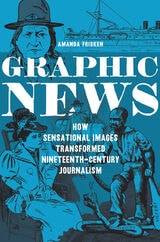
Graphic News
How Sensational Images Transformed Nineteenth-Century JournalismAmanda Frisken
University of Illinois Press, 2020
Graphic Novels in Your School Library
Jesse Karp
American Library Association, 2012
Graphic Opinions
Editorial Cartoonists and Their ArtJack Colldeweih
University of Wisconsin Press, 1998
calling.
The editors examine the current work and opinions of two dozen prominent cartoonists through profiles and essays about political and social issues. Four examples by each cartoonist illustrate this.
Grassroots Engagement and Social Justice through Cooperative Extension
Nia Imani Fields
Michigan State University Press, 2022
Grassroots Library Advocacy
Lauren Comito
American Library Association, 2012
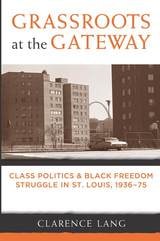
Grassroots at the Gateway
Class Politics and Black Freedom Struggle in St. Louis, 1936-75Clarence Lang
University of Michigan Press, 2010
"This is a theoretically sophisticated and thoroughly documented historical case study of the movements for African American liberation in St. Louis. Through detailed analysis of black working class mobilization from the depression years to the advent of Black Power, award-winning historian Clarence Lang describes how the advances made in earlier decades were undermined by a black middle class agenda that focused on the narrow aims of black capitalists and politicians. The book is a major contribution to our understanding of the black working class insurgency that underpinned the civil rights and Black Power campaigns of the twentieth century."
---V. P. Franklin, University of California, Riverside
"A major work of scholarship that will transform historical understanding of the pivotal role that class politics played in both civil rights and Black Power activism in the United States. Clarence Lang's insightful, engagingly written, and well-researched study will prove indispensable to scholars and students of postwar American history."
---Peniel Joseph, Brandeis University
Breaking new ground in the field of Black Freedom Studies, Grassroots at the Gateway reveals how urban black working-class communities, cultures, and institutions propelled the major African American social movements in the period between the Great Depression and the end of the Great Society. Using the city of St. Louis in the border state of Missouri as a case study, author Clarence Lang undermines the notion that a unified "black community" engaged in the push for equality, justice, and respect. Instead, black social movements of the working class were distinct from---and at times in conflict with---those of the middle class. This richly researched book delves into African American oral histories, records of activist individuals and organizations, archives of the black advocacy press, and even the records of the St. Louis' economic power brokers whom local black freedom fighters challenged. Grassroots at the Gateway charts the development of this race-class divide, offering an uncommon reading of not only the civil rights movement but also the emergence and consolidation of a black working class.
Clarence Lang is Assistant Professor in African American Studies and History at the University of Illinois at Urbana-Champaign.
Photo courtesy Western Historical Manuscript Collection, University of Missouri, St. Louis

Grateful Nation
Student Veterans and the Rise of the Military-Friendly CampusEllen Moore
Duke University Press, 2017
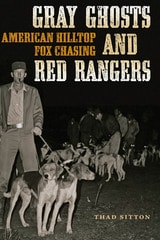
Gray Ghosts and Red Rangers
American Hilltop Fox ChasingBy Thad Sitton
University of Texas Press, 2010
Around a campfire in the woods through long hours of night, men used to gather to listen to the music of hounds' voices as they chased an elusive and seemingly preternatural fox. To the highly trained ears of these backwoods hunters, the hounds told the story of the pursuit like operatic voices chanting a great epic. Although the hunt almost always ended in the escape of the fox—as the hunters hoped it would—the thrill of the chase made the men feel "that they [were] close to something lost and never to be found, just as one can feel something in a great poem or a dream."
Gray Ghosts and Red Rangers offers a colorful account of this vanishing American folkway—back-country fox hunting known as "hilltopping," "moonlighting," "fox racing," or "one-gallus fox hunting." Practiced neither for blood sport nor to put food on the table, hilltopping was worlds removed from elite fox hunting where red- and black-coated horsemen thundered across green fields in daylight. Hilltopping was a nocturnal, even mystical pursuit, uniting men across social and racial lines as they gathered to listen to dogs chasing foxes over miles of ground until the sun rose. Engaged in by thousands of rural and small-town Americans from the 1860s to the 1980s, hilltopping encouraged a quasi-spiritual identification of man with animal that bound its devotees into a "brotherhood of blood and cause" and made them seem almost crazy to outsiders.

Great American Treasures
Women Preserving History Since 1891Carol Cadou
The Artist Book Foundation, 2025
Great American Treasures is a comprehensive survey of America's historic sites and buildings, their furnishings, and their gardens.
America’s historic sites, homes, and public buildings are a living record of the diverse ethnicities that, over four centuries, helped to build a growing nation. Since 1891, the National Society of the Colonial Dames of America (NSCDA) has actively promoted our national heritage through historic preservation, restoration, and the interpretation of historic sites across the United States. In conjunction with NSCDA, in 2025 The Artist Book Foundation (TABF) published Great American Treasures, a comprehensive survey of the architecture, furnishings, and gardens that epitomize the nation’s diverse material culture over more than 400 years.
The publication features the NSCDA’s collection of historic places, which span the sixteenth to the twentieth centuries, and highlights the residences of those who established themselves in America during this time. It features an array of buildings that speak to the diversity of traditions, people, and architecture in a growing nation—from English Georgian houses on the eastern seaboard to a French Colonial dwelling in Missouri and mission houses in Hawai’i. This survey illuminates the stories and material traditions of the wide range of individuals who contributed to the founding of the United States and to the development of America as a dynamic multicultural nation.
Many of the sites tell the stories of familiar historic figures like George and Martha Washington, John Adams, James and Dolley Madison, John Quincy Adams, Benjamin Franklin, and George Mason. Other sites offer the narratives of figures who contributed to America’s artistic heritage, such as John James Audubon and John Smibert, or those who helped to shape the country’s mercantile system, like Frederick Van Cortlandt and James Logan. Some places were designed by well-known architects such as Robert Mills or McKim, Mead & White, while most were the work of unknown or little-known architects, builders, joiners, and slave laborers. The classic architecture of these sites, their exquisite furnishings and lush gardens, and even the headstones in historic cemeteries all provide a window into the rich diversity of men, women, and children—free, indentured, and enslaved—who came together to build America.
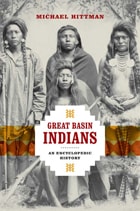
Great Basin Indians
An Encyclopedic HistoryMichael Hittman
University of Nevada Press, 2024
Great Basin Indians is an essential resource for any reader interested in the Native peoples of the American West and in western history in general.
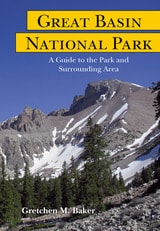
Great Basin National Park
A Guide to the Park and Surrounding AreaGretchen M. Baker
Utah State University Press, 2012
Great Basin National Park is in large part a high-alpine park, but it sits in one of America’s driest, least populated, and most isolated deserts. That contrast is one facet of the diversity that characterizes this region. Within and outside the park are phenomenal landscape features, biotic wonders, unique environments, varied historic sites, and the local colors of isolated towns and ranches. Vast Snake and Spring Valleys, bracketing the national park, are also subjects of one of the West's most divisive environment contests, over what on the surface seems most absent but underground is abundant enough for sprawling Las Vegas to covet it—water.
Great Basin Rock Art
Archaeological PerspectivesAngus R. Quinlan
University of Nevada Press, 2007
Rock art is one of humankind’s most ancient forms of artistic expression, and one of its most enigmatic. For centuries, scholars and other observers have struggled to interpret the meaning of the mysterious figures incised or painted on natural rocks and to understand their role in the lives of their long-vanished creators. The Great Basin of the American West is especially rich in rock art, but until recently North American archaeologists have largely ignored these most visible monuments left by early Native Americans and have given little attention to the terrain surrounding them. In Great Basin Rock Art, twelve respected rock art researchers examine a number of significant sites from the dual perspectives of settlement archaeology and contemporary Native American interpretations of the role of rock art in their cultural past. The authors demonstrate how modern archaeological methodology and interpretations are providing a rich physical and cultural context for these ancient and hitherto puzzling artifacts. They offer exciting new insights into the lives of North America’s first inhabitants. This is essential reading for anyone interested in the petroglyphs of the American West and in the history of the Great Basin and its original peoples.

Great Dishes from New Jersey's Favorite Restaurants
Vicki J. Caparulo
Rutgers University Press, 2003
Great Expectation
A Father's DiaryDan Roche
University of Iowa Press, 2008
With five years of parenting his irrepressible daughter Maeve under his belt, Roche, already forty-five years old, and his wife, Maura, face the prospect of another arrival and the myriad of emotions that come with a second child. From revelling in the joys of pregnancy such as Maura's delight at "having cleavage" and being able to eat whatever she desires; to assuaging the parental anxieties of choosing the right obstetrician, correcting the mistakes one made with the first child, and sending children to college in the future; to navigating the unforeseen, experiencing the unexpected death of a parent, and feeling trepidation toward the thought of having a son, Roche records his emotions with unusual candidness and intimacy.
Reflecting on day-to-day events and their significance in his family’s life together, Roche wonders what he is getting himself into and how much deeper he can immerse himself into parenting. Together, he and his wife face the bittersweet intersections of death and new life, menace and hopefulness. With sincerity and a mature wit, Great Expectation stands as a wise recounting of nine months’ time, with all of its chaos and charms, and offers a fresh perspective for first-time and veteran parents alike.

Great Expectations
Marriage and Divorce in Post-Victorian AmericaElaine Tyler May
University of Chicago Press, 1983
Great Houses and Gardens of New Jersey
Seebohm, Caroline
Rutgers University Press, 2003
New Jersey is called the Garden State with good reason- some of the nation's most strikingly beautiful homes and gardens can be found within its borders. Caroline Seebohm and Peter C. Cook have captured them gloriously in Great Houses and Gardens of New Jersey.
No other book has so beautifully presented the architectural story of the state, stunningly documented in more than 200 color photographs- from a centuries-old farm to modern glass houses, from woodlands planted with native plants to formal French and English-style gardens. Each house and garden is privately owned, and many have never before been photographed. Readers are given an exclusive peek at some of New Jersey's greatest treasures.
Seebohm and Cook take us on a private tour of a pre-revolutionary Dutch farmhouse that could have sprung from the coast of Devon in England; a brick-patterned house that vividly expresses the originality and exuberance of the region's early builders and craftsmen; a collection of native stone buildings reminiscent of Bucks County, Pennsylvania; and an Arts and Crafts house with contributions by New Jersey's innovative Gustav Stickley. The twentieth century is equally well represented with works by masters such as Frank Lloyd Wright, Robert Venturi, Michael Graves, and Richard Meier.
The book showcases gardens of dazzling splendor and variety- woodlands ablaze with native azaleas and dogwoods; a charming sunken garden by well-known English garden designer Penelope Hobhouse; a stunning water garden on the Navesink River; a tiny formal garden surrounded by a picket fence in Somerset County; a garden in Alpine carpeted with bluebells in the spring, scented with roses in the summer, and with orchids on display all year round.
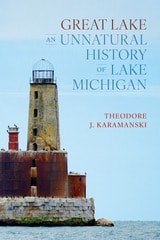
Great Lake
An Unnatural History of Lake MichiganTheodore J. Karamanski
University of Michigan Press, 2026
Great Lake is a comprehensive survey of the manifold ways Americans, from the first Native American communities to the present age, have abused, nurtured, loved, and neglected this massive freshwater resource. Extending 307 miles from north to south, the lake cuts across climatic, environmental, and physiographic zones, from the prairies of Illinois to the boreal forests of the north. Bordered by large cities like Chicago and Milwaukee as well as smaller Wisconsin resorts and northern Michigan mines and mill towns, the lake touches people in urban centers and countryside. Thus, the history of Lake Michigan combines the history of frontier resource extraction, agricultural abundance, industrialization, and dense urbanization in the American heartland. Great Lake is the story of the ever-escalating and divergent demands Americans have placed on Lake Michigan, how the lake’s ecosystem responded to those changes, and how together they have shaped the modern American Midwest.
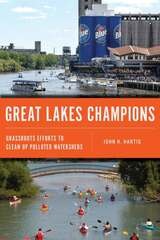
Great Lakes Champions
Grassroots Efforts to Clean Up Polluted WatershedsJohn H. Hartig
Michigan State University Press, 2022
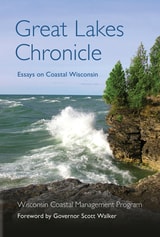
Great Lakes Chronicle
Essays on Coastal WisconsinWisconsin Coastal Management
Wisconsin Historical Society Press, 2018
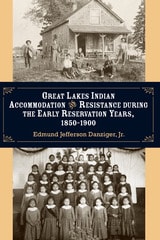
Great Lakes Indian Accommodation and Resistance during the Early Reservation Years, 1850-1900
Edmund Jefferson Danziger, Jr.
University of Michigan Press, 2009
During the four decades following the War of 1812, Great Lakes Indians were forced to surrender most of their ancestral homelands and begin refashioning their lives on reservations. The challenges Indians faced during this period could not have been greater. By century's end, settlers, frontier developers, and federal bureaucrats possessed not only economic and political power but also the bulk of the region's resources. It is little wonder that policymakers in Washington and Ottawa alike anticipated the disappearance of distinctive Indian communities within a single generation. However, these predictions have proved false as Great Lakes Indian communities, though assaulted on both sides of the international border to this day, have survived. Danziger's lively and insightful book documents the story of these Great Lakes Indians---a study not of victimization but of how Aboriginal communities and their leaders have determined their own destinies and preserved core values, lands, and identities against all odds and despite ongoing marginalization.
Utilizing eyewitness accounts from the 1800s and an innovative, cross-national approach, Danziger explores not only how Native Americans adapted to their new circumstances---including attempts at horse and plow agriculture, the impact of reservation allotment, and the response to Christian evangelists---but also the ways in which the astute and resourceful Great Lakes chiefs, councils, and clan mothers fought to protect their homeland and preserve the identity of their people. Through their efforts, dreams of economic self-sufficiency and self-determination as well as the historic right to unimpeded border crossings---from one end of the Great Lakes basin to the other---were kept alive.
Edmund Jefferson Danziger, Jr., is a Distinguished Teaching Professor in the Department of History at Bowling Green State University. Danziger is well known among historians and anthropologists for his interpretive histories of Great Lakes Native Americans.
Photo of girls at Lac du Flambeau School courtesy Wisconsin Historical Society, image 55938; photo of Ojibwa farm family at Garden River Reservation courtesy Archives of Ontario, image S 16361.

Great Lakes Lumber on the Great Plains
The Laird, Norton Lumber Company In South DakotaJohn N. Vogel
University of Iowa Press, 1992
Focusing on the Plains territory of east central South Dakota as well as the Great Lakes lumber-producing region of Wisconsin's Chippewa Valley, John Vogel carefully and thoroughly examines the pattern and process by which lumber reached South Dakota. The Great Dakota Boom of 1878 to 1887 and the Laird, Norton Lumber Company of Winona, Minnesota, provide the basis for his engrossing book.
The westward expansion of the railroad and the continuing settlement of the Great Plains in the late nineteenth century allowed the lumber companies of Minnesota and Wisconsin to send their boards and beams and fenceposts and millwork to a market characterized by great demand and small supply. Laird, Norton followed settlers across southern Dakota as they arrived on the trains. The eastern portions of Dakota were settled first, and thus early lumberyards were found there; as settlement moved west, so did the lumberyards. Beyond its all-important function of distribution, the railroad forced Laird, Norton to alter the very structure of its operation. Experimenting with nearly complete vertical integration, the company pioneered organizational models that would serve significant purposes as frontier America—a republic of wood—solidified itself economically and culturally.

Great Lakes Sea Lamprey
The 70 Year War on a Biological InvaderCory Brant
University of Michigan Press, 2019
Threatening the complete collapse of the fishery, the sea lamprey invasion triggered an environmental awakening in the region and prompted an international treaty that secured unprecedented cooperation across political boundaries to protect the Great Lakes. Fueled by a pioneering scientific spirit, the war on Great Lakes sea lampreys led to discoveries that are the backbone of the program that eventually brought the creature under control and still protects the largest freshwater ecosystem in the world to this day.
Great Lakes Sea Lamprey draws on extensive interviews with individuals who experienced the invasion firsthand as well as a trove of unexplored archival materials to tell the incredible story of sea lamprey in the Great Lakes—what started the invasion, how it was halted, and what this history can teach us about the response to biological invaders in the present and future. Richly illustrated with color and black & white photographs, the book will interest readers concerned with the health of the Great Lakes, the history of the conservation movement, and the ongoing threat of invasive species.
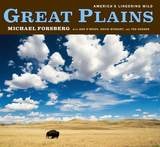
Great Plains
America's Lingering WildMichael Forsberg
University of Chicago Press, 2009
The Great Plains were once among the greatest grasslands on the planet. But as the United States and Canada grew westward, the Plains were plowed up, fenced in, overgrazed, and otherwise degraded. Today, this fragmented landscape is the most endangered and least protected ecosystem in North America. But all is not lost on the prairie. Through lyrical photographs, essays, historical images, and maps, this beautifully illustrated book gets beneath the surface of the Plains, revealing the lingering wild that still survives and whose diverse natural communities, native creatures, migratory traditions, and natural systems together create one vast and extraordinary whole.
Three broad geographic regions in Great Plains are covered in detail, evoked in the unforgettable and often haunting images taken by Michael Forsberg. Between the fall of 2005 and the winter of 2008, Forsberg traveled roughly 100,000 miles across 12 states and three provinces, from southern Canada to northern Mexico, to complete the photographic fieldwork for this project, underwritten by The Nature Conservancy. Complementing Forsberg’s images and firsthand accounts are essays by Great Plains scholar David Wishart and acclaimed writer Dan O’Brien. Each section of the book begins with a thorough overview by Wishart, while O’Brien—a wildlife biologist and rancher as well as a writer—uses his powerful literary voice to put the Great Plains into a human context, connecting their natural history with man’s uses and abuses.
The Great Plains are a dynamic but often forgotten landscape—overlooked, undervalued, misunderstood, and in desperate need of conservation. This book helps lead the way forward, informing and inspiring readers to recognize the wild spirit and splendor of this irreplaceable part of the planet.