Results by title
22279 books match the query 'Social Science' and 583 start with g
Global Storytelling, vol. 2, no. 1
Journal of Digital and Moving ImagesGuest Editors: Ellen Seiter & Suzanne Scott
Michigan Publishing Services, 2022
Guest Editors
Suzanne Scott and Ellen Seiter
Ellen Seiter. Letter from the Editor.
Research Articles
Paige MacIntosh. Transgressive TV: Euphoria, HBO, and a New Trans Aesthetic
Kelsey J. Cummings. Queer Seriality, Streaming Television, and She-Ra and the Princesses of Power
Jia Tan. Platformized Seriality: Chinese Time-Travel Fantasy from Prime-Time Television to Online Streaming
Jake Pitre. Platform Strategy in a Technopolitical War: The Failure (and Success) of Facebook Watch
Anne Gilbert. Algorithmic Audiences, Serialized Streamers, and the Discontents of Datafication
Oliver Kröener. Then, Now, Forever: Television Wrestling, Seriality, and the Rise of the Cinematic Match during COVID-19
Book Reviews
Briand Gentry. The Serial Will Be Televised: Serial Television’s Revolutionary Potential for Multidisciplinary Analysis of Social Identity. Reviews of Birth of the Binge: Serial TV and the End of Leisure by Dennis Broe, Wayne State University Press, 2019, and Gender and Seriality: Practices and Politics of Contemporary US Television by Maria Sulimma, Edinburgh University Press, 2021
Grace Elizabeth Wilsey. The Patchwork That Makes a Global Streaming Giant. Review of Netflix Nations: The Geography of Digital Distribution by Ramon Lobato, New York University Press, 2019
Asher Guthertz. The History of the American Comic Book, Revised: Review of Comic Books Incorporated: How the Business of Comics Became the Business of Hollywood by Shawna Kidman, University of California Press, 2019
Film Reviews
Anne Metcalf. Review of Zola (Janicza Bravo, 2020)
Global Storytelling, vol. 3, no. 2
Satirical Activism and Youth Culture in and Beyond COVID-19 China: Journal of Digital and Moving ImagesSpecial Issue Editor: Haiqing Yu
Michigan Publishing Services, 2024
Haiqing Yu. COVID-19, Satirical Activism, and Chinese Youth Culture: An Introduction
Research Articles
Ying Zhu and Junqi Peng. From Diaosi to Sang to Tangping: The Chinese DST Youth Subculture Online
Shaohua Guo. Moments of "Madness": Cynicism in Times of COVID
Howard Choy. Laughter in the Time of Coronavirus: Epidemic Humor and Satire in Chinese Women's Digital Diaries
Shaoyu Tang. Political In Between: Streaming Stand-Up Comedy and Feminist Reckoning in Contemporary Mainland China
Jingxue Zhang and Charlie Yi Zhang. The Power of Citation: Feminist Counter-Appropriation of State Discourses in Post-Reform China
Book Reviews
Ethan Tussey. Revised Research Methodology for the Age of Media Industries Speculation - Review of Specworld: Folds, Faults, and Fractures in Embedded Creator Industries by John Thornton Caldwell, University of California Press, 2023
Michael Keane. Precarious Creativity and the State in New Era China - Review of Chinese Creator Economies: Labor and Bilateral Creative Workers by Jian Lin, New York University Press, 2023
Global Storytelling, vol. 4, no. 1
The Global Social Mediascape of Feminism and Misogyny (Summer 2024)Special Issue Editor: Hong Zeng
Michigan Publishing Services, 2024
Global Storytelling, vol. 4, no. 2
Netflix and East Asian Audiovisual Culture (Winter 2024)Special Issue Editor: Dal Yong Jin
Michigan Publishing Services, 2024
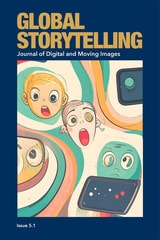
Global Storytelling, vol. 5, no. 1
Digital Narratives in Transnational Circulation: Power, Vulnerability, and Creative PossibilitySpecial Issue Editors: Jun Lei and Shaohua Guo
Michigan Publishing Services, 2025
Global Storytelling: Journal of Digital and Moving Images, housed at the Academy of Film and published by Michigan Publishing, is an open access, peer-reviewed international and interdisciplinary journal for intellectual debates concerning the politics, economics, culture, media, and technology of the moving image.
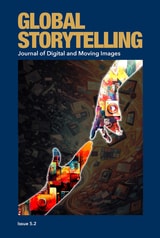
Global Storytelling, vol. 5, no. 2
Visual Storytelling and Entrepreneurship: The Representations of Daily LifeSpecial Issue Editors: Erick Behar-Villegas and Víctor Manuel Jiménez-Rodríguez
Michigan Publishing Services, 2026
Global Storytelling: Journal of Digital and Moving Images, housed at the Academy of Film and published by Michigan Publishing, is an open access, peer-reviewed international and interdisciplinary journal for intellectual debates concerning the politics, economics, culture, media, and technology of the moving image.

Global Tarantella
Reinventing Southern Italian Folk Music and DancesIncoronata Inserra
University of Illinois Press, 2017

Global Technological Change
From Hard Technology to Soft Technology - Second EditionZhouying Jin
Intellect Books, 2011
This updated second edition of Global Technological Change reconsiders how we make and use technology in the twenty-first century. With human-centered "soft technology" driving machine-based "hard technology" in ever more complex ways, Zhouying Jin provides an understanding of the human dimension of technological advancement. Through a theoretical framework that incorporates elements of both Eastern and Western philosophy, she offers insight into the dynamic between the two as it relates to a variety of technological innovation. More relevant than ever, Global Technological Change continues to challenge assumptions about technology and the gap between the developed and developing countries in the twenty-first century.
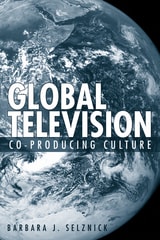
Global Television
Co-Producing CultureBarbara J. Selznick
Temple University Press, 2008
The face of U.S. television broadcasting is changing in ways that are both profound and subtle. Global Television uncovers the particular processes by which the international circulation of culture takes place, while addressing larger cultural issues such as identity formation.
Focusing on how the process of internationally made programming such as Highlander: The Series and The Odyssey—amusingly dubbed “Europudding” and “commercial white bread”—are changing television into a transnational commodity, Barbara Selznick considers how this mode of production—as a means by which transnational television is created—has both economic rewards and cultural benefits as well as drawbacks.
Global Television explores the ways these international co-productions create a “global” culture as well as help form a national identity. From British “brand” programming (e.g, Cracker) that airs on A&E in the U.S. to children’s television programs such as Plaza Sesamo, and documentaries, Selznick indicates that while the style, narrative, themes and ideologies may be interesting, corporate capitalism ultimately affects and impacts these programs in significant ways.

Global Value Chains and Uneven Development
Corporate Strategies and Class Dynamics in Argentinian AgribusinessChristin Bernhold
Campus Verlag, 2022
Are global value chains (GVCs) opportunity structures for economic upgrading, job creation, and poverty reduction? At least, this is what institutions like the World Bank suggest. However, the present book shows that this is not a tenable position—either on empirical or theoretical grounds. The study is conceived as an empirical ideology critique of the mainstream GVC approach, especially of its focus on upgrading as a development strategy. It is based on in-depth empirical research into upgrading strategies in Argentinian grain and oilseed value chains and their ramifications. Here, corporate actors organized along agribusiness value chains have demonstrated fairly successful trajectories of firm-level upgrading and, at the same time, employed the chain metaphor from the standpoint of specific business interests rather than a general development interest. Christin Bernhold devised the concept of “upgrading in and through class differentiation” to show how firm-level upgrading is based on, and at the same time re-shapes, class and power relations—shaping the uneven geographies of capitalism rather than eliminating them.

Global Village
Dead Or Alive?Edited by Ray B. Browne and Marshall W. Fishwick
University of Wisconsin Press, 1999
The Global Village offers fifteen essays by leading scholars and thinkers who weigh the pros and cons and come up with individual conclusions as well as a consensus. Included are “Turning McLuhan on His Head” by James E. Grunig, “The Vanishing Global Village” by Ray B. Browne, and “Global Village—Writ Small” by Marshall Fishwick. This book speaks to concerns in journalism, media, popular culture, and communications.

Global Visions of Violence
Agency and Persecution in World ChristianityJason Bruner
Rutgers University Press, 2023
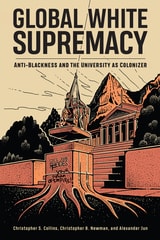
Global White Supremacy
Anti-Blackness and the University as ColonizerChristopher S. Collins
Rutgers University Press, 2023
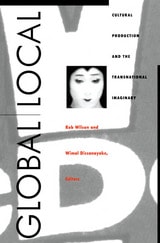
Global/Local
Cultural Production and the Transnational ImaginaryRob Wilson and Wimal Dissanayake, eds.
Duke University Press, 1996
Ranging across issues involving film, literature, and theory, as well as history, politics, economics, sociology, and anthropology, these deeply interdisciplinary essays explore the interwoven forces of globalism and localism in a variety of cultural settings, with a particular emphasis on the Asia-Pacific region. Powerful readings of the new image culture, transnational film genre, and the politics of spectacle are offered as is a critique of globalization as the latest guise of colonization. Articles that unravel the complex links between the global and local in terms of the unfolding narrative of capital are joined by work that illuminates phenomena as diverse as "yellow cab" interracial sex in Japan, machinic desire in Robocop movies, and the Pacific Rim city. An interview with Fredric Jameson by Paik Nak-Chung on globalization and Pacific Rim responses is also featured, as is a critical afterword by Paul Bové.
Positioned at the crossroads of an altered global terrain, this volume, the first of its kind, analyzes the evolving transnational imaginary—the full scope of contemporary cultural production by which national identities of political allegiance and economic regulation are being undone, and in which imagined communities are being reshaped at both the global and local levels of everyday existence.

Globalisation
Studies in AnthropologyEdited by Thomas Hylland Eriksen
Pluto Press, 2003
Globalization
Arjun Appadurai, ed.
Duke University Press, 2001
Seeking an alternative to the dead-end debate between those who see globalization as a phenomenon wholly without precedent and those who see it simply as modernization, imperialism, or global capitalism with a new face, the contributors seek to illuminate how space and time are transforming each other in special ways in the present era. They examine how this complex transformation involves changes in the situation of the nation, the state, and the city. While exploring distinct regions—China, Africa, South America, Europe—and representing different disciplines and genres—anthropology, literature, political science, sociology, music, cinema, photography—the contributors are concerned with both the political economy of location and the locations in which political economies are produced and transformed. A special strength of the collection is its concern with emergent styles of subjectivity, citizenship, and mobilization and with the transformations of state power through which market rationalities are distributed and embodied locally.
Contributors. Arjun Appadurai, Jean François Bayart, Jérôme Bindé, Néstor García Canclini, Leo Ching, Steven Feld, Ralf D. Hotchkiss, Wu Hung, Andreas Huyssen, Boubacar Touré Mandémory, Achille Mbembe, Philipe Rekacewicz, Saskia Sassen, Fatu Kande Senghor, Seteney Shami, Anna Tsing, Zhang Zhen
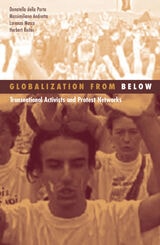
Globalization From Below
Transnational Activists And Protest NetworksDonatella della Porta Della Porta
University of Minnesota Press, 2006
Presenting the first systematic empirical research on the global justice movement, Globalization from Below analyzes a movement from the viewpoints of the activists, organizers, and demonstrators themselves. The authors traveled to Genoa with anti-G8 protesters and collected data from more than 800 participants. A year later, they surveyed 2,400 activists at the European Social Forum in Florence. To understand how this cycle of global protest emerged, they examine the interactions between challengers and elites, and discuss how these new models of activism fit into current social movement work.
Globalization from Below places the protests within larger debates, revealing and investigating the forces that led to a clash between demonstrators and the Italian government, which responded with violence.
Donatella della Porta is professor of political science; Massimiliano Andretta is a researcher in political science and sociology; Lorenzo Mosca is a researcher in information and communication technologies; Herbert Reiter is a researcher in history, all at the European University Institute.

Globalization and Culture
John Tomlinson
University of Chicago Press, 1999
Tomlinson begins this ambitious project by studying the relationship between globalization and contemporary culture, explaining the importance of time and space concerns, cultural imperialism, "deterritorialization," the impact of the media and communication technologies, and the possible growth of more cosmopolitan culture. We come to understand how someone may face unemployment as a result of downsizing decisions made at a company's head office on another continent, or how the food we find in our grocery stores is radically different today from twenty years ago. He discusses the uneven nature of the experience of global modernity in relation to first and third world countries, and concludes that a genuinely cosmopolitan culture is unlikely to emerge unless we respect cultural differences and share a common sense of commitment about the world.

Globalization and Race
Transformations in the Cultural Production of BlacknessKamari Maxine Clarke and Deborah A. Thomas, eds.
Duke University Press, 2006
A number of the essays bring to light the formative but not unproblematic influence of African American identity on other populations within the black diaspora. Among these are an examination of the impact of “black America” on racial identity and politics in mid-twentieth-century Liverpool and an inquiry into the distinctive experiences of blacks in Canada. Contributors investigate concepts of race and space in early-twenty-first century Harlem, the experiences of trafficked Nigerian sex workers in Italy, and the persistence of race in the purportedly non-racial language of the “New South Africa.” They highlight how blackness is consumed and expressed in Cuban timba music, in West Indian adolescent girls’ fascination with Buffy the Vampire Slayer, and in the incorporation of American rap music into black London culture. Connecting race to ethnicity, gender, sexuality, nationality, and religion, these essays reveal how new class economies, ideologies of belonging, and constructions of social difference are emerging from ongoing global transformations.
Contributors. Robert L. Adams, Lee D. Baker, Jacqueline Nassy Brown, Tina M. Campt, Kamari Maxine Clarke, Raymond Codrington, Grant Farred, Kesha Fikes, Isar Godreau, Ariana Hernandez-Reguant, Jayne O. Ifekwunigwe, John L. Jackson Jr., Oneka LaBennett, Naomi Pabst, Lena Sawyer, Deborah A. Thomas
Globalization and the Post-Creole Imagination
Notes on Fleeing the PlantationMichaeline A. Crichlow
Duke University Press, 2009
Engaging with the thought of Michel Foucault, Michel Rolph-Trouillot, Achille Mbembe, Henri Lefebvre, Margaret Archer, Saskia Sassen, Pierre Bourdieu, and others, Crichlow argues for understanding creolization as a continual creative remaking of past and present moments to shape the future. She draws on sociology, philosophy, postcolonial studies, and cultural studies to illustrate how national histories are lived personally and how transnational experiences reshape individual lives and collective spaces. Critically extending Bourdieu’s idea of habitus, she describes how contemporary Caribbean subjects remake themselves in and beyond the Caribbean region, challenging, appropriating, and subverting older, localized forms of creolization. In this book, Crichlow offers a nuanced understanding of how Creole citizens of the Caribbean have negotiated modern economies of power.
Globalization in Rural Mexico
Three Decades of ChangeBy Frances Abrahamer Rothstein
University of Texas Press, 2007
Winner, Society of the Anthropology of Work Book Prize, 2010
When the ever-intensifying global marketplace "modernizes" rural communities, who stands to gain? Can local residents most impacted by changes to their social fabric ever recover or even identify what has been lost?
Frances Abrahamer Rothstein uses thirty years of sustained anthropological fieldwork in the rural Mexican community of San Cosme Mazatecochco to showcase globalization's complexities and contradictions.
Rothstein's lucid work chronicles the changes in production, consumption, and social relations during three distinct periods: the Mexican "miracle," when economic development fueled mobility for a large segment of the population, including San Cosme's worker-peasants; the lost decade of the 1980s, when much of what had been gained was lost; and the recent period of trade liberalization and globalization, considered by many in Mexico and beyond as a panacea and a disaster at the same time.
After Mexico's textile industry decline in the late 1980s, some families of former textile workers in San Cosme opened home workshops—talleres—and a small-scale, textile-based economy took root. These families, who managed to prosper through their own trade and industry, demonstrate that those who rely on consumer demand for their livelihood need not always follow the dictate of the marketplace, but rather can position themselves assertively to influence alternative economic possibilities held close to their culture.
Employing rich ethnography and broad analysis, Rothstein focuses on how everyday life has been transformed by these processes, but shows also how important continuities with the past persist. She strikes a delicate balance between firmly grounded scientific study and a deep compassion for the subjects of her work, while challenging contemporary views of globalization and consumption.

Globalization
Millennial Quartet II, Volume 12Arjun Appadurai, ed.
Duke University Press, 0
Seeking an alternative to the dead-end debate between those who see globalization as a phenomenon wholly without precedent and those who see it simply as modernization, imperialism, or global capitalism with a new face, the contributors seek to illuminate how space and time are transforming each other in special ways in the present era. They examine how this complex transformation involves changes in the situation of the nation, the state, and the city. While exploring distinct regions—China, Africa, South America, Europe—and representing different disciplines and genres—anthropology, literature, political science, sociology, music, cinema, photography—the contributors are concerned with both the political economy of location and the locations in which political economies are produced and transformed. A special strength of the collection is its concern with emergent styles of subjectivity, citizenship, and mobilization and with the transformations of state power through which market rationalities are distributed and embodied locally.
Contributors. Arjun Appadurai, Jérome Bindé, Néstor García Canclini, Leo Ching, Steven Feld, Ralf D. Hotchkiss, Wu Hung, Andreas Huyssen, Boubacar Touré Mandémory, Achille Mbembe, Saskia Sassen, Fatu Kande Senghor, Seteney Shami, Anna Tsing, Zhang Zhen
Globalizations and Social Movements
Culture, Power, and the Transnational Public SphereJohn A. Guidry, Michael D. Kennedy, and Mayer N. Zald, Editors
University of Michigan Press, 2000
Globalized Authoritarianism
Megaprojects, Slums, and Class Relations in Urban MoroccoKoenraad Bogaert
University of Minnesota Press, 2018
A rich investigation into Morocco’s urban politics
Over the past thirty years, Morocco’s cities have transformed dramatically. To take just one example, Casablanca’s medina is now obscured behind skyscrapers that are funded by global capital and encouraged by Morocco’s monarchy, which hopes to transform this city into a regional leader of finance and commerce. Such changes have occurred throughout Morocco. Megaprojects are redesigning the cityscapes of Rabat, Tangiers, and Casablanca, turning the nation’s urban centers into laboratories of capital accumulation, political dominance, and social control.
In Globalized Authoritarianism, Koenraad Bogaert links more abstract questions of government, globalization, and neoliberalism with concrete changes in the city. Bogaert goes deep beneath the surface of Morocco’s urban prosperity to reveal how neoliberal government and the increased connectivity engendered by global capitalism transformed Morocco’s leading urban spaces, opening up new sites for capital accumulation, creating enormous class divisions, and enabling new innovations in state authoritarianism. Analyzing these transformations, he argues that economic globalization does not necessarily lead to increased democratization but to authoritarianism with a different face, to a form of authoritarian government that becomes more and more a globalized affair.
Showing how Morocco’s experiences have helped produce new forms of globalization, Bogaert offers a bridge between in-depth issues of Middle Eastern studies and broader questions of power, class, and capital as they continue to evolve in the twenty-first century.
Globalizing the Caribbean
Political Economy, Social Change, and the Transnational Capitalist ClassJeb Sprague
Temple University Press, 2019
The beautiful Caribbean basin is fertile ground for a study of capitalism past and present. Transnational corporations move money and labor around the region, as national regulations are reworked to promote conditions benefiting private capital. Globalizing the Caribbean offers a probing account of the region’s experience of economic globalization while considering gendered and racialized social relations and the frequent exploitation of workers.
Jeb Sprague focuses on the social and material nature of this new era in the history of world capitalism. He combines an historical overview of capitalism in the region with theoretical analysis backed by case studies. Sprague elaborates upon the role of class formation and the restructuring of local states. He considers both U.S. hegemony, and how various upsurges from below and crises occur. He examines the globalization of the cruise ship and mining businesses, looks at the growth of migrant labor and reverse flow of remittances, and describes the evolving role of export processing and supranational associations. In doing so, Sprague shows how transnationally oriented elites have come to rule the Caribbean, and how capitalist globalization in the region occurs alongside shifting political, institutional, and organizational dynamics.

Globalizing the Sacred
Religion Across the AmericasVásquez, Manuel A
Rutgers University Press, 2003
French and German tourists join Mexican migrant workers to venerate the image of the Virgin Mary at a strip mall in Florida; Latino gang members, deported from the United States to home countries they barely know, find Jesus in transnational churches; U.S. evangelicals use electronic media to preach a “neo liberal” gospel of wealth and health to landless peasants in remote indigenous villages in Guatemala. These are just some examples of how religion in the Americas today intersects in complex ways with the economic, political, and cultural dimensions of globalization.
Drawing on case studies in the United States and Latin America, Manuel A. Vásquez and Marie Friedmann Marquardt explore the evolving roles of religion in the Americas in the face of globalization, transnational migration, the rapid growth of culture industries, the rise of computer mediated technologies, and the crisis of modernity. Combining ethnographic research in local congregations, studies of material culture and sacred space, textual analyses, and approaches to mass and electronic media, the authors challenge dominant paradigms in sociology of religion, such as the secularization and rational choice models. Further, the book offers alternative theoretical and methodological tools to understand the increasing complexity of religious life in the Americas.
By illustratingthe challenges that scholars and students must confront in order to understand the complexity of today’s religious landscape, Globalizing the Sacred makes both important theoretical and methodological contributions to the study of religion’s role in social change.

Globetrotting
African American Athletes and Cold War PoliticsDamion L. Thomas
University of Illinois Press, 2012

Glorious, Accursed Europe
Jehuda Reinharz and Yaacov Shavit
Brandeis University Press, 2010

Glory in Their Spirit
How Four Black Women Took On the Army during World War IISandra M Bolzenius
University of Illinois Press, 2018
Glossolalia and the Problem of Language
Nicholas Harkness
University of Chicago Press, 2021
Glossolalia and the Problem of Language investigates speaking in tongues in South Korea, where it is practiced widely across denominations and congregations. Nicholas Harkness shows how the popularity of glossolalia in Korea lies at the intersection of numerous, often competing social forces, interwoven religious legacies, and spiritual desires that have been amplified by Christianity’s massive institutionalization. As evangelicalism continues to spread worldwide, Glossolalia and the Problem of Language analyzes one of its most enigmatic practices while marking a major advancement in our understanding of the power of language and its limits.

Glyphosate and the Swirl
An Agroindustrial Chemical on the MoveVincanne Adams
Duke University Press, 2022
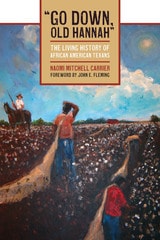
Go Down, Old Hannah
The Living History of African American TexansBy Naomi Mitchell Carrier
University of Texas Press, 2010
Living history is a style of instructive and entertaining performance that seeks to bring history to life with the use of costumes, tools, and reenactments appropriate to a specific time period. Done well, living history performances illuminate human experience in powerful, unforgettable ways.
The fifteen living history plays in this collection were commissioned by museums and historic sites in Texas to show the interdependence of African American experiences and contributions to the living history of Texas. The plays cover subject matter ranging from slave celebrations, family breakups, and running away, to the Civil War, emancipation, and Reconstruction. Each play is research based and performed by Talking Back Living History Theatre as a festival production. These scripts are easily performed, and author Naomi Mitchell Carrier has included production notes in the overviews that precede each play. Lesson plans are also included, which add to the collection's appeal as a classroom tool.
Carrier's talent for bringing historical figures to life is exceptional. The names of most primary characters in these plays are real. By giving them faces, feelings, intelligence, and dignity, Carrier aims to give them new life.

Go! Fight! Win!
Cheerleading in American CultureMary Ellen Hanson
University of Wisconsin Press, 1995
Cheerleading has become a staple in American culture. The cheerleader straddles two contradictory symbolic poles. This individual is an instantly recognized figure representing youthful attractiveness, leadership, and popularity. Yet, for many, the cheerleader is seen as epitomizing mindless enthusiasm, shallow boosterism, and objectified sexuality. This contradictory view is explored in this extensively documented book.

Go-Go Live
The Musical Life and Death of a Chocolate CityNatalie Hopkinson
Duke University Press, 2012
Go-Go Live is a social history of black Washington told through its go-go music and culture. Encompassing dance moves, nightclubs, and fashion, as well as the voices of artists, fans, business owners, and politicians, Natalie Hopkinson's Washington-based narrative reflects the broader history of race in urban America in the second half of the twentieth century and the early twenty-first. In the 1990s, the middle class that had left the city for the suburbs in the postwar years began to return. Gentrification drove up property values and pushed go-go into D.C.'s suburbs. The Chocolate City is in decline, but its heart, D.C.'s distinctive go-go musical culture, continues to beat. On any given night, there's live go-go in the D.C. metro area.

Go-betweens and the Colonization of Brazil
1500–1600By Alida C. Metcalf
University of Texas Press, 2006
Doña Marina (La Malinche) ...Pocahontas ...Sacagawea—their names live on in historical memory because these women bridged the indigenous American and European worlds, opening the way for the cultural encounters, collisions, and fusions that shaped the social and even physical landscape of the modern Americas. But these famous individuals were only a few of the many thousands of people who, intentionally or otherwise, served as "go-betweens" as Europeans explored and colonized the New World.
In this innovative history, Alida Metcalf thoroughly investigates the many roles played by go-betweens in the colonization of sixteenth-century Brazil. She finds that many individuals created physical links among Europe, Africa, and Brazil—explorers, traders, settlers, and slaves circulated goods, plants, animals, and diseases. Intercultural liaisons produced mixed-race children. At the cultural level, Jesuit priests and African slaves infused native Brazilian traditions with their own religious practices, while translators became influential go-betweens, negotiating the terms of trade, interaction, and exchange. Most powerful of all, as Metcalf shows, were those go-betweens who interpreted or represented new lands and peoples through writings, maps, religion, and the oral tradition. Metcalf's convincing demonstration that colonization is always mediated by third parties has relevance far beyond the Brazilian case, even as it opens a revealing new window on the first century of Brazilian history.

God and Government in the Ghetto
The Politics of Church-State Collaboration in Black AmericaMichael Leo Owens
University of Chicago Press, 2007
But as Michael Leo Owens demonstrates in God and Government in the Ghetto, this alliance also serves as a means for black clergy to reaffirm their political leadership and reposition moral authority in black civil society. Drawing on both survey data and fieldwork in New York City, Owens reveals that African American churches can use these newly forged connections with public agencies to influence policy and government responsiveness in a way that reaches beyond traditional electoral or protest politics. The churches and neighborhoods, Owens argues, can see a real benefit from that influence—but it may come at the expense of less involvement at the grassroots.
Anyone with a stake in the changing strategies employed by churches as they fight for social justice will find God and Government in the Ghetto compelling reading.

God in the Machine
Video Games as Spiritual PursuitLiel Leibovitz
Templeton Press, 2014
Yet video games remain relatively unexplored by both scholars and pundits alike. Few have advanced beyond outmoded and futile attempts to tie gameplay to violent behavior. With this rumor now thoroughly and repeatedly disproven, it is time to delve deeper. Just as the Museum of Modern Art in Manhattan recently acquired fourteen games as part of its permanent collection, so too must we seek to add a serious consideration of virtual worlds to the pantheon of philosophical inquiry.
In God in the Machine, author Liel Leibovitz leads a fascinating tour of the emerging virtual landscape and its many dazzling vistas from which we are offered new vantage points on age-old theological and philosophical questions. Free will vs. determinism, the importance of ritual, transcendence through mastery, notions of the self, justice and sin, life, death, and resurrection all come into play in the video games that some critics so quickly write off as mind-numbing wastes of time. When one looks closely at how these games are designed, their inherent logic, and their cognitive effects on players, it becomes clear that playing these games creates a state of awareness vastly different from when we watch television or read a book. Indeed, the gameplay is a far more dynamic process that draws on various faculties of mind and body to evoke sensations that might more commonly be associated with religious experience. Getting swept away in an engaging game can be a profoundly spiritual activity. It is not to think, but rather to be, a logic that sustained our ancestors for millennia as they looked heavenward for answers.
As more and more of us look “screenward,” it is crucial to investigate these games for their vast potential as fine instruments of moral training. Anyone seeking a concise and well-reasoned introduction to the subject would do well to start with God in the Machine. By illuminating both where video game storytelling is now and where it currently butts up against certain inherent limitations, Liebovitz intriguingly implies how the field and, in turn, our experiences might continue to evolve and advance in the coming years.

God's Businessmen
Entrepreneurial Evangelicals in Depression and WarSarah Ruth Hammond
University of Chicago Press, 2017
The evangelical embrace of conservatism is a familiar feature of the contemporary political landscape. What’s less well-known, however, is that the connection predates the Reagan revolution, going all the way back to the Depression and World War II. Evangelical businessmen at the time were quite active in opposing the New Deal—on both theological and economic grounds—and in doing so claimed a place alongside other conservatives in the public sphere. Like previous generations of devout laymen, they self-consciously merged their religious and business lives, financing and organizing evangelical causes with the kind of visionary pragmatism that they practiced in the boardroom.
In God’s Businessmen, Sarah Ruth Hammond explores not only these men’s personal trajectories but also those of the service clubs and other institutions that, like them, believed that businessmen were God’s instrument for the Christianization of the world. Hammond presents a capacious portrait of the relationship between the evangelical business community and the New Deal—and in doing so makes important contributions to American religious history, business history, and the history of the American state.

God's Schools
Wagner, Melinda Bollar
Rutgers University Press, 1990
Many of us assume that Christian day schools foster a strict and conservative environment that is very different from the rest of the United States. Christian educators themselves foster this view when they say that following biblical strictures requires that they not always conform to this world. Melinda Wagner goes beyond this stereotype to portray the way these schools foster American popular culture and "professional education culture" as well as "Christian culture." In her participant observation study of a variety of Christian schools (sponsored by fundamentalist, evangelical, new charismatic, Holiness, and Pentecostal Christians), Wagner describes and interprets how such compromises are made.
In American culture, children are taught to meet challenges, to compete, and are rewarded for individual achievement. Conservative Christians label this individualism as "secular humanism," and find it antithetical to their view of the self. Instead, these Christians seek a culture of love, compassion, orderliness, non-competitiveness, and separation from the material trappings of this world.
But in reality, Wager finds that the schools mix Christian values with the values of American culture. She discovers that even in Christian schools students compete fiercely and are recognized for individual achievements. Christian schools incorporate norms and strategies from mainstream American education. Alternative Christian schools are not as alternative as they could be; they are walking the Christian walk the American way.
The Christian schools serve as a case study of the process of culture building. Conservative Christians are trying to revitalize their culture. Yet all along the way, they quite consciously compromise.

God's Schools
Choice and Compromise in American SocietyWagner, Melinda Bollar
Rutgers University Press, 1990
Many of us assume that Christian day schools foster a strict and conservative environment that is very different from the rest of the United States. Christian educators themselves foster this view when they say that following biblical strictures requires that they not always conform to this world. Melinda Wagner goes beyond this stereotype to portray the way these schools foster American popular culture and "professional education culture" as well as "Christian culture." In her participant observation study of a variety of Christian schools (sponsored by fundamentalist, evangelical, new charismatic, Holiness, and Pentecostal Christians), Wagner describes and interprets how such compromises are made.
In American culture, children are taught to meet challenges, to compete, and are rewarded for individual achievement. Conservative Christians label this individualism as "secular humanism," and find it antithetical to their view of the self. Instead, these Christians seek a culture of love, compassion, orderliness, non-competitiveness, and separation from the material trappings of this world.
But in reality, Wager finds that the schools mix Christian values with the values of American culture. She discovers that even in Christian schools students compete fiercely and are recognized for individual achievements. Christian schools incorporate norms and strategies from mainstream American education. Alternative Christian schools are not as alternative as they could be; they are walking the Christian walk the American way.
The Christian schools serve as a case study of the process of culture building. Conservative Christians are trying to revitalize their culture. Yet all along the way, they quite consciously compromise.

God's Waiting Room
Racial Reckoning at Life's EndCasey Golomski
Rutgers University Press, 2025
Winner of the Elliott P. Skinner Award from the Association of Africanist Anthropology, part of the American Anthropological Association
Third Place in the Victor Turner Prize in Ethnographic Writing from the American Anthropological Association's Society for Humanistic Anthropology
Can older racists change their tune, or will they haunt us further once they're gone? Rich in mystery and life's lessons, God's Waiting Room considers what matters in the end for older white adults and the younger Black nurses who care for them. An innovation in creative nonfiction, Casey Golomski's story of his years of immersive research at a nursing home in South Africa, thirty years after the end of apartheid, is narrated as a one-day, room-by-room tour. The story is told in breathtakingly intimate and witty conversations with the home's residents and nurses, including the untold story of Nelson Mandela's Robben Island prison nurse, and readers learn how ageism, sexism, and racism intersect and impact health care both in South Africa and in the United States, as well as create conditions in which people primed to be enemies find grace despite the odds.
Course or Book Club Reading and Discussion Guide (https://dhjhkxawhe8q4.cloudfront.net/rup-wp-v2/wp-content/uploads/2025/02/04135941/gods-waiting-room_reading-questions.pdf)
For copyright reasons, this edition is not available in the South African Development Community and Kenya.

God, Science, Sex, Gender
An Interdisciplinary Approach to Christian EthicsEdited by Patricia Beattie Jung and Aana Marie Vigen with John Anderson
University of Illinois Press, 2010
God, Sex, Science, Gender: An Interdisciplinary Approach to Christian Ethics is a timely, wide-ranging attempt to rescue dialogues on human sexuality, sexual diversity, and gender from insular exchanges based primarily on biblical scholarship and denominational ideology. Too often, dialogues on sexuality and gender devolve into the repetition of party lines and defensive postures, without considering the interdisciplinary body of scholarly research on this complex subject. This volume expands beyond the usual parameters, opening the discussion to scholars in the humanities, social sciences, and natural sciences to foster the development of Christian sexual ethics for contemporary times.
Essays by prominent and emerging scholars in the fields of anthropology, sociology, psychology, philosophy, literary studies, theology, and ethics reveal how faith and reason can illuminate our understanding of human sexual and gender diversity. Focusing on the intersection of theology and science and incorporating feminist theory, God, Science, Sex, Gender is a much-needed call for Christian ethicists to map the origins and full range of human sexual experience and gender identity. Essays delve into why human sexuality and gender can be so controversial in Christian contexts, investigate the complexity of sexuality in humans and other species, and reveal the implications of diversity for Christian moral theology.
Contributors are Joel Brown, James Calcagno, Francis J. Catania, Pamela L. Caughie, Robin Colburn, Robert Di Vito, Terry Grande, Frank Fennell, Anne E. Figert, Patricia Beattie Jung, Fred Kniss, John McCarthy, Jon Nilson, Stephen J. Pope, Susan A. Ross, Joan Roughgarden, and Aana Marie Vigen.
God, Sex, and Politics
Homosexuality and Everyday TheologiesDawne Moon
University of Chicago Press, 2004
Through this compelling work we learn that the considerable turmoil surrounding homosexuality in churches has less to do with homosexuality than with the fear of weakening the church's spiritual, communal solidarity. We learn too how the church mirrors the secular world—the fear of division and politics leads members to avoid conflict in the congregations Moon examines. And so, the Protestants who are the subject of her study avoid debating the key issue of whether homosexuality is sinful because of its potentially polarizing effects. The religious culture Moon uncovers is ultimately critical of politics and of the intense moral and social discord that members believe it entails.
God, Sex, and Politics will be of enormous value to sociologists of religion and anyone interested in religious controversies over sexuality.
God-Apes and Fossil Men
Paleoanthropology of South AsiaKenneth A. R. Kennedy
University of Michigan Press, 2000

Godly Women
Fundamentalism and Female PowerBrasher, Brenda E
Rutgers University Press, 1997

Gods and Heroes of the Greeks
The "Library" of ApollodorusMichael Simpson
University of Massachusetts Press, 1976
The immortal characters of Greek mythology enact their dramas, conflicts, and passions in the Library of Apollodorus. Probably composed in the first century A.D., it is the only Greek handbook of mythology to survive antiquity, and is a major source of our knowledge of Greek myths.
Beginning with the birth of the gods and ending with the death of Odysseus, the Library traces the destinies of such great mythic figures as Prometheus, Oedipus, Heracles, Daedalus, and the heroes of the Trojan War. Sir James G. Frazer called the Library “an accurate record of what the Greeks in general believed about the origin an early history of the world and their race.”
Michael Simpson’s new translation captures the fine simplicity and straightforwardness of the original. Leonard Baskin’s drawings throw a unique contemporary light on this ancient world.

Gods and Vampires
Return to ChipayaNathan Wachtel
University of Chicago Press, 1994
Wachtel discovered that a series of recent deaths and misfortunes in Chipaya had been attributed to the evil powers of the Urus, a group usually regarded with suspicion by the other ethnic groups. Those incarcerated were believed to be the chief sorcerers and vampires whose paganistic practices had brought death to Chipaya by upsetting the social order. Wachtel's investigation, told in Gods and Vampires: Back to Chipaya, reveals much about relations between the Urus and the region's dominant ethnic groups and confronts some of the most trenchant issues in contemporary anthropology. His analysis shows that the Urus had become victims of the same set of ideals the Spanish had used, centuries before, to establish their hegemony in the region.
Presented as a personal detective story, Gods and Vampires is Wachtel's latest work in a series studying the ongoing impact of the Spanish conquest on the Andean consciousness and social system. Its insight into Bolivian society and the legacy of hegemony confronts some of the most trenchant issues in contemporary anthropologyand will be of great interest to scholars of anthropology, Latin American studies, and Native American studies.

Gods in the Bazaar
The Economies of Indian Calendar ArtKajri Jain
Duke University Press, 2007
Jain draws on interviews with artists, printers, publishers, and consumers as well as analyses of the prints themselves to trace the economies—of art, commerce, religion, and desire—within which calendar images and ideas about them are formulated. For Jain, an analysis of the bazaar, or vernacular commercial arena, is crucial to understanding not only the calendar art that circulates within the bazaar but also India’s postcolonial modernity and the ways that its mass culture has developed in close connection with a religiously inflected nationalism. The bazaar is characterized by the coexistence of seemingly incompatible elements: bourgeois-liberal and neoliberal modernism on the one hand, and vernacular discourses and practices on the other. Jain argues that from the colonial era to the present, capitalist expansion has depended on the maintenance of these multiple coexisting realms: the sacred, the commercial, and the artistic; the official and the vernacular.
Gods in the Time of Democracy
Kajri Jain
Duke University Press, 2021

Gods of the Blood
The Pagan Revival and White SeparatismMattias Gardell
Duke University Press, 2003
Gods of the Blood details the trends that have converged to fuel militant paganism in the United States: anti-government sentiments inflamed by such events as Ruby Ridge and Waco, the rise of the white power music industry (including whitenoise, dark ambient, and hatecore), the extraordinary reach of modern communications technologies, and feelings of economic and cultural marginalization in the face of globalization and increasing racial and ethnic diversity of the American population. Gardell elucidates how racist pagan beliefs are formed out of various combinations of conspiracy theories, anti-Semitism, warrior ideology, populism, beliefs in racial separatism, Klandom, skinhead culture, and tenets of national socialism. He shows how these convictions are further animated by an array of thought selectively derived from thinkers including Nietzche, historian Oswald Spengler, Carl Jung, and racist mystics. Scrupulously attentive to the complexities of racist paganism as it is lived and practiced, Gods of the Blood is a fascinating, disturbing, and important portrait of the virulent undercurrents of certain kinds of violence in America today.