Results by title
1272 books match the query 'Asia' and 30 start with h
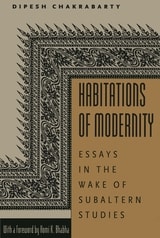
Habitations of Modernity
Essays in the Wake of Subaltern StudiesDipesh Chakrabarty
University of Chicago Press, 2002
Chakrabarty pursues these issues in a series of closely linked essays, ranging from a history of the influential Indian series Subaltern Studies to examinations of specific cultural practices in modern India, such as the use of khadi—Gandhian style of dress—by male politicians and the politics of civic consciousness in public spaces. He concludes with considerations of the ethical dilemmas that arise when one writes on behalf of social justice projects.
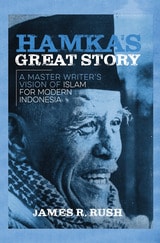
Hamka’s Great Story
A Master Writer’s Vision of Islam for Modern IndonesiaJames R. Rush
University of Wisconsin Press, 2016
Hamka (Haji Abdul Malik Karim Amrullah) was born when Indonesia was still a Dutch colony and came of age as the nation itself was emerging through tumultuous periods of Japanese occupation, revolution, and early independence. He became a prominent author and controversial public figure. In his lifetime of prodigious writing, Hamka advanced Islam as a liberating, enlightened, and hopeful body of beliefs around which the new nation could form and prosper. He embraced science, human agency, social justice, and democracy, arguing that these modern concepts comported with Islam’s true teachings. Hamka unfolded this big idea—his Great Story—decade by decade in a vast outpouring of writing that included novels and poems and chatty newspaper columns, biographies, memoirs, and histories, and lengthy studies of theology including a thirty-volume commentary on the Holy Qur’an. In introducing this influential figure and his ideas to a wider audience, this sweeping biography also illustrates a profound global process: how public debates about religion are shaping national societies in the postcolonial world.
Hands Across the Sea?
U.S.-Japan Relations, 1961–1981Timothy P. Maga
Ohio University Press, 1997
In 1961, the U.S. economy and military remained unassailable in the eyes of the world. Within twenty years, America faced defeat in Vietnam and its economy had been shaken. Japan was now considered the great economic superpower, while the U.S. and Japan reversed roles as surplus and debtor nations. Hands across the Sea? examines this reversal of roles, determining how and why America and Japan became the post-World War II era’s most argumentative allies.
Through extensive research in a number of presidential libraries and author interviews with both American and Japanese policy-makers, Professor Maga finds a U.S.-Japan relationship forever troubled by cultural misunderstanding, America’s Cold War obsession, Japanese pride, and strangely conflicting goals in both trade and defense. Given the intensity of the arguments over some of these issues, it is remarkable that Washington and Tokyo continued a working dialogue during this critical time.
Hands across the Sea? represents the first in-depth study of the modern U.S.-Japan relationship. It especially discovers how serious the U.S.-Japan disagreements over trade, defense, the direction of the Cold War, nuclear policy, and the environment had become.
Whereas American observers of U.S.-Japan relations are quick to point out their fellow countrymen’s ignorance of other cultures and Japan’s brilliance in analyzing American policy and life, the evidence suggests otherwise. Steering far away from anyone’s political correctness, this book’s bottom line involves hard-hitting investigation and analysis.
Harbin and Manchuria
Place, Space, and Identity, Volume 99Thomas Lahusen, ed.
Duke University Press, 0
Crossing the boundaries of their specializations, contributors respond to the complexity of this history while considering the concrete concept of place and its relation to the more abstract idea of space. A rare encounter between scholars of East Asian and Slavic studies, this well-illustrated collections includes discussions of history, politics, economics, anthropology, sociology, cinema, and cultural studies. An eclectic and comprehensive exploration of memory and its reconstruction in the Harbin-Manchuria diaspora, Harbin and Manchuria provides the first full treatment of this colonial encounter.
Contributors. Olga Bakich, Sabine Breuillard, James Carter, Elena Chernolutskaya, Prasenjit Duara, Thomas Lahusen, Hyun-Ok Park, Andre Schmid, Mariko Asano Tamanoi, David Wolff
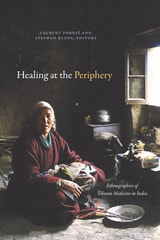
Healing at the Periphery
Ethnographies of Tibetan Medicine in IndiaLaurent Pordié and Stephan Kloos, editors
Duke University Press, 2022
Contributors. Florian Besch, Calum Blaikie, Sienna R. Craig, Barbara Gerke, Isabelle Guérin, Kim Gutschow, Pascale Hancart Petitet, Stephan Kloos, Fernanda Pirie, Laurent Pordié
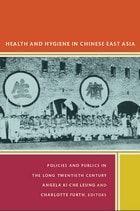
Health and Hygiene in Chinese East Asia
Policies and Publics in the Long Twentieth CenturyAngela Ki Che Leung and Charlotte Furth, eds.
Duke University Press, 2010
Contributors. Warwick Anderson, Charlotte Furth, Marta E. Hanson, Sean Hsiang-lin Lei, Angela Ki Che Leung, Shang-Jen Li, Yushang Li, Yi-Ping Lin, Shiyung Liu, Ruth Rogaski, Yen-Fen Tseng, Chia-ling Wu, Xinzhong Yu
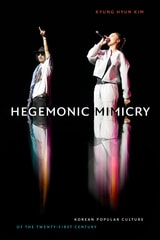
Hegemonic Mimicry
Korean Popular Culture of the Twenty-First CenturyKyung Hyun Kim
Duke University Press, 2021
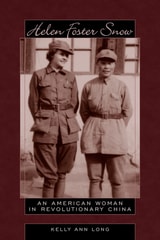
Helen Foster Snow
An American Woman in Revolutionary ChinaKelly Ann Long
University Press of Colorado, 2006
As Kelly Ann Long recounts in this engaging biography, Helen Foster Snow immersed herself in the social and political currents of a nation in turmoil. After marrying renowned journalist Edgar Snow, she developed her own writing talents and offered an important perspective on emerging events in China as that nation was wracked by Japanese invasion, the outbreak of World War II, and a continuing civil war. She supported the December Ninth Movement of 1935, broke boundaries to enter communist Yenan in 1937, and helped initiate the "gung ho" Chinese Industrial Cooperative movement.
Helen Foster Snow wrote about the people and events in China's remote communist territories during an important era. She relayed detailed portraits of female communist leaders and famous figures such as Mao Zedong and Zhu De, as well as common people struggling to survive in a period of increasing turmoil. Her informed, compassionate depictions built a bridge linking American interest to the welfare of the Chinese.
Long's account recovers the story of a controversial and important commentator on a critical period in U.S.-China relations and in Chinese history
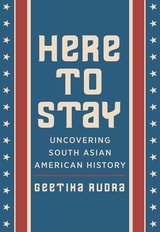
Here to Stay
Uncovering South Asian American HistoryGeetika Rudra
Rutgers University Press, 2022
In Here to Stay, Geetika Rudra, a second-generation Indian immigrant and American history buff, takes readers on a journey across the country to unearth the little-known histories of earlier generations of South Asian Americans. She visits storied sites such as Oregon’s “Hindoo Alley,” home to many lumber workers at the turn of the century, and Angel Island, California’s immigration hub. She also introduces readers to such inspiring figures as Bhagat Singh Thind, an immigrant who had enlisted in the U.S. Army to serve his adopted country in World War I, but who was later denied citizenship and took his case all the way to the U.S. Supreme Court. In turns both serious and joyful, this book vividly reveals how South Asians have always been a vital part of the American tapestry.
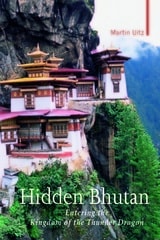
Hidden Bhutan
Entering the Kingdom of the Thunder DragonMartin Uitz
Haus Publishing, 2006

Hidden Transfers
How Rural Women’s Reproductive Work Paid for Industrialization in Mao’s ChinaJacob Eyferth
University of Chicago Press, 0
Provides a striking, new interpretation of the importance of rural women’s cloth production in collective-era China.
Based on extensive archival research, fieldwork across multiple villages, and hundreds of interviews, Hidden Transfers offers a material history of the working lives of rural women in communist China from 1949 to 1983.
Focusing on cotton cultivation and manual textile production in rural households, historian Jacob Eyferth examines the relationship between domestic labor and socialist development by recovering the story of the millions of women who spent countless hours spinning yarn, weaving cloth, and making clothes for their families. He shows how the “hidden transfers” from the domestic economy to fund accumulation rested, as with capitalist economies, on women’s unpaid domestic work. But state socialism went even further, celebrating the future-making work of production while disparaging work that reproduced life at home. Through careful research, Eyferth tracks how the Chinese state’s project of primitive accumulation, in turn, created the conditions for the spectacular growth experienced in the post-Mao years.
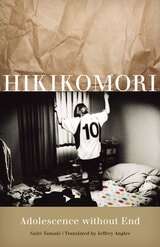
Hikikomori
Adolescence without EndSaito Tamaki
University of Minnesota Press, 2013
This is the first English translation of a controversial Japanese best seller that made the public aware of the social problem of hikikomori, or “withdrawal”—a phenomenon estimated by the author to involve as many as one million Japanese adolescents and young adults who have withdrawn from society, retreating to their rooms for months or years and severing almost all ties to the outside world. Saitō Tamaki’s work of popular psychology provoked a national debate about the causes and extent of the condition.
Since Hikikomori was published in Japan in 1998, the problem of social withdrawal has increasingly been recognized as an international one, and this translation promises to bring much-needed attention to the issue in the English-speaking world. According to the New York Times, “As a hikikomori ages, the odds that he’ll re-enter the world decline. Indeed, some experts predict that most hikikomori who are withdrawn for a year or more may never fully recover. That means that even if they emerge from their rooms, they either won’t get a full-time job or won’t be involved in a long-term relationship. And some will never leave home. In many cases, their parents are now approaching retirement, and once they die, the fate of the shut-ins—whose social and work skills, if they ever existed, will have atrophied—is an open question.”
Drawing on his own clinical experience with hikikomori patients, Saitō creates a working definition of social withdrawal and explains its development. He argues that hikikomori sufferers manifest a specific, interconnected series of symptoms that do not fit neatly with any single, easily identifiable mental condition, such as depression.
Rejecting the tendency to moralize or pathologize, Saitō sensitively describes how families and caregivers can support individuals in withdrawal and help them take steps toward recovery. At the same time, his perspective sparked contention over the contributions of cultural characteristics—including family structure, the education system, and gender relations—to the problem of social withdrawal in Japan and abroad.
Hindutva as Political Monotheism
Anustup Basu
Duke University Press, 2020
History of the Byzantine State
Ostrogorsky, George
Rutgers University Press, 1986
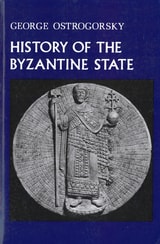
With clarity and logic, George Ostrogorsky succinctly traces the intricate thousand-year course of the Byzantine Empire. While his emphasis is on political development, he gives extensive consideration to social, esthetic, economic, and ecclesiastical factors as well. He also illuminates the Empire’s links with classical antiquity, as well as its effect on contemporaneous and subsequent European and Near Eastern history. The author captures the full sweep, the grandeur, and the tragic course of Byzantium’s rise and fall, backed by the scholarship and authority of a lifetime devoted to its study.
Long recognized as the basic history of the Byzantine Empire, this masterful work incorporates the results of the vast expansion in Byzantine research in recent years. This edition has been completely retranslated by Professor Joan Hussey from the third German edition. The text and annotation have been expanded by over seventy pages, with more than double the number of illustrations, and additional reference tables and lists.

History of the Malay Kingdom of Patani
Mis Sea#68Ibrahim Syukri
Ohio University Press, 1985
The SKMP represents a valuable contribution to the limited literature available on the Malay population of present-day southern Thailand. While the account of Patani’s history is based on a distinctively Malay interpretation of the record, the SKMP is more important as a political statement of the strong sense of ethnic identity shared by Patani’s Malay population. The SKMP will be of particular interest to those seeking to understand the persistence of conflict in southern Thailand.
Hmong in Wisconsin
Mai Zong Vue
Wisconsin Historical Society Press, 2020
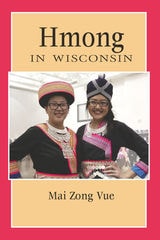
Many of these families found homes in Wisconsin, which now has the third largest Hmong population in the country, following California and Minnesota. As one of the most recent cultural groups to arrive in the Badger State, the Hmong have worked hard to establish a new life here, building support systems to preserve traditions and to help one another as they enrolled in schools, started businesses, and strived for independence.
Told with a mixture of scholarly research, interviews, and personal experience of the author, this latest addition to the popular People of Wisconsin series shares the Hmong’s varied stories of survival and hope as they have become an important part of Wisconsin communities.
Hollywood Diplomacy
Film Regulation, Foreign Relations, and East Asian RepresentationsHye Seung Chung
Rutgers University Press, 2020
Home Is Not Here
Wang Gungwu
National University of Singapore Press, 2018
As someone who has studied history for much of my life, I have found the past fascinating. But it has always been some grand and even intimidating universe that I wanted to unpick and explain to myself.
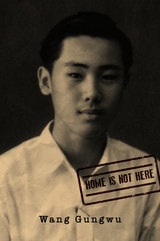
Wang Gungwu is one of Asia’s most important public intellectuals. He is best known for his explorations of Chinese history in the long view and for his writings on the Chinese diaspora. With Home is Not Here, the historian of grand themes turns to a single life history: his own.
Wang writes about his multicultural upbringing and life under British rule. He was born in Surabaya, Java, but his parents’ orientation was always to China. Wang grew up in the plural, multi-ethnic town of Ipoh, Malaya (now Malaysia). He learned English in colonial schools and was taught the Confucian classics at home. After the end of WWII and the Japanese occupation, he left for the National Central University in Nanjing to study alongside some of the finest of his generation of Chinese undergraduates. The victory of Mao Zedong’s Communist Party interrupted his education, and he ends this volume with his return to Malaya.
Wise and moving, Home Is Not Here speaks to the ability of the individual to find a place amid the historical currents that have shaped Asia and the world.
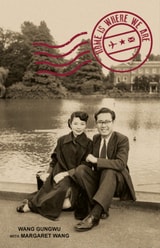
Home Is Where We Are
Wang Gungwu and Margaret Wang
National University of Singapore Press, 2020
Wang Gungwu’s account of his university education in Singapore and the UK, and the early years of his career as an academic in Malaysia captures the excitement, the ambition, and the choices of a generation that saw it their responsibility to build the new nations of Southeast Asia.
The exploration of the emotional and intellectual journey towards the formation of an identity, treasured by readers of Wang's Home Is Not Here, extends in this volume into an appreciation of love, family life, and the life of the mind. We also see these years from Margaret’s perspective, her own fascinating family story, and her early impressions of this young bearded poet. Wise and moving, this is a fascinating reflection on identity and belonging, and on the ability of the individual to find a place amidst the historical currents that have shaped Asia.
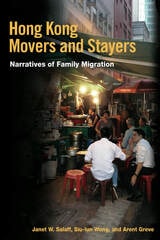
Hong Kong Movers and Stayers
Narratives of Family MigrationJanet W. Salaff, Siu-lun Wong, and Arent Greve
University of Illinois Press, 2010
Half a million Hong Kong residents fled their homeland during the thirteen years before Hong Kong's reversion to China in 1997. Nearly half of those returned within the next several years. Filled with detailed, first-hand stories of nine Hong Kong families over nearly two decades, Hong Kong Movers and Stayers is a multifaceted yet intimate look at the forces behind Hong Kong families' successful, and failed, efforts at migration and settlement.
Defining migration as a process, not a single act of leaving, Hong Kong Movers and Stayers provides an antidote to ethnocentric and simplistic theories by uncovering migration stories as they relate to social structures and social capital. The authors meld survey analysis, personal biography, and sociology and compare multiple families in order to give voice to the interplay of gender, age, and diverse family roles as motivating factors in migration.
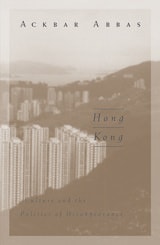
Hong Kong
Culture and the Politics of DisappearanceAckbar Abbas
University of Minnesota Press, 1997
A consideration of what the culture of Hong Kong tells us about the state of the world at the fin-de-siècle.
On June 30, 1997, Hong Kong as we know it will disappear, ceasing its singular and ambiguous existence as a colonial holdover and becoming part of the People’s Republic of China. In an intriguing and provocative exploration of its cinema, architecture, photography, and literature, Ackbar Abbas considers what Hong Kong, with its unique relations to decolonization and disappearance, can teach us about the future of both the colonial city and the global city.
The culture of Hong Kong encompasses Jackie Chan and John Woo, British colonial architecture and postmodern skyscrapers. Ironically, it was not until they were faced with the imposition of Mainland power—with the signing of the Sino-British Joint Agreement in 1984—that the denizens of the colony began the search for a Hong Kong identity. According to Abbas, Hong Kong’s peculiar lack of identity is due to its status as “not so much a place as a space of transit,” whose residents think of themselves as transients and migrants on their way from China to somewhere else. Abbas explores the way Hong Kong’s media saturation changes its people’s experience of space so that it becomes abstract, dominated by signs and images that dispel memory, history, and presence.Hong Kong disappears through simple dualities such as East/West and tradition/modernity. What is missing from a view of Hong Kong as merely a colony is the paradox that Hong Kong has benefited from and made a virtue of its dependent colonial status, turning itself into a global and financial city and outstripping its colonizer in terms of wealth.Combining sophisticated theory and a critical perspective, this rich and thought-provoking work captures the complex situation of the metropolis that is contemporary Hong Kong. Along the way, it challenges, entertains, and makes an important contribution to our thinking about the surprising processes and consequences of colonialism.Copublished with Hong Kong University Press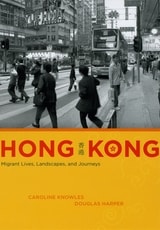
Hong Kong
Migrant Lives, Landscapes, and JourneysCaroline Knowles and Douglas Harper
University of Chicago Press, 2009
In 1997 the United Kingdom returned control of Hong Kong to China, ending the city’s status as one of the last remnants of the British Empire and initiating a new phase for it as both a modern city and a hub for global migrations. Hong Kong is a tour of the city’s postcolonial urban landscape, innovatively told through fieldwork and photography.
Caroline Knowles and Douglas Harper’s point of entry into Hong Kong is the unusual position of the British expatriates who chose to remain in the city after the transition. Now a relatively insignificant presence, British migrants in Hong Kong have become intimately connected with another small minority group there: immigrants from Southeast Asia. The lives, journeys, and stories of these two groups bring to life a place where the past continues to resonate for all its residents, even as the city hurtles forward into a future marked by transience and transition. By skillfully blending ethnographic and visual approaches, Hong Kong offers a fascinating guide to a city that is at once unique in its recent history and exemplary of our globalized present.
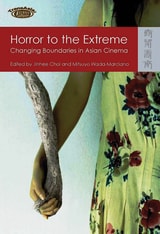
Horror to the Extreme
Changing Boundaries in Asian CinemaEdited by Jinhee Choi and Mitsuyo Wada-Marciano
Hong Kong University Press, 2009
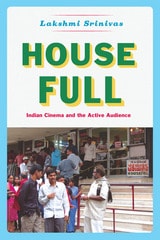
House Full
Indian Cinema and the Active AudienceLakshmi Srinivas
University of Chicago Press, 2016
With House Full, Lakshmi Srinivas takes readers deep into the moviegoing experience in India, showing us what it’s actually like to line up for a hot ticket and see a movie in a jam-packed theater with more than a thousand seats. Building her account on countless trips to the cinema and hundreds of hours of conversation with film audiences, fans, and industry insiders, Srinivas brings the moviegoing experience to life, revealing a kind of audience that, far from passively consuming the images on the screen, is actively engaged with them. People talk, shout, whistle, cheer; others sing along, mimic, or dance; at times audiences even bring some of the ritual practices of Hindu worship into the cinema, propitiating the stars onscreen with incense and camphor. The picture Srinivas paints of Indian filmgoing is immersive, fascinating, and deeply empathetic, giving us an unprecedented understanding of the audience’s lived experience—an aspect of Indian film studies that has been largely overlooked.

House, but No Garden
Apartment Living in Bombay's Suburbs, 1898-1964Nikhil Rao
University of Minnesota Press, 2013
Between the well-documented development of colonial Bombay and sprawling contemporary Mumbai, a profound shift in the city’s fabric occurred: the emergence of the first suburbs and their distinctive pattern of apartment living. In House, but No Garden Nikhil Rao considers this phenomenon and its significance for South Asian urban life. It is the first book to explore an organization of the middle-class neighborhood that became ubiquitous in the mid-twentieth-century city and that has spread throughout the subcontinent.
Rao examines how the challenge of converting lands from agrarian to urban use created new relations between the state, landholders, and other residents of the city. At the level of dwellings, apartment living in self-contained flats represented a novel form of urban life, one that expressed a compromise between the caste and class identities of suburban residents who are upper caste but belong to the lower-middle or middle class. Living in such a built environment, under the often conflicting imperatives of maintaining the exclusivity of caste and subcaste while assembling residential groupings large enough to be economically viable, led suburban residents to combine caste with class, type of work, and residence to forge new metacaste practices of community identity.
As it links the colonial and postcolonial city—both visually and analytically—Rao’s work traces the appearance of new spatial and cultural configurations in the middle decades of the twentieth century in Bombay. In doing so, it expands our understanding of how built environments and urban identities are constitutive of one another.
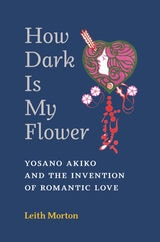
How Dark Is My Flower
Yosano Akiko and the Invention of Romantic LoveLeith Morton
University of Michigan Press, 2023
How Dark Is My Flower emphasizes the astonishing innovations in diction and style, not to mention content, in Akiko’s work that transformed the tanka genre from a hidebound and conservative mode of verse to something much more daring and modern. This book pays particular attention to poetry, particularly the tanka genre, in the evolution of modernism in Japanese literature and breaks new ground in the study of modern Japanese literature by examining the invention and evolution of the concept of romantic love.
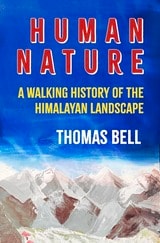
Human Nature
A Walking History of the Himalayan LandscapeThomas Bell
Haus Publishing, 2025
Combining travelogue, folklore, literature, art, and anthropology, this work explores the human and natural geography of the Himalayas and offers a nuanced portrait of life over the centuries in one of the world’s most enigmatic regions.
In Human Nature, Thomas Bell embarks on four walks through the Himalayas, each in a different season, to explore the interplay between the land and the people who call it home. Bell’s decades in Nepal give him an unusual perspective that bridges the gap between insider and outsider. The stories he recounts touch on themes from religion to ecology and political economy, and span from prehistory to the present day. He also deftly examines the impact of British imperialism and the growing external pressures on the environment. Accompanied by Bell’s striking photographs and maps, Human Nature is a magnificently written account that spans big ideas and real lives. Erudite, intimate, and evocative, this is essential reading for anyone seeking to understand the relationship between communities and their environments.
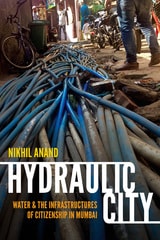
Hydraulic City
Water and the Infrastructures of Citizenship in MumbaiNikhil Anand
Duke University Press, 2017
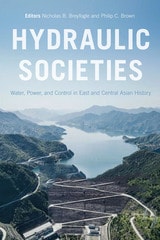
Hydraulic Societies
Water, Power, and Control in East and Central Asian HistoryNicholas B. Breyfogle
Oregon State University Press, 2023
Hydraulic Societies explores the linked themes of water, power, state-building, and hydraulic control. Bringing together a range of ecological, geographical, chronological, and methodological perspectives, the essays in this book address the how humans have long harnessed water and sought to contain its destructive power for political, economic and social ends. Water defines every aspect of life and remains at the center of human activity: in irrigation and agriculture; waste and sanitation; drinking and disease; floods and droughts; religious beliefs and practices; fishing and aquaculture; travel and discovery; scientific study; water pollution and conservation; multi-purpose dam building; boundaries and borders; politics and economic life; and wars and diplomacy.
From the earliest large irrigation works thousands of years ago, control over water has involved control over people, as the essays in this volume reflect. The intersections of water and political, economic, and social power historically span international as well as domestic politics and operate at scales ranging from the local to the global. The authors consider the role of water in national development schemes, water distribution as a tool of political power, international disputes over waterways and water supplies, and the place of water in armed conflicts. They explore the ways in which political power and social hierarchies have themselves been defined and redefined by water and its control, how state leaders legitimized their rule both culturally and economically through the control of water, and how water management schemes were a means to impose and refine colonial power.
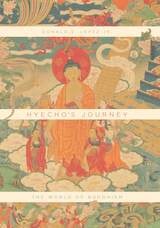
Hyecho's Journey
The World of BuddhismDonald S. Lopez Jr.
University of Chicago Press, 2017
With Hyecho’s Journey, eminent scholar of Buddhism Donald S. Lopez Jr. re-creates Hyecho’s trek. Using the surviving fragments of Hyecho’s travel memoir, along with numerous other textual and visual sources, Lopez imagines the thriving Buddhist world the monk explored. Along the way, Lopez introduces key elements of Buddhism, including its basic doctrines, monastic institutions, works of art, and the many stories that have inspired Buddhist pilgrimage. Through the eyes of one remarkable Korean monk, we discover a vibrant tradition flourishing across a vast stretch of Asia. Hyecho’s Journey is simultaneously a rediscovery of a forgotten pilgrim, an accessible primer on Buddhist history and doctrine, and a gripping, beautifully illustrated account of travel in a world long lost.