Results by title
718 books match the query 'Civil rights' and 16 start with h
Habeas for the Twenty-First Century
Uses, Abuses, and the Future of the Great WritNancy J. King and Joseph L. Hoffmann
University of Chicago Press, 2011
For centuries, the writ of habeas corpus has served as an important safeguard against miscarriages of justice, and today it remains at the center of some of the most contentious issues of our time—among them terrorism, immigration, crime, and the death penalty. Yet, in recent decades, habeas has been seriously abused. In this book, Nancy J. King and Joseph L. Hoffmann argue that habeas should be exercised with greater prudence.
Through historical, empirical, and legal analysis, as well as illustrative case studies, the authors examine the current use of the writ in the United States and offer sound reform proposals to help ensure its ongoing vitality in today’s justice system. Comprehensive and thoroughly grounded in a modern understanding of habeas corpus, this informative book will be an insightful read for legal scholars and anyone interested in the importance of habeas corpus for American government.
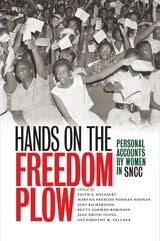
Hands on the Freedom Plow
Personal Accounts by Women in SNCCFaith S. Holsaert
University of Illinois Press, 2012

Hannah Arendt
A Critical IntroductionFinn Bowring
Pluto Press, 2011
Hannah Arendt is one of the most famous political theorists of the twentieth century, yet in the social sciences her work has rarely been given the attention it deserves. This careful and comprehensive study introduces Arendt to a wider audience.
Finn Bowring shows how Arendt's writings have engaged with and influenced prominent figures in the sociological canon, and how her ideas may shed light on some of the most pressing social and political problems of today. He explores her critique of Marx, her relationship to Weber, the influence of her work on Habermas and the parallels and discrepancies between her and Foucault. This is a clearly written and scholarly text which surveys the leading debates over Arendt’s work, including discussions of totalitarianism, the public sphere and the nature of political responsibility.
This book will bring new perspectives to students and lecturers in sociology and politics.
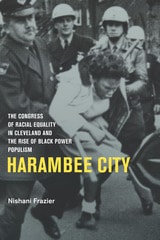
Harambee City
The Congress of Racial Equality in Cleveland and the Rise of Black Power PopulismNishani Frazier
University of Arkansas Press, 2017
BLACK POWER!
It was a phrase that consumed the American imagination in the 1960s and 70s and inspired a new agenda for black freedom. Dynamic and transformational, the black power movement embodied more than media stereotypes of gun-toting, dashiki-wearing black radicals; the movement opened new paths to equality through political and economic empowerment.
In Harambee City, Nishani Frazier chronicles the rise and fall of black power within the Congress of Racial Equality (CORE) by exploring the powerful influence of the Cleveland CORE chapter. Frazier explores the ways that black Clevelanders began to espouse black power ideals including black institution building, self-help, and self-defense. These ideals challenged CORE’s philosophy of interracial brotherhood and nonviolent direct action, spawning ideological ambiguities in the Cleveland chapter. Later, as Cleveland CORE members rose to national prominence in the organization, they advocated an open embrace of black power and encouraged national CORE to develop a notion of black community uplift that emphasized economic populism over political engagement. Not surprisingly, these new empowerment strategies found acceptance in Cleveland.
By providing an understanding of the tensions between black power and the mainstream civil rights movement as they manifested themselves as both local and national forces, Harambee City sheds new light on how CORE became one of the most dynamic civil rights organizations in the black power era.
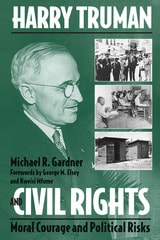
Harry Truman and Civil Rights
Moral Courage and Political RisksMichael R. Gardner. Forewords by George M. Elsey and Kweisi Mfume
Southern Illinois University Press, 2002
Given his background, President Truman was an unlikely champion of civil rights. Where he grew up—the border state of Missouri—segregation was accepted and largely unquestioned. Both his maternal and paternal grandparents had owned slaves, and his mother, victimized by Yankee forces, railed against Abraham Lincoln for the remainder of her ninety-four years. When Truman assumed the presidency on April 12, 1945, Michael R. Gardner points out, Washington, DC, in many ways resembled Cape Town, South Africa, under apartheid rule circa 1985.
Truman’s background notwithstanding, Gardner shows that it was Harry Truman—not Franklin D. Roosevelt, Dwight D. Eisenhower, or John F. Kennedy—who energized the modern civil rights movement, a movement that basically had stalled since Abraham Lincoln had freed the slaves. Gardner recounts Truman’s public and private actions regarding black Americans. He analyzes speeches, private conversations with colleagues, the executive orders that shattered federal segregation policies, and the appointments of like-minded civil rights activists to important positions. Among those appointments was the first black federal judge in the continental United States.
One of Gardner’s essential and provocative points is that the Frederick Moore Vinson Supreme Court—a court significantly shaped by Truman—provided the legal basis for the nationwide integration that Truman could not get through the Congress. Challenging the myth that the civil rights movement began with Brown v. Board of Education under Chief Justice Earl Warren, Gardner contends that the life-altering civil rights rulings by the Vinson Court provided the necessary legal framework for the landmark Brown v. Board of Education decision.
Gardner characterizes Truman’s evolution from a man who grew up in a racist household into a president willing to put his political career at mortal risk by actively supporting the interests of black Americans.
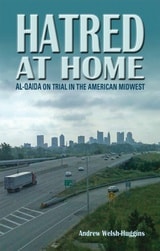
Hatred at Home
al-Qaida on Trial in the American MidwestAndrew Welsh-Huggins
Ohio University Press, 2011
One day in 2002, three friends—a Somali immigrant, a Pakistan–born U.S. citizen, and a hometown African American—met in a Columbus, Ohio coffee shop and vented over civilian casualties in the war in Afghanistan. Their conversation triggered an investigation that would become one of the most unusual and far–reaching government probes into terrorism since the 9/11 attacks.
Over several years, prosecutors charged each man with unrelated terrorist activities in cases that embodied the Bush administration’s approach to fighting terrorism at home.
Government lawyers spoke of catastrophes averted; defense attorneys countered that none of the three had done anything but talk. The stories of these homegrown terrorists illustrate the paradox the government faces after September 11: how to fairly wage a war against alleged enemies living in our midst.
Hatred at Home is a true crime drama that will spark debate from all political corners about safety, civil liberties, free speech, and the government’s war at home.
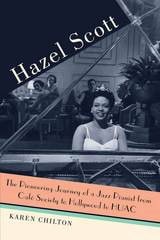
Hazel Scott
The Pioneering Journey of a Jazz Pianist, from Café Society to Hollywood to HUACKaren Chilton
University of Michigan Press, 2010
"Hazel Scott was an important figure in the later part of the Black renaissance onward. Even in an era where there was limited mainstream recognition of Black Stars, Hazel Scott's talent stood out and she is still fondly remembered by a large segment of the community. I am pleased to see her legend honored."
---Melvin Van Peebles, filmmaker and director
"This book is really, really important. It comprises a lot of history---of culture, race, gender, and America. In many ways, Hazel's story is the story of the twentieth century."
---Murray Horwitz, NPR commentator and coauthor of Ain't Misbehavin'
"Karen Chilton has deftly woven three narrative threads---Adam Clayton Powell, Jr., Harlem, and Hazel Scott---into a marvelous tapestry of black life, particularly from the Depression to the Civil Rights era. Of course, Hazel Scott's magnificent career is the brightest thread, and Chilton handles it with the same finesse and brilliance as her subject brought to the piano."
---Herb Boyd, author of Baldwin's Harlem: A Biography of James Baldwin
"A wonderful book about an extraordinary woman: Hazel Scott was a glamorous, gifted musician and fierce freedom fighter. Thank you Karen Chilton for reintroducing her. May she never be forgotten."
---Farah Griffin, Institute for Research in African-American Studies, Columbia University
In this fascinating biography, Karen Chilton traces the brilliant arc of the gifted and audacious pianist Hazel Scott, from international stardom to ultimate obscurity.
A child prodigy, born in Trinidad and raised in Harlem in the 1920s, Scott's musical talent was cultivated by her musician mother, Alma Long Scott as well as several great jazz luminaries of the period, namely, Art Tatum, Fats Waller, Billie Holiday and Lester Young. Career success was swift for the young pianist---she auditioned at the prestigious Juilliard School when she was only eight years old, hosted her own radio show, and shared the bill at Roseland Ballroom with the Count Basie Orchestra at fifteen. After several stand-out performances on Broadway, it was the opening of New York's first integrated nightclub, Café Society, that made Hazel Scott a star. Still a teenager, the "Darling of Café Society" wowed audiences with her swing renditions of classical masterpieces by Chopin, Bach, and Rachmaninoff. By the time Hollywood came calling, Scott had achieved such stature that she could successfully challenge the studios' deplorable treatment of black actors. She would later become one of the first black women to host her own television show. During the 1940s and 50s, her sexy and vivacious presence captivated fans worldwide, while her marriage to the controversial black Congressman from Harlem, Adam Clayton Powell, Jr., kept her constantly in the headlines.
In a career spanning over four decades, Hazel Scott became known not only for her accomplishments on stage and screen, but for her outspoken advocacy of civil rights and her refusal to play before segregated audiences. Her relentless crusade on behalf of African Americans, women, and artists made her the target of the House Un-American Activities Committee (HUAC) during the McCarthy Era, eventually forcing her to join the black expatriate community in Paris. By age twenty-five, Hazel Scott was an international star. Before reaching thirty-five, however, she considered herself a failure. Plagued by insecurity and depression, she twice tried to take her own life. Though she was once one of the most sought-after talents in show business, Scott would return to America, after years of living abroad, to a music world that no longer valued what she had to offer. In this first biography of an important but overlooked African American pianist, singer, actor and activist, Hazel Scott's contributions are finally recognized.
Karen Chilton is a New York-based writer and actor, and the coauthor of I Wish You Love, the memoir of legendary jazz vocalist Gloria Lynne.
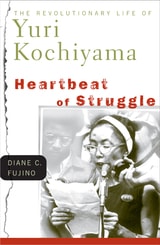
Heartbeat of Struggle
The Revolutionary Life of Yuri KochiyamaDiane C. Fujino
University of Minnesota Press, 2005
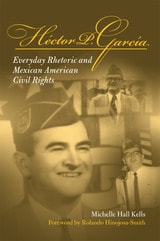
Hector P Garcia
Everyday Rhetoric and Mexican American Civil RightsMichelle Hall Kells. Foreword by Rolando Hinojosa-Smith
Southern Illinois University Press, 2006
Examining the Mexican American civil rights movement through the public rhetoric of a veteran activist
Héctor P. García: Everyday Rhetoric and Mexican American Civil Rights examines the transition of Mexican Americans from political and social marginalization to civic inclusion after World War II. Focusing on the public rhetoric of veteran rights activist and physician Dr. Héctor P. García, a Mexican immigrant who achieved unprecedented influence within the U.S. political system, author Michelle Hall Kells provides an important case study in the exercise of influence, the formation of civic identity, and the acquisition of social power among this underrepresented group.
As a major influence in national twentieth-century civil rights reform, García effectively operated between Anglo and Mexican American sociopolitical structures. The volume illustrates how García, a decorated World War II veteran and founder of the American GI Forum in Texas in 1948, successfully engendered a discourse that crossed geographical, political, and cultural borders, forming associations with the working poor as well as with prominent national figures such as John F. Kennedy and Lyndon B. Johnson. Through his rhetoric and action, García publicly revealed the plight of Mexican Americans, crossing class, regional, and racial lines to improve socioeconomic conditions for his people.
Héctor P. García, which is enhanced by sixteen illustrations, contributes to rhetorical, cultural, and historical studies and offers new scholarship establishing García’s role on the national front, effectively tracing Garcia’s legacy of resistance, the process of achieving enfranchisement, and the role of racism in the evolution from social marginalization to national influence.
Hegel's Critique of Liberalism
Rights in ContextSteven B. Smith
University of Chicago Press, 1989

Homeland Securities, Volume 2005
Kavita Philip, Eliza Jane Reilly and David Serlin
Duke University Press, 0
The contributors to this special issue offer critical perspectives on the many fronts of the global “war on terror” and reveal continuities and discontinuities within familiar strategies of political control, racial discrimination, and state-sanctioned violence. Featured articles explore such issues as the intersection of racism, homophobia, and imperialism at Abu Ghraib; the conundrum faced by economically disadvantaged Latino youth who find themselves doubly targeted by aggressive army recruitment and anti-immigration activity; and the ways that rhetoric and policies of homeland security have provided new legal tools in the ongoing project of defining “real Americans” through exclusion and state violence. Other essays examine the role of the military in civilian spaces, the right-wing assault on progressive historians and on area studies, librarians’ efforts to protect the privacy of their patrons’ records in light of the Patriot Act, and the role of intellectuals in resisting everyday forms of control and surveillance.
Contributors. Barbara Abrash, Lori A. Allen, Jerry Atkin, Rachel Tzvia Back, Francisco E. Balderrama, Beatriz da Costa, Lara Z. Deeb, Eric Hiltner, Martha Howell, Lawrence Jones, Burçak Keskin-Kozat, R. J. Lambrose, Jorge Mariscal, Joseph Masco, Conor McGrady, Quincy T. Mills, Priscilla Murolo, Enrique C. Ochoa, Claire Pentecost, Kavita Philip, Vivian H. Price, Jasbir K. Puar, Eliza Jane Reilly, Natsu Taylor Saito, Ellen Schrecker, David Serlin, Rogers M. Smith, Marc Stein, Matias Viegener, Kath Weston, Maurice B. Wheeler, Jessica Winegar
Hostile Heartland
Racism, Repression, and Resistance in the MidwestBrent M. S. Campney
University of Illinois Press, 2019
Houston and the Permanence of Segregation
An Afropessimist Approach to Urban HistoryDavid Ponton
University of Texas Press, 2024
2025 Most Significant Scholarly Book, Texas Institute of Letters
A history of racism and segregation in twentieth-century Houston and beyond.
Through the 1950s and beyond, the Supreme Court issued decisions that appeared to provide immediate civil rights protections to racial minorities as it relegated Jim Crow to the past. For black Houstonians who had been hoping and actively fighting for what they called a “raceless democracy,” these postwar decades were often seen as decades of promise. In Houston and the Permanence of Segregation, David Ponton argues that these were instead “decades of capture”: times in which people were captured and constrained by gender and race, by faith in the law, by antiblack violence, and even by the narrative structures of conventional histories. Bringing the insights of Black studies and Afropessimism to the field of urban history, Ponton explores how gender roles constrained thought in black freedom movements, how the “rule of law” compelled black Houstonians to view injustice as a sign of progress, and how antiblack terror undermined Houston’s narrative of itself as a “heavenly” place.
Today, Houston is one of the most racially diverse cities in the United States, and at the same time it remains one of the most starkly segregated. Ponton’s study demonstrates how and why segregation has become a permanent feature in our cities and offers powerful tools for imagining the world otherwise.
How to Lose the Hounds
Maroon Geographies and a World beyond PolicingCeleste Winston
Duke University Press, 2023
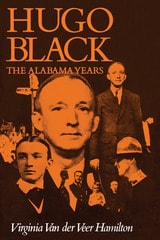
Hugo Black
The Alabama YearsVirginia Van Der Veer Hamilton
University of Alabama Press, 1982
The making of a Supreme Court justice in the crucible of Alabama politics.
Hugo Black: The Alabama Years by Virginia Van der Veer Hamilton is a richly researched political biography that explores the formative experiences of Hugo L. Black, one of the most influential justices in the history of the United States Supreme Court. Focusing on his early life and career in Alabama, Hamilton traces Black's journey from his rural upbringing and legal training to his emergence as a prominent attorney, politician, and United States senator. Through careful analysis of Alabama's social, economic, and political landscape, the book reveals the forces that shaped Black's ideas about government, democracy, and constitutional rights.
Hamilton examines Black's rise during a period of profound change in the South, highlighting the alliances, controversies, and challenges that defined his political career. The study places Black within the broader context of Progressive Era reform, the transformation of Southern politics, and the expanding role of the federal government in American life. At the same time, it provides a nuanced portrait of a complex public figure whose beliefs and actions continue to inspire debate among historians and legal scholars.
Essential reading for students of legal history, political science, Southern studies, and American government, this volume offers valuable insight into the Alabama roots of a justice who would profoundly influence modern constitutional interpretation and civil liberties jurisprudence.
Human Rights
Concepts, Contests, ContingenciesAustin Sarat and Thomas R. Kearns, Editors
University of Michigan Press, 2002