Results by title
4531 books match the query 'Cultural & Ethnic Studies' and 116 start with h
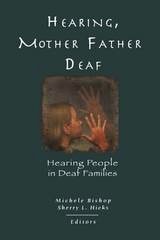
HEARING, MOTHER-FATHER DEAF
Hearing People in Deaf FamiliesMichele Bishop
Gallaudet University Press, 2009
The newest entry in the Sociolinguistics in Deaf Communities series explores the richness and complexity of the lives of hearing people in deaf families. Along with their own contributions, volume editors Michele Bishop and Sherry L. Hicks present the work of an extraordinary cadre of deaf, hearing, and Coda (children of deaf adults) researchers: Susan Adams, Jean Andrews, Oya Ataman, Anne E. Baker, Beppie van den Bogaerde , Helsa B. Borinstein, Karen Emmorey, Tamar H. Gollan, Mara Lúcia Masutti, Susan Mather, Ronice Müller de Quadros, Jemina Napier, Paul Preston, Jennie E. Pyers, Robin Thompson, and Andrea Wilhelm. Their findings represent research in a number of countries, including Australia, Brazil, England, Germany, the Netherlands, and the United States.
Hearing, Mother^Father Deaf: Hearing People in Deaf Families includes a comprehensive description of the societal influences at work in the lives of deaf people and their hearing children, which serves as a backdrop for the essays. The topics range from bimodal bilingualism in adults to cultural and linguistic behaviors of hearing children from deaf families; sign and spoken language contact phenomena; and to issues of self-expression, identity, and experience. A blend of data-based research and personal writings, the articles in this sociolinguistic study provide a thorough understanding of the varied experiences of hearing people and their deaf families throughout the world.
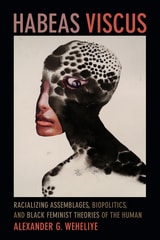
Habeas Viscus
Racializing Assemblages, Biopolitics, and Black Feminist Theories of the HumanAlexander G. Weheliye
Duke University Press, 2014

Habitus of the Hood
Edited by Chris Richardson and Hans A. Skott-Myhre
Intellect Books, 2012
Since the 1990s, popular culture the world over has frequently looked to the ’hood for inspiration, whether in music, film, or television. Habitus of the Hood explores the myriad ways in which the hood has been conceived—both within the lived experiences of its residents and in the many mediated representations found in popular culture. Using a variety of methodologies including autoethnography, textual studies, and critical discourse analysis, contributors analyze and connect these various conceptions.
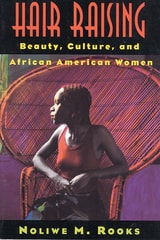
Hair Raising
Beauty, Culture, and African American WomenRooks, Noliwe M
Rutgers University Press, 1996
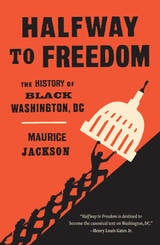
Halfway to Freedom
The History of Black Washington, DCMaurice Jackson. Foreword by Lonnie G. Bunch III.
Duke University Press, 2026
For more than two hundred years, the history and culture of the District of Columbia have been in great part shaped by its Black residents. Several Black men were elected to political positions citywide only a handful of years after the end of the Civil War, and while the years after Reconstruction saw the region plagued with segregation and racial violence, the capital’s Black population continued to grow at all economic levels. Washington became the first major US city with a majority Black population in 1957, a status it held for almost seventy years as gentrification has led to the decline of Black political and economic power in DC in the twenty-first century.
Halfway to Freedom is a social, political, intellectual, and cultural history of African Americans in Washington, DC; it explores the role that race, gender, color, class, and power have played in the city and its relationship with the federal government. Maurice Jackson explores the material conditions that shaped life for African Americans, free and enslaved, from the earliest moments of the District’s history to more contemporary times of organization and activism. Through an array of archival materials, especially firsthand accounts of Black residents in the area, Jackson critiques how and why DC exists as a haven within the Black American imaginary given the realities of conflict its Black residents have faced and continue to face today. In doing so, he highlights and honors the gains they have earned through the concerted struggles of labor organizations, women’s movements, sports, music, art, legal activism, and more.
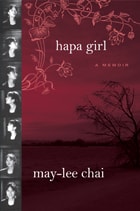
Hapa Girl
A MemoirMay-lee Chai
Temple University Press, 2008
In the mid-1960s, Winberg Chai, a young academic and the son of Chinese immigrants, married an Irish-American artist. In Hapa Girl ("hapa" is Hawaiian for "mixed") their daughter tells the story of this loving family as they moved from Southern California to New York to a South Dakota farm by the 1980s. In their new Midwestern home, the family finds itself the object of unwelcome attention, which swiftly escalates to violence. The Chais are suddenly socially isolated and barely able to cope with the tension that arises from daily incidents of racial animosity, including random acts of cruelty.
May-lee Chai's memoir ends in China, where she arrives just in time to witness a riot and demonstrations. Here she realizes that the rural Americans' "fears of change, of economic uncertainty, of racial anxiety, of the unknowable future compared to the known past were the same as China's. And I realized finally that it had not been my fault."
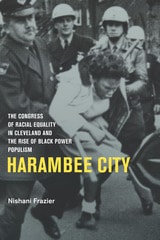
Harambee City
The Congress of Racial Equality in Cleveland and the Rise of Black Power PopulismNishani Frazier
University of Arkansas Press, 2017
BLACK POWER!
It was a phrase that consumed the American imagination in the 1960s and 70s and inspired a new agenda for black freedom. Dynamic and transformational, the black power movement embodied more than media stereotypes of gun-toting, dashiki-wearing black radicals; the movement opened new paths to equality through political and economic empowerment.
In Harambee City, Nishani Frazier chronicles the rise and fall of black power within the Congress of Racial Equality (CORE) by exploring the powerful influence of the Cleveland CORE chapter. Frazier explores the ways that black Clevelanders began to espouse black power ideals including black institution building, self-help, and self-defense. These ideals challenged CORE’s philosophy of interracial brotherhood and nonviolent direct action, spawning ideological ambiguities in the Cleveland chapter. Later, as Cleveland CORE members rose to national prominence in the organization, they advocated an open embrace of black power and encouraged national CORE to develop a notion of black community uplift that emphasized economic populism over political engagement. Not surprisingly, these new empowerment strategies found acceptance in Cleveland.
By providing an understanding of the tensions between black power and the mainstream civil rights movement as they manifested themselves as both local and national forces, Harambee City sheds new light on how CORE became one of the most dynamic civil rights organizations in the black power era.
Hard Road to Freedom
The Story of African America, The Civil War to the MillenniumHorton, Lois E
Rutgers University Press, 2002
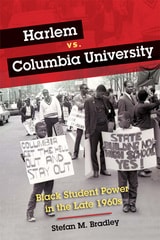
Harlem vs. Columbia University
Black Student Power in the Late 1960sStefan M. Bradley
University of Illinois Press, 2012
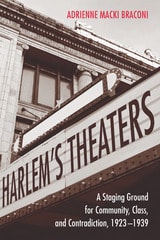
Harlem's Theaters
A Staging Ground for Community, Class, and Contradiction, 1923-1939Adrienne Macki Braconi
Northwestern University Press, 2015
Honorable Mention, 2016 Errol Hill Book Award for Outstanding Scholarship in African American Theater, Drama and/or Performance
Based on a vast amount of archival research, Adrienne Macki Braconi’s illuminating study of three important community-based theaters in Harlem shows how their work was essential to the formation of a public identity for African Americans and the articulation of their goals, laying the groundwork for the emergence of the Civil Rights movement. Macki Braconi uses textual analysis, performance reconstruction, and audience reception to examine the complex dynamics of productions by the Krigwa Players, the Harlem Experimental Theatre, and the Negro Theatre of the Federal Theatre Project. Even as these theaters demonstrated the extraordinary power of activist art, they also revealed its limits. The stage was a site in which ideological and class differences played out, theater being both a force for change and a collision of contradictory agendas. Macki Braconi’s book alters our understanding of the Harlem Renaissance, the roots of the Civil Rights movement, and the history of community theater in America.
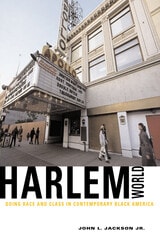
Harlemworld
Doing Race and Class in Contemporary Black AmericaJohn L. Jackson Jr.
University of Chicago Press, 2001
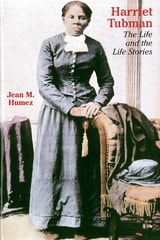
Harriet Tubman
The Life and the Life StoriesJean M. Humez
University of Wisconsin Press, 2005
Harriet Tubman’s name is known world-wide and her exploits as a self-liberated Underground Railroad heroine are celebrated in children’s literature, film, and history books, yet no major biography of Tubman has appeared since 1943. Jean M. Humez’s comprehensive Harriet Tubman is both an important biographical overview based on extensive new research and a complete collection of the stories Tubman told about her life—a virtual autobiography culled by Humez from rare early publications and manuscript sources. This book will become a landmark resource for scholars, historians, and general readers interested in slavery, the Underground Railroad, the Civil War, and African American women.
Born in slavery in Maryland in or around 1820, Tubman drew upon deep spiritual resources and covert antislavery networks when she escaped to the north in 1849. Vowing to liberate her entire family, she made repeated trips south during the 1850s and successfully guided dozens of fugitives to freedom. During the Civil War she was recruited to act as spy and scout with the Union Army. After the war she settled in Auburn, New York, where she worked to support an extended family and in her later years founded a home for the indigent aged. Celebrated by her primarily white antislavery associates in a variety of private and public documents from the 1850s through the 1870s, she was rediscovered as a race heroine by woman suffragists and the African American women’s club movement in the early twentieth century. Her story was used as a key symbolic resource in education, institutional fundraising, and debates about the meaning of "race" throughout the twentieth century.
Humez includes an extended discussion of Tubman’s work as a public performer of her own life history during the nearly sixty years she lived in the north. Drawing upon historiographical and literary discussion of the complex hybrid authorship of slave narrative literature, Humez analyzes the interactive dynamic between Tubman and her interviewers. Humez illustrates how Tubman, though unable to write, made major unrecognized contributions to the shaping of her own heroic myth by early biographers like Sarah Bradford. Selections of key documents illustrate how Tubman appeared to her contemporaries, and a comprehensive list of primary sources represents an important resource for scholars.
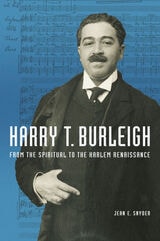
Harry T. Burleigh
From the Spiritual to the Harlem RenaissanceJean E. Snyder
University of Illinois Press, 2021
Harvesting Coffee, Bargaining Wages
Rural Labor Markets in Colombia, 1975-1990Sutti Ortiz
University of Michigan Press, 1999
Harvesting Haiti
Reflections on Unnatural DisastersMyriam J.A. Chancy
University of Texas Press, 2023
2024 Isis Duarte Book Prize, Haiti/ Dominican Republic Section, Latin American Studies Association
2024 Longlist, OCM Bocas Prize for Caribbean Literature, Bocas Lit Fest
This collection ponders the personal and political implications for Haitians at home and abroad resulting from the devastating 2010 earthquake.
The 7.0 magnitude earthquake that struck Haiti in January 2010 was a debilitating event that followed decades of political, social, and financial issues. Leaving over 250,000 people dead, 300,000 injured, and 1.5 million people homeless, the earthquake has had lasting repercussions on a struggling nation. As the post-earthquake political situation unfolded, Myriam Chancy worked to illuminate on-the-ground concerns, from the vulnerable position of Haitian women to the failures of international aid. Originally presented at invited campus talks, published as columns for a newspaper in Trinidad and Tobago, and circulated in other ways, her essays and creative responses preserve the reactions and urgencies of the years following the disaster.
In Harvesting Haiti, Chancy examines the structures that have resulted in Haiti's post-earthquake conditions and reflects at key points after the earthquake on its effects on vulnerable communities. Her essays make clear the importance of sustaining and supporting the dignity of Haitian lives and of creating a better, contextualized understanding of the issues that mark Haitians’ historical and present realities, from gender parity to the vexed relationship between Haiti and the Dominican Republic.
Harvesting the Clouds
Ecologies of Fog Capture in Coastal PeruChakad Ojani
University of Arizona Press, 2027
Vision limited, sounds muffled. Tiny water droplets reflect light back to its source and make it difficult to locate the origin of sounds: this is fog. In Chakad Ojani’s ethnography, this atmospheric phenomenon plays a pivotal role.
Drawing on long-term ethnographic research on engagements with fog in Lima and coastal Peru, Harvesting the Clouds examines how local NGO workers and fog oasis conservationists sought to utilize coastal fog as a water source. NGO workers installed fog catchers in informal or recently formalized neighborhoods where state infrastructure was absent, while conservationists harnessed ground-touching clouds in order to prevent informal urbanization. As they set out to capture ground-touching clouds to pursue their distinct goals, these collectives became entrapped by activities, demands, and expectations that they had not foreseen. The book frames these relationships as ecologies of capture: emergent webs of relationships held together by conflicting aims and expectations, the possibilities and limitations of fog capture, and the material qualities of fog itself.
Harvesting the Clouds argues that capture is always only partially successful, but by virtue of this partiality, it becomes productive of social relations—an understanding that the author extends to anthropological inquiry itself as an exercise in the productive impossibility of ethnographic entrapment.
Haunted City
Three Centuries of Racial Impersonation in PhiladelphiaChristian DuComb
University of Michigan Press, 2017
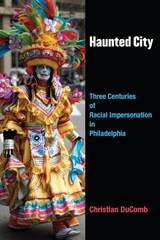
Mummers have long worn blackface makeup during winter holiday celebrations in Europe and North America; in Philadelphia, mummers’ blackface persisted from the colonial period well into the twentieth century. The first annual Mummers Parade, a publicly sanctioned procession from the working-class neighborhoods of South Philadelphia to the city center, occurred in 1901. Despite a ban on blackface in the Mummers Parade after civil rights protests in 1963–64, other forms of racial and ethnic impersonation in the parade have continued to flourish unchecked. Haunted City combines detailed historical research with the author’s own experiences performing in the Mummers Parade to create a lively and richly illustrated narrative. Through its interdisciplinary approach, Haunted City addresses not only theater history and performance studies but also folklore, American studies, critical race theory, and art history. It also offers a fresh take on the historiography of the antebellum minstrel show.

Haunted Life
Visual Culture and Black ModernityMarriott, David
Rutgers University Press, 2007
Drawing on a range of comparative readings by writers, theorists, and filmmakers, including John Edgar Wideman, Frantz Fanon, Richard Wright, Issac Julien, Alain Locke, and Sidney Poitier, Haunted Life is a bold and original exploration of the legacies of black visual culture and the political, deeply sexualized violence that lies buried beneath it.
Haunting Biology
Science and Indigeneity in AustraliaEmma Kowal
Duke University Press, 2023
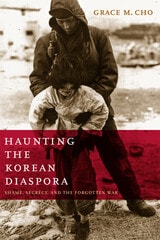
Haunting the Korean Diaspora
Shame, Secrecy, and the Forgotten WarGrace M. Cho
University of Minnesota Press, 2008
Grace M. Cho exposes how Koreans in the United States have been profoundly affected by the forgotten war and uncovers the silences and secrets that still surround it, arguing that trauma memories have been passed unconsciously through a process psychoanalysts call “transgenerational haunting.” Tracing how such secrets have turned into “ghosts,” Cho investigates the mythic figure of the yanggongju, literally the “Western princess,” who provides sexual favors to American military personnel. She reveals how this figure haunts both the intimate realm of memory and public discourse, in which narratives of U.S. benevolence abroad and assimilation of immigrants at home go unchallenged. Memories of U.S. violence, Cho writes, threaten to undo these narratives—and so they have been rendered unspeakable.
At once political and deeply personal, Cho’s wide-ranging and innovative analysis of U.S. neocolonialism and militarism under contemporary globalization brings forth a new way of understanding—and remembering—the impact of the Korean War.
Have You Got Good Religion?
Black Women's Faith, Courage, and Moral Leadership in the Civil Rights MovementAnneMarie Mingo
University of Illinois Press, 2024
A depiction of moral imagination that resonates today, Have You Got Good Religion? reveals how Black Churchwomen’s understanding of God became action and transformed a nation.

Hawai'i Is My Haven
Race and Indigeneity in the Black PacificNitasha Tamar Sharma
Duke University Press, 2021
Healing Like Our Ancestors
The Nahua Tiçitl, Gender, and Settler Colonialism in Central Mexico, 1535–1660Edward Anthony Polanco
University of Arizona Press, 2024
Early colonial Spanish settlers defined, assessed, and admonished Nahua titiçih (healing specialists) and tiçiyotl (healing knowledge) in the process of building a society in Mexico that mirrored Iberia. Nevertheless, Nahua survivance (intergenerational knowledge transfer) has allowed communities to heal like their ancestors through changes and adaptations. Edward Anthony Polanco draws from diverse colonial primary sources, largely in Spanish and Nahuatl (the Nahua ancestral language), to explore how Spanish settlers framed titiçih, their knowledge, and their practices within a Western complex. Polanco argues for the usage of Indigenous terms when discussing Indigenous concepts and arms the reader with the Nahuatl words to discuss central Mexican Nahua healing. In particular, this book emphasizes the importance of women as titiçih and highlights their work as creators and keepers of knowledge. These vital Nahua perspectives of healing—and how they differed from the settler narrative—will guide community members as well as scholars and students of the history of science, Latin America, and Indigenous studies.
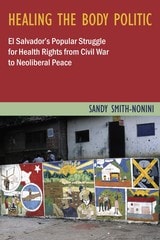
Healing the Body Politic
El Salvador's Popular Struggle for Health Rights from Civil War to Neoliberal PeaceSmith-Nonini, Sandy
Rutgers University Press, 2010
Hear #MeToo in India
News, Social Media, and Anti-Rape and Sexual Harassment ActivismPallavi Guha
Rutgers University Press, 2021
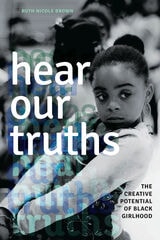
Hear Our Truths
The Creative Potential of Black GirlhoodRuth Nicole Brown
University of Illinois Press, 2013

Heartbeat of Struggle
The Revolutionary Life of Yuri KochiyamaDiane C. Fujino
University of Minnesota Press, 2005

Heartthrob
Del Balboa Cafe al Apartheid and BackSusana Chávez-Silverman
University of Wisconsin Press, 2019
Their attraction was intense, but the social and political climate of South Africa, still in the grip of apartheid, threatened to tear them apart. Describing the vicissitudes of the Latina migratory experience, Chávez-Silverman struggles to overcome the hostility of a place that is so unwelcoming to nonwhite persons and outsiders.
Heartthrob, a love story for the ages, implores us to consider how things could have been. In these romantic crónicas based on detailed diary entries and confessional letters to family and friends, Chávez-Silverman weaves together English and Spanish to lay bare the raw intensity and true fragility of love. Anyone who has wondered about the-one-that-got-away or sought out the true meaning of happily-ever-after will be enraptured by this intimate exploration of love, loss, and regret.
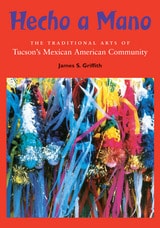
Hecho a Mano
The Traditional Arts of Tucson's Mexican American CommunityJames S. Griffith; Foreword by Patricia Preciado Martin
University of Arizona Press, 2000
Arts as intimate as a piece of needlework or a home altar. Arts as visible as decorative iron, murals, and low riders. Through such arts, members of Tucson's Mexican American community contribute much of the cultural flavor that defines the city to its residents and to the outside world. Now Tucson folklorist Jim Griffith celebrates these public and private artistic expressions and invites us to meet the people who create them.
- Josefina Lizárraga learned to make paper flowers as a girl in her native state of Nayarit, Mexico, and ensures that this delicate art is not lost.
- Ornamental blacksmith William Flores runs the oldest blacksmithing business in town, a living link with an earlier Tucson.
- Ramona Franco's family has maintained an elaborate altar to Our Lady of Guadalupe for three generations.
- Signmaker Paul Lira, responsible for many of Tucson's most interesting signs, brings to his work a thoroughly mexicano sense of aesthetics and humor.
- Muralists David Tineo and Luis Mena proclaim Mexican cultural identity in their work and carry on a tradition that has blossomed in the last twenty years.
Featuring a foreword by Tucson author Patricia Preciado Martin and a spectacular gallery of photographs, many by Pulitzer prize-winning photographer José Galvez, this remarkable book offers a close-up view of a community rich with tradition and diverse artistic expression. Hecho a Mano is a piñata bursting with unexpected treasures that will inspire and inform anyone with an interest in folk art or Mexican American culture.
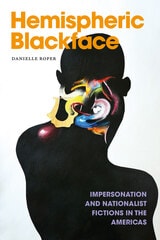
Hemispheric Blackface
Impersonation and Nationalist Fictions in the AmericasDanielle Roper
Duke University Press, 2025
Here to Stay
Uncovering South Asian American HistoryGeetika Rudra
Rutgers University Press, 2022
In Here to Stay, Geetika Rudra, a second-generation Indian immigrant and American history buff, takes readers on a journey across the country to unearth the little-known histories of earlier generations of South Asian Americans. She visits storied sites such as Oregon’s “Hindoo Alley,” home to many lumber workers at the turn of the century, and Angel Island, California’s immigration hub. She also introduces readers to such inspiring figures as Bhagat Singh Thind, an immigrant who had enlisted in the U.S. Army to serve his adopted country in World War I, but who was later denied citizenship and took his case all the way to the U.S. Supreme Court. In turns both serious and joyful, this book vividly reveals how South Asians have always been a vital part of the American tapestry.
Heresy in the University
The Black Athena Controversy and the Responsibilities of American IntellectualsJacques Berlinerblau
Rutgers University Press, 1999

Hezbollah
The Political Economy of Lebanon's Party of GodJoseph Daher
Pluto Press, 2016
By discarding more common approaches to the party that focus on religious discourse or military questions, Daher is freed up to analyze what the party actually is: an organization that is operating within a specific political and socio-economic context, one that simultaneously offers it a rich ground of support and limits its range of action. Daher clearly and carefully positions Hezbollah within that context, focusing on its historic ties with its main sponsor, Iran, its media and cultural wings, its relationship with Western economic policies, and the impact of the Shi’a population on the sectarian politics of Lebanon. Offering additional attention to the party’s positions on worker’s rights and women’s issues, this fresh take on Hezbollah will be incredibly useful for understanding the world’s most tumultuous region.

Hidden Empire of Finance
How Wall Street Profits from Our Cities and Fuels Global InequalityMichael Goldman
Duke University Press, 2026
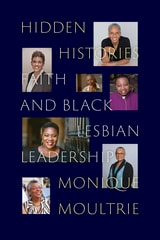
Hidden Histories
Faith and Black Lesbian LeadershipMonique Moultrie
Duke University Press, 2023
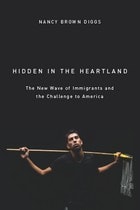
Hidden in the Heartland
The New Wave of Immigrants and the Challenge to AmericaNancy Brown Diggs
Michigan State University Press, 2011
As other teens returned home from school, thirteen-year-old José Silva headed for work at a restaurant, where he would remain until 2:00 a.m. Francisca Herrera, a tomato picker, was exposed to pesticides while she was pregnant and gave birth to a baby without arms or legs. Silva and Herrera immigrated illegally to the United States, and their experiences are far from unique. In this comprehensive, balanced overview of the immigration crisis, Nancy Brown Diggs examines the abusive, unethical conditions under which many immigrants work, and explores how what was once a border problem now extends throughout the country. Drawing from a wide spectrum of sources, Hidden in the Heartland demonstrates how the current situation is untenable for both illegal immigrants and American citizens. A vivid portrait of the immigration crisis, the book makes a passionate case for confronting this major human rights issue—a threat to the very unity of the country.

Hidden in the Mix
The African American Presence in Country MusicDiane Pecknold, ed.
Duke University Press, 2013
The contributors to Hidden in the Mix examine how country music became "white," how that fictive racialization has been maintained, and how African American artists and fans have used country music to elaborate their own identities. They investigate topics as diverse as the role of race in shaping old-time record catalogues, the transracial West of the hick-hopper Cowboy Troy, and the place of U.S. country music in postcolonial debates about race and resistance. Revealing how music mediates both the ideology and the lived experience of race, Hidden in the Mix challenges the status of country music as "the white man’s blues."
Contributors. Michael Awkward, Erika Brady, Barbara Ching, Adam Gussow, Patrick Huber, Charles Hughes, Jeffrey A. Keith, Kip Lornell, Diane Pecknold, David Sanjek, Tony Thomas, Jerry Wever

Hiding in Plain Sight
Black Women, the Law, and the Making of a White Argentine RepublicErika Denise Edwards
University of Alabama Press, 2020
WINNER OF THE ASSOCIATION OF BLACK WOMEN HISTORIANS 2020 LETITIA WOODS-BROWN AWARD FOR THE BEST BOOK IN AFRICAN AMERICAN WOMEN'S HISTORY
WINNER OF THE WESTERN ASSOCIATION OF WOMEN HISTORIAN'S BARBARA “PENNY” KANNER AWARD
2021 FINALIST FOR THE HARRIET TUBMAN BOOK PRIZE
2020 FINALIST BERSHIRE CONFERENCE OF WOMEN HISTORIANS BOOK PRIZE
Uncovering the Afro-Argentine women behind the myth of a white nation.
Argentina promotes itself as a country of European immigrants. This makes it an exception to other Latin American countries, which embrace a more mixed—African, Indian, European—heritage. Hiding in Plain Sight: Black Women, the Law, and the Making of a White Argentine Republic traces the origins of what some white Argentines mischaracterize as a “black disappearance” by delving into the intimate lives of black women and explaining how they contributed to the making of a “white” Argentina. Erika Denise Edwards has produced the first comprehensive study in English of the history of African descendants outside of Buenos Aires in the late colonial and early republican periods, with a focus on how these women sought whiteness to better their lives and that of their children.
Edwards argues that attempts by black women to escape the stigma of blackness by recategorizing themselves and their descendants as white began as early as the late eighteenth century, challenging scholars who assert that the black population drastically declined at the end of the nineteenth century because of the whitening or modernization process. She further contends that in Córdoba, Argentina, women of African descent (such as wives, mothers, daughters, and concubines) were instrumental in shaping their own racial reclassifications and destinies.
This volume makes use of a wealth of sources to relate these women’s choices. The sources consulted include city censuses and notarial and probate records that deal with free and enslaved African descendants; criminal, ecclesiastical, and civil court cases; marriages and baptisms records and newsletters. These varied sources provide information about the day-to-day activities of cordobés society and how women of African descent lived, formed relationships, thrived, and partook in the transformation of racial identities in Argentina.
High Contrast
Race and Gender in Contemporary Hollywood FilmsSharon Willis
Duke University Press, 1997
Capturing the political complexity of these films, Willis argues that race, gender, and sexuality, as they are figured in the fantasy of popular film, do not function separately, but rather inform and determine each other’s meaning. She demonstrates how collective anxieties regarding social difference are mapped onto big budget movies like the Die Hard and Lethal Weapon series, Basic Instinct, Fatal Attraction, Thelma and Louise, Terminator 2, and others. Analyzing the artistic styles of directors Lynch, Tarantino, and Lee, in such films as Wild at Heart, Pulp Fiction, and Do the Right Thing, she investigates how these interactions of difference are linked to the production of specific authorial styles, and how race functions for each of these directors, particularly in relation to gender identity, erotics, and fantasy.
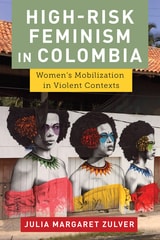
High-Risk Feminism in Colombia
Women's Mobilization in Violent ContextsJulia Margaret Zulver
Rutgers University Press, 2022
Hindi Structures
Intermediate Level, with Drills, Exercises, and KeyPeter Edwin Hook
University of Michigan Press, 1979

Hip Hop Desis
South Asian Americans, Blackness, and a Global Race ConsciousnessNitasha Tamar Sharma
Duke University Press, 2010

Hip Hop Underground
The Integrity and Ethics of Racial IdentificationAnthony Kwame Harrison
Temple University Press, 2009
Hip Hop Underground is a vivid ethnography of the author's observations and experiences in the multiracial world of the San Francisco underground hip hop scene. While Anthony Kwame Harrison interviewed area hip hop artists for this entertaining and informative book, he also performed as the emcee "Mad Squirrel." His immersion in the subculture provides him with unique insights into this dynamic and racially diverse but close-knit community.
Hip Hop Underground examines the changing nature of race among young Americans, and examines the issues of ethnic and racial identification, interaction, and understanding. Critiquing the notion that the Bay Area underground music scene is genuinely "colorblind," Harrison focuses on the issue of race to show how various ethnic groups engage hip hop in remarkably divergent ways—as a means to both claim subcultural legitimacy and establish their racial authenticity.
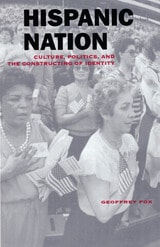
Hispanic Nation
Culture, Politics, and the Constructing of IdentityGeoffrey Fox
University of Arizona Press, 1997
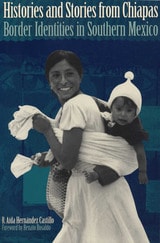
Histories and Stories from Chiapas
Border Identities in Southern MexicoBy R. Aída Hernández Castillo
University of Texas Press, 2001
The 1994 Zapatista uprising of Chiapas' Maya peoples against the Mexican government shattered the state myth that indigenous groups have been successfully assimilated into the nation. In this wide-ranging study of identity formation in Chiapas, Aída Hernández delves into the experience of a Maya group, the Mam, to analyze how Chiapas' indigenous peoples have in fact rejected, accepted, or negotiated the official discourse on "being Mexican" and participating in the construction of a Mexican national identity.
Hernández traces the complex relations between the Mam and the national government from 1934 to the Zapatista rebellion. She investigates the many policies and modernization projects through which the state has attempted to impose a Mexican identity on the Mam and shows how this Maya group has resisted or accommodated these efforts. In particular, she explores how changing religious affiliation, women's and ecological movements, economic globalization, state policies, and the Zapatista movement have all given rise to various ways of "being Mam" and considers what these indigenous identities may mean for the future of the Mexican nation. The Spanish version of this book won the 1997 Fray Bernardino de Sahagún national prize for the best social anthropology research in Mexico.
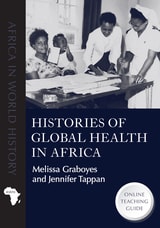
Histories of Global Health in Africa
Melissa Graboyes and Jennifer Tappan
Ohio University Press, 0
Histories of Global Health in Africa offers a concise and compelling introduction to the development and practice of global health on the African continent over the past century. Rather than centering institutions, the book foregrounds the people whose lives and labor have shaped global health—including African communities receiving care and the practitioners and experts who have long driven biomedical work across the region.
Drawing on cutting-edge scholarship, the book traces the colonial roots of global health and examines how these legacies continue to influence contemporary interventions, from vaccination campaigns and disease eradication efforts to epidemic responses. Its accessible thematic chapters explore key topics, including data collection, demography, ethics, and equity.
Designed for classroom use and ideal for nonspecialists, Histories of Global Health in Africa provides a flexible structure and a rich suite of teaching materials, including online multimedia components. It is an essential resource for students and readers seeking to understand how global health has evolved—and why its future depends on confronting its past.
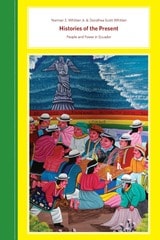
Histories of the Present
People and Power in EcuadorNorman E. Whitten Jr. and Dorothea Scott Whitten
University of Illinois Press, 2011

History and Legend
Ideas and Images in the Ming Historical NovelsShelley Hsueh-lun Chang
University of Michigan Press, 1990
This combination of influences in the historical novels was especially significant during the Ming dynasty because of the rise of both urban culture of great refinement and diversity and a popularizing vernacular designed to promote learning among all people. These two exuberant movements came together in the historical novel to propagate the difficult and complex Official Histories of the governing elite, as well as to adapt unofficial histories and fictitious narratives, thus opening the way to the influence of the common people in literature.
This book is the first study of the novels from a historical standpoint. Combining traditional historical research with new source material of the historical novels and with analytical strategies, Chang creates a three-dimensional picture of the “historical world” of the Ming people. Chang compares issues of the dynastic cycle and political legitimacy of a regime, human ambitions and immortality, ethics in the relations between historical personages and legendary heroes, ideals of government and grandiose imperial institutions, and supernatural power and the justice of history that emerged from the historical novels with those in the Official Histories and Confucian canon.

History of the Mosaic Templars of America
Its Founders and OfficialsA.E. Bush
University of Arkansas Press, 2008
Originally published in 1924 and long out of print, this book tells the story of the Mosaic Templars of America (MTA), a famous Black fraternal organization that was founded by John E. Bush and Chester W. Keatts (both former slaves) in Little Rock, Arkansas, in the late-nineteenth century. The organization originally provided illness, death, and burial insurance during an era of segregation when few basic services were available to Black people, and grew to include an insurance company, a building and loan association, a publishing company, a business college, a nursing school, and a hospital.
By 1905 it had a number of lodges across the state of Arkansas with thousands of members. In 1913 a handsome new headquarters building opened and Booker T. Washington delivered the dedication speech. In the 1920s they claimed chapters in twenty-six states and six foreign countries, making it one of the largest Black organizations in the world.
However, in the 1930s the MTA began to feel the effects of the Great Depression and eventually ceased operations except for a single chapter in Barbados. Tragically, the original Little Rock headquarters building burned down in 2005.
This replica edition of History of the Mosaic Templars of America, with a new introduction by John William Graves, was published to coincide with the grand opening in 2008 of a completely rebuilt structure that houses the new Mosaic Templars Cultural Center.
History on the Run
Secrecy, Fugitivity, and Hmong Refugee EpistemologiesMa Vang
Duke University Press, 2021