Results by title
3745 books match the query 'Europe' and 89 start with h
Habitual Offenders
A True Tale of Nuns, Prostitutes, and Murderers in Seventeenth-Century ItalyCraig A. Monson
University of Chicago Press, 2016
Drawing on over four thousand pages of primary sources, the intrepid Craig A. Monson reconstructs this fascinating history of crime and punishment in seventeenth-century Italy. Along the way, he explores Italy’s back streets and back stairs, giving us access to voices we rarely encounter in conventional histories: prostitutes and maidservants, mercenaries and bandits, along with other “dubious” figures negotiating the boundaries of polite society. Painstakingly researched and breathlessly told, Habitual Offenders will delight historians and true-crime fans alike.
Habsburg Encounters with Native America
Familiar StrangersJonathan Singerton
Central European University Press, 2025
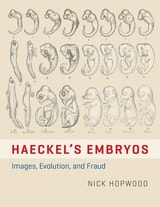
Haeckel's Embryos
Images, Evolution, and FraudNick Hopwood
University of Chicago Press, 2015
In Haeckel’s Embryos, Nick Hopwood tells this extraordinary story in full for the first time. He tracks the drawings and the charges against them from their genesis in the nineteenth century to their continuing involvement in innovation in the present day, and from Germany to Britain and the United States. Emphasizing the changes worked by circulation and copying, interpretation and debate, Hopwood uses the case to explore how pictures succeed and fail, gain acceptance and spark controversy. Along the way, he reveals how embryonic development was made a process that we can see, compare, and discuss, and how copying—usually dismissed as unoriginal—can be creative, contested, and consequential.
With a wealth of expertly contextualized illustrations, Haeckel’s Embryos recaptures the shocking novelty of pictures that enthralled schoolchildren and outraged priests, and highlights the remarkable ways these images kept on shaping knowledge as they aged.
Hagia Sophia, 1850-1950
Holy Wisdom Modern MonumentRobert S. Nelson
University of Chicago Press, 2004
Built from 532 to 537 as the Cathedral of Constantinople, Hagia Sophia was little studied and seldom recognized as a great monument of world art until the nineteenth century, and Nelson examines the causes and consequences of the building's newly elevated status during that time. He chronicles the grand dome's modern history through a vibrant cast of characters—emperors, sultans, critics, poets, archaeologists, architects, philanthropists, and religious congregations—some of whom spent years studying it, others never visiting the building. But as Nelson shows, they all had a hand in the recreation of Hagia Sophia as a modern architectural icon. By many means and for its own purposes, the West has conceptually transformed Hagia Sophia into the international symbol that it is today.
While other books have covered the architectural history of the structure, this is the first study to address its status as a modern monument. With his narrative of the building's rebirth, Nelson captures its importance for the diverse communities that shape and find meaning in Hagia Sophia. His book will resonate with cultural, architectural, and art historians as well as with those seeking to acquaint themselves with the modern life of an inspired and inspiring building.
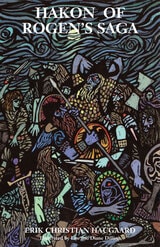
Hakon of Rogen's Saga
Erik Christian Haugaard
University of Minnesota Press, 2013
An American Library Association Notable Book and his first book for children, Erik Christian Haugaard’s Hakon of Rogen’s Saga is a remarkable novel that perfectly catches the mood of a harsh but heroic people. Set at the end of the Viking period, it tells of a young boy, Hakon, from the island of Rogen who, after his chieftain father is murdered, undertakes to reclaim his birthright from his treacherous uncle. The illustrations by renowned artists Leo and Diane Dillon make this captivating story come alive.
Haphazard Families
Romanticism, Nation, and the Prehistory of Modern AdoptionEric C. Walker
The Ohio State University Press, 2024
There are no provisions for adoption in English common law, and adoption wasn't legally formalized in England and Wales until 1926. But a century earlier, untimely adoptions navigated the new exceptionalism of childhood in Romanticism. In Haphazard Families, Eric C. Walker explores the history of the adopted child in Romantic-era England. Taking up the stories of both fictional and historical adoptees, he demonstrates how these children, diminished to nonpersons, shouldered the burden of social constructs of nation, family, gender, and class. Walker further demonstrates how Rousseau’s infamous failure to follow his own ideals of parenthood shaped British reactions in famous texts such as Frankenstein and Emma. Incorporating perspectives from Romantic scholarship and critical adoption studies and examining the stories of adopted children associated with Queen Caroline, Anna Letitia Barbauld, Jane Austen, the Wordsworth siblings, Mary Shelley, Charles and Mary Lamb, Letitia Landon, and others, Haphazard Families considers how Romantic constructions of childhood supply foundational structures of modern adoptee subjectivity.
Happiness in the Nordic World
Christian Bjørnskov
University of Wisconsin Press, 2021
Many experts attribute the region's high levels of happiness to factors such as greater relative national wealth and well-functioning institutions. Yet, a number of other countries in Europe and parts of Asia share those qualities and rank far lower in life satisfaction. Others credit the region's high levels of happiness to its welfare state model, but these have changed considerably over time—and Iceland does not share this feature.
Instead, economist Christian Bjørnskov argues that the most important factor to come out of international comparisons is the importance of social trust—the ability to trust other people one does not know personally. The populations in three of the five countries are also characterized by a very strong sense of personal freedom. These two key factors contribute to a fuller and richer life. Bjørnskov ends by discussing to what extent these factors can be exported to other parts of the world.
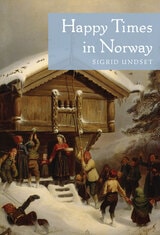
Happy Times in Norway
Sigrid Undset
University of Minnesota Press, 2013
Happy Timesin Norway is a moving and delicately humorous picture of Undset’s own blissful home life before her nation fell to the Nazi occupation. Captured here is the excitement of a Norwegian Christmas, the Seventeenth of May, and summer in the idyllic mountains, as well as the chaotic adventure of raising two energetic boys. With vivid detail and illuminating descriptions of the landscape, Happy Times in Norway is infused with the wish that those cherished days could come again.
Harmful Eloquence
Ovid's Amores from Antiquity to ShakespeareM. L. Stapleton
University of Michigan Press, 1996

Hasidic Pilgrimages and Local Identity
Stories from Four Eastern European TownsAlla Marchenko
Central European University Press, 2027
Drawing on ethnographic fieldwork, media analysis, and memory studies, the author examines how pilgrims, local residents, and institutions engage with the Jewish past in ways that are often parallel, contested, or only partially connected. Rather than forming a shared framework, these encounters produce multiple, coexisting interpretations of place and history.
By tracing patterns of cooperation, tension, and selective inclusion, this book reveals how collective memory is continuously negotiated in post-socialist contexts, offering new insights into pilgrimage, heritage, and the politics of memory in a changing Europe.

Haskalah
The Romantic Movement in JudaismLitvak, Olga
Rutgers University Press, 2012
Commonly translated as the “Jewish Enlightenment,” the Haskalah propelled Jews into modern life. Olga Litvak argues that the idea of a Jewish modernity, championed by adherents of this movement, did not originate in Western Europe’s age of reason. Litvak contends that the Haskalah spearheaded a Jewish religious revival, better understood against the background of Eastern European Romanticism.
Based on imaginative and historically grounded readings of primary sources, Litvak presents a compelling case for rethinking the relationship between the Haskalah and the experience of political and social emancipation. Most importantly, she challenges the prevailing view that the Haskalah provided the philosophical mainspring for Jewish liberalism.
In Litvak’s ambitious interpretation, nineteenth-century Eastern European intellectuals emerge as the authors of a Jewish Romantic revolution. Fueled by contradictory longings both for community and for personal freedom, the poets and scholars associated with the Haskalah questioned the moral costs of civic equality and the achievement of middle-class status. In the nineteenth century, their conservative approach to culture as the cure for the spiritual ills of the modern individual provided a powerful argument for the development of Jewish nationalism. Today, their ideas are equally resonant in contemporary debates about the ramifications of secularization for the future of Judaism.
He Words Me
Men Writing as Women in Early Modern EnglandCatherine Loomis
Arizona Center for Medieval and Renaissance Studies, 2026
This anthology gives students and scholars access to a body of texts that provide a clearer understanding of what life was like for early modern women by presenting hundreds of little-known primary texts that contain details about early modern women’s work, relationships, emotional and intellectual development, friendships, and daily struggles. He Words Me brings together work from a variety of genres in which male authors adopt the voice of a female narrator and use that voice to provide intimate details about the lives of women.
These works introduce modern readers to less familiar genres, complement or contradict portrayals of women in canonical texts, and raise compelling questions about who speaks for women and when women can speak for themselves. Through these women’s voices, readers can encounter characters and experiences that will broaden their understanding of early modern English literature and culture, and of the history of women in the late sixteenth and early seventeenth centuries.
Healing and Society in Medieval England
A Middle English Translation of the Pharmaceutical Writings of Gilbertus AnglicusFaye M. Getz
University of Wisconsin Press, 1991
Originally composed in Latin by Gilbertus Anglicus (Gilbert the Englishman), his Compendium of Medicine was a primary text of the medical revolution in thirteenth-century Europe. Composed mainly of medicinal recipes, it offered advice on diagnosis, medicinal preparation, and prognosis. In the fifteenth-century it was translated into Middle English to accommodate a widening audience for learning and medical “secrets.”
Faye Marie Getz provides a critical edition of the Middle English text, with an extensive introduction to the learned, practical, and social components of medieval medicine and a summary of the text in modern English. Getz also draws on both the Latin and Middle English texts to create an extensive glossary of little-known Middle English pharmaceutical and medical vocabulary.
Health and Efficiency
Fatigue, the Science of Work, and the Making of the Working-Class BodySteffan Blayney
University of Massachusetts Press, 2022
A new model of health emerged in Britain between 1870 and 1939. Centered on the working body, organized around the concept of efficiency, and grounded in scientific understandings of human labor, scientists, politicians, and capitalists of the era believed that national economic productivity could be maximized by transforming the body of the worker into a machine. At the core of this approach was the conviction that worker productivity was intimately connected to worker health.
Under this new “science of work,” fatigue was seen as the ultimate pathology of the working-class body, reducing workers’ capacity to perform continued physical or mental labor. As Steffan Blayney shows, the equation between health and efficiency did not go unchallenged. While biomedical and psychological experts sought to render the body measurable, governable, and intelligible, ordinary men and women found ways to resist the logics of productivity and efficiency imposed on them, and to articulate alternative perspectives on work, health, and the body.

Healthcare in Ireland and Britain 1850-1970
Voluntary, regional and comparative perspectivesEdited by Donnacha Sean Lucey and Virginia Crossman
University of London Press, 2015
Heidegger and the Myth of a Jewish World Conspiracy
Peter Trawny
University of Chicago Press, 2015
While Heidegger’s affiliation with National Socialism is well known, the anti-Semitic dimension of that engagement could not be fully told until now. Trawny traces Heidegger’s development of a grand “narrative” of the history of being, the “being-historical thinking” at the center of Heidegger’s work after Being and Time. Two of the protagonists of this narrative are well known to Heidegger’s readers: the Greeks and the Germans. The world-historical antagonist of this narrative, however, has remained hitherto undisclosed: the Jews, or, more specifically, “world Judaism.” As Trawny shows, world Judaism emerges as a racialized, destructive, and technological threat to the German homeland, indeed, to any homeland whatsoever. Trawny pinpoints recurrent, anti-Semitic themes in the Notebooks, including Heidegger’s adoption of crude cultural stereotypes, his assigning of racial reasons to philosophical decisions (even undermining his Jewish teacher, Edmund Husserl), his endorsement of a Jewish “world conspiracy,” and his first published remarks on the extermination camps and gas chambers (under the troubling aegis of a Jewish “self-annihilation”). Trawny concludes with a thoughtful meditation on how Heidegger’s achievements might still be valued despite these horrifying facets. Unflinching and systematic, this is one of the most important assessments of one of the most important philosophers in our history.
Heidegger's Political Thinking
James F. Ward
University of Massachusetts Press, 1995
In recent years there has been much controversy concerning Martin Heidegger’s politics, prompted by new research on the nature and extent of his engagement with National Socialism. Examining the political ideas embedded in Heidegger’s larger philosophical oeuvre, James F. Ward moves beyond the narrow preoccupation with Heidegger’s overtly pro-Nazi utterances and activities to show how the central theme of Heidegger’s philosophy—the question of Being—is itself inherently political.
Ward builds his case on close readings of texts drawn from nearly all of the writings published during Heidegger’s lifetime as well as from lectures, course transcripts, and other materials that appeared posthumously. With subtlety and insight, he uncovers the political content of Heidegger’s thinking on such topics as the temporality of Being, the role of science in the crisis of the West, and the presumed special status and destiny of the German people. In an epilogue, Ward reflects on the implications of Heidegger’s political thinking for postmodern political theory.
Heimskringla
History of the Kings of NorwayBy Snorri Sturluson
University of Texas Press, 1964
Beginning with the dim prehistory of the mythical gods and their descendants, Heimskringla recounts the history of the kings of Norway through the reign of Olaf Haraldsson, who became Norway's patron saint. Once found in most homes and schools and still regarded as a national treasure, Heimskringla influenced the thinking and literary style of Scandinavia over several centuries.
Heinrich Himmler's Cultural Commissions
Programmed Plunder in Italy and YugoslaviaJames R. Dow
University of Wisconsin Press, 2018
Drawing on extensive research in public and private archives and interviews with family members of fieldworkers, James R. Dow uncovers both details of the SS cultural commissions' work and the continuing vestiges of the materials they assembled. Teams of poorly qualified and ideologically motivated collectors were sent to South Tyrol in Italy and Gottschee in Slovenian Yugoslavia, from which ethnically German communities were to be resettled in the German Reich. Although a mass of information on narratives, songs and dances, beliefs, customs, local clothing and architecture, and folk speech was collected, the research was deeply tainted and skewed by racialist and nationalist preconditions. Dow sharply critiques the continued use of these ersatz archives.
Helmholtz
A Life in ScienceDavid Cahan
University of Chicago Press, 2018
Utilizing all of Helmholtz’s scientific and philosophical writings, as well as previously unknown letters, this book reveals the forces that drove his life—a passion to unite the sciences, vigilant attention to the sources and methods of knowledge, and a deep appreciation of the ways in which the arts and sciences could benefit each other. By placing the overall structure and development of his scientific work and philosophy within the greater context of nineteenth-century Germany, Helmholtz also serves as cultural biography of the construction of the scientific community: its laboratories, institutes, journals, disciplinary organizations, and national and international meetings. Helmholtz’s life is a shining example of what can happen when the sciences and the humanities become interwoven in the life of one highly motivated, energetic, and gifted person.
Heloise and Abelard
Etienne Gilson
University of Michigan Press, 1960
Hemingway in Italy
Richard Owen
Haus Publishing, 2017
In evocative prose, complemented by a rich selection of historical images, Richard Owen takes us on a tour through Hemingway’s Italy. He describes how Hemingway first visited the country of the Latins during World War I, an experience that set the scene for A Farewell to Arms. Then after World War II, it was in Italy that he found inspiration for Across the River and into the Trees. Again and again, the Italian landscape—from the Venetian lagoon to the Dolomites and beyond—deeply affected one of the greatest writers of the twentieth century. Hemingway in Italy demonstrates that Italy stands alongside Spain as a key influence on Hemingway’s work—and why the Italians themselves hold Hemingway and his writing close to their hearts.
Henpecked
Winston Churchill and Women's SuffrageCheryl R. Jorgensen-Earp
Michigan State University Press, 2027
Henpecked: Winston Churchill and Women’s Suffrage explores the recurrent interactions between Winston Churchill and the women’s suffrage movement in Britain. Churchill purposely concealed, under a discursive veil, his complex and shifting perceptions of women’s competency to use the franchise. In balancing a public stance that vaguely favored the “principle” of women’s suffrage with his, often private, opposition to the movement’s legislative efforts, he employed every available rhetorical tool. This book presents a new understanding of his early Parliamentary career, his ability to manipulate public and private discourse, and his complicated stance on women’s right to vote. This rhetorical history challenges the view that Winston Churchill was only dissuaded in his support of women’s suffrage by the militancy of suffrage activists.
Henryk Grossman and the Recovery of Marxism
Rick Kuhn
University of Illinois Press, 2006
Rick Kuhn’s Henryk Grossman and the Recovery of Marxism is the definitive study of the life and work of this renowned economist, activist, and intellectual. As a young man, Grossman joined the socialist movement and participated in Jewish workers' strikes and demonstrations, as well as in boycotts against employers and the Austro-Hungarian state. He moved to Vienna, but was driven back to Poland by the Austrian state's racist citizenship policies. A member of the illegal Polish Communist Party, Grossman was frequently arrested and jailed, finally leaving Poland for a post at the Institute for Social Research in Frankfurt am Main, which gave rise to the famous 'Frankfurt School'.
Grossman published his best known work in Frankfurt, including studies of Marx's method in Capital and theories of economic crisis that remain influential today. In tracing Grossman's experiences, from Kraków to New York, and offering a detailed account of his ideas, the biography provides an intimate account of key events in twentieth century history, including the politicization of east European Jewry, the World Wars, the rise of Stalinism and Nazism, and the cold war.
Heroic Chancellor
Winston Churchill and the University of Bristol, 1929 to 1965David Cannadine
University of London Press, 2016
Hersilia's Sisters
Jacques-Louis David, Women, and the Emergence of Civil Society in Post-Revolution FranceNorman Bryson
J. Paul Getty Trust, The, 0
In 1799, when the French artist Jacques-Louis David (1748–1825) exhibited his Intervention of the Sabines, a history painting featuring the ancient heroine Hersilia, he added portraits of two contemporary women on either side of her—Henriette de Verninac, daughter of Charles-François Delacroix, minister of foreign affairs, and Juliette Récamier, a well-known and admired socialite. Drawing on many disciplines, Norman Bryson explains how such a combination of paintings could reveal the underlying nature of the Directoire, the period between the vicious and near-dictatorial Reign of Terror (1793–94) and the coup in 1799 that brought Napoleon to power.
Hersilia’s Sisters illuminates ways that cultural life and civil society were rebuilt during these years through an extraordinary efflorescence of women pioneers in every cultural domain—literature, the stage, opera, moral philosophy, political theory, painting, popular journalism, and fashion. Through a close examination of David’s work between The Intervention of the Sabines (begun in 1796) and Bonaparte Crossing the Alps (begun in 1800), Bryson explores how the flowering of women’s culture under the Directoire became a decisive influence on David’s art. With more than 150 illustrations, this book provides new and brilliant insight into this period that will captivate readers.
Hesitant Comrades
The Irish Revolution and the British Labour MovementGeoffrey Bell
Pluto Press, 2016
Drawing principally on primary sources, Bell brings to light for the first time important incidents in British/Irish history, including how the leaders of British trade unions were complicit in Belfast loyalist sectarianism; the troubled nature of the Labour Party's relations with its Irish community; and how the Bolsheviks criticised British Marxists over their inaction on Ireland. The author also considers socialist debates on the compatibility of Irish nationalism with socialism, as well as the contentious 'Ulster question'. He examines prominent figures of the era, ranging from Ramsay MacDonald to Sylvia Pankhurst. With sources ranging from newly discovered writings to reports of police spies - Hesitant Comrades is a scholarly, provocative and groundbreaking perspective on the fragile relationship between the British left and the Irish revolution.
Hessians
Officer, Baroness, Chaplain—Three German Experiences in the American RevolutionBrady J. Crytzer
Westholme Publishing, 2023
In 1775 the British Empire was in crisis. While it was buried in debt from years of combat against the French, revolution was stirring in its wealthiest North American colonies. To allow the rebellion to fester would cost the British dearly, but to confront it would press their exhausted armed forces to a breaking point. Faced with a nearly impossible decision, the administrators of the world’s largest empire elected to employ the armies of the Holy Roman Empire to suppress the sedition of the American revolutionaries. By 1776 there would be 18,000 German soldiers marching through the wilds of North America, and by war’s end there would be over 30,000.
To the colonists these forces were “mercenaries,” and to the Germans the Americans were “rebels. ”While soldiers of fortune fight for mere profit, the soldiers of the Holy Roman Empire went to war in the name of their country, and were paid little for their services, while their respective kings made fortunes off of their blood and sacrifice among the British ranks. Labeled erroneously as “Hessians,” the armies of the Holy Roman Empire came from six separate German states, each struggling to retain relevance in a newly enlightened and ever-changing world.
In Hessians: Officer, Baroness, Chaplain—Three German Experiences in the American Revolution historian Brady J. Crytzer explores the German experience during the American Revolution through the lives of three individuals from vastly different walks of life, all thrust into the maelstrom of North American combat. Here are the stories of a dedicated career soldier, Johann Ewald, captain of a Field-Jäger Corps, who fought from New York to the final battles along the Potomac; Frederika Charlotte Louise von Massow, Baroness von Riedesel, who raced with her young children through the Canadian wilderness to reunite with her long-distant husband; and middle-aged chaplain Philipp Waldeck, who struggled to make sense of it all while accompanying his unit through the exotic yet brutal conditions of the Caribbean and British Florida. Beautifully written, Hessians offers a glimpse into the American Revolution as seen through the eyes of the German armies commanded to destroy it.

Heterosyncrasies
Female Sexuality When Normal Wasn’tKarma Lochrie
University of Minnesota Press, 2005
Hidden Histories of Unauthorized Migrations from Europe to the United States
Edited by Danielle Battisti and S. Deborah Kang
University of Illinois Press, 2025
Often depicted as the nation’s iconic legal immigrant, unauthorized European migrants are often overlooked by scholars, policymakers, and the media. This volume tells the stories of European migrants who adopted irregular migration strategies to enter and remain in the United States throughout the twentieth century. Contributors explore facets of this history with essays on migration patterns from Russia, Italy, Ireland, the Ottoman Empire, and Poland. They also offer important arguments about the treatment of unauthorized European migrants by states and societies on both sides of the Atlantic and how the reception of undocumented immigrants has been and continues to be impacted by the dynamics of racial, class, and gender constructions in the United States and abroad. As the contributors show, the reception accorded unauthorized European migrants frequently obscured and even normalized their irregular migration strategies, easing their access to American citizenship.
Revealing and insightful, Hidden Histories of Unauthorized Migrations from Europe to the United States sheds new light our intertwined notions of race, legality, and immigration.
Contributors: Danielle Battisti, Ashley Johnson Bavery, Mary Patrice Erdmans, Polina Ermoshkina, Torsten Feys, Carly Goodman, S. Deborah Kang, E. Kyle Romero, Randa Tawil, and Joanna Wojdon
High Renaissance Art in St. Peter's and the Vatican
An Interpretive GuideGeorge L. Hersey
University of Chicago Press, 1993
Before starting the tour of individual works, Hersey describes how the treacherously shifting political and religious alliances of sixteenth-century Italy, France, and Spain played themselves out in the Eternal City. He offers vivid accounts of the lives and personalities of four popes, each a great patron of art and architecture: Julius II, Leo X, Clement VII, and Paul III. He also tells of the complicated rebuilding and expanding of St. Peter's, a project in which Bramante, Raphael, and Michelangelo all took part.
Having set the historical scene, Hersey then explores the Vatican's magnificent Renaissance art and architecture. In separate chapters, organized spatially, he leads the reader through the Cortile del Belvedere and Vatican Museums, with their impressive holdings of statuary and paintings; the richly decorated Stanze and Logge of Raphael; and Michelangelo's Last Judgment and newly cleaned Sistine Chapel ceiling. A fascinating final chapter entitled "The Tragedy of the Tomb" recounts the vicissitudes of Michelangelo's projected funeral monument to Julius II.
Hersey is never content to simply identify the subject of a painting or sculpture. He gives us the story behind the works, telling us what their particular themes signified at the time for the artist, the papacy, and the Church. He also indicates how the art was received by contemporaries and viewed by later generations.
Generously illustrated and complete with a useful chronology, High Renaissance Art in St. Peter's and the Vatican is a valuable reference for any traveler to Rome or lover of Italian art who has yearned for a single-volume work more informative and stimulating than ordinary guidebooks. At the same time, Hersey's many anecdotes and intriguing comparisons with works outside the Vatican will provide new insights even for specialists.
Hills and the Sea
Hilaire Belloc
Northwestern University Press, 1996
Belloc captures the essence of each place he visits--whether on the gloomy English fens, or the sunny Provence and Languedoc regions of France, or navigating the North Sea in a leaky boat. Praised for his blend of wit and philosophy, Belloc also weaves together fantasy and fact, producing portraits that take on mythic proportions.

Historiae Britannicae Defensio / A Defence of the British History
John Prise
Bodleian Library Publishing, 2015
Historians and Historiography in the Italian Renaissance
Eric Cochrane
University of Chicago Press, 1981

Historical Anthropology of the Middle Ages
Aaron Gurevich
University of Chicago Press, 1992
Gurevich's writing, while informed by the history of mentalities as practiced by the French school of Le Goff and Duby, reflects a broader view of European culture outside France. He rejects reductionist concepts and operates with a total view of culture, using a wide range of sources—legal as well as ecclesiastical, popular as well as learned, oral and visual as well as literary.
This collection amply demonstrates this breadth of Gurevich's work and highlights his ability to synthesize historical, anthropological, and semiotic approaches to culture. Especially valuable are pieces such as Gurevich's essay Wealth and Gift-Bestowal Among the Ancient Scandinavians, about the importance of gift exchange in the medieval world. One of the first studies for this practice, this classic essay has for years been unavailable. Other pieces range from the deities and heroes of Germanic poetry to the image of the Beyond in the Middle Ages.
Historical Atlases
The First Three Hundred Years, 1570-1870Walter Goffart
University of Chicago Press, 2003
Beginning in the sixteenth century, and continuing down to the late nineteenth, Walter Goffart discusses milestones in the origins of historical atlases as well as individual maps illustrating historical events in alternating, paired chapters. He focuses on maps of the medieval period because the development of maps for history hinged particularly on portrayals of this segment of the postclassical, "modern" past. Goffart concludes the book with a detailed catalogue of more than 700 historical maps and atlases produced from 1570 to 1870.
Historical Atlases will immediately take its place as the single most important reference on its subject. Historians of cartography, medievalists, and anyone seriously interested in the role of maps in portraying history will find it invaluable.
Historical Milton
Manuscript, Print, and Political Culture in Revolutionary EnglandThomas Fulton
University of Massachusetts Press, 2010
Historicizing the Enlightenment, Volume 1
Politics, Religion, Economy, and Society in BritainMichael McKeon
Bucknell University Press, 2023
Published by Bucknell University Press. Distributed worldwide by Rutgers University Press.
Historicizing the Enlightenment, Volume 2
Literature, the Arts, and the Aesthetic in BritainMichael McKeon
Bucknell University Press, 2023
Published by Bucknell University Press. Distributed worldwide by Rutgers University Press.
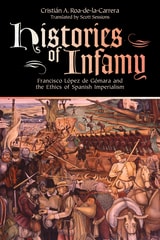
Histories of Infamy
Francisco López de Gómara and the Ethics of Spanish ImperialismCristián A. Roa-de-la-Carrera
University Press of Colorado, 2005
- Luis Fernando Restrepo, University of Arkansas
“In an eloquent and thorough exegesis, Roa-de-la-Carrera reveals how and why López de Gómara, having written the best of all possible books in exultation of Spanish imperialism, nevertheless failed to convince the readers of his time."
- Susan Schroeder, Tulane University
In Histories of Infamy, Cristián Roa-de-la-Carrera explores Francisco López de Gómara's (1511-ca.1559) attempt to ethically reconcile Spain's civilizing mission with the conquistadors' abuse and exploitation of Native peoples.
The most widely read account of the conquest in its time, Gómara's Historia general de las Indias y Conquista de México rationalized the conquistadors' crimes as unavoidable evils in the task of bringing "civilization" to the New World. Through an elaborate defense of Spanish imperialism, Gómara aimed to convince his readers of the merits of the conquest, regardless of the devastation it had wrought upon Spain's new subjects. Despite his efforts, Gómara's apologist text quickly fell into disrepute and became ammunition for Spain's critics. Evaluating the effectiveness of ideologies of colonization, Roa-de-la-Carrera's analysis will appeal to scholars in colonial studies and readers interested in the history of the Americas.
History Of Scandinavia
Norway, Sweden, Denmark, Finland, And IcelandT.K. Derry
University of Minnesota Press, 2000
This concise account traces the history of the Scandinavian countries from earliest times to the present, emphasizing common features in their heritage and in their contribution to the modern world. The author’s aim is to describe each country’s history, traditions, and way of life and to examine the political development of the five nations in the context of the whole Nordic region.
History Within
The Science, Culture, and Politics of Bones, Organisms, and MoleculesMarianne Sommer
University of Chicago Press, 2016
Our interpretation of gene sequences, like our interpretation of other historical evidence, inevitably tells a story laden with political and moral values. Focusing on the work of Henry Fairfield Osborn, Julian Sorell Huxley, and Luigi Luca Cavalli-Sforza in paleoanthropology, evolutionary biology, and human population genetics, History Within asks how the sciences of human origins, whether through the museum, the zoo, or the genetics lab, have shaped our idea of what it means to be human. How have these biologically based histories influenced our ideas about nature, society, and culture? As Marianne Sommer shows, the stories we tell about bones, organisms, and molecules often change the world.
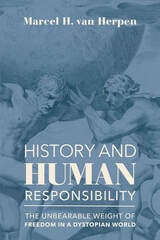
History and Human Responsibility
The Unbearable Weight of Freedom in a Dystopian WorldMarcel van Herpen
St. Augustine's Press, 2023
In a time of crisis we face the accusations of history, however distant, and are subjected to the sound of its echoing ahead of us. But, Van Herpen asks, to what exactly (or to what extent) should we listen as we strive to respond to the challenges of present day? "Is it true that history is a teacher for our lives? And has it ever been? In crisis periods this question becomes more urgent: old certainties disappear and––independently from our wishes––a new, unknown world is emerging, which seems to be at odds with our established ways of thinking and our existing value patterns."
Van Herpen scrutinizes modern European history and the post-modern man and offers the reader a compelling account of human freedom in politics, morality, and the ways in which history will or will not ever guide us into the future. He proves himself to be a very capable political scientist and sociologist, but more importantly he has now pronounced himself to be an optimistic (yet sober) observer of both human beings and history, willing to confront the present generation with possible future outcomes of contemporary crises.
History and Myth in Romanian Consciousness
Lucian Boia
Central European University Press, 2001
There is a considerable difference between real history and discourse history - this book stems from this idea. The author points out that history is constantly reconstructed, adapted and sometimes mythified from the perspective of the present day, of present states of mind and ideologies. Boia closely examines the process of historical culture and conscience in nineteenth and twentieth century Romania, particularly concentrating on the impact of the national ideology on history. Based upon his findings, the author identifies several key mythical configurations and analyses the manner in which Romanians have reconstituted their own highly ideologized history over the last two centuries.
The strength of History and Myth in Romanian Consciousness lies in the author's ability to fully deconstruct the entire Romanian historiographic system and demonstrate the increasing acuteness of national problems in general, and in particular the exploitation of history to support national ideology.
History and Warfare in Renaissance Epic
Michael Murrin
University of Chicago Press, 1994
Analyzing English, Italian, and Iberian epics published between 1483 and 1610, Murrin focuses on particular aspects of warfare (cavalry clashes, old and new style sieges, the tactical use of the gun, naval warfare) and the responses to them by authors from Malory to Milton. Throughout, Murrin traces a parallel development in the art of war and in the epic as it emerged from the romance.
Murrin demonstrates that with new technology and increasing levels of carnage, the practice of war gradually drifted from traditional epic modes. But before changes in warfare completely doomed the tradition in which the epic was rooted, this crisis provoked an unprecedented range of experiment which marks heroic narrative in the late Renaissance and ultimately led to the epic without war.
A much-needed introduction to the neglected subject of warfare in epic literature, this work is an uncommonly wide-ranging exercise in comparative criticism that will appeal to historians and students of literature alike.
History as a Kind of Writing
Textual Strategies in Contemporary French HistoriographyPhilippe Carrard
University of Chicago Press, 2017
Carrard’s work here is expansive—examining the conventions historians draw on to produce their texts and casting light on views put forward by literary theorists, theorists of history, and historians themselves. Ranging from discussions of lengthy dissertations on 1960s social and economic history to a more contemporary focus on events, actors, memory, and culture, the book digs deep into the how of history. How do historians arrange their data into narratives? What strategies do they employ to justify the validity of their descriptions? Are actors given their own voice? Along the way, Carrard also readdresses questions fundamental to the field, including its necessary membership in the narrative genre, the presumed objectivity of historiographic writing, and the place of history as a science, distinct from the natural and theoretical sciences.
History in My Life
A Memoir of Three ErasIvan T. Berend is Distinguished Research Professor at the History Department of the University of California Los Angeles.
Central European University Press, 2009
Ivan T. Berend is Distinguished Professor at the University of California Los Angeles, Director of the European Studies Program. He was one of the masterminds of regime change in Hungary. He made a career in Hungary as a university professor, Rector of the University of Economics (1973–79), and President of the Hungarian Academy of Sciences (1985–90). He was President of the International Committee of Historical Sciences (1995–2000), and Vice-President of the International Economic History Association (1986–1994). His research interests are the complex economic, social, ideological, and cultural history of Central and Eastern Europe in the 19th–20th century; economic modernization; problems of European backwardness; transition from state socialism to capitalism. He published and 26 books and more than 120 studies.
Before he became a professor at UCLA, Ivan Berend had survived five regime changes and two revolutions in Hungary, had been in prison and German concentration camp in 1944–45.
His memoir offers an interesting case study, a subjective addition to the “objective” historical works on Central and Eastern European state socialism. It describes the hard choices of intellectuals in a dictatorial state: 1. remain in isolation, concentrate on scholarly works, and exclude politics in your personal life; 2. be in opposition, criticize and unveil the regime, accept discrimination and exclusion; 3. remain within the establishment and work for reforming the country using legal possibilities to criticize the regime and to achieve changes from within.
Berend’s book raises basic historical questions and debates, compares East European and American higher education systems, and presents an eyewitness’ insights on life in the United States.
History of Old Age
From Antiquity to the RenaissanceGeorges Minois
University of Chicago Press, 1990
Minois shows how, in ancient Greece, the cult of youth and beauty on the one hand, and the reverence for the figure of the Homeric sage, on the other, created an ambivalent attitude toward the aged. This ambiguity appears again in the contrast between the active role that older citizens played in Roman politics and their depiction in satirical literature of the period. Christian literature in the Middle Ages also played a large part in defining society's perception of the old, both in the image of the revered holy sage and in the total condemnation of the aged sinner.
Drawing on literary texts throughout, Minois considers the interrelation of literary, religious, medical, and political factors in determining the social fate of the elderly and their relationship to society. This book will be of great interest to social and cultural historians, as well as to general readers interested in the subject of the aged in society today.

History of Pedlars in Europe
Laurence Fontaine
Duke University Press, 1996
Focusing primarily on the fifteenth through eighteenth centuries, Fontaine traces the origins and development of peddling and the establishment of trading networks. She analyzes the changing social construction of the practice and the effect of encounters between traders of different regions. Following the pedlars’ trade routes across Europe from Spain to Sweden and Scotland to the upper Rhine, she examines their importance as channels of communication as well as of goods and raises such issues as the impact of pedlars on the values and cultural practices of the communities they visited and the ways in which being merchants changed the lives of these migrants.
History of Pedlars in Europe separates the mythology that surrounds peddling from the historically reliable and integrates existing studies with new archival research to illuminate one of the most remote areas of the social and economic history of early modern Europe. A means of trade based on mobility, uncertainty, and interdependence, peddling is rediscovered as a dynamic force involved in nothing less than the creation of a modern consumer society.
History of Western Civilization
A HandbookWilliam H. McNeill
University of Chicago Press, 1986
With this book, renowned historian William H. McNeil provides a brilliant narrative chronology of the development of Western civilization, representing its sociopolitical as well as cultural aspects. Sweeping in its coverage but careful in its attention to detail, and up to date with the latest scholarship History of Western Civlization is the perfect introduction to the subject for general readers and students alike.