Results by title
3388 books match the query 'Fiction' and 95 start with h
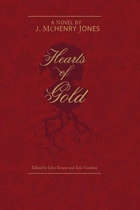
HEARTS OF GOLD
a novel by J. McHenry Jones, edited by John Ernest and Eric Gardner
West Virginia University Press, 2010
J. McHenry Jones’s Hearts of Gold is a gripping tale of post-Civil War battles against racism and systemic injustice. Originally published in 1896, this novel reveals an African American community of individuals dedicated to education, journalism, fraternal organizations, and tireless work serving the needs of those abandoned by the political process of the white world. Jones challenges conventional wisdom by addressing a range of subjects—from interracial relationships to forced labor in coal mines—that virtually no other novelist of the time was willing to approach. With the addition of an introduction and appendix, this new edition reveals the difficult foundations upon which African Americans built a platform to address injustice; generate opportunities; and play a prominent role in American social, economic, and political life.
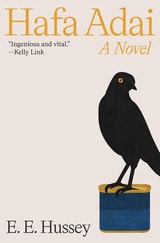
Hafa Adai
A NovelE. E. Hussey
Northwestern University Press, 2027
A tale of two sisters braving the current of global tremors, mysterious beings, and their own past
Amihan is a respected and talented wildlife researcher on a small Pacific island in the US Commonwealth of the Northern Mariana Islands, where the land has undergone centuries of occupation. Offshore military testing, shifting climates, and tourists threaten the local ecosystem, making Amihan’s job harder than ever. As she braves knotty forests and watery caves in search of the elusive rufous fantail, her expedition takes her to the suicide cliffs . . . and over them. Amihan plummets into another realm, a purgatory of colonial violence and Filipino folklore.
Ligaya, Amihan’s sister, is back in Osaka and in between research positions when she is called to the island to search for her itinerant and reclusive sister. But when her search uncovers a stowaway, Ligaya's path takes an unexpected turn. Traveling along with her is a ghost with an omikuji tongue—a ghost that delights in spitting fortunes and mining memories. As Ligaya searches and Amihan wanders, it becomes clear that there is more to confront between these sisters than their whereabouts. On an island shuddering under the weight of global crises, can Ligaya make it to Amihan, or has her sister wandered too far?
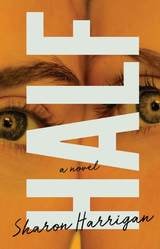
Half
Sharon Harrigan
University of Wisconsin Press, 2020
Written in spare,lyrical prose,Halfis an achingly beautiful story of intimacy and loss, revealing the complexity—and cost—of sharing your life entirely with someone else. Sharon Harrigan deftly explores how fierce lovecanalso be the very thing that leadsto heartbreak and betrayal.
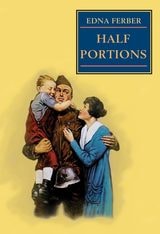
Half Portions
Edna Ferber
University of Illinois Press, 2002
A collection of short stories from Pultizer Prize winner, Edna Ferber
The short stories in this collection take the reader from small-town Wisconsin to the bustling streets of New York and Chicago and back again. While they range greatly in length and tone, they all share the trademark wit and affectionate insight of Edna Ferber.
Showcasing the facility with words that made her a mainstay at the Algonquin round table, Ferber explores some of her favorite themes: the role of women (especially strong or unconventional women) in modern society, the mores of the midwestern small town, and the changes over time in relationships between parents and children.
In “The Maternal Feminine,” a plain, overlooked child grows into a strong, resourceful businesswoman and forms a strong motherly bond with the children of her more attractive sister. In “April 25th, As Usual,” an aging Wisconsin couple reluctantly join their successful daughter in New York, where they try to adjust to a very different lifestyle. “Old Lady Mandle” is a bittersweet tale about an elderly Chicago mother coming to terms with the fact that she is no longer the most important woman in the life of her grown son. “One Hundred Per Cent” features Ferber’s celebrated heroine Emma McChesney, now re-married, seeing her husband off to war.
The stories gathered here are beautifully observed chronicles of early twentieth-century life and are filled with characters who, despite their very human foibles, are all bestowed by Ferber with warmth and dignity.
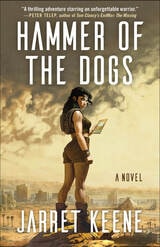
Hammer of the Dogs
A NovelJarret Keene
University of Nevada Press, 2023
Set in the wasteland of post-apocalyptic Las Vegas, Hammer of the Dogs is a literary dystopian adventure filled with high-octane fun starring twenty-one-year-old Lash. With her high-tech skill set and warrior mentality, Lash is a master of her own fate as she helps to shield the Las Vegas valley’s survivors and protect her younger classmates at a paramilitary school holed up in Luxor on the Las Vegas Strip. After graduation, she’ll be alone in fending off the deadly intentions and desires of the school’s most powerful opponents.
When she’s captured by the enemy warlord, she’s surprised by two revelations: He’s not the monster her headmaster wants her to believe and the one thing she can’t safeguard is her own heart. Hammer of the Dogs celebrates the courageousness of a younger generation in the face of authority while exploring the difficult choices a conscionable young woman must make with her back against a blood-spattered wall. It’s a story of transformation and maturity, as Lash grapples with her own identity and redefines the glittering Las Vegas that Nevada is known for.
Hammer of the Dogs
A NovelJarret Keene
University of Nevada Press, 2023
Set in the wasteland of post-apocalyptic Las Vegas, Hammer of the Dogs is a literary dystopian adventure filled with high-octane fun starring twenty-one-year-old Lash. With her high-tech skill set and warrior mentality, Lash is a master of her own fate as she helps to shield the Las Vegas valley’s survivors and protect her younger classmates at a paramilitary school holed up in Luxor on the Las Vegas Strip. After graduation, she’ll be alone in fending off the deadly intentions and desires of the school’s most powerful opponents.
When she’s captured by the enemy warlord, she’s surprised by two revelations: He’s not the monster her headmaster wants her to believe and the one thing she can’t safeguard is her own heart. Hammer of the Dogs celebrates the courageousness of a younger generation in the face of authority while exploring the difficult choices a conscionable young woman must make with her back against a blood-spattered wall. It’s a story of transformation and maturity, as Lash grapples with her own identity and redefines the glittering Las Vegas that Nevada is known for.
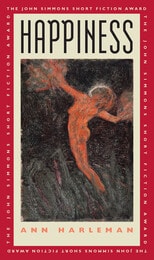
Happiness
Ann Harleman
University of Iowa Press, 1994
In Ann Harleman's remarkable debut collection, men and women of extraordinary passions look for and sometimes find the hidden heart of ordinary life. Testing themselves and each other, they search for ways to connect. "Understanding," says the troubled voyeur-narrator of "Imaginary Colors," "is the booby prize"; these characters go for experience. Reckless explorers of inner space, they try the limits of their lives.
A gravely ill woman seeks forgiveness from her grown-up daughters for an adulterous past which she does not really regret. A boy watches anxiously—and enviously—while his brother flaunts an interracial love affair in front of their dangerous father. In strike-torn Warsaw during the rise of Solidarity, an American professor and his Polish housekeeper reach toward each other from their respective cages of loneliness. A girl's determined pursuit of her first sexual experience brings her more, and less, than she bargained for.
Harleman combines a clear eye with a generous heart, revealing her characters-misguided, selfish, loving, brave—through a compassionate, often humorous probing of their inner and outer worlds. In "It Was Humdrum" a system analyst hires a detective to find the mother who left him as an infant, while his young wife leaves him daily for afternoon trysts with her Puerto Rican lover. A woman assaulted by a teenage gang escapes physically unharmed but forever changed. The past overtakes a woman who has married for love, not of her husband, but of his small daughter. A greeting card poet pursued by stereotyped images of happiness flees from the woman he loves and the brother he never knew he had.
The supple language of these twelve stories—wise, funny, delighting in the sensuous—makes us feel the beauty and terror of a fully lived life. Harleman's characters, whether they succeed or fail, show us the way to a deeper exploration of our own lives.

Happy Like This
Ashley Wurzbacher
University of Iowa Press, 2019
The characters in Happy Like This are smart girls and professional women—social scientists, linguists, speech therapists, plant physiologists, dancers—who search for happiness in roles and relationships that are often unscripted or unconventional. In the midst of their ambivalence about marriage, monogamy, and motherhood and their struggles to accept and love their bodies, they look to other women for solidarity, stability, and validation. Sometimes they find it; sometimes they don’t. Spanning a wide range of distinct perspectives, voices, styles, and settings, the ten shimmering stories in Happy Like This offer deeply felt, often humorous meditations on the complexity of choice and the ambiguity of happiness.

Har Mar
StoriesHilal Isler
Northwestern University Press, 2026
Journeying through the emotional migrations of women living in the in-between
In Hilal Isler’s gripping debut story collection, Har Mar, women in the early twenty-first century navigate the complex spaces between countries, families, languages, and selves. Isler’s characters are all on the verge of something—success, rebellion, revelation—and they want to disappear as much as they want to be seen. Moving back and forth between Turkey and the United States, these stories trace migrations both physical and emotional: a nanny plots to flee the wealthy family she cares for in the Grand Bazaar of Istanbul; in Har Mar, a quiet mall tucked in the suburbs of Minneapolis, a bookseller escapes her grief in a complicated relationship with a wig retailer; an actress is hired by a famous American novelist to portray her at public events.
The women in Har Mar don’t always make sound decisions, and they’re not trying to be heroes. But they are reaching—imperfectly, but fiercely—for connection, truth, and home. With moving prose and a deep sense of longing, this collection explores what it means to grow up in the margins, to live in translation, and to build a life at the edge of belonging.

Hard Side of The Mountain
Paul Cohen
Carnegie Mellon University Press, 2027
Dark family secrets follow Coe as he drops out of college and attempts to start a new life with fellow outlaws in the mountains of Wyoming.
“Fleeing a mental illness diagnosis pushed by his family, Coe drops out of college and hits the road, ending up in Wyoming, where he falls in with a group living illegally on the mountain above a resort town. Here he works muscle jobs, climbs mountains, befriends a pair of brothers new to the sport, and slips under the spell of Benny, a Vietnam war vet who sleeps beneath a rocky overhang, ascends cliffs like a mountain goat, and seems to know things he shouldn't about Coe's French grandfather. At Benny's command, the group climbs routes well beyond the brothers' abilities and kicks off a dangerous vandalism war against the resort corporation. An old cook warns Coe away from Benny, suggesting the secret to his identity is encoded in a bible passage. Meanwhile, from letters sent by his great aunt, Coe receives contradictory accounts of his grandfather's past. As those close to Coe meet tragic ends, he is forced to confront the frightful notion that this Wyoming violence may connect to a crime committed a half century before. Is the old cook right about Benny and the biblical mystery? Is Coe slipping into mental illness? High on the mountain, alone with Benny, Coe must cast his lot.
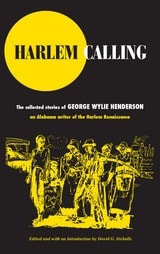
Harlem Calling
The Collected Stories of George Wylie HendersonGeorge Wylie Henderson
University of Michigan Press, 2005
"A very interesting collection . . . both for the way that Henderson's work links the literature of the Harlem Renaissance with the black protest literature of Richard Wright and others, and for Henderson's subject matter and the places that he chose to publish."
--Nellie McKay, University of Wisconsin-Madison
"There is really no other black fiction quite like this that I know of, from the 1920s through the 1930s . . . That Henderson was publishing stories in a newspaper and magazine for the mass market after the period when 'the vogue of the Negro' had allegedly ended is significant in itself. The stories are interesting in relation to both the Negro renaissance and the turn to proletarian fiction."
--George Hutchinson, Indiana University
Harlem Calling collects carefully crafted short stories about life in Alabama, Memphis, and New York City that dramatize the profound ambivalence many blacks felt about their participation in the Great Migration. George Wylie Henderson's tales of the rural South are sometimes nostalgic but also present the hard work and violence of everyday life there, and his stories set in Harlem present the glamour of urban life, while they also are concerned with poverty and social mores.
Henderson enjoyed a widespread popular audience for his periodical fiction in the 1930s and '40s and was a regular contributor to the New York Daily News and Redbook magazine, where the seventeen stories in Harlem Calling were originally published. Until the publication of Harlem Calling, Henderson had been chiefly known for his critically acclaimed 1935 novel about an Alabama farmhand, Ollie Miss, and the 1946 sequel narrating her son's migration to Harlem, Jule. Contemporary critics have favorably compared Henderson's writing to that of Zora Neale Hurston and Langston Hughes, as it captures the life of the black migrant with a style that embraces simplicity and honesty.
Collected here by literary scholar and editor David G. Nicholls, and contextualized with an informative and insightful introduction, Harlem Calling provides a unique perspective on the Harlem Renaissance and on the African American literary tradition.
George Wylie Henderson (1904-65) was born in Alabama, worked in the printing trade, and began writing fiction shortly after graduating from the Tuskegee Institute. He migrated to Harlem with his wife in the late 1920s and published his first story in the New York Daily News in 1932. He also published two novels, Ollie Miss (1935) and Jule (1946). David G. Nicholls is the Director of Book Publications for the Modern Language Association and holds a Ph.D. in English from the University of Chicago. He is author of Conjuring the Folk: Forms of Modernity in African America.
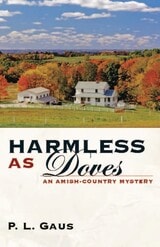
Harmless as Doves
An Amish–Country MysteryP. L. Gaus
Ohio University Press, 2011
As he goes about his milking chores on a cold October morning, Bishop Leon Shetler daydreams of escaping the Ohio winter and taking a bus to the Pinecraft Amish community in Florida for a vacation. His reverie is suddenly interrupted when young Crist Burkholder enters the barn, head down, hat in hand, to make a confession. ”I just killed Glenn Spiegle.”
“An Amish murderer?” Sheriff Robertson asks when he arrives on the scene. “Who will believe that?” But Burkholder is adamant about his guilt, fueled by the passion of his love for Vesta Miller, the young woman both he and Spiegle so desperately wanted to marry.
No sooner does the sheriff start his investigation than he learns of two more murders in the Pinecraft community, and a startling connection is made. There’s no way around it — Professor Mike Branden will have to put his research trip on hold and, along with detective Ricky Niell, travel south to investigate. There they discover the disturbing truth about Spiegle’s conversion to the Amish faith and the reason for the long–smoldering hatred that has reached into the secluded pastoral valleys of Holmes County.
In Harmless as Doves, P. L. Gaus takes the action to Florida in one of the most exciting mysteries in this series. This is Gaus at his best.
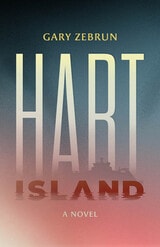
Hart Island
Gary Zebrun
University of Wisconsin Press, 2024
Driven out of the Coast Guard during the days of “Don’t Ask, Don’t Tell,” Sal Cusumano hauls coffins to Hart Island with a burial crew of Rikers Island inmates and guards. Only there can he fully leave his family troubles on Staten Island behind: Justin, his adopted brother and lover; his mother, Ida, slipping rapidly into dementia; the memory of Francesco, his father, a bookie gunned down on his stoop; and his brother Antony, a Manhattan homicide detective moonlighting with the mob. But the island ceases to be his sanctuary after Antony ensnares him—and others—in a crime that involves a nocturnal visit to the potter’s field.
This compelling and intricately plotted novel moves through the shadows as its characters yearn for belonging and forgiveness. Set on the eve of the COVID pandemic, it is part love story, part crime novel, and part mystery.

Hazel
David Huddle
Tupelo Press, 2019
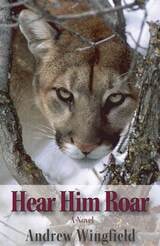
Hear Him Roar
A NovelAndrew Wingfield
Utah State University Press, 2005
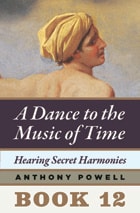
Hearing Secret Harmonies
Book 12 of A Dance to the Music of TimeAnthony Powell
University of Chicago Press, 1995
Anthony Powell’s universally acclaimed epic A Dance to the Music of Time offers a matchless panorama of twentieth-century London. Now, for the first time in decades, readers in the United States can read the books of Dance as they were originally published—as twelve individual novels—but with a twenty-first-century twist: they’re available only as e-books.
In the final volume, Hearing Secret Harmonies, Nick and his contemporaries have begun to settle into the quieter stages of later life—even as the rise of the counterculture signals that a new generation is pushing its way to the front. The darkly fascinating young Scorpio Murtlock unexpectedly draws Widmerpool into his orbit, calling to mind occult and cultish doings from earlier decades; close friends leave the stage, never to be replaced in this life; and, drawing all the long, tangled strands together, Anthony Powell sounds an unforgettable requiem for an age.
"Anthony Powell is the best living English novelist by far. His admirers are addicts, let us face it, held in thrall by a magician."--Chicago Tribune
"A book which creates a world and explores it in depth, which ponders changing relationships and values, which creates brilliantly living and diverse characters and then watches them grow and change in their milieu. . . . Powell's world is as large and as complex as Proust's."--Elizabeth Janeway, New York Times
"One of the most important works of fiction since the Second World War. . . . The novel looked, as it began, something like a comedy of manners; then, for a while, like a tragedy of manners; now like a vastly entertaining, deeply melancholy, yet somehow courageous statement about human experience."--Naomi Bliven, New Yorker
“The most brilliant and penetrating novelist we have.”--Kingsley Amis
Heartwall
Richard Jackson
University of Massachusetts Press, 2000
Taking its title from a poem by Paul Celan that is both elegiac and hopeful, but also playing off the notion of the “hart” walls erected to corral deer for a medieval hunt that was more a slaughter, and evoking the very physiology of the heart itself, this collection of poems explores the possibilities for love and feeling in a world besieged by tragedies in Bosnia, Kosovo, Rwanda, and elsewhere. At times lyrical, at times satirical, and written in a surrealistic style that ranges from the formal to the aphoristic, Heartwall explores the complex and sometimes confounding relationship between the personal and the political, between our individual perceptions and the larger vision they suggest. These are poems that ask forgiveness, offer praise, and carry enough irony never to seek redemption. They are, at heart, love poems. According to the late William Matthews, Jackson's poems tell us “what it means to belong in history. . . . The wonderful amplitude . . . testifies that we can live with such chaos and not lie about it or ignore it: indeed the poems are a demonstration of how we might do such a thing.”
Heaven of Drums
Ana Gloria Moya
Northwestern University Press, 2006
This story of love and revolution takes place during the Argentine struggle for independence (1810-1820) and focuses on the character of the national hero, Manuel Belgrano. Belgrano's story is told through the voices of the real heroes of the novel—María Kumbá a mulatto healer-priestess, fighter, and nurse to the common soldiers; and Gregorio Rivas, mestizo son of a well-to-do Spanish businessman.
Heaven of Drums (Cielo de tambores) is filled with political and personal intrigue. At the core of the novel is the issue of racial discrimination. Belgrano is blinded to the love María has for him and the good counsel she has to offer because of his contempt for blacks. His open contempt for Rivas as a mestizo leads to his death. Rivas becomes María's lover but is always haunted by María's evident adoration of Belgrano. The manner in which the love-hate triangle plays out is filled with surprises and cuts to the heart of Argentina's troubled identity.
Heavier Than Air
StoriesNona Caspers
University of Massachusetts Press, 2008
Heirlooms
storiesRachel Hall
BkMk Press, 2016

Helen Halsey, or The Swamp State of Conelachita
A Tale of the BordersWilliam Gilmore Simms
University of Arkansas Press, 1998
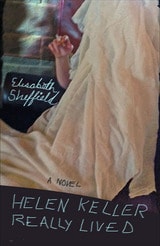
Helen Keller Really Lived
A NovelElisabeth Sheffield
University of Alabama Press, 2014
What does it mean to really live? Or not?
Set in eastern, upstate New York, Helen Keller Really Lived features a fortyish former barfly and grifter who must make a living in the wake of her wealthy husband’s death, and who finds work in a clinic helping women seeking reproductive assistance. The other main character is the grifter’s dead ex-husband, a Ukrainian hooker-to-healer success story, who prior to his demise was a gynecologist and after, an amateur folklorist, or ghostlorist, who collected and provided scholarly commentary on the stories of his fellow “revenants.”
Their intertwined stories explore the mistakes, miscarriages, inadequacies, and defeats that may have led to their divorce, including his failure (according to her) to “fully live.”
As it investigates the theme of what it means to “really live” or not, Elisabeth Sheffield’s brilliant new novel is also an exploration of virtual reality in the sense of the experience provided by literature. It is a novel awash in a multitude of voices, from the obscenity-laced, Nabokovian soliloquys of the dead Ukrainian doctor, to the trade-school / midcentury-romance-novel-constrained style of his dead mother-in-law.
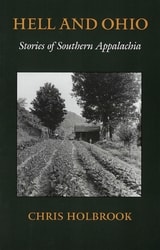
Hell and Ohio
Stories of Southern AppalachiaChris Holbrook
Ohio University Press, 1995
Originally published by Gnomon Press in 1995Hell and Ohio: Stories of Southern Appalachia brings together a powerful collection of stories that illuminate the complexities of contemporary Appalachian life. Drawing on the landscapes, communities, and traditions of eastern Kentucky and the greater Southern Appalachian region, Chris Holbrook crafts nuanced portraits of people negotiating family ties, economic hardship, migration, memory, and belonging. His characters confront loss, resilience, and change while remaining deeply rooted in the culture and terrain that shape their lives. Written with remarkable empathy and a keen ear for regional speech, these stories move beyond stereotypes to reveal the richness and contradictions of mountain communities. Holbrook's fiction explores the tensions between home and exile, tradition and modernity, and individual aspiration and communal identity, offering readers an intimate view of a region often misunderstood but rarely rendered with such authenticity. Praised by novelist Robert Morgan for capturing "the voices" and "living vivid details of contemporary life in the mountains," and described in Appalachian Journal as "beautifully crafted, nuanced, empathetic," Hell and Ohio stands as an important contribution to Appalachian literature and the modern American short story.
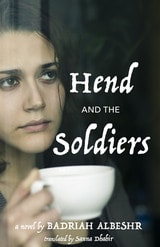
Hend and the Soldiers
By Badriah Albeshr, translated by Sanna Dhahir
University of Texas Press, 2017
Hend is a young Saudi Arabian woman struggling to challenge her conservative society, which is represented by various soldiers, real and metaphorical, in her life. After a failed arranged marriage to an army officer, she is determined to establish herself as a writer and make her own choices in love. Her mother, a firm supporter of their society’s traditional norms, works to block her efforts. As Hend engages with her mother, stories of her past and those of other female relatives reveal the extent of the suffering previous generations of women have endured while living in such a patriarchal society. Hend also comes to understand how such traditions have adversely affected the men in her family, including one brother who flees to the West and another who finds comradeship among the members of al-Qaeda.
Badriah Albeshr represents a growing number of women writers from the Arabian Peninsula who refuse to shy away from the taboo topics of religion and sexuality, which makes Hend and the Soldiers a valuable read for those seeking insights into the complexities surrounding these issues.
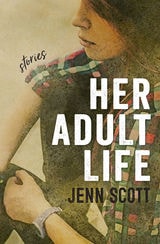
Her Adult Life
StoriesJenn Scott
Acre Books, 2017
“The beauty of being young was, in fact, the ability to project all that might happen. She recognizes, suddenly, how less grandiose the projection of her plans has become. It’s like she was once standing looking an expanse of field, but now she’s trapped in a hallway hung with too many pastel prints of landscapes that refuse to interest her. It’s as if she’s moved her entire life inside a dental office, minus the gas that sings a person to sleep while their cavities are filled, their roots fixed.”
Assumed identities, Russian mail-order brides, pie theft, lost (and found) cleavers, coworkers who commit murder, the sudden ballooning of breasts, conversations with the (surprisingly opinionated) vegetables in a restaurant’s walk-in cooler: in stories sharply funny and deeply poignant, situations that delight and discomfit, Scott explores “the complicated, or simple, ways in which we settle.”
Her America
“A Jury of Her Peers” and Other StoriesSusan Glaspell
University of Iowa Press, 2010
One of the preeminent authors of the early twentieth century, Susan Glaspell (1876–1948) produced fourteen ground-breaking plays, nine novels, and more than fifty short stories. Her work was popular and critically acclaimed during her lifetime, with her novels appearing on best-seller lists and her stories published in major magazines and in The Best American Short Stories. Many of her short works display her remarkable abilities as a humorist, satirizing cultural conventions and the narrowness of small-town life. And yet they also evoke serious questions—relevant as much today as during Glaspell’s lifetime—about society’s values and priorities and about the individual search for self-fulfillment. While the classic “A Jury of Her Peers” has been widely anthologized in the last several decades, the other stories Glaspell wrote between 1915 and 1925 have not been available since their original appearance. This new collection reprints “A Jury of Her Peers”—restoring its original ending—and brings to light eleven other outstanding stories, offering modern readers the chance to appreciate the full range of Glaspell’s literary skills.
Glaspell was part of a generation of midwestern writers and artists, including Sherwood Anderson, Sinclair Lewis, Willa Cather, and F. Scott Fitzgerald, who migrated first to Chicago and then east to New York. Like these other writers, she retained a deep love for and a deep ambivalence about her native region. She parodied its provincialism and narrow-mindedness, but she also celebrated its pioneering and agricultural traditions and its unpretentious values. Witty, gently humorous, satiric, provocative, and moving, the stories in this timely collection run the gamut from acerbic to laugh-out-loud funny to thought-provoking. In addition, at least five of them provide background to and thematic comparisons with Glaspell’s innovative plays that will be useful to dramatic teachers, students, and producers.
With its thoughtful introduction by two widely published Glaspell scholars, Her America marks an important contribution to the ongoing critical and scholarly efforts to return Glaspell to her former preeminence as a major writer. The universality and relevance of her work to political and social issues that continue to preoccupy American discourse—free speech, ethics, civic justice, immigration, adoption, and gender—establish her as a direct descendant of the American tradition of short fiction derived from Hawthorne, Poe, and Twain.
Her Husband
Luigi Pirandello
Duke University Press, 2000
Evoking in vivid detail the literary world in Rome at the turn of the century, Her Husband tells the story of Silvia Roncella, a talented young female writer, and her husband Giustino Boggiolo. The novel opens with their arrival in Rome after having left their provincial southern Italian hometown following the success of Silvia’s first novel, the rather humorously titled House of Dwarves. As his wife’s self-appointed (and self-important) promoter, protector, counselor, and manager, Giustino becomes the primary target of Pirandello’s satire. But the couple’s relationship—and their dual career—is also complicated by a lively supporting cast of characters, including literary bohemians with avant-garde pretensions and would-be aristocratic esthetes who are all too aware of the newly acquired power of journalists and the publishing establishment to make or break their careers. Having based many of the characters—including Silvia and Giustino—on actual literary acquaintances of his, Pirandello reacted to the novel’s controversial reception by not allowing it to be reprinted after the first printing sold out. Not until after his death were copies again made available in Italy.
Readers will find Her Husband eerily evocative of the present in myriad ways—not the least of which is contemporary society’s ongoing transformation wrought by the changing roles of men and women, wives and husbands.
Her Kind of Want
Jennifer S. Davis
University of Iowa Press, 2002
Set mainly in the small towns of Alabama, the stories in Her Kind of Want ache with the relentless longing of the poor, struggling, usually discarded southern women who tell us their lives—lives that seem to revolve around men whose only presence is their absence.
Bebe, Luna, Melly, Little Hula, Dena. These are just a few of the women we meet in Jennifer Davis's award-winning collection. Women who married too fast, had children too young, and drink too much. Yet beneath their unpolished exteriors, these women are flesh and blood, and their wants and needs are as severe and deep as any.
Davis's characters relate their stories in voices as complex and raw as their southern environment. Each tale may sound slightly familiar—an unwanted pregnancy, a fast car flying down a country road—but Davis moves beyond the familiar stories of the rural South to expose the gaps that connect these women, creating startlingly real and vibrant characters.
Although often bleak and sometimes disturbing, Her Kind of Want is a celebration of southern people, their perseverance, their spirit, and their determination to make the ugly beautiful.
Her Name That Day
A NovelPietro Spirito
Rutgers University Press, 2026
Giuliana Striano is forty years old and lives in Cape Town, South Africa. She is the daughter of Italian emigrants with a daughter of her own, Renata, now five years old. Upon the death of her mother, Giuliana learns that she had been adopted and given a new identity with a different name and a different date and place of birth. So Giuliana determines to find out who she really is, what is hidden in her past, and who her birth parents were.
Her Name That Day the story of “another” Italy set in a region that only recently became Italian and whose characters are Croatian, Slovenian, Australian, and South African, as well as Italians, precariously perched in a border community filled with secrets and scores to settle with History. Against this backdrop, the narrator endeavors to save a woman encountered by chance on the internet from becoming still another name without a history, another deracinated and disenchanted individual. In prose that is precise and engaging, as though shot through by a sense of pain both silent and inescapable, Pietro Spirito gives shape to an existential thriller in which there are neither guilty parties nor heroes, only victims and survivors.
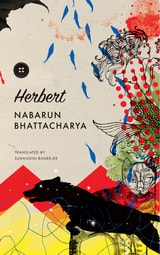
Herbert
Nabarun Bhattacharya
Seagull Books, 2019
Surreal, haunting, painful, beautiful and astonishing in turn, and sweeping us along from Herbert’s early orphan years to the tumultuous Naxalite times of the 1970s to the explosive events after his death, Bhattacharya’s groundbreaking novel is now available in a daring new translation and holds up before us both a fascinating character and a plaintive city.
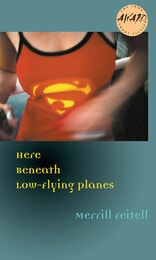
Here Beneath Low-Flying Planes
Merrill Feitell
University of Iowa Press, 2004
The stories in Merrill Feitell’s award-winning collection, Here Beneath Low-Flying Planes, examine the fleeting and unexpected moments of human connection, reminding us of the indelible impact we have on one another no matter how insignificant or anonymous we might feel under our huge, collective sky.
Feitell’s characters deal with shifting dynamics in relationships—whether they be best friends, lovers, family, or even strangers—that consistently leave them torn between two places or commitments. In the title story, Janie has undergone a painful childbirth experience and her group of friends must pioneer new dynamics while she wonders how to bring her old self back. In “Bike New York!” amid thirty thousand cyclists, a man on the brink of marriage meets a young girl who, in a tiny Brooklyn bakery, affirms both who he has been and who he is going to be. On this short detour from normal life he comes to understand “the funny thing about finding your way in the world. There was a place laid out for you . . . and even as you stepped into it, happy for the chance to rest, you wondered how you ever ended up there.”
Funny, big-hearted, and deft, Here Beneath Low-Flying Planes navigates the reader through the life that happens when you’re planning other things. It is a collection of experiences, roads not taken, and the intense and unforeseen sparks of connection we hope for.

Here Is a Game We Could Play
A NovelJenny Bitner
Acre Books, 2021
In each fantasy, her lover takes a different form, ranging from a prison guard in a world where metaphor is forbidden, to a more-than-brotherly Hansel from the Grimms’ fairy tale, to a tentacled mind-reading space alien. All share a desire for a deep intimacy that eludes Claudia, even as she forms new real-life relationships and reconsiders her sexual identity—building a rapport with an elderly volunteer at the library, striking up a friendship with a wily temp at her dead-end job, and embarking on a passionate affair with Rose, the town’s new librarian. When paranoia threatens to ruin her relationship with Rose, Claudia is forced not only to combat her anxiety but to face the unresolved trauma in her past—the disappearance of her father on a night she has long repressed.
Funny, dark, inventive, and moving, Here Is a Game We Could Play is an original debut novel recalling the work of Aimee Bender, Angela Carter, Rebecca Brown, and Margaret Atwood.
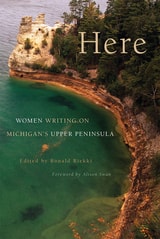
Here
Women Writing on Michigan's Upper PeninsulaRonald Riekki
Michigan State University Press, 2015
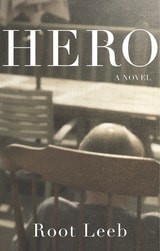
Hero
Root Leeb
Haus Publishing, 2014
Inspired in part by King Lear, this enchanting novel of families, secrets, and love is the first of Root Leeb’s works to be translated into English and is sure to win new fans for this successful German writer.
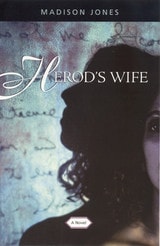
Herod's Wife
A NovelMadison Jones
University of Alabama Press, 2003
A timely novel evocative of the biblical story of the beheading of John the Baptist by a major American writer
Hugh Helton, a prosperous attorney in a progressive town, has married his brother's ex-wife, Nora. As Hugh negotiates his relationships with his new spouse, her daughter, Jean, and parish priest Father John Riley, Nora’s growing hate for the church into which they were all born and from which they have all lapsed drives her to desperate acts of deceit and manipulation.
Father Riley himself wrestles with his own sense of purpose and mission. But when Nora attempts to discredit him as an authority figure in the minds of both her husband and their community, she uses her devoted daughter as the springboard for a series of accusations against the priest that has catastrophic results for all involved.
Grappling with issues of faith, trust, family loyalty, child molestation, and scandal in the Catholic Church, Herod’s Wife is a timely exploration of subjects from today's headlines. It illuminates the isolation and search for meaning of characters young and old, innocent and experienced, in a rapidly changing and bewildering southern landscape. Madison Smartt Bell, author of All Soul's Rising, writes, “The main plot revolves around a mother pressuring a child to express her will in a more concrete way than she would or could herself—so that the child ultimately commits acts which are both criminal and morally horrifying. . . . [Herod’s Wife] is a morality play set in contemporary conditions, with its eye on eternal verities.”
Madison Jones is the author of 10 previous novels, including An Exile and A Cry of Absence. He has won the T. S. Eliot Award from the Ingersoll Foundation, the Michael Shaara Award from the United States Civil War Center, and the Harper Lee Award.
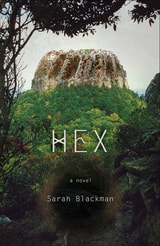
Hex
A NovelSarah Blackman
University of Alabama Press, 2016
Alice is a motherless child, born to a motherless child, and raised with neither care nor grace. Her response to this multiple abandonment is a lifelong obsession with her best friend Ingrid, or Thingy, as Alice calls her, and a sort of fantastic narcissism wherein she figures herself as the nexus of a supernatural world she understands through a blend of mountain lore, indigenous Cherokee legend, and the dangerous idiom of the fairy-tale girl who enters the forest despite being warned.
The novel is written in blended parts and is crafted as an address to Thingy’s daughter, Ingrid the Second, who is now in Alice’s care. Alice attempts to tell Ingrid the story of her life: her friendship with Thingy; her troubled relationships with her father, a small-town sexual troubadour; her stepmother, a hard-minded business woman who treats all interactions as commerce; her marriage to her husband Jacob, a silent figure of tremendous will; and her growing suspicion that Ingrid is another girl-child around whom disaster accumulates. Simultaneously, Alice tells the child the kind of bedtime stories she herself has used to make sense of her world. For Alice, and thus in Hex, the line between fantasy and reality is nonexistent, the mountain is older than its geology, and the world a limbo in which everything that has ever happened is coming around again.
Hex is a novel about violence—the violence of the fist, of the womb, of the story. It is also a novel about language and how we use it to build a world when the one we find around us is irretrievably broken.
Hibernate
Elizabeth Eslami
The Ohio State University Press, 2014
A masterful storyteller as likely to draw blood as to heal, Eslami moves her restless, resilient characters across an uneven landscape toward a hard earned place of peace.
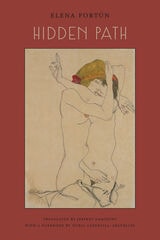
Hidden Path
Elena Fortún
Swan Isle Press, 2020
Best known in Spain as a writer of children’s literature, Elena Fortún left this manuscript unpublished at the time of her death in 1952, as its semi-autobiographical content risked provoking homophobic backlash under the dictatorship of Francisco Franco. The first Spanish edition appeared in 2016 and was hailed as Fortún’s adult masterpiece, a previously unknown complement to her children’s saga Celia and Her World. This edition, with Jeffrey Zamostny’s sensitive and nuanced translation, marks the novel’s first time appearing in any language aside from Spanish; it is also the first of Fortún’s works to appear in English. With an insightful foreword by scholar Nuria Capdevila-Argüelles, this volume will be an influential contribution to women’s studies, LGBT histories, and Spanish literature and culture.
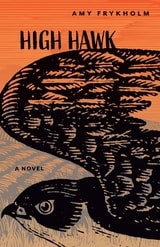
High Hawk
Amy Frykholm
University of Iowa Press, 2024
It’s 1970, and on the Windy Creek Reservation in South Dakota, amidst the rise of AIM in neighboring Pine Ridge, a baby boy appears nestled in a box of Styrofoam peanuts on the doorstep of St. Rose Catholic Church. His appearance disrupts the predictable, lonely life of longtime reservation priest Father Joe Kreitzer. The child, whom they name Bear, finds refuge under the care of Father Joe’s closest friend and ally, Alice Nighthawk.
Thirteen years pass without event, when Alice’s older son, Albert, is mysteriously murdered outside a bar in Rapid City, and Bear is accused of attempting to kill the only person who knows what happened that night. At the same time, Father Joe receives a letter from a person from his past, the only woman who made him question the path of priesthood. She has reached out to Father Joe as one of the few who might help her.
To keep Bear’s case from federal prosecution, Father Joe and Alice begin a search for Bear’s long-lost mother. But their journey unearths more than they bargained for, plunging Father Joe into a labyrinth of secrets and revelations. He is forced not only to confront the choices he’s made and the secrets he keeps, but also to see the truth of the lives of the people around him.
High Hawk is a rich tapestry of love and history, delving into the delicate intricacies of the past and the redemptive power of second chances. Through evocative prose, the lives of those on the fringes of American culture come alive, navigating adversity and forging
connections against all odds.
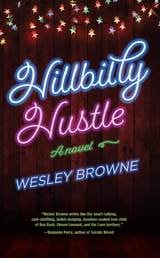
Hillbilly Hustle
Wesley Browne
West Virginia University Press, 2020
Knox’s shop makes the perfect front for a marijuana operation, but his supplier turns out to be violent and calculating, and Knox ends up under his thumb. It’s not long before more than just the pizza shop is at risk.

Hints of His Mortality
David Borofka
University of Iowa Press, 1996
The award-winning stories in David Borofka's Hints of His Mortality focus on the male of the species, on bewildered, guilt-ridden, hypersensitive characters adrift in a sea of changing roles and expectations. Although they yearn for the ideal—whether physical or spiritual—and for that sense of divine connection suggested by Wordsworth's Intimations of Immortality, they usually end up settling for what seems the next best thing: sex or religion.
The amorous scrimmage between male and female in these taut, intense stories is a contest that leaves no one unmarked. The hapless ministers in Borofka's memorable collection find that their daily grind of professional piety leaves them with more questions than answers. The men and boys in Hints of His Mortality are always aware of their flaws, for Borofka's vital characters have the capacity to register the shadows of their every blemish. Like Ferguson of the title story, haunted for twenty years by his failures of conscience, each protagonist experiences the inexorable fallibility of his own nature, agonizes over his moral weakness, and longs for escape from this life in which “our birth is but a sleep and a forgetting." Yet each is redeemed by his ongoing struggle for compassion and understanding.
His Current Woman
Jerzy Pilch
Northwestern University Press, 2002
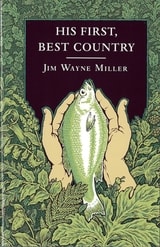
His First, Best Country
Jim Wayne Miller
Ohio University Press, 1993
Published in 1993 by Gnomon Press
In His First, Best Country, the sequel to his earlier book Newfound, Jim Wayne Miller delivers an unforgettable Appalachian novel. His lyrical prose captures the pull of home as he explores our ties to land, neighbors, and self, exploring what’s most painful and sustaining about belonging.
His Master's Voice
Stanislaw Lem
Northwestern University Press, 1999
Hitler, My Father
A Novel of World War Two, Hitler's Unknown Lover, and Son.Rodney Merten
Parkhurst Brothers, Inc., 2017
An adoring young woman encounters Adolph Hitler when her youth group sings for him. He demands her company in private, and she becomes pregnant, bearing his child but never being contacted by Hitler again. The plot follows her life as an outcast believed to be lying about the child’s parentage, and the life of her son told through her correspondence, diary entries, and from the point of view of a researcher who writes a generation later. Based on facts and documented history, author Ron Merten tells this tale with just enough creativity to make the story fascinating.
Hoaxes and Other Stories
Brian DiNuzzo
University of Wisconsin Press, 2022
The characters populating Brian DiNuzzo’s debut short story collection may be eccentrics, but at their core they are struggling to get through life, dealing with unmanageable bosses and tedious jobs, and trying to maintain their interpersonal and romantic relationships. These are people seeking to improve their circumstances, people striving for utopia but willing to accept much less. Frustrated and weary, downtrodden and misguided, they still hold out for the dim light of hope.
DiNuzzo navigates ordinary settings—Southern California, South Philadelphia, suburban and city streets, office buildings, derelict apartment complexes, the public library, the airport, the shopping mall—with quirky characters and odd situations. These stories ask us to wonder how falsehoods pervade private life. Through his twelve distinct tales, DiNuzzo asks: What’s real? What’s fake? Does it matter?
Hobomok and Other Writings on Indians
Karcher, Carolyn L
Rutgers University Press, 1986
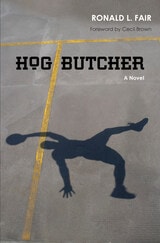
Hog Butcher
A NovelRonald L. Fair
Northwestern University Press, 2014
It’s summer on the South Side of Chicago, and ten-year-old boys Earl and Wilford are frequently courtside watching their role model Nathaniel “Cornbread” Hamilton as he prepares to leave for college on a basketball scholarship. Their world comes crashing down in an alley when two cops—one white, one black—mistake Cornbread for a fleeing burglary suspect. What follows threatens to tear apart the community. Earl and Wilford know what happened, but will they stand up for their hero in a city in which power trumps justice, and each player must decide whether to fold to the system, or risk losing it all?
Instantly recognized as a gritty classic when it was first published in 1966, Hog Butcher was later adapted for the 1975 film Cornbread, Earl and Me. This new edition brings back into print Fair’s startlingly relevant indictment of Chicago’s inequalities.
Hogg
A NovelSamuel R. Delany
University of Alabama Press, 2004
A fearless descent into the darkest corners of human desire and violence.
First written thirty-five years ago and completed days before the Stonewall riots in New York, award-winning author Samuel R. Delany’s Hogg is one of America’s most famous “unpublishable” novels. It recounts three days in 1969 in the life of truck driver and rapist-for-hire, Franklin Hargus. Narrated by his young accomplice, Delaney’s novel portrays an exploration of erotic depravity, a capacious landscape of sexuality that transgresses social and erotic boundaries.
While testing readers’ tolerance, what transfigures the novel into a work of literature is Delany’s refusal, faced with moral anxieties and revulsion, to mutilate or disown his creation. Hogg’s characters wear recognizable human faces, possessing intense loyalty, perverse admiration, and a kind of integrity. Hargus fascinates. He is the embodiment of what society can turn people into, the decaying condition of the human soul.
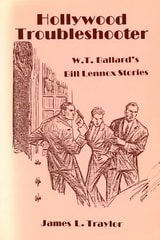
Hollywood Troubleshooter
W. T. Ballard's Bill Lennox StoriesJames L. Traylor
University of Wisconsin Press, 1985
This is the first collection of short stories by W.T. Ballard. This volume is just a sampling of Ballard's most famous character Bill Lennox, a selection for both the connoisseur of crime and the lover of good, fast-moving crime/adventure stories.