Results by title
932 books match the query 'Genres & Styles' and 32 start with h
HPSCHD
Inside John Cage and Lejaren A. Hiller Jr.'s Radical Multimedia CollaborationTiffany Funk
University of Illinois Press, 2027
Tiffany Funk explores how HPSCHD’s use of early computer art helped change ideas about sound, chance, and authorship. The event was less a concert than a performative system built through programming, labor, and shared decision-making. Computer art of the era required physical labor and collaboration. The impact of everything from punch cards to magnetic tape shaped the work while revealing the human effort involved. Throughout, Funk reveals that HPSCHD still offers valuable lessons about machines as collaborators rather than tools; the politics of technology; and the tension between the excitement and fears of automation.
An in-depth look at an avant-garde landmark, HPSCHD takes readers inside a legendary merger of music with computer art and its ongoing relevance in today’s digital world.
Half a Million Strong
Crowds and Power from Woodstock to CoachellaGina Arnold
University of Iowa Press, 2018
From baby boomers to millennials, attending a big music festival has basically become a cultural rite of passage in America. In Half a Million Strong, music writer and scholar Gina Arnold explores the history of large music festivals in America and examines their impact on American culture. Studying literature, films, journalism, and other archival detritus of the countercultural era, Arnold looks closely at a number of large and well-known festivals, including the Newport Folk Festival, Woodstock, Altamont, Wattstax, the New Orleans Jazz and Heritage Festival, Hardly Strictly Bluegrass, and others to map their cultural significance in the American experience. She finds that—far from being the utopian and communal spaces of spiritual regeneration that they claim for themselves— these large music festivals serve mostly to display the free market to consumers in its very best light.
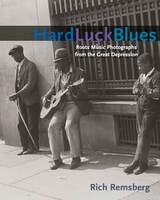
Hard Luck Blues
Roots Music Photographs from the Great DepressionRich Remsberg
University of Illinois Press, 2010
Showcasing American music and music making during the Great Depression, Hard Luck Blues presents more than two hundred photographs created by the New Deal's Farm Security Administration photography program. With an appreciation for the amateur and the local, FSA photographers depicted a range of musicians sharing the regular music of everyday life, from informal songs in migrant work camps, farmers' homes, barn dances, and on street corners to organized performances at church revivals, dance halls, and community festivals. Captured across the nation from the northeast to the southwest, the images document the last generation of musicians who learned to play without the influence of recorded sound, as well as some of the pioneers of Chicago's R & B scene and the first years of amplified instruments. The best visual representation of American roots music performance during the Depression era, Hard Luck Blues features photographs by Jack Delano, Dorothea Lange, Russell Lee, Arthur Rothstein, Ben Shahn, Marion Post Wolcott, and others.
Photographer and image researcher Rich Remsberg breathes life into the images by providing contextual details about the persons and events captured, in some cases drawing on interviews with the photographers' subjects. Also included are a foreword by author Nicholas Dawidoff and an afterword by music historian Henry Sapoznik.
Published in association with the Library of Congress.
Hating Jazz
A History of Its Disparagement, Mockery, and Other Forms of AbuseAndrew S. Berish
University of Chicago Press, 2025
A rock guitarist plays four notes in front of one thousand people, while a jazz guitarist plays one thousand notes in front of four people. You might laugh or groan at this jazz joke, but what is it about jazz that makes people want to disparage it in the first place?
Andrew S. Berish’s Hating Jazz listens to the voices who have denounced, disparaged, and mocked the music. By focusing on the rejection of the music, Berish says, we see more holistically jazz’s complicated place in American cultural life. Jazz is a display of Black creativity and genius, an art form that is deeply embedded in African American life. Though the explicit racial tenor of jazz jokes has become muted over time, making fun of jazz, either in a lighthearted or aggressive way, is also an engagement with the place of Blackness in America. An individual’s taste in music may seem personal, but Berish’s analysis of jazz hatred demonstrates that musical preferences and trends are a social phenomenon. Criticism of jazz has become inextricable from the ways we understand race in America, past and present. In addition to this form of criticism, Berish also considers jazz hate as a form of taste discrimination and as a conflict over genre boundaries within different jazz cultures.
Both enlightening and original, Hating Jazz shows that our response to music can be a social act, unique to our historical moment and cultural context—we react to music in certain ways because of who we are, where we are, and when we are.

Haunted Heart
A Biography of Susannah McCorkleLinda Dahl
University of Michigan Press, 2006
"In this comprehensive biography, compiled from meticulous research and interviews with many of McCorkle's confidants . . . Dahl reconstructs a career distinguished by great promise and great sadness . . . doing her best to address a large, looming 'Why?' that can never be completely answered."
—New York Times
"A compelling, sympathetic but often chilling view not only of McCorkle's complexities but also of the difficult business of music itself and of the widespread always potentially fatal illness now better known as bipolar disorder, which the singer hid from so many, even from herself for many years."
—Newsweek
“Susannah's life was dark and daunting. Her music was suave and sunny. Both are honored in this remarkably well-researched and constantly revealing keyhole peek into a haunted life that is both chilling and exhilarating. I could not put it down.”
—Rex Reed
“Susannah McCorkle was a mesmerizing singer with a dark side she hid even from her closest friends. Now, thanks to this probing and courageous biography, we can understand the gut ambition that took her to the top of her field and the turmoil that brought her down.”
—James Gavin, author of Deep in a Dream: The Long Night of Chet Baker
“Haunted Heart strikingly resembles the woman it describes: it is vivacious, tender, saturnine, industrious, and deeply intelligent. Like Susannah's way with certain ballads, it opens a wound and begins the work of healing it. I am grateful for Linda Dahl's diligence and sympathy.”
—Leon Wieseltier
Linda Dahl is the author of Stormy Weather: The Music and Lives of a Century of Jazzwomen and Morning Glory: A Biography of Mary Lou Williams. Visit the author’s website at www.dahljazz.com.
Haydn and the Performance of Rhetoric
Edited by Tom Beghin and Sander M. Goldberg
University of Chicago Press, 2007
In this volume, a distinguished group of contributors in fields from classics to literature to musicology restores the rhetorical model to prominence and shows what can be achieved by returning to the idea of music as a rhetorical process. An accompanying DVD, specially designed for this project, presents performances and illustrations keyed to its chapters, making musicological arguments accessible to nonspecialists and advancing additional arguments of its own through the medium of performance. The volume thus reaches beyond musicology to enrich and complicate the larger debate over rhetoric's role in eighteenth-century culture.
Haydn’s Sunrise, Beethoven’s Shadow
Audiovisual Culture and the Emergence of Musical RomanticismDeirdre Loughridge
University of Chicago Press, 2016
Deirdre Loughridge reveals that allusions in musical writings to optical technologies reflect their spread from fairgrounds and laboratories into public consciousness and a range of discourses, including that of music. She demonstrates how concrete points of intersection—composers’ treatments of telescopes and peepshows in opera, for instance, or a shadow-play performance of a ballad—could then fuel new modes of listening that aimed to extend the senses. An illuminating look at romantic musical practices and aesthetics, this book yields surprising relations between the past and present and offers insight into our own contemporary audiovisual culture.
Head Hunters
The Making of Jazz's First Platinum AlbumSteven F. Pond
University of Michigan Press, 2010
---Jazzwise Magazine
---Travis Jackson, Associate Professor of American Music, University of Chicago
Healing Songs
Ted Gioia
Duke University Press, 2006
Until recently, that is. Over the past few decades there has been a resurgence of interest in healing music. In the midst of this nascent revival, Ted Gioia, a musician, composer, and widely praised author, offers the first detailed exploration of the uses of music for curative purposes from ancient times to the present. Gioia’s inquiry into the restorative powers of sound moves effortlessly from the history of shamanism to the role of Orpheus as a mythical figure linking Eastern and Western ideas about therapeutic music, and from Native American healing ceremonies to what clinical studies can reveal about the efficacy of contemporary methods of sonic healing.
Gioia considers a broad range of therapies, providing a thoughtful, impartial guide to their histories and claims, their successes and failures. He examines a host of New Age practices, including toning, Cymatics, drumming circles, and the Tomatis method. And he explores how the medical establishment has begun to recognize and incorporate the therapeutic power of song. Acknowledging that the drumming circle will not—and should not—replace the emergency room, nor the shaman the cardiologist, Gioia suggests that the most promising path is one in which both the latest medical science and music—with its capacity to transform attitudes and bring people together—are brought to bear on the multifaceted healing process.
In Healing Songs, as in its companion volume Work Songs, Gioia moves beyond studies of music centered on specific performers, time periods, or genres to illuminate how music enters into and transforms the experiences of everyday life.
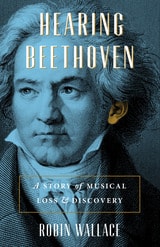
Hearing Beethoven
A Story of Musical Loss and DiscoveryRobin Wallace
University of Chicago Press, 2018
We’re all familiar with the image of a fierce and scowling Beethoven, struggling doggedly to overcome his rapidly progressing deafness. That Beethoven continued to play and compose for more than a decade after he lost his hearing is often seen as an act of superhuman heroism. But the truth is that Beethoven’s response to his deafness was entirely human. And by demystifying what he did, we can learn a great deal about Beethoven’s music. Perhaps no one is better positioned to help us do so than Robin Wallace, who not only has dedicated his life to the music of Beethoven but also has close personal experience with deafness. One day, Wallace’s late wife, Barbara, found she couldn’t hear out of her right ear—the result of radiation administered to treat a brain tumor early in life. Three years later, she lost hearing in her left ear as well. Over the eight and a half years that remained of her life, despite receiving a cochlear implant, Barbara didn’t overcome her deafness or ever function again like a hearing person.
Wallace shows here that Beethoven didn’t do those things, either. Rather than heroically overcoming his deafness, Beethoven accomplished something even more challenging: he adapted to his hearing loss and changed the way he interacted with music, revealing important aspects of its very nature in the process. Wallace tells the story of Beethoven’s creative life, interweaving it with his and Barbara’s experience to reveal aspects that only living with deafness could open up. The resulting insights make Beethoven and his music more accessible and help us see how a disability can enhance human wholeness and flourishing.
Hearing Harmony
Toward a Tonal Theory for the Rock EraChristopher Doll
University of Michigan Press, 2017

Heartbeat of the People
Music and Dance of the Northern Pow-wowTara Browner
University of Illinois Press, 2002

Heavy Metal and Disability
Crips, Crowds, and CacophoniesEdited by Jasmine Hazel Shadrack and Keith Kahn-Harris
Intellect Books, 2024
Persisting across metal’s subgenres is a preoccupation with exploring and questioning the boundary that divides the body that has agency from the body that has none. This boundary is one that is familiar to those for whom the agency of the body is an everyday matter of survival. While metal scholars who contribute to this collection see metal as a space of possibility, in which dis/ability and other intersectional identities can be validated and understood, the collection does not imply that the possibilities that metal affords are always actualized. This collection situates itself in a wider struggle to open up metal, challenging its power structures—a struggle in which metal studies has played a significant part.
Metal’s preoccupation with unleashing and controlling sensorial overload acts both as an analog of neurodiversity and as a space in which those who are neurodivergent find ways to understand and leverage their sensory capacities. Metal offers potent resources for the self-understanding of people with disabilities. It does not necessarily mean that this potential is always explored or that metal scenes are hospitable to those with disabilities. This collection is disability-positive, validating people with disabilities as different and not damaged.
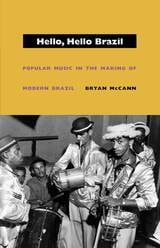
Hello, Hello Brazil
Popular Music in the Making of Modern BrazilBryan McCann
Duke University Press, 2004
McCann explores the links between the growth of the culture industry, rapid industrialization, and the rise and fall of Getúlio Vargas’s Estado Novo dictatorship. He argues that these processes opened a window of opportunity for the creation of enduring cultural patterns and demonstrates that the understandings of popular music cemented in the mid–twentieth century continue to structure Brazilian cultural life in the early twenty-first.
Henry Cow
The World Is a ProblemBenjamin Piekut
Duke University Press, 2019
Here for the Hearing
Analyzing the Music in Musical TheaterMichael Buchler and Gregory J. Decker, Editors
University of Michigan Press, 2023
Winner of the Society for Music Theory's Outstanding Multi-Author Collection Award
This book offers a series of essays that show the integrated role that musical structure (including harmony, melody, rhythm, meter, form, and musical association) plays in making sense of what transpires onstage in musicals. Written by a group of music analysts who care deeply about musical theater, this collection provides new understanding of how musicals are put together, how composers and lyricists structure words and music to complement one another, and how music helps us understand the human relationships and historical and social contexts. Using a wide range of musical examples, representing the history of musical theater from the 1920s to the present day, the book explores how music interacts with dramatic elements within individual shows and other pieces within and outside of the genre. These essays invite readers to consider issues that are fundamental both to our understanding of musical theater and to the multiple ways we engage with music.
Hidden in the Mix
The African American Presence in Country MusicDiane Pecknold, ed.
Duke University Press, 2013
The contributors to Hidden in the Mix examine how country music became "white," how that fictive racialization has been maintained, and how African American artists and fans have used country music to elaborate their own identities. They investigate topics as diverse as the role of race in shaping old-time record catalogues, the transracial West of the hick-hopper Cowboy Troy, and the place of U.S. country music in postcolonial debates about race and resistance. Revealing how music mediates both the ideology and the lived experience of race, Hidden in the Mix challenges the status of country music as "the white man’s blues."
Contributors. Michael Awkward, Erika Brady, Barbara Ching, Adam Gussow, Patrick Huber, Charles Hughes, Jeffrey A. Keith, Kip Lornell, Diane Pecknold, David Sanjek, Tony Thomas, Jerry Wever
Highbrow/Lowdown
Theater, Jazz, and the Making of the New Middle ClassDavid Savran
University of Michigan Press, 2010

Hillbilly Maidens, Okies, and Cowgirls
Women's Country Music, 1930-1960Stephanie Vander Wel
University of Illinois Press, 2020
From the 1930s to the 1960s, the booming popularity of country music threw a spotlight on a new generation of innovative women artists. These individuals blazed trails as singers, musicians, and performers even as the industry hemmed in their potential popularity with labels like woman hillbilly, singing cowgirl, and honky-tonk angel.
Stephanie Vander Wel looks at the careers of artists like Patsy Montana, Rose Maddox, and Kitty Wells against the backdrop of country music's golden age. Analyzing recordings and appearances on radio, film, and television, she connects performances to real and imagined places and examines how the music sparked new ways for women listeners to imagine the open range, the honky-tonk, and the home. The music also captured the tensions felt by women facing geographic disruption and economic uncertainty. While classic songs and heartfelt performances might ease anxieties, the subject matter underlined women's ambivalent relationships to industrialism, middle-class security, and established notions of femininity.
Hip Hop Desis
South Asian Americans, Blackness, and a Global Race ConsciousnessNitasha Tamar Sharma
Duke University Press, 2010
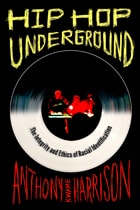
Hip Hop Underground
The Integrity and Ethics of Racial IdentificationAnthony Kwame Harrison
Temple University Press, 2009
Hip Hop Underground is a vivid ethnography of the author's observations and experiences in the multiracial world of the San Francisco underground hip hop scene. While Anthony Kwame Harrison interviewed area hip hop artists for this entertaining and informative book, he also performed as the emcee "Mad Squirrel." His immersion in the subculture provides him with unique insights into this dynamic and racially diverse but close-knit community.
Hip Hop Underground examines the changing nature of race among young Americans, and examines the issues of ethnic and racial identification, interaction, and understanding. Critiquing the notion that the Bay Area underground music scene is genuinely "colorblind," Harrison focuses on the issue of race to show how various ethnic groups engage hip hop in remarkably divergent ways—as a means to both claim subcultural legitimacy and establish their racial authenticity.
Hip-Hop Archives
The Politics and Poetics of Knowledge ProductionMark V. Campbell and Murray Forman
Intellect Books, 2025
Despite the vast popularity and cultural influence of hip-hop, efforts to archive its history are still in fairly early stages. This book focuses on the cultural and political aspects of those undertakings. It addresses practical aspects, including methods of collection, curation, preservation, and digitization, and critically analyzes institutional power, community engagement, urban economics, public access, and the ideological implications of hip-hop culture’s enduring tensions with dominant social values. A wide swath of hip-hop culture is covered by the contributors, including dance, graffiti, clothing, and battle rap.
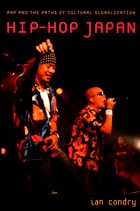
Hip-Hop Japan
Rap and the Paths of Cultural GlobalizationIan Condry
Duke University Press, 2006
Condry attended more than 120 hip-hop performances in clubs in and around Tokyo, sat in on dozens of studio recording sessions, and interviewed rappers, music company executives, music store owners, and journalists. Situating the voices of Japanese artists in the specific nightclubs where hip-hop is performed—what musicians and fans call the genba (actual site) of the scene—he draws attention to the collaborative, improvisatory character of cultural globalization. He contends that it was the pull of grassroots connections and individual performers rather than the push of big media corporations that initially energized and popularized hip-hop in Japan. Zeebra, DJ Krush, Crazy-A, Rhymester, and a host of other artists created Japanese rap, one performance at a time.

Hip-Hop in Africa
Prophets of the City and Dustyfoot PhilosophersMsia Kibona Clark
Ohio University Press, 2018
Throughout Africa, artists use hip-hop both to describe their lives and to create shared spaces for uncensored social commentary, feminist challenges to patriarchy, and resistance against state institutions, while at the same time engaging with the global hip-hop community. In Hip-Hop in Africa, Msia Kibona Clark examines some of Africa’s biggest hip-hop scenes and shows how hip-hop helps us understand specifically African narratives of social, political, and economic realities.
Clark looks at the use of hip-hop in protest, both as a means of articulating social problems and as a tool for mobilizing listeners around those problems. She also details the spread of hip-hop culture in Africa following its emergence in the United States, assessing the impact of urbanization and demographics on the spread of hip-hop culture.
Hip-Hop in Africa is a tribute to a genre and its artists as well as a timely examination that pushes the study of music and diaspora in critical new directions. Accessibly written by one of the foremost experts on African hip-hop, this book will easily find its place in the classroom.
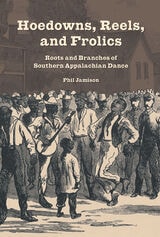
Hoedowns, Reels, and Frolics
Roots and Branches of Southern Appalachian DancePhil Jamison
University of Illinois Press, 2015
These distinctive folk dances, Jamison argues, are not the unaltered jigs and reels brought by early British settlers, but hybrids that developed over time by adopting and incorporating elements from other popular forms. He traces the forms from their European, African American, and Native American roots to the modern day. On the way he explores the powerful influence of black culture, showing how practices such as calling dances as well as specific kinds of steps combined with white European forms to create distinctly "American" dances.
From cakewalks to clogging, and from the Shoo-fly Swing to the Virginia Reel, Hoedowns, Reels, and Frolics reinterprets an essential aspect of Appalachian culture.
Hole in Our Soul
The Loss of Beauty and Meaning in American Popular MusicMartha Bayles
University of Chicago Press, 1996
Bayles defends the tough, affirmative spirit of Afro-American music against the strain of artistic modernism she calls 'perverse.' She describes how perverse modernism was grafted onto popular music in the late 1960s, and argues that the result has been a cult of brutality and obscenity that is profoundly anti-musical.
Unlike other recent critics of popular music, Bayles does not blame the problem on commerce. She argues that culture shapes the market and not the other way around. Finding censorship of popular music "both a practical and a constitutional impossibility," Bayles insists that "an informed shift in public tastes may be our only hope of reversing the current malignant mood."
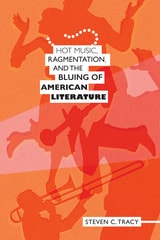
Hot Music, Ragmentation, and the Bluing of American Literature
Steven C. Tracy
University of Alabama Press, 2015
Exploring the deep and enduring relationship between music and literature, Hot Music, Ragmentation, and the Bluing of American Literature examines the diverse ways in which African American “hot” music influenced American culture—particularly literature—in early twentieth century America. Steven C. Tracy provides a history of the fusion of African and European elements that formed African American “hot” music, and considers how terms like ragtime, jazz, and blues developed their own particular meanings for American music and society. He draws from the fields of literature, literary criticism, cultural anthropology, American studies, and folklore to demonstrate how blues as a musical and poetic form has been a critical influence on American literature.
Hot Music, Ragmentation, and the Bluing of American Literature begins by highlighting instances in which American writers, including Herman Melville, Stephen Crane, and Gertrude Stein, use African American culture and music in their work, and then characterizes the social context of the Jazz Age, discussing how African American music reflected the wild abandon of the time. Tracy focuses on how a variety of schools of early twentieth century writers, from modernists to members of the Harlem Renaissance to dramatists and more, used their connections with “hot” music to give their own work meaning.
Tracy’s extensive and detailed understanding of how African American “hot” music operates has produced a fresh and original perspective on its influence on mainstream American literature and culture. An experienced blues musician himself, Tracy draws on his performance background to offer an added dimension to his analysis. Where another blues scholar might only analyze blues language, Tracy shows how the language is actually performed.
Hot Music, Ragmentation, and the Bluing of American Literature is the first book to offer such a refreshingly broad interdisciplinary vision of the influence of African American “hot” music on American literature. It is an essential addition to the library of serious scholars of American and African American literature and culture and blues aficionados alike.

Hound Dog
A Song by Big Mama Thornton and Interpreted by Elvis Presley and OthersEric Weisbard
Duke University Press, 2023
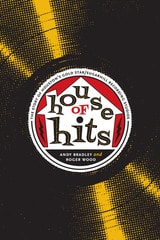
House of Hits
The Story of Houston's Gold Star/SugarHill Recording StudiosBy Andy Bradley and Roger Wood
University of Texas Press, 2010
Founded in a working-class neighborhood in southeast Houston in 1941, Gold Star/SugarHill Recording Studios is a major independent studio that has produced a multitude of influential hit records in an astonishingly diverse range of genres. Its roster of recorded musicians includes Lightnin' Hopkins, George Jones, Willie Nelson, Bobby "Blue" Bland, Junior Parker, Clifton Chenier, Sir Douglas Quintet, 13th Floor Elevators, Freddy Fender, Kinky Friedman, Ray Benson, Guy Clark, Lucinda Williams, Beyoncé and Destiny's Child, and many, many more.
In House of Hits, Andy Bradley and Roger Wood chronicle the fascinating history of Gold Star/SugarHill, telling a story that effectively covers the postwar popular music industry. They describe how Houston's lack of zoning ordinances allowed founder Bill Quinn's house studio to grow into a large studio complex, just as SugarHill's willingness to transcend musical boundaries transformed it into of one of the most storied recording enterprises in America. The authors offer behind-the-scenes accounts of numerous hit recordings, spiced with anecdotes from studio insiders and musicians who recorded at SugarHill. Bradley and Wood also place significant emphasis on the role of technology in shaping the music and the evolution of the music business. They include in-depth biographies of regional stars and analysis of the various styles of music they represent, as well as a list of all of Gold Star/SugarHill's recordings that made the Billboard charts and extensive selected historical discographies of the studio's recordings.
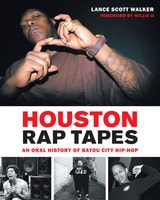
Houston Rap Tapes
An Oral History of Bayou City Hip-HopBy Lance Scott Walker, Foreword by Willie D
University of Texas Press, 2018
The neighborhoods of Fifth Ward, Fourth Ward, Third Ward, and the Southside of Houston, Texas, gave birth to Houston rap, a vibrant music scene that has produced globally recognized artists such as Geto Boys, DJ Screw, Pimp C and Bun B of UGK, Fat Pat, Big Moe, Z-Ro, Lil’ Troy, and Paul Wall. Lance Scott Walker and photographer Peter Beste spent a decade documenting Houston’s scene, interviewing and photographing the people—rappers, DJs, producers, promoters, record label owners—and places that give rap music from the Bayou City its distinctive character. Their collaboration produced the books Houston Rap and Houston Rap Tapes.
This second edition of Houston Rap Tapes amplifies the city’s hip-hop history through new interviews with Scarface, Slim Thug, Lez Moné, B L A C K I E, Lil’ Keke, and Sire Jukebox of the original Ghetto Boys. Walker groups the interviews into sections that track the different eras and movements in Houston rap, with new photographs and album art that reveal the evolution of the scene from the 1970s to today’s hip-hop generation. The interviews range from the specifics of making music to the passions, regrets, memories, and hopes that give it life. While offering a view from some of Houston’s most marginalized areas, these intimate conversations lay out universal struggles and feelings. As Willie D of Geto Boys writes in the foreword, “Houston Rap Tapes flows more like a bunch of fellows who haven’t seen each other for ages, hanging out on the block reminiscing, rather than a calculated literary guide to Houston’s history.”
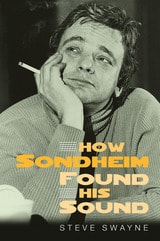
How Sondheim Found His Sound
Steve Swayne
University of Michigan Press, 2010
---Richard Crawford, author of America's Musical Life: A History
"Sondheim's career and music have never been so skillfully dissected, examined, and put in context. With its focus on his work as composer, this book is surprising and welcome."
---Theodore S. Chapin, President and Executive Director, The Rodgers & Hammerstein Organization
"What a fascinating book, full of insights large and small. An impressive analysis and summary of Sondheim's many sources of inspiration. All fans of the composer and lovers of Broadway in general will treasure and frequently refer to Swayne's work."
---Tom Riis, Joseph Negler Professor of Musicology and Director of the American Music Research Center, University of Colorado
Stephen Sondheim has made it clear that he considers himself a "playwright in song." How he arrived at this unique appellation is the subject of How Sondheim Found His Sound---an absorbing study of the multitudinous influences on Sondheim's work.
Taking Sondheim's own comments and music as a starting point, author Steve Swayne offers a biography of the artist's style, pulling aside the curtain on Sondheim's creative universe to reveal the many influences---from classical music to theater to film---that have established Sondheim as one of the greatest dramatic composers of the twentieth century.
Sondheim has spoken often and freely about the music, theater, and films he likes, and on occasion has made explicit references to how past works crop up in his own work. He has also freely acknowledged his eclecticism, seeing in it neither a curse nor a blessing but a fact of his creative life.
Among the many forces influencing his work, Sondheim has readily pointed to a wide field: classical music from 1850 to 1950; the songs of Tin Pan Alley, Broadway, and Hollywood; the theatrical innovations of Oscar Hammerstein II and his collaborators; the cinematic elements found in certain film schools; and the melodramatic style of particular plays and films. Ultimately, Sondheim found his sound by amalgamating these seemingly disparate components into his unique patois.
How Sondheim Found His Sound is the first book to provide an overview of his style and one of only a few to account for these various components, how they appear in Sondheim's work, and how they affect his musical and dramatic choices.
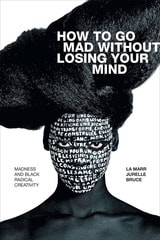
How to Go Mad without Losing Your Mind
Madness and Black Radical CreativityLa Marr Jurelle Bruce
Duke University Press, 2020