Results by title
1441 books match the query 'Great Britain' and 43 start with h

Hamlet Vocation Coleridge And Wordsworth
Martin Greenberg
University of Iowa Press, 1986
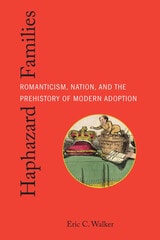
Haphazard Families
Romanticism, Nation, and the Prehistory of Modern AdoptionEric C. Walker
The Ohio State University Press, 2024
There are no provisions for adoption in English common law, and adoption wasn't legally formalized in England and Wales until 1926. But a century earlier, untimely adoptions navigated the new exceptionalism of childhood in Romanticism. In Haphazard Families, Eric C. Walker explores the history of the adopted child in Romantic-era England. Taking up the stories of both fictional and historical adoptees, he demonstrates how these children, diminished to nonpersons, shouldered the burden of social constructs of nation, family, gender, and class. Walker further demonstrates how Rousseau’s infamous failure to follow his own ideals of parenthood shaped British reactions in famous texts such as Frankenstein and Emma. Incorporating perspectives from Romantic scholarship and critical adoption studies and examining the stories of adopted children associated with Queen Caroline, Anna Letitia Barbauld, Jane Austen, the Wordsworth siblings, Mary Shelley, Charles and Mary Lamb, Letitia Landon, and others, Haphazard Families considers how Romantic constructions of childhood supply foundational structures of modern adoptee subjectivity.
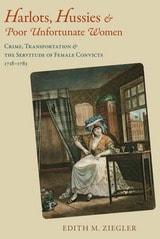
Harlots, Hussies, and Poor Unfortunate Women
Crime, Transportation, and the Servitude of Female Convicts, 1718-1783Edith M. Ziegler
University of Alabama Press, 2014
In Harlots, Hussies, and Poor Unfortunate Women, Edith M. Ziegler recounts the history of British convict women involuntarily transported to Maryland in the eighteenth century.
Great Britain’s forced transportation of convicts to colonial Australia is well known. Less widely known is Britain’s earlier program of sending convicts—including women—to North America. Many of these women were assigned as servants in Maryland. Titled using epithets that their colonial masters applied to the convicts, Edith M. Ziegler’s Harlots, Hussies, and Poor Unfortunate Women examines the lives of this intriguing subset of American immigrants.
Basing much of her powerful narrative on the experiences of actual women, Ziegler restores individual faces to women stripped of their basic freedoms. She begins by vividly invoking the social conditions of eighteenth-century Britain, which suffered high levels of criminal activity, frequently petty thievery. Contemporary readers and scholars will be fascinated by Ziegler’s explanation of how gender-influenced punishments were meted out to women and often ensnared them in Britain’s system of convict labor.
Ziegler depicts the methods and operation of the convict trade and sale procedures in colonial markets. She describes the places where convict servants were deployed and highlights the roles these women played in colonial Maryland and their contributions to the region’s society and economy. Ziegler’s research also sheds light on escape attempts and the lives that awaited those who survived servitude.
Mostly illiterate, convict women left few primary sources such as diaries or letters in their own words. Ziegler has masterfully researched the penumbra of associated documents and accounts to reconstruct the worlds of eighteenth-century Britain and colonial Maryland and the lives of these unwilling American settlers. In illuminating this little-known episode in American history, Ziegler also discusses not just the fact that these women have been largely forgotten, but why. Harlots, Hussies, and Poor Unfortunate Women makes a valuable contribution to American history, women’s studies, and labor history.
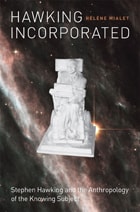
Hawking Incorporated
Stephen Hawking and the Anthropology of the Knowing SubjectHélène Mialet
University of Chicago Press, 2012
These days, the idea of the cyborg is less the stuff of science fiction and more a reality, as we are all, in one way or another, constantly connected, extended, wired, and dispersed in and through technology. One wonders where the individual, the person, the human, and the body are—or, alternatively, where they stop. These are the kinds of questions Hélène Mialet explores in this fascinating volume, as she focuses on a man who is permanently attached to assemblages of machines, devices, and collectivities of people: Stephen Hawking.
Drawing on an extensive and in-depth series of interviews with Hawking, his assistants and colleagues, physicists, engineers, writers, journalists, archivists, and artists, Mialet reconstructs the human, material, and machine-based networks that enable Hawking to live and work. She reveals how Hawking—who is often portrayed as the most singular, individual, rational, and bodiless of all—is in fact not only incorporated, materialized, and distributed in a complex nexus of machines and human beings like everyone else, but even more so. Each chapter focuses on a description of the functioning and coordination of different elements or media that create his presence, agency, identity, and competencies. Attentive to Hawking’s daily activities, including his lecturing and scientific writing, Mialet’s ethnographic analysis powerfully reassesses the notion of scientific genius and its associations with human singularity. This book will fascinate anyone interested in Stephen Hawking or an extraordinary life in science.
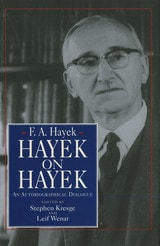
Hayek on Hayek
An Autobiographical DialogueF. A. Hayek
University of Chicago Press, 1994
Through a complete collection of previously unpublished autobiographical sketches and a wide selection of interviews, Hayek on Hayek provides the first detailed chronology of Hayek's early life and education, his intellectual progress, and the academic and public reception of his ideas. His discussions range from economic methodology and the question of religious faith to the atmosphere of post-World War I Vienna and the British character.
Born in 1899 into a Viennese family of academics and civil servants, Hayek was educated at the University of Vienna, fought in the Great War, and later moved to London, where, as he watched liberty vanish under fascism and communism across Europe, he wrote The Road to Serfdom. Although this book attracted great public attention, Hayek was ignored by other economists for thirty years after World War II, when European social democracies boomed and Keynesianism became the dominant intellectual force. However, the award of the Nobel Prize in economics for 1974 signaled a reversal in Hayek's fortunes, and before his death in 1992 he saw his life's work vindicated in the collapse of the planned economies of Eastern Europe.
Hayek on Hayek is as close to an autobiography of Hayek as we will ever have. In his own eloquent words, Hayek reveals the remarkable life of a revolutionary thinker in revolutionary times.
"One of the great thinkers of our age who explored the promise and contours of liberty....[Hayek] revolutionized the world's intellectual and political life"—President George Bush, on awarding F. A. Hayek the Medal of Freedom
F. A. Hayek, recipient of the Medal of Freedom 1991 and the Nobel Memorial Prize in Economics in 1974, was a pioneer in monetary theory and the principal proponent of the libertarian philosophy. Hayek is the author of numerous books in economics, as well as books in political philosophy and psychology.
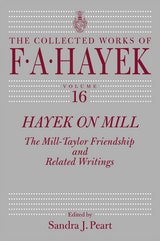
Hayek on Mill
The Mill-Taylor Friendship and Related WritingsF. A. Hayek
University of Chicago Press, 2015
This latest addition to the University of Chicago Press’s Collected Works of F. A. Hayek series showcases the fascinating intersections between two of the most prominent thinkers from two successive centuries. Hayek situates Mill within the complex social and intellectual milieu of nineteenth-century Europe—as well as within twentieth-century debates on socialism and planning—and uncovers the influence of Taylor-Mill on Mill’s political economy. The volume features the Mill-Taylor correspondence and brings together for the first time Hayek’s related writings, which were widely credited with beginning a new era of Mill scholarship.
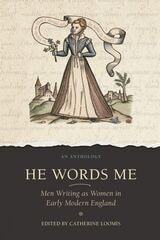
He Words Me
Men Writing as Women in Early Modern EnglandCatherine Loomis
Arizona Center for Medieval and Renaissance Studies, 2026
This anthology gives students and scholars access to a body of texts that provide a clearer understanding of what life was like for early modern women by presenting hundreds of little-known primary texts that contain details about early modern women’s work, relationships, emotional and intellectual development, friendships, and daily struggles. He Words Me brings together work from a variety of genres in which male authors adopt the voice of a female narrator and use that voice to provide intimate details about the lives of women.
These works introduce modern readers to less familiar genres, complement or contradict portrayals of women in canonical texts, and raise compelling questions about who speaks for women and when women can speak for themselves. Through these women’s voices, readers can encounter characters and experiences that will broaden their understanding of early modern English literature and culture, and of the history of women in the late sixteenth and early seventeenth centuries.
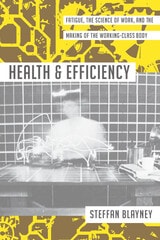
Health and Efficiency
Fatigue, the Science of Work, and the Making of the Working-Class BodySteffan Blayney
University of Massachusetts Press, 2022
A new model of health emerged in Britain between 1870 and 1939. Centered on the working body, organized around the concept of efficiency, and grounded in scientific understandings of human labor, scientists, politicians, and capitalists of the era believed that national economic productivity could be maximized by transforming the body of the worker into a machine. At the core of this approach was the conviction that worker productivity was intimately connected to worker health.
Under this new “science of work,” fatigue was seen as the ultimate pathology of the working-class body, reducing workers’ capacity to perform continued physical or mental labor. As Steffan Blayney shows, the equation between health and efficiency did not go unchallenged. While biomedical and psychological experts sought to render the body measurable, governable, and intelligible, ordinary men and women found ways to resist the logics of productivity and efficiency imposed on them, and to articulate alternative perspectives on work, health, and the body.

Healthcare in Ireland and Britain 1850-1970
Voluntary, regional and comparative perspectivesEdited by Donnacha Sean Lucey and Virginia Crossman
University of London Press, 2015
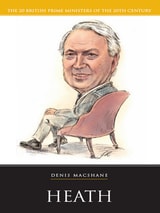
Heath
Denis MacShane
Haus Publishing, 2006
Helping Out
Miri Song
Temple University Press, 1999
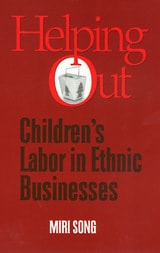
Helping Out addresses the centrality of children's labor participation in such family enterprises. Discussing the case of Chinese families running take-out food shops in Britain, Miri Song examines the ways in which children contribute their labor and the context in which children come to understand and believe in "helping out" as part of a "family work contract." Song explores the implications of these children's labor participation for family relationships, cultural identity, and the future of the Chinese community in Britain. While doing so, she argues that the practical importance and the broader meanings of children's work must be understood in the context of immigrant families' experiences of migration and ethnic minority status in Western, white-majority societies.
Henpecked
Winston Churchill and Women's SuffrageCheryl R. Jorgensen-Earp
Michigan State University Press, 2027
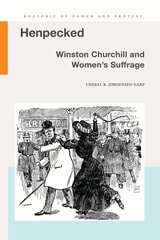
Henpecked: Winston Churchill and Women’s Suffrage explores the recurrent interactions between Winston Churchill and the women’s suffrage movement in Britain. Churchill purposely concealed, under a discursive veil, his complex and shifting perceptions of women’s competency to use the franchise. In balancing a public stance that vaguely favored the “principle” of women’s suffrage with his, often private, opposition to the movement’s legislative efforts, he employed every available rhetorical tool. This book presents a new understanding of his early Parliamentary career, his ability to manipulate public and private discourse, and his complicated stance on women’s right to vote. This rhetorical history challenges the view that Winston Churchill was only dissuaded in his support of women’s suffrage by the militancy of suffrage activists.
Henry IV Part 1
William Shakespeare
Arizona Center for Medieval and Renaissance Studies, 2021
Shakespeare’s two Henry IV plays follow the exploits of King Henry IV after usurping the crown from his cousin Richard II. Featuring some of Shakespeare’s most recognizable characters such as Prince Hal and the roguish Sir John Falstaff, Henry IV, Part 1 delves into complicated questions of loyalty and kingship on and off the battlefield. Henry IV, Part 2 follows Prince Hal as he grapples with his eventual ascent to the throne and his increasingly strained relationship with Falstaff. As the king falls sick and Hal’s ascent appears imminent, Hal’s decisions hold significant implications for all those around him. Modernizing the language of the two plays, Yvette Nolan’s translation carefully works at the seeds sown by Shakespeare—bringing to new life the characters and dramatic arcs of the original.
These translations of Henry IV were written as part of the Oregon Shakespeare Festival’s Play On! project, which commissioned new translations of thirty-nine Shakespeare plays. These translations present work from “The Bard” in language accessible to modern audiences while never losing the beauty of Shakespeare’s verse. Enlisting the talents of a diverse group of contemporary playwrights, screenwriters, and dramaturges from diverse backgrounds, this project reenvisions Shakespeare for the twenty-first century. These volumes make these works available for the first time in print—a new First Folio for a new era.
Henry V
William Shakespeare
Arizona Center for Medieval and Renaissance Studies, 2021
Shakespeare’s Henry V is a play about nationalism, war, and how we remember history. Known for its rousing speeches and miraculous outcomes, the play has long had a life beyond the stage and page, its themes and rhetoric common points of reference in politics. In this modern translation of Henry V, Lloyd Suh has created a new interpretation that is distinctly his own while protecting the mystery of Shakespeare’s drama. Suh’s translation focuses on the actors and the staging, channeling the theatrical nature of Shakespeare’s play for a new audience.
This translation of Henry V was written as part of the Oregon Shakespeare Festival’s Play On! project, which commissioned new translations of thirty-nine Shakespeare plays. These translations present the Bard’s work in language accessible to modern audiences while never losing the beauty of Shakespeare’s verse. Enlisting the talents of a diverse group of contemporary playwrights, screenwriters, and dramaturges from diverse backgrounds, this project reenvisions Shakespeare for the twenty-first century. These volumes make these works available for the first time in print—a new First Folio for a new era.
Henry VI, Part 1
William Shakespeare
Arizona Center for Medieval and Renaissance Studies, 2021
In his three Henry VI plays, Shakespeare tackles the infamous Wars of the Roses and the fall of the House of Lancaster. In this translation of Henry VI, Part 1, Douglas Langworthy explores the initial unrest as a young Henry VI becomes king. Langworthy’s translation takes a deep dive into the language of Shakespeare. With a fine-tooth comb, he updates passages that are archaic and difficult to the modern ear and matches them with the syntax and lyricism of the rest of the play, essentially translating archaic Shakespeare to match contemporary Shakespeare.
This translation of Henry VI, Part 1 was written as part of the Oregon Shakespeare Festival’s Play On! project, which commissioned new translations of thirty-nine Shakespeare plays. These translations present the work of "The Bard" in language accessible to modern audiences while never losing the beauty of Shakespeare’s verse. Enlisting the talents of a diverse group of contemporary playwrights, screenwriters, and dramaturges from diverse backgrounds, this project reenvisions Shakespeare for the twenty-first century. These volumes make these works available for the first time in print—a new First Folio for a new era.
Henry VI, Part 2
William Shakespeare
Arizona Center for Medieval and Renaissance Studies, 2021
In his three Henry VI plays, Shakespeare tackles the infamous Wars of the Roses and the fall of the House of Lancaster. In this translation of Henry VI, Part 2, Douglas Langworthy follows the increasing tensions as the Duke of York foments rebellion against the crown. Langworthy’s translation takes a deep dive into the language of Shakespeare. With a fine-tooth comb, he updates passages that are archaic and difficult to the modern ear, and matches them with the syntax and lyricism of the rest of the play, essentially translating archaic Shakespeare to match contemporary Shakespeare.
This translation of Henry VI, Part 2 was written as part of the Oregon Shakespeare Festival’s Play On! project, which commissioned new translations of thirty-nine Shakespeare plays. These translations present the work of "The Bard" in language accessible to modern audiences while never losing the beauty of Shakespeare’s verse. Enlisting the talents of a diverse group of contemporary playwrights, screenwriters, and dramaturges from diverse backgrounds, this project reenvisions Shakespeare for the twenty-first century. These volumes make these works available for the first time in print—a new First Folio for a new era.
Henry VI, Part 3
William Shakespeare
Arizona Center for Medieval and Renaissance Studies, 2021
In his three Henry VI plays, Shakespeare tackles the infamous Wars of the Roses and the fall of the House of Lancaster. In this translation of Henry VI, Part 3, Douglas Langworthy concludes the trilogy, tracking the final downfall of Henry VI and the rise of the House of York. Langworthy’s translation takes a deep dive into the language of Shakespeare. With a fine-tooth comb, he updates passages that are archaic and difficult to the modern ear, and matches them with the syntax and lyricism of the rest of the play, essentially translating archaic Shakespeare to match contemporary Shakespeare.
This translation of Henry VI, Part 3 was written as part of the Oregon Shakespeare Festival’s Play On! project, which commissioned new translations of thirty-nine Shakespeare plays. These translations present the work of "The Bard" in language accessible to modern audiences while never losing the beauty of Shakespeare’s verse. Enlisting the talents of a diverse group of contemporary playwrights, screenwriters, and dramaturges from diverse backgrounds, this project reenvisions Shakespeare for the twenty-first century. These volumes make these works available for the first time in print—a new First Folio for a new era.
Henry VIII
William Shakespeare
Arizona Center for Medieval and Renaissance Studies, 2022
Shakespeare’s Henry VIII is a story of a brazen race to power and the desire for an heir. Advised by Cardinal Wolsey, Henry VIII is caught between church and state as he meets Anne Boleyn and seeks to annul his marriage to Queen Katherine. This episodic and plot-driven play examines the machinations of royal power. Shakespeare’s Henry VIII, in this new translation by Caridad Svich, is a swift-moving, complex tale of intrigue.
This translation of Henry VIII was written as part of the Oregon Shakespeare Festival’s Play On! project, which commissioned new translations of thirty-nine Shakespeare plays. These translations present work from “The Bard” in language accessible to modern audiences while never losing the beauty of Shakespeare’s verse. Enlisting the talents of a diverse group of contemporary playwrights, screenwriters, and dramaturges from diverse backgrounds, this project reenvisions Shakespeare for the twenty-first century. These volumes make these works available for the first time in print—a new First Folio for a new era.
Her Oxford
Judy G. Batson
Vanderbilt University Press, 2008
Her Oxford looks at the people and the political and social forces that produced this dramatic transformation. Drawing on a vast array of biographies, histories, obituaries, and archives, Batson traces not only the institutional struggles over privileges and disciplinary rules for women, but also the rich texture of everyday life-women's amateur theatricals, debating societies, sports, and college escapades (Dorothy Sayers is the subject of quite a few). She tells the stories of women's active roles in two war efforts and in the suffrage movement.
An unusual feature of the book is the set of 120 biographical profiles of women who attended Oxford between 1879 and 1960. They constitute a Who's Who of women scientists, anthropologists, psychotherapists, educators, novelists, and social reformers in the English-speaking world.

Here to Stay, Here to Fight
A Race Today AnthologyPaul Field
Pluto Press, 2019

Here to Stay, Here to Fight
A Race Today AnthologyPaul Field
Pluto Press, 2019
Heretical Hellenism
Women Writers, Ancient Greece, and the Victorian Popular ImaginationShanyn Fiske
Ohio University Press, 2008
The prevailing assumption regarding the Victorians’ relationship to ancient Greece is that Greek knowledge constituted an exclusive discourse within elite male domains. Heretical Hellenism: Women Writers, Ancient Greece, and the Victorian Popular Imagination challenges that theory and argues that while the information women received from popular sources was fragmentary and often fostered intellectual insecurities, it was precisely the ineffability of the Greek world refracted through popular sources and reconceived through new fields of study that appealed to women writers’ imaginations.
Examining underconsidered sources such as theater history and popular journals, Shanyn Fiske uncovers the many ways that women acquired knowledge of Greek literature, history, and philosophy without formal classical training. Through discussions of women writers such as Charlotte Brontë, George Eliot, and Jane Harrison, Heretical Hellenism demonstrates that women established the foundations of a heretical challenge to traditional humanist assumptions about the uniformity of classical knowledge and about women’s place in literary history.
Heretical Hellenism provides a historical rationale for a more expansive definition of classical knowledge and offers an interdisciplinary method for understanding the place of classics both in the nineteenth century and in our own time.
Heroic Chancellor
Winston Churchill and the University of Bristol, 1929 to 1965David Cannadine
University of London Press, 2016
Hesitant Comrades
The Irish Revolution and the British Labour MovementGeoffrey Bell
Pluto Press, 2016
Drawing principally on primary sources, Bell brings to light for the first time important incidents in British/Irish history, including how the leaders of British trade unions were complicit in Belfast loyalist sectarianism; the troubled nature of the Labour Party's relations with its Irish community; and how the Bolsheviks criticised British Marxists over their inaction on Ireland. The author also considers socialist debates on the compatibility of Irish nationalism with socialism, as well as the contentious 'Ulster question'. He examines prominent figures of the era, ranging from Ramsay MacDonald to Sylvia Pankhurst. With sources ranging from newly discovered writings to reports of police spies - Hesitant Comrades is a scholarly, provocative and groundbreaking perspective on the fragile relationship between the British left and the Irish revolution.
Hessians
Officer, Baroness, Chaplain—Three German Experiences in the American RevolutionBrady J. Crytzer
Westholme Publishing, 2023
In 1775 the British Empire was in crisis. While it was buried in debt from years of combat against the French, revolution was stirring in its wealthiest North American colonies. To allow the rebellion to fester would cost the British dearly, but to confront it would press their exhausted armed forces to a breaking point. Faced with a nearly impossible decision, the administrators of the world’s largest empire elected to employ the armies of the Holy Roman Empire to suppress the sedition of the American revolutionaries. By 1776 there would be 18,000 German soldiers marching through the wilds of North America, and by war’s end there would be over 30,000.
To the colonists these forces were “mercenaries,” and to the Germans the Americans were “rebels. ”While soldiers of fortune fight for mere profit, the soldiers of the Holy Roman Empire went to war in the name of their country, and were paid little for their services, while their respective kings made fortunes off of their blood and sacrifice among the British ranks. Labeled erroneously as “Hessians,” the armies of the Holy Roman Empire came from six separate German states, each struggling to retain relevance in a newly enlightened and ever-changing world.
In Hessians: Officer, Baroness, Chaplain—Three German Experiences in the American Revolution historian Brady J. Crytzer explores the German experience during the American Revolution through the lives of three individuals from vastly different walks of life, all thrust into the maelstrom of North American combat. Here are the stories of a dedicated career soldier, Johann Ewald, captain of a Field-Jäger Corps, who fought from New York to the final battles along the Potomac; Frederika Charlotte Louise von Massow, Baroness von Riedesel, who raced with her young children through the Canadian wilderness to reunite with her long-distant husband; and middle-aged chaplain Philipp Waldeck, who struggled to make sense of it all while accompanying his unit through the exotic yet brutal conditions of the Caribbean and British Florida. Beautifully written, Hessians offers a glimpse into the American Revolution as seen through the eyes of the German armies commanded to destroy it.
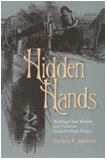
Hidden Hands
Working-Class Women and Victorian Social-Problem FictionPatricia E. Johnson
Ohio University Press, 2001
Tracing the Victorian crisis over the representation of working-class women to the 1842 Parliamentary bluebook on mines, with its controversial images of women at work, Hidden Hands argues that the female industrial worker became even more dangerous to represent than the prostitute or the male radical because she exposed crucial contradictions between the class and gender ideologies of the period and its economic realities.
Drawing on the recent work of feminist historians, Patricia Johnson lays the groundwork for a reinterpretation of Victorian social-problem fiction that highlights its treatment of issues that particularly affected working-class women: sexual harassment; the interconnections between domestic ideology and domestic violence; their relationships to male-dominated working-class movements such as Luddism, Chartism, and unionism; and their troubled connection to middle-class feminism.
Uncovering a series of images in Victorian fiction ranging from hot-tempered servants and sexually harassed factory girls to working-class homemakers pictured as beaten dogs, Hidden Hands demonstrates that representations of working-class women, however marginalized or incoherent, reveal the very contradictions they are constructed to hide and that the dynamics of these representations have broad implications both for other groups, such as middle-class women, and for the emergence of working-class women as writers themselves.
Hidden in Plain Sight
Jews and Jewishness in British Film, Television, and Popular CultureEdited by Nathan Abrams
Northwestern University Press, 2016
High-Intensity Participation
The Dynamics of Party Activism in BritainPaul F. Whiteley and Patrick Seyd
University of Michigan Press, 2002

Hijra
Hala Alyan
Southern Illinois University Press, 2016
The reader sees war, diaspora, and immigration, and hears the marginalized voices of women of color. The poems use lyrical diction and striking imagery to evoke the weight of an emotional and visceral journey. They grow and build in length and form, reflecting the gains the women in the poems make in re-creating selfhood through endurance and strength.
In prose, narrative, and confessional-style poems, Alyan reflects on how physical space is refashioned, transmitted, and remembered. Her voice is distinct, fresh, relevant, and welcoming.
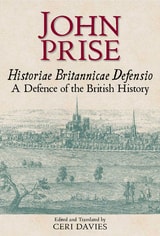
Historiae Britannicae Defensio / A Defence of the British History
John Prise
Bodleian Library Publishing, 2015
Historic Preservation
Collective Memory and Historic IdentityBarthel, Diane
Rutgers University Press, 1996
Historical Milton
Manuscript, Print, and Political Culture in Revolutionary EnglandThomas Fulton
University of Massachusetts Press, 2010
Historicizing the Enlightenment, Volume 1
Politics, Religion, Economy, and Society in BritainMichael McKeon
Bucknell University Press, 2023
Published by Bucknell University Press. Distributed worldwide by Rutgers University Press.
Historicizing the Enlightenment, Volume 2
Literature, the Arts, and the Aesthetic in BritainMichael McKeon
Bucknell University Press, 2023
Published by Bucknell University Press. Distributed worldwide by Rutgers University Press.
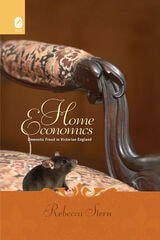
Home Economics
Domestic Fraud in Victorian EnglandRebecca Stern
The Ohio State University Press, 2008
In Home Economics: Domestic Fraud in Victorian England, Rebecca Stern establishes fraud as a basic component of the Victorian popular imagination, key to its intimate, as well as corporate, systems of exchange. Although Victorian England is famous for revering the domestic realm as a sphere separate from the market and its concerns, actual households were hardly isolated havens of fiscal safety and innocence. Rather, the Victorian home was inevitably a marketplace, a site of purchase, exchange, and employment in which men and women hired or worked as servants, contracted marriages, managed children, and obtained furniture, clothing, food, and labor. Alongside the multiplication of joint-stock corporations and the rise of a credit-based economy, which dramatically increased fraud in the Victorian money market, the threat of swindling affected both actual household commerce and popular conceptions of ostensibly private, more emotive forms of exchange. Working with diverse primary material, including literature, legal cases, newspaper columns, illustrations, ballads, and pamphlets, Stern argues that the climate of fraud permeated Victorian popular ideologies about social transactions. Beyond providing a history of cases and categories of domestic deceit, Home Economics illustrates the diverse means by which Victorian culture engaged with, refuted, celebrated, represented, and consumed swindling in familial and other household relationships.
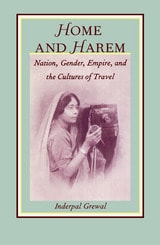
Home and Harem
Nation, Gender, Empire and the Cultures of TravelInderpal Grewal
Duke University Press, 1996
In her look at England, Grewal draws on nineteenth-century aesthetics, landscape art, and debates about women’s suffrage and working-class education to show how all social classes, not only the privileged, were educated and influenced by imperialist travel narratives. By examining diverse forms of Indian travel to the West and its colonies and focusing on forms of modernity offered by colonial notions of travel, she explores how Indian men and women adopted and appropriated aspects of European travel discourse, particularly the set of oppositions between self and other, East and West, home and abroad.
Rather than being simply comparative, Home and Harem is a transnational cultural study of the interaction of ideas between two cultures. Addressing theoretical and methodological developments across a wide range of fields, this highly interdisciplinary work will interest scholars in the fields of postcolonial and cultural studies, feminist studies, English literature, South Asian studies, and comparative literature.
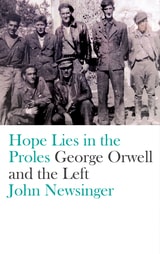
Hope Lies in the Proles
George Orwell and the LeftJohn Newsinger
Pluto Press, 2018
How Corrupt Is Britain?
Edited by David Whyte
Pluto Press, 2015
David Whyte brings together a wide range of leading commentators and campaigners, offering a series of troubling answers. Unflinchingly facing the corruption in British public life, they show that it is no longer tenable to assume that corruption is something that happens elsewhere; corrupt practices are revealed across a wide range of venerated institutions, from local government to big business. These powerful, punchy essays aim to shine a light on the corruption fundamentally embedded in UK politics, police, and finance.
How a Century of War Changed the Lives of Women
Lindsey German
Pluto Press, 2013
How a Century of War Changed the Lives of Women looks at the remarkable impact of war on women in Britain. It shows how conflict has changed women’s lives and how those changes have put women at the centre of peace campaigning.
Lindsey German, one of the UK's leading anti-war activists and commentators, shows how women have played a central role in anti-war and peace movements, including the recent wars in Afghanistan and Iraq. The women themselves talk about how they overcame prejudice and difficulty to become active. The book integrates this experience with a historical overview, analysing the two world wars as catalysts of social change for women. It looks at how the changing nature of war, especially the involvement of civilians, increasingly involves significant numbers of women.
As well as providing an inspiring account of women's opposition to war, the book also tackles key contemporary developments, challenging negative assumptions about Muslim women and showing how anti-war movements are feeding into a broader desire to change society.
How the West Came to Rule
The Geopolitical Origins of CapitalismAlex Anievas and Kerem Nisancioglu
Pluto Press, 2015
***Winner, British International Studies Association International Political Economy Working Group Book Prize 2016***
Mainstream historical accounts of the development of capitalism describe a profess which is fundamentally European—a system that was born in the mills and factories of English and under the guillotines of the French Revolution. This groundbreaking book tells a very difference story.
How the West Came to Rule offers a unique interdisciplinary and international historical account of the origins of capitalism. It argues that, contrary to dominant wisdom, capitalism’s origins should not be understood as a development confined to the geographically and culturally sealed borders of Europe, but the outcome of a wider array of global processes in which non-European societies played a decisive role.
Here is a provocative, incisive explanation of how capitalism emerged in England and Europe through a dialectical intersocietal and geopolitical process. The authors’ aim to undermine a Eurocentric bias that has been prominent in the debate about capitalisms rise to supremacy, and their case is remarkably convincing. They provide a fundamental rethinking. Anievas and Nisancioglu contend that often cited assumptions are neither theoretically nor empirically tenable and deny the agency of non-Western societies to the emergence of capitalism. Topics covered include:
*The Problem of Eurocentrism
*The Problem of Historical Specificity
*The Brenner Thesis: Explanation and Critique
*The Geopolitical in the Making of Capitalism
*The Political Marxist Conception of Capitalism
*Rethinking the Origins of Capitalism
*And much more!
Through an outline of the uneven histories of Mongolian expansion, New World discoveries, Ottoman-Habsburg rivalry, the development of the colonies, and bourgeois revolutions, Alex Anievas and Kerem Nisancioglu offer an account of capitalism’s origins that convincingly argues against the prevailing Eurocentric narratives. It will change minds and open the eyes of historians, economists, and political thinkers.
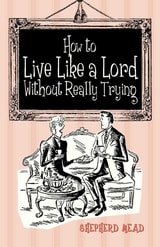
How to Live like a Lord Without Really Trying
Shepherd Mead
Bodleian Library Publishing, 2012
In 1958, ad man and soon-to-be best-selling author Shepherd Mead moved to England with his family to pursue his career. Six years later, his observations on the oddities of British culture were enough to compile a satirical guidebook for fellow Americans planning to visit from across the pond. The blunders that could befall them were many. For instance, explains Mead, “Pants are always underpants and what you wear out in the open are trousers. Mistakes in this area can lead to nasty misunderstandings.”
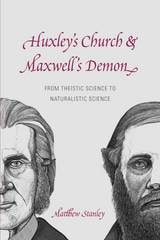
Huxley's Church and Maxwell's Demon
From Theistic Science to Naturalistic ScienceMatthew Stanley
University of Chicago Press, 2014
Matthew Stanley explores the overlap and shift between theistic and naturalistic science through a parallel study of two major scientific figures: James Clerk Maxwell, a devout Christian physicist, and Thomas Henry Huxley, the iconoclast biologist who coined the word agnostic. Both were deeply engaged in the methodological, institutional, and political issues that were crucial to the theistic-naturalistic transformation. What Stanley’s analysis of these figures reveals is that the scientific naturalists executed a number of strategies over a generation to gain control of the institutions of scientific education and to reimagine the history of their discipline. Rather than a sudden revolution, the similarity between theistic and naturalistic science allowed for a relatively smooth transition in practice from the old guard to the new.
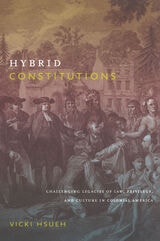
Hybrid Constitutions
Challenging Legacies of Law, Privilege, and Culture in Colonial AmericaVicki Hsueh
Duke University Press, 2010
Hsueh traces the historical development and theoretical implications of proprietary constitutionalism by examining the founding of the colonies of Maryland, Carolina, and Pennsylvania. She provides close readings of colonial proclamations, executive orders, and assembly statutes, as well as the charter granting Cecilius Calvert the colony of Maryland in 1632; the Fundamental Constitutions of Carolina, adopted in 1669; and the treaties brokered by William Penn and various Lenni Lenape and Susquehannock tribes during the 1680s and 1690s. These founding documents were shaped by ambition, contingency, and limited resources; they reflected an ambiguous and unwieldy colonialism rather than a purposeful, uniform march to modernity. Hsueh concludes by reflecting on hybridity as a rubric for analyzing the historical origins of colonialism and reconsidering contemporary indigenous claims in former settler colonies such as Australia, New Zealand, and the United States.