Results by title
968 books match the query 'Movements' and 53 start with h
Habit's Pathways
Repetition, Power, ConductTony Bennett
Duke University Press, 2023
Hebrew and Hellene in Victorian England
Newman, Arnold, and PaterBy David DeLaura
University of Texas Press, 1969
Hebrew and Hellene explores the intellectual and personal relations among John Henry Newman, Matthew Arnold, and Walter Pater, three figures important in the development of nineteenth-century English thought and culture. Fundamentally concerned with the humanistic vision of Arnold and Pater, especially as they adapted the traditional religious culture to the needs of their generation, David DeLaura also recognizes Newman's central role. To a far greater degree than has been realized, Newman assumed a commanding position in the thought of the two younger men.
DeLaura seeks to define the mechanics of the process by which the conservative religious humanism of Newman could be exploited in the fluid, relativistic, and "aesthetic" humanism of Pater. The careers of Arnold and Pater are viewed as a continuing effort to reconcile the opposing forces of one of the central modern myths, the great cultural struggle between religious and secular values—Arnold's Hebraism and Hellenism.
DeLaura traces this important movement in nineteenth-century culture by studying the development of key phrases and ideas in the writings of the three men: the secularization of Newman's ideal of "inwardness" in Arnold's "criticism" and "culture" and in Pater's "impassioned contemplation"; the shared emphasis on an elite culture; the growing tendency to identify culture with the functions of traditional religion.
Newman, as the supreme apologist of both religious orthodoxy and the older Oxonian tradition, offered a rich arsenal to the defenders of a literary culture increasingly threatened by the utilitarian spirit (!nd by a rising scientific naturalism. Moreover, with the appearance of his Apologia in 1864, the "mystery" and the "miracle" of Newman's personality intrigued a new literary generation.
In Hebrew and Hellene DeLaura looks beyond the debates of the Late Victorians, the immediate inheritors of this legacy, to the continuing twentieth-century discussion of the nature of literature, its place in the humanizing process, and its role in a science-dominated civilization. He finds the problems faced by Pater, Arnold, and Newman—and some of their solutions—surprisingly relevant to unfinished contemporary debate.
Hegel Myths and Legends
Jon Stewart
Northwestern University Press, 1996
Hegel and Spinoza
Substance and NegativityGregor Moder, with a foreword by Mladen Dolar
Northwestern University Press, 2017
Hegel and Spinoza traces the historical roots of these alternatives and shows how contemporary discussions between Heideggerians and Althusserians, Lacanians and Deleuzians are a variation of the disagreement between Hegel and Spinoza. Throughout, Moder persuasively demonstrates that the best way to read Hegel and Spinoza is not in opposition or contrast but together: as Hegel and Spinoza.
Hegel and the Freedom of Moderns
Domenico Losurdo
Duke University Press, 2004
Hegel and the Freedom of Moderns persuasively argues that the tug of war between “conservative” and “liberal” interpretations of Hegel has obscured and distorted the most important aspects of his political thought. Losurdo unravels this misleading dualism and provides an illuminating discussion of the relation between Hegel’s political philosophy and the thinking of Karl Marx and Friedrich Engels. He also discusses Hegel’s ideas in relation to the pertinent writings of other major figures of modern political philosophy such as Jean-Jacques Rousseau, John Locke, Edmund Burke, John Stuart Mill, Jeremy Bentham, Karl Popper, Norberto Bobbio, and Friedrich Hayek.
Hegel and the Problem of Multiplicity
Andrew Haas
Northwestern University Press, 2000
Hegel's Energy
A Reading of The Phenomenology of SpiritMichael Marder
Northwestern University Press, 2021
Hegel's Idea of a Phenomenology of Spirit
Michael N. Forster
University of Chicago Press, 1998
The Phenomenology of Spirit emerges as an extraordinarily coherent work with a rich array of important and original ideas. These include a diagnosis of the ills of modernity in terms of its commitment to a series of dualisms, and a project for overcoming them; a sweeping naturalism; a deep rethinking of and response to problems of skepticism; subtle arguments for social theories of meaning and truth; and ideas based on the insight that human thought changes in fundamental ways over the course of history. Forster's unique and compelling reading unlocks the mysteries of Hegel's seminal work.
Hegel's Phenomenology, Part 1
Analysis and CommentaryHoward P. Kainz
Ohio University Press, 1976
Kainz provides an accessible entry into the complexities of Hegelian thought by asking a series of questions about such matters as the literary form of the Phenomenology, its "plot," its relation to the "system," its subject matter, the problem of objectivity, dialectical necessity, the concept of "experience," and the Hegelian concept of consciousness. Building of the work of previous commentators, and presenting the work of these commentators in a clear and unbiased manner, Kainz offers an analysis that will be helpful both to experienced Hegelian scholars and to those readers preparing to approach the large and bewildering territory of the Phenomenology for the first time.

Hegel’s Phenomenology, Part 2
The Evolution of Ethical and Religious Consciousness to the Absolute StandpointHoward P. Kainz
Ohio University Press, 1983
The publication in 1807 of Georg Wilhelm Frederich Hegel’s Phanomenologie des Geistes (translated alternately as “Phenomenology of Mind” or “Phenomenology of Spirit”) marked the beginning of the modern era in philosophy. Hegel’s remarkable insights formed the basis for what eventually became the Existentialist movement. Yet the Phenomenology remains one of the most difficult and forbidding works in the canon of philosophical literature.
Hegel’s Theory of Normativity
The Systematic Foundations of the Philosophical Science of RightKevin Thompson
Northwestern University Press, 2019
Heidegger and Plato
Toward DialogueCatalin Partenie and Tom Rockmore
Northwestern University Press, 2005
As editors Catalin Partenie and Tom Rockmore remark, a simple way to describe Heidegger's reading of Plato might be to say that what began as an attempt to appropriate Plato (and through him a large portion of Western philosophy) finally ended in an estrangement from both Plato and Western philosophy. The authors of this volume consider Heidegger's thought in relation to Plato before and after the "Kehre" or turn. In doing so, they take up various central issues in Heidegger's Being and Time (1927) and thereafter, and the questions of hermeneutics, truth, and language. The result is a subtle and multifaceted reinterpretation of Heidegger's position in the tradition of philosophy, and of Plato's role in determining that position.
Heidegger and the Destruction of Aristotle
On How to Read the TraditionSean D. Kirkland
Northwestern University Press, 2023
A bold new conception of Heidegger’s project of Destruktion as a method of interpreting history
For Martin Heidegger, our inherited traditions provide the concepts through which we make our world intelligible. Concepts we can also oppose, disrupt, and even exceed. First, however, if Western philosophy is our inheritance, we must submit it to Destruktion—starting with Aristotle. Heidegger and the Destruction of Aristotle: On How to Read the Tradition presents a new conception of Heidegger’s “destruction” as a way of reading.
Situated between Nietzschean genealogy and Derridean deconstruction, this method uncovers in Aristotle the most vital originating articulations of the Western tradition and gives us the means to confront it. Sean D. Kirkland argues this is not a rejection of the past but a sophisticated and indeed timely hermeneutic tool—a complex, illuminating, and powerful method for interpreting historical texts at our present moment. Acknowledging the historical Heidegger as a politically compromised and still divisive figure, Kirkland demonstrates that Heideggerian destruction is a method of interpreting history that enables us to reorient and indeed transform its own most troubling legacies.
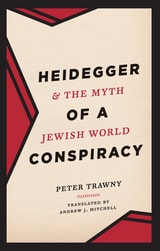
Heidegger and the Myth of a Jewish World Conspiracy
Peter Trawny
University of Chicago Press, 2015
While Heidegger’s affiliation with National Socialism is well known, the anti-Semitic dimension of that engagement could not be fully told until now. Trawny traces Heidegger’s development of a grand “narrative” of the history of being, the “being-historical thinking” at the center of Heidegger’s work after Being and Time. Two of the protagonists of this narrative are well known to Heidegger’s readers: the Greeks and the Germans. The world-historical antagonist of this narrative, however, has remained hitherto undisclosed: the Jews, or, more specifically, “world Judaism.” As Trawny shows, world Judaism emerges as a racialized, destructive, and technological threat to the German homeland, indeed, to any homeland whatsoever. Trawny pinpoints recurrent, anti-Semitic themes in the Notebooks, including Heidegger’s adoption of crude cultural stereotypes, his assigning of racial reasons to philosophical decisions (even undermining his Jewish teacher, Edmund Husserl), his endorsement of a Jewish “world conspiracy,” and his first published remarks on the extermination camps and gas chambers (under the troubling aegis of a Jewish “self-annihilation”). Trawny concludes with a thoughtful meditation on how Heidegger’s achievements might still be valued despite these horrifying facets. Unflinching and systematic, this is one of the most important assessments of one of the most important philosophers in our history.
Heidegger and the Tradition
Werner Marx
Northwestern University Press, 1971
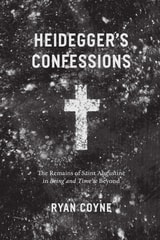
Heidegger's Confessions
The Remains of Saint Augustine in "Being and Time" and BeyondRyan Coyne
University of Chicago Press, 2015
Coyne first examines the role of Augustine in Heidegger’s early period and the development of his magnum opus, Being and Time. He then goes on to show that Heidegger owed an abiding debt to Augustine even following his own rise as a secular philosopher, tracing his early encounters with theological texts through to his late thoughts and writings. Bringing a fresh and unexpected perspective to bear on Heidegger’s profoundly influential critique of modern metaphysics, Coyne traces a larger lineage between religious and theological discourse and continental philosophy.
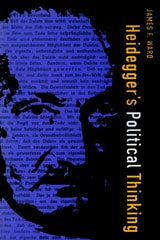
Heidegger's Political Thinking
James F. Ward
University of Massachusetts Press, 1995
In recent years there has been much controversy concerning Martin Heidegger’s politics, prompted by new research on the nature and extent of his engagement with National Socialism. Examining the political ideas embedded in Heidegger’s larger philosophical oeuvre, James F. Ward moves beyond the narrow preoccupation with Heidegger’s overtly pro-Nazi utterances and activities to show how the central theme of Heidegger’s philosophy—the question of Being—is itself inherently political.
Ward builds his case on close readings of texts drawn from nearly all of the writings published during Heidegger’s lifetime as well as from lectures, course transcripts, and other materials that appeared posthumously. With subtlety and insight, he uncovers the political content of Heidegger’s thinking on such topics as the temporality of Being, the role of science in the crisis of the West, and the presumed special status and destiny of the German people. In an epilogue, Ward reflects on the implications of Heidegger’s political thinking for postmodern political theory.
Heidegger, Strauss, and the Premises of Philosophy
On Original ForgettingRichard L. Velkley
University of Chicago Press, 2011
Heidegger
Phenomenology, Ecology, PoliticsMichael Marder
University of Minnesota Press, 2018
Understanding the political and ecological implications of Heidegger’s work without ignoring his noxious public engagements
The most controversial philosopher of the twentieth century, Martin Heidegger has influenced generations of intellectuals even as his involvement with Nazism and blatant anti-Semitism, made even clearer after the publication of his Black Notebooks, have recently prompted some to discard his contributions entirely. For Michael Marder, Heidegger’s thought remains critical for interpretations of contemporary politics and our relation to the natural environment.
Bringing together and reframing more than a decade of Marder’s work on Heidegger, this volume questions the wholesale rejection of Heidegger, arguing that dismissive readings of his project overlook the fact that it is impossible to grasp without appreciating his lifelong commitment to phenomenology and that Heidegger’s anti-Semitism is an aberration in his still-relevant ecological and political thought, rather than a defining characteristic. Through close readings of Heidegger’s books and seminars, along with writings by other key phenomenologists and political philosophers, Marder contends that neither Heidegger’s politics nor his reflections on ecology should be considered in isolation from his phenomenology. By demonstrating the codetermination of his phenomenological, ecological, and political thinking, Marder accounts for Heidegger’s failures without either justifying them or suggesting that they invalidate his philosophical endeavor as a whole.
Heidegger
The Question of Being and HistoryJacques Derrida
University of Chicago Press, 2016
Derrida performs an almost surgical reading of the notoriously difficult text, marrying pedagogical clarity with patient rigor and acting as a lucid guide through the thickets of Heidegger’s prose. At this time in intellectual history, Heidegger was still somewhat unfamiliar to French readers, and Being and Time had only been partially translated into French. Here Derrida mostly uses his own translations, giving his own reading of Heidegger that directly challenges the French existential reception initiated earlier by Sartre. He focuses especially on Heidegger’s Destruktion (which Derrida would translate both into “solicitation” and “deconstruction”) of the history of ontology, and indeed of ontology as such, concentrating on passages that call for a rethinking of the place of history in the question of being, and developing a radical account of the place of metaphoricity in Heidegger’s thinking.
This is a rare window onto Derrida’s formative years, and in it we can already see the philosopher we’ve come to recognize—one characterized by a bravura of exegesis and an inventiveness of thought that are particularly and singularly his.

Helen Saunders
Modernist RebelEdited by Rachel Sloan
Paul Holberton Publishing, 2022
This catalog accompanies the Courtauld’s display of the work of Helen Saunders (1885–1963), the first monographic exhibition devoted to the artist in over twenty-five years. One of the first British artists to pursue abstraction, Saunders was one of only two women to join the Vorticists, the radical but short-lived art movement that emerged in London on the eve of World War I. Her extraordinary drawings capture both the dynamism of modern urban life and the horrors of mechanized warfare. Following the war, she turned her back on Vorticism and chose to work in a more figurative style. Due in part to the loss of a significant portion of her oeuvre, including all of her Vorticist oil paintings, this remarkable artist fell into obscurity. Only in recent years has her work been rediscovered and celebrated.
Featuring essays on Saunders’s artistic education and career and her relationship to the places of Vorticism in London, this catalog sheds light on an artist who steadily pursued her own path and whose contribution to the story of modern art is gaining recognition for the first time.
Henry van de Velde
Selected Essays, 1889–1914Henry van de Velde
J. Paul Getty Trust, The, 2022
Belgian artist, architect, designer, and theorist Henry van de Velde (1863–1957) was a highly original and influential figure in Europe beginning in the 1890s. A founding member of the Art Nouveau and Jugendstil movements, he also directed the Grand-Ducal Saxon School of Arts and Crafts in Weimar, Germany, which eventually became the Bauhaus under Walter Gropius.
This selection of twenty-six essays, translated from French and German, includes van de Velde’s writings on William Morris and the English Arts and Crafts movement, Neo-Impressionist painting, and relationships between ornament, line, and abstraction in German aesthetics. The texts trace the evolution of van de Velde’s thoughts during his most productive period as a theorist in the artistic debates in France, Germany, Belgium, and the Netherlands. Katherine M. Kuenzli expertly guides readers to see how van de Velde’s writings reconcile themes of aesthetics and function, and expression and reason, throughout the artistic periods and regions represented by these texts. With introductory discussions of each essay and full annotations, this is an essential volume for a broad range of scholars and students of the history of fine and applied arts and ideas.
Heraclitus Seminar
Martin Heidegger
Northwestern University Press, 1993
Heidegger's remarks in this seminar illuminate his interpretations not only of pre-Socratic philosophy, but also of figures such as Hegel and Holderllin. At the same time, Heidegger clarifies many late developments in his own understanding of truth, Being, and understanding. Heidegger and Fink, both deeply rooted in the Freiburg phenomenological tradition, offer two competing approaches to the phenomenological reading of the ancient text-a kind of reading that, as Fink says, is "not so much concerned with the philological problematic . . . as with advancing into the matter itself, that is, toward the matter that must have stood before Heraclitus's spiritual view."
Hermeneutic Phenomenology
The Philosopher of Paul RicoeurDon Ihde
Northwestern University Press, 1971
Hermeneutics and Truth
Brice R. Wachterhauser
Northwestern University Press, 1994
No thinkers have wrestled with the issue of truth and interpretation in more illuminating ways for the Continental tradition of philosophy than Heidegger and Gadamer. Hermeneutics and Truth is a dual focus on Heidegger and Gadamer, but it concentrates primarily on Gadamer's efforts to think through the issue of truth for hermeneutics and only secondarily on Heidegger's thought on this issue.
Hermeneutics
Interpretation Theory in Schleiermacher, Dilthey, Heidegger, and GadamerRichard E. Palmer
Northwestern University Press, 1969
Palmer principally treats the conception of hermeneutics enunciated by Heidegger and developed into a “philosophical hermeneutics” by Hans-Georg Gadamer. He provides a brief overview of the field of hermeneutics by surveying some half-dozen alternate definitions of the term and by examining in detail the contributions of Friedrich Schleiermacher and Wilhelm Dilthey. In the “Manifesto” which concludes the book, Palmer suggests the potential significance of hermeneutics for literary interpretation.
When the context of interpretation is pressed to its limits, hermeneutics becomes the philosophical analysis of what is involved in every act of understanding. In this context, hermeneutics becomes relevant not simply to the humanistic disciplines, in which linguistic and historical understanding are crucial, but to scientific forms of interpretation as well, for it asserts the principles involved in any and every act of interpretation.

Hidden in Plain Sight
Concealing Enslavement in American Visual CultureRachel Stephens
University of Arkansas Press, 2023
In Hidden in Plain Sight: Concealing Enslavement in American Visual Culture, Rachel Stephens addresses an enormous body of material by tracing themes of concealment and silence through paintings, photographs, and ephemera, connecting long overlooked artworks with both the abolitionist materials to which they were responding and archival research across a range of southern historical narratives.
Stephens begins her fascinating study with an examination of the ways that slavery was visually idealized and defended in antebellum art. She then explores the tyranny—especially that depicted in art—enacted by supporters of enslavement, introduces a range of ways that artwork depicting slavery was tangibly concealed, considers photographs of enslaved female caretakers with the white children they reared, and investigates a printmaker’s confidential work in support of the Confederacy. Finally, she delves into an especially pernicious group of proslavery artists in Richmond, Virginia.
Reading visual culture as a key element of the antebellum battle over slavery, Hidden in Plain Sight complicates the existing narratives of American art and history.
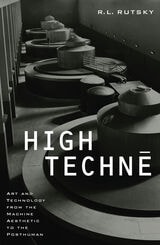
High Techne
Art and Technology from the Machine Aesthetic to the PosthumanR.L. Rutsky
University of Minnesota Press, 1999
Explores our changing cultural perceptions of the relations between technology and art.
In an age of high tech, our experience of technology has changed tremendously, yet the definition of technology has remained largely unquestioned. High Techne redresses this gap in thinking about technology, examining the shifting relations of technology, art, and culture from the beginnings of modernity to contemporary technocultures.
Drawing on the Greek root of technology, (techne, generally translated as “art, skill, or craft”), R. L. Rutsky challenges both the modernist notion of technology as an instrument or tool and the conventional idea of a noninstrumental aesthetics. Today, technology and aesthetics have again begun to come together: even basketball shoes are said to exhibit a “high-tech style” and the most advanced technology is called “state of the art.” Rutsky charts the history and vicissitudes of this new high-tech techne up to our day—from Fritz Lang to Octavia Butler, Thomas Edison to Japanese Anime, constructivism to cyberspace.Progressing from the major art movements of modernism to contemporary science fiction and cultural theory, Rutsky provides clear and compelling evidence of a shift in the cultural conceptions of technology and art and demonstrates the centrality of technology to modernism and postmodernism.
Hilma af Klint
A BiographyJulia Voss
University of Chicago Press, 2022
The Swedish painter Hilma af Klint (1862–1944) was forty-four years old when she broke with the academic tradition in which she had been trained to produce a body of radical, abstract works the likes of which had never been seen before. Today, it is widely accepted that af Klint was one of the earliest abstract academic painters in Europe.
But this is only part of her story. Not only was she a working female artist, she was also an avowed clairvoyant and mystic. Like many of the artists at the turn of the twentieth century who developed some version of abstract painting, af Klint studied Theosophy, which holds that science, art, and religion are all reflections of an underlying life-form that can be harnessed through meditation, study, and experimentation. Well before Kandinsky, Mondrian, and Malevich declared themselves the inventors of abstraction, af Klint was working in a nonrepresentational mode, producing a powerful visual language that continues to speak to audiences today. The exhibition of her work in 2018 at the Guggenheim Museum in New York City attracted more than 600,000 visitors, making it the most-attended show in the history of the institution.
Despite her enormous popularity, there has not yet been a biography of af Klint—until now. Inspired by her first encounter with the artist’s work in 2008, Julia Voss set out to learn Swedish and research af Klint’s life—not only who the artist was but what drove and inspired her. The result is a fascinating biography of an artist who is as great as she is enigmatic.
History and Truth
Paul Ricoeur
Northwestern University Press, 1965
History and Truth
Paul Ricoeur, Foreward by David M. Rasmussen, Introduction by Charles Kelbley
Northwestern University Press, 2007
History, the Human, and the World Between
R. Radhakrishnan
Duke University Press, 2008
Radhakrishnan develops his rationale of the “between” through three linked essays where he locates the terms “world,” “history,” “human,” and “subject” between phenomenology and poststructuralism, and in the process sets forth a nuanced reading of the politics of a gendered postcolonial humanism. Critically juxtaposing the works of thinkers such as Friedrich Nietzsche, Adrienne Rich, Frantz Fanon, Edward Said, Michel Foucault, Maurice Merleau-Ponty, Martin Heidegger, David Harvey, and Ranajit Guha, Radhakrishnan examines the relationship between systems of thought and their worldly situations. History, the Human, and the World Between is a powerful argument for a theoretical perspective that combines the existential urgency of phenomenology with the discursive rigor of poststructuralist practices.
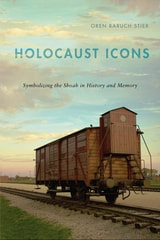
Holocaust Icons
Symbolizing the Shoah in History and MemoryOren Baruch Stier
Rutgers University Press, 2015
Jewish studies scholar Oren Stier offers in this volume new insight into symbols and the symbol-making process, as he traces the lives and afterlives of certain remnants of the Holocaust and their ongoing impact. Stier focuses in particular on four icons: the railway cars that carried Jews to their deaths, symbolizing the mechanics of murder; the Arbeit Macht Frei (“work makes you free”) sign over the entrance to Auschwitz, pointing to the insidious logic of the camp system; the number six million that represents an approximation of the number of Jews killed as well as mass murder more generally; and the persona of Anne Frank, associated with victimization. Stier shows how and why these icons—an object, a phrase, a number, and a person—have come to stand in for the Holocaust: where they came from and how they have been used and reproduced; how they are presently at risk from a variety of threats such as commodification; and what the future holds for the memory of the Shoah.
In illuminating these icons of the Holocaust, Stier offers valuable new perspective on one of the defining events of the twentieth century. He helps readers understand not only the Holocaust but also the profound nature of historical memory itself.

Home Front
Daily Life in the Civil War NorthPeter John Brownlee, Sarah Burns, Diane Dillon, Daniel Greene, and Scott Manning Stevens
University of Chicago Press, 2013
Home Front: Daily Life in the Civil War North reveals this side of the war as it happened, comprehensively examining the visual culture of the Northern home front. Through contributions from leading scholars from across the humanities, we discover how the war influenced household economies and the cotton economy; how the absence of young men from the home changed daily life; how war relief work linked home fronts and battle fronts; why Indians on the frontier were pushed out of the riven nation’s consciousness during the war years; and how wartime landscape paintings illuminated the nation’s past, present, and future.
A companion volume to a collaborative exhibition organized by the Newberry Library and the Terra Foundation for American Art, Home Front is the first book to expose the visual culture of a world far removed from the horror of war yet intimately bound to it.
Home and Beyond
Generative Phenomenology after HusserlAnthony J. Steinbock
Northwestern University Press, 1995
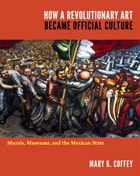
How a Revolutionary Art Became Official Culture
Murals, Museums, and the Mexican StateMary K. Coffey
Duke University Press, 2012

How to Read Barthes' Image-Music-Text
Ed White
Pluto Press, 2012
Roland Barthes remains one of the most influential cultural theorists of the postwar period and Image-Music-Text collects his most influential essays. Ed White provides students with a clear guide to this essential but difficult text.
As students are increasingly expected to write across a range of media, Barthes' work can be understood as an early mapping of what we now call interdisciplinary or multidisciplinary study. The book's detailed section-by-section readings makes Barthes' most important writings accessible to undergraduate readers.
This book is a perfect companion for teaching and learning Barthes' ideas in cultural studies and literary theory.
How to Think like a Philosopher
Twelve Key Principles for More Humane, Balanced, and Rational ThinkingJulian Baggini
University of Chicago Press, 2023
By now, it should be clear: in the face of disinformation and disaster, we cannot hot take, life hack, or meme our way to a better future. But how should we respond instead? In How to Think like a Philosopher, Julian Baggini turns to the study of reason itself for practical solutions to this question, inspired by our most eminent philosophers, past and present.
Baggini offers twelve key principles for a more humane, balanced, and rational approach to thinking: pay attention; question everything (including your questions); watch your steps; follow the facts; watch your language; be eclectic; be a psychologist; know what matters; lose your ego; think for yourself, not by yourself; only connect; and don’t give up. Each chapter is chockful of real-world examples showing these principles at work—from the discovery of penicillin to the fight for trans rights—and how they lead to more thoughtful conclusions. More than a book of tips and tricks (or ways to be insufferably clever at parties), How to Think like a Philosopher is an invitation to develop the habits of good reasoning that our world desperately needs.
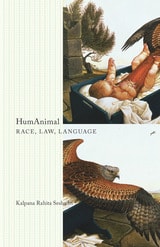
HumAnimal
Race, Law, LanguageKalpana Rahita Seshadri
University of Minnesota Press, 2012
HumAnimal explores the experience of dehumanization as the privation of speech. Taking up the figure of silence as the space between human and animal, it traces the potential for an alternate political and ethical way of life beyond law. Employing the resources offered by deconstruction as well as an ontological critique of biopower, Kalpana Rahita Seshadri suggests that humAnimal, as the site of impropriety opened by racism and manifested by silence, can be political and hazardous to power.
Through the lens of such works as Coetzee’s Foe, Chesnutt’s “The Dumb Witness,” Dr. Itard’s “wild child,” and aerialist Philippe Petit’s Man on Wire, Seshadri lucidly brings Derrida’s concept of the trace and his theory of sovereignty into conversation with Agamben’s investigation of the analytics of power. The task is twofold: on the one hand, to question the logocentric presumption that determines the separation between human and animal, and on the other to examine the conflation of this separation as an instrument of power in the practice of racism. Thus HumAnimal details the differences and intersections between Derrida and Agamben in their respective approaches to power, claiming that to think simultaneously within the registers of deconstruction (which conceives of power as a symptom of the metaphysics of presence) and biopolitics (which conceives of power as the operation of difference) entails a specification of the political and ethical consequences that attends the two perspectives.
When considered as the potential of language to refuse the law of signification and semantics, silence can neutralize the exercise of power through language, and Seshadri’s inquiry discloses a counterpower that does not so much oppose or destroy the politics of the subject but rather neutralizes it and renders it ineffective.
Human Being
A Philosophical AnthropologyThomas Langan, Edited by Antonio Calcagno
University of Missouri Press, 2009
Human Experience of Time
The Development of Its Philosophic MeaningCharles Sherover
Northwestern University Press, 2001
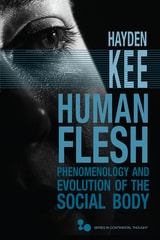
Human Flesh
Phenomenology and Evolution of the Social BodyHayden Kee
Ohio University Press, 0
Much recent research on human evolution emphasizes that social behavior and cognition are at the heart of everything that is distinctively human. This body of research generally understands sociality in terms of social reasoning and the brain that supports it. Human Flesh shifts the focus. What if human sociality is not primarily or exclusively located in the brain but rather is distributed throughout the body? What if the foundation of the human way of life lies in intercorporeity: the ways in which our affective, sensorimotor social bodies—our eyes, hands, voices, ears, and desires—open our bodies and minds up to one another?
Human Flesh develops a framework for exploring these questions based on Merleau-Ponty’s unfinished work on human evolution, combining it with contemporary research in phenomenology, embodied cognitive science, evolutionary anthropology, and primatology. It applies that framework to explore how the different senses and sensory organs take on their distinctively human variations to facilitate the intercorporeal, social human form of life. Along the way, the book interprets familiar facts about the human body in a new light and develops novel hypotheses concerning human evolution. In contrast to the widely discussed social brain hypothesis, its guiding premise is the social body hypothesis: the proposition that the human body has evolved in response to the challenges posed by the distinctively human social form of life.
Based on these concrete investigations into the human body, Human Flesh proposes a new way of thinking about familiar topics in the evolution of cognition literature, such as the emergence of higher orders of social cognition and the development of human symbolic and linguistic capacities. Ultimately, the book arrives at a new determination of human nature and the human form of life: To be human is to be Homo invisibilis, an animal obsessed with, adapted for, and dependent upon the invisible minds of other humans and the symbolic-cultural worlds opened up by their unique social bodies.
Human Identity
Claude Romano, Samuel R. Webb
Northwestern University Press, 2027
Examining philosophical views of human identity and calling for a shift in how we discuss this essential concept
The problem of identity is one of the most debated contemporary issues in philosophy and the social sciences. Human Identity does not approach this question from a sociological or political position but rather seeks to take a step away from the dominant approach in metaphysics and analytical philosophy, putting forward a dialogical concept of identity inspired mainly by the phenomenological-hermeneutic tradition. Claude Romano argues that the question of identity can only be satisfactorily formulated from the point of view of an intrinsically social understanding of the human being: The identity that matters in our lives is the one we can assume before others in truthful conduct and thus the one for which we can bear responsibility in the first person.
Romano carefully examines the full historical sweep of the philosophy of identity, referencing not only classic thinkers, including Descartes, Locke, Kant, and Husserl, but also contemporary interlocutors, such as Richard Moran and Charles Larmore. He engages in a sustained dialogue with these fellow philosophers, historical and current, while arguing for a complete paradigm shift in our approach to identity. Romano contends that we need to move on from the question Who?, as used by a prosecutor or judge to identify a guilty party, and instead look to the question used by Montaigne to define himself: Who am I?
Humanism and Secularization
From Petrarch to VallaRiccardo Fubini
Duke University Press, 2003
Humanism and Secularization offers a nuanced account of humanists contesting medieval ideas about authority not in order to reject Christianity or even orthodoxy, but to claim for themselves the right to define what it meant to be a Christian. Fubini analyzes key texts by major humanists—isuch as Petrarch, Poggio, and Valla—from the first century of the movement. As he subtly works out these authors’ views on religion and the Church from both biographical and textual information, Fubini reveals in detail the new historical consciousness that animated the humanists in their reading of classical and patristic texts. His book as a whole shows convincingly just how radical the humanism of the first half of the fifteenth century was and how sharply it challenged well-entrenched ideas and institutions. Appearing here in English for the first time, his work provides a model set of readings of humanist texts and a critical perspective on Italian humanism that will alter and enrich discussion and understanding of the nature of the humanist movement.
Humanism of the Other
Emmanuel Levinas
University of Illinois Press, 2003
Husserl and Transcendental Intersubjectivity
A Response to the Linguistic-Pragmatic CritiqueDan Zahavi
Ohio University Press, 2001
Against this background the book compares his view with the approaches to intersubjectivity found in Heidegger, Sartre, and Merleau-Ponty, and it then attempts to establish to what extent the phenomenological approach can contribute to the current discussion of intersubjectivity. This is achieved through a systematic confrontation with the language-pragmatical positions of Apel and Habermas.
Husserl and the Idea of Europe
Timo Miettinen
Northwestern University Press, 2020
Husserl and the Idea of Europe argues that Edmund Husserl’s late reflections on Europe should not be read either as departures from his early transcendental phenomenology or as simple exercises of cultural criticism but rather as systematic phenomenological reflections on generativity and historicity. Timo Miettinen shows that Husserl’s deliberations on Europe contain his most compelling and radical interpretation of the intersubjective, communal, and historical dimensions of phenomenology.
Husserl and his generation worked in the aftermath of World War I, as Europe struggled to redefine itself, and he penned his late writings as the clouds of World War II gathered. Decades later, the fall of the Soviet Union again altered the continent’s identity and its political and economic divisions. Miettinen writes as a European involved in the question of Europe, and many of the recent authors and critics he addresses in this work—such as Michel Foucault, Jacques Derrida, and Giorgio Agamben—likewise deeply engaged with this new problem of European identity. The book illuminates the multifaceted problem of the idea of European rationality, and it defends novel conceptions of universalism and teleology as necessary components of radical philosophical reflection.
Husserl at the Limits of Phenomenology
Maurice Merleau-Ponty
Northwestern University Press, 2002
Husserl, Heidegger, and the Space of Meaning
Paths Toward Trancendental PhenomenologySteven Galt Crowell
Northwestern University Press, 2001
In a penetrating and lucid discussion of the enigmatic relationship between the work of Edmund Husserl and Martin Heidegger, Steven Galt Crowell proposes that the distinguishing feature of twentieth-century philosophy is not so much its emphasis on language as its concern with meaning. Arguing that transcendental phenomenology is indispensable to the philosophical explanation of the space of meaning, Crowell shows how a proper understanding of both Husserl and Heidegger reveals the distinctive contributions of each to that ongoing phenomenological project.
Husserl
An Analysis of His PhenomenologyPaul Ricoeur, Edward G. Ballard and Lester E. Embree; Foreword by David Carr
Northwestern University Press, 1967