Results by title
192 books match the query 'Popular music' and 5 start with h
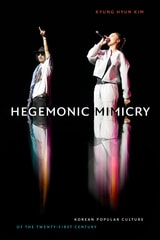
Hegemonic Mimicry
Korean Popular Culture of the Twenty-First CenturyKyung Hyun Kim
Duke University Press, 2021
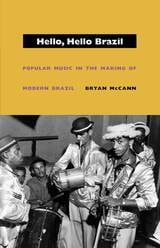
Hello, Hello Brazil
Popular Music in the Making of Modern BrazilBryan McCann
Duke University Press, 2004
McCann explores the links between the growth of the culture industry, rapid industrialization, and the rise and fall of Getúlio Vargas’s Estado Novo dictatorship. He argues that these processes opened a window of opportunity for the creation of enduring cultural patterns and demonstrates that the understandings of popular music cemented in the mid–twentieth century continue to structure Brazilian cultural life in the early twenty-first.
Hole in Our Soul
The Loss of Beauty and Meaning in American Popular MusicMartha Bayles
University of Chicago Press, 1996
Bayles defends the tough, affirmative spirit of Afro-American music against the strain of artistic modernism she calls 'perverse.' She describes how perverse modernism was grafted onto popular music in the late 1960s, and argues that the result has been a cult of brutality and obscenity that is profoundly anti-musical.
Unlike other recent critics of popular music, Bayles does not blame the problem on commerce. She argues that culture shapes the market and not the other way around. Finding censorship of popular music "both a practical and a constitutional impossibility," Bayles insists that "an informed shift in public tastes may be our only hope of reversing the current malignant mood."
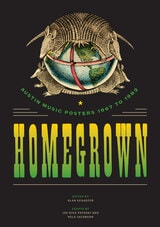
Homegrown
Austin Music Posters 1967 to 1982Edited by Alan Schaefer with essays by Joe Nick Patoski and Nels Jacobson
University of Texas Press, 2015
Before Austin became the “live music capital of the world” and attracted tens of thousands of music fans, it had a vibrant local music scene that spanned late sixties psychedelic and avant-garde rock to early eighties punk. Venues such as the Vulcan Gas Company and the Armadillo World Headquarters hosted both innovative local musicians and big-name touring acts. Poster artists not only advertised the performances—they visually defined the music and culture of Austin during this pivotal period. Their posters promoted an alternative lifestyle that permeated the city and reflected Austin’s transformation from a sleepy university town into a veritable oasis of underground artistic and cultural activity in the state of Texas.
This book presents a definitive survey of music poster art produced in Austin between 1967 and 1982. It vividly illustrates four distinct generations of posters—psychedelic art of the Vulcan Gas Company, early works from the Armadillo World Headquarters, an emerging variety of styles from the mid-1970s, and the radical visual aesthetic of punk—produced by such renowned artists as Gilbert Shelton, Jim Franklin, Kerry Awn, Micael Priest, Guy Juke, Ken Featherston, NOXX, and Danny Garrett. Setting the posters in context, Texas music and pop-culture authority Joe Nick Patoski details the history of music posters in Austin, and artist and poster art scholar Nels Jacobson explores the lives and techniques of the artists.

How Belfast Got the Blues
A Cultural History of Popular Music in the 1960sNoel McLaughlin and Joanna Braniff
Intellect Books, 2020
Was the first white European blues singer an Irish woman? What links The Rolling Stones to the birth of the Northern Ireland civil rights movement? Did the state suppress the work of a key countercultural director because his film was shot in Belfast in 1965?
This book provides the answers in an engaging and dynamic reconsideration of Belfast’s long-ignored contributions to the popular music and cultural politics of the 1960s. In an expansive socio-cultural history, Noel McLaughlin and Joanna Braniff explore how popular music engaged with and influenced the global cultural and political currents of the decade.
The popular history of Northern Ireland has been overshadowed by the violence of the Troubles. But How Belfast Got the Blues offers a corrective, reconsidering the period before 1969 and arguing that popular music in Northern Ireland was central to the politics of the time, in ways not previously understood or explored. In addition to big names like Van Morrison and Rory Gallagher, the authors highlight lesser-known artists—notably Ottilie Patterson, Ireland's first blues singer—and restore them to music history. By intertwining politics, culture, and key personalities, the authors reexamine this radical decade and the complex but essential relationship between music and identity in a place where it could mean the difference between life and death.