Results by title
1325 books match the query 'Psychology' and 47 start with h
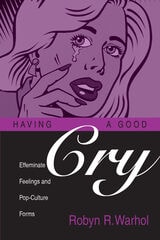
HAVING A GOOD CRY
Effeminate Feelings and Pop-Culture FormsRobyn R. Warhol
The Ohio State University Press, 2003
Robyn R. Warhol’s goal is to investigate the effects of readers’ emotional responses to formulaic fiction of the nineteenth and twentieth centuries on gendered subjectivity. She argues that modern literary and cultural studies have ignored nonsexual affectivity in their inquiries. The book elaborates on Warhol’s theory of affect and then focuses on sentimental stories, marriage plots, serialized novels, and soap operas as distinct genres producing specific feelings among fans.
Popular narrative forms use formulas to bring up familiar patterns of feelings in the audiences who love them. This book looks at the patterns of feelings that some nineteenth- and twentieth-century popular genres evoke, and asks how those patterns are related to gender. Soap operas and sentimentalism are generally derided as “effeminate” forms because their emotional range is seen as hyperfeminine. Having a Good Cry presents a celebration of effeminate feelings and works toward promoting more flexible, less pejorative concepts of gender. Using a psychophysiological rather than a psychoanalytic approach to reading and emotion, Warhol seeks to make readers more conscious of what is happening to the gendered body when we read.
Habits and Holiness
Ethics, Theology, and BiopsychologyEzra, OP Sullivan
Catholic University of America Press, 2021

Hamlet Vocation Coleridge And Wordsworth
Martin Greenberg
University of Iowa Press, 1986
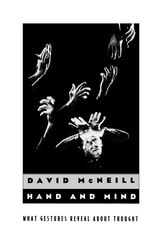
Hand and Mind
What Gestures Reveal about ThoughtDavid McNeill
University of Chicago Press, 1992
Hare Krishna
(Studies in Contemporary Religion)Federico Squarcini
Signature Books, 2004
When Bhaktivedanta arrived in America, it was a bold step because historically a guru who ventured outside of India was stripped of his Brahman status. However, the effort bore fruit—not the least of which was the type of intercultural understanding promoted by the current authors through their study of ISKCON’s place within the religion and culture of India.
Haunted Life
Visual Culture and Black ModernityMarriott, David
Rutgers University Press, 2007
Drawing on a range of comparative readings by writers, theorists, and filmmakers, including John Edgar Wideman, Frantz Fanon, Richard Wright, Issac Julien, Alain Locke, and Sidney Poitier, Haunted Life is a bold and original exploration of the legacies of black visual culture and the political, deeply sexualized violence that lies buried beneath it.
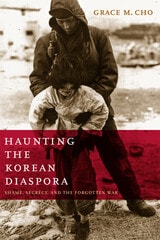
Haunting the Korean Diaspora
Shame, Secrecy, and the Forgotten WarGrace M. Cho
University of Minnesota Press, 2008
Grace M. Cho exposes how Koreans in the United States have been profoundly affected by the forgotten war and uncovers the silences and secrets that still surround it, arguing that trauma memories have been passed unconsciously through a process psychoanalysts call “transgenerational haunting.” Tracing how such secrets have turned into “ghosts,” Cho investigates the mythic figure of the yanggongju, literally the “Western princess,” who provides sexual favors to American military personnel. She reveals how this figure haunts both the intimate realm of memory and public discourse, in which narratives of U.S. benevolence abroad and assimilation of immigrants at home go unchallenged. Memories of U.S. violence, Cho writes, threaten to undo these narratives—and so they have been rendered unspeakable.
At once political and deeply personal, Cho’s wide-ranging and innovative analysis of U.S. neocolonialism and militarism under contemporary globalization brings forth a new way of understanding—and remembering—the impact of the Korean War.
Head and Heart
Perspectives from Religion and PsychologyFraser Watts
Templeton Press, 2013
The fact that this distinction has been so persistent makes it an important area of study. Head and Heart: Perspectives from Religion and Psychology takes an inter-disciplinary approach, linking the thinking of theologians and philosophers with theory and research in present-day psychology. The tradition of using framing questions that have been developed in theology and philosophy can now be brought into dialogue with scientific approaches developed within cognitive psychology and neuroscience. Though these scientific approaches have not generally used the terms “head” and “heart,” they have arrived at a similar distinction in other ways. There is a notable convergence upon the realization that humans have two modes of cognition at their disposal that correspond to “head” and “heart.” The time is therefore ripe to bring the approaches of theology and science in to dialogue—an important dialogue that has been heretofore neglected.
Head-to-Head and Heart-to-Heart
Contemporary Discourse on Deaf Mental HealthCathy J. Chovaz
Gallaudet University Press, 2026
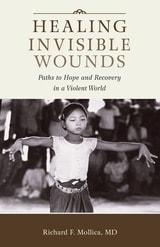
Healing Invisible Wounds
Paths to Hope and Recovery in a Violent WorldRichard F. Mollica
Vanderbilt University Press, 2006
Here is how Neil Boothby, Director of the Program on Forced Migration and Health at the Mailman School of Public Health, Columbia University, describes the book:
"Mollica provides a wealth of ethnographic and clinical evidence that suggests the human capacity to heal is innate--that the 'survival instinct' extends beyond the physical to include the psychological as well. He enables us to see how recovery from 'traumatic life events' needs to be viewed primarily as a 'mystery' to be listened to and explored, rather than solely as a 'problem' to be identified and solved. Healing involves a quest for meaning--with all of its emotional, cultural, religious, spiritual and existential attendants--even when bio-chemical reactions are also operative."
Healing Invisible Wounds reveals how trauma survivors, through the telling of their stories, teach all of us how to deal with the tragic events of everyday life. Mollica's important discovery that humiliation--an instrument of violence that also leads to anger and despair--can be transformed through his therapeutic project into solace and redemption is a remarkable new contribution to survivors and clinicians.
This book reveals how in every society we have to move away from viewing trauma survivors as "broken people" and "outcasts" to seeing them as courageous people actively contributing to larger social goals. When violence occurs, there is damage not only to individuals but to entire societies, and to the world. Through the journey of self-healing that survivors make, they enable the rest of us not only as individuals but as entire communities to recover from injury in a violent world.
Healing Narratives
Women Writers Curing Cultural Dis-easeWilentz, Gay
Rutgers University Press, 2000
Healing Songs
Ted Gioia
Duke University Press, 2006
Until recently, that is. Over the past few decades there has been a resurgence of interest in healing music. In the midst of this nascent revival, Ted Gioia, a musician, composer, and widely praised author, offers the first detailed exploration of the uses of music for curative purposes from ancient times to the present. Gioia’s inquiry into the restorative powers of sound moves effortlessly from the history of shamanism to the role of Orpheus as a mythical figure linking Eastern and Western ideas about therapeutic music, and from Native American healing ceremonies to what clinical studies can reveal about the efficacy of contemporary methods of sonic healing.
Gioia considers a broad range of therapies, providing a thoughtful, impartial guide to their histories and claims, their successes and failures. He examines a host of New Age practices, including toning, Cymatics, drumming circles, and the Tomatis method. And he explores how the medical establishment has begun to recognize and incorporate the therapeutic power of song. Acknowledging that the drumming circle will not—and should not—replace the emergency room, nor the shaman the cardiologist, Gioia suggests that the most promising path is one in which both the latest medical science and music—with its capacity to transform attitudes and bring people together—are brought to bear on the multifaceted healing process.
In Healing Songs, as in its companion volume Work Songs, Gioia moves beyond studies of music centered on specific performers, time periods, or genres to illuminate how music enters into and transforms the experiences of everyday life.
Healing Souls
Psychotherapy in the Latter-day Saint CommunityEric G. Swedin
University of Illinois Press, 2003
The psychological professions pervasive in twentieth-century American society were viewed as dangerous by some religious communities. Healing Souls describes the LDS community's mixed feelings about science and modernity: while valuing knowledge, Mormons feared a challenge to faith. Nonetheless, psychology courses were introduced at Brigham Young University, and LDS psychotherapists began to introduce new ideas and practices to the community.
Swedin portrays the rise of professional organizations such as the Association of Mormon Counselors and Psychotherapists, as well as the importance of Allen E. Bergin, first director of the BYU Institute for Studies in Values and Human Behavior. Bergin and others paved the way for the LDS adoption of professional psychotherapy as an essential element of their "cure of souls."
Important chapters take up LDS psychopathology, feminist dissent, LDS philosophies of sexuality, and the LDS rejection of mainstream psychotherapy's selfist psychology on the basis of theological doctrines of family salvation, eternalism, and the natural man.
Healing Souls contributes to a more complete historical picture of the mental health professions in North America and a better understanding of how religious traditions and psychology have influenced each other.

Health Psychology
A Discipline and a ProfessionEdited by George C. Stone
University of Chicago Press, 1987
Hello, This Is Your Body Talking
A Draw-It-Yourself Coloring BookLucia Capacchione
Ohio University Press, 2017
Help Your Marriage Survive
The Death Of A ChildPaul Rosenblatt
Temple University Press, 2000
Based on intensive interviews of 29 couples who experienced the death of a child, this book offers perspectives and advice on common marital problems experienced by bereaved parents. Each couple's problems are unique, but often the problems are connected to couple communication, sexuality, parenting of other children, the use of alcohol and drugs, blaming, and differences in such areas as whether to have another child, how to grieve, how to talk about the child who died, whether to go outside the marriage for support, and what to do with things and spaces that were the child's.
Although the book deals with pain and marital distress, it offers a message of hope. Grieving parents can and do get through the hard times, based on respect for differences, mutual understanding, and shared history.
Helping Children Live With Death and Loss
Dinah Seibert, Judy C. Drolet, and Joyce V. Fetro. Illustrations by Christine I. Stetter
Southern Illinois University Press, 2003
Helping Children Live with Death and Loss is a practical guide for parents, caregivers, teachers, clergy, funeral directors, and other adults who may interact with young children between the ages of two and ten. Utilizing a developmental approach that is critical for understanding the unique characteristics and needs among children under ten, the volume is enhanced by an accessible style and format, numerous illustrations, and the positive attitude that make it possible for any reader to comprehend and apply the concepts when discussing death and loss with young children.
The scope of concepts ranges from adult self-assessment to knowledge of children’s developmental stages in learning. Building on that foundation, the book provides four basic content areas for teaching, supplies sample questions and answers, and suggests strategies for teaching general death education as well as strategies for responding to a current death or loss. The resource concludes with print and internet sources for adults and children. Helping Children Live with Death and Loss also aids adults and children in improving their communication and coping skills, which are critical for managing loss and preparing for a healthier future.
Helping Groups Heal
Leading Groups in the Process of TransformationJan Paul Hook
Templeton Press, 2017
Helping Groups Heal presents “The Healing Cycle,” a grace-based model that facilitates healing and growth in groups. It has been tested with a variety of settings, and can be adapted to nearly any small group, from sex addiction therapy to marriage therapy to Bible studies.
The basic components of “The Healing Cycle” are grace, safety, vulnerability, truth, ownership, and confession. Helping Groups Heal guides the reader through these elements, offering case studies and practical advice from the voices of researchers and practitioners. Each chapter shows how “The Healing Cycle” moves its members to share their truth, own it, and make positive change in their lives. Each step of the process allows participants to move past surface issues and find depth in their understanding of their pain.
Whether you have been leading small groups for years or are about to lead your first session, Helping Groups Heal is an accessible, easy-to-follow guide through “The Healing Cycle” that will give each group member what’s needed to grow, relate, and heal.
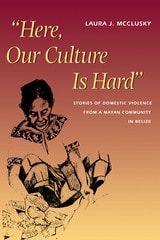
Here, Our Culture Is Hard
Stories of Domestic Violence from a Mayan Community in BelizeBy Laura McClusky
University of Texas Press, 2001
Marriage among the Maya of Central America is a model of complementarity between a man and a woman. This union demands mutual respect and mutual service. Yet some husbands beat their wives.
In this pioneering book, Laura McClusky examines the lives of several Mopan Maya women in Belize. Using engaging ethnographic narratives and a highly accessible analysis of the lives that have unfolded before her, McClusky explores Mayan women's strategies for enduring, escaping, and avoiding abuse. Factors such as gender, age inequalities, marriage patterns, family structure, educational opportunities, and economic development all play a role in either preventing or contributing to domestic violence in the village. McClusky argues that using narrative ethnography, instead of cold statistics or dehumanized theoretical models, helps to keep the focus on people, "rehumanizing" our understanding of violence. This highly accessible book brings to the social sciences new ways of thinking about, representing, and studying abuse, marriage, death, gender roles, and violence.
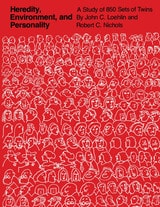
Heredity, Environment, and Personality
A Study of 850 Sets of TwinsBy John C. Loehlin and Robert C. Nichols
University of Texas Press, 1976
This volume reports on a study of 850 pairs of twins who were tested to determine the influence of heredity and environment on individual differences in personality, ability, and interests. It presents the background, research design, and procedures of the study, a complete tabulation of the test results, and the authors’ extensive analysis of their findings. Based on one of the largest studies of twin behavior conducted in the twentieth century, the book challenges a number of traditional beliefs about genetic and environmental contributions to personality development.
The subjects were chosen from participants in the National Merit Scholarship Qualifying Test of 1962 and were mailed a battery of personality and interest questionnaires. In addition, parents of the twins were sent questionnaires asking about the twins’ early experiences. A similar sample of nontwin students who had taken the merit exam provided a comparison group. The questions investigated included how twins are similar to or different from nontwins, how identical twins are similar to or different from fraternal twins, how the personalities and interests of twins reflect genetic factors, how the personalities and interests of twins reflect early environmental factors, and what implications these questions have for the general issue of how heredity and environment influence the development of psychological characteristics. In attempting to answer these questions, the authors shed light on the importance of both genes and environment and form the basis for different approaches in behavior genetic research.
Higher Mental Processes
Edited by Robert W. Proctor
University of Illinois Press, 2015
Contributors: P. Baratta, M. H. Birnbaum, M. E. Bulbrook, L. S. Buyer, R. A. Carlson, S. N. F. Chant, A. A. Cleveland, T. D. Cutsforth, R. L. Dominowski, E. Galanter, P. N. Johnson-Laird, M. G. Preston, Robert W. Proctor, and J. Tagart.
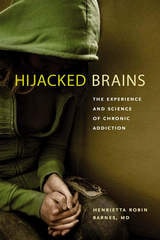
Hijacked Brains
The Experience and Science of Chronic AddictionHenrietta Robin Barnes
Dartmouth College Press, 2015
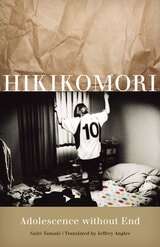
Hikikomori
Adolescence without EndSaito Tamaki
University of Minnesota Press, 2013
This is the first English translation of a controversial Japanese best seller that made the public aware of the social problem of hikikomori, or “withdrawal”—a phenomenon estimated by the author to involve as many as one million Japanese adolescents and young adults who have withdrawn from society, retreating to their rooms for months or years and severing almost all ties to the outside world. Saitō Tamaki’s work of popular psychology provoked a national debate about the causes and extent of the condition.
Since Hikikomori was published in Japan in 1998, the problem of social withdrawal has increasingly been recognized as an international one, and this translation promises to bring much-needed attention to the issue in the English-speaking world. According to the New York Times, “As a hikikomori ages, the odds that he’ll re-enter the world decline. Indeed, some experts predict that most hikikomori who are withdrawn for a year or more may never fully recover. That means that even if they emerge from their rooms, they either won’t get a full-time job or won’t be involved in a long-term relationship. And some will never leave home. In many cases, their parents are now approaching retirement, and once they die, the fate of the shut-ins—whose social and work skills, if they ever existed, will have atrophied—is an open question.”
Drawing on his own clinical experience with hikikomori patients, Saitō creates a working definition of social withdrawal and explains its development. He argues that hikikomori sufferers manifest a specific, interconnected series of symptoms that do not fit neatly with any single, easily identifiable mental condition, such as depression.
Rejecting the tendency to moralize or pathologize, Saitō sensitively describes how families and caregivers can support individuals in withdrawal and help them take steps toward recovery. At the same time, his perspective sparked contention over the contributions of cultural characteristics—including family structure, the education system, and gender relations—to the problem of social withdrawal in Japan and abroad.
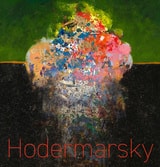
Hodermarsky
Daniel Hodermarsky
The Artist Book Foundation, 2024
Daniel Hodermarsky's work embraces both the representational and the abstract, reflecting the intricate spaces of both his psyche and shared human experience.
Daniel Hodermarsky was the son of Slovak immigrants who emigrated from Hačava to settle and work in the coal fields of Pennsylvania and later in the auto-manufacturing industries of Ohio. He served in World War II on the Western front and was awarded two presidential citations, two Croix de Guerre, and one combat star. He returned home with severe and persistent post-traumatic stress disorder that left an indelible mark on his life and art.
Throughout his career, Hodermarsky’s work embraced both the representational and the abstract. His early works experimented with new media (such as Dayglo paint) and new styles such as Op Art and performance. In the 1970s and beyond, he engaged landscape—rural, urban, and imaginary—wherein he explored the interplay of terrain (land or water, horizon, and sky). The human figure—Slovak farmers, wounded or dismembered soldiers, and mythical and historical figures—were among his favorite subjects. He was fascinated by how age, human nature, and personality combine to create the physical form. His eclectic themes mirror his own unique complexities and experiences. Later in his career, he focused on abstract works that reflect the intricate spaces of both his psyche and shared human experience.
A deeply spiritual man with a strong religious faith, Hodermarsky’s abstract paintings ask the existential questions that have challenged humankind across millennia. By showing us his own experience of these great mysteries, his art underscores life’s abiding beauty. Over his long career of interpreting the world in which he lived, Hodermarsky invites us to inhabit a realm filled with joy, reverence, and passion.
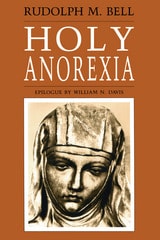
Holy Anorexia
Rudolph M. Bell
University of Chicago Press, 1985
"Everyone interested in anorexia nervosa . . . should skim this book or study it. It will make you realize how dependent upon culture the definition of disease is. I will never look at an anorexic patient in the same way again."—Howard Spiro, M.D., Gastroenterology
"[This] book is a first-class social history and is well-documented both in its historical and scientific portions."—Vern L. Bullough, American Historical Review
"A significant contribution to revisionist history, which re-examines events in light of feminist thought. . . . Bell is particularly skillful in describing behavior within its time and culture, which would be bizarre by today's norms, without reducing it to the pathological."—Mary Lassance Parthun, Toronto Globe and Mail
"Bell is both enlightened and convincing. His book is impressively researched, easy to read, and utterly fascinating."—Sheila MacLeod, New Statesman
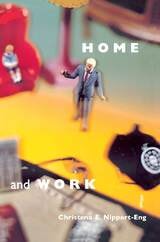
Home and Work
Negotiating Boundaries through Everyday LifeChristena E. Nippert-Eng
University of Chicago Press, 1996
Arguing that relationships between the two realms range from those that are highly "integrating" to those that are highly "segmenting," Nippert-Eng examines the ways people sculpt the boundaries between home and work. With remarkable sensitivity to the symbolic value of objects and actions, Nippert-Eng explores the meaning of clothing, wallets, lunches and vacations, and the places and ways in which we engage our family, friends, and co-workers. Commuting habits are also revealing, showing how we make the transition between home and work selves though ritualized behavior like hellos and goodbyes, the consumption of food, the way we dress, our choices of routes to and from work, and our listening, working, and sleeping habits during these journeys.
The ways each of us manages time, space, and people not only reflect but reinforce lives that are more "integrating" or "segmenting" at any given time. In clarifying what we take for granted, this book will leave you thinking in different ways about your life and work.
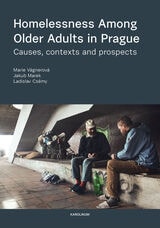
Homelessness among Older Adults in Prague
Causes, Contexts and ProspectsMarie Vágnerová, Ladislav Csémy, and Jakub Marek
Karolinum Press, 2020

Homicidal Insanity, 1800-1985
Janet Colaizzi, with a foreword by Jonas R. Rappeport
University of Alabama Press, 1989
Where madness meets the law, history leaves no easy verdict.
Homicidal insanity has remained a vexation to both the psychiatric and legal professions despite the panorama of scientific and social change during the past 200 years. The predominant opinion today among psychiatrists is that no correlation exists between dangerousness and specific mental disorders. But for generation after generation, psychiatrists have reported cases of insane homicide that were clinically similar. Although psychiatric theory changed and psychiatric nosology was inconsistent, the mental phenomena psychiatrists identified in such cases remained the same. The central thesis of Homicidal Insanity is that as psychiatric theory changed, psychiatrists regarded these phenomena variously as symptoms of mental disease or the disease in itself. It is possible to trace these phenomena throughout the history of Anglo-American psychiatric theory and practice. A secondary thesis of the book is that psychiatrists have used these phenomena as predictors and markers in the practical matters of preventing insane homicide and of testifying in the courts to defend the irresponsible and expose the culpable.
For 200 years, scientific and philosophical disagreement raised controversy and brought the issues to public attention. Still, to this day no rational method exists to discriminate the dangerous from the harmless in matters of involuntary commitment, nor insanity from crime in the courts.
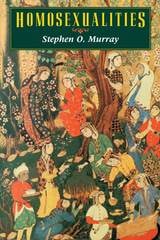
Homosexualities
Stephen O. Murray
University of Chicago Press, 2000
"[An] indispensable resource on same-sex sexual relationships and their social contexts. . . . Essential reading." —Choice
"[P]romises to deliver a lot, and even more extraordinarily succeeds in its lofty aims. . . . [O]riginal and refreshing. . . . [A] sensational book, part of what I see emerging as a new commonsense revolution within academe." —Kevin White, International Gay and Lesbian Review
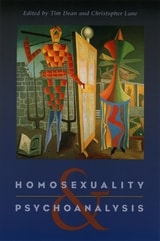
Homosexuality and Psychoanalysis
Edited by Tim Dean and Christopher Lane
University of Chicago Press, 2001
Why has homosexuality always fascinated and vexed psychoanalysis? This groundbreaking collection of original essays reconsiders the troubled relationship between same-sex desire and psychoanalysis, assessing homosexuality's status in psychoanalytic theory and practice, as well as the value of psychoanalytic ideas for queer theory. The contributors, each distinguished clinicians and specialists, reexamine works by Freud, Klein, Reich, Lacan, Laplanche, and their feminist and queer revisionists. Sharing a commitment to conscious and unconscious forms of homosexual desire, they offer new perspectives on pleasure, perversion, fetishism, disgust, psychosis, homophobia, AIDS, otherness, and love. Including two previously untranslated essays by Michel Foucault, Homosexuality and Psychoanalysis will interest cultural theorists, psychoanalysts, and anyone concerned with the fate of sexuality in our time.
Contributors:
Lauren Berlant
Leo Bersani
Daniel L. Buccino
Arnold I. Davidson
Tim Dean
Jonathan Dollimore
Brad Epps
Michel Foucault
Lynda Hart
Jason B. Jones
Christopher Lane
H. N. Lukes
Catherine Millot
Elizabeth A. Povinelli
Ellie Ragland
Paul Robinson
Judith Roof
Joanna Ryan
Ramón E. Soto-Crespo
Suzanne Yang
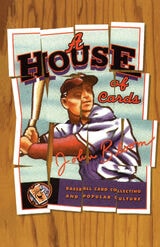
House Of Cards
Baseball Card Collecting and Popular CultureJohn Bloom
University of Minnesota Press, 1997
Explores the connection between baseball card collecting and nostalgia among men of the baby boom.
Baseball card collecting carries with it images of idealized boyhoods in the sprawling American suburbs of the postwar era. Yet in the past twenty years, it has grown from a pastime for children to a big-money pursuit taken seriously by adults. In A House of Cards, John Bloom uses interviews with collectors, dealers, and hobbyists as well as analysis of the baseball card industry and extensive firsthand observations to ask what this hobby tells us about nostalgia, work, play, masculinity, and race and gender relations among collectors.
Beginning in the late 1970s and into the early 1990s, baseball card collecting grew into a business that embodied traditional masculine values such as competition, savvy, and industry. In A House of Cards, Bloom interviews collectors who reveal ambivalence about the hobby’s emphasis on these values, often focusing on its alienating, lonely, and unfulfilling aspects. They express nostalgia for the ideal childhood world many middle-class white males experienced in the postwar years, when they perceived baseball card collecting as a form of play, not a moneymaking enterprise. Bloom links this nostalgia to anxieties about deindustrialization and the rise of the civil rights, feminist, and gay rights movements. He examines the gendered nature of swap meets as well as the views of masculinity expressed by the collectors: Is the purpose of baseball card collecting to form a community of adults to reminisce or to inculcate young men with traditional masculine values? Is it to establish “connectedness” or to make money? Are collectors striving to reinforce the dominant culture or question it through their attempts to create their own meaning out of what are, in fact, mass-produced commercial artifacts? Bloom provides a fascinating exploration of male fan culture, ultimately providing insight into the ways white men of the baby boom view themselves, masculinity, and the culture at large. [Excerpt:]“Collectors often decried how money had ruined their hobby, making it hard for them to form meaningful friendships through their cards. Money, however, made the hobby not only profitable but also more serious, more instrumental, and therefore more manly. The same collectors who complained about greed often bragged in the same interview about the value of their cards. Yet money, in turn, made the hobby less akin to child’s play and more like work: lonely, competitive, unfulfilling, and alienating.”
How Did Poetry Survive?
The Making of Modern American VerseJohn Timberman Newcomb
University of Illinois Press, 2013
This book traces the emergence of modern American poetry at the turn of the nineteenth century. With a particular focus on four "little magazines"--Poetry, The Masses, Others, and The Seven Arts--John Timberman Newcomb shows how each advanced ambitious agendas combining urban subjects, stylistic experimentation, and progressive social ideals. While subsequent literary history has favored the poets whose work made them distinct--individuals singled out usually on the basis of a novel technique--Newcomb provides a denser, richer view of the history that hundreds of poets made.

How Do I Know Thee?
Theatrical and Narrative Cognition in Seventeenth-Century FranceRichard E. Goodkin
Northwestern University Press, 2015
The classical period in France presents a particularly lively battleground for the transition between oral-visual culture, on the one hand, and print culture on the other. The former depended on learning from sources of knowledge directly, in their presence, in a manner analogous to theatrical experience. The latter became characterized by the distance and abstraction of reading. How Do I Know Thee? explores the ways in which literature, philosophy, and psychology approach social cognition, or how we come to know others. Richard E. Goodkin describes a central opposition between what he calls “theatrical cognition” and “narrative cognition,” drawing both on scholarship on literary genre and mode, and also on the work of a number of philosophers and psychologists, in particular Descartes’s theory of cognition, Freudian psychoanalysis, mid‑twentieth‑century behaviorism, and the field of cognitive science. The result is a study that will be of interest not only to students of the classical period but also to those in the corresponding disciplines.
How Does Analysis Cure?
Heinz Kohut
University of Chicago Press, 1984
An important work for working psychoanalysts, this book is important not only for psychologists, but also for anyone interested in the complex inner workings of the human psyche.
How Emotions Work
Jack Katz
University of Chicago Press, 1999
How Healthy Are We?
A National Study of Well-Being at MidlifeEdited by Orville Gilbert Brim, Carol D. Ryff, and Ronald C. Kessler
University of Chicago Press, 2003
The MacArthur Foundation addressed these questions head-on by funding a landmark study known as "Midlife in the U.S.," or MIDUS. For the first time in a single study, researchers were able to integrate epidemiological, sociological, and psychological assessments, as well as innovative new measures to evaluate how work and family life influence each other.
How Healthy Are We? presents the key findings from the survey in three sections: physical health, quality of life and psychological well-being, and the contexts (family, work) of the midlife. The topics covered by almost forty scholars in a wide variety of fields are vast, including everything from how health and well-being vary with socioeconomic standing, gender, race, or region of the country to how middle-aged people differ from younger or older adults in their emotional experience and quality of life. This health—the study measures not only health-the absence of illness—but also reports on the presence of wellness in middle-aged Americans.
The culmination of a decade and a half of research by leading scholars, How Healthy Are We? will dramatically alter the way we think about health in middle age and the factors that influence it. Researchers, policymakers, and others concerned about the quality of midlife in contemporary America will welcome its insights.
* Having a good life means having good relationships with others to almost 70% of those surveyed. Less than 40% mentioned their careers.
* Reports of disruptive daily stressors vary by age, with young adults and those in midlife experiencing more than those in later adulthood.
* Men have higher assessments of their physical and mental health than woman until the age of 60.

How Monkeys See the World
Inside the Mind of Another SpeciesDorothy L. Cheney and Robert M. Seyfarth
University of Chicago Press, 1990
"This reviewer had to be restrained from stopping people in the street to urge them to read it: They would learn something of the way science is done, something about how monkeys see their world, and something about themselves, the mental models they inhabit."—Roger Lewin, Washington Post Book World
"A fascinating intellectual odyssey and a superb summary of where science stands."—Geoffrey Cowley, Newsweek
"A once-in-the-history-of-science enterprise."—Duane M. Rumbaugh, Quarterly Review of Biology
How Science Takes Stock
The Story of Meta-AnalysisMorton Hunt
Russell Sage Foundation, 1997
How the Clinic Made Gender
The Medical History of a Transformative IdeaSandra Eder
University of Chicago Press, 2022
Today, a world without “gender” is hard to imagine. Gender is at the center of contentious political and social debates, shapes policy decisions, and informs our everyday lives. Its formulation, however, is lesser known: Gender was first used in clinical practice. This book tells the story of the invention of gender in American medicine, detailing how it was shaped by mid-twentieth-century American notions of culture, personality, and social engineering.
Sandra Eder shows how the concept of gender transformed from a pragmatic tool in the sex assignment of children with intersex traits in the 1950s to an essential category in clinics for transgender individuals in the 1960s. Following gender outside the clinic, she reconstructs the variable ways feminists integrated gender into their theories and practices in the 1970s. The process by which ideas about gender became medicalized, enforced, and popularized was messy, and the route by which gender came to be understood and applied through the treatment of patients with intersex traits was fraught and contested. In historicizing the emergence of the sex/gender binary, Eder reveals the role of medical practice in developing a transformative idea and the interdependence between practice and wider social norms that inform the attitudes of physicians and researchers. She shows that ideas like gender can take on a life of their own and may be used to question the normative perceptions they were based on. Illuminating and deeply researched, the book closes a notable gap in the history of gender and will inspire current debates on the relationship between social norms and medical practice.
How the Clinic Made Gender
The Medical History of a Transformative IdeaSandra Eder
University of Chicago Press, 2022
This is an auto-narrated audiobook edition of this book.
An eye-opening exploration of the medical origins of gender in modern US history.
Today, a world without “gender” is hard to imagine. Gender is at the center of contentious political and social debates, shapes policy decisions, and informs our everyday lives. Its formulation, however, is lesser known: Gender was first used in clinical practice. This book tells the story of the invention of gender in American medicine, detailing how it was shaped by mid-twentieth-century American notions of culture, personality, and social engineering.
Sandra Eder shows how the concept of gender transformed from a pragmatic tool in the sex assignment of children with intersex traits in the 1950s to an essential category in clinics for transgender individuals in the 1960s. Following gender outside the clinic, she reconstructs the variable ways feminists integrated gender into their theories and practices in the 1970s. The process by which ideas about gender became medicalized, enforced, and popularized was messy, and the route by which gender came to be understood and applied through the treatment of patients with intersex traits was fraught and contested. In historicizing the emergence of the sex/gender binary, Eder reveals the role of medical practice in developing a transformative idea and the interdependence between practice and wider social norms that inform the attitudes of physicians and researchers. She shows that ideas like gender can take on a life of their own and may be used to question the normative perceptions they were based on. Illuminating and deeply researched, the book closes a notable gap in the history of gender and will inspire current debates on the relationship between social norms and medical practice.
Human Attachment
Virginia Colin
Temple University Press, 1996
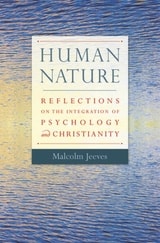
Human Nature
Reflections on the Integration of Psychology and ChristianityMalcolm Jeeves
Templeton Press, 2006
College and university professors have been demanding that this book, out of print for several years, be made available again, as it is unique in its field. This new edition, which includes a new preface and guidance to current literature, offers a balanced study of the implications of scientific developments in psychology and neuroscience for traditional Christian beliefs.
Malcolm Jeeves, former editor-in-chief of Neuropsychologia, a leading international scientific journal in behavioral and cognitive neuroscience, explores the intersection of science and faith in defining what it means to be human. He reports on recent scientific research on consciousness and the link between mind, brain, and behavior. He examines issues such as determinism by indicating the possible relevance of chaos theory to enduring concerns about freedom and responsibility. He looks at similarities and differences between human nature and animal nature. He reexamines traditional dualist views of soul and body in the light of contemporary research on mind and brain and argues for a wholistic model. This leads to addressing questions such as: does spiritual awareness depend on the intactness of our brains or does spirituality stand apart from our biological substrate?
Jeeves' insightful analysis of the ways recent findings in psychology relate to certain Christian beliefs about people expands the global science religion dialogue.
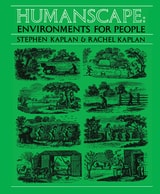
Humanscape
Environments for PeopleStephen Kaplan & Rachel Kaplan
Michigan Publishing Services, 2017
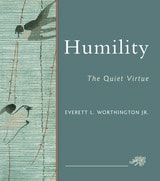
Humility
The Quiet VirtueEverett L. Worthington
Templeton Press, 2007
Humility is a virtue that can be difficult to describe because of its paradoxical nature: claiming authority about humility and claiming that one is humble both suggest a lack of humility. In Humility, Everett L.Worthington Jr. seeks a way around this paradox by looking to people who are considered by others to be humble. He suggests people as examples: Jesus, Siddhartha, Gandhi, Mother Teresa, and Martin Luther King Jr. He looks, too, at people whom he admires. He examines the characteristics of humility they share, and, in doing so, formulates a working understanding of humility.
Science has made few attempts to measure humility, Worthington points out, but those few studies do give a different, but complementary, perspective on humility than the wisdom of the ages. Humility may not be a skill we can learn, but people can be inspired to be humble. "Great people—and ordinary people acting nobly—can inspire us," Worthington writes. "When we catch the spirit, we can transfer that spirit from ourselves to others." Quotations interspersed throughout the book reinforce the message that the unassuming virtue of humility transforms lives.
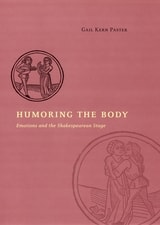
Humoring the Body
Emotions and the Shakespearean StageGail Kern Paster
University of Chicago Press, 2004
Using notions drawn from humoral medical theory to untangle passages from important moral treatises, medical texts, natural histories, and major plays of Shakespeare and his contemporaries, Paster identifies a historical phenomenology in the language of affect by reconciling the significance of the four humors as the language of embodied emotion. She urges modern readers to resist the influence of post-Cartesian abstraction and the disembodiment of human psychology lest they miss the body-mind connection that still existed for Shakespeare and his contemporaries and constrained them to think differently about how their emotions were embodied in a premodern world.

Hung Jury
The Diary of a Menendez JurorHazel Thornton
Temple University Press, 2017
More than two decades after serving as a juror on the high-profile seven-month murder trial People v. Erik Galen Menendez, Hazel Thornton updates her book Hung Jury with a new preface and a postscript essay of observations about the Menendez brothers’ second trial. Includes psychological commentary by Lawrence S. Wrightsman and Amy J. Posey, and legal commentary by Alan Scheflin.
Hypothesis and Evidence in Psychoanalysis
Marshall Edelson
University of Chicago Press, 1984