Results by title
584 books match the query 'Short Stories (single author)' and 31 start with h
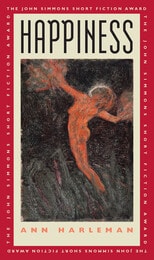
Happiness
Ann Harleman
University of Iowa Press, 1994
In Ann Harleman's remarkable debut collection, men and women of extraordinary passions look for and sometimes find the hidden heart of ordinary life. Testing themselves and each other, they search for ways to connect. "Understanding," says the troubled voyeur-narrator of "Imaginary Colors," "is the booby prize"; these characters go for experience. Reckless explorers of inner space, they try the limits of their lives.
A gravely ill woman seeks forgiveness from her grown-up daughters for an adulterous past which she does not really regret. A boy watches anxiously—and enviously—while his brother flaunts an interracial love affair in front of their dangerous father. In strike-torn Warsaw during the rise of Solidarity, an American professor and his Polish housekeeper reach toward each other from their respective cages of loneliness. A girl's determined pursuit of her first sexual experience brings her more, and less, than she bargained for.
Harleman combines a clear eye with a generous heart, revealing her characters-misguided, selfish, loving, brave—through a compassionate, often humorous probing of their inner and outer worlds. In "It Was Humdrum" a system analyst hires a detective to find the mother who left him as an infant, while his young wife leaves him daily for afternoon trysts with her Puerto Rican lover. A woman assaulted by a teenage gang escapes physically unharmed but forever changed. The past overtakes a woman who has married for love, not of her husband, but of his small daughter. A greeting card poet pursued by stereotyped images of happiness flees from the woman he loves and the brother he never knew he had.
The supple language of these twelve stories—wise, funny, delighting in the sensuous—makes us feel the beauty and terror of a fully lived life. Harleman's characters, whether they succeed or fail, show us the way to a deeper exploration of our own lives.

Happy Like This
Ashley Wurzbacher
University of Iowa Press, 2019
The characters in Happy Like This are smart girls and professional women—social scientists, linguists, speech therapists, plant physiologists, dancers—who search for happiness in roles and relationships that are often unscripted or unconventional. In the midst of their ambivalence about marriage, monogamy, and motherhood and their struggles to accept and love their bodies, they look to other women for solidarity, stability, and validation. Sometimes they find it; sometimes they don’t. Spanning a wide range of distinct perspectives, voices, styles, and settings, the ten shimmering stories in Happy Like This offer deeply felt, often humorous meditations on the complexity of choice and the ambiguity of happiness.

Har Mar
StoriesHilal Isler
Northwestern University Press, 2026
Journeying through the emotional migrations of women living in the in-between
In Hilal Isler’s gripping debut story collection, Har Mar, women in the early twenty-first century navigate the complex spaces between countries, families, languages, and selves. Isler’s characters are all on the verge of something—success, rebellion, revelation—and they want to disappear as much as they want to be seen. Moving back and forth between Turkey and the United States, these stories trace migrations both physical and emotional: a nanny plots to flee the wealthy family she cares for in the Grand Bazaar of Istanbul; in Har Mar, a quiet mall tucked in the suburbs of Minneapolis, a bookseller escapes her grief in a complicated relationship with a wig retailer; an actress is hired by a famous American novelist to portray her at public events.
The women in Har Mar don’t always make sound decisions, and they’re not trying to be heroes. But they are reaching—imperfectly, but fiercely—for connection, truth, and home. With moving prose and a deep sense of longing, this collection explores what it means to grow up in the margins, to live in translation, and to build a life at the edge of belonging.
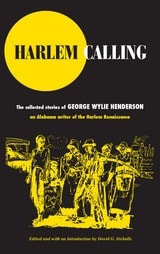
Harlem Calling
The Collected Stories of George Wylie HendersonGeorge Wylie Henderson
University of Michigan Press, 2005
"A very interesting collection . . . both for the way that Henderson's work links the literature of the Harlem Renaissance with the black protest literature of Richard Wright and others, and for Henderson's subject matter and the places that he chose to publish."
--Nellie McKay, University of Wisconsin-Madison
"There is really no other black fiction quite like this that I know of, from the 1920s through the 1930s . . . That Henderson was publishing stories in a newspaper and magazine for the mass market after the period when 'the vogue of the Negro' had allegedly ended is significant in itself. The stories are interesting in relation to both the Negro renaissance and the turn to proletarian fiction."
--George Hutchinson, Indiana University
Harlem Calling collects carefully crafted short stories about life in Alabama, Memphis, and New York City that dramatize the profound ambivalence many blacks felt about their participation in the Great Migration. George Wylie Henderson's tales of the rural South are sometimes nostalgic but also present the hard work and violence of everyday life there, and his stories set in Harlem present the glamour of urban life, while they also are concerned with poverty and social mores.
Henderson enjoyed a widespread popular audience for his periodical fiction in the 1930s and '40s and was a regular contributor to the New York Daily News and Redbook magazine, where the seventeen stories in Harlem Calling were originally published. Until the publication of Harlem Calling, Henderson had been chiefly known for his critically acclaimed 1935 novel about an Alabama farmhand, Ollie Miss, and the 1946 sequel narrating her son's migration to Harlem, Jule. Contemporary critics have favorably compared Henderson's writing to that of Zora Neale Hurston and Langston Hughes, as it captures the life of the black migrant with a style that embraces simplicity and honesty.
Collected here by literary scholar and editor David G. Nicholls, and contextualized with an informative and insightful introduction, Harlem Calling provides a unique perspective on the Harlem Renaissance and on the African American literary tradition.
George Wylie Henderson (1904-65) was born in Alabama, worked in the printing trade, and began writing fiction shortly after graduating from the Tuskegee Institute. He migrated to Harlem with his wife in the late 1920s and published his first story in the New York Daily News in 1932. He also published two novels, Ollie Miss (1935) and Jule (1946). David G. Nicholls is the Director of Book Publications for the Modern Language Association and holds a Ph.D. in English from the University of Chicago. He is author of Conjuring the Folk: Forms of Modernity in African America.
Heartwall
Richard Jackson
University of Massachusetts Press, 2000
Taking its title from a poem by Paul Celan that is both elegiac and hopeful, but also playing off the notion of the “hart” walls erected to corral deer for a medieval hunt that was more a slaughter, and evoking the very physiology of the heart itself, this collection of poems explores the possibilities for love and feeling in a world besieged by tragedies in Bosnia, Kosovo, Rwanda, and elsewhere. At times lyrical, at times satirical, and written in a surrealistic style that ranges from the formal to the aphoristic, Heartwall explores the complex and sometimes confounding relationship between the personal and the political, between our individual perceptions and the larger vision they suggest. These are poems that ask forgiveness, offer praise, and carry enough irony never to seek redemption. They are, at heart, love poems. According to the late William Matthews, Jackson's poems tell us “what it means to belong in history. . . . The wonderful amplitude . . . testifies that we can live with such chaos and not lie about it or ignore it: indeed the poems are a demonstration of how we might do such a thing.”
Heavier Than Air
StoriesNona Caspers
University of Massachusetts Press, 2008
Heirlooms
storiesRachel Hall
BkMk Press, 2016
Hell and Ohio
Stories of Southern AppalachiaChris Holbrook
Ohio University Press, 1995
Originally published by Gnomon Press in 1995Hell and Ohio: Stories of Southern Appalachia brings together a powerful collection of stories that illuminate the complexities of contemporary Appalachian life. Drawing on the landscapes, communities, and traditions of eastern Kentucky and the greater Southern Appalachian region, Chris Holbrook crafts nuanced portraits of people negotiating family ties, economic hardship, migration, memory, and belonging. His characters confront loss, resilience, and change while remaining deeply rooted in the culture and terrain that shape their lives. Written with remarkable empathy and a keen ear for regional speech, these stories move beyond stereotypes to reveal the richness and contradictions of mountain communities. Holbrook's fiction explores the tensions between home and exile, tradition and modernity, and individual aspiration and communal identity, offering readers an intimate view of a region often misunderstood but rarely rendered with such authenticity. Praised by novelist Robert Morgan for capturing "the voices" and "living vivid details of contemporary life in the mountains," and described in Appalachian Journal as "beautifully crafted, nuanced, empathetic," Hell and Ohio stands as an important contribution to Appalachian literature and the modern American short story.
Her America
“A Jury of Her Peers” and Other StoriesSusan Glaspell
University of Iowa Press, 2010
One of the preeminent authors of the early twentieth century, Susan Glaspell (1876–1948) produced fourteen ground-breaking plays, nine novels, and more than fifty short stories. Her work was popular and critically acclaimed during her lifetime, with her novels appearing on best-seller lists and her stories published in major magazines and in The Best American Short Stories. Many of her short works display her remarkable abilities as a humorist, satirizing cultural conventions and the narrowness of small-town life. And yet they also evoke serious questions—relevant as much today as during Glaspell’s lifetime—about society’s values and priorities and about the individual search for self-fulfillment. While the classic “A Jury of Her Peers” has been widely anthologized in the last several decades, the other stories Glaspell wrote between 1915 and 1925 have not been available since their original appearance. This new collection reprints “A Jury of Her Peers”—restoring its original ending—and brings to light eleven other outstanding stories, offering modern readers the chance to appreciate the full range of Glaspell’s literary skills.
Glaspell was part of a generation of midwestern writers and artists, including Sherwood Anderson, Sinclair Lewis, Willa Cather, and F. Scott Fitzgerald, who migrated first to Chicago and then east to New York. Like these other writers, she retained a deep love for and a deep ambivalence about her native region. She parodied its provincialism and narrow-mindedness, but she also celebrated its pioneering and agricultural traditions and its unpretentious values. Witty, gently humorous, satiric, provocative, and moving, the stories in this timely collection run the gamut from acerbic to laugh-out-loud funny to thought-provoking. In addition, at least five of them provide background to and thematic comparisons with Glaspell’s innovative plays that will be useful to dramatic teachers, students, and producers.
With its thoughtful introduction by two widely published Glaspell scholars, Her America marks an important contribution to the ongoing critical and scholarly efforts to return Glaspell to her former preeminence as a major writer. The universality and relevance of her work to political and social issues that continue to preoccupy American discourse—free speech, ethics, civic justice, immigration, adoption, and gender—establish her as a direct descendant of the American tradition of short fiction derived from Hawthorne, Poe, and Twain.
Her Kind of Want
Jennifer S. Davis
University of Iowa Press, 2002
Set mainly in the small towns of Alabama, the stories in Her Kind of Want ache with the relentless longing of the poor, struggling, usually discarded southern women who tell us their lives—lives that seem to revolve around men whose only presence is their absence.
Bebe, Luna, Melly, Little Hula, Dena. These are just a few of the women we meet in Jennifer Davis's award-winning collection. Women who married too fast, had children too young, and drink too much. Yet beneath their unpolished exteriors, these women are flesh and blood, and their wants and needs are as severe and deep as any.
Davis's characters relate their stories in voices as complex and raw as their southern environment. Each tale may sound slightly familiar—an unwanted pregnancy, a fast car flying down a country road—but Davis moves beyond the familiar stories of the rural South to expose the gaps that connect these women, creating startlingly real and vibrant characters.
Although often bleak and sometimes disturbing, Her Kind of Want is a celebration of southern people, their perseverance, their spirit, and their determination to make the ugly beautiful.
Here Beneath Low-Flying Planes
Merrill Feitell
University of Iowa Press, 2004
The stories in Merrill Feitell’s award-winning collection, Here Beneath Low-Flying Planes, examine the fleeting and unexpected moments of human connection, reminding us of the indelible impact we have on one another no matter how insignificant or anonymous we might feel under our huge, collective sky.
Feitell’s characters deal with shifting dynamics in relationships—whether they be best friends, lovers, family, or even strangers—that consistently leave them torn between two places or commitments. In the title story, Janie has undergone a painful childbirth experience and her group of friends must pioneer new dynamics while she wonders how to bring her old self back. In “Bike New York!” amid thirty thousand cyclists, a man on the brink of marriage meets a young girl who, in a tiny Brooklyn bakery, affirms both who he has been and who he is going to be. On this short detour from normal life he comes to understand “the funny thing about finding your way in the world. There was a place laid out for you . . . and even as you stepped into it, happy for the chance to rest, you wondered how you ever ended up there.”
Funny, big-hearted, and deft, Here Beneath Low-Flying Planes navigates the reader through the life that happens when you’re planning other things. It is a collection of experiences, roads not taken, and the intense and unforeseen sparks of connection we hope for.
Hibernate
Elizabeth Eslami
The Ohio State University Press, 2014
A masterful storyteller as likely to draw blood as to heal, Eslami moves her restless, resilient characters across an uneven landscape toward a hard earned place of peace.

Hints of His Mortality
David Borofka
University of Iowa Press, 1996
The award-winning stories in David Borofka's Hints of His Mortality focus on the male of the species, on bewildered, guilt-ridden, hypersensitive characters adrift in a sea of changing roles and expectations. Although they yearn for the ideal—whether physical or spiritual—and for that sense of divine connection suggested by Wordsworth's Intimations of Immortality, they usually end up settling for what seems the next best thing: sex or religion.
The amorous scrimmage between male and female in these taut, intense stories is a contest that leaves no one unmarked. The hapless ministers in Borofka's memorable collection find that their daily grind of professional piety leaves them with more questions than answers. The men and boys in Hints of His Mortality are always aware of their flaws, for Borofka's vital characters have the capacity to register the shadows of their every blemish. Like Ferguson of the title story, haunted for twenty years by his failures of conscience, each protagonist experiences the inexorable fallibility of his own nature, agonizes over his moral weakness, and longs for escape from this life in which “our birth is but a sleep and a forgetting." Yet each is redeemed by his ongoing struggle for compassion and understanding.
Hoaxes and Other Stories
Brian DiNuzzo
University of Wisconsin Press, 2022
The characters populating Brian DiNuzzo’s debut short story collection may be eccentrics, but at their core they are struggling to get through life, dealing with unmanageable bosses and tedious jobs, and trying to maintain their interpersonal and romantic relationships. These are people seeking to improve their circumstances, people striving for utopia but willing to accept much less. Frustrated and weary, downtrodden and misguided, they still hold out for the dim light of hope.
DiNuzzo navigates ordinary settings—Southern California, South Philadelphia, suburban and city streets, office buildings, derelict apartment complexes, the public library, the airport, the shopping mall—with quirky characters and odd situations. These stories ask us to wonder how falsehoods pervade private life. Through his twelve distinct tales, DiNuzzo asks: What’s real? What’s fake? Does it matter?
Home in the Dark
Selected StoriesJayanta Dey
Seagull Books, 2025
Home in the Dark peels back the polished surface of middle-class life to expose the shadows lurking underneath: violence, betrayal, and the unsettling truths we refuse to see. In these fifteen gripping stories, Jayanta Dey weaves a world where desperation takes strange forms: a woman on the brink of suicide finds an unlikely savior in a rat, a stolen clock carries the weight of communal hatred, and a writer–publisher duo rides the highs of literary success—until their lucrative business in pornography turns against them.
Set in Calcutta and its suburbs, these tales decipher the moral and psychological conflicts simmering beneath genteel facades, where people will do anything to survive. With elements of the macabre and the psychological, Home in the Dark delivers sharp twists that unsettle as much as they illuminate. Translated from Bengali by Sayari Debnath, this collection brings a new and daring voice to readers, offering a rare glimpse into the dark undercurrents of contemporary urban life in India.
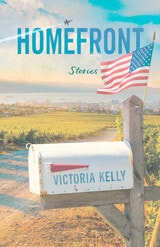
Homefront
StoriesVictoria Kelly
University of Nevada Press, 2024
Foreword INDIES 2024 Silver Winner for War & Military (Adult Fiction)!
Inspired by Victoria Kelly’s experiences as the wife of a fighter pilot during three wartime deployments, this collection follows women whose lives have been impacted by war and military service as they struggle with their fragile ideas of home.
In “Prayers of an American Wife,” a Navy wife grapples with loneliness when she discovers that her neighbor, also a Navy wife, is having an affair while their husbands are deployed on the same aircraft carrier. Tensions rise in “The Strangers of Dubai” as a soldier on leave tries to buy his wife a souvenir from an Afghan vendor. After attending eight funerals with fellow military wives whose husbands died in the Iraq war, the protagonist in “Finding the Good Light” divorces her Navy husband and tries to start a new life as a movie star. These, along with the eleven other stories in this collection, explore the emotional landscape of the resilient women who remain on the homefront.
Kelly’s stories offer readers an intimate, eye-opening look into the sacrifices and steadfastness of military family members.
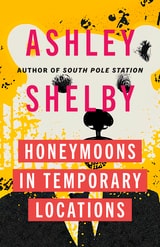
Honeymoons in Temporary Locations
Ashley Shelby
University of Minnesota Press, 2024
Eclectic, experimental, and wildly imaginative climate fictions from a familiar world hauntingly transformed
Climate disaster–induced fugue states, mutinous polar bears, support groups for recently displaced millionaires, men who hear trees, and women who lose their wives on environmental refugee resettlement trips. In these dispatches from a weirding world, the absurd and fantastic are increasingly indistinguishable from reality. Exploring this liminal moment, Ashley Shelby’s collection of climate fictions imagines a near future that is both unnervingly familiar and subversively strange.
Set in the same post-climate-impact era, these stories range from playfully satirical to poignantly humane, bending traditional narrative forms and coming together into a brilliant and unusual contemplation of our changing world. Featuring the Hugo-nominated novelette “Muri,” Honeymoons in Temporary Locations processes the unthinkable through riotous inventions like guided tours of submerged cities, Craigslist ads placed by climate refugees, and cynical pharmaceutical efforts to market a drug to treat solastalgia, the existential distress caused by environmental change.
Shelby reengineers the dystopic bleakness that characterizes so much climate fiction by embracing an eclectic experimentalism leavened with humor, irony, and the inevitable bathos that characterizes the human experience. Unexpected and clever, this innovative collection confirms her status as a visionary writer whose work expands the forms, attitudes, and possibilities of climate fiction.
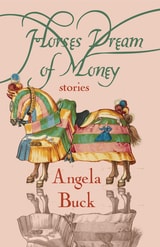
Horses Dream of Money
StoriesAngela Buck
University of Alabama Press, 2021
2021 Big Other Book Award Fiction Finalist
A visceral, stark, and deadpan collection of stories that brilliantly fuse humor with horror
Horses Dream of Money is a daring collection of tales, darkly humorous, that eerily channels the surreal and sinister mood of the times. Preoccupied with the fault lines between life and death, and veering often into horror, Angela Buck brings a raw energy and witty sobriety to these accounts of human life and connection with the intimacy of fireside-storytelling, gimlet-eyed revelry in bloodletting, and a masterful sleight of hand between the fantastical and the quotidian.
“The Solicitor” reinvents the coming-of-age story as a romance-for-hire between a girl and her “solicitor,” a man whose services are demanded by her mother and enforced by a cruel master. “Coffin-Testament” is a fabulous futuristic account of the extinction of human life on earth written 1,667 years later by a group of lady robots channeling Sir Thomas Browne to muse on their own mortality. “The Bears at Bedtime” documents a compound of cuddly kind worker-bears and their ruthless doings. “Bisquit” imagines today’s precariat as a lovable horse who is traded from one master to another until a horse race brings his maddeningly repetitive adventures to a violent conclusion.
House Fires
Nancy Reisman
University of Iowa Press, 1999
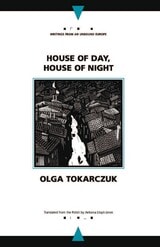
House of Day, House of Night
Olga Tokarczuk
Northwestern University Press, 2003
Winner of the Gunter Grass Prize
Nowa Ruda is a small town in Silesia, an area that has been a part of Poland, Germany, and the former Czechoslovakia in the past. When the narrator moves into the area, she and discovers everyone-and everything-has its own story. With the help of Marta, her enigmatic neighbor, the narrator accumulates these stories, tracing the history of Nowa Ruda from the founding of the town to the lives of its saints, from the caller who wins the radio quiz every day to the tale of the man who causes international tension when he dies on the border, one leg on the Polish side, the other on the Czech side. Each of the stories represents a brick and they interlock to reveal the immense monument that is the town. What emerges is the message that the history of any place--no matter how humble--is limitless, that by describing or digging at the roots of a life, a house, or a neighborhood, one can see all the connections, not only with one's self and one's dreams but also with all of the universe.
Richly imagined, weaving in anecdote with recipes and gossip, Tokarczuk's novel is an epic of a small place. Since its original publication in 1998 it has remained a bestseller in Poland. House of Day, House of Night is the English-language debut of one of Europe's best young writers.
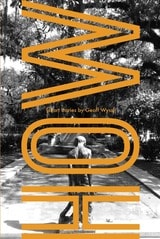
How
Geoff Wyss
The Ohio State University Press, 2012
If every story is born of a question—How did we get here? How do you make your arm do that?—the stories in Geoff Wyss’s How search for answers to the mysteries of an astonishing range of characters. The narrator of “How I Come to Be Here at the GasFast” explains why he hasn’t left a truck stop in the two days since he scratched a winning lottery ticket. In “How to Be a Winner,” a sports consultant browbeats a high school football team with his theory of history and a justification of his failed coaching career. Lost in the mazes they’ve made of themselves, Wyss’s characters search for exits on ground that shifts dizzyingly from humor to pathos, from cynicism to earnestness, from comedy to tragedy, often within the same sentence. Although propelled by a razor-sharp, contemporary voice, Wyss’s stories—many set in a New Orleans unknown to television and tourists—have more in common with Chekhov and O’Connor than with “Treme.”
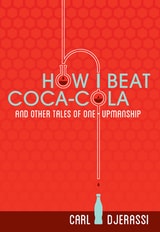
How I Beat Coca-Cola and Other Tales of One-Upmanship
Carl Djerassi
University of Wisconsin Press, 2013
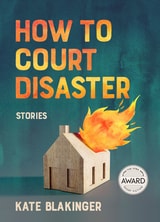
How to Court Disaster
Blakinger, Kate
University of Iowa Press, 2026
How to Court Disaster takes us from wide expanses of open ocean to the enclosed spaces of grimy dive bars, echoing caves, and the holds of a musty ship. A grieving mother explores the secret chambers of a cave system. A stranded sailor joins the crew of a movie being filmed on a remote tropical island. A pregnant teenager finds herself on foot in the middle of a whiteout snowstorm with a stranger’s baby in her arms. A bed-and-breakfast owner struggles to rekindle her bond with the husband who no longer fully remembers their life together. Moving headlong into trouble, the characters in these stories discover they possess the inner resources they need to carry them beyond it: pluck, grit, fierceness, hope, and a growing sense of who they are becoming.
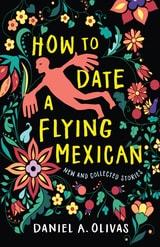
How to Date a Flying Mexican
New and Collected StoriesDaniel A. Olivas
University of Nevada Press, 2022
The collection is made up of Olivas’s favorite previously published stories, along with two new stories—one dystopian and the other magical— that challenge the Trump administration’s anti-immigration rhetoric and policies. How to Date a Flying Mexican draws together some of Olivas’s most unforgettable and strange tales, allowing readers to experience his very distinct, and very Chicano, fiction.
How to Get into Our House and Where We Keep the Money
Panio Gianopoulos
Four Way Books, 2017
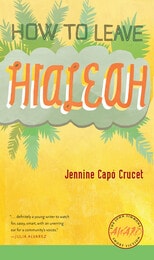
How to Leave Hialeah
Capó Crucet, Jennine
University of Iowa Press, 2009
Crucet’s writing has been shaped by the people and landscapes of South Florida and by the stories of Cuba told by her parents and abuelos. Her own stories are informed by her experiences as a Cuban American woman living within and without her community, ready to leave and ready to return, “ready to mourn everything.”
Coming to us from the predominantly Hispanic working-class neighborhoods of Hialeah, the voices of this steamy section of Miami shout out to us from rowdy all-night funerals and kitchens full of plátanos and croquetas and lechón ribs, from domino tables and cigar factories, glitter-purple Buicks and handed-down Mom Rides, private homes of santeras and fights on front lawns. Calling to us from crowded expressways and canals underneath abandoned overpasses shading a city’s secrets, these voices are the heart of Miami, and in this award-winning collection Jennine Capó Crucet makes them sing.
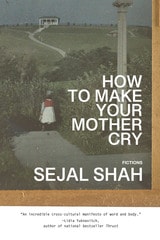
How to Make Your Mother Cry
FictionsSejal Shah
West Virginia University Press, 2024
2024/25 Story Prize Longlist
2024 Foreword Indies Finalist, Multicultural Adult Fiction
In the eleven linked short stories of How to Make Your Mother Cry, Sejal Shah builds a shrine gleaming with memory and myth. Keys, rocks, photographs, fairy tales, fables, and relics all add texture and meaning to an exploration of growing up and living as a diasporic Gujarati woman in a culture that excuses the behavior of men. Throughout, girls and women contend with the expectations, limitations, and challenges of becoming the heroine of one’s own life.
How to Make Your Mother Cry—Shah’s follow-up to her award-winning essay collection This Is One Way to Dance—continues the rich tradition of innovative feminist work by Claudia Rankine, Leslie Marmon Silko, and Maxine Hong Kingston. By braiding stories and images with fictional letters to a beloved English teacher, the collection defies traditional autofiction, epistolary, and short story conventions. These astonishing stories about friendship and love, resilience and survival establish Shah as an exciting new voice in contemporary fiction.
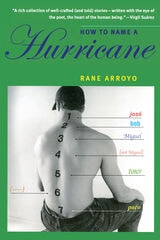
How to Name a Hurricane
Rane Arroyo
University of Arizona Press, 2005
How to Name a Hurricane collects short stories and other fictions depicting Latino drag queens and leather men, religious sinners and happy atheists, working class heroes and cyberspace vaqueros—a parade of characters that invites readers to consider whether one is more authentic a gay Latino than another. Whereas actual hurricanes are given names, the gays given voice in this collection must name themselves—and these narratives in turn reveal something of the "I" of Hurricane Rane. Whether portraying a family gathering as Brideshead Revisited with a mambo soundtrack, recounting the relationship of transvestite Louie/Lois and her bisexual Superman, or bemoaning "feeling as unsexy as an old bean burrito in a 7-11 microwave," Arroyo tracks the heartbeat of his characters through a shimmering palette of styles. Here are monologues, a story in verse, and other experimental forms appropriate to experimental lives—all affirming the basic human rights to dignity, equality, love, and even silliness.
When the AIDS epidemic first hit, many Latino families destroyed any remembrances of their gay and bisexual sons that might betray their pasts to la familia or el pueblo. Arroyo’s writings return the ghosts of those sons to the families, bars, dance clubs, and neighborhoods where they belong. By penetrating to the I’s of narrative hurricanes, these stories honor the survivors of our ongoing cultural storms.
Hum
StoriesMichelle Richmond
University of Alabama Press, 2014
Thirteen years after the publication of her first story collection, The Girl in the Fall-Away Dress, New York Times bestselling author Michelle Richmond returns with Hum, a collection of ten stories that examine love, lust, and loyalty from surprising angles.
In “Hum,” a young couple that is paid to live in a house filled with surveillance equipment becomes “quietly lost to each other,” as the wife’s infatuation with the subject of their surveillance turns to obsession. In “Medicine,” a woman grieving over the death of her sister finds her calling as a manual medical caregiver. In “Boulevard,” a couple who has been trying to have a child for seven years finds themselves in an unnamed country at the height of a revolution, summoned there by the enigmatic H. “Scales,” the story of a woman who falls in love with a man whose body is covered with scales, parses the intersection of pain and pleasure. The narrator of “Lake” must choose whether to walk in the footsteps of her famous grandfather, The Great Amphibian, who disappeared while performing a feat of daring in Lake Michigan. What does it mean to be heroic? How much should one sacrifice in the name of love? These questions and more are explored with tenderness, wit, and unerring precision in Hum.
Human Being Songs
Northern StoriesJean Anderson
University of Alaska Press, 2017
Jean Anderson delicately balances the lyrical and the experimental to tell the stories of hardworking Alaskans—teachers, laborers, dental hygienists, artists—worrying over fairness and equity and meaning, falling in and out of love, and pondering elusive, long-dreamed-of goals. Powered by a rich empathy, Human Being Songs shows us life in Alaska as it’s actually lived today—its successes, failures, and moments of transcendent beauty.
Hydroplane
FictionsSusan Steinberg
University of Alabama Press, 2006
Each of Steinberg's stories builds as if telegraphed. Each sentence glissades into the next as though in perpetual motion, as characters, crippled by loss, rummage through their recollections looking for buffers to an indistinct future.