Results by title
1296 books match the query 'Women authors' and 49 start with h
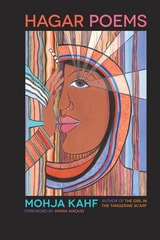
Hagar Poems
Mohja Kahf
University of Arkansas Press, 2016
“Mohja Kahf ’s Hagar Poems is brilliantly original in its conception, thrillingly artful in its execution. Its range is immense, its spiritual depth is profound, it negotiates its shifts between archaic and the contemporary with utmost skill. There’s lyricism, there’s satire, there’s comedy, there’s theology of a high order in this book.”
—Alicia Ostriker, author of For the Love of God: The Bible as an Open Book
“Hagar/ Hajar the immigrant/exile/outcast/refugee mother of a people is given multiple voices and significance in Mohja Kahf’s new book of dramatic monologues, which also reinvents Pharaoh’s daughter, Zuleika, Aïsha, and Mary in poems that are at once lively and learned, agnostic and devout. The sequence on an American mosque, and the poet’s ambivalent love for what it represents, is unique in American poetry.”
—Marilyn Hacker, author of A Stranger’s Mirror
“‘Where have all the goddesses gone,’ writes Mohja Kahf, ‘I tracked down Isis / incognito on Cyprus. /She told me Ishtar / lived under the radar / in southern Iraq. . . .’ In Hagar Poems, Mohja Kahf’s hallmark qualities—irreverence, imagination, wit, poignancy—are all exuberantly in evidence. A wonderful read.”
—Leila Ahmed, author of A Quiet Revolution: The Veil’s Resurgence, from the Middle East to America
“This brilliant collection captures all the ‘patient threading of relationship’ between Hagar and Sarah as between women, and then between women and men, between human and God. . . . At every turn of the page [Kahf] refuses complacency and circumstance but opts instead for exposing the tenuousness of threads that tie and bind and then come loose before our eyes.”
—From the foreword by Amina Wadud
The central matter of this daring new collection is the story of Hagar, Abraham, and Sarah—the ancestral feuding family of Judaism, Christianity, and Islam.
These poems delve into the Hajar story in Islam. They explore other figures from the Near Eastern heritage, such as Mary and Moses, and touch on figures from early Islam, such as Fatima and Aisha. Throughout, there is artful reconfiguring. Readers will find sequels and prequels to the traditional narratives, along with modernized figures claimed for contemporary conflicts.
Hagar Poems is a compelling shakeup of not only Hagar’s story but also of current roles of all kinds of women in all kinds of relationships.
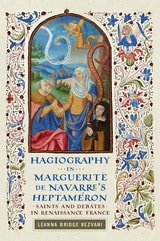
Hagiography in Marguerite de Navarre’s Heptaméron
Saints and Debates in Renaissance FranceLeanna Bridge Rezvani
University of Delaware Press, 2026
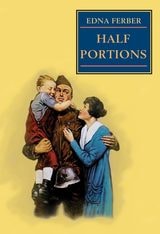
Half Portions
Edna Ferber
University of Illinois Press, 2002
A collection of short stories from Pultizer Prize winner, Edna Ferber
The short stories in this collection take the reader from small-town Wisconsin to the bustling streets of New York and Chicago and back again. While they range greatly in length and tone, they all share the trademark wit and affectionate insight of Edna Ferber.
Showcasing the facility with words that made her a mainstay at the Algonquin round table, Ferber explores some of her favorite themes: the role of women (especially strong or unconventional women) in modern society, the mores of the midwestern small town, and the changes over time in relationships between parents and children.
In “The Maternal Feminine,” a plain, overlooked child grows into a strong, resourceful businesswoman and forms a strong motherly bond with the children of her more attractive sister. In “April 25th, As Usual,” an aging Wisconsin couple reluctantly join their successful daughter in New York, where they try to adjust to a very different lifestyle. “Old Lady Mandle” is a bittersweet tale about an elderly Chicago mother coming to terms with the fact that she is no longer the most important woman in the life of her grown son. “One Hundred Per Cent” features Ferber’s celebrated heroine Emma McChesney, now re-married, seeing her husband off to war.
The stories gathered here are beautifully observed chronicles of early twentieth-century life and are filled with characters who, despite their very human foibles, are all bestowed by Ferber with warmth and dignity.
Hard Bread
Peg Boyers
University of Chicago Press, 2002
Harm
Hillary Gravendyk
Omnidawn, 2012
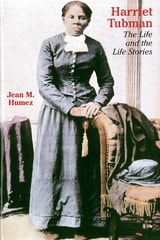
Harriet Tubman
The Life and the Life StoriesJean M. Humez
University of Wisconsin Press, 2005
Harriet Tubman’s name is known world-wide and her exploits as a self-liberated Underground Railroad heroine are celebrated in children’s literature, film, and history books, yet no major biography of Tubman has appeared since 1943. Jean M. Humez’s comprehensive Harriet Tubman is both an important biographical overview based on extensive new research and a complete collection of the stories Tubman told about her life—a virtual autobiography culled by Humez from rare early publications and manuscript sources. This book will become a landmark resource for scholars, historians, and general readers interested in slavery, the Underground Railroad, the Civil War, and African American women.
Born in slavery in Maryland in or around 1820, Tubman drew upon deep spiritual resources and covert antislavery networks when she escaped to the north in 1849. Vowing to liberate her entire family, she made repeated trips south during the 1850s and successfully guided dozens of fugitives to freedom. During the Civil War she was recruited to act as spy and scout with the Union Army. After the war she settled in Auburn, New York, where she worked to support an extended family and in her later years founded a home for the indigent aged. Celebrated by her primarily white antislavery associates in a variety of private and public documents from the 1850s through the 1870s, she was rediscovered as a race heroine by woman suffragists and the African American women’s club movement in the early twentieth century. Her story was used as a key symbolic resource in education, institutional fundraising, and debates about the meaning of "race" throughout the twentieth century.
Humez includes an extended discussion of Tubman’s work as a public performer of her own life history during the nearly sixty years she lived in the north. Drawing upon historiographical and literary discussion of the complex hybrid authorship of slave narrative literature, Humez analyzes the interactive dynamic between Tubman and her interviewers. Humez illustrates how Tubman, though unable to write, made major unrecognized contributions to the shaping of her own heroic myth by early biographers like Sarah Bradford. Selections of key documents illustrate how Tubman appeared to her contemporaries, and a comprehensive list of primary sources represents an important resource for scholars.
Harriette Simpson Arnow
Critical Essays on Her WorkHaeja K. Chung
Michigan State University Press, 1995
At her death in 1986, Harriette Simpson Arnow left a modest collection of published work: ten short stories, five novels, two non-fiction books, a short autobiography, and nineteen essays and book reviews. Although the sum is small, her writing has been examined from regionalist, Marxist, feminist, and other critical perspectives.
The 1970s saw the first serious attempts to revive interest in Arnow. In 1971, Tillie Olsen identified her as a writer whose "books of great worth suffer the death of being unknown, or at best, a peculiar eclipsing." Joyse Carol Oates wrote in The New York Times Book Review that Arnow's The Dollmaker is "our most unpretentious American masterpiece."
In the 1990s, it is appropriate to take stock of her earlier work and to prompt reexamination of this powerful yet poorly understood writer. This collection of critical essays examines traditional as well as new interpretations of Arnow and her work. It also suggests future directions for Arnow scholarship and includes studies of all of Arnow's writing, fiction and non-fiction, published and unpublished.
Harvester of Hearts
Motherhood under the Sign of FrankensteinRachel Feder
Northwestern University Press, 2018
In the period between 1815 and 1820, Mary Shelley wrote her most famous novel, Frankenstein; or, The Modern Prometheus, as well as its companion piece, Mathilda, a tragic incest narrative that was confiscated by her father, William Godwin, and left unpublished until 1959. She also gave birth to four—and lost three—children.
In this hybrid text, Rachel Feder interprets Frankenstein and Mathilda within a series of provocative frameworks including Shelley’s experiences of motherhood and maternal loss, twentieth-century feminists’ interests in and attachments to Mary Shelley, and the critic’s own experiences of pregnancy, childbirth, and motherhood. Harvester of Hearts explores how Mary Shelley’s exchanges with her children—in utero, in birth, in life, and in death—infuse her literary creations. Drawing on the archives of feminist scholarship, Feder theorizes “elective affinities,” a term she borrows from Goethe to interrogate how the personal attachments of literary critics shape our sense of literary history. Feder blurs the distinctions between intellectual, bodily, literary, and personal history, reanimating the classical feminist discourse on Frankenstein by stepping into the frame.
The result—at once an experimental book of literary criticism, a performative foray into feminist praxis, and a deeply personal lyric essay—not only locates Mary Shelley’s monsters within the folds of maternal identity but also illuminates the connections between the literary and the quotidian.
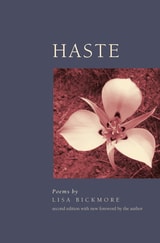
Haste
Lisa Bickmore
Signature Books, 2023
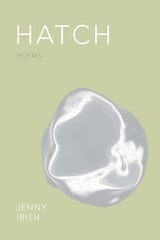
Hatch
PoemsJenny Irish
Northwestern University Press, 2024
The prose poems in Jenny Irish’s newest collection, Hatch, trace the consciousness of an artificial womb that must confront the role she has played in the continuation of the dying of the human species. This apocalyptic vision engages with the most pressing concerns of this contemporary sociopolitical moment: reproductive rights, climate crises, and mass extinction; gender and racial bias in healthcare and technology; disinformation, conspiracy theories, and pseudoscience; and the possibilities and dangers of artificial intelligence. More intimately, Hatch considers questions about how motherhood and its cultural expectations shape female identity. Working with avant strategies, Irish crafts a speculative feminist narrative, excavating and reexamining the aspects of the American experience that should have served as a call to action but have not. Part elegy and part prophecy, Hatch warns of a possible future while speaking to the present moment.
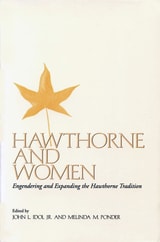
Hawthorne and Women
Engendering and Expanding the Hawthorne TraditionJohn L. Idol
University of Massachusetts Press, 1999
This collection of original essays presents a more complex and positive view of Hawthorne's attitudes toward women, demonstrating his recognition of the crucial role that women played--as critics, reviewers, readers, and authors--in building a national readership that made his writing career so successful.
The book begins with an examination of the influence exerted by the women in Hawthorne's immediate family. It goes on to explore his links to a broad range of women writers, as well as his attitudes toward the female characters he created. Among the authors discussed are Margaret Fuller, Harriet Beecher Stowe, Louisa May Alcott, Emily Dickinson, Sarah Orne Jewett, Willa Cather, Charlotte Perkins Gilman, George Eliot, Virginia Woolf, Flannery O'Connor, and Toni Morrison.

He Knew She Was Right
The Independent Woman in the Novels of Anthony TrollopeJane Nardin
Southern Illinois University Press, 1989
Trollope’s mother, wife, and a friend he loved platonically most of his life provided him three very different views of the Victorian woman. And, according to Jane Nardin, they were responsible for the dramatic shift in his treatment of women in his novels.
This is the first book in Sandra Gilbert’s Ad Feminam series to examine a male author. Nardin initially analyzes the novels Trollope wrote from 1855 to 1861, in which male concerns are central to the plot and women are angelic heroines, submissive and self-sacrificing. Even the titles of his novels written during this period are totally male oriented. The Three Clerks, Doctor Thorne, and The Bertrams all refer to men. Shortly after meeting Kate Field, Trollope wrote Orley Farm, which refers to the estate an angry woman steals from her husband and which marks a change in the attitudes toward women evident in his novels.
His next four books, The Small House at Allington, Rachel Ray, Can You Forgive Her?, and Miss Mackenzie, prove that women’s concerns had become central in his writing. Nardin examines specific novels written from 1861 to 1865 in which Trollope, with increasing vigor, subverts the conventional notions of gender that his earlier novels had endorsed.
Nardin argues that his novels written after 1865 and often recognized as feminist are not really departures but merely refinements of attitudes Trollope exhibited in earlier works.
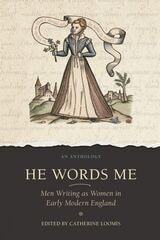
He Words Me
Men Writing as Women in Early Modern EnglandCatherine Loomis
Arizona Center for Medieval and Renaissance Studies, 2026
This anthology gives students and scholars access to a body of texts that provide a clearer understanding of what life was like for early modern women by presenting hundreds of little-known primary texts that contain details about early modern women’s work, relationships, emotional and intellectual development, friendships, and daily struggles. He Words Me brings together work from a variety of genres in which male authors adopt the voice of a female narrator and use that voice to provide intimate details about the lives of women.
These works introduce modern readers to less familiar genres, complement or contradict portrayals of women in canonical texts, and raise compelling questions about who speaks for women and when women can speak for themselves. Through these women’s voices, readers can encounter characters and experiences that will broaden their understanding of early modern English literature and culture, and of the history of women in the late sixteenth and early seventeenth centuries.
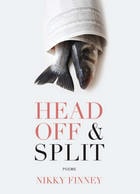
Head Off & Split
PoemsNikky Finney
Northwestern University Press, 2011
Winner, 2011 National Book Award for Poetry
Winner, 2012 GCLS Award for Poetry
Winner, 2012 SIBA Book Award for Poetry
Nominee, 2012 NAACP Image Award for Outstanding Literary Work in Poetry
The poems in Nikky Finney's breathtaking new collection Head Off & Split sustain a sensitive and intense dialogue with emblematic figures and events in African American life: from civil rights matriarch Rosa Parks to former secretary of state Condoleezza Rice, from a brazen girl strung out on lightning to a terrified woman abandoned on a rooftop during Hurricane Katrina. Finney's poetic voice is defined by an intimacy that holds a soft yet exacting eye on the erotic, on uncanny political and family events, like her mother's wedding waltz with South Carolina senator Strom Thurmond, and then again on the heartbreaking hilarity of an American president's final State of the Union address.
Artful and intense, Finney's poems ask us to be mindful of what we fraction, fragment, cut off, dice, dishonor, or throw away, powerfully evoking both the lawless and the sublime.
Healing Narratives
Women Writers Curing Cultural Dis-easeWilentz, Gay
Rutgers University Press, 2000

Heart of the Stone / El corazón de la piedra / Uk'u'x ri ab'aj
By Rosa Chávez, translated by Gabriela Ramirez-Chavez and Wel Raxulew
Amherst College Press, 2027
In Heart of the Stone, Rosa Chávez celebrates a Maya spirituality that recognizes all things—stones included—as part of the web of life. At the center of the collection is tijax, the poet's nawal represented by obsidian, the volcanic stone. Her verses cut through grief and fear to address colonization, injustices, and environmental abuse, while carving out a space for tenderness and deep healing.
Originally written in Spanish and translated into Maya K'iche' by Wel Raxulew, this stunning trilingual edition brings the poems into English for the first time in Gabriela Ramirez-Chavez's translation. The volume is framed by an introduction from Ramirez-Chavez, photography by Carlos Bernardo Euler Coy, and illustrations by Erick Boror.
Hearts of Darkness
White Women Write RaceMarcus, Jane
Rutgers University Press, 2004
The centerpiece of the book is Marcus's dialogue with one of her best-known essays, "Britannia Rules The Waves." In that piece, she argues that The Waves makes a strong anti-imperialist statement. Although many already support that argument, she now goes further in order to question the moral value of such a buried critique on Woolf's part. In "A Very Fine Negress" she analyzes the painful subject of Virginia Woolf's racism in A Room of One's Own. Other chapters traverse the connected issues of modernism, race, and imperialism. In two of them, we follow Nancy Cunard through the making of the Negro anthology and her appearance in a popular novel of the freewheeling Jazz Age. Elsewhere, Marcus delivers a complex analysis of A Passage to India, in a reading that interrogates E. M. Forster's displacement of his fear of white Englishwomen struggling for the vote.
Marcus, as always, brings considerable gifts as both researcher and writer to this collection of new and reprinted essays, a combination resulting in a powerful interpretation of many of modernism's most cherished figures.
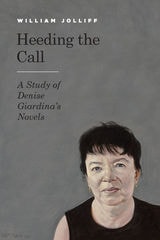
Heeding the Call
A Study of Denise Giardina's NovelsWilliam Jolliff
West Virginia University Press, 2020
In chapters devoted to each of Giardina’s novels, Jolliff attends to her uses of history, her formal techniques, and the central themes that make each work significant. What becomes clear is that while the author’s religious beliefs inform her fiction, she never offers easy answers. Her narratives consistently push her characters—and her readers—into more challenging and meaningful questions. Jolliff concludes by arguing that although Giardina’s initial fame has been tied to her significance as an Appalachian novelist, future studies must look beyond the regional to the deeply human questions her novels so persistently engage.
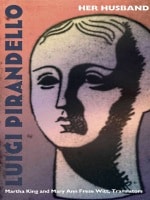
Her Husband
Luigi Pirandello
Duke University Press, 2000
Evoking in vivid detail the literary world in Rome at the turn of the century, Her Husband tells the story of Silvia Roncella, a talented young female writer, and her husband Giustino Boggiolo. The novel opens with their arrival in Rome after having left their provincial southern Italian hometown following the success of Silvia’s first novel, the rather humorously titled House of Dwarves. As his wife’s self-appointed (and self-important) promoter, protector, counselor, and manager, Giustino becomes the primary target of Pirandello’s satire. But the couple’s relationship—and their dual career—is also complicated by a lively supporting cast of characters, including literary bohemians with avant-garde pretensions and would-be aristocratic esthetes who are all too aware of the newly acquired power of journalists and the publishing establishment to make or break their careers. Having based many of the characters—including Silvia and Giustino—on actual literary acquaintances of his, Pirandello reacted to the novel’s controversial reception by not allowing it to be reprinted after the first printing sold out. Not until after his death were copies again made available in Italy.
Readers will find Her Husband eerily evocative of the present in myriad ways—not the least of which is contemporary society’s ongoing transformation wrought by the changing roles of men and women, wives and husbands.
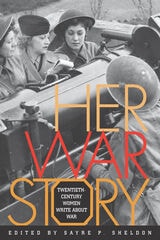
Her War Story
Twentieth-Century Women Write About WarEdited by Sayre P. Sheldon
Southern Illinois University Press, 1999
Sayre P. Sheldon chose the twentieth century for this collection of women's war writing because women's roles in war have changed dramatically in this century. The twentieth century has redefined the meaning of combat and expanded the territory of war to include women in larger numbers than ever before. When the technological advances of modern war began to target civilians, the home front became the front line. Women took an active part in war whether or not by choice, often by moving into occupations previously closed to them. Women covered wars for their newspapers, wrote war propaganda for their governments, published their wartime diaries, described fighting alongside men, and used wartime experience for their fiction and poetry.
Women writers also chose the right to imagine war, just as men for centuries had written about war without actually experiencing it. Women writers anthologized here include Anna Akhmatova, Vera Brittain, Gwendolyn Brooks, Willa Cather, Colette, Martha Gellhorn, H.D., Etty Hillesum, Käthe Kollwitz, Doris Lessing, Amy Lowell, Katherine Mansfield, Mary McCarthy, Toni Morrison, Dorothy Parker, Mary Lee Settle, Gertrude Stein, Huong Tram, Edith Wharton, Virginia Woolf, and Mitsuye Yamada.
Here, Now
EssaysMichelle Suzanne Mirsky
Northwestern University Press, 2025
A deeply felt and humorous collection examining a year in the wake of extraordinary loss
In November 2010, on the morning after election day, Mirsky lost her three-year-old son, Lev. In the year that followed, she produced a profound and provocatively humorous body of work—tackling extreme loss as well as divorce, friendship, dating, sex, comedy, and art making, all while continuing her day job as a family liaison at the same children’s hospital where Lev died. Every November, the anniversary of Lev’s loss aligns with the churn of the election cycle.
A decade later, we find Mirsky in the heart of a different crisis: supervising COVID vaccine distribution in the polarized political climate of Austin, Texas. In “An Addendum,” she turns again to themes of grief and healing, this time on a societal scale, as she reckons with the tenth anniversary of Lev’s passing. Through her un-extraordinary story of extraordinary loss, Mirsky offers proof that there is an afterward to grief.
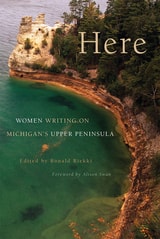
Here
Women Writing on Michigan's Upper PeninsulaRonald Riekki
Michigan State University Press, 2015
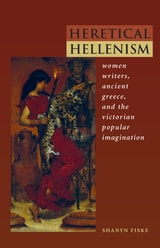
Heretical Hellenism
Women Writers, Ancient Greece, and the Victorian Popular ImaginationShanyn Fiske
Ohio University Press, 2008
The prevailing assumption regarding the Victorians’ relationship to ancient Greece is that Greek knowledge constituted an exclusive discourse within elite male domains. Heretical Hellenism: Women Writers, Ancient Greece, and the Victorian Popular Imagination challenges that theory and argues that while the information women received from popular sources was fragmentary and often fostered intellectual insecurities, it was precisely the ineffability of the Greek world refracted through popular sources and reconceived through new fields of study that appealed to women writers’ imaginations.
Examining underconsidered sources such as theater history and popular journals, Shanyn Fiske uncovers the many ways that women acquired knowledge of Greek literature, history, and philosophy without formal classical training. Through discussions of women writers such as Charlotte Brontë, George Eliot, and Jane Harrison, Heretical Hellenism demonstrates that women established the foundations of a heretical challenge to traditional humanist assumptions about the uniformity of classical knowledge and about women’s place in literary history.
Heretical Hellenism provides a historical rationale for a more expansive definition of classical knowledge and offers an interdisciplinary method for understanding the place of classics both in the nineteenth century and in our own time.
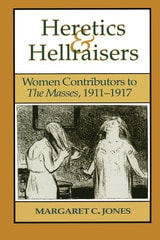
Heretics and Hellraisers
Women Contributors to The Masses, 1911-1917By Margaret C. Jones
University of Texas Press, 1993
The Masses was the most dynamic and influential left-wing magazine of the early twentieth century, a touchstone for understanding radical thought and social movements in the United States during that era. As a magazine that supported feminist issues, it played a crucial role in shaping public discourse about women's concerns. Women editors, fiction writers, poets, and activists like Mary Heaton Vorse, Louise Bryant, Adriana Spadoni, Elsie Clews Parsons, Inez Haynes Gillmore, and Helen Hull contributed as significantly to the magazine as better-known male figures.
In this major revisionist work, Margaret C. Jones calls for reexamination of the relevance of Masses feminism to that of the 1990s. She explores women contributors' perspectives on crucial issues: patriarchy, birth control, the labor movement, woman suffrage, pacifism, and ethnicity. The book includes numerous examples of the writings and visual art of Masses women and a series of biographical/bibliographical sketches designed to aid other researchers.
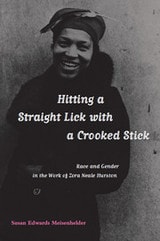
Hitting A Straight Lick with a Crooked Stick
Race and Gender in the Work of Zora Neale HurstonSusan E Meisenhelder
University of Alabama Press, 2001
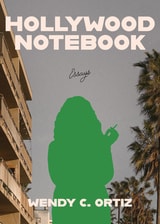
Hollywood Notebook
EssaysWendy C. Ortiz
Northwestern University Press, 2025
A daylight traipse through early-aughts Los Angeles, Hollywood Notebook encapsulates the powerful feelings and hopeful futures of twentysomething Wendy C. Ortiz. In this boundary-defying sister memoir to Bruja, Ortiz navigates internal maps as she traverses external palm-treed streets, moving through her youthful twenties and into the pensiveness of her thirties. Peering at what lies ahead while dipping her toes into the past, Ortiz shows us that there is no place like Hollywood to unearth the joys of success and the blows of mistakes—both realized and denied. An innovative and bold examination of the daytime roaming mind, Hollywood Notebook is a cartography of love, loss, and transformation in the face of a brilliant psyche in a vibrant city.
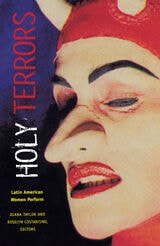
Holy Terrors
Latin American Women PerformDiana Taylor and Roselyn Costantino, eds.
Duke University Press, 2003
The performance pieces in Holy Terrors are powerful testimonies to the artists' political and personal struggles. These women confront patriarchy, racism, and repressive government regimes and challenge brutality and corruption through a variety of artistic genres. Several have formed theatre collectives—among them FOMMA (a Mayan women’s theatre company in Chiapas) and El Teatro de la máscara in Colombia. Some draw from cabaret and ‘frivolous’ theatre traditions to create intense and humorous performances that challenge church and state. Engaging in self-mutilation and abandoning traditional dress, others use their bodies as the platforms on which to stage their defiant critiques of injustice. Holy Terrors is a unique English-language presentation of some of Latin America's fiercest, most provocative art.
Contributors
Sabina Berman
Tania Bruguera
Petrona de la Cruz Cruz
Diamela Eltit
Griselda Gambaro
Astrid Hadad
Teresa Hernández
Rosa Luisa Márquez
Teresa Ralli
Diana Raznovich
Jesusa Rodríguez
Denise Stoklos
Katia Tirado
Ema Villanueva
Home Girls, 40th Anniversary Edition
A Black Feminist AnthologyBarbara Smith
Rutgers University Press, 2024
Contributors: Tania Abdulahad, Donna Allegra, Barbara A. Banks, Becky Birtha, Cenen, Cheryl Clarke, Michelle Cliff, Michelle T. Clinton, Willi (Willie) M. Coleman, Toi Derricotte, Alexis De Veaux, Jewelle L. Gomez, Akasha (Gloria) Hull, Patricia Spears Jones, June Jordan, Audre Lorde, Raymina Y. Mays, Deidre McCalla, Chirlane McCray, Pat Parker, Linda C. Powell, Bernice Johnson Reagon, Spring Redd, Gwendolyn Rogers, Kate Rushin, Ann Allen Shockley, Barbara Smith, Beverly Smith, Shirley O. Steele, Luisah Teish, Jameelah Waheed, Alice Walker, and Renita J. Weems.
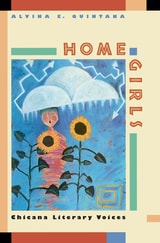
Home Girls
Chicana Literary VoicesAlvina E. Quintana
Temple University Press, 1996

Home Material
Ohio's Nineteenth-Century Regional Women's FictionSandra Parker
University of Wisconsin Press, 1998
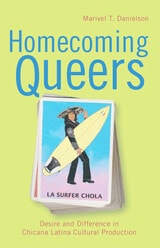
Homecoming Queers
Desire and Difference in Chicana Latina Cultural ProductionDanielson, Marivel T
Rutgers University Press, 2009
Spanning multiple genres and forms, and including scholarly theory alongside performances, films, narratives, and testimonials, Homecoming Queers leads readers along a crucial path toward understanding and overcoming the silences that previously existed across these fields.
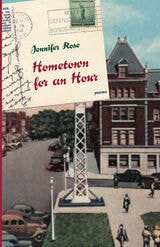
Hometown for an Hour
PoemsJennifer Rose
Ohio University Press, 2006
In her second collection of poems, Jennifer Rose writes primarily of places and displacement. Using the postcard’s conventions of brevity, immediacy, and, in some instances, humor, these poems are greetings from destinations as disparate as Cape Cod, Kentuckiana, and Croatia. Rich in imagery, deftly crafted, and imbued with a lightness of voice, these poems are also postmarked from poetry’s more familiar provinces of love, nature, and loss.
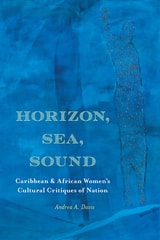
Horizon, Sea, Sound
Caribbean and African Women's Cultural Critiques of NationAndrea A. Davis
Northwestern University Press, 2022
In Horizon, Sea, Sound: Caribbean and African Women’s Cultural Critiques of Nation, Andrea Davis imagines new reciprocal relationships beyond the competitive forms of belonging suggested by the nation-state. The book employs the tropes of horizon, sea, and sound as a critique of nation-state discourses and formations, including multicultural citizenship, racial capitalism, settler colonialism, and the hierarchical nuclear family.
Drawing on Tina Campt’s discussion of Black feminist futurity, Davis offers the concept future now, which is both central to Black freedom and a joint social justice project that rejects existing structures of white supremacy. Calling for new affiliations of community among Black, Indigenous, and other racialized women, and offering new reflections on the relationship between the Caribbean and Canada, she articulates a diaspora poetics that privileges our shared humanity. In advancing these claims, Davis turns to the expressive cultures (novels, poetry, theater, and music) of Caribbean and African women artists in Canada, including work by Dionne Brand, M. NourbeSe Philip, Esi Edugyan, Ramabai Espinet, Nalo Hopkinson, Amai Kuda, and Djanet Sears. Davis considers the ways in which the diasporic characters these artists create redraw the boundaries of their horizons, invoke the fluid histories of the Caribbean Sea to overcome the brutalization of plantation histories, use sound to enter and reenter archives, and shapeshift to survive in the face of conquest. The book will interest readers of literary and cultural studies, critical race theories, and Black diasporic studies.
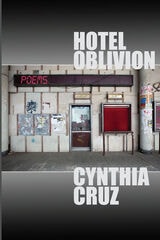
Hotel Oblivion
Cynthia Cruz
Four Way Books, 2022
A specter, haunting the edges of society: because neoliberalism insists there are no social classes, thus, there is no working class, the main subject of Hotel Oblivion, a working class subject, does not exist. With no access to a past, she has no home, no history, no memory. And yet, despite all this, she will not assimilate. Instead, this book chronicles the subject’s repeated attempts at locating an exit from capitalist society via acts of negative freedom and through engagement with the death drive, whose aim is complete destruction in order to begin all over again. In the end, of course, the only true exit and only possibility for emancipation for the working class subject is through a return to one’s self. In Hotel Oblivion, through a series of fragments and interrelated poems, Cruz resists invisibilizing forces, undergoing numerous attempts at transfiguration in a concerted effort to escape her fate.
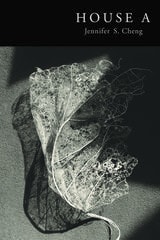
House A
Jennifer S. Cheng
Omnidawn, 2016
House A is the winner of the 2015 Omnidawn 1st/2nd Poetry Book Prize, selected by Claudia Rankine.
House of McQueen
Valerie Wallace
Four Way Books, 2018
House/Garden/Nation
Space, Gender, and Ethnicity in Post-Colonial Latin American Literatures by WomenIleana Yamileth Rodriguez
Duke University Press, 1994
In House/Garden/Nation the narratives of five Centro-Caribbean writers illustrate these times of transition: Dulce María Loynáz, from colonial rule to independence in Cuba; Jean Rhys, from colony to commonwealth in Dominica; Simone Schwarz-Bart, from slave to free labor in Guadeloupe; Gioconda Belli, from oligarchic capitalism to social democratic socialism in Nicaragua; and Teresa de la Parra, from independence to modernity in Venezuela. Focusing on the nation as garden, hacienda, or plantation, Rodríguez shows us these writers debating the predicament of women under nation formation from within the confines of marriage and home.
In reading these post-colonial literatures by women facing the crisis of transition, this study highlights urgent questions of destitution, migration, exile, and inexperience, but also networks of value allotted to women: beauty, clothing, love. As a counterpoint on issues of legality, policy, and marriage, Rodriguez includes a chapter on male writers: José Eustacio Rivera, Omar Cabezas, and Romulo Gallegos. Her work presents a sobering picture of women at a crossroads, continually circumscribed by history and culture, writing their way.
How Dark Is My Flower
Yosano Akiko and the Invention of Romantic LoveLeith Morton
University of Michigan Press, 2023
How Dark Is My Flower emphasizes the astonishing innovations in diction and style, not to mention content, in Akiko’s work that transformed the tanka genre from a hidebound and conservative mode of verse to something much more daring and modern. This book pays particular attention to poetry, particularly the tanka genre, in the evolution of modernism in Japanese literature and breaks new ground in the study of modern Japanese literature by examining the invention and evolution of the concept of romantic love.
How Long She'll Last in This World
Maria Melendez
University of Arizona Press, 2006
With this invocation, María Meléndez beckons us on a journey—an exotic expedition through life’s mysteries in search of the finer strands of experience. In a Latina voice laced with a naturalist’s sense of wonder, she weaves bold images reflecting a world threaded by unseen wounds, now laid before us with an unflinching love of life and an exquisite precision of language. Adopting multiple guises—field researcher, laboring mother, grief-stricken lover—Meléndez casts aside stereotypes and expectations to forge a new language steeped in life and landscape. Whether meditating on a controlled prairie burn or contemplating the turquoise cheek of a fathead minnow, she weaves words and memories into a rich tapestry that resonates with sensual detail and magnifies her sense of maternal wildness, urging us to “Love as much as you / can, don’t throw your heart / away to just one god.” In her paean to the Aztec deity Tonacacihuatl, mother of the gods, Meléndez muses that “How many spirits she’s twin to, and how long she’ll last in this world, / are secrets stashed in the rattle / of corn ears, in the coils / of venomous snakes.”
Through stunning images and stark realism, her poems embrace motherhood and vocation, love and grief, land and life, to bring new meaning to the natural world and how we experience it.
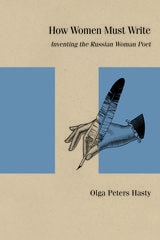
How Women Must Write
Inventing the Russian Woman PoetOlga Peters Hasty
Northwestern University Press, 2019
In How Women Must Write, Olga Peters Hasty takes us from an emphatically male Romantic age to a modernist period preoccupied with women’s creativity but also with its containment. In late nineteenth and early twentieth-century Russia, the woman poet was invented: by women poets themselves, by readers who projected gender biases into their poems, and by male poets who wrote posing as women. Examining Karolina Pavlova and Evdokiia Rostopchina, who inspired those writing after them, as well as two women invented by men, Cherubina de Gabriak and Briusov’s Nelli, and challenges to male authority by Marina Tsvetaeva and Anna Akhmatova, this book shows women as purposeful actors realizing themselves creatively and advancing the woman poet’s cause. It will appeal to the general reader and to specialists in Russian literature, women’s studies, and cultural history.
How the End Begins
Cynthia Cruz
Four Way Books, 2016
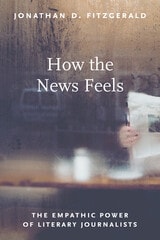
How the News Feels
The Empathic Power of Literary JournalistsJonathan D. Fitzgerald
University of Massachusetts Press, 2023
Literary journalism’s origins can be traced to the nineteenth century, when it developed alongside the era’s sentimental literature. Combining fact-based reporting with the sentimentality of popular fiction, literary journalism encouraged readers to empathize with subjects by presenting more nuanced and engaging stories than typical news coverage. While women writers were central to the formation and ongoing significance of the genre, literary journalism scholarship has largely ignored their contributions.
How the News Feels re-centers the work of a range of writers who were active from the nineteenth century until today, including Catharine Williams, Margaret Fuller, Nellie Bly, Winifred Black, Zora Neale Hurston, Joan Didion, Adrian Nicole LeBlanc, and Alexis Okeowo. Offering intimate access to their subjects’ thoughts, motivations, and yearnings, these journalists encouraged readers to empathize with society’s outcasts, from asylum inmates and murder suspects to “fallen women” and the working poor. As this carefully researched study shows, these writers succeeded in defining and developing the genre of literary journalism, with stories that inspire action, engender empathy, and narrow the gap between writer, subject, and audience.
How to Abandon Ship
Sasha West
Four Way Books, 2024
How to Live/What to Do
H.D.'s Cultural PoeticsAdalaide Morris
University of Illinois Press, 2002
Ever since the publication of her first H.D. essay in 1985 (included here in an expanded version), Morris has eschewed prevailing literary trends in favor of new approaches that both challenge and overpass dominant critical constructs. As she argues in this volume, the writing and, crucially, the reading of poetry is a process in which meaning is produced by the interplay of words on a page and in the ear of the reader. This quality of being not heard but overheard, composed within the body, is crucial to an appreciation of H.D.
Morris shows H.D. to be a playful linguistic innovator whose writings bear on debates in science, technology, and cinema as well as on poetry. Foremost, however, H.D. was a profound reshaper of the boundaries and possibilities of poetry, a generative form that, as this book shows, can indeed serve the cultural work of survival and resistance against the violence of modern culture.
How to Make an Algorithm in the Microwave
Maya Salameh
University of Arkansas Press, 2022
“We need a new poetry lexicon—a new way of moleculing the poem on the page, even—and Maya Salameh brings it. We need all the strange Arabic-diasporic ways we can find for being in this terrible and joyful and often frighteningly banalizing world, and Salameh’s poems are a generous find. Her writing is an unexpected cousin in the colonized and capitalism-razed city, bewildering and divining things you’ve never heard but want to learn. . . . Prepare to be stretched and delighted.”
—Mohja Kahf, from the Foreword
The divine and the digital achieve a distinct corporality in Maya Salameh’s HOW TO MAKE AN ALGORITHM IN THE MICROWAVE, winner of the 2022 Etel Adnan Poetry Prize. Layering prayer with code, Salameh brings supposedly unassailable technological constructs like algorithm, recursion, and loop into conversation with the technologies of womanhood, whether liner, lipstick, or blood. Exploring the relationships we have with our devices, she speaks back to the algorithm (“a computer’s admission to blood”), which acts simultaneously as warden, confidant, and data thief.
Here Salameh boldly examines how an Arab woman survives the digitization of her body—experimenting with form to create an intimate collage of personal and neocolonial histories, fearlessly insinuating herself into the scripts that would otherwise erase her, and giving voice to the full mess of ritual.
How to Suppress Women's Writing
By Joanna Russ; foreword by Jessa Crispin
University of Texas Press, 2018
Are women able to achieve anything they set their minds to? In How to Suppress Women’s Writing, award-winning novelist and scholar Joanna Russ lays bare the subtle—and not so subtle—strategies that society uses to ignore, condemn, or belittle women who produce literature. As relevant today as when it was first published in 1983, this book has motivated generations of readers with its powerful feminist critique.
“What is it going to take to break apart these rigidities? Russ’s book is a formidable attempt. It is angry without being self-righteous, it is thorough without being exhausting, and it is serious without being devoid of a sense of humor. But it was published over thirty years ago, in 1983, and there’s not an enormous difference between the world she describes and the world we inhabit.”
—Jessa Crispin, from the foreword
“A book of the most profound and original clarity. Like all clear-sighted people who look and see what has been much mystified and much lied about, Russ is quite excitingly subversive. The study of literature should never be the same again.”
—Marge Piercy
“Joanna Russ is a brilliant writer, a writer of real moral passion and high wit.”
—Adrienne Rich
Hungry Moon
Henrietta Goodman
University Press of Colorado, 2013
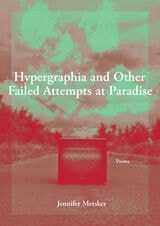
Hypergraphia and Other Failed Attempts at Paradise
Jennifer Metsker
New Issues Poetry and Prose, 2021
This collection of poetry explores the disruptive state of psychosis, with all its insights and follies, and the challenges of living life after a departure from the self. These poems reach for an understanding of the ecstasy and tragedy of madness through both lyric and prose forms that mimic the sublime state of mania through their engagement with language. Ordinary life becomes strange in these poems, which are playful and humorous at times and dark at others, as they seek resolution to the question of what happens when the mind overthrows the body.

Hypertext and the Female Imaginary
Jaishree K. Odin
University of Minnesota Press, 2010
Investigating the work of Trinh T. Minh-ha, Judy Malloy, Shelley Jackson, Stephanie Strickland, and M. D. Coverly, Odin demonstrates how these writers apply hypertextual strategies to subversively convey difference. Through her readings of various transformative hypertext narratives by women writers/artists, she pursues the question of what constitutes empowering descriptions of the world in a technology-mediated culture where the dominant discourse is turning everything into the same.
Using feminist as well as postcolonial perspectives, she explores the embodied state of the human as reflected in critically aware contemporary narratives and examines how these works consider what it means to be human in the twenty-first century.