Results by title
28164 books match the query 'History' and 906 start with h
History of Humanities, volume 9 number 2 (Fall 2024)
The University of Chicago Press
University of Chicago Press Journals, 2024
History of Hurricanes
PoemsTeresa Cader
Northwestern University Press, 2009
In her third collection of poems, Teresa Cader spins a complete universe of lyrical, probing verse that reaches out to readers and invites them to come inside. These poems deal with love and loss in particularly striking ways, as Cader uses rigorously controlled verse to express chaotic emotion. Stylistically adventurous, her work moves gracefully from intricate, slant-rhymed couplets to elliptical, lanky free verse. Geographically, she takes readers on a ride with stops in Kraków’s rock clubs, colonial New England’s sites, and shrines of contemporary Japan. The shadow of death, especially the loss of Cader’s mother, falls across many of her poems, but her verse reacts viscerally to such events, her emotion resounding out from each line to move through pain or desire.

History of International Broadcasting, Volume 1
James Wood
The Institution of Engineering and Technology, 1994
History of International Broadcasting, Volume 2
James Wood
The Institution of Engineering and Technology, 2000
History of Metals in Colonial America
James A. Mulholland
University of Alabama Press, 1981
History of Mortgage Banking in the West
Financing America's DreamsE. Michael Rosser
University Press of Colorado, 2017
Part economic history, part public history, A History of Mortgage Banking in the West is an insider’s account of how the mortgage banking sector worked over the last 150 years, including analysis of the causes of the 2007 mortgage crisis. Beginning with the land and railroad development acts that encouraged settlement in the west, E. Michael Rosser and Diane M. Sanders trace the laws, institutions, and individuals that contributed to the economic growth of the region.
Using Colorado and the west as a case study for the nation’s economic and property development as a whole since the late nineteenth century, Rosser and Sanders explain how farm mortgages and agricultural lending steadily gave way to urban development and housing mortgages, all while the large mortgage and investment firms financed the development of some of the state’s most important water resources and railroad networks. Rosser uses his personal experience as a lifelong practitioner and educator of mortgage banking, along with a plethora of primary sources, academic archives, and industry publications, to analyze the causes of economic booms and busts as they relate to real estate and development.
Rosser’s professional acumen combined with Sanders’s research experience makes A History of Mortgage Banking in the West a rich and nuanced account of the region’s most significant economic events. It will be an important work for scholars and practitioners in regional and financial history, mortgage market practice and development, government housing and mortgage policy, and financial stability and of great significance to anyone curious about the role of the federal government in national housing policy and the inherent risk in mortgages.

History of Nineteeth-Century Russian Literature
Volume I: The Romantic PeriodDmitrij Tschizewskij
Vanderbilt University Press, 1974

History of Old Age
From Antiquity to the RenaissanceGeorges Minois
University of Chicago Press, 1990
Minois shows how, in ancient Greece, the cult of youth and beauty on the one hand, and the reverence for the figure of the Homeric sage, on the other, created an ambivalent attitude toward the aged. This ambiguity appears again in the contrast between the active role that older citizens played in Roman politics and their depiction in satirical literature of the period. Christian literature in the Middle Ages also played a large part in defining society's perception of the old, both in the image of the revered holy sage and in the total condemnation of the aged sinner.
Drawing on literary texts throughout, Minois considers the interrelation of literary, religious, medical, and political factors in determining the social fate of the elderly and their relationship to society. This book will be of great interest to social and cultural historians, as well as to general readers interested in the subject of the aged in society today.

History of Paradise
THE GARDEN OF EDEN IN MYTH AND TRADITIONJean Delumeau
University of Illinois Press, 1995
With erudition and wit, Jean Delumeau explores the medieval conviction that paradise existed in a precise although unreachable earthly location. Delving into the writings of dozens of medieval and Renaissance thinkers, from Augustine to Dante, Delumeau presents a luminous study of the meaning of Original Sin and the human yearning for paradise.
The finest minds of the Middle Ages wrote about where paradise was to be found, what it was like, and who dwelt in it. Explorers sailed into the unknown in search of paradisal gardens of wealth and delight that were thought to be near the original Garden. Cartographers drew Eden into their maps, often indicating the wilderness into which Adam and Eve were cast, along with the magical kingdom of Prester John, Jerusalem, Babel, the Happy Isles, Ophir, and other places described in biblical narrative or borrowed from other cultures. Later, Renaissance thinkers and writers meticulously reconstructed the details of the original Eden, even providing schedules of the Creation and physical descriptions of Adam and Eve.
Even when the Enlightenment, with its discovery of fossils and pre-Darwinian theories of evolution, gradually banished the dream of paradise on earth, a nostalgia for Eden shaped elements of culture from literature to gardening. In our own time, Eden's hold on the Western imagination continues to fuel questions such as whether land should be conserved or exploited and whether a return to innocence is possible.

History of Pedlars in Europe
Laurence Fontaine
Duke University Press, 1996
Focusing primarily on the fifteenth through eighteenth centuries, Fontaine traces the origins and development of peddling and the establishment of trading networks. She analyzes the changing social construction of the practice and the effect of encounters between traders of different regions. Following the pedlars’ trade routes across Europe from Spain to Sweden and Scotland to the upper Rhine, she examines their importance as channels of communication as well as of goods and raises such issues as the impact of pedlars on the values and cultural practices of the communities they visited and the ways in which being merchants changed the lives of these migrants.
History of Pedlars in Europe separates the mythology that surrounds peddling from the historically reliable and integrates existing studies with new archival research to illuminate one of the most remote areas of the social and economic history of early modern Europe. A means of trade based on mobility, uncertainty, and interdependence, peddling is rediscovered as a dynamic force involved in nothing less than the creation of a modern consumer society.
History of Political Ideas, Volume 1 (CW19)
Hellenism, Rome, and Early ChristianityEric Voegelin, Edited & Intro by Athanasios Moulakis
University of Missouri Press, 1997
Reaching from the decline of the Greek Polis to Saint Augustine, this first volume of Eric Voegelin's eagerly anticipated History of Political Ideas fills the gap left between volumes 3 and 4 of Order and History. The heart of the book is the powerful account of Apostolic Christianity's political implications and the work of the early church fathers. Voegelin's consideration of the political philosophy of Rome and his unique analysis of Greek and early Roman law are of particular interest.
Although History of Political Ideas was begun as a textbook for Macmillan, Voegelin never intended it to be a conventional "synthesis." He sought instead an original comprehensive interpretation, founded on primary materials and taking into account the most advanced specialist scholarship—or science as he called it—available to him. Because of this, the book grew well beyond the confines of an easily marketable college survey and until now remained unpublished.
In the process of writing it, Voegelin himself outgrew the conceptual frame of a "History of Political Ideas," turning to compose Order and History and the other works of his maturity. History of Political Ideas became the ordered collection of materials from which much of Voegelin's later theoretical elaboration grew, structured in a manner that reveals the conceptual intimations of his later thought. As such, it provides an unparalleled opportunity to observe the working methods and the intellectual evolution of one of our century's leading political thinkers. In its embracing scope, History of Political Ideas contains both analyses of themes Voegelin developed in his later works and discussions of authors and ideas to which he did not return or which he later approached from a different angle and with a different emphasis.
In Hellenism, Rome, and Early Christianity, Voegelin demonstrates that the "spiritual disintegration" of the Hellenic world inaugurated a long process of transition in the self- understanding of Mediterranean and European man. The reflections that emerge remain universal concerns regarding the order of human existence in society and history. Although one may come to different conclusions, Voegelin's responses to the problems of the period suggest avenues of investigation that are still little traveled.
History of Political Ideas, Volume 2 (CW20)
The Middle Ages to AquinasEric Voegelin, Edited & Intro by Peter von Sivers
University of Missouri Press, 1997
Voegelin's magisterial account of medieval political thought opens with a survey of the structure of the period and continues with an analysis of the Germanic invasions, the fall of Rome, and the rise of empire and monastic Christianity. The political implications of Christianity and philosophy in the period are elaborated in chapters devoted to John of Salisbury, Joachim of Flora (Fiore), Frederick II, Siger de Brabant, Francis of Assisi, Roman law, and climaxing in a remarkable study of Saint Thomas Aquinas's mighty thirteenth-century synthesis.
Although History of Political Ideas was begun as a textbook for Macmillan, Voegelin never intended it to be a conventional chronological account. He sought instead an original comprehensive interpretation, founded on primary materials and taking into account the most advanced specialist scholarship—or science as he called it—available to him. Because of this, the book grew well beyond the confines of an easily marketable college survey and until now remained unpublished.
In the process of writing it, Voegelin himself outgrew the conceptual frame of a "History of Political Ideas," turning to compose Order and History and the other works of his maturity. History of Political Ideas became the ordered collection of materials from which much of Voegelin's later theoretical elaboration grew, structured in a manner that reveals the conceptual intimations of his later thought. As such, it provides an unparalleled opportunity to observe the working methods and the intellectual evolution of one of our century's leading political thinkers. In its embracing scope, History of Political Ideas contains both analyses of themes Voegelin developed in his later works and discussions of authors and ideas to which he did not return or which he later approached from a different angle and with a different emphasis.
The Middle Ages to Aquinas has withstood the test of time. What makes it still highly valuable is its thoroughly revisionist approach, cutting through all the convenient clichés and generalizations and seeking to establish the experiential underpinnings that typified the medieval period.
History of Political Ideas, Volume 3 (CW21)
The Later Middle AgesEric Voegelin, Edited & Intro by David Walsh
University of Missouri Press, 1998
In The Later Middle Ages, the third volume of his monumental History of Political Ideas, Eric Voegelin continues his exploration of one of the most crucial periods in the history of political thought. Illuminating the great figures of the high Middle Ages, Voegelin traces the historical momentum of our modern world in the core evocative symbols that constituted medieval civilization. These symbols revolved around the enduring aspiration for the sacrum imperium, the one order capable of embracing the transcendent and immanent, the ecclesiastical and political, the divine and human. The story of the later Middle Ages is that of the "civilizational schism"—the movement in which not only the reality but the aspiration for the sacrum imperium gradually disappeared and the unification of faith and reason dissolved.
His recognition of this civilizational schism provides Voegelin with a unique perspective on medieval society. William of Ockham, Dante, Giles of Rome, and Marsilius of Padua all emerge in Voegelin's study as predecessors to modern thought; each turns to personal authority and intellectual analysis in an attempt to comprehend the loss of the sacrum imperium as an authoritative ideal. Voegelin is further drawn into investigations that, despite insufficient attention by scholars, still bear relevance to the study of the later Middle Ages. The mysticism apparent in Piers Plowman and the apocalyptic revolt of Cola di Rienzo are merely two reactions to the disintegration of wholeness.
Yet the story of the later Middle Ages does not merely revolve around disintegration. Voegelin recognizes the emergence of the constitutional political tradition as the most positive development of this period. He is at his best when explaining the difference between the presence of a representative institution and the growth of communal consciousness. Voegelin's study of the English political pattern is matched only by his unique perspective on the German imperial zone, culminating in a fitting conclusion on Nicholas of Cusa—the one political thinker with the ability to evoke the unity of mankind beyond fragmentation.
The Later Middle Ages is at once a brilliant examination of the symbols that characterized medieval society and a remarkable predecessor to Voegelin's study of the modern world, beginning with the Renaissance and the Reformation.
History of Political Ideas, Volume 4 (CW22)
Renaissance and ReformationEric Voegelin, Edited & Intro by David L. Morse & William M. Thompson
University of Missouri Press, 1998
By closely examining the sources, movements, and persons of the Renaissance and the Reformation, Voegelin reveals the roots of today's political ideologies in this fourth volume of his History of Political Ideas. This insightful study lays the groundwork for Voegelin's critique of the modern period and is essential to an understanding of his later analysis.
Voegelin identifies not one but two distinct beginnings of the movement toward modern political consciousness: the Renaissance and the Reformation. Historically, however, the powerful effects of the second have overshadowed the first. In this book, Voegelin carefully examines both periods and their presence in modern thought.
The Renaissance, represented by the works of Niccolò Machiavelli, Desiderius Erasmus, and Thomas More, is characterized by a struggle for balance. Machiavelli and Erasmus both looked to a virtuous prince to achieve order, one calling for brute force and the other for Christian spirituality to reach their goal. Also a participant in the first beginning of modernity, More was a complex thinker identified as a saint both of the church and of the communist movement. The issues he explored in Utopia, as Voegelin demonstrates, indirectly gave rise to concepts that have profoundly affected Western history: colonization, imperialism, national socialism, and communism.
Exploring the transition from the Renaissance to the Reformation is a brilliant chapter, "The People of God," which examines the sectarian movement. These pages contain the rich historical background that led to Voegelin's later conclusions about Gnosticism and its modern influences.
Voegelin offers a controversial view of the Reformation as well as the political and religious situation directly preceding it. Yet he sheds light on the strengths and inadequacies of its key figures, Martin Luther and John Calvin. The driving force behind the Reformation stemmed solely from the powerful personality of Luther. What began as an abstract, purely technical discussion developed into a full-blown revolt. Later in the period, Calvin confronted the problems left behind by Luther and endeavored to create his own universal church to supplant the Catholic Church. His theory of a new elite would have a distinct impact on history.
By examining the political ideas that first emerged during the Renaissance and Reformation, this fascinating volume provides a foundation for understanding the events of centuries to follow.
History of Political Ideas, Volume 5 (CW23)
Religion and the Rise of ModernityEric Voegelin, Edited by James L. Wiser
University of Missouri Press, 1998
Examining the emergence of modernity within the philosophical and political debates of the sixteenth century, Religion and the Rise of Modernity resumes the analysis of the "great confusion" introduced in Volume IV of History of Political Ideas. Encompassing a vast range of events ignited by Luther's Ninety-Five Theses, this period is one of controversy, revolution, and partiality.
Despite the era's fragmentation and complexity, Voegelin's insightful analysis clarifies its significance and suggests the lines of change converging at a point in the future: the medieval Christian understanding of a divinely created closed cosmos was being replaced by a distinctly modern form of human consciousness that posits man as the proper origin of meaning in the universe.
Analyzing the most significant features of the great confusion, Voegelin examines a vast range of thought and issues of the age. From the more obvious thinkers to those less frequently studied, this volume features such figures as Calvin, Althusius, Hooker, Bracciolini, Savonarola, Copernicus, Tycho de Brahe, and Giordano Bruno. Devoting a considerable amount of attention to Jean Bodin, Voegelin presents him as a prophet of a new, true religion amid the civilizational disorder of the post-Christian era. Focusing on such traditional themes as monarchy, just war theory, and the philosophy of law, this volume also investigates issues within astrology, cosmology, and mathematics.
Religion and the Rise of Modernity is a valuable work of scholarship not only because of its treatment of individual thinkers and doctrines influential in the sixteenth century and beyond but also because of its close examination of those experiences that formed the modern outlook.
History of Political Ideas, Volume 6 (CW24)
Revolution and the New ScienceEric Voegelin, Edited & Intro by Barry Cooper
University of Missouri Press, 1999
Volume VI of Voegelin's account of the history of Western political ideas continues from the point reached in the previous volume with the study of the mystic-philosopher Jean Bodin. Voegelin begins with a discussion of the conflict between Bishop Bossuet and Voltaire concerning the relationship between what is conventionally identified as sacred history and profane history. Bossuet maintained the traditional Christian position, the origin of which may be traced to Saint Augustine's City of God. Voegelin shows, however, that while Bossuet may have been heir to an adequate understanding of human existence, Voltaire drew attention to a series of historical facts, such as the comparative size of the Russian and Roman empires, the existence of Chinese civilization, and the discovery of the New World, that could be incorporated into Bossuet's account only with great difficulty or not at all.
For the first time, the theoretical problem of the historicity of evocative symbols of political order becomes the focus of Voegelin's analysis. This major problem, which found a provisional solution in the New Science of Vico, was intertwined with several additional ones that may be summarized in terms of an increasing closure toward what Voegelin calls the world- transcendent ground of reality. Voegelin traces the consequences of the new attitudes and sentiments in terms of an increasing disorientation in personal, social, and political life, a disorientation that was expressed in increasingly impoverished experiences and accounts of history and of nature.
Vico represents the great exception to this decline in the intellectual adequacy of modern political ideas and modern self- understanding. Readers familiar with Voegelin's New Science of Politics will find in the long, challenging, and brilliant chapter on Vico and his New Science one of the major textual analyses that sustained Voegelin's entire intellectual enterprise. Indeed, the chapter on Vico, along with similarly provocative and insightful chapters on Bodin and on Schelling in other volumes, may almost be read as an element of Voegelin's own spiritual autobiography.
History of Political Ideas, Volume 7 (CW25)
The New Order and Last OrientationEric Voegelin, Edited & Intro by Jurgen Gebhardt & Thomas A. Hollweck
University of Missouri Press, 1999
In The New Order and Last Orientation, Eric Voegelin explores two distinctly different yet equally important aspects of modernity. He begins by offering a vivid account of the political situation in seventeenth-century Europe after the decline of the church and the passing of the empire. Voegelin shows how the intellectual and political disorder of the period was met by such seemingly disparate responses as Grotius's theory of natural right, Hobbes's Leviathan, the role of the Fronde in the formation of the French national state, Spinoza's Tractatus Theologico-Politicus, and Locke's Second Treatise, the blueprint of a modern middle-class society. By putting these responses and the thought of Montesquieu, Hume, and others in the context of the birth pains of the national state and the emergence of a new self-understanding of man, Voegelin achieves a brilliant mixture of political history and profound philosophical analysis.
Voegelin's verdict of modernity is pronounced most powerfully in the opening part of "Last Orientation," in the chapter entitled "Phenomenalism." His discussion of the intellectual confusion underlying the modern project of scientistic phenomenalism is the most original criticism leveled against modernity to date. It is at the same time the first step toward a recovery of reality through philosophy conceived as a science of substance in the spirit of Giordano Bruno. Voegelin's first example of such an effort at recovering reality is the chapter on Schelling, one of the spiritual realists who has not been affected by the prevailing rationalist or reductionist creeds that are part of the modern disorder. Schelling's indirect yet powerful influence on Schopenhauer, Nietzsche, and Freud more than justifies Voegelin's interest in his philosophy and character, even though Voegelin would later distance himself from some of Schelling's positions.
The volume's concluding chapter, "Nietzsche and Pascal," applies the understanding gained from the study of Schelling to the thought of the most powerful critic of the age, Nietzsche. Nietzsche's self-avowed affinity with Pascal provides the key to an analysis of the strengths and weaknesses of his thought and reaffirms the connection that links the beginning of modernity with its most recent crises and the efforts to overcome them.
History of Political Ideas, Volume 8 (CW26)
Crisis and the Apocalypse of ManEric Voegelin, Edited & Intro by David Walsh.
University of Missouri Press, 1999
Reaching into our own time, Crisis and the Apocalypse of Man confronts the disintegration of traditional sources of meaning and the correlative attempt to generate new sources of order from within the self. Voegelin allows us to contemplate the crisis in its starkest terms as the apocalypse of man that now seeks to replace the apocalypse of God. The totalitarian upheaval that convulsed Voegelin's world, and whose aftermath still defines ours, is only the external manifestation of an inner spiritual turmoil. Its roots have been probed throughout the eight volumes of History of Political Ideas, but its emergence is marked by the age of Enlightenment.
In our postmodern era, discussions of the collapse of the "enlightenment project" have become commonplace. Voegelin compels us to follow the great-souled individuals who sought to go from disintegration of the present toward evocations of order for the future. Such thinkers as Comte, Bakunin, and Marx suffered through the crisis and fully understood the need for a new outpouring of the spirit. They resolved to supply the deficiency themselves. As a consequence they launched us irrevocably on the path of the apocalypse of man.
One of the great merits of Voegelin's analysis is his exposition of the pervasive character of this crisis. It is not confined to the megalomaniacal dreamers of a revolutionary apocalypse; rather, echoes of it are found in the more moderate Enlightenment preoccupation with progress to be attained through application of the scientific method. Faith in the capacity of instrumental reason to answer the ultimate questions of human existence defined men such as Voltaire, Helvétius, Diderot, D'Alembert, and Condorcet. It remains the authoritative faith of our world today, Voegelin argues, demonstrated by our continuing inability to step outside the parameters of the Enlightenment. Are we condemned, then, to oscillate between the rational incoherence of a science that never delivers on its promises and a now discredited revolutionary idealism that wreaks havoc in practice? This is the question toward which Voegelin's final volume points. While not direct, his response is evident everywhere. Crisis and the Apocalypse of Man could have been written only by a man who had reached his own resolution of the crisis.
History of Political Philosophy
Edited by Leo Strauss and Joseph Cropsey
University of Chicago Press, 2001
History of Public Health in New York City, 1625-1866
Volume 1John Duffy
Russell Sage Foundation, 1968
History of Religions, volume 60 number 3 (February 2021)
The University of Chicago Press
University of Chicago Press Journals, 2021
History of Religions, volume 60 number 4 (May 2021)
The University of Chicago Press
University of Chicago Press Journals, 2021
History of Religions, volume 61 number 1 (August 2021)
The University of Chicago Press
University of Chicago Press Journals, 2021
History of Religions, volume 61 number 2 (November 2021)
The University of Chicago Press
University of Chicago Press Journals, 2021
History of Religions, volume 61 number 3 (February 2022)
The University of Chicago Press
University of Chicago Press Journals, 2022
History of Religions, volume 61 number 4 (May 2022)
The University of Chicago Press
University of Chicago Press Journals, 2022
History of Religions, volume 62 number 1 (August 2022)
The University of Chicago Press
University of Chicago Press Journals, 2022
History of Religions, volume 62 number 2 (November 2022)
The University of Chicago Press
University of Chicago Press Journals, 2022
History of Religions, volume 62 number 3 (February 2023)
The University of Chicago Press
University of Chicago Press Journals, 2023
History of Religions, volume 62 number 4 (May 2023)
The University of Chicago Press
University of Chicago Press Journals, 2023
History of Religions, volume 63 number 1 (August 2023)
The University of Chicago Press
University of Chicago Press Journals, 2023
History of Religions, volume 63 number 2 (November 2023)
The University of Chicago Press
University of Chicago Press Journals, 2023
History of Religions, volume 63 number 3 (February 2024)
The University of Chicago Press
University of Chicago Press Journals, 2024
History of Religions, volume 63 number 4 (May 2024)
The University of Chicago Press
University of Chicago Press Journals, 2024
History of Religions, volume 64 number 1 (August 2024)
The University of Chicago Press
University of Chicago Press Journals, 2024
History of Religions, volume 64 number 2 (November 2024)
The University of Chicago Press
University of Chicago Press Journals, 2024
History of Religions, volume 64 number 3 (February 2025)
The University of Chicago Press
University of Chicago Press Journals, 2025
History of Religions, volume 64 number 4 (May 2025)
The University of Chicago Press
University of Chicago Press Journals, 2025
History of Religions, volume 65 number 1 (August 2025)
The University of Chicago Press
University of Chicago Press Journals, 2025
History of Religions, volume 65 number 2 (November 2025)
The University of Chicago Press
University of Chicago Press Journals, 2025
History of Religions, volume 65 number 3 (February 2026)
The University of Chicago Press
University of Chicago Press Journals, 2026
History of Religions, volume 65 number 4 (May 2026)
The University of Chicago Press
University of Chicago Press Journals, 2026
History of Religions, volume 66 number 1 (August 2026)
The University of Chicago Press
University of Chicago Press Journals, 2026
History of Religious Ideas, Volume 2
From Gautama Buddha to the Triumph of ChristianityMircea Eliade
University of Chicago Press, 1982
History of Religious Ideas, Volume 3
From Muhammad to the Age of ReformsMircea Eliade
University of Chicago Press, 1985
As in his previous work, Eliade pays particular attention to heresies, folk beliefs, and cults of secret wisdom, such as alchemy and sorcery, and continues the discussion, begun in earlier volumes, of pre-Christian shamanistic practices in northern Europe and the syncretistic tradition of Tibetan Buddhism. These subcultures, he maintains, are as important as the better-known orthodoxies to a full understanding of Judaism, Christianity, and Islam.
History of Structuralism
Volume 1: The Rising Sign, 1945-1966Francois Dosse
University of Minnesota Press, 1998
The first comprehensive history of one of the most influential intellectual movements of the twentieth century.
Structuralism has had a profound impact on disciplines ranging from literary theory to sociology, from anthropology to philosophy, from history to psychoanalysis. François Dosse tells the story of structuralism from its beginnings in postwar Paris to its culmination as a movement that would reconfigure French intellectual life and reverberate throughout the Western world. This first volume of his study, The Rising Sign, 1945–1966, cogently maps the dizzying array of personalities and ideas of the early structuralist movement, paving the way for later developments.

History of Telegraphy
Ken Beauchamp
The Institution of Engineering and Technology, 2001
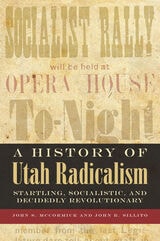
History of Utah Radicalism
Startling, Socialistic, and Decidedly RevolutionaryJohn S. McCormick and John R. Sillito
Utah State University Press, 2023
Utah, now one of the most conservative states, has a long tradition of left-wing radicalism. Early Mormon settlers set a precedent with the United Order and other experiments with a socialistic economy. The tradition continued into the more recent past with New Left, anti-apartheid, and other radicals. Throughout, Utah radicalism usually reflected national and international developments. Recounting its long history, McCormick and Sillito focus especially on the Socialist Party of America, which reached a peak of political influence in the first two decades of the twentieth century—in Utah and across the nation.
At least 115 Socialists in over two dozen Utah towns and cities were elected to office in that period, and on seven occasions they controlled governments of five different municipalities. This is a little-known story worth a closer look. Histories of Socialism in the United States have tended to forsake attention to specific, local cases and situations in favor of broader overviews of the movement. By looking closely at Utah's experience, this book helps unravel how American Socialism briefly flowered before rapidly withering in the early twentieth century. It also broadens the conventional understanding of Utah history.
History of Western Civilization
A HandbookWilliam H. McNeill
University of Chicago Press, 1986
With this book, renowned historian William H. McNeil provides a brilliant narrative chronology of the development of Western civilization, representing its sociopolitical as well as cultural aspects. Sweeping in its coverage but careful in its attention to detail, and up to date with the latest scholarship History of Western Civlization is the perfect introduction to the subject for general readers and students alike.
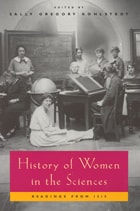
History of Women in the Sciences
Readings from IsisEdited by Sally Gregory Kohlstedt
University of Chicago Press, 2000
This book features some of the most influential and pioneering studies of women in the sciences, with a special focus on patterns of education, access, barriers, and opportunities for women's work in science. Spanning the 17th through the 20th centuries, the book demonstrates the meaning and power of gender experienced by women in the sciences.
Individual chapters focus on exceptional women whose unusual initiativee and particular circumstance led them to engage in science: Laura Bassi, Nettie Stevens, Maria Winkelmann, and others. Chapters on women's access to science discuss collaboration with family members in the domestic sphere, the impact of primers and popular science writing, and formal education in public schools and advanced research institutions. There are examinations of the reasons for clusters of women working in "female friendly" sciences such as botany and physiology in the 19th century and astronomy in the U.S. during the early 20th century.
This important and useful book provides a thoughtful and detailed overview for scholars and students in the history of science, as well as for feminist historians, scientists, and others who who want a comparative and historical analysis of women in the sciences.
Contributors include Janet Browne, Paula Findlen, Peggy Aldrich Kidwell, Ann Hibner Koblitz, M. Susan Lindee, Carolyn Merchant, Margaret W. Rossiter, Londa Schiebinger, Nancy Leys Stepan, and Deborah Jean Warner.