Results by title
22279 books match the query 'Social Science' and 635 start with h

How Slavoj Became Zizek
The Digital Making of a Public IntellectualEliran Bar-El
University of Chicago Press, 2025
This revised edition corrects several erroneous and insufficient references in the first edition of this book.
Slovenian philosopher bad boy Slavoj Žižek is one of the most famous intellectuals of our time, publishing at a breakneck speed and lecturing around the world. With his unmistakable speaking style and set of mannerisms that have made him ripe material for internet humor and meme culture, he is recognizable to a wide spectrum of fans and detractors. But how did an intellectual from a small Eastern European country come to such popular notoriety? In How Slavoj Became Žižek, sociologist Eliran Bar-El plumbs the emergence, popularization, and development of the phenomenon called “Žižek.”
Beginning with Žižek’s early years as a thinker and political figure in Slovenian civil society, Bar-El traces Žižek’s rise from Marxist philosopher to political candidate to eventual intellectual celebrity, as Žižek perfected his unique performative style and a rhetorical arsenal of “Hegelacanese.” Following 9/11, Žižek’s career as a global op-ed writer and TV commentator married his rhetoric with global events such as the war on terror, the financial crisis of 2008, and the Arab Spring of 2011. Yet, at the same time, this mainstream popularity, as well as a series of politically incorrect views, almost entirely estranged the Slovenian from the normal workings of academia. Ultimately, this account shows how Žižek has harnessed the power of the digital era in his own self-fashioning as a public intellectual.

How Slavoj Became Žižek
The Digital Making of a Public IntellectualEliran Bar-El
University of Chicago Press, 2023
Slovenian philosopher bad boy Slavoj Žižek is one of the most famous intellectuals of our time, publishing at a breakneck speed and lecturing around the world. With his unmistakable speaking style and set of mannerisms that have made him ripe material for internet humor and meme culture, he is recognizable to a wide spectrum of fans and detractors. But how did an intellectual from a remote Eastern European country come to such popular notoriety? In How Slavoj Became Žižek, sociologist Eliran Bar-El plumbs the emergence, popularization, and development of this phenomenon called “Žižek.”
Beginning with Žižek’s early years as a thinker and political figure in Slovenian civil society, Bar-El traces Žižek’s rise from Marxist philosopher to a political candidate to eventual intellectual celebrity as Žižek perfects his unique performative style and a rhetorical arsenal of “Hegelacanese.” Following 9/11, Žižek’s career as a global op-ed writer and TV commentator married his rhetoric with global events such as the War on Terror, the financial crisis of 2008, and the Arab Spring of 2011. Yet, at the same time, this mainstream popularity, as well as a series of politically incorrect views, almost entirely estranged the Slovenian from the normal workings of academia. Ultimately, this account shows how Žižek harnessed the power of the digital era in his own self-fashioning as a public intellectual.
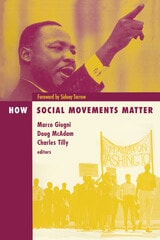
How Social Movements Matter
Marco Giugni
University of Minnesota Press, 1999
Provides original assessments of the consequences of social movements.
We have all witnessed social movements and felt their effects-some subtle, others profound. But to truly understand their impact over time, in different countries, and on various segments of society requires the kind of rare insight this book provides. Bringing together several well-known scholars, this volume offers an assessment of the consequences of social movements in Western countries.
Policy, institutional, cultural, short- and long-term, and intended and unintended outcomes are among the types of consequences the authors consider in depth. They also compare political outcomes of several contemporary movements-specifically, twomen’s, peace, ecology, and extreme-right movements-in different countries. Contributors: Edwin Amenta, New York U; Paul Burstein, U of Washington; Donatella della Porta, U of Florence; Joyce Gelb, CUNY; Vivien Hart, U of Sussex; Ruud Koopmans, Science Center, Berlin; Hanspeter Kriesi, U of Geneva; David S. Meyer, CUNY; Kelly Moore, Columbia U; Dieter Rucht, U of Kent, Canterbury; Paul Statham, Science Center, Berlin; Sidney Tarrow, Cornell U; Dominique Wisler, U of Geneva; Michael P. Young.ISBN 0-8166-2914-5 Cloth £00.00 $57.95xxISBN 0-8166-2915-3 Paper £00.00 $22.95x336 Pages 10 tables, 4 figures 5 7/8 x 9 AugustSocial Movements, Protest and Contention Series, volume 10Translation inquiries: University of Minnesota Press
How Soon Is Now?
Medieval Texts, Amateur Readers, and the Queerness of TimeCarolyn Dinshaw
Duke University Press, 2012
Whether discussing Victorian men of letters who parodied the Book of John Mandeville, a fictionalized fourteenth-century travel narrative, or Hope Emily Allen, modern coeditor of the early-fifteenth-century Book of Margery Kempe, Dinshaw argues that these and other medievalists outside the academy inhabit different temporalities than modern professionals operating according to the clock. How Soon Is Now? clears space for amateurs, hobbyists, and dabblers who approach medieval worlds from positions of affect and attachment, from desires to build other kinds of worlds. Unruly, untimely, they urge us toward a disorderly and asynchronous collective.
How States Shaped Postwar America
State Government and Urban PowerNicholas Dagen Bloom
University of Chicago Press, 2019
How States Shaped Postwar America
State Government and Urban PowerNicholas Dagen Bloom
University of Chicago Press, 2019
The history of public policy in postwar America tends to fixate on developments at the national level, overlooking the crucial work done by individual states in the 1960s and ’70s. In this book, Nicholas Dagen Bloom demonstrates the significant and enduring impact of activist states in five areas: urban planning and redevelopment, mass transit and highways, higher education, subsidized housing, and the environment. Bloom centers his story on the example set by New York governor Nelson Rockefeller, whose aggressive initiatives on the pressing issues in that period inspired others and led to the establishment of long-lived state polices in an age of decreasing federal power. Metropolitan areas, for both better and worse, changed and operated differently because of sustained state action—How States Shaped Postwar America uncovers the scope of this largely untold story.
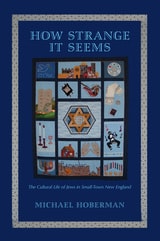
How Strange It Seems
The Cultural Life of Jews in Small-Town New EnglandMichael Hoberman
University of Massachusetts Press, 2008
Jews have lived in small-town New England since the colonial era, but during the last hundred years they have been especially active contributors to the region's cultural life. Part oral history, part ethnography, and part literary portrait, How Strange It Seems tells the story of this often overlooked group, tracing its patterns of settlement, economic activity, civic involvement, and religious life since the late 1800s.
Based on more than fifty interviews with men and women of all ages from Maine, New Hampshire, Vermont, Massachusetts, and Connecticut, it seeks to understand what is distinctive—and not so distinctive—about contemporary Jewish communities outside the larger urban centers of the Northeast. Michael Hoberman weaves the personal stories of these individuals and families into a collective narrative that offers as much folklore as history and is equal parts Jewish and Yankee. He introduces us to Hiram Adelman, a Russian immigrant peddler and potato farmer who settled in northernmost Maine because its climate was comparable to his native Siberia, and to Shmuel Simenowitz, an urban transplant who produces kosher maple syrup in southern Vermont. We also meet Suzie Laskin, who moved to the White Mountains region of New Hampshire in the 1900s and soon established a local havurah, and Bob August of Whately, Massachusetts, who once ran what may have been the world's only Christmas tree farm owned by a Jewish family.
Each section of the book explores how small-town New England Jews have both departed from and mimicked the broader patterns of Jewish American experience, while also illustrating how they have acclimated themselves to local practices without relinquishing a strong sense of Jewish identity. Accompanying the text are photographs by Janice Sorensen that include portraits of many of the interviewees and lively glimpses of the region's present-day Jewish revival.

How They Lived 2
The Everyday Lives of Hungarian Jews, 1867-1940: Family, Religious, and Social Life, Learning, Military Life, Vacationing, Sports, CharityAndrás Koerner
Central European University Press, 2017

How They Lived
The Everyday Lives of Hungarian Jews, 1867–1940András Koerner
Central European University Press, 2015
How Things Fall Apart
What Happened to the Cuban RevolutionElizabeth Dore
Duke University Press, 2023
How We Became Human
Mimetic Theory and the Science of Evolutionary OriginsPierpaolo Antonello
Michigan State University Press, 2015
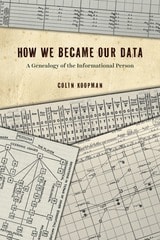
How We Became Our Data
A Genealogy of the Informational PersonColin Koopman
University of Chicago Press, 2019
In How We Became Our Data, Colin Koopman excavates early moments of our rapidly accelerating data-tracking technologies and their consequences for how we think of and express our selfhood today. Koopman explores the emergence of mass-scale record keeping systems like birth certificates and social security numbers, as well as new data techniques for categorizing personality traits, measuring intelligence, and even racializing subjects. This all culminates in what Koopman calls the “informational person” and the “informational power” we are now subject to. The recent explosion of digital technologies that are turning us into a series of algorithmic data points is shown to have a deeper and more turbulent past than we commonly think. Blending philosophy, history, political theory, and media theory in conversation with thinkers like Michel Foucault, Jürgen Habermas, and Friedrich Kittler, Koopman presents an illuminating perspective on how we have come to think of our personhood—and how we can resist its erosion.
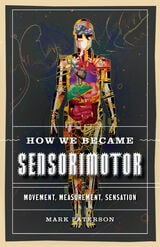
How We Became Sensorimotor
Movement, Measurement, SensationMark Paterson
University of Minnesota Press, 2021
An engrossing history of the century that transformed our knowledge of the body’s inner senses
The years between 1833 and 1945 fundamentally transformed science’s understanding of the body’s inner senses, revolutionizing fields like philosophy, the social sciences, and cognitive science. In How We Became Sensorimotor, Mark Paterson provides a systematic account of this transformative period, while also demonstrating its substantial implications for current explorations into phenomenology, embodied consciousness, the extended mind, and theories of the sensorimotor, the body, and embodiment.
Each chapter of How We Became Sensorimotor takes a particular sense and historicizes its formation by means of recent scientific studies, case studies, or coverage in the media. Ranging among a diverse array of sensations, including balance, fatigue, pain, the “muscle sense,” and what Maurice Merleau-Ponty termed “motricity,” Paterson’s analysis moves outward from the familiar confines of the laboratory to those of the industrial world and even to wild animals and their habitats. He uncovers important stories, such as how forgotten pain-measurement schemes transformed criminology, or how Penfield’s outmoded concepts of the sensory and motor homunculi of the brain still mar psychology textbooks.
Complete with original archival research featuring illustrations and correspondence, How We Became Sensorimotor shows how the shifting and sometimes contested historical background to our understandings of the senses are being extended even today.
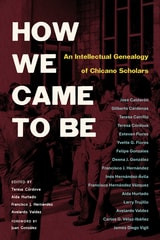
How We Came to Be
An Intellectual Genealogy of Chicano ScholarsEdited by Teresa Córdova, Aída Hurtado, Francisco J. Hernández, Avelardo Valdez; Foreword by Juan González
University of Arizona Press, 2026
This work chronicles the lives and legacies of Chicana and Chicano scholars whose formative experiences in the Chicano Movement shaped the development of Chicano studies and transformed higher education. Originating from the Reuniónes de Colegas—gatherings of veteran scholars reflecting on their shared histories—the volume features sixteen essays organized into five thematic sections that explore the intersections of activism, scholarship, and institutional change.
The contributors document how grassroots organizing evolved into academic inquiry, leading to the creation of departments, student support systems, and policy reforms that advanced equity and representation in universities. Essays address how community-engaged research influenced urban planning, health advocacy, and cultural production, while also highlighting Indigenous and transnational epistemologies that redefined theoretical frameworks in Chicano studies. The volume concludes with reflections on academic leadership and the breaking of barriers by Chicana scholars in higher education administration.
Together, these essays offer a powerful intellectual history and a testament to a generation’s enduring commitment to social justice. How We Came to Be is both a scholarly archive and a call to action, preserving the legacy of those who built Chicano studies and inspiring future generations to continue the work of transformation within and beyond the academy.
Contributors
José Calderón
Gilberto Cárdenas
Teresa Carrillo
Teresa Córdova
Estevan Flores
Yvette G. Flores
Felipe Gonzales
Deena J. González
Francisco J. Hernández
Inés Hernández-Ávila
Francisco Hernández Vázquez
Aída Hurtado
Larry Trujillo
Avelardo Valdez
Carlos G. Vélez-Ibáñez
James Diego Vigil
How We Die Now
Intimacy and the Work of DyingKarla Erickson
Temple University Press, 2013
How We Make Each Other
Trans Life at the Edge of the UniversityPerry Zurn
Duke University Press, 2025
How We Write Now
Living with Black Feminist TheoryJennifer C. Nash
Duke University Press, 2024

How Will the Heart Endure
Elizabeth Bowen and the Landscape of WarHeather Bryant Jordan
University of Michigan Press, 1992
How Women Saved The City
Daphne Spain
University of Minnesota Press, 2001
Reclaims the lost history of women’s contributions to the development of American cities
In the days between the Civil War and World War I, women rarely worked outside the home, rarely went to college, and, if our histories are to be believed, rarely put their mark on the urban spaces unfolding around them. And yet, as this book clearly demonstrates, women did play a key role in shaping the American urban landscape.
To uncover the contribution of women to urban development during this period, Daphne Spain looks at the places where women participated most actively in public life—voluntary organizations like the Young Women’s Christian Association, the Salvation Army, the College Settlements Association, and the National Association of Colored Women. In the extensive building projects of these associations—boarding houses, vocational schools, settlement houses, public baths, and playgrounds—she finds clear evidence of a built environment created by women. Exploring this environment, Spain reconstructs the story of the "redemptive places" that addressed the real needs of city dwellers—especially single women, African-Americans, immigrants, and the poor—and established an environment in which newcomers could learn to become urban Americans.
How Would You Like to Pay?
How Technology Is Changing the Future of MoneyBill Maurer
Duke University Press, 2015
How Writing Came About
By Denise Schmandt-Besserat
University of Texas Press, 1996
Top 100 Books on Science, American Scientist, 2001
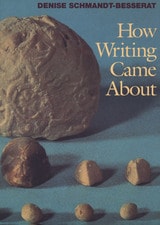
In 1992, the University of Texas Press published Before Writing, Volume I: From Counting to Cuneiform and Before Writing, Volume II: A Catalog of Near Eastern Tokens. In these two volumes, Denise Schmandt-Besserat set forth her groundbreaking theory that the cuneiform script invented in the Near East in the late fourth millennium B.C.—the world's oldest known system of writing—derived from an archaic counting device.
How Writing Came About draws material from both volumes to present Schmandt-Besserat's theory for a wide public and classroom audience. Based on the analysis and interpretation of a selection of 8,000 tokens or counters from 116 sites in Iran, Iraq, the Levant, and Turkey, it documents the immediate precursor of the cuneiform script.

How a Century of War Changed the Lives of Women
Lindsey German
Pluto Press, 2013
How a Century of War Changed the Lives of Women looks at the remarkable impact of war on women in Britain. It shows how conflict has changed women’s lives and how those changes have put women at the centre of peace campaigning.
Lindsey German, one of the UK's leading anti-war activists and commentators, shows how women have played a central role in anti-war and peace movements, including the recent wars in Afghanistan and Iraq. The women themselves talk about how they overcame prejudice and difficulty to become active. The book integrates this experience with a historical overview, analysing the two world wars as catalysts of social change for women. It looks at how the changing nature of war, especially the involvement of civilians, increasingly involves significant numbers of women.
As well as providing an inspiring account of women's opposition to war, the book also tackles key contemporary developments, challenging negative assumptions about Muslim women and showing how anti-war movements are feeding into a broader desire to change society.
How the Clinic Made Gender
The Medical History of a Transformative IdeaSandra Eder
University of Chicago Press, 2022
Today, a world without “gender” is hard to imagine. Gender is at the center of contentious political and social debates, shapes policy decisions, and informs our everyday lives. Its formulation, however, is lesser known: Gender was first used in clinical practice. This book tells the story of the invention of gender in American medicine, detailing how it was shaped by mid-twentieth-century American notions of culture, personality, and social engineering.
Sandra Eder shows how the concept of gender transformed from a pragmatic tool in the sex assignment of children with intersex traits in the 1950s to an essential category in clinics for transgender individuals in the 1960s. Following gender outside the clinic, she reconstructs the variable ways feminists integrated gender into their theories and practices in the 1970s. The process by which ideas about gender became medicalized, enforced, and popularized was messy, and the route by which gender came to be understood and applied through the treatment of patients with intersex traits was fraught and contested. In historicizing the emergence of the sex/gender binary, Eder reveals the role of medical practice in developing a transformative idea and the interdependence between practice and wider social norms that inform the attitudes of physicians and researchers. She shows that ideas like gender can take on a life of their own and may be used to question the normative perceptions they were based on. Illuminating and deeply researched, the book closes a notable gap in the history of gender and will inspire current debates on the relationship between social norms and medical practice.
How the Clinic Made Gender
The Medical History of a Transformative IdeaSandra Eder
University of Chicago Press, 2022
This is an auto-narrated audiobook edition of this book.
An eye-opening exploration of the medical origins of gender in modern US history.
Today, a world without “gender” is hard to imagine. Gender is at the center of contentious political and social debates, shapes policy decisions, and informs our everyday lives. Its formulation, however, is lesser known: Gender was first used in clinical practice. This book tells the story of the invention of gender in American medicine, detailing how it was shaped by mid-twentieth-century American notions of culture, personality, and social engineering.
Sandra Eder shows how the concept of gender transformed from a pragmatic tool in the sex assignment of children with intersex traits in the 1950s to an essential category in clinics for transgender individuals in the 1960s. Following gender outside the clinic, she reconstructs the variable ways feminists integrated gender into their theories and practices in the 1970s. The process by which ideas about gender became medicalized, enforced, and popularized was messy, and the route by which gender came to be understood and applied through the treatment of patients with intersex traits was fraught and contested. In historicizing the emergence of the sex/gender binary, Eder reveals the role of medical practice in developing a transformative idea and the interdependence between practice and wider social norms that inform the attitudes of physicians and researchers. She shows that ideas like gender can take on a life of their own and may be used to question the normative perceptions they were based on. Illuminating and deeply researched, the book closes a notable gap in the history of gender and will inspire current debates on the relationship between social norms and medical practice.
How the Earth Feels
Geological Fantasy in the Nineteenth-Century United StatesDana Luciano
Duke University Press, 2024

How the Maya Built Their World
Energetics and Ancient ArchitectureBy Elliot M. Abrams
University of Texas Press, 1994
Maya architecture is often described as "massive" and "monumental," but experiments at Copan, Honduras, convinced Elliot Abrams that 300 people could have built one of the large palaces there in only 100 days.
In this groundbreaking work, Abrams explicates his theory of architectural energetics, which involves translating structures into volumes of raw and manufactured materials that are then multiplied by the time required for their production and assembly to determine the labor costs of past construction efforts. Applying this method to residential structures of the Late Classic period (A.D. 700-900) at Copan leads Abrams to posit a six-tiered hierarchic social structure of political decision making, ranging from a stratified elite to low-ranking commoners. By comparing the labor costs of construction and other economic activities, he also prompts a reconsideration of the effects of royal construction demands on commoners.
How the Maya Built Their World will interest a wide audience in New and Old World anthropology, archaeology, architecture, and engineering.
How the Religious Right Shaped Lesbian and Gay Activism
Tina Fetner
University of Minnesota Press, 2008
An unexpected analysis of the battle between opposing activist movements
While gay rights are on the national agenda now, activists have spent decades fighting for their platform, seeing themselves as David against the religious right’s Goliath. At the same time, the religious right has continuously and effectively countered the endeavors of lesbian and gay activists, working to repeal many of the laws prohibiting discrimination based on sexual orientation and to progress a constitutional amendment “protecting” marriage.
In this accessible and grounded work, Tina Fetner uncovers a remarkably complex relationship between the two movements—one that transcends political rivalry. Fetner shows how gay activists and the religious right have established in effect a symbiotic relationship in which each side very much affects the development of its counterpart. As lesbian and gay activists demand an end to prejudice, inclusion in marriage, the right to serve in the military, and full citizenship regardless of sexual orientation, the religious right has responded with antigay planks in Republican party platforms and the blocking of social and political change efforts. Fetner examines how the lesbian and gay movement reacts to opposition by changing rhetoric, tone, and tactics and reveals how this connection has influenced—and made more successful—the evolution of gay activism in the United States. Fetner addresses debates that lie at the center of the culture wars and, ultimately, she demonstrates how the contentious relationship between gay and lesbian rights activists and the religious right—a dynamic that is surprisingly necessary to both—challenges assumptions about how social movements are significantly shaped by their rivals.
How the West Really Lost God
A New Theory of SecularizationMary Eberstadt
Templeton Press, 2014
How the World Changed Social Media
Daniel Miller, Elisabetta Costa, Nell Haynes, Tom McDonald, Razvan Nicolescu, Jolynna Sinanan, Juliano Spyer, Shriram Venkatraman, and Xinyuan Wang,
University College London, 2016
How to Be French
Nationality in the Making since 1789Patrick Weil
Duke University Press, 2008
Throughout How to Be French, Weil compares French laws to those of other countries, including the United States, Great Britain, and Germany, showing how France both borrowed from and influenced other nations’ legislation. Examining moments when a racist approach to nationality policy held sway, Weil brings to light the Vichy regime’s denaturalization of thousands of citizens, primarily Jews and anti-fascist exiles, and late-twentieth-century efforts to deny North African immigrants and their children access to French nationality. He also reveals stark gender inequities in nationality policy, including the fact that until 1927 French women lost their citizenship by marrying foreign men. More than the first complete, systematic study of the evolution of French nationality policy, How to be French is a major contribution to the broader study of nationality.
How to Be South Asian in America
Narratives of Ambivalence and BelongingAuthored by anupama jain
Temple University Press, 2011
Providing a useful analysis of and framework for understanding immigration and assimilation narratives, anupama jain's How to Be South Asian in America considers the myth of the American Dream in fiction (Meena Alexander's Manhattan Music), film (American Desi, American Chai), and personal testimonies. By interrogating familiar American stories in the context of more supposedly exotic narratives, jain illuminates complexities of belonging that also reveal South Asians' anxieties about belonging, (trans)nationalism, and processes of cultural interpenetration.
jain argues that these stories transform as well as reflect cultural processes, and she shows just how aspects of identity—gender, sexual, class, ethnic, national—are shaped by South Asians' accommodation of and resistance to mainstream American culture.

How to Be a Texan
The ManualBy Andrea Valdez
University of Texas Press, 2016
There are certain things every Texan should know how to do and say, whether your Lone Star roots reach all the way back to the 1836 Republic or you were just transplanted here yesterday. Some of these may be second nature to you, but others . . . well, maybe it wouldn’t hurt to have a few handy hints if, say, branding the herd or hosting a tamalada aren’t your usual pastimes. That’s where How to Be a Texan can help.
In a friendly, lighthearted style, Andrea Valdez offers illustrated, easy-to-follow steps for dozens of authentic Texas activities and sayings. In no time, you’ll be talking like a Texan and dressing the part; hunting, fishing, and ranching; cooking your favorite Texas dishes; and dancing cumbia and two-step. You’ll learn how to take a proper bluebonnet photo and build a Día de los Muertos altar, and you’ll have a bucket list of all the places Texans should visit in their lifetime. Not only will you know how to do all these things, you’ll finish the book with a whole new appreciation for what it means to be a Texan and even more pride in saying “I’m from Texas” anywhere you wander in the world.
How to Be an Intellectual in the Age of TV
The Lessons of Gore VidalMarcie Frank
Duke University Press, 2005
Frank highlights the connections between Vidal’s attitudes toward TV, sex, and American politics as they have informed his literary and political writings and screen appearances. She deftly situates his public persona in relation to those of Andy Warhol, Jacqueline Susann, Mary McCarthy, Susan Sontag, and others. By describing Vidal’s shrewd maneuvering between different media, Frank suggests that his career offers a model to aspiring public intellectuals and a refutation to those who argue that electronic media have eviscerated public discourse.

How to Control Fire on a Burning Continent
Timothy Neale
Duke University Press, 2026
Each year, Australia faces increasingly unprecedented wildfires, marked both by their scale and by the intense public disagreements about their political, cultural, and ecological causes. How to Control Fire on a Burning Continent is a critical and ethnographic exploration of wildfire management in Australia and the technoscientific systems of control that shape its current and future possibilities. Timothy Neale observes how two seemingly opposing forces—an entrenched sense of crisis and widespread normalization—combine to form an apparatus of institutional fire management that increasingly centers technical control and militarization. While sympathetic to the double binds many fire management professionals find themselves in, Neale ties contemporary wildfire problems to ongoing colonization and Indigenous dispossession, exploring Indigenous-led land management and cultural burning as a practical assertion of sovereignty. Through dialogue and collaboration with professional fire managers and Indigenous environmental stewards, Neale calls for a collective movement beyond control thinking by fostering new alliances and modes of coping with, rather than commanding, our flammable world.

How to Do Things with Videogames
Ian Bogost
University of Minnesota Press, 2011
In recent years, computer games have moved from the margins of popular culture to its center. Reviews of new games and profiles of game designers now regularly appear in the New York Times and the New Yorker, and sales figures for games are reported alongside those of books, music, and movies. They are increasingly used for purposes other than entertainment, yet debates about videogames still fork along one of two paths: accusations of debasement through violence and isolation or defensive paeans to their potential as serious cultural works. In How to Do Things with Videogames, Ian Bogost contends that such generalizations obscure the limitless possibilities offered by the medium’s ability to create complex simulated realities.
Bogost, a leading scholar of videogames and an award-winning game designer, explores the many ways computer games are used today: documenting important historical and cultural events; educating both children and adults; promoting commercial products; and serving as platforms for art, pornography, exercise, relaxation, pranks, and politics. Examining these applications in a series of short, inviting, and provocative essays, he argues that together they make the medium broader, richer, and more relevant to a wider audience.
Bogost concludes that as videogames become ever more enmeshed with contemporary life, the idea of gamers as social identities will become obsolete, giving rise to gaming by the masses. But until games are understood to have valid applications across the cultural spectrum, their true potential will remain unrealized. How to Do Things with Videogames offers a fresh starting point to more fully consider games’ progress today and promise for the future.
How to Go Mad without Losing Your Mind
Madness and Black Radical CreativityLa Marr Jurelle Bruce
Duke University Press, 2020

How to Have Theory in an Epidemic
Cultural Chronicles of AIDSPaula A. Treichler
Duke University Press, 1999
“AIDS is more than an epidemic disease,” Treichler writes, “it is an epidemic of meanings.” Exploring how such meanings originate, proliferate, and take hold, her essays investigate how certain interpretations of the epidemic dominate while others are obscured. They also suggest ways to understand and choose between overlapping or competing discourses. In her coverage of roughly fifteen years of the AIDS epidemic, Treichler addresses a range of key issues, from biomedical discourse and theories of pathogenesis to the mainstream media’s depictions of the crisis in both developed and developing countries. She also examines representations of women and AIDS, treatment issues, and the role of activism in shaping the politics of the epidemic. Linking the AIDS tragedy to a uniquely broad spectrum of contemporary theory and culture, this collection concludes with an essay on the continued importance of theoretical thought for untangling the sociocultural phenomena of AIDS—and for tackling the disease itself.
With an exhaustive bibliography of critical and theoretical writings on HIV and AIDS, this long-awaited volume will be essential to all those invested in studying the course of AIDS, its devastating medical effects, and its massive impact on contemporary culture. It should become a standard text in university courses dealing with AIDS in biomedicine, sociology, anthropology, gay and lesbian studies, women’s studies, and cultural and media studies.
How to House the Homeless
Ingrid Gould Ellen
Russell Sage Foundation, 2010
How to Live like a Lord Without Really Trying
Shepherd Mead
Bodleian Library Publishing, 2012
In 1958, ad man and soon-to-be best-selling author Shepherd Mead moved to England with his family to pursue his career. Six years later, his observations on the oddities of British culture were enough to compile a satirical guidebook for fellow Americans planning to visit from across the pond. The blunders that could befall them were many. For instance, explains Mead, “Pants are always underpants and what you wear out in the open are trousers. Mistakes in this area can lead to nasty misunderstandings.”
How to Look Good in a War
Justifying and Challenging State ViolenceBrian Rappert
Pluto Press, 2012
How to Look Good in A War examines the methods used to depict, defend and justify the use of state violence. Many books have shown how 'truth is the first casualty of war' but this is the first to analyse exactly how pro-war narratives are constructed and normalised.
Brian Rappert details the 'upside-down' world of war in which revelation conceals, knowledge fosters uncertainty, and transparency obscures. He looks at government spin during recent wars in Iraq, Afghanistan and Libya where officials manoeuvre between circulating and withholding information.
Examining how organised violence is justified, How to Look Good in A War draws on experiences from recent controversy to consider how ignorance about the operation of war is produced and how concerned individuals and groups can intervene to make a difference.
How to Lose the Hounds
Maroon Geographies and a World beyond PolicingCeleste Winston
Duke University Press, 2023
How to Make Art at the End of the World
A Manifesto for Research-CreationNatalie Loveless
Duke University Press, 2019
How to Make Dances in an Epidemic
Tracking Choreography in the Age of AIDSDavid Gere
University of Wisconsin Press, 2004
David Gere, who came of age as a dance critic at the height of the AIDS epidemic, offers the first book to examine in depth the interplay of AIDS and choreography in the United States, specifically in relation to gay men. The time he writes about is one of extremes. A life-threatening medical syndrome is spreading, its transmission linked to sex. Blame is settling on gay men. What is possible in such a highly charged moment, when art and politics coincide?
Gere expands the definition of choreography to analyze not only theatrical dances but also the protests conceived by ACT-UP and the NAMES Project AIDS quilt. These exist on a continuum in which dance, protest, and wrenching emotional expression have become essentially indistinguishable. Gere offers a portrait of gay male choreographers struggling to cope with AIDS and its meanings.

How to Make a Life
A Tibetan Refugee Family and the Midwestern Woman They AdoptedMadeline Uraneck
Wisconsin Historical Society Press, 2018
When Madeline Uraneck said hello to the Tibetan woman cleaning her office cubicle, she never imagined the moment would change her life. After learning that Tenzin Kalsang had left her husband and four children behind in a Tibetan refugee settlement in India to try to forge a better life for them, Madeline took on the task of helping her apply for US visas. When the family reunited in their new Midwestern home, Madeline became swept up in their lives, from homework and soccer games to family dinners and shared holiday traditions. By reaching out, she found more than she bargained for—a family who welcomed her as their own and taught her more than she offered them.
An evocative blend of immersion journalism and memoir, How to Make a Life shares the immigration story of a Tibetan refugee family who crossed real and cultural bridges to make a life in Madison, Wisconsin, with the assistance of the Midwestern woman they befriended. From tales of escaping Tibet over the Himalayas, to striking a balance between old traditions with new, to bridging divides one friendly gesture at a time, readers will expand their understanding of family, culture, and belonging.

How to Protest
Lessons on Nonviolent ActionMegan Hershey, Illustrations by Matthew Cahill
University of Wisconsin Press, 2026
Many people around the world are frustrated with their governments yet do not know what actions to take. Protest may feel out of reach, like something only seasoned activists can do. This accessible guide explores the creativity, joy, and accessibility of peaceful protest. Megan Hershey introduces readers to twenty-five specific and inspiring nonviolent protest methods through real-life examples from the past fifty years. Each chapter includes a short, vivid description of a bold nonviolent action taken by everyday people who demanded that their leaders listen to them. From patriotic choir concerts in Estonia to live painted pigs at the Ugandan parliament, these unique protest strategies will inspire those looking to effect change and offer encouragement from past successes.
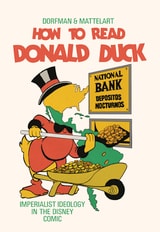
How to Read Donald Duck
Imperialist Ideology in the Disney ComicAriel Dorfman
Pluto Press, 2020
First published in 1971, How to Read Donald Duck shocked readers by revealing how capitalist ideology operates in our most beloved cartoons. Having survived bonfires, impounding and being dumped into the ocean by the Chilean army, this controversial book is once again back on our shelves.
Written and published during the blossoming of Salvador Allende's revolutionary socialism in Chile, the book examines how Disney products reflect capitalist ideology, and are active agents working in this ideology’s favor. Focusing on the hapless mice and ducks of Disney, curiously parentless, marginalized and always short of cash, Ariel Dorfman and Armand Mattelart expose how these characters established hegemonic ideas about capital, race, gender and the relationship between developed countries and the Third World.
A devastating indictment of a media giant, a document of twentieth-century political upheaval, and a reminder of the dark undercurrent of pop culture, How to Read Donald Duck is once again available, together with a new introduction by Ariel Dorfman in which he writes.
"It is that joy in liberation, that alegria, that spirit of resistance, that I wish to share with America, as the book that Pinochet’s soldiers could not liquidate or Disney’s lawyers stop from entering the United States finally finds its way to its new home, deep into the land that invented Donald Duck and Donald Trump. Is the same country that gave me such a warm welcome as a child, and perhaps may now equally greet with open arms this critique of oppression and it certainty that we don’t have to leave the world as it was when we first encountered it."
How to Read Foucault's Discipline and Punish
Stephen Shapiro and Anne Schwan
Pluto Press, 2011
Michel Foucault’s Discipline and Punish is one of the best-selling works of critical theory and a key text on many undergraduate courses. However, it is a long, difficult text which makes Anne Schwan and Stephen Shapiro's excellent step-by-step reading guide a welcome addition to the How to Read Theory series.
Undergraduates across a wide range of disciplines are expected to have a solid understanding of Foucault's key terms, which have become commonplace in critical thinking today. While there are many texts that survey Foucault's thought, these are often more general overviews or biographical précis that give little in the way of robust explanation and discussion. In contrast, Schwan and Shapiro take a plain-speaking, yet detailed, approach, specifically designed to give students a thorough understanding of one of the most influential texts in contemporary cultural theory.

How to Shoot the Longbow
A Guide from Historical and Applied SourcesHugh D. H. Soar
Westholme Publishing, 2015
“Soar’s book [The Crooked Stick] is indispensible.”—Bernard Cornwell, New York Times bestselling author
Relying on more than fifty years’ experience in archery, historian Hugh D. H. Soar reflects on how the longbow was drawn and shot across the centuries through examining the design of the bow and early literature about the bow, combined with his and his colleagues’ applied knowledge using replica bows. No complete medieval longbow has survived, but those found aboard the Tudor warship Mary Rose provide the best archaeological evidence to the possible construction of the medieval bow. Contemporary treatises written about the proper manner of shooting the bow, together with the resurgence in interest and construction of replica bows beginning in the late sixteenth century that form part of the author’s collection provide the basis for this work. How to Shoot the Longbow: A Guide from Historical and Applied Sources is a fascinating and practical look at the use of a legendary invention.
How to Think About Catastrophe
Toward a Theory of Enlightened DoomsayingJean-Pierre Dupuy
Michigan State University Press, 2022
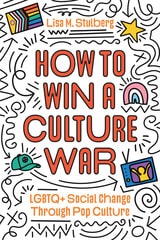
How to Win a Culture War
LGBTQ+ Social Change Through Pop CultureLisa M. Stulberg
University of Chicago Press, 2026
How elite athletes and entertainment industry movers and shakers work to win the culture war for LGBTQ+ social justice.
The unquestionable runaway television hit of late 2025 was Crave/HBO Max’s Heated Rivalry, a show that tells the love story of two queer ice hockey players. This show—and the wider social context around it—would have been unthinkable without the courageous writing, art, and advocacy of previous generations of LGBTQ+ people and their allies in the entertainment industry. In How to Win a Culture War, sociologist Lisa M. Stulberg argues that, despite substantial barriers, past and current creatives and athletes are changing American culture through their contributions to arts, sports, and politics.
Stulberg conducted in-depth interviews with 170 culture workers—including television, film, and theater actors and creators; musicians; elite athletes; and activists over the span of 14 years. These include stars such as Will & Grace's Eric McCormack, Orange Is the New Black’s Lea DeLaria, Olympic diver Greg Louganis, and several former NFL players, as well as the TV and movie writers, producers, and directors behind some of pop culture’s boldest moves. These culture makers take six primary steps toward LGBTQ+ social change: they become visible, use available platforms, change their workplaces, overachieve, become normal, and stay queer. In this work, they are opening up the culture, changing hearts and minds, and building community, even amid a fresh round of ruthless political attacks on LGBTQ+ people.
Providing rich behind-the-scenes insight and cultural material, Stulberg outlines an urgently needed playbook for how to win a culture war.