Results by title
22279 books match the query 'Social Science' and 635 start with h
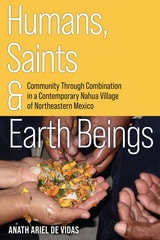
Humans, Saints, and Earth Beings
Community Through Combination in a Contemporary Nahua Village of Northeastern MexicoAnath Ariel De Vidas
University Press of Colorado, 2025
In her work, Ariel de Vidas demonstrates how villagers blend traditional earth-based rituals with Catholic practices, creating a sophisticated system of coexistence between humans and nonhuman entities. These ritual combinations serve as the primary mechanism for social production, cultural continuity, and political authority. The book challenges conventional anthropological binaries of tradition versus modernity and continuity versus acculturation through “thick” ethnographic descriptions that focus on the ethics of coexistence among humans themselves as well as between humans and the peculiar nonhuman inhabitants of their environment.
Originally published in Spanish as Combinar para convivir (2021), Humans, Saints, and Earth Beings contributes to contemporary theoretical discussions about Indigenous ontologies, ritual practice, and social cohesion. It offers crucial insights into how rural communities worldwide might navigate the tensions between maintaining cultural particularities and participating in broader social transformations, making it essential reading for anthropologists, Latin American studies scholars, and anyone interested in Indigenous resilience and adaptation.
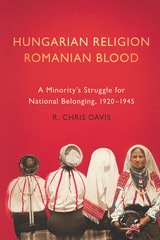
Hungarian Religion, Romanian Blood
A Minority's Struggle for National Belonging, 1920–1945R. Chris Davis
University of Wisconsin Press, 2019
Davis's highly illuminating example is the case of the little-known Moldavian Csangos, a Hungarian- and Romanian-speaking community of Roman Catholics in eastern Romania. During World War II, some in the Romanian government wanted to expel them. The Hungarian government saw them as Hungarians and wanted to settle them on lands confiscated from other groups. Resisting deportation, the clergy of the Csangos enlisted Romania's leading racial anthropologist, collected blood samples, and rewrote a millennium of history to claim Romanian origins and national belonging—thus escaping the discrimination and violence that devastated so many of Europe's Jews, Roma, Slavs, and other minorities. In telling their story, Davis offers fresh insight to debates about ethnic allegiances, the roles of science and religion in shaping identity, and minority politics past and present.

Hungarians and Europe in the Early Middle Ages
An Introduction to Early Hungarian HistoryAndrás Róna-Tas
Central European University Press, 1999
Hunger So Wide And So Deep
A Multiracial View of Women’s Eating ProblemsBecky Thompson
University of Minnesota Press, 1996
A new feminist classic--now in paper!
Based on in-depth life history interviews with African-American, Latina, and white women-both lesbian and heterosexual-this book chronicles the effects of racism, sexism, acculturation, and sexual abuse on women’s bodies and eating patterns.
“A wonderful book: gripping, creative and profoundly humane. In lucid prose Thompson offers an original explanation for women’s eating problems. She argues that many women turn to food-bingeing, dieting, purging, or starving- as a sensible means of coping with physical and psychic ‘atrocities’ deriving from ‘racism, sexism, homophobia, classism, the stress of acculturation, and emotional, physical, and sexual abuse.’” Women’s Review of Books“Surprising and alarming. . . . Thompson urges a second look at our national obsession with weight and proffers theories and practices that could save the lives of women of all colors and sexual orientations.” Lambda Book Report“Thompson breaks new ground and offers hope for the multitudes of women who have swallowed their pain.” Evelyn C. White, Editor, The Black Women's Health Book
Hungry Heart
The Literary Emergence of Julia Ward HoweGary Williams
University of Massachusetts Press, 2009

Hungry Hill
A MemoirCarole O'Malley Gaunt
University of Massachusetts Press, 2007
On a sweltering June night in 1959, Betty O'Malley died from lymphatic cancer, leaving behind an alcoholic husband and eight shell-shocked children—seven sons and one daughter, ranging in age from two to fifteen years. The daughter, Carole, was thirteen at the time. In this poignant memoir, she recalls in vivid detail the chaotic course of her family life over the next four years.
The setting for the story is Hungry Hill, an Irish-Catholic working-class neighborhood in Springfield, Massachusetts. The author recounts her sad and turbulent story with remarkable clarity, humor, and insight, punctuating the narrative with occasional fictional scenes that allow the adult Carole to comment on her teenage experiences and to probe the impact of her mother's death and her father's alcoholism.
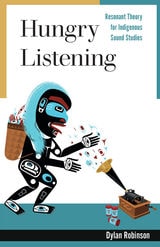
Hungry Listening
Resonant Theory for Indigenous Sound StudiesDylan Robinson
University of Minnesota Press, 2020
WInner of the Best First Book from the Native American and Indigenous Studies Association
Winner of the Labriola Center American Indian National Book Award
Winner of the Ann Saddlemyer Award from the Canadian Association for Theatre Research
Reimagining how we understand and write about the Indigenous listening experience
Hungry Listening is the first book to consider listening from both Indigenous and settler colonial perspectives. A critical response to what has been called the “whiteness of sound studies,” Dylan Robinson evaluates how decolonial practices of listening emerge from increasing awareness of our listening positionality. This, he argues, involves identifying habits of settler colonial perception and contending with settler colonialism’s “tin ear” that renders silent the epistemic foundations of Indigenous song as history, law, and medicine.
With case studies on Indigenous participation in classical music, musicals, and popular music, Hungry Listening examines structures of inclusion that reinforce Western musical values. Alongside this inquiry on the unmarked terms of inclusion in performing arts organizations and compositional practice, Hungry Listening offers examples of “doing sovereignty” in Indigenous performance art, museum exhibition, and gatherings that support an Indigenous listening resurgence.
Throughout the book, Robinson shows how decolonial and resurgent forms of listening might be affirmed by writing otherwise about musical experience. Through event scores, dialogic improvisation, and forms of poetic response and refusal, he demands a reorientation toward the act of reading as a way of listening. Indigenous relationships to the life of song are here sustained in writing that finds resonance in the intersubjective experience between listener, sound, and space.
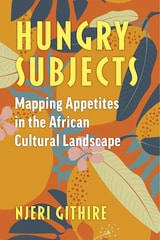
Hungry Subjects
Mapping Appetites in the African Cultural LandscapeNjeri Githire
University of Michigan Press, 2026
Against the backdrop of media representations of Africa through persistent and pervasive images of emaciated, starving Africans and the critical need to marshall food aid in response, Hungry Subjects places Africa’s food anxiety within a broader historical context and expands ongoing food scholarship beyond its current confines in the social sciences. Njeri Githire weaves together coming-of-age texts across the African and African diasporic literary landscape in English, French, and Portuguese expression to ask how African writers incorporate food into their storylines to transmit cultural information, question norms, and propose alternatives. Eating is an intimately personal yet inherently social experience codified by public rituals and commerce, invariably linked to a larger tapestry of historical, cultural, economic, and political dynamics. Delving into the political dynamics of food as a tool of power and control alongside subversive potentialities, Hungry Subjects appraises the narrative and political thrust of (not-)eating and exposes the ways in which postcolonial manifestations of colonial-era power relations are symbolized in food’s many functions and meanings.
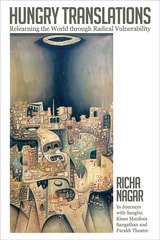
Hungry Translations
Relearning the World through Radical VulnerabilityRicha Nagar
University of Illinois Press, 2019
Hunted
Predation and Pentecostalism in GuatemalaKevin Lewis O'Neill
University of Chicago Press, 2019
Hunted is based on more than ten years of fieldwork among these centers and the drug users that populate them. Over time, as Kevin Lewis O’Neill engaged both those in treatment and those who surveilled them, he grew increasingly concerned that he, too, had become a hunter, albeit one snatching up information. This thoughtful, intense book will reframe the arc of redemption we so often associate with drug rehabilitation, painting instead a seemingly endless cycle of hunt, capture, and release.
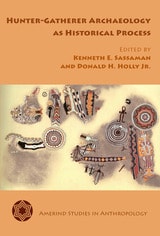
Hunter-Gatherer Archaeology as Historical Process
Edited by Kenneth E. Sassaman and Donald H. Holly Jr.
University of Arizona Press, 2011
Combining the latest empirical studies of archaeological practice with the latest conceptual tools of anthropological and historical theory, this volume seeks to set a new course for hunter-gatherer archaeology by organizing the chapters around three themes. The first section offers diverse views of the role of human agency, challenging the premise that hunter-gatherer societies were bound by their interactions with the natural world. The second section considers how society and culture are constituted. Chapters in the final section take the long view of the historical process, examining how cultural diversity arises out of interaction and the continuity of ritual practices.
A closing commentary by H. Martin Wobst underscores the promise of an archaeology of foragers that does not associate foraging with any particular ideology or social structure but instead invites inquiry into counterintuitive alternatives. Hunter-Gatherer Archaeology as Historical Process seeks to blur the divisions between prehistory and history, between primitive and modern, and between hunter-gatherers and people in other societies. Because it offers alternatives to the dominant discourse and contributes to the agenda of hunter-gatherer research, this book will be of interest to anyone involved in the study of foraging peoples.
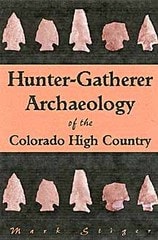
Hunter-Gatherer Archaeology of the Colorado High Country
Mark Stiger
University Press of Colorado, 2001
Synthesizing research from several important, previously neglected sites, the book anchors its findings in a massive body of data that Mark Stiger gathered over eight years at Tenderfoot - a large lithic-scatter site once categorized as insignificant. Advances in spatial analysis, theoretical approaches, and excavation methods have allowed lithic-scatter sites, once considered less revealing than intact structures and similar sites, to yield startlingly rich cultural evidence.
Presenting artifactual data that reflects changes in houses, game drives, fire pits, stone tools, and debitage, Stiger explains the cultural sequence in the Upper Gunnison Basin and its connections to changes across the West. He relates environmental and cultural changes, relying on paleoenvironmental evidence, changes in floral and faunal usage patterns, and data recovered in multi-year, repetitive surface collections. An overview and critique of past research in the region complements discussion of the advantages of horizontally extensive block excavations and other contemporary ways of excavating and analyzing surface sites.
Stiger's findings hold promise for future research, as high-altitude surface sites are common, under-researched, and relatively well-preserved. The advances in archaeological method and theory that enabled Stiger's outstanding results in the Upper Gunnison Basin will allow many other Western sites to yield fascinating evidence.
Hunter-Gatherer Mortuary Practices during the Central Texas Archaic
By Leland C. Bement
University of Texas Press, 1995
Beginning over 10,000 years ago and continuing until the arrival of the Spanish in the 1500s, hunter and gatherer societies occupied the Edwards Plateau of central Texas. Archaeological studies over the past eighty years have reconstructed their subsistence, technology, and settlement patterns, but until now little information has been available on their burial practices, due to the scarcity of known burial sites. This detailed archaeological report describes the human skeletal remains, burial furnishings, and fauna recovered from Bering Sinkhole in Kerr County, the first carefully excavated hunter-gatherer burial site in central Texas.
The remains in Bering Sinkhole were deposited from 7,500 to 2,000 years ago. Leland Bement's analysis reveals a growing elaboration in burial rituals during the period and also uncovers important data on the diet and health of the hunter-gatherers. He discusses climate change based on faunal remains and compares burial goods such as bone, antler, freshwater shell, marine shell, turtle, and stone artifacts with those found at other Texas mortuary sites and with deposits at hunter-gatherer habitation sites in Central Texas.
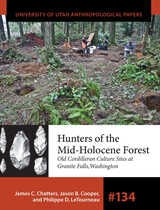
Hunters of the Mid-Holocene Forest
Old Cordilleran Culture Sites at Granite Falls, WashingtonJames C. Chatters, Jason B. Cooper, and Philippe D. LeTourneau
University of Utah Press, 2020
This volume examines an almost purely lithic record known in the Puget Sound region as the Olcott Complex. Only loosely described off and on since the early 1960s by a series of researchers, none of whom used the same analytical approach, the Olcott record has never been systematically analyzed until now. As a result, this book fills in enormous gaps in our knowledge regarding the age, mode of subsistence, and adaptive strategy of the Olcott Complex. Chatters and colleagues describe the intensive excavation of three Olcott sites that were threatened by highway construction. The book concludes by pulling those findings together to place the Olcott Complex into its proper place in regional prehistory. An exemplary model of how to conduct archaeological research, the volume demonstrates how important research issues can be addressed in a cultural resource management context.
Extensive appendices available online.
Hunters of the Northern Forest
Designs for Survival among the Alaskan KutchinRichard K. Nelson
University of Chicago Press, 1986
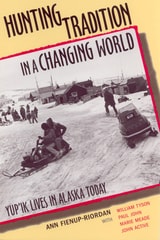
Hunting Tradition in a Changing World
Yup'ik Lives in Alaska TodayFienup-Riordan, Ann
Rutgers University Press, 2000

Hunting and Fishing for Sport
Commerce, Controversy, Popular CultureRichard Hummel
University of Wisconsin Press, 1994
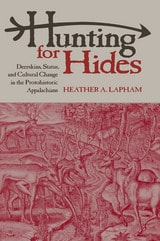
Hunting for Hides
Deerskins, Status, and Cultural Change in the Protohistoric AppalachiansHeather A. Lapham
University of Alabama Press, 2006
Through research on faunal remains and mortuary assemblages, Lapham tracks both the products Native Americans produced for colonial trade--deerskins and other furs--as well as those items received in exchange--European and native prestige goods that end up in burial contexts. Zooarchaeological analyses provide insights into subsistence practices, deer-hunting strategies, and deer-hide production activities, while an examination of mortuary practices contributes information on the use of the nonlocal goods acquired through trade in deerskins. This study reveals changes in economic organization and mortuary practices that provide new insights into how participation in the colonial deerskin trade initially altered Native American social relations and political systems.
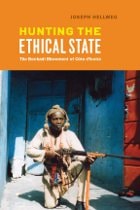
Hunting the Ethical State
The Benkadi Movement of Côte d'IvoireJoseph Hellweg
University of Chicago Press, 2011
In the 1990s a nationwide crime wave overtook Côte d’Ivoire. The Ivoirian police failed to control the situation, so a group of poor, politically marginalized, and mostly Muslim men took on the role of the people’s protectors as part of a movement they called Benkadi. These men were dozos—hunters skilled in ritual sacrifice—and they applied their hunting and occult expertise, along with the ethical principles implicit in both forms of knowledge, to the tracking and capturing of thieves. Meanwhile, as Benkadi emerged, so too did the ethnic, regional, and religious divisions that would culminate in Côte d’Ivoire’s 2002–07 rebellion.
Hunting the Ethical State reveals how dozos worked beyond these divisions to derive their new roles as enforcers of security from their ritual hunting ethos. Much as they used sorcery to shape-shift and outwit game, they now transformed into unofficial police, and their ritual networks became police bureaucracies. Though these Muslim and northern-descended men would later resist the state, Joseph Hellweg demonstrates how they briefly succeeded at making a place for themselves within it. Ultimately, Hellweg interprets Benkadi as a flawed but ingenious and thoroughly modern attempt by non-state actors to reform an African state.
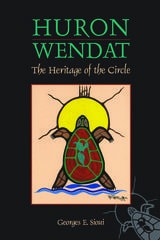
Huron Wendat
The Heritage of the CircleGeorges E. Sioui
Michigan State University Press, 1999
Wendat, or Wyandot, was the name that the five confederated nations of Wendake gave to Huronia, the Ontario territory described by the French in the 1600s. In this book, Georges Sioui, himself a Wendat, tells the history of his people by describing their social ideas and philosophy and their relevance to contemporary life. Sioui argues that for human beings there is only one way of looking at life on earth, and that is as a sacred circle of relationships among all beings. Sioui reviews the Wendats' Creation mythology and explains their origins, migrations, theology, ethics, philosophy, oral literature, and sociology, and their role in Amerindian geopolitics. He then examines archaeology and its role in bridging the gap created by negative perceptions. Finally, he describes Wendat society from an Amerindian viewpoint, concentrating on the period from 1615 to 1650 and drawing on traditional ethnographic documentation.
Hurrah for Hampton!
Black Red Shirts in South Carolina during ReconstructionEdmund L. Drago
University of Arkansas Press, 1999
This post-revisionist study examines the motives and the concerns of the ex-slaves in South Carolina who supported a movement that eventually led to white supremacy.
Although most freedmen throughout the states of the former Confederacy were Republicans loyal to the party of the Federal government that had emancipated them, they were factions of African-American voters who aligned themselves with local white Democratic leaders. one such group of black conservatives joined the “Red Shirts,” white paramilitary clubs that attempted to restore antebellum values in electing former Confederate general Wade Hampton governor of South Carolina in 1876.
Drago’s fine analysis recovers and explains this lost aspect of Southern black history. Drawing on primary sources that include testimonies of several black Red Shirts before a Congressional investigation of the election and eleven slave narratives, he de-romanticizes the black experience by examining the relationship between black initiative and southern paternalism.
Hush
Media and Sonic Self-ControlMack Hagood
Duke University Press, 2019
Hustle Urbanism
Making Life Work in NairobiTatiana Thieme
University of Minnesota Press, 2025
Exploring hustle as a social, cultural, and economic phenomenon in contemporary Nairobi
In Nairobi’s underserved neighborhoods, “hustle” has emerged as both a vital survival strategy and a way of life for youth. Exploring the multiple meanings and manifestations of the hustle economy across different scenarios of provisioning, distribution, exchange, learning, and mobilizing, Hustle Urbanism draws on more than a decade of ethnographic engagement to center the logics, perspectives, and inventive strategies of a group of youth who constantly navigate job scarcity, inadequate basic services, and climate-induced harms.
Tatiana Thieme shows how young people develop tools of resistance against the legacies of colonial violence and uneven urban development while carving out spaces of opportunity for themselves and their peers. The stories she includes bring thick ethnographic detail and longitudinal perspective to the lives and livelihoods of youth whose diverse skill sets and knowledges span from circular economies and eco-activism to hip hop and local leadership. Filling a significant gap in both existing scholarship and popular discussion, Hustle Urbanism offers critical theorization of precarious urban environments and the affirmative modes of making life work in the city against the odds.
While Thieme cautions against fetishizing hustle as a form of social and economic uplift, she calls for a greater recognition of the ingenuity and skill involved in hustle urbanism, arguing that studying hustle narratives and practices opens up timely empirical and theoretical questions about overlapping urban struggles and possibilities that coexist in the everyday city.
Retail e-book files for this title are screen-reader friendly with images accompanied by short alt text and/or extended descriptions.

Hustling Is Not Stealing
Stories of an African Bar GirlJohn M. Chernoff
University of Chicago Press, 2003
In Hustling Is Not Stealing and its follow-up, Exchange Is Not Robbery, a chronicle of exploitation is transformed by verbal art into an ebullient comedy. In Hustling Is Not Stealing, Hawa is a playful warrior struggling against circumstances in Ghana and Togo. In Exchange Is Not Robbery, Hawa returns to her native Burkina Faso, where she achieves greater control over her life but faces new difficulties. As a woman making sacrifices to live independently, Hawa sees her own situation become more complex as she confronts an atmosphere in Burkina Faso that is in some ways more challenging than the one she left behind, and the moral ambiguities of her life begin to intensify.
Combining elements of folklore and memoir, Hawa’s stories portray the diverse social landscape of West Africa. Individually the anecdotes can be funny, shocking, or poignant; assembled together they offer a sweeping critical and satirical vision.
Hybrid Cultures
Strategies for Entering and Leaving ModernityNestor Garcia Canclini
University of Minnesota Press, 1995
Hybrid Cultures
Strategies for Entering and Leaving ModernityNestor Garcia Canclini
University of Minnesota Press, 2005

Hybrid Renaissance
Culture, Language, ArchitecturePeter Burke
Central European University Press, 2016
Hybrid Renaissance introduces the idea that the Renaissance in Italy, elsewhere in Europe, and in the world beyond Europe is an example of cultural hybridization.
The two key concepts used in this book are “hybridization” and “Renaissance”. Roughly speaking, hybridity refers to something new that emerges from the combination of diverse older elements. (The term “hybridization” is preferable to “hybridity” because it refers to a process rather than to a state, and also because it encourages the writer and the readers alike to think in terms of degree: where there is more or less, rather than presence versus absence.)
The book begins with a discussion of the concept of cultural hybridization and a cluster of other concepts related to it. Then comes a geography of cultural hybridization focusing on three locales: courts, major cities (whether ports or capitals) and frontiers. The following seven chapters describe the hybridity of the Renaissance in different fields: architecture, painting and sculpture, languages, literature, music, philosophy and law and finally religion. The essay concludes with a brief account of attempts to resist hybridization or to purify cultures or domains from what was already hybridized.
Hybridity
The Cultural Logic Of GlobalizationMarwan Kraidy
Temple University Press, 2005

Hydra Rising
The Enduring Struggle for Freedom, Mobility, and the CommonsBridget Anderson, Nandita Sharma, and Cynthia Wright, editors
Duke University Press, 2027
Hydraulic City
Water and the Infrastructures of Citizenship in MumbaiNikhil Anand
Duke University Press, 2017
Hydraulic Societies
Water, Power, and Control in East and Central Asian HistoryNicholas B. Breyfogle
Oregon State University Press, 2023
Hydraulic Societies explores the linked themes of water, power, state-building, and hydraulic control. Bringing together a range of ecological, geographical, chronological, and methodological perspectives, the essays in this book address the how humans have long harnessed water and sought to contain its destructive power for political, economic and social ends. Water defines every aspect of life and remains at the center of human activity: in irrigation and agriculture; waste and sanitation; drinking and disease; floods and droughts; religious beliefs and practices; fishing and aquaculture; travel and discovery; scientific study; water pollution and conservation; multi-purpose dam building; boundaries and borders; politics and economic life; and wars and diplomacy.
From the earliest large irrigation works thousands of years ago, control over water has involved control over people, as the essays in this volume reflect. The intersections of water and political, economic, and social power historically span international as well as domestic politics and operate at scales ranging from the local to the global. The authors consider the role of water in national development schemes, water distribution as a tool of political power, international disputes over waterways and water supplies, and the place of water in armed conflicts. They explore the ways in which political power and social hierarchies have themselves been defined and redefined by water and its control, how state leaders legitimized their rule both culturally and economically through the control of water, and how water management schemes were a means to impose and refine colonial power.
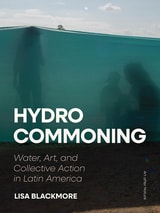
Hydrocommoning
Water, Art, and Collective Action in Latin AmericaLisa Blackmore
University of Minnesota Press, 2027
Reimagining watersheds as living hydrocommons through which artists and communities create more just and sustainable futures
Hydrocommoning explores how artists, activists, and curators coalesce around water in embodied efforts to contest entrenched and enduring forms of harm and degradation. Against the reduction of rivers, streams, and wetlands to mere resources to be managed, Hydrocommoning centers water as a living web of relations through which artists and communities forge creative means of reconnection by moving, weaving, pumping, eating, and listening.
By charting these aesthetic practices, Hydrocommoning shows how artists and organizers across Latin America oppose extractivism, unequal urbanization, ecological degradation, and the erasure of Indigenous water cultures. To cultivate widespread social attunement to vulnerable waters and raise the call for their defense and care, collectives in Brazil, Colombia, Guatemala, and Peru engage in communal meals, sound art, infrastructural interventions, and other practices that Lisa Blackmore theorizes as “hydrocommoning.”
Grounded in five years of experiential fieldwork, archival research, and curatorial projects in Latin America, Blackmore proposes a methodology to work with water as an analytical framework for collective action. Bridging the gap between theory, curating, and community-based practices, Hydrocommoning offers a promising vision of grassroots organizing that actively confronts some of today’s most urgent ecological threats.
Retail e-book files for this title are screen-reader friendly with images accompanied by short alt text and/or extended descriptions.

Hypertext and the Female Imaginary
Jaishree K. Odin
University of Minnesota Press, 2010
Investigating the work of Trinh T. Minh-ha, Judy Malloy, Shelley Jackson, Stephanie Strickland, and M. D. Coverly, Odin demonstrates how these writers apply hypertextual strategies to subversively convey difference. Through her readings of various transformative hypertext narratives by women writers/artists, she pursues the question of what constitutes empowering descriptions of the world in a technology-mediated culture where the dominant discourse is turning everything into the same.
Using feminist as well as postcolonial perspectives, she explores the embodied state of the human as reflected in critically aware contemporary narratives and examines how these works consider what it means to be human in the twenty-first century.
Hysteric's Guide to the Future Female Subject
Juliet Flower Maccannell
University of Minnesota Press, 1999
Proposes an ethics of the feminine through an examination of women’s writing.
The Hysteric’s Guide to the Future Female Subject was first published in 1999. Minnesota Archive Editions uses digital technology to make long-unavailable books once again accessible, and are published unaltered from the original University of Minnesota Press editions.
How can a girl become a woman today—an ethical woman and a member of society—without being either a victim or a manipulator? Reflecting on this question, Juliet Flower MacCannell takes us for the first time beyond the flawed models for “becoming woman” left to us by Freud and Sade.Having previously explored the logic of feminine sexuality, MacCannell sets out in the Hysteric’s Guide to locate an ethics of the feminine. She does this by examining instances of the (often hysterical) feminine confrontation with (usually perverse) masculine subjects, confrontations that represent crucial scenes in the constitution of female sexuality. Her study takes us into Sadean ethics and the prescriptions of Freudian psychoanalysis; post-Enlightenment colonialism; racism during and after World War I; genocidal fascism in World War II; and the slowing of time and generation during the Cold War.MacCannell treats contemporary art, fiction, and theory, considering works by Arendt, Angelou, Rousseau, Kant, Stendhal, Kleist, Hitchcock, Atwood, Klein, Chodorow, Adorno, and Duras. Ultimately, this book reasserts “becoming woman” as an issue that has, until now, been denied for want of a feminine ethic relevant to contemporary life.
Hysterical!
Women in American ComedyEdited by Linda Mizejewski and Victoria Sturtevant; foreword by Kathleen Rowe Karlyn
University of Texas Press, 2017
Ideal for classroom use, this anthology of original essays by the leading authorities on women’s comedy surveys the disorderly, subversive, and unruly performances of women comics from silent film to contemporary multimedia
Winner, Susan Koppleman Award for Best Anthology, Multi-Authored, or Edited Book in Feminist Studies, Popular and American Culture Associations (PACA), 2017
Amy Schumer, Samantha Bee, Mindy Kaling, Melissa McCarthy, Tig Notaro, Leslie Jones, and a host of hilarious peers are killing it nightly on American stages and screens large and small, smashing the tired stereotype that women aren’t funny. But today’s funny women aren’t a new phenomenon—they have generations of hysterically funny foremothers. Fay Tincher’s daredevil stunts, Mae West’s linebacker walk, Lucille Ball’s manic slapstick, Carol Burnett’s athletic pratfalls, Ellen DeGeneres’s tomboy pranks, Whoopi Goldberg’s sly twinkle, and Tina Fey’s acerbic wit all paved the way for contemporary unruly women, whose comedy upends the norms and ideals of women’s bodies and behaviors.
Hysterical! Women in American Comedy delivers a lively survey of women comics from the stars of the silent cinema up through the multimedia presences of Tina Fey and Lena Dunham. This anthology of original essays includes contributions by the field’s leading authorities, introducing a new framework for women’s comedy that analyzes the implications of hysterical laughter and hysterically funny performances. Expanding on previous studies of comedians such as Mae West, Moms Mabley, and Margaret Cho, and offering the first scholarly work on comedy pioneers Mabel Normand, Fay Tincher, and Carol Burnett, the contributors explore such topics as racial/ethnic/sexual identity, celebrity, stardom, censorship, auteurism, cuteness, and postfeminism across multiple media. Situated within the main currents of gender and queer studies, as well as American studies and feminist media scholarship, Hysterical! masterfully demonstrates that hysteria—women acting out and acting up—is a provocative, empowering model for women’s comedy.