Results by title
4030 books match the query 'Language Arts & Disciplines' and 68 start with h

How Libraries and Librarians Help
A Guide to Identifying User-Centered OutcomesMarian Bouch Hinton
American Library Association, 2005
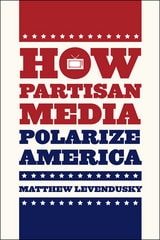
How Partisan Media Polarize America
Matthew Levendusky
University of Chicago Press, 2013
In How Partisan Media Polarize America, Matthew Levendusky confirms—but also qualifies—both of these claims. Drawing on experiments and survey data, he shows that Americans who watch partisan programming do become more certain of their beliefs and less willing to weigh the merits of opposing views or to compromise. And while only a small segment of the American population watches partisan media programs, those who do tend to be more politically engaged, and their effects on national politics are therefore far-reaching.
In a time when politics seem doomed to partisan discord, How Partisan Media Polarize America offers a much-needed clarification of the role partisan media might play.
How Writing Faculty Write
Strategies for Process, Product, and ProductivityChristine E. Tulley
Utah State University Press, 2018
Tulley illuminates a long-unstudied corner of the discipline: the writing habits of theorists, researchers, and teachers of writing. Her interviewees speak candidly about overcoming difficulties in their writing processes on a daily basis, using strategies for getting started and restarted, avoiding writer’s block, finding and using small moments of time, and connecting their writing processes to their teaching. How Writing Faculty Write will be of significant interest to students and scholars across the spectrum—graduate students entering the discipline, new faculty and novice scholars thinking about their writing lives, mid-level and senior faculty curious about how scholars research and write, historians of rhetoric and composition, and metadisciplinary scholars.
How the News Feels
The Empathic Power of Literary JournalistsJonathan D. Fitzgerald
University of Massachusetts Press, 2023
Literary journalism’s origins can be traced to the nineteenth century, when it developed alongside the era’s sentimental literature. Combining fact-based reporting with the sentimentality of popular fiction, literary journalism encouraged readers to empathize with subjects by presenting more nuanced and engaging stories than typical news coverage. While women writers were central to the formation and ongoing significance of the genre, literary journalism scholarship has largely ignored their contributions.
How the News Feels re-centers the work of a range of writers who were active from the nineteenth century until today, including Catharine Williams, Margaret Fuller, Nellie Bly, Winifred Black, Zora Neale Hurston, Joan Didion, Adrian Nicole LeBlanc, and Alexis Okeowo. Offering intimate access to their subjects’ thoughts, motivations, and yearnings, these journalists encouraged readers to empathize with society’s outcasts, from asylum inmates and murder suspects to “fallen women” and the working poor. As this carefully researched study shows, these writers succeeded in defining and developing the genre of literary journalism, with stories that inspire action, engender empathy, and narrow the gap between writer, subject, and audience.
How to Create a Universe
Jakob Ion Wille, Simon Jon Andreasen, and Gunnar Wille
University of Westminster Press, 2025

How to Look Good in a War
Justifying and Challenging State ViolenceBrian Rappert
Pluto Press, 2012
How to Look Good in A War examines the methods used to depict, defend and justify the use of state violence. Many books have shown how 'truth is the first casualty of war' but this is the first to analyse exactly how pro-war narratives are constructed and normalised.
Brian Rappert details the 'upside-down' world of war in which revelation conceals, knowledge fosters uncertainty, and transparency obscures. He looks at government spin during recent wars in Iraq, Afghanistan and Libya where officials manoeuvre between circulating and withholding information.
Examining how organised violence is justified, How to Look Good in A War draws on experiences from recent controversy to consider how ignorance about the operation of war is produced and how concerned individuals and groups can intervene to make a difference.
How to Manage Processing in Archives and Special Collections
An IntroductionPam Hackbart-Dean
American Library Association, 2013
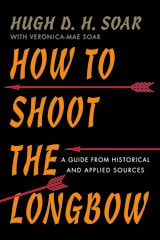
How to Shoot the Longbow
A Guide from Historical and Applied SourcesHugh D. H. Soar
Westholme Publishing, 2015
“Soar’s book [The Crooked Stick] is indispensible.”—Bernard Cornwell, New York Times bestselling author
Relying on more than fifty years’ experience in archery, historian Hugh D. H. Soar reflects on how the longbow was drawn and shot across the centuries through examining the design of the bow and early literature about the bow, combined with his and his colleagues’ applied knowledge using replica bows. No complete medieval longbow has survived, but those found aboard the Tudor warship Mary Rose provide the best archaeological evidence to the possible construction of the medieval bow. Contemporary treatises written about the proper manner of shooting the bow, together with the resurgence in interest and construction of replica bows beginning in the late sixteenth century that form part of the author’s collection provide the basis for this work. How to Shoot the Longbow: A Guide from Historical and Applied Sources is a fascinating and practical look at the use of a legendary invention.
How to Stay Afloat in the Academic Library Job Pool
Teresa Y. Neely
American Library Association, 2011
How to Write Well
50 Pointers on Process, Usage, and StyleBryan A. Garner
University of Chicago Press, 2027
Stop worshipping Strunk and White. Start writing well, with 50 tips and techniques from language expert Bryan A. Garner.
For decades, people looking for a concise guide to English-language writing turned to The Elements of Style by William Strunk Jr. and E. B. White. That slim book has been used by everyone from high school and college students to professionals seeking quick advice on usage, grammar, and form. But The Elements of Style hasn’t been updated in more than a quarter century, and it no longer reflects the way good writers work or what they most need to know, especially in the age of generative AI.
How to Write Well: 50 Pointers on Process, Usage, and Style is the modern, evidence-based alternative. Leading language and writing expert Bryan A. Gamer distills a lifetime of teaching and research into 50 compact pointers for modern writers seeking to produce clear, accurate, and lively prose. You’ll learn how strong writers think, how they turn ideas into blueprints, and how they draft, revise, and tighten with ruthless selectivity. You’ll also encounter lucid guidance on grammar and punctuation that corrects Strunk & White’s famous blunders, including shaky treatment of passive voice and a fixation on trivia over substance.
How to Write Well presents a start-to-finish method: mindset, habits, process, and the concrete techniques that produce clean, forceful writing. Unlike The Elements of Style, this book doesn’t pretend your draft magically appears on the page. It shows you how to generate ideas, structure them, and build a repeatable process for everything you write—from emails and memos to articles, briefs, and books. And while emphasizing the mind and the voice of the writer, it also offers advice on working intelligently with AI while keeping full editorial control.
If you’re serious about writing, Garner’s How to Write Well is the indispensable style book you need now.
How to Write a BA Thesis, Second Edition
A Practical Guide from Your First Ideas to Your Finished PaperCharles Lipson
University of Chicago Press, 2018
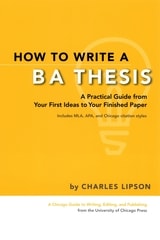
How to Write a BA Thesis
A Practical Guide from Your First Ideas to Your Finished PaperCharles Lipson
University of Chicago Press, 2005
This book offers step-by-step advice on how to turn a vague idea into a clearly defined proposal, then a draft paper, and, ultimately, a polished thesis. Lipson also tackles issues beyond the classroom-from good work habits to coping with personal problems that interfere with research and writing.
Filled with examples and easy-to-use highlighted tips, the book also includes handy time schedules that show when to begin various tasks and how much time to spend on each. Convenient checklists remind students which steps need special attention, and a detailed appendix, filled with examples, shows how to use the three main citation systems in the humanities and social sciences: MLA, APA, and Chicago.
How to Write a BA Thesis will help students work more comfortably and effectively-on their own and with their advisers. Its clear guidelines and sensible advice make it the perfect text for thesis workshops. Students and their advisers will refer again and again to this invaluable resource. From choosing a topic to preparing the final paper, How to Write a BA Thesis helps students turn a daunting prospect into a remarkable achievement.
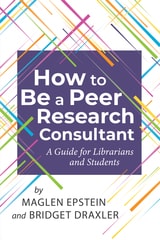
How to be a Peer Research Consultant
A Guide for Librarians and StudentsMaglen Epstein
Assoc of College & Research Libraries, 2022
In seven highly readable chapters, How to Be a Peer Research Consultant provides focused support for anyone preparing undergraduate students to serve as peer research consultants, whether you refer to these student workers as research tutors, reference assistants, or research helpers. Inside you’ll find valuable training material to help student researchers develop metacognitive, transferable research skills and habits, as well as foundational topics like what research looks like in different disciplines, professionalism and privacy, ethics, the research process, inclusive research consultations, and common research assignments. It concludes with an appendix containing 30 activities, discussion questions, and written reflection prompts to complement the content covered in each chapter, designed to be easily printed or copied from the book.
How to Be a Peer Research Consultant can be read in its entirety to gather ideas and activities, or it can be distributed to each student as a training manual. It pays particular attention to the peer research consultant-student relationship and offers guidance on flexible approaches for supporting a wide range of research needs. The book is intended to be useful in a variety of higher education settings and is designed to be applicable to each institution’s unique library resources and holdings. Through mentoring and coaching, undergraduate students can feel confident in their ability to help their peers with research and may be inspired to continue this work as professional librarians in the future.
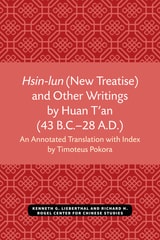
Hsin-lun (New Treatise) and Other Writings by Huan T'an (43 B.C.–28 A.D.)
An Annotated Translation with Index by Timoteus Pokora
University of Michigan Press, 1975
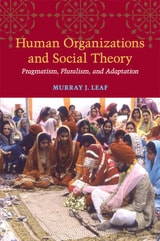
Human Organizations and Social Theory
Pragmatism, Pluralism, and AdaptationMurray J. Leaf
University of Illinois Press, 2008
Human Resource for Results
American Library Association, 2007
Humanism in Crisis
The Decline of the French RenaissancePhilippe Desan, Editor
University of Michigan Press, 1991
Hunt the Devil
A Demonology of US War CultureRobert L. Ivie and Oscar Giner
University of Alabama Press, 2015
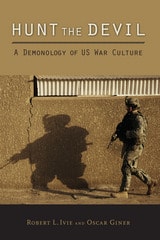
Meticulously researched, documented, and argued, Hunt the Devil opens with contemporary images of the US’s global war on terror in the aftermath of 9/11. In five chapters devoted to the demonization of evildoers, witches, Indians, dictators, and Reds by American writers, in presidential rhetoric, and in popular culture, Ivie and Giner show how the use of demonization in the war on terror is only the most recent manifestation of a process that has recurred throughout American history.
In a sixth chapter, the authors introduce the archetype of the Trickster. Though not opposed to the Devil per se, the Trickster’s democratic impulses have often provided a corrective antidote to the corrosive and distorting effects of demonization. Invoking the framework of Carl Jung’s shadow aspect, Hunt the Devil offers the Trickster as a figure who can break the cycle of demonization and war.
The role of the mythic Devil in the American psyche has profound implications, not just for American diplomacy and the use of American arms in the world, but for the possibility of domestic peace within an increasingly diverse society. Hunt the Devil provides much of interest to readers and scholars in the fields of war, rhetorical studies, American Studies, US political culture, Jungian psychology, and mythography.