Results by title
5159 books match the query 'Biography' and 171 start with h
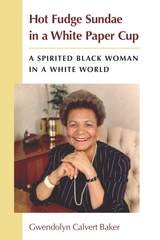
Hot Fudge Sundae in a White Paper Cup
A Spirited Black Woman in a White WorldGwendolyn Calvert Baker
University of Michigan Press, 2014
House Hold
A Memoir of PlaceAnn Peters
University of Wisconsin Press, 2013
More than a memoir of remembered landscapes, House Hold is also an expansive contemplation of America, a meditation on place and property, and an exploration of how literature shapes our thinking about the places we live. A gifted prose stylist, Peters seamlessly combines her love of buildings with her love of books. She wanders through the rooms of her past but also through what Henry James called “the house of fiction,” interweaving personal narrative with musings on James, Willa Cather, William Dean Howells, Paule Marshall, William Maxwell, and others. Peters reflects on the romance of pastoral retreat, the hazards of nostalgia, America’s history of expansion and land ownership, and the conflicted desires to put down roots and to hit the road. Throughout House Hold, she asks how places make us who we are.
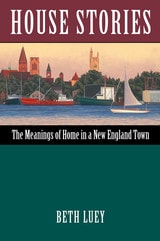
House Stories
The Meanings of Home in a New England TownBeth Luey
University of Massachusetts Press, 2017
Historic houses adorned with plaques populate New England like nowhere else in the country. These plaques note the construction year and original owner of the house, but they tell nothing about the rich lives of the people who lived there. In House Stories, Beth Luey takes readers on a virtual walking tour of several historic houses in Fairhaven, Massachusetts, a small New England coastal town, inviting us in to learn each house's secrets.
Through letters and diaries, church and business records, newspaper accounts, legal documents, and the recollections of neighbors who knew them, Luey introduces the diverse cast of historical characters who lived in these houses at various times from 1800 to the 2000s, including a Japanese castaway and his rescuer, a self-made millionaire, a seagoing adventurer, a religious pioneer, and an entrepreneurial immigrant. All of the houses are still standing and all but a lighthouse are still called home. In House Stories, Luey asks readers to join her as she considers the multiple meanings of “home” for these people and their families.
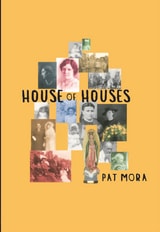
House of Houses
Pat Mora
University of Arizona Press, 1997
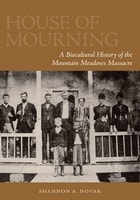
House of Mourning
A Biocultural History of the Mountain Meadows MassacreShannon A Novak
University of Utah Press, 2008
On September 11, 1857, some 120 men, women, and children from the Arkansas hills were murdered in the remote desert valley of Mountain Meadows, Utah. This notorious massacre was, in fact, a mass execution: having surrendered their weapons, the victims were bludgeoned to death or shot at point-blank range. The perpetrators were local Mormon militiamen whose motives have been fiercely debated for 150 years.
In House of Mourning, Shannon A. Novak goes beyond the question of motive to the question of loss. Who were the victims at Mountain Meadows? How had they settled and raised their families in the American South, and why were they moving west once again? What were they hoping to find or make for themselves at the end of the trail? By integrating archival records and oral histories with the first analysis of skeletal remains from the massacre site, Novak offers a detailed and sensitive portrait of the victims as individuals, family members, cultural beings, and living bodies.
The history of the massacre has often been treated as a morality tale whose chief purpose was to vilify (or to glorify) some collective body. Resisting this tendency to oversimplify the past, Novak explores Mountain Meadows as a busy and dangerous intersection of cultural and material forces in antebellum America. House of Mourning is a bold experiment in a new kind of history, the biocultural analysis of complex events.
Winner of the Society for Historical Archaeology James Deetz Book Award.
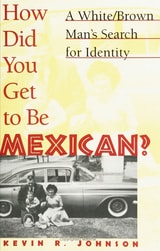
How Did You Get To Be Mexican
Kevin R. Johnson
Temple University Press, 1999
Johnson also grew up in the borderlands between classes. He spent his childhood with his mother, first on welfare and then with a racist working-class stepfather. As an adolescent, he moved to his father's home in a predominantly upper-middle-class suburb. His educational experiences too extend from a racially mixed elementary school to an all-white high school, and from Berkeley to Harvard Law School. From this vantage point, he analyzes the intersection of race and class in the United States.
This book looks not just at the question "Who is a Latino?" but also at the question of where persons of mixed Anglo-Latino heritage fit into the racial dynamics of the United States. Professor Johnson's mother was an ardent assimilationist who classified herself as "Spanish"; her failure to become a part o f middle America led her into depression and eventually mental illness. Her son has woven not just her experiences and his own, but also those of friends and relatives, into a complex and moving story of one white/brown man's search for identity.
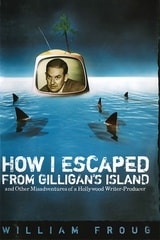
How I Escaped from Gilligan's Island
And Other Misadventures of a Hollywood Writer-ProducerWilliam Froug
University of Wisconsin Press, 2005
In the early 1950s writers were leaving radio en masse to try their hand at another promising medium—television. William Froug was in the thick of that exodus, a young man full of ideas in a Hollywood bursting with opportunities. In his forty-year career Froug would write and/or produce many of the shows that America has grown up with. From the drama of Playhouse 90 and the mind-bending premises of The Twilight Zone to the escapist scenarios of Adventures in Paradise, Gilligan’s Island, Bewitched, and Charlie’s Angels, Froug played a role in shaping his trade. He crossed paths with some of the memorable personalities in the industry, including Jack Benny, Lucille Ball, Agnes Moorehead, Elizabeth Montgomery, Robert Blake, Rod Serling, Gene Roddenberry, Aaron Spelling, and Sherwood Schwartz.
Froug reveals a post-WWII America giddy with the success of its newest medium—yet sobered at moments by strikes and union politics, McCarthyism and anti-Semitism. It was a world of hastily written scripts, sudden firings, thwarted creativity, and fickle tastes. And yet, while clearly exasperated with many aspects of Hollywood, Froug was a man utterly in his element, his frustration with the industry ultimately eclipsed by his dedication to his craft.
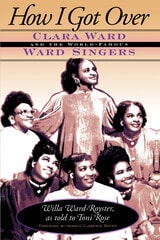
How I Got Over
Clara Ward and the World-Famous Ward SingersWilla Ward-Royster
Temple University Press, 2000
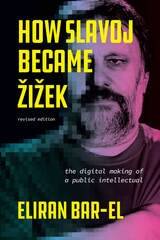
How Slavoj Became Zizek
The Digital Making of a Public IntellectualEliran Bar-El
University of Chicago Press, 2025
This revised edition corrects several erroneous and insufficient references in the first edition of this book.
Slovenian philosopher bad boy Slavoj Žižek is one of the most famous intellectuals of our time, publishing at a breakneck speed and lecturing around the world. With his unmistakable speaking style and set of mannerisms that have made him ripe material for internet humor and meme culture, he is recognizable to a wide spectrum of fans and detractors. But how did an intellectual from a small Eastern European country come to such popular notoriety? In How Slavoj Became Žižek, sociologist Eliran Bar-El plumbs the emergence, popularization, and development of the phenomenon called “Žižek.”
Beginning with Žižek’s early years as a thinker and political figure in Slovenian civil society, Bar-El traces Žižek’s rise from Marxist philosopher to political candidate to eventual intellectual celebrity, as Žižek perfected his unique performative style and a rhetorical arsenal of “Hegelacanese.” Following 9/11, Žižek’s career as a global op-ed writer and TV commentator married his rhetoric with global events such as the war on terror, the financial crisis of 2008, and the Arab Spring of 2011. Yet, at the same time, this mainstream popularity, as well as a series of politically incorrect views, almost entirely estranged the Slovenian from the normal workings of academia. Ultimately, this account shows how Žižek has harnessed the power of the digital era in his own self-fashioning as a public intellectual.
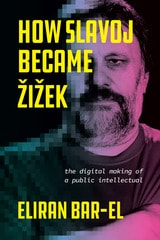
How Slavoj Became Žižek
The Digital Making of a Public IntellectualEliran Bar-El
University of Chicago Press, 2023
Slovenian philosopher bad boy Slavoj Žižek is one of the most famous intellectuals of our time, publishing at a breakneck speed and lecturing around the world. With his unmistakable speaking style and set of mannerisms that have made him ripe material for internet humor and meme culture, he is recognizable to a wide spectrum of fans and detractors. But how did an intellectual from a remote Eastern European country come to such popular notoriety? In How Slavoj Became Žižek, sociologist Eliran Bar-El plumbs the emergence, popularization, and development of this phenomenon called “Žižek.”
Beginning with Žižek’s early years as a thinker and political figure in Slovenian civil society, Bar-El traces Žižek’s rise from Marxist philosopher to a political candidate to eventual intellectual celebrity as Žižek perfects his unique performative style and a rhetorical arsenal of “Hegelacanese.” Following 9/11, Žižek’s career as a global op-ed writer and TV commentator married his rhetoric with global events such as the War on Terror, the financial crisis of 2008, and the Arab Spring of 2011. Yet, at the same time, this mainstream popularity, as well as a series of politically incorrect views, almost entirely estranged the Slovenian from the normal workings of academia. Ultimately, this account shows how Žižek harnessed the power of the digital era in his own self-fashioning as a public intellectual.
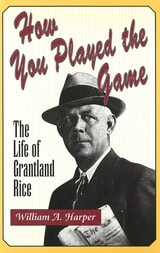
How You Played the Game
The Life of Grantland RiceWilliam Harper
University of Missouri Press, 1999
Centering around the life and times of the revered American sportswriter Grantland Rice (1880-1954), How You Played the Game takes us back to those magical days of sporting tales and mythic heroes. Through Rice's eyes we behold such sports as bicycle racing, boxing, golf, baseball, football, and tennis as they were played before 1950. We witness ups and downs in the careers of such legendary figures as Christy Mathewson, Jack Dempsey, Ty Cobb, Babe Ruth, Jim Thorpe, Red Grange, Bobby Jones, Bill Tilden, Notre Dame's Four Horsemen, Gene Tunney, and Babe Didrikson--all of whom Rice helped become household names.
Grantland Rice was a remarkably gifted and honorable sportswriter. From his early days in Nashville and Atlanta, to his famed years in New York, Rice was acknowledged by all for his uncanny grasp of the ins and outs of a dozen sports, as well as his personal friendship with hundreds of sportsmen and sportswomen. As a pioneer in American sportswriting, Rice helped establish and dignify the profession, sitting shoulder to shoulder in press boxes around the nation with the likes of Ring Lardner, Damon Runyon, Heywood Broun, and Red Smith.
Besides being a first-rate reporter, Rice was also a columnist, poet, magazine and book writer, film producer, family man, war veteran, fund-raiser, and skillful golfer. His personal accomplishments over a half century as an advocate for sports and good sportsmanship are astounding by any standard. What truly set Rice apart from so many of his peers, however, was the idea behind his sports reporting and writing. He believed that good sportsmanship was capable of lifting individuals, societies, and even nations to remarkable heights of moral and social action.
More than just a biography of Grantland Rice, How You Played the Game is about the rise of American sports and the early days of those who created the art and craft of sportswriting. Exploring the life of a man who perfectly blended journalism and sporting culture, this book is sure to appeal to all, sports lovers or not.
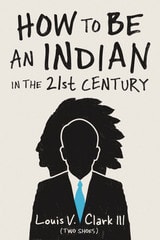
How to Be an Indian in the 21st Century
Louis V. Clark (Two Shoes)
Wisconsin Historical Society Press, 2017

How to Live
A memoir-in-essaysKelle Groom
Tupelo Press, 2023
—Joan Wickersham
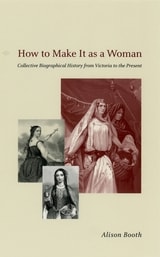
How to Make It as a Woman
Collective Biographical History from Victoria to the PresentAlison Booth
University of Chicago Press, 2004
Beginning in the fifteenth century with Christine de Pizan, Alison Booth traces the long tradition of this genre, investigating the varied types and stories most often grouped together in illustrated books designed for entertainment and instruction. She claims that these group biographies have been instrumental in constructing modern subjectivities as well as relations among classes, races, and nations.
From Joan of Arc to Virginia Woolf, Booth examines a host of models of womanhood—both bad and good. Incorporating a bibliography that includes more than 900 all-female collections published in English between 1830 and 1940, Booth uses collective biographies to decode the varied advice on how to make it as a woman.
How to Make a Life
A Tibetan Refugee Family and the Midwestern Woman They AdoptedMadeline Uraneck
Wisconsin Historical Society Press, 2018
When Madeline Uraneck said hello to the Tibetan woman cleaning her office cubicle, she never imagined the moment would change her life. After learning that Tenzin Kalsang had left her husband and four children behind in a Tibetan refugee settlement in India to try to forge a better life for them, Madeline took on the task of helping her apply for US visas. When the family reunited in their new Midwestern home, Madeline became swept up in their lives, from homework and soccer games to family dinners and shared holiday traditions. By reaching out, she found more than she bargained for—a family who welcomed her as their own and taught her more than she offered them.
An evocative blend of immersion journalism and memoir, How to Make a Life shares the immigration story of a Tibetan refugee family who crossed real and cultural bridges to make a life in Madison, Wisconsin, with the assistance of the Midwestern woman they befriended. From tales of escaping Tibet over the Himalayas, to striking a balance between old traditions with new, to bridging divides one friendly gesture at a time, readers will expand their understanding of family, culture, and belonging.
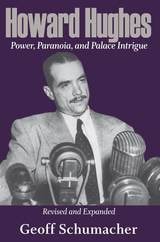
Howard Hughes
Power, Paranoia, and Palace Intrigue, Revised and ExpandedGeoff Schumacher
University of Nevada Press, 2020
Although the public viewed Hughes as a heroic and independent-minded trailblazer, behind closed doors he suffered from germophobia, obsessive-compulsive disorder, and an addiction to painkillers. He became paranoid and reclusive, surrounding himself with a small cadre of loyal caretakers. As executives battled each other over his empire, Hughes’ physical and mental health deteriorated to the point where he lost control of his business affairs.
This second edition includes more insider details on Hughes’ personal interactions with actresses, journalists, and employees. New chapters provide insights into Hughes’s involvement with the mob, his ownership and struggles as the majority shareholder of TWA and the wide-ranging activities of Hughes Aircraft Company, Hughes’s critical role in the Glomar Explorer CIA project (a deep-sea drillship platform built to recover the Soviet submarine K-129), and more. Based on in-depth interviews with individuals who knew and worked with Hughes, this fascinating biography provides a colorful and comprehensive look at Hughes—from his life and career to his final years and lasting influence. This penetrating depiction of the man behind the curtain demonstrates Hughes’s legacy, and enduring impact on popular culture.
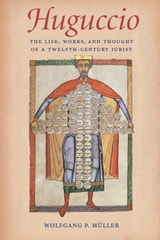
Huguccio
The Life, Works, and Thought of a Twelfth-Century JuristWolfgang Muller
Catholic University of America Press, 1994
This book provides the point of departure for anyone wishing to study Huguccio first-hand. It will be worthy reading for students of medieval canon law and an essential addition to all libraries supporting research in medieval studies.
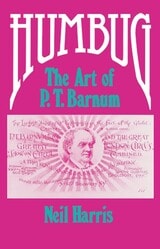
Humbug
The Art of P. T. BarnumNeil Harris
University of Chicago Press, 1981
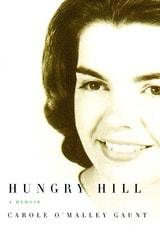
Hungry Hill
A MemoirCarole O'Malley Gaunt
University of Massachusetts Press, 2007
On a sweltering June night in 1959, Betty O'Malley died from lymphatic cancer, leaving behind an alcoholic husband and eight shell-shocked children—seven sons and one daughter, ranging in age from two to fifteen years. The daughter, Carole, was thirteen at the time. In this poignant memoir, she recalls in vivid detail the chaotic course of her family life over the next four years.
The setting for the story is Hungry Hill, an Irish-Catholic working-class neighborhood in Springfield, Massachusetts. The author recounts her sad and turbulent story with remarkable clarity, humor, and insight, punctuating the narrative with occasional fictional scenes that allow the adult Carole to comment on her teenage experiences and to probe the impact of her mother's death and her father's alcoholism.
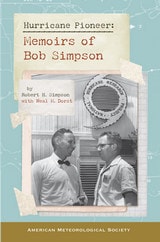
Hurricane Pioneer
Memoirs of Bob SimpsonRobert H. Simpson with Neal M. Dorst
American Meteorological Society, 2014
For Simpson this was just one of his many pioneering explorations of hurricanes and extreme storms. Over his decades-long career his research led to great leaps in our understanding of tropical meteorology and our approach to hurricane safety. He was the first director of the National Hurricane Research Project and the second director of the National Hurricane Center, though he may be best known as co-creator of the widely used Saffir-Simpson Hurricane Scale, familiar to anyone who has heard a reporter use the words “category five.”
Simpson’s memoirs take readers from his experience with the Corpus Christi hurricane of 1919 to his travels to study weather across the globe. Along the way he crosses paths with other weather greats, including his trailblazing wife, meteorologist Joanne Simpson. Hurricane Pioneer is a riveting first-hand account at a revolutionary time in meteorology.
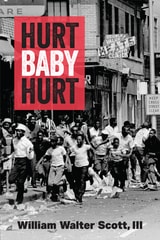
Hurt, Baby, Hurt
William Walter Scott, III
University of Michigan Press, 2025
This memoir recounts Scott’s life from his birth up through the Rebellion. It tells the story of how the Rebellion started and provides an on-the-ground account of the Rebellion and its immediate aftermath, including the police detainment of the people involved. Now with a new foreword by Austin McCoy that considers the lasting impact of the rebellion, Hurt, Baby, Hurt offers valuable insight into an important part of Detroit history.