Results by title
22279 books match the query 'Social Science' and 635 start with h
Health in Ruins
The Capitalist Destruction of Medical Care at a Colombian Maternity HospitalCésar Ernesto Abadía-Barrero
Duke University Press, 2022
Health in a Fragile State
Science, Sorcery, and Spirit in the Lower CongoJohn M. Janzen
University of Wisconsin Press, 2019
Janzen explores the manner in which power and information, including science, are legitimized in the preservation and improvement of health. Institutional validity and knowledge empower citizens and health practitioners to gain the upper hand over the region's principal diseases, including malaria, tuberculosis, typhoid, and HIV/AIDS.
Health, Culture, and Community
Benjamin D. Paul
Russell Sage Foundation, 1955
Health, Ritual, and Community in Ancient Greece
Calloway Scott
University of Wisconsin Press, 2027
At the heart of this book is a deceptively simple question: What does “health” mean? The answer, historian Calloway B. Scott shows, is culturally contingent, and in ancient Greece the concept went well beyond the proper functioning of an individual’s body. Rather, “health” (Greek hygieia) furnished a key discursive and ritual tool for civic cohesion, religious praxis, and even cultural identity. The all-important polis, central to ancient Greek social and political life, fundamentally depended on this conception of good health as a communal and religious phenomenon, and its ritualization informed relationships not just between individuals but also between communities of humans and between the human and divine realms.
Scott employs an impressive array of sources, from technical medical treatises to poetry to material remains and sanctuary sites, to explore the “body politic” of the ancient Greek world—and to query exactly what keeping that body healthy meant. Health, political identity, social relationships, and religious praxis were all deeply entwined; thus rites, rituals, and healing spaces were public, bringing people together in cohesive, coherent, and, ideally, healthy communities.
Healthcare and Human Dignity
Law MattersFrank M. McClellan
Rutgers University Press, 2020
Hear #MeToo in India
News, Social Media, and Anti-Rape and Sexual Harassment ActivismPallavi Guha
Rutgers University Press, 2021
Hear Our Truths
The Creative Potential of Black GirlhoodRuth Nicole Brown
University of Illinois Press, 2013
Hearing Southeast Asia
Sounds of Hierarchy and Power in ContextEdited by Nathan Porath
National University of Singapore Press, 2019
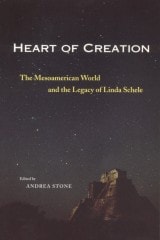
Heart of Creation
The Mesoamerican World and the Legacy of Linda ScheleEdited by Andrea Stone
University of Alabama Press, 2002
This accessible, state-of-the-art review of Mayan hieroglyphics and cosmology also serves as a tribute to one of the field's most noted pioneers.
The core of this book focuses on the current study of Mayan hieroglyphics as inspired by the recently deceased Mayanist Linda Schele. As author or coauthor of more than 200 books or articles on the Maya, Schele served as the chief disseminator of knowledge to the general public about this ancient Mesoamerican culture, similar to the way in which Margaret Mead introduced anthropology and the people of Borneo to the English-speaking world.
Twenty-five contributors offer scholarly writings on subjects ranging from the ritual function of public space at the Olmec site and the gardens of the Great Goddess at Teotihuacan to the understanding of Jupiter in Maya astronomy and the meaning of the water throne of Quirigua Zoomorph P. The workshops on Maya history and writing that Schele conducted in Guatemala and Mexico for the highland people, modern descendants of the Mayan civilization, are thoroughly addressed as is the phenomenon termed "Maya mania"—the explosive growth of interest in Maya epigraphy, iconography, astronomy, and cosmology that Schele stimulated. An appendix provides a bibliography of Schele's publications and a collection of Scheleana, written memories of "the Rabbit Woman" by some of her colleagues and students.
Of interest to professionals as well as generalists, this collection will stand as a marker of the state of Mayan studies at the turn of the 21st century and as a tribute to the remarkable personality who guided a large part of that archaeological research for more than two decades.
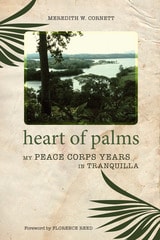
Heart of Palms
My Peace Corps Years in TranquillaMeredith W. Cornett
University of Alabama Press, 2014
A memoir of service, culture and transformation in a rural Panamanian village by a young American woman trained as a community forester for the Peace Corp.
In the storied fifty-year history of the US Peace Corps, Heart of Palms is the first Peace Corps memoir set in Panama, the slender isthmus that connects two continents and two oceans. In her memoir, Meredith Cornett transports readers to the remote village of Tranquilla, where dugout canoes are the mainstay of daily transportation, life and nature are permeated by witchcraft, and a restful night’s sleep may be disturbed by a raiding phalanx of army ants.
Cornett is sent to help counter the rapid deforestation that is destroying the ecosystem and livelihoods of the Panama Canal watershed region. Her first chapters chronicle her arrival and struggles not only with the social issues of language, loneliness, and insecurity, but also with the tragicomic basics of mastering open-fire cookery and intrusions by insects and poisonous snakes. As she grows to understand the region and its people, her keen eye discerns the overwhelming scope of her task. Unable to plant trees faster than they are lost, she writes with moving clarity about her sense of powerlessness.
Combating deforestation leads Cornett into an equally fierce battle against her own feelings of fear and isolation. Her journey to Panama becomes a parallel journey into herself. In this way, Heart of Palms is much more than a record of her Peace Corps service; it is also a moving environmental coming-of-age story and nuanced meditation on one village’s relationship to nature. When she returns home two years later, Cornett brings with her both skills and experience and a remarkable, newfound sense of confidence and mission.
Writing with rueful, self-deprecating humor, Cornett lets us ride along with her on a wave of naïve optimism, a wave that breaks not only on fear and intimidation, but also on tedium and isolation. Heart of Palms offers a bracing alternative to the romantic idealism common to Peace Corps memoirs and will be valued as a welcome addition to writing about the Peace Corps and environmental service.

Heartbeat of Struggle
The Revolutionary Life of Yuri KochiyamaDiane C. Fujino
University of Minnesota Press, 2005
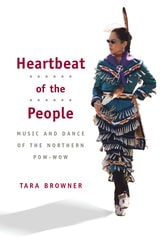
Heartbeat of the People
Music and Dance of the Northern Pow-wowTara Browner
University of Illinois Press, 2002
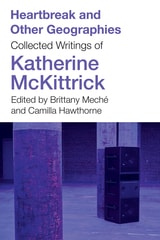
Heartbreak and Other Geographies
Collected Writings of Katherine McKittrickKatherine McKittrick
University of Minnesota Press, 2026
A uniquely structured collection of essays from one of today’s most esteemed scholars of black studies
A thoughtfully curated selection of texts by preeminent black feminist scholar Katherine McKittrick, Heartbreak and Other Geographies showcases the remarkable depth of inquiry she has generated over twenty years. Edited by Brittany Meché and Camilla Hawthorne, this collection highlights McKittrick’s enduring commitment to ideas around radical placemaking and the creative articulations of and within the black diaspora.
McKittrick’s work is marked by a recurring engagement with anticolonialism, practices of liberation, and radical methodologies of black cultural production. Through discussions of figures such as Toni Morrison, Jimi Hendrix, Édouard Glissant, Paul Gilroy, Nina Simone, and Sylvia Wynter, the writing in Heartbreak and Other Geographies spans the author’s investigations into scientific method, liberal modernity, the cycles that perpetuate racial violence, and the poetics and sonics of black livingness.
Bringing together recent texts, influential pieces, and lesser-known essays, the unconventional format of Heartbreak and Other Geographies includes an introductory conversation with McKittrick as well as a series of creative interludes from the editors throughout the book. Innovative in both form and content, this wide-ranging volume invites us to rethink the boundaries between disciplines and the ways that scholarship can embody a more collaborative form of worldmaking.
Retail e-book files for this title are screen-reader friendly with images accompanied by short alt text and/or extended descriptions.
Hearts of Darkness
White Women Write RaceMarcus, Jane
Rutgers University Press, 2004
The centerpiece of the book is Marcus's dialogue with one of her best-known essays, "Britannia Rules The Waves." In that piece, she argues that The Waves makes a strong anti-imperialist statement. Although many already support that argument, she now goes further in order to question the moral value of such a buried critique on Woolf's part. In "A Very Fine Negress" she analyzes the painful subject of Virginia Woolf's racism in A Room of One's Own. Other chapters traverse the connected issues of modernism, race, and imperialism. In two of them, we follow Nancy Cunard through the making of the Negro anthology and her appearance in a popular novel of the freewheeling Jazz Age. Elsewhere, Marcus delivers a complex analysis of A Passage to India, in a reading that interrogates E. M. Forster's displacement of his fear of white Englishwomen struggling for the vote.
Marcus, as always, brings considerable gifts as both researcher and writer to this collection of new and reprinted essays, a combination resulting in a powerful interpretation of many of modernism's most cherished figures.
Heartthrob
Del Balboa Cafe al Apartheid and BackSusana Chávez-Silverman
University of Wisconsin Press, 2019
Their attraction was intense, but the social and political climate of South Africa, still in the grip of apartheid, threatened to tear them apart. Describing the vicissitudes of the Latina migratory experience, Chávez-Silverman struggles to overcome the hostility of a place that is so unwelcoming to nonwhite persons and outsiders.
Heartthrob, a love story for the ages, implores us to consider how things could have been. In these romantic crónicas based on detailed diary entries and confessional letters to family and friends, Chávez-Silverman weaves together English and Spanish to lay bare the raw intensity and true fragility of love. Anyone who has wondered about the-one-that-got-away or sought out the true meaning of happily-ever-after will be enraptured by this intimate exploration of love, loss, and regret.
Heat Wave
A Social Autopsy of Disaster in ChicagoEric Klinenberg
University of Chicago Press, 2002
Heat waves in the United States kill more people during a typical year than all other natural disasters combined. Until now, no one could explain either the overwhelming number or the heartbreaking manner of the deaths resulting from the 1995 Chicago heat wave. Meteorologists and medical scientists have been unable to account for the scale of the trauma, and political officials have puzzled over the sources of the city's vulnerability. In Heat Wave, Eric Klinenberg takes us inside the anatomy of the metropolis to conduct what he calls a "social autopsy," examining the social, political, and institutional organs of the city that made this urban disaster so much worse than it ought to have been.
Starting with the question of why so many people died at home alone, Klinenberg investigates why some neighborhoods experienced greater mortality than others, how the city government responded to the crisis, and how journalists, scientists, and public officials reported on and explained these events. Through a combination of years of fieldwork, extensive interviews, and archival research, Klinenberg uncovers how a number of surprising and unsettling forms of social breakdown—including the literal and social isolation of seniors, the institutional abandonment of poor neighborhoods, and the retrenchment of public assistance programs—contributed to the high fatality rates. The human catastrophe, he argues, cannot simply be blamed on the failures of any particular individuals or organizations. For when hundreds of people die behind locked doors and sealed windows, out of contact with friends, family, community groups, and public agencies, everyone is implicated in their demise.
As Klinenberg demonstrates in this incisive and gripping account of the contemporary urban condition, the widening cracks in the social foundations of American cities that the 1995 Chicago heat wave made visible have by no means subsided as the temperatures returned to normal. The forces that affected Chicago so disastrously remain in play in America's cities, and we ignore them at our peril.
Heat Wave
A Social Autopsy of Disaster in ChicagoEric Klinenberg
University of Chicago Press, 2015
On Thursday, July 13, 1995, Chicagoans awoke to a blistering day in which the temperature would reach 106 degrees. The heat index, which measures how the temperature actually feels on the body, would hit 126 degrees by the time the day was over. Meteorologists had been warning residents about a two-day heat wave, but these temperatures did not end that soon. When the heat wave broke a week later, city streets had buckled; the records for electrical use were shattered; and power grids had failed, leaving residents without electricity for up to two days. And by July 20, over seven hundred people had perished-more than twice the number that died in the Chicago Fire of 1871, twenty times the number of those struck by Hurricane Andrew in 1992—in the great Chicago heat wave, one of the deadliest in American history.
Heat waves in the United States kill more people during a typical year than all other natural disasters combined. Until now, no one could explain either the overwhelming number or the heartbreaking manner of the deaths resulting from the 1995 Chicago heat wave. Meteorologists and medical scientists have been unable to account for the scale of the trauma, and political officials have puzzled over the sources of the city's vulnerability. In Heat Wave, Eric Klinenberg takes us inside the anatomy of the metropolis to conduct what he calls a "social autopsy," examining the social, political, and institutional organs of the city that made this urban disaster so much worse than it ought to have been.
Starting with the question of why so many people died at home alone, Klinenberg investigates why some neighborhoods experienced greater mortality than others, how the city government responded to the crisis, and how journalists, scientists, and public officials reported on and explained these events. Through a combination of years of fieldwork, extensive interviews, and archival research, Klinenberg uncovers how a number of surprising and unsettling forms of social breakdown—including the literal and social isolation of seniors, the institutional abandonment of poor neighborhoods, and the retrenchment of public assistance programs—contributed to the high fatality rates. The human catastrophe, he argues, cannot simply be blamed on the failures of any particular individuals or organizations. For when hundreds of people die behind locked doors and sealed windows, out of contact with friends, family, community groups, and public agencies, everyone is implicated in their demise.
As Klinenberg demonstrates in this incisive and gripping account of the contemporary urban condition, the widening cracks in the social foundations of American cities that the 1995 Chicago heat wave made visible have by no means subsided as the temperatures returned to normal. The forces that affected Chicago so disastrously remain in play in America's cities, and we ignore them at our peril.
For the Second Edition Klinenberg has added a new Preface showing how climate change has made extreme weather events in urban centers a major challenge for cities and nations across our planet, one that will require commitment to climate-proofing changes to infrastructure rather than just relief responses.
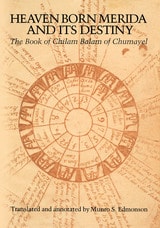
Heaven Born Merida and Its Destiny
The Book of Chilam Balam of ChumayelTranslated and annotated by Munro S. Edmonson
University of Texas Press, 1986
When the Spaniards conquered the Yucatan Peninsula in the early 1500s, they made a great effort to destroy or Christianize the native cultures flourishing there. That they were in large part unsuccessful is evidenced by the survival of a number of documents written in Maya and preserved and added to by literate Mayas up to the 1830s. The Book of Chilam Balam of Chumayel is such a document, literally the history of Yucatan written by and for Mayas, and it contains much information not available from Spanish sources because it was part of an underground resistance movement of which the Spanish were largely unaware.
Well known to Mayanists, The Book of Chilam Balam of Chumayel is presented here in Munro S. Edmonson's English translation, extensively annotated. Edmonson reinterprets the book as literature and as history, placing it in chronological order and translating it as poetry. The ritual nature of Mayan history clearly emerges and casts new light on Mexican and Spanish acculturation of the Yucatecan Maya in the post-Classic and colonial periods.
Centered in the city of Merida, the Chumayel provides the western (Xiu) perspective on Yucatecan history, as Edmonson's earlier book The Ancient Future of the Itza: The Book of Chilam Balam of Tizimin presented the eastern (Itza) viewpoint. Both document the changing calendar of the colonial period and the continuing vitality of pre-Columbian ritual thought down to the nineteenth century. Perhaps the biggest surprise is the survival of the long-count dating system down to the Baktun Ceremonial of 1618 (12.0.0.0.0). But there are others: the use of rebus writing, the survival of the tun until 1752, graphic if oblique accounts of Mayan ceremonial drama, and the depiction of the Spanish conquest as a long-term inter-Mayan civil war.
Heaven Has a Wall
Religion, Borders, and the Global United StatesElizabeth Shakman Hurd
University of Chicago Press, 2025
Our national conversation about the border has taken a religious turn. When televangelists declare, “Heaven has a wall,” activists shout back, “Jesus was a refugee.” For Elizabeth Shakman Hurd, the standoff makes explicit a longstanding truth: borders are religious as well as political objects.
In this book, Hurd argues that Americans share a bipartisan border religion, complete with an array of beliefs and practices, including a reverence for national security, a liturgy for immigration, and an eschatological foreign policy. Through an analysis of the many ways the United States creates, enforces, and ignores borders at home and abroad, Hurd offers a bold new perspective on the ties that bind American religion, politics, and public life.

Heaven's Kitchen
Living Religion at God's Love We DeliverCourtney Bender
University of Chicago Press, 2003
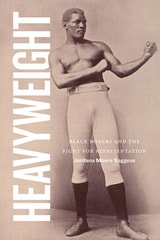
Heavyweight
Black Boxers and the Fight for RepresentationJordana Moore Saggese
Duke University Press, 2024
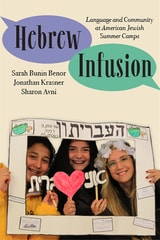
Hebrew Infusion
Language and Community at American Jewish Summer CampsSarah Bunin Benor, Jonathan B. Krasner, and Sharon Avni
Rutgers University Press, 2019
Each summer, tens of thousands of American Jews attend residential camps, where they may see Hebrew signs, sing and dance to Hebrew songs, and hear a camp-specific hybrid language register called Camp Hebraized English, as in: “Let’s hear some ruach (spirit) in this chadar ochel (dining hall)!” Using historical and sociolinguistic methods, this book explains how camp directors and staff came to infuse Hebrew in creative ways and how their rationales and practices have evolved from the early 20th century to today. Some Jewish leaders worry that Camp Hebraized English impedes Hebrew acquisition, while others recognize its power to strengthen campers’ bonds with Israel, Judaism, and the Jewish people. Hebrew Infusion explores these conflicting ideologies, showing how hybrid language can serve a formative role in fostering religious, diasporic communities. The insightful analysis and engaging descriptions of camp life will appeal to anyone interested in language, education, or American Jewish culture.
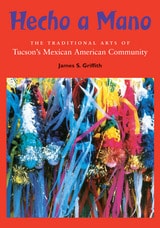
Hecho a Mano
The Traditional Arts of Tucson's Mexican American CommunityJames S. Griffith; Foreword by Patricia Preciado Martin
University of Arizona Press, 2000
Arts as intimate as a piece of needlework or a home altar. Arts as visible as decorative iron, murals, and low riders. Through such arts, members of Tucson's Mexican American community contribute much of the cultural flavor that defines the city to its residents and to the outside world. Now Tucson folklorist Jim Griffith celebrates these public and private artistic expressions and invites us to meet the people who create them.
- Josefina Lizárraga learned to make paper flowers as a girl in her native state of Nayarit, Mexico, and ensures that this delicate art is not lost.
- Ornamental blacksmith William Flores runs the oldest blacksmithing business in town, a living link with an earlier Tucson.
- Ramona Franco's family has maintained an elaborate altar to Our Lady of Guadalupe for three generations.
- Signmaker Paul Lira, responsible for many of Tucson's most interesting signs, brings to his work a thoroughly mexicano sense of aesthetics and humor.
- Muralists David Tineo and Luis Mena proclaim Mexican cultural identity in their work and carry on a tradition that has blossomed in the last twenty years.
Featuring a foreword by Tucson author Patricia Preciado Martin and a spectacular gallery of photographs, many by Pulitzer prize-winning photographer José Galvez, this remarkable book offers a close-up view of a community rich with tradition and diverse artistic expression. Hecho a Mano is a piñata bursting with unexpected treasures that will inspire and inform anyone with an interest in folk art or Mexican American culture.
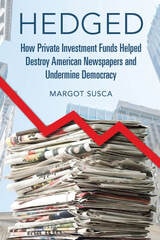
Hedged
How Private Investment Funds Helped Destroy American Newspapers and Undermine DemocracyMargot Susca
University of Illinois Press, 2024
The ultrawealthy largely own and guide the newspaper system in the United States. Through entities like hedge funds and private equity firms, this investor class continues to dismantle the one institution meant to give voice to average citizens in a democracy.
Margot Susca reveals the little-known history of how private investment took over the newspaper industry. Drawing on a political economy of media, Susca’s analysis uses in-depth interviews and documentary evidence to examine issues surrounding ownership and power. Susca also traces the scorched-earth policies of layoffs, debt, cash-outs, and wholesale newspaper closings left behind by private investors and the effects of the devastation on the future of news and information. Throughout, Susca reveals an industry rocked less by external forces like lost ad revenue and more by ownership and management obsessed with profit and beholden to private fund interests that feel no responsibility toward journalism or the public it is meant to serve.

Hedstroms and the Bethel Ship Saga
Methodist Influence on Swedish Religious LifeHenry C. Whyman. Foreword by Kenneth E. Rowe
Southern Illinois University Press, 1992
The first book-length biographical treatment of Olof Gustaf Hedstrom and his brother Jonas documents their work in spreading Methodism among Swedish immigrants to America. Henry C. Whyman discusses the Bethel Ship Saga, a ministry unique in American immigrant history, and examines the larger picture of the role of religion in nineteenth-century European immigration to the United States.
The Bethel Ship, a floating chapel in New York Harbor, was the vehicle and headquarters for an effective ministry to immigrants arriving in America. Olof Hedstrom, a Methodist minister serving in the Catskill Mountain area, was called to New York to organize and lead this endeavor.
Hegemonic Mimicry
Korean Popular Culture of the Twenty-First CenturyKyung Hyun Kim
Duke University Press, 2021
Hegemonies of Language and Their Discontents
The Southwest North American Region Since 1540Carlos G. Vélez-Ibáñez
University of Arizona Press, 2017
Well-regarded author Carlos G. Vélez-Ibáñez details the linguistic and cultural processes used by penetrating imperial and national states. He argues that these impositions have been not linear but hydra-headed, complex and contradictory, sometimes accommodated and sometimes forcefully imposed. Such impositions have created discontent resulting in physical and linguistic revolts, translanguage versions, and multilayered capacities of use and misuse of imposed languages—even the invention of community-created trilingual dictionaries.
Vélez-Ibáñez gives particular attention to both sides of the border, explaining the consequences of the fragile splitting of the area through geopolitical border formation. He illustrates the many ways those discontents have manifested in linguistic, cultural, educational, political, and legal forms.
From revolt to revitalization, from silent objection to expressive defiance, people in the Southwest North American Region have developed arcs of discontent from the Spanish colonial period to the present. These narratives are supported by multiple sources, including original Spanish colonial documents and new and original ethnographic studies of performance rituals like the matachines of New Mexico. This unique work discusses the most recent neurobiological studies of bilingualism and their implications for cognitive development and language as it spans multiple disciplines. Finally, it provides the most important models for dual language development and their integration to the "Funds of Knowledge" concept as creative contemporary discontents with monolingual approaches.
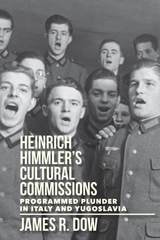
Heinrich Himmler's Cultural Commissions
Programmed Plunder in Italy and YugoslaviaJames R. Dow
University of Wisconsin Press, 2018
Drawing on extensive research in public and private archives and interviews with family members of fieldworkers, James R. Dow uncovers both details of the SS cultural commissions' work and the continuing vestiges of the materials they assembled. Teams of poorly qualified and ideologically motivated collectors were sent to South Tyrol in Italy and Gottschee in Slovenian Yugoslavia, from which ethnically German communities were to be resettled in the German Reich. Although a mass of information on narratives, songs and dances, beliefs, customs, local clothing and architecture, and folk speech was collected, the research was deeply tainted and skewed by racialist and nationalist preconditions. Dow sharply critiques the continued use of these ersatz archives.
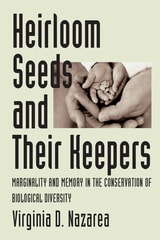
Heirloom Seeds and Their Keepers
Marginality and Memory in the Conservation of Biological DiversityVirginia D. Nazarea
University of Arizona Press, 2005
As scientists grapple with the erosion of genetic diversity of crops and their wild relatives, old-timey farmers and gardeners continue to save, propagate, and pass on folk varieties and heirloom seeds. Virginia Nazarea focuses on the role of these seedsavers in the perpetuation of diversity. She thoughtfully examines the framework of scientific conservation and argues for the merits of everyday conservation—one that is beyond programmatic design. Whether considering small-scale rice and sweet potato farmers in the Philippines or participants in the Southern Seed Legacy and Introduced Germplasm from Vietnam in the American South, she explores roads not necessarily less traveled but certainly less recognized in the conservation of biodiversity.
Through characters and stories that offer a wealth of insights about human nature and society, Heirloom Seeds and Their Keepers helps readers more fully understand why biodiversity persists when there are so many pressures for it not to. The key, Nazarea explains, is in the sovereign spaces seedsavers inhabit and create, where memories counter a culture of forgetting and abandonment engendered by modernity. A book about theory as much as practice, it profiles these individuals, who march to their own beat in a world where diversity is increasingly devalued as the predictability of mass production becomes the norm.
Heirloom Seeds and Their Keepers offers a much-needed, scientifically researched perspective on the contribution of seedsaving that illustrates its critical significance to the preservation of both cultural knowledge and crop diversity around the world. It opens new conversations between anthropology and biology, and between researchers and practitioners, as it honors conservation as a way of life.
Held in Memory, Shared in Story
Teachings of the Middle KuskokwimAnn Fienup-Riordan
University of Alaska Press, 2026
Along the winding banks of the Middle Kuskokwim River, stories live in the languages of the land. Shared from our Elders, around kitchen tables on long winter nights and beside summer campfires, these teachings carry the wisdom of the people who have called this place home for generations. Held in Memory, Shared in Story gathers these voices into a collection, a record of resilience and the deep relationship we share with world around us. This book captures the knowledge, shared in writing and orally, of our region and celebrates the storytellers, the listeners, and all who keep these traditions alive. To read these stories is to walk beside the people of the Middle Kuskokwim, to see through their eyes, to hear their laughter, and to understand that the heart of a culture lives in the stories shared across generations.
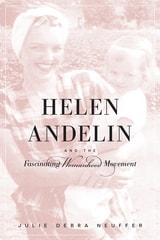
Helen Andelin and the Fascinating Womanhood Movement
Julie Debra Neuffer
University of Utah Press, 2014
Countering second-wave feminists in the 1960s, Andelin preached family values and urged women not to have careers, but to become good wives, mothers, and homemakers instead. A woman’s true happiness, taught Andelin, could only be realized if she admired, cared for, and obeyed her husband. As Andelin’s notoriety grew, so did the backlash from her critics. Undeterred, she became a national celebrity, who was interviewed extensively and appeared in sold-out speaking engagements.
Andelin’s message calling for the return to traditional roles appealed to many in a time of uncertainty and radical social change. This study provides an evenhanded and important look at a crucial, but often overlooked cross section of American women as they navigated their way through the turbulent decades following the post-war calm of the 1950s.
Winner of the Mormon History Association's Best Biography Award.

Hell of a Way to Make a Living
The Unvarnished Truth about What It's Like to Cover Major League BaseballPaul Hagen
Temple University Press, 2027
For 50 years, Paul Hagen lived the dream of being a beat writer covering the Dodgers, Rangers, and Phillies. But, as Hell of a Way to Make a Living demonstrates, the enviable job isn’t always as glamorous as it seems.
This insider’s account gives readers an all-access pass to the press box, clubhouse, and dugout to discover what the experience is really about. It’s both a clear-eyed dissection of the daily grind and a breezy, occasionally gossipy, account of being to paid to watch baseball games.
Hagen features entertaining and insightful anecdotes such as confirming to manager Terry Francona that the Phillies were going to fire him two weeks before it happened and building trust with players from the last man on the roster to future Hall of Famers like Mike Schmidt, Ferguson Jenkins, Billy Wagner, and Scott Rolen. He also addresses the changing media landscape, what’s on the record and off, the ethics of reporting on a team fairly, and how sports writing has changed over the decades.
Covering all the bases, Hell of a Way to Make a Living is an ode to the importance of conscientious beat writing and building trust with readers.
Hell's Belles, Revised Edition
Prostitution, Vice, and Crime in Early Denver, With a Biography of Sam Howe, Frontier LawmanClark Secrest
University Press of Colorado, 2001
The popular veneer of Denver's present-day Market Street - its fancy bars, posh restaurants, and Coors Field - is stripped away to reveal the street's former incarnation: a mecca of loose morals entrenched in prostitution, liquor, and money. Hell's Belles examines the neglected topics of vice and crime in Denver and utilizes a unique and invaluable historic source - the scrapbooks of Detective Sam Howe.

Hellenism in Late Antiquity
G.W. Bowersock
University of Michigan Press, 1996

Help Your Marriage Survive
The Death Of A ChildPaul Rosenblatt
Temple University Press, 2000
Based on intensive interviews of 29 couples who experienced the death of a child, this book offers perspectives and advice on common marital problems experienced by bereaved parents. Each couple's problems are unique, but often the problems are connected to couple communication, sexuality, parenting of other children, the use of alcohol and drugs, blaming, and differences in such areas as whether to have another child, how to grieve, how to talk about the child who died, whether to go outside the marriage for support, and what to do with things and spaces that were the child's.
Although the book deals with pain and marital distress, it offers a message of hope. Grieving parents can and do get through the hard times, based on respect for differences, mutual understanding, and shared history.
Help or Hindrance?
The Economic Implications of Immigration for African AmericansDaniel S. Hammermesh
Russell Sage Foundation, 1998
Hemingway and Women
Female Critics and the Female VoiceLawrence R. Broer
University of Alabama Press, 2003
Ernest Hemingway has often been criticized as a misogynist because of his portrayal of women. But some of the most exciting Hemingway scholarship of recent years has come from women scholars who challenge traditional views of Hemingway and women. The essays in this collection range from discussions of Hemingway’s famous heroines Brett Ashley and Catherine Barkley to examinations of the central role of gender in his short stories and in the novel The Garden of Eden. Other essays address the real women in Hemingway’s life—those who cared for him, competed with him, and, ultimately, helped to shape his art. While Hemingway was certainly influenced by traditional perceptions of women, these essays show that he was also aware of the struggle of the emerging new woman of his time. Making this gender struggle a primary concern of his fiction, these critics argue, Hemingway created women with strength, depth, and a complexity that readers are only beginning to appreciate.
Hemispheres and Stratospheres
The Idea and Experience of Distance in the International EnlightenmentKevin L. Cope
Bucknell University Press, 2021
Published by Bucknell University Press. Distributed worldwide by Rutgers University Press.
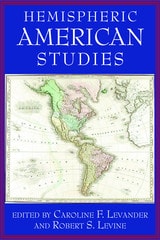
Hemispheric American Studies
Levander, Caroline F
Rutgers University Press, 2007
With essays that examine stamps, cartoons, novels, film, art, music, travel documents, and governmental publications, Hemispheric American Studies seeks to excavate the complex cultural history of texts and discourses across the ever-changing and stratified geopolitical and cultural fields that collectively comprise the American hemisphere. This collection promises to chart new directions in American literary and cultural studies.
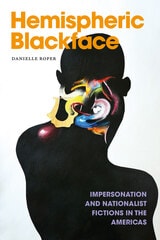
Hemispheric Blackface
Impersonation and Nationalist Fictions in the AmericasDanielle Roper
Duke University Press, 2025

Hend and the Soldiers
By Badriah Albeshr, translated by Sanna Dhahir
University of Texas Press, 2017
Hend is a young Saudi Arabian woman struggling to challenge her conservative society, which is represented by various soldiers, real and metaphorical, in her life. After a failed arranged marriage to an army officer, she is determined to establish herself as a writer and make her own choices in love. Her mother, a firm supporter of their society’s traditional norms, works to block her efforts. As Hend engages with her mother, stories of her past and those of other female relatives reveal the extent of the suffering previous generations of women have endured while living in such a patriarchal society. Hend also comes to understand how such traditions have adversely affected the men in her family, including one brother who flees to the West and another who finds comradeship among the members of al-Qaeda.
Badriah Albeshr represents a growing number of women writers from the Arabian Peninsula who refuse to shy away from the taboo topics of religion and sexuality, which makes Hend and the Soldiers a valuable read for those seeking insights into the complexities surrounding these issues.
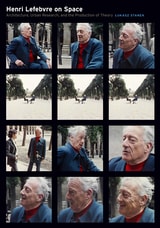
Henri Lefebvre on Space
Architecture, Urban Research, and the Production of TheoryLukasz Stanek
University of Minnesota Press, 2010
Countering the prevailing view, which reduces Lefebvre’s theory of space to a projection of his philosophical positions, Stanek argues that Lefebvre’s work grew out of his concrete, empirical engagement with everyday practices of dwelling in postwar France and his exchanges with architects and planners. Stanek focuses on the interaction between architecture, urbanism, sociology, and philosophy that occurred in France in the 1960s and 1970s, which was marked by a shift in the processes of urbanization at all scales, from the neighborhood to the global level. Lefebvre’s thinking was central to this encounter, which informed both his theory of space and the concept of urbanization becoming global.
Stanek offers a deeper and clearer understanding of Lefebvre’s thought and its implications for the present day. At a time when cities are increasingly important to our political, spatial, and architectural world, this reassessment proposes a new empirical, and practical, interpretation of Lefebvre’s ideas on urbanism.
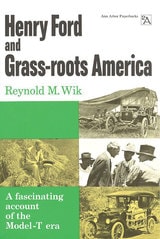
Henry Ford and Grass-roots America
Reynold M. Wik
University of Michigan Press, 1973
–Kirkus Reviews
“…a unique social history of the period. The book has nostalgic value for all over 40, the humor of a naïve America for young people, and social and technical history for the scholar.”
–Robert J. Havlik, Library Journal
“…the underlying theme is how Ford became a folk hero to rural America… This well written book not only supplements… previous studies… but helps to illuminate American values and attitudes during the 1920’s.”
–Choice

Henry L. Brunk and Brunk's Comedians
Tent Repertoire Empire of the SouthwestJerry L. Martin
University of Wisconsin Press, 1984
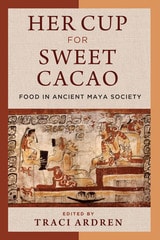
Her Cup for Sweet Cacao
Food in Ancient Maya SocietyEdited by Traci Ardren
University of Texas Press, 2020
For the ancient Maya, food was both sustenance and a tool for building a complex society. This collection, the first to focus exclusively on the social uses of food in Classic Maya culture, deploys a variety of theoretical approaches to examine the meaning of food beyond diet—ritual offerings and restrictions, medicinal preparations, and the role of nostalgia around food, among other topics. For instance, how did Maya feasts build community while also reinforcing social hierarchy? What psychoactive substances were the elite Maya drinking in their caves, and why? Which dogs were good for eating, and which breeds became companions? Why did even some non-elite Maya enjoy cacao, but rarely meat? Why was meat more available for urban Maya than for those closer to hunting grounds on the fringes of cities? How did the molcajete become a vital tool and symbol in Maya gastronomy?
These chapters, written by some of the leading scholars in the field, showcase a variety of approaches and present new evidence from faunal remains, hieroglyphic texts, chemical analyses, and art. Thoughtful and revealing, Her Cup for Sweet Cacao unlocks a more comprehensive understanding of how food was instrumental to the development of ancient Maya culture.

Her Oxford
Judy G. Batson
Vanderbilt University Press, 2008
Her Oxford looks at the people and the political and social forces that produced this dramatic transformation. Drawing on a vast array of biographies, histories, obituaries, and archives, Batson traces not only the institutional struggles over privileges and disciplinary rules for women, but also the rich texture of everyday life-women's amateur theatricals, debating societies, sports, and college escapades (Dorothy Sayers is the subject of quite a few). She tells the stories of women's active roles in two war efforts and in the suffrage movement.
An unusual feature of the book is the set of 120 biographical profiles of women who attended Oxford between 1879 and 1960. They constitute a Who's Who of women scientists, anthropologists, psychotherapists, educators, novelists, and social reformers in the English-speaking world.
Her Stories
Daytime Soap Opera and US Television HistoryElana Levine
Duke University Press, 2020
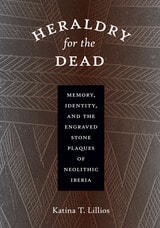
Heraldry for the Dead
Memory, Identity, and the Engraved Stone Plaques of Neolithic IberiaBy Katina T. Lillios
University of Texas Press, 2008
In the late 1800s, archaeologists began discovering engraved stone plaques in Neolithic (3500-2500 BC) graves in southern Portugal and Spain. About the size of one's palm, usually made of slate, and incised with geometric or, more rarely, zoomorphic and anthropomorphic designs, these plaques have mystified generations of researchers. What do their symbols signify? How were the plaques produced? Were they worn during an individual's lifetime, or only made at the time of their death? Why, indeed, were the plaques made at all?
Employing an eclectic range of theoretical and methodological lenses, Katina Lillios surveys all that is currently known about the Iberian engraved stone plaques and advances her own carefully considered hypotheses about their manufacture and meanings. After analyzing data on the plaques' workmanship and distribution, she builds a convincing case that the majority of the Iberian plaques were genealogical records of the dead that served as durable markers of regional and local group identities. Such records, she argues, would have contributed toward legitimating and perpetuating an ideology of inherited social difference in the Iberian Late Neolithic.

Herbert Marcuse
An Aesthetics of LiberationMalcolm Miles
Pluto Press, 2012
When capitalism is clearly catastrophically out of control and its excesses cannot be sustained socially or ecologically, the ideas of Herbert Marcuse become as relevant as they were in the 1960s. This is the first English introduction to Marcuse to be published for decades, and deals specifically with his aesthetic theories and their relation to a critical theory of society.
Although Marcuse is best known as a critic of consumer society, epitomised in the classic One-Dimensional Man, Malcolm Miles provides an insight into how Marcuse's aesthetic theories evolved within his broader attitudes, from his anxiety at the rise of fascism in the 1930s through heady optimism of the 1960s, to acceptance in the 1970s that radical art becomes an invaluable progressive force when political change has become deadlocked.
Marcuse's aesthetics of liberation, in which art assumes a primary role in interrupting the operation of capitalism, made him a key figure for the student movement in the 1960s. As diverse forms of resistance rise once more, a new generation of students, scholars and activists will find Marcuse’s radical theory essential to their struggle.
Here and Everywhere Else
Small-Town Maine and the WorldAndrew Witmer
University of Massachusetts Press, 2022
Winner of the 2023 New England Society Book Award in the Historical Nonfiction category
Winner of an Award of Excellence, American Association for State and Local History (AASLH)
In 1822, settlers pushed north from Massachusetts and other parts of New England into Monson, Maine. On land taken from the Penobscot people, they established prosperous farms and businesses. Focusing on the microhistory of this village, Andrew Witmer reveals the sometimes surprising ways that this small New England town engaged with the wider world across the nineteenth and twentieth centuries. Townspeople fought and died in distant wars, transformed the economy and landscape with quarries and mills, and used railroads, highways, print, and new technologies to forge connections with the rest of the nation.
Here and Everywhere Else starts with Monson’s incorporation in the early nineteenth century, when central Maine was considered the northern frontier and over 90 percent of Americans still lived in rural areas; it ends with present-day attempts to revive this declining Maine town into an artists’ colony. Engagingly written, with colorful portraits of local characters and landmarks, this study illustrates how the residents of this remote place have remade their town by integrating (and resisting) external influences.