Results by title
28164 books match the query 'History' and 906 start with h
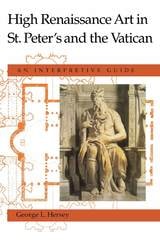
High Renaissance Art in St. Peter's and the Vatican
An Interpretive GuideGeorge L. Hersey
University of Chicago Press, 1993
Before starting the tour of individual works, Hersey describes how the treacherously shifting political and religious alliances of sixteenth-century Italy, France, and Spain played themselves out in the Eternal City. He offers vivid accounts of the lives and personalities of four popes, each a great patron of art and architecture: Julius II, Leo X, Clement VII, and Paul III. He also tells of the complicated rebuilding and expanding of St. Peter's, a project in which Bramante, Raphael, and Michelangelo all took part.
Having set the historical scene, Hersey then explores the Vatican's magnificent Renaissance art and architecture. In separate chapters, organized spatially, he leads the reader through the Cortile del Belvedere and Vatican Museums, with their impressive holdings of statuary and paintings; the richly decorated Stanze and Logge of Raphael; and Michelangelo's Last Judgment and newly cleaned Sistine Chapel ceiling. A fascinating final chapter entitled "The Tragedy of the Tomb" recounts the vicissitudes of Michelangelo's projected funeral monument to Julius II.
Hersey is never content to simply identify the subject of a painting or sculpture. He gives us the story behind the works, telling us what their particular themes signified at the time for the artist, the papacy, and the Church. He also indicates how the art was received by contemporaries and viewed by later generations.
Generously illustrated and complete with a useful chronology, High Renaissance Art in St. Peter's and the Vatican is a valuable reference for any traveler to Rome or lover of Italian art who has yearned for a single-volume work more informative and stimulating than ordinary guidebooks. At the same time, Hersey's many anecdotes and intriguing comparisons with works outside the Vatican will provide new insights even for specialists.
High Stakes of Identity
Gambling in the Life and Literature of Nineteenth-Century RussiaIan M. Helfant
Northwestern University Press, 2002
During the reigns of Alexander I and Nicholas I, Ian Helfant argues, gambling became an essential proving-ground and symbolic locus for noble identity in Russia--a way for the nobility to assert its values (fearlessness, disdain for money, implacable self-possession, deification of whim and will, and stylish performance) against nineteenth-century economics and bourgeois sentimentality. In <i>The High Stakes of Identity</i> Helfant's twin concerns are to analyze the structural components of the myth of the noble "beau joueur" and to show how gambling performances in society and in literature reciprocally reinforced, complicated, and eventually disintegrated its mystique.
Using a broad variety of sources--memoiristic, epistolary, journalistic, legal, fictional, theatrical--Helfant reconstructs both the prevalence and the particular codes of gambling's cultural system in the first few decades of the nineteenth century. These codes allow him to interpret the iconoclastic performances of truly legendary gamblers and to assess the importance and purpose of gambling in works ranging from Pushkin's "Queen of Spades" to Lermontov's "Masquerade." Throughout, Helfant gives voice to the rich variety of discourses, from tsarist laws to moralistic tracts, that came to bear on the culture of gambling in the 1830s and eventually led to its displacement as the key marker of nobility.
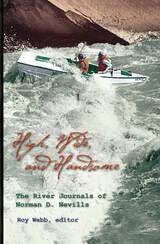
High, Wide, and Handsome
The River Journals of Norman D. Nevillsedited by Roy Webb
Utah State University Press, 2005
When he started taking paying passengers by boat through the rapids of the Colorado River's canyons, Norman Nevills invented whitewater tourism and the commercial river business. For twelve years, from 1938 until his death in a plane crash in 1949, he safely took, without a single life lost, friends, explorers, and customers down the Colorado, Green, San Juan, Salmon, and Snake Rivers in boats he designed. National media found him and his adventures irresistible and turned him into the personification of river running. Logging seven trips through the Grand Canyon when no one else had completed more than two, he was called the Fast Water Man. Boatmen he trained went on to found their own competing operations. Always controversial, Nevills had important critics and enemies as well as friends and supporters, but no one can dispute his tremendous impact on the history of western rivers and recreation.
Nevills's complete extant journals of those river expeditions are published for the first time in High, Wide, and Handsome. They contain vivid stories and images of still untamed-by-dams rivers and canyons in the Colorado River system and elsewhere, of wild rides in wooden boats, and of the few intrepid pioneers of adventure tourism who paid Nevills so they could experience it all. They have been transcribed and edited by river historian Roy Webb, author of If We Had a Boat: Green River Explorers, Adventurers, and Runners and Call of the
Colorado.
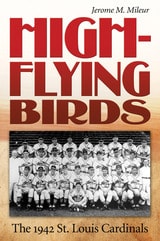
High-Flying Birds
The 1942 St. Louis CardinalsJerome M. Mileur
University of Missouri Press, 2009
High-Profile Crimes
When Legal Cases Become Social CausesLynn S. Chancer
University of Chicago Press, 2005
An astute and incisive chronicle of some of the most polarizing cases of the 1980s and 1990s, High-Profile Crimes shows that their landmark status results from the overlapping interaction of diverse participants. The merging of legal cases and social causes, Chancer argues, has wrought ambivalent effects on both social movements and the law. On the one hand, high-profile crimes offer important opportunities for emotional expression and raise awareness of social issues. But on the other hand, social problems cannot be resolved through the either/or determinations that are the goals of the legal system, creating frustration for those who look to the outcome of these cases for social progress. Guilt or innocence through the lens of the media leads to either defeat or victory for a social cause-a confounding situation that made the O. J. Simpson case, for example, unable to resolve the issues of domestic violence and police racism that it had come to symbolize.
Based on nearly two hundred interviews, Chancer's discussions of the infamous Central Park jogger and Bensonhurst cases-as well as the rape trials of William Kennedy Smith and Mike Tyson, the assault cases of Rodney King and Reginald Denny, and, finally, the O. J. Simpson murder trial-provide a convincing, multidimensional and innovative analysis of the most charged public dramas of the last two decades.
Highbrow/Lowdown
Theater, Jazz, and the Making of the New Middle ClassDavid Savran
University of Michigan Press, 2010

Higher Education and the American Dream
Success and Its DiscontentsMarvin Lazerson
Central European University Press, 2007

Higher Education in Texas
Its Beginnings to 1970Charles R. Matthews
University of North Texas Press, 2018

Higher Ground
From Utopianism to Realism in American Feminist Thought and TheorySally L. Kitch
University of Chicago Press, 2000
Drawing on the history of utopian thought, as well as on her own research on utopian communities, Kitch defines utopian thinking, explores the pitfalls of pursuing social change based on utopian ideas, and argues for a "higher ground" —a contrasting approach she calls realism. Replacing utopianism with realism helps to eliminate self-defeating notions in feminist theory, such as false generalization, idealization, and unnecessary dichotomies. Realistic thought, however, allows feminist theory to respond to changing circumstances, acknowledge sameness as well as difference, value the past and the present, and respect ideological give-and-take.
An important critique of feminist thought, Kitch concludes with a clear, exciting vision for a feminist future without utopia.

Higher and Colder
A History of Extreme Physiology and ExplorationVanessa Heggie
University of Chicago Press, 2019
Unlike most books on modern biomedicine, Higher and Colder focuses on fieldwork, expeditions, and exploration, and in doing so provides a welcome alternative to laboratory-dominated accounts of the history of modern life sciences. Though centered on male-dominated practices—science and exploration—it recovers the stories of women’s contributions that were sometimes accidentally, and sometimes deliberately, erased. Engaging and provocative, this book is a history of the scientists and physiologists who face challenges that are physically demanding, frequently dangerous, and sometimes fatal, in the interest of advancing modern science and pushing the boundaries of human ability.
Highland Park and River Oaks
The Origins of Garden Suburban Community Planning in TexasBy Cheryl Caldwell Ferguson
University of Texas Press, 2014
In the early twentieth century, developers from Baltimore to Beverly Hills built garden suburbs, a new kind of residential community that incorporated curvilinear roads and landscape design as picturesque elements in a neighborhood. Intended as models for how American cities should be rationally, responsibly, and beautifully modernized, garden suburban communities were fragments of a larger (if largely imagined) garden city—the mythical “good” city of U.S. city-planning practices of the 1920s.
This extensively illustrated book chronicles the development of the two most fully realized garden suburbs in Texas, Dallas’s Highland Park and Houston’s River Oaks. Cheryl Caldwell Ferguson draws on a wealth of primary sources to trace the planning, design, financing, implementation, and long-term management of these suburbs. She analyzes homes built by such architects as H. B. Thomson, C. D. Hill, Fooshee & Cheek, John F. Staub, Birdsall P. Briscoe, and Charles W. Oliver. She also addresses the evolution of the shopping center by looking at Highland Park’s Shopping Village, which was one of the first in the nation. Ferguson sets the story of Highland Park and River Oaks within the larger story of the development of garden suburban communities in Texas and across America to explain why these two communities achieved such prestige, maintained their property values, became the most successful in their cities in the twentieth century, and still serve as ideal models for suburban communities today.

Highland Sanctuary
Environmental History in Tanzania’s Usambara MountainsChristopher A. Conte
Ohio University Press, 2004

Highlights in the History of the American Press
A Book of ReadingsEdwin H. Ford and Edwin Emery, Editors
University of Minnesota Press, 1954
Highlights in the History of the American Press was first published in 1954. Minnesota Archive Editions uses digital technology to make long-unavailable books once again accessible, and are published unaltered from the original University of Minnesota Press editions.
The articles collected in this volume present a vivid panorama of American journalistic history from its antecedents in the English ballad singers to the press giants of modern times. Since there is probably no single force that has played a greater role in the history of America than its newspapers, the history of journalism tells, in large measure, the story of this country's political, social, and economic development. Therefore, this book of readings offers much to the students of the American scene, past and present, whether they are general readers or specialists in journalism, history, American studies, or any of the social sciences.
The 27 articles included here have been chosen particularly for their readability and authenticity. They are by many different writers and are from a wide variety of periodicals published over the past 100 years. They are arranged according to six historical periods, covering the rise of the English press, the Colonial press, the nationalistic press of Revolutionary times, the popular press of the Jacksonian democracy, the transition press following the Civil War, and the modern era of mass circulation. An introductory essay for each group of articles places the individual studies in historical perspective and examines briefly the journalistic events not covered in detail by the articles themselves. The article authors include such notable names in American letters as Gamaliel Bradford, Will Irwin, William Allen White, John Dos Passos, and Henry F. Pringle.
The coherent presentation of this diverse material should help anyone interested in the American newspaper get a better view of its broad scope, its lively color, and its profound influence on the course of history.
Highway 61 Revisited
Bob Dylan’s Road from Minnesota to the WorldColleen J. Sheehy
University of Minnesota Press, 2009
New essays consider Dylan’s latest work, his Minnesota roots, and his global reach
The young man from Hibbing released Highway 61 Revisited in 1965, and the rest, as they say, is history. Or is it? From his roots in Hibbing, to his rise as a cultural icon in New York, to his prominence on the worldwide stage, Colleen J. Sheehy and Thomas Swiss bring together the most eminent Dylan scholars at work today—as well as people from such far-reaching fields as labor history, African American studies, and Japanese studies—to assess Dylan’s career, influences, and his global impact on music and culture.
The Dylan effect has extended far beyond the United States in recent decades, and the essays here analyze his contribution to the people and cultures of the United Kingdom, Italy, and Japan. With a special focus on his Minnesota roots, including Greil Marcus’s spectacular tour of Dylan’s hometown, authors also take into account his most recent work and Martin Scorsese’s documentary No Direction Home.The first cultural and historical geography of his dramatic rise, storied career, and unmatched iconic status, Highway 61 Revisited maps the terrain of Bob Dylan’s music in the world.Contributors: John Barner, U of Georgia; Daphne Brooks, Princeton U; Court Carney, Stephen F. Austin State U; Alessandro Carrera, U of Houston; Michael Cherlin, U of Minnesota; Marilyn J. Chiat; Susan Clayton; Mick Cochrane, Canisius College; Thomas Crow, New York U; Kevin J. H. Dettmar, Pomona College, Carbondale; Sumanth Gopinath, U of Minnesota; Charles Hughes; C. P. Lee, U of Salford, Manchester, England; Alex Lubet, U of Minnesota; Greil Marcus, U of California, Berkeley; Aldon Lynn Nielsen, Pennsylvania State U; Roberto Polito, The New School; Robert Reginio, Frostburg State U; Heather Stur, U of Southern Mississippi; Mikiko Tachi, Chiba U, Japan; Gayle Wald, George Washington U; Anne Waldman, Naropa U; David Yaffe, Syracuse U.
Hijos del Pueblo
Gender, Family, and Community in Rural Mexico, 1730-1850By Deborah E. Kanter
University of Texas Press, 2008
The everyday lives of indigenous and Spanish families in the countryside, a previously under-explored segment of Mexican cultural history, are now illuminated through the vivid narratives presented in Hijos del Pueblo ("offspring of the village"). Drawing on neglected civil and criminal judicial records from the Toluca region, Deborah Kanter revives the voices of native women and men, their Spanish neighbors, muleteers, and hacienda peons to showcase their struggles in an era of crisis and uncertainty (1730-1850).
Engaging and meaningful biographies of indigenous villagers, female and male, illustrate that no scholar can understand the history of Mexican communities without taking gender seriously. In legal interactions native plaintiffs and Spanish jurists confronted essential questions of identity and hegemony. At once an insightful consideration of individual experiences and sweeping paternalistic power constructs, Hijos del Pueblo contributes important new findings to the realm of gender studies and the evolution of Latin America.

Hijra
Hala Alyan
Southern Illinois University Press, 2016
The reader sees war, diaspora, and immigration, and hears the marginalized voices of women of color. The poems use lyrical diction and striking imagery to evoke the weight of an emotional and visceral journey. They grow and build in length and form, reflecting the gains the women in the poems make in re-creating selfhood through endurance and strength.
In prose, narrative, and confessional-style poems, Alyan reflects on how physical space is refashioned, transmitted, and remembered. Her voice is distinct, fresh, relevant, and welcoming.

Hikikomori
Adolescence without EndSaito Tamaki
University of Minnesota Press, 2013
This is the first English translation of a controversial Japanese best seller that made the public aware of the social problem of hikikomori, or “withdrawal”—a phenomenon estimated by the author to involve as many as one million Japanese adolescents and young adults who have withdrawn from society, retreating to their rooms for months or years and severing almost all ties to the outside world. Saitō Tamaki’s work of popular psychology provoked a national debate about the causes and extent of the condition.
Since Hikikomori was published in Japan in 1998, the problem of social withdrawal has increasingly been recognized as an international one, and this translation promises to bring much-needed attention to the issue in the English-speaking world. According to the New York Times, “As a hikikomori ages, the odds that he’ll re-enter the world decline. Indeed, some experts predict that most hikikomori who are withdrawn for a year or more may never fully recover. That means that even if they emerge from their rooms, they either won’t get a full-time job or won’t be involved in a long-term relationship. And some will never leave home. In many cases, their parents are now approaching retirement, and once they die, the fate of the shut-ins—whose social and work skills, if they ever existed, will have atrophied—is an open question.”
Drawing on his own clinical experience with hikikomori patients, Saitō creates a working definition of social withdrawal and explains its development. He argues that hikikomori sufferers manifest a specific, interconnected series of symptoms that do not fit neatly with any single, easily identifiable mental condition, such as depression.
Rejecting the tendency to moralize or pathologize, Saitō sensitively describes how families and caregivers can support individuals in withdrawal and help them take steps toward recovery. At the same time, his perspective sparked contention over the contributions of cultural characteristics—including family structure, the education system, and gender relations—to the problem of social withdrawal in Japan and abroad.
Hill Farms
Surviving Modern Times in Early Twentieth-Century VermontDona Brown
University of Massachusetts Press, 2025
There is a stubborn myth that has persisted for almost two centuries: the narrative of the abandoned farm in the rural American northeast. In Hill Farms, historian Dona Brown confronts this myth of rural decline with a focus on Jamaica, Vermont, a small town in the hills west of Brattleboro. Through this town’s history, she reveals a more complex economic and environmental narrative, a story of the continued use of traditional farm methods despite the growing power of modernization and demands for increased efficiencies.
Brown examines the records of a 1930 study by the University of Vermont’s now infamous Eugenics Survey, part of a flood of problematic investigations of Vermont rural life at the time, wherein eugenicists interviewed residents in every Jamaica household about crops, incomes, and housing conditions. These researchers from various disciplines saw in Jamaica and towns like it poverty and ignorance rather than a commitment to farming as a modest but sustainable way of life. Extensive handwritten notes from the Eugenics Survey provide a remarkable glimpse into the daily lives and practices of these upland farmers, revealing the value in maintaining older, less intensive farming practices and shedding new light on the social and environmental history of the time. As debates around farming and rural life intensified during the Great Depression, advocates beyond Vermont rose to the defense of traditional farms. Though industrialized agriculture ultimately prevailed, the old farming strategies cultivated by these upcountry residents continue to attract adherents in the face of new challenges to traditional farming in our own times.

Hillary Clinton's Career in Speeches
The Promises and Perils of Women's Rhetorical AdaptivityShawn J. Parry-Giles
Michigan State University Press, 2023

Hillary and Bill
The Clintons and the Politics of the PersonalWilliam H. Chafe
Duke University Press, 2016
Hillbilly Hellraisers
Federal Power and Populist Defiance in the OzarksJ Perkins
University of Illinois Press, 2017
J. Blake Perkins searches for the roots of rural defiance in the Ozarks--and discovers how it changed over time. Eschewing generalities, Perkins focuses on the experiences and attitudes of rural people themselves as they interacted with government from the late nineteenth century through the twentieth century.He uncovers the reasons local disputes and uneven access to government power fostered markedly different reactions by hill people as time went by. Resistance in the earlier period sprang from upland small farmers' conflicts with capitalist elites who held the local levers of federal power. But as industry and agribusiness displaced family farms after World War II, a conservative cohort of town business elites, local political officials, and midwestern immigrants arose from the region's new low-wage, union-averse economy. As Perkins argues, this modern antigovernment conservatism bore little resemblance to the backcountry populism of an earlier age but had much in common with the movement elsewhere.

Hillbilly Maidens, Okies, and Cowgirls
Women's Country Music, 1930-1960Stephanie Vander Wel
University of Illinois Press, 2020
From the 1930s to the 1960s, the booming popularity of country music threw a spotlight on a new generation of innovative women artists. These individuals blazed trails as singers, musicians, and performers even as the industry hemmed in their potential popularity with labels like woman hillbilly, singing cowgirl, and honky-tonk angel.
Stephanie Vander Wel looks at the careers of artists like Patsy Montana, Rose Maddox, and Kitty Wells against the backdrop of country music's golden age. Analyzing recordings and appearances on radio, film, and television, she connects performances to real and imagined places and examines how the music sparked new ways for women listeners to imagine the open range, the honky-tonk, and the home. The music also captured the tensions felt by women facing geographic disruption and economic uncertainty. While classic songs and heartfelt performances might ease anxieties, the subject matter underlined women's ambivalent relationships to industrialism, middle-class security, and established notions of femininity.
Hillbilly Realist
Herman Clarence Nixon of Possum TrotSarah Newman Shouse
University of Alabama Press, 1986
Nixon’s life offers insight into one southerner’s efforts to comprehend and interpret the conflict and change of his time and illuminates for contemporary Americans a classical view of life—one lived fully, right in strength, beauty, courage, compassion, adventure, and thought.
Clarence Nixon was first and foremost a Southern intellectual, deeply involved in the region’s cultural renaissance, and his life reveals an intellectual odyssey from Victorianism to Modernism. As his personality, ideology, and social environment interacted, a new world view emerged. But he was an ambivalent modernist, like many intellectuals who were reared in the nineteenth-century South, he never abandoned certain Victorian ideals and values.
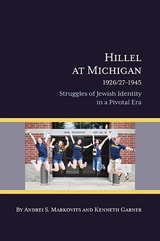
Hillel at Michigan, 1926/27-1945
Struggles of Jewish Identity in a Pivotal EraAndrei S. Markovits and Kenneth Garner
Michigan Publishing Services, 2016
The study analyzes Hillel's challenges as a big-tent, catch-all institution trying to represent all Jewish students on campus regardless of their religious orientation, cultural preferences, and ideological predilections. It looks at Hillel's interactions with the then powerful Jewish fraternities and sororities that provided the main locus of Jewish life on campus at the time, as well as its relations with the University's leadership and many of its cultural and political constituencies. Most of these activities occurred at a time when anti-Semitism was rife in the United States, particularly in the larger Detroit area, home to Henry Ford and Father Charles Edward Coughlin.

Hillside Fields
A History of Sports in West VirginiaBob Barnett
West Virginia University Press, 2013
Hillside Fields provides a broad view of the development of sports in West Virginia, from one of the first golf clubs in America at Oakhurst Links to the Greenbrier Classic; from the first girls basketball championship in 1919 to post Title IX; from racially segregated sports to integrated teams; and from the days when West Virginia Wesleyan and Davis & Elkins beat the big boys in football to the championship teams at WVU, Marshall, West Virginia State and West Liberty.
Hillside Fields explains how major national trends and events, as well as West Virginia’s economic, political, and demographic conditions, influenced the development of sports in the state. The story of the growth of sports in West Virginia is also a story of the tribulations, hopes, values and triumphs of a proud people.
Hindutva as Political Monotheism
Anustup Basu
Duke University Press, 2020
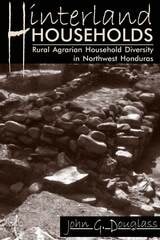
Hinterland Households
Rural Agrarian Household Diversity in Northwest HondurasJohn G. Douglass
University Press of Colorado, 2002
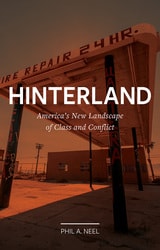
Hinterland
America's New Landscape of Class and ConflictPhil A. Neel
Reaktion Books, 2018
Urgent and unsparing, this book opens our eyes to America’s new heart of darkness. Driven by an ever-expanding socioeconomic crisis, America’s class structure is recomposing itself in new geographies of race, poverty, and production. The center has fallen. Riots ricochet from city to city led by no one in particular. Anarchists smash financial centers as a resurgent far right builds power in the countryside. Drawing on his direct experience of recent popular unrest, from the Occupy movement to the wave of riots and blockades that began in Ferguson, Missouri, Phil A. Neel provides a close-up view of this landscape in all its grim but captivating detail. Inaugurating the new Field Notes series, published in association with the Brooklyn Rail, Neel’s book tells the intimate story of a life lived within America’s hinterland.
Hinterlands to Cities
The Archaeology of Northwest Mexico and Its VecinosMatthew C. Pailes
University Press of Colorado, 2022
Hinton Rowan Helper
Abolitionist and RacistHugh C. Bailey
University of Alabama Press, 1965
Hinton Rowan Helper—a statistical fanatic, abolitionist, militant racist, Republican propagandist, ardent patriot, international railway projector, and promoter of inter-American co-operation was a man of great paradox and tragedy. Born and reared a Southerner, he became a caustic and potent critic of slavery, who sought to “liberate” his people from its burdens. Unlike many of his Northern abolitionist friends, however, he loathed not only the Negro but most “non-Anglo-Saxon peoples.” It is shocking to read Helper's violent pleas for abolition and to know of his contempt for the Negro.

Hip-Hop in Africa
Prophets of the City and Dustyfoot PhilosophersMsia Kibona Clark
Ohio University Press, 2018
Throughout Africa, artists use hip-hop both to describe their lives and to create shared spaces for uncensored social commentary, feminist challenges to patriarchy, and resistance against state institutions, while at the same time engaging with the global hip-hop community. In Hip-Hop in Africa, Msia Kibona Clark examines some of Africa’s biggest hip-hop scenes and shows how hip-hop helps us understand specifically African narratives of social, political, and economic realities.
Clark looks at the use of hip-hop in protest, both as a means of articulating social problems and as a tool for mobilizing listeners around those problems. She also details the spread of hip-hop culture in Africa following its emergence in the United States, assessing the impact of urbanization and demographics on the spread of hip-hop culture.
Hip-Hop in Africa is a tribute to a genre and its artists as well as a timely examination that pushes the study of music and diaspora in critical new directions. Accessibly written by one of the foremost experts on African hip-hop, this book will easily find its place in the classroom.
Hipbillies
Deep Revolution in the Arkansas OzarksJared M. Phillips
University of Arkansas Press, 2019
Hippie Homesteaders
Arts, Crafts, Music and Living on the Land in West VirginiaCarter Taylor Seaton
West Virginia University Press, 2014
It’s the 1960s. The Vietnam War is raging and protests are erupting across the United States. In many quarters, young people are dropping out of society, leaving their urban homes behind in an attempt to find a safe place to live on their own terms, to grow their own food, and to avoid a war they passionately decry. During this time, West Virginia becomes a haven for thousands of these homesteaders—or back-to-the-landers, as they are termed by some. Others call them hippies.
When the going got rough, many left. But a significant number remain to this day. Some were artisans when they arrived, while others adopted a craft that provided them with the cash necessary to survive. Hippie Homesteaders tells the story of this movement from the viewpoint of forty artisans and musicians who came to the state, lived on the land, and created successful careers with their craft. There’s the couple that made baskets coveted by the Smithsonian Institution’s Renwick Gallery. There’s the draft-dodger that fled to Canada and then became a premier furniture maker. There’s the Boston-born VISTA worker who started a quilting cooperative. And, there’s the immigrant Chinese potter who lived on a commune.
Along with these stories, Hippie Homesteaders examines the serendipitous timing of this influx and the community and economic support these crafters received from residents and state agencies in West Virginia. Without these young transplants, it’s possible there would be no Tamarack: The Best of West Virginia, the first statewide collection of fine arts and handcrafts in the nation, and no Mountain Stage, the weekly live musical program broadcast worldwide on National Public Radio since 1983. Forget what you know about West Virginia.
Hippie Homesteaders isn’t about coal or hillbillies or moonshine or poverty. It is the story of why West Virginia was—and still is—a kind of heaven to so many.
Hippolyte Bayard and the Invention of Photography
Karen Hellman
J. Paul Getty Trust, The, 2024
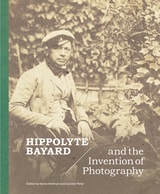
Hippolyte Bayard (1801–1887) is often characterized as an underdog in the early history of photography. From the outset, his contribution to the invention of the medium was eclipsed by others such as Louis-Jacques-Mandé Daguerre (1787–1851) and William Henry Fox Talbot (1800–1877). However, Bayard had an undeniable role in the birth of photography and its subsequent evolution into a form of art. He was a pioneer in artistic style, innovator in terms of practice, and teacher of the next generation of photographers.
Alongside an exploration of Bayard’s decades-long career and lasting impact, this volume presents—for the first time in print—some of the earliest photographs in existence. An album containing nearly 200 images, 145 of those by or attributed to Bayard, is among the Getty Museum’s rarest and most treasured photographic holdings. Few prints have ever been seen in person due to the extreme light sensitivity of Bayard’s experimental processes, making this an essential reference for scholars and enthusiasts of the very beginning of photography.
This volume is published to accompany an exhibition on view at the J. Paul Getty Museum at the Getty Center from April 9 to July 7, 2024.

Hipster Economy
Taste and Authenticity in Late Modern CapitalismAlessandro Gerosa
University College London, 2024
The Hipster Economy gives hipsterism the serious analysis it deserves, through which he reveals the importance of hipster aesthetics, based on authenticity, for today’s consumption-based economy.
Since being authentic has become an aspiration and an imperative, the notion of authenticity shapes the consumption habits of individuals in the most diverse contexts such as food and drinks, clothing, music, tourism, and the digital sphere. It even transforms urban areas and their local economies. In this book, Alessandro Gerosa analyzes this complex set of related phenomena to argue that the quest for authenticity has been a driver of Western societies from the emersion of capitalism and industrial society to today.
The Hipster Economy provides a historically and sociologically grounded explanation of the value of authenticity in the contemporary economy and society, through which it shows why and how authenticity has become a fundamental value orienting consumers' taste in late modern capitalism. In clear and convincing writing, Gerosa proposes a novel conceptualization of the aesthetic regime of consumption and an analysis of how the hipster economy impacts the urban space.

Hired Pens
Professional Writers in America’s Golden Age of PrintRonald Weber
Ohio University Press, 1997
Just as mass-market magazines and cheap books have played important roles in the creation of an American identity, those skilled craftsmen (and women) whose careers are the subjects of Ronald Weber’s narrative profoundly influenced the outlook and strategies of the high-culture writers who are generally the focus of literary studies.
Hired Pens, a history of the writing profession in the United States, recognizes the place of independent writers who wrote for their livelihood from the 1830s and 1840s, with the first appearance of a broad-based print culture, to the 1960s.
Many realist authors began on this American Grub Street. Jack London turned out hackwork for any paying market he could find, while Scott Fitzgerald’s stories in slick magazines in the 1920s and early ’30s established his name as a writer.
From Edgar Allen Poe’s earliest forays into writing for pay to Sylvia Plath’s attempts to produce fiction for mass-circulation journals, Hired Pens documents without agenda the evolution of professional writing in all its permutations—travel accounts, sport, popular biography and history, genre and series fiction—and the culture it fed.
Hiroshima in History
The Myths of RevisionismEdited with an introduction by Robert James Maddox
University of Missouri Press, 2007
When President Harry Truman authorized the use of atomic weapons against Japan, he did so to end a bloody war that would have been bloodier still had the planned invasion of Japan proved necessary. Revisionists claim that Truman’s real interest was a power play with the Soviet Union and that the Japanese would have surrendered even earlier had the retention of their imperial system been assured. Truman wanted the war to continue, they insist, in order to show off America’s powerful new weapon.
This anthology exposes revisionist fallacies about Truman’s motives, the cost of an invasion, and the question of Japan’s surrender. Essays by prominent military and diplomatic historians reveal the hollowness of revisionist claims, exposing the degree to which these agenda-driven scholars have manipulated the historical record to support their contentions. They show that, although some Japanese businessmen and minor officials indicated a willingness to negotiate peace, no one in a governmental decision-making capacity even suggested surrender. And although casualty estimates for an invasion vary considerably, the more authoritative approximations point to the very bloodbath that Truman sought to avoid.
Volume editor Robert Maddox first examines the writings of revisionist Gar Alperovitz to expose the unscholarly methods Alperovitz employed to support his claims, then distinguished Japanese historian Sadao Asada reveals how difficult it was for his country’s peace faction to prevail even after the bombs had been dropped. Other contributors point to continuing Japanese military buildups, analyze the revisionists’ low casualty estimates for an invasion, reveal manipulations of the Strategic Bombing Survey of 1946, and show how even the exhibit commemorating the fiftieth anniversary of the bombing at the Smithsonian National Air and Space Museum hewed to the revisionist line. And a close reading of Tsuyoshi Hasegawa’s acclaimed Racing the Enemy exposes many grave discrepancies between that recent revisionist text and its sources.
The use of atomic bombs against Japan remains one of the most controversial issues in American history. Gathered in a single volume for the first time, these insightful readings take a major step toward settling that controversy by showing how insubstantial Hiroshima revisionism really is—and that sometimes history cannot proceed without decisive action, however regrettable.
His Humble Servant
Sister M. Pascalina Lehnert's Memoirs of Her Years of Service to Eugenio Pacelli, Pope Pius XIIM. Pascalina Lehnert
St. Augustine's Press, 2012
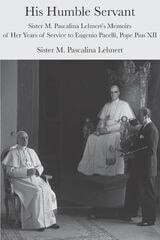
This is a personal and insightful portrait of Pope Pius XII, the memories of Sister M. Pascalina Lehnert, who served as his housekeeper for forty years. Her book, most of it written just a few months after the Pope’s death, shares insights into the person, the life, and the thinking of Pius XII, from his time as Nuncio in Munich until his death. Much of Sister’s motivation in writing this work was to correct the many distortions of fact and interpretation regarding this great pope.
This book was a best seller in the original German, as well as in the Italian and French translations. This is the first edition in English.
These reminiscences were written down at the instructions of Sister’s Superior General, but were not made known to the public until 1982, when it was published in German at the express wishes of Pope John Paul II to publish the work without any changes. So the work remained a lively, flowing account of memories and anecdotes in a simple, spontaneous style. It is a powerful and insightful account of Pius’s daily life, his treatment of those around him, and his concern for the upholding of the traditional teaching of the Church in the face of his awesome burden to lead the Church during World War II.

Hispanic Arizona, 1536–1856
James E. Officer
University of Arizona Press, 1987
The heart of the work centers on the early nineteenth century. It explores subjects such as the constant threat posed by hostile Apaches, government intrigue and revolution in Sonora and the provincias internas, and patterns of land ownership in villages such as Tucson and Tubac. Also covered are the origins of land grants in present-day southern Arizona and the invasion of southern Arizona by American “49ers” as seen from the Mexican point of view. Officer traces kinship ties of several elite families who ruled the frontier province over many generations—men and women whose descendants remain influential in Sonora and Arizona today.
Hispanic Spaces, Latino Places
Community and Cultural Diversity in Contemporary AmericaEdited by Daniel D. Arreola
University of Texas Press, 2004
Hispanics/Latinos are the largest ethnic minority in the United States—but they are far from being a homogenous group. Mexican Americans in the Southwest have roots that extend back four centuries, while Dominicans and Salvadorans are very recent immigrants. Cuban Americans in South Florida have very different occupational achievements, employment levels, and income from immigrant Guatemalans who work in the poultry industry in Virginia. In fact, the only characteristic shared by all Hispanics/Latinos in the United States is birth or ancestry in a Spanish-speaking country.
In this book, sixteen geographers and two sociologists map the regional and cultural diversity of the Hispanic/Latino population of the United States. They report on Hispanic communities in all sections of the country, showing how factors such as people's country/culture of origin, length of time in the United States, and relations with non-Hispanic society have interacted to create a wide variety of Hispanic communities. Identifying larger trends, they also discuss the common characteristics of three types of Hispanic communities—those that have always been predominantly Hispanic, those that have become Anglo-dominated, and those in which Hispanics are just becoming a significant portion of the population.
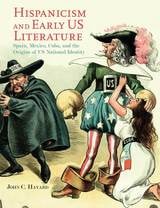
Hispanicism and Early US Literature
Spain, Mexico, Cuba, and the Origins of US National IdentityJohn C. Havard
University of Alabama Press, 2018
Revealing how Spain, Mexico, and Cuba helped shape the literary origins of American national identity.
In Hispanicism and Early US Literature, author John C. Havard posits that representations of Spain, Spanish America, Spanishness, and Spanish Americanness are integral elements in the evolution of early national and antebellum US literature. He argues that Spanish-speaking countries have long held a broad fascination for Americans and that stock narratives regarding these peoples were central to the period’s US literature.
Beginning with the work of eighteenth-century literary nationalists such as Joel Barlow, US literature has been drawn to reflect on Spain and Spanish America. Such reflection was often inspired by geopolitical conflicts such as US expansion into Spanish Louisiana and the US-Mexican War. Havard terms the discourse emerging from these reflections “Hispanicism.” This discourse was used to portray the dominant viewpoint of classical liberalism that propounded an American exceptionalism premised on the idea that Hispanophone peoples were comparatively lacking the capacity for self-determination, hence rationalizing imperialism. On the conservative side were warnings against progress through conquest.
Havard delves into selected works of early national and antebellum literature on Spain and Spanish America to illuminate US national identity. Poetry and novels by Joel Barlow, James Fenimore Cooper, and Herman Melville are mined to further his arguments regarding identity, liberalism, and conservatism. Understudied authors Mary Peabody Mann and José Antonio Saco are held up to contrast American and Cuban views on Hispanicism and Cuban annexation as well as to develop the focus on nationality and ideology via differences in views on liberalism.
More than just a work of literary criticism, there is a substantial amount of cultural and political history discussed. Havard’s use of archival sources such as political articles and personal correspondence elucidates not just literary genres and movements such as early national epic poetry, abolitionist fiction, and the American Renaissance, but also US prominent culture.
Hispaniola
Caribbean Chiefdoms in the Age of ColumbusSamuel M. Wilson
University of Alabama Press, 1990
In 1492 the island of Hispaniola was inhabited by the Taino, an Indian group whose ancestors had moved into the Caribbean archipelago from lowland South America more than 1,500 years before. They were organized politically into large cacicazgos, or chiefdoms, comprising 70 or more villages under the authority of a paramount cacique, or chief. From the first voyage on, Columbus made Hispaniola his primary base for operations in the New World. Over the subsequent decades, disease, warfare, famine, and enslavement brought about the destruction of the Taino chiefdoms and almost completely annihilated the aboriginal population of the island.
This book examines the early years of the contact period in the Caribbean and in narrative form reconstructs the social and political organization of the Taino. Wilson describes in detail the interactions between the Taino and the Spaniards, with special attention paid to the structure and functioning of the Taino chiefdoms. By providing additional information from archaeology and recent ethnography, he builds a rich context within which to understand the Taino and their responses to the Europeans.
The Taino are especially important in a New World context because they represent a society undergoing rapid sociopolitical change and becoming more complex through time. The early contact period on Hispaniola gives us a rich ethnohistorical glimpse of the political processes of a complex New World society before and during its destruction brought about by the arrival of the Europeans.

Historiae Britannicae Defensio / A Defence of the British History
John Prise
Bodleian Library Publishing, 2015
Historians Against History
The Frontier Thesis and the National Covenant in American Historical Writing Since 1830David W. Noble
University of Minnesota Press, 1967
Historians Against History was first published in 1967. Minnesota Archive Editions uses digital technology to make long-unavailable books once again accessible, and are published unaltered from the original University of Minnesota Press editions.
Professor Noble examines the basic philosophy and writing of six American historians, George Bancroft, Frederick Jackson, Charles A. Beard, Carl Becker, Vernon Louis Parrington, and Daniel J. Boorstin, and finds in them a common tradition which he calls anti-historical. He argues that this viewpoint is founded in the frontier interpretation of American history, that American historians have served as the chief political theorists and theologians of this country since 1830, and that their writings can be interpreted as Jeremiads designed to preserve a national covenant with nature.
Historians and Historiography in the Italian Renaissance
Eric Cochrane
University of Chicago Press, 1981
Historians in Public
The Practice of American History, 1890-1970Ian Tyrrell
University of Chicago Press, 2005
Tyrrell's elegant history of the practice of American history traces debates, beginning shortly after the profession's emergence in American academia, about history's role in school curricula. He also examines the use of historians in and by the government and whether historians should utilize mass media such as film and radio to influence the general public. As Historians in Public shows, the utility of history is a distinctive theme throughout the history of the discipline, as is the attempt to be responsive to public issues among pressure groups.
A superb examination of the practice of American history since the turn of the century, Historians in Public uncovers the often tangled ways history-makers make history-both as artisans and as actors.
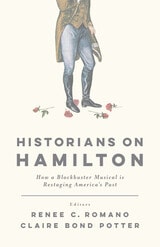
Historians on Hamilton
How a Blockbuster Musical Is Restaging America's PastRomano, Renee C
Rutgers University Press, 2018
Historians on Hamilton brings together a collection of top scholars to explain the Hamilton phenomenon and explore what it might mean for our understanding of America’s history. The contributors examine what the musical got right, what it got wrong, and why it matters. Does Hamilton’s hip-hop take on the Founding Fathers misrepresent our nation’s past, or does it offer a bold positive vision for our nation’s future? Can a musical so unabashedly contemporary and deliberately anachronistic still communicate historical truths about American culture and politics? And is Hamilton as revolutionary as its creators and many commentators claim?
Perfect for students, teachers, theatre fans, hip-hop heads, and history buffs alike, these short and lively essays examine why Hamilton became an Obama-era sensation and consider its continued relevance in the age of Trump. Whether you are a fan or a skeptic, you will come away from this collection with a new appreciation for the meaning and importance of the Hamilton phenomenon.
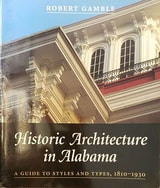
Historic Architecture in Alabama
A Guide to Styles and Types, 1810-1930Robert S. Gamble
University of Alabama Press, 2001
Discover the stories behind Alabama’s timeless structures.
Robert Gamble outlines in detail the primary architectural currents and styles that have surfaced in Alabama over the years and defined the state's built landscape. The structures and styles, all well-illustrated,range from folk houses and early settlement buildings to railway terminals, churches, libraries, municipal and university buildings, palatial private mansions, and modest homes. Structures from every period and every major stylistic era—Federal, Greek Revival, Gothic Revival, Italianate, Romanesque and Mission Revival, and the Richardsonian—are documented meticulously, along with examples of early—Modern buildings, including Alabama's only Frank Lloyd Wright structure and skyscrapers from the Chicago school.
More than 200 photographs, supplemented by sketches, plans, and etchings, provide the general reader and the design professional with images of Alabama architecture in all its variety and range. Many illustrations offer rare views of buildings long since demolished. A substantial glossary of architectural terms and a thorough bibliography enhance this standard sure to be welcomed anew by any lover of old buildings, whether weekend rambler or serious student.
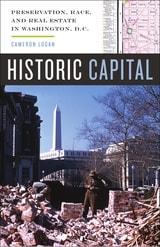
Historic Capital
Preservation, Race, and Real Estate in Washington, D.C.Cameron Logan
University of Minnesota Press, 2017
Washington, D.C. has long been known as a frustrating and sometimes confusing city for its residents to call home. The monumental core of federal office buildings, museums, and the National Mall dominates the city’s surrounding neighborhoods and urban fabric. For much of the postwar era, Washingtonians battled to make the city their own, fighting the federal government over the basic question of home rule, the right of the city’s residents to govern their local affairs.
In Historic Capital, urban historian Cameron Logan examines how the historic preservation movement played an integral role in Washingtonians’ claiming the city as their own. Going back to the earliest days of the local historic preservation movement in the 1920s, Logan shows how Washington, D.C.’s historic buildings and neighborhoods have been a site of contestation between local interests and the expansion of the federal government’s footprint. He carefully analyzes the long history of fights over the right to name and define historic districts in Georgetown, Dupont Circle, and Capitol Hill and documents a series of high-profile conflicts surrounding the fate of Lafayette Square, Rhodes Tavern, and Capitol Park, SW before discussing D.C. today.
Diving deep into the racial fault lines of D.C., Historic Capital also explores how the historic preservation movement affected poor and African American residents in Anacostia and the U Street and Shaw neighborhoods and changed the social and cultural fabric of the nation’s capital. Broadening his inquiry to the United States as a whole, Logan ultimately makes the provocative and compelling case that historic preservation has had as great an impact on the physical fabric of U.S. cities as any other private or public sector initiative in the twentieth century.
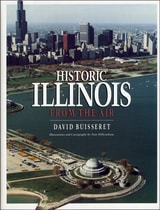
Historic Illinois from the Air
David Buisseret
University of Chicago Press, 1990