Results by title
22279 books match the query 'Social Science' and 635 start with h
Holocaust
An American UnderstandingLipstadt, Deborah E
Rutgers University Press, 2016
Holocene Hunter-Gatherers of the Lower Ohio River Valley
Richard Jefferies
University of Alabama Press, 2009

Holy Anorexia
Rudolph M. Bell
University of Chicago Press, 1985
"Everyone interested in anorexia nervosa . . . should skim this book or study it. It will make you realize how dependent upon culture the definition of disease is. I will never look at an anorexic patient in the same way again."—Howard Spiro, M.D., Gastroenterology
"[This] book is a first-class social history and is well-documented both in its historical and scientific portions."—Vern L. Bullough, American Historical Review
"A significant contribution to revisionist history, which re-examines events in light of feminist thought. . . . Bell is particularly skillful in describing behavior within its time and culture, which would be bizarre by today's norms, without reducing it to the pathological."—Mary Lassance Parthun, Toronto Globe and Mail
"Bell is both enlightened and convincing. His book is impressively researched, easy to read, and utterly fascinating."—Sheila MacLeod, New Statesman
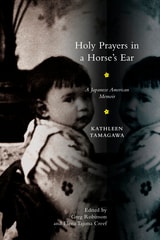
Holy Prayers in a Horse's Ear
A Japanese American MemoirKathleen Tamagawa, Edited by Greg Robinson and Elena Tajima Creef
Rutgers University Press, 2008
Originally published in 1932, Kathleen Tamagawa’s pioneering Asian American memoir is a sensitive and thoughtful look at the personal and social complexities of growing up racially mixed during the early twentieth century. Born in 1893 to an Irish American mother and a Japanese father and raised in Chicago and Japan, Tamagawa reflects on the difficulty she experienced fitting into either parent’s native culture.
She describes how, in America, her every personal quirk and quality was seen as quintessentially Japanese and how she was met unpredictably with admiration or fear—perceived as a “Japanese doll” or “the yellow menace.” When her family later moved to Japan, she was viewed there as a “Yankee,” and remained an outsider in that country as well. As an adult she came back to the United States as an American diplomat’s wife, but had trouble feeling at home in any place.
This edition, which also includes Tamagawa’s recently rediscovered short story, “A Fit in Japan,” and a critical introduction, will challenge readers to reconsider how complex ethnic identities are negotiated and how feelings of alienation limit human identification in any society.

Holy Rebellion
Religious Feminism and the Transformation of Judaism and Women's Rights in IsraelRonit Irshai and Tanya Zion-Waldoks
Brandeis University Press, 2024
In Holy Rebellion, Ronit Irshai and Tanya Zion-Waldoks examine social change in Israel through a rigorous analysis of the shifting entanglements of religion, gender, and law in times of cultural transformation. They explore theological, halakhic, political, and sociological processes and show how they interact with one another in ways that advance women’s rights, as well as how they are met with a conservative backlash in the discourses and actions of the rabbinic establishment. Irshai and Zion-Waldoks build on legal philosopher Robert Cover’s 1982 paper “Nomos and Narrative,” which explained how cultural narratives and legal norms are reciprocally enforced or transformed. Expanding on this notion, Irshai and Zion-Waldoks propose a “narrative ripeness test,” an analytic tool that evaluates the relationship between culture and law to assess how and when change within a minority cultural community may be accelerated or hindered by state intervention.
Religious feminisms are emerging around the world, not solely in Israel, and this book helps elucidate how they create enduring and radical change. Many liberal states are also confronting an illiberal backlash and question the multicultural framework’s ability to serve the needs of minorities within minorities. Therefore, the theoretical framework offered by Irshai and Zion-Waldoks is applicable beyond the Israeli case, even as it offers deeper insights into an Israeli society in turmoil.

Holy Terrors
Latin American Women PerformDiana Taylor and Roselyn Costantino, eds.
Duke University Press, 2003
The performance pieces in Holy Terrors are powerful testimonies to the artists' political and personal struggles. These women confront patriarchy, racism, and repressive government regimes and challenge brutality and corruption through a variety of artistic genres. Several have formed theatre collectives—among them FOMMA (a Mayan women’s theatre company in Chiapas) and El Teatro de la máscara in Colombia. Some draw from cabaret and ‘frivolous’ theatre traditions to create intense and humorous performances that challenge church and state. Engaging in self-mutilation and abandoning traditional dress, others use their bodies as the platforms on which to stage their defiant critiques of injustice. Holy Terrors is a unique English-language presentation of some of Latin America's fiercest, most provocative art.
Contributors
Sabina Berman
Tania Bruguera
Petrona de la Cruz Cruz
Diamela Eltit
Griselda Gambaro
Astrid Hadad
Teresa Hernández
Rosa Luisa Márquez
Teresa Ralli
Diana Raznovich
Jesusa Rodríguez
Denise Stoklos
Katia Tirado
Ema Villanueva
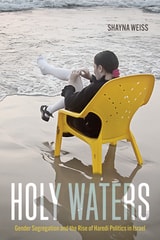
Holy Waters
Gender Segregation and the Rise of Haredi Politics in IsraelShayna Weiss
Rutgers University Press, 2027
Examining the politics of pools and beaches, Holy Waters reveals a surprising history about Haredi Jews and Israel. By looking at the battles to establish gender segregating swimming in Israel, which required a partnership between the Israeli government and its Haredi population to reshape public space, the book argues that the establishment of Israel created a new Haredi pragmatic politics. Unlike some Ultra-Orthodox Jews, who rejected the Jewish state entirely, these radical moderates worked with the state to make it feel more Jewish, and to improve life for its Haredi population, without embracing Zionist ideology. Holy Waters examines three cases: a failure to prevent mixed swimming in Jerusalem, the successful establishment of a separate beach in Tel Aviv, and the mixed results of a Diaspora awareness campaign. Connecting historical controversies to today’s debates of gender segregation, the book demonstrates how these radical moderates still influence Israel today.
This book is published with the support of the Jordan Schnitzer First Book Publication Award, administered by the Association for Jewish Studies.

Holy Wind in Navajo Philosophy
James Kale McNeley
University of Arizona Press, 1981
"An admirable volume . . . it illustrates how much we can learn about the importance of poetry as a fundamental activity by investigating the traditions of what should be acknowledged as the New World's unique classical past." —New Scholar
"This book is a fascinating analysis of what obviously is a central dimension in the traditional Navajo awareness of life." —New Mexico Historical Review
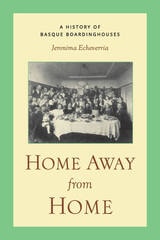
Home Away From Home
A History of Basque BoardinghousesJeronima Echeverria
University of Nevada Press, 1999
In this meticulously researched study of Basque boardinghouses in the United States, Jeronima Echeverria offers a compelling history of the institution that most deeply shaped Basque immigrant life and served as the center of Basque communities throughout the West. She weaves into her narrative the stories of the boarding house owners and operators and the ways they made their establishments a home away from home for their fellow compatriots, as well as the stories of the young Basques who left the security of their beloved homeland to find work in the United States.

Home Away from Home
Japanese Corporate Wives in the United StatesSawa Kurotani
Duke University Press, 2005
Kurotani interviewed and spent time with more than 120 women in three U.S. locations with sizable expatriate Japanese communities: Centerville, a pseudonymous Midwestern town; the New York metropolitan area; and North Carolina’s Research Triangle area. She highlights the contradictory situations faced by the transient wives. Their husbands’ assignments in the United States typically last from three to five years, and they frequently emphasize the temporariness of their situation, referring to it as a “long vacation.” Yet they are responsible for creating comfortable homes for their families, which necessitates producing a familiar and permanent environment. Kurotani looks at the dynamic friendships that develop among the wives and describes their feelings about returning to Japan. She conveys how their sense of themselves as Japanese women, of home, and of their relationships with family members are altered by their personal experiences of transnational homemaking.
Home Before the Raven Caws
Richard Feldman
Indiana Historical Society Press, 2012
Home Fronts
Domesticity and Its Critics in the Antebellum United StatesLora Romero
Duke University Press, 1997
Romero remaps the literary landscape of the last century by looking at the operations of domesticity on the frontier as well as within the middle-class home and by reconsidering such crucial (if sometimes unexpected) sites for the workings of domesticity as social reform movements, African-American activism, and homosocial high culture. In the process, she indicts theories of the nineteenth century based on binarisms and rigidity while challenging models of power and resistance based on the idea that "culture" has the capacity to either free or enslave. Through readings of James Fenimore Cooper, Catherine Beecher, Harriet Beecher Stowe, Maria Stewart, and Nathaniel Hawthorne, Romero shows how the politics of culture reside in local formulations rather than in essential and ineluctable political structures.

Home Girls, 40th Anniversary Edition
A Black Feminist AnthologyBarbara Smith
Rutgers University Press, 2024
Contributors: Tania Abdulahad, Donna Allegra, Barbara A. Banks, Becky Birtha, Cenen, Cheryl Clarke, Michelle Cliff, Michelle T. Clinton, Willi (Willie) M. Coleman, Toi Derricotte, Alexis De Veaux, Jewelle L. Gomez, Akasha (Gloria) Hull, Patricia Spears Jones, June Jordan, Audre Lorde, Raymina Y. Mays, Deidre McCalla, Chirlane McCray, Pat Parker, Linda C. Powell, Bernice Johnson Reagon, Spring Redd, Gwendolyn Rogers, Kate Rushin, Ann Allen Shockley, Barbara Smith, Beverly Smith, Shirley O. Steele, Luisah Teish, Jameelah Waheed, Alice Walker, and Renita J. Weems.

Home Girls
A Black Feminist AnthologySmith, Barbara
Rutgers University Press, 2000
Contributors are Tania Abdulahad, Donna Allegra, Barbara A. Banks, Becky Birtha, Julie Carter, Cenen, Cheryl Clarke, Michelle Cliff, Michelle T. Clinton, Willie M. Coleman, Toi Derricotte, Alexis De Veaux, Jewelle L. Gomez, Akasha (Gloria) Hull, Patricia Jones, June Jordan, Audre Lorde, Raymina Y. Mays, Deidre McCalla, Chirlane McCray, Pat Parker, Linda C. Powell, Bernice Johnson Reagon, Spring Redd, Gwendolyn Rogers, Kate Rushin, Ann Allen Shockley, Barbara Smith, Beverly Smith, Shirley O. Steele, Luisah Teish, Jameelah Waheed, Alice Walker, and Renita Weems.
Home Girls
Chicana Literary VoicesAlvina E. Quintana
Temple University Press, 1996
Home Is Where Your Politics Are
Queer Activism in the U.S. South and South AfricaJessica A. Scott
Rutgers University Press, 2024

Home Material
Ohio's Nineteenth-Century Regional Women's FictionSandra Parker
University of Wisconsin Press, 1998

Home Movies and Other Necessary Fictions
Michelle Citron
University of Minnesota Press, 1998
Home Rule
National Sovereignty and the Separation of Natives and MigrantsNandita Sharma
Duke University Press, 2020

Home Safe Home
Housing Solutions for Survivors of Intimate Partner ViolenceBotein, Hilary
Rutgers University Press, 2016
Home Signs
An Ethnography of Life beyond and beside LanguageJoshua O. Reno
University of Chicago Press, 2024
Home Signs grew out of the anthropologist Joshua Reno’s experience of caring for and trying to communicate with his teenage son, Charlie, who cannot speak. To manage interactions with others, Charlie uses what are known as “home signs,” gestures developed to meet his need for expression, ranging from the wiggle of a finger to a subtle sideways glance. Though he is nonverbal, he is far from silent: in fact, he is in constant communication with others.
In this intimate reflection on language, disability, and togetherness, the author invites us into his and Charlie’s shared world. Combining portraits of family life and interviews with other caregivers, Reno upends several assumptions, especially the idea that people who seem not to be able to speak for themselves need others to speak on their behalf. With its broad exploration of nonverbal communication in both human and nonhuman contexts, Home Signs challenges us to think harder about what it means to lead a “normal” life and to connect with another person.

Home Team Away
Watching European Football in Urban ChinaYuan Gong
University of Michigan Press, 2026
Home Team Away calls for a rethinking of sport fandom that is divorced from an attachment to location. As the first comprehensive account of the European football fandom in China, this book explores how the Chinese middle class subjectivity is formed through the cross-cultural, digital consumption of the Big Five leagues. Yuan Gong captures the embodied experiences of fans and fan clubs, fan discourses and activities unfolding on digital platforms on Weibo, Weixin, and Hupu, combining fieldwork in Shanghai and virtual ethnography. Gong argues that Chinese fans’ decisions to follow and engage with European football result from their material conditions, ideological contestation, and technology appropriation as a new demographic bloc arising during China’s transition to authoritarian digital capitalism. By engaging with their home teams away, the Chinese middle class fans perform as citizens with a global vision despite the resurgence of the nationalist and anti-Western sentiments.

Home Truths?
Video Production and Domestic LifeDavid Buckingham, Rebekah Willett, and Maria Pini
University of Michigan Press, 2011
Over the past decade, the video camera has become a commonplace household technology. With falling prices on compact and easy-to-use cameras, as well as mobile phones and digital still cameras with video recording capabilities, access to moving image production technology is becoming virtually universal. Home Truths? represents one of the few academic research studies exploring this everyday, popular use of video production technology, looking particularly at how families use and engage with the technology and how it fits into the routines of everyday life.
The authors draw on interviews, observations, and the participants' videos themselves, seeking to paint a comprehensive picture of the role of video making in their everyday lives. While readers gain a sense of the individual characters involved in the project and the complexities and diversities of their lives, the analysis also raises a range of broader issues about the nature of learning and creativity, subjectivity and representation, and the "domestication" of technology---issues that are of interest to many in the fields of sociology and media/cultural studies.
David Buckingham is Professor of Education at the Institute of Education, University of London, and Director of the Institute's Centre for the Study of Children, Youth and Media.
Rebekah Willett is Lecturer at the Institute of Education, University of London, where she teaches in Media, Culture and Communication.
Maria Pini previously worked as Lecturer in Media and Communications at Goldsmiths College, London University, and is now a researcher on the Camcorder Cultures project at the Institute of Education.
Cover art: Young videomaker ©iStockphoto.com/ kaisersosa67
Technologies of the Imagination: New Media in Everyday Life
digitalculturebooks is an imprint of the University of Michigan Press and the Scholarly Publishing Office of the University of Michigan Library dedicated to publishing innovative and accessible work exploring new media and their impact on society, culture, and scholarly communication. Visit the website at www.digitalculture.org.
Home and Harem
Nation, Gender, Empire and the Cultures of TravelInderpal Grewal
Duke University Press, 1996
In her look at England, Grewal draws on nineteenth-century aesthetics, landscape art, and debates about women’s suffrage and working-class education to show how all social classes, not only the privileged, were educated and influenced by imperialist travel narratives. By examining diverse forms of Indian travel to the West and its colonies and focusing on forms of modernity offered by colonial notions of travel, she explores how Indian men and women adopted and appropriated aspects of European travel discourse, particularly the set of oppositions between self and other, East and West, home and abroad.
Rather than being simply comparative, Home and Harem is a transnational cultural study of the interaction of ideas between two cultures. Addressing theoretical and methodological developments across a wide range of fields, this highly interdisciplinary work will interest scholars in the fields of postcolonial and cultural studies, feminist studies, English literature, South Asian studies, and comparative literature.
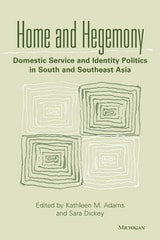
Home and Hegemony
Domestic Service and Identity Politics in South and Southeast AsiaKathleen M. Adams and Sara Dickey, Editors
University of Michigan Press, 2000
This pathbreaking collection builds on recent examinations of identity in the postcolonial states of South and Southeast Asia by investigating the ways in which domestic workers and their employers come to know and depict one another and themselves through their interactions inside and outside of the home. This setting provides a particularly apt arena for examining the daily negotiations of power and hegemony.
Contributors to the volume, all anthropologists, provide rich ethnographic analyses that avoid a narrow focus on either workers or employers. Rather, they examine systems of power through specific topics that range from the notion of "nurture for sale" to the roles of morality and humor in the negotiation of hierarchy and the dilemmas faced by foreign employers who find themselves in life-and-death dependence on their servants.
With its provocative theoretical and ethnographic contributions to current debates, this collection will be of interest to scholars in Asian studies, women's studies, anthropology, sociology, and cultural studies.
Kathleen M. Adams is Associate Professor of Anthropology, Loyola University of Chicago. Sara Dickey is Associate Professor of Anthropology, Bowdoin College.
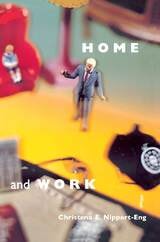
Home and Work
Negotiating Boundaries through Everyday LifeChristena E. Nippert-Eng
University of Chicago Press, 1996
Arguing that relationships between the two realms range from those that are highly "integrating" to those that are highly "segmenting," Nippert-Eng examines the ways people sculpt the boundaries between home and work. With remarkable sensitivity to the symbolic value of objects and actions, Nippert-Eng explores the meaning of clothing, wallets, lunches and vacations, and the places and ways in which we engage our family, friends, and co-workers. Commuting habits are also revealing, showing how we make the transition between home and work selves though ritualized behavior like hellos and goodbyes, the consumption of food, the way we dress, our choices of routes to and from work, and our listening, working, and sleeping habits during these journeys.
The ways each of us manages time, space, and people not only reflect but reinforce lives that are more "integrating" or "segmenting" at any given time. In clarifying what we take for granted, this book will leave you thinking in different ways about your life and work.
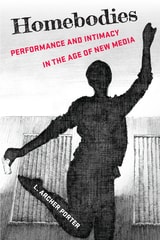
Homebodies
Performance and Intimacy in the Age of New MediaL. Archer Porter
University of Michigan Press, 2026
Homebodies: Performance and Intimacy in the Age of New Media sheds light on a fascinating yet often overlooked phenomenon: how ordinary people transform their private lives into captivating performances for the digital stage. Focusing on home dance videos shared on Instagram from 2010 to 2020, the book explores the delicate art of "intimaesthetics"—the aestheticization of intimacy through the interplay of body, space, and media—and the paradox of the homebody. These seemingly spontaneous performances reveal how users craft images of closeness and authenticity, drawing audiences into a curated version of their domestic lives. Yet, Porter argues, these intimate portrayals exist within a larger system of platform control, algorithmic surveillance, and the commodification of personal expression.
Porter utilizes hand-drawn illustrations in place of screenshots, which reflects their commitment to critiquing the exploitative dynamics of digital visibility while respecting the personal nature of the media studied. By examining the intersection of personal agency, algorithmic control, and the commodification of authenticity, Homebodies provides a nuanced understanding of how technology redefines intimacy, identity, and creativity in the twenty-first century.
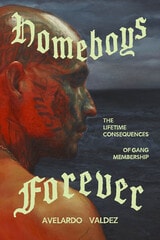
Homeboys Forever
The Lifetime Consequences of Gang MembershipAvelardo Valdez
University of Chicago Press, 2026
Violence, addiction, imprisonment . . . we don’t have to look hard to see the negative consequences of gang involvement. But what does it look like to spend a life—from adolescence to adulthood—in gangs? Sociologist Avelardo Valdez and his research team have been following the lives of Mexican American men in San Antonio, Texas, over a remarkable twenty years, watching and listening as they navigate adolescent delinquency and gang involvement, advance into a life of crime, and—sometimes—attempt to break from gang life and build lives in conventional society.
When gang affiliation exploded in the 1990s, adolescent street gang membership surged in the Mexican American community of Westside San Antonio. Valdez was quick to begin investigating how young men embedded in a system with little support for lasting change turned to gang violence, drug use, and other risky behaviors. The honesty of these men’s accounts draws our attention to the economic, political, and sociocultural context of impoverished communities in San Antonio. Being constantly written off as troublemakers and criminals eroded the self-respect that these young men once had. They were once lithe, active, and full of self-confidence, but after a lifetime of constant harassment and entanglements with the legal system, they now have a perpetual look of exhaustion and defeat.
Encouraging readers to question who is at fault when young men become involved in gangs and other delinquent behaviors, Homeboys Forever is a humanizing account of marginalized youth who struggle to overcome the systemic inequities that have led to a lifetime of heartbreaking consequences.
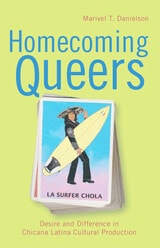
Homecoming Queers
Desire and Difference in Chicana Latina Cultural ProductionDanielson, Marivel T
Rutgers University Press, 2009
Spanning multiple genres and forms, and including scholarly theory alongside performances, films, narratives, and testimonials, Homecoming Queers leads readers along a crucial path toward understanding and overcoming the silences that previously existed across these fields.

Homegirls in the Public Sphere
By Marie "Keta" Miranda
University of Texas Press, 2003
Girls in gangs are usually treated as objects of public criticism and rejection. Seldom are they viewed as objects worthy of understanding and even more rarely are they allowed to be active subjects who craft their own public persona—which is what makes this work unique. In this book, Marie "Keta" Miranda presents the results of an ethnographic collaboration with Chicana gang members, in which they contest popular and academic representations of Chicana/o youth and also construct their own narratives of self identity through a documentary film, It's a Homie Thang!
In telling the story of her research in the Fruitvale community of Oakland, California, Miranda honestly reveals how even a sympathetic ethnographer from the same ethnic group can objectify the subjects of her study. She recounts how her project evolved into a study of representation and its effects in the public sphere as the young women spoke out about how public images of their lives rarely come close to the reality. As Miranda describes how she listened to the gang members and collaborated in the production of their documentary, she sheds new light on the politics of representation and ethnography, on how inner city adolescent Chicanas present themselves to various publics, and on how Chicana gangs actually function.
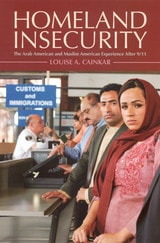
Homeland Insecurity
The Arab American and Muslim American Experience After 9/11Louis A. Cainkar
Russell Sage Foundation, 2009
Homeland Maternity
US Security Culture and the New Reproductive RegimeNatalie Fixmer-Oraiz
University of Illinois Press, 2019

Homeless Families
THE STRUGGLE FOR DIGNITYBarry Jay Seltser and Donald E. Miller
University of Illinois Press, 1993
Homeless In Paradise
A Map of the TerrainRobert Rosenthal
Temple University Press, 1993
Homeless Mothers
Face to Face with Women and PovertyDeborah R. Connolly
University of Minnesota Press, 2001

Homeless and at Home in America
Evidence for the Dignity of the Human Soul in Our Time and PlacePeter Augustine Lawler
St. Augustine's Press, 2007

Homeless in Las Vegas
Stories from the StreetKurt Borchard
University of Nevada Press, 2011
Homelessness among Older Adults in Prague
Causes, Contexts and ProspectsMarie Vágnerová, Ladislav Csémy, and Jakub Marek
Karolinum Press, 2020
Homelessness among Young People in Prague
Marie Vágnerová, Ladislav Csémy, and Jakub Marek
Karolinum Press, 2014
Young homeless people describe a life in which they lose their privacy, the possibility to satisfy their basic needs, and, often, their self-respect in order to survive. The latter half of the book considers what happens when these young people return to society and how they navigate difficulties as they attempt to leave their past behind. Often, the struggle is not solely one of coping with the stigma of their experience; rather, they must face the legacies that linger long after their lives have turned a corner: drug addiction, criminal records, and accumulated debt.
Based on interviews with homeless people in Prague, Homelessness as an Alternative Existence of Young People paints an authentic picture of this social group and documents the often unseen social consequences of the transformation to capitalism from communism.
Homeplaces
Dwelling and Habitability in Critical TimesJoão Biehl and Federico Neiburg, editors
Duke University Press, 2026
Homesick
Nicholas Shapiro
Duke University Press, 2025
Homesteads Ungovernable
Families, Sex, Race, and the Law in Frontier Texas, 1823-1860By Mark M. Carroll
University of Texas Press, 2001
When he settled in Mexican Texas in 1832 and began courting Anna Raguet, Sam Houston had been separated from his Tennessee wife Eliza Allen for three years, while having already married and divorced his Cherokee wife Tiana and at least two other Indian "wives" during the interval. Houston's political enemies derided these marital irregularities, but in fact Houston's legal and extralegal marriages hardly set him apart from many other Texas men at a time when illicit and unstable unions were common in the yet-to-be-formed Lone Star State.
In this book, Mark Carroll draws on legal and social history to trace the evolution of sexual, family, and racial-caste relations in the most turbulent polity on the southern frontier during the antebellum period (1823-1860). He finds that the marriages of settlers in Texas were typically born of economic necessity and that, with few white women available, Anglo men frequently partnered with Native American, Tejano, and black women. While identifying a multicultural array of gender roles that combined with law and frontier disorder to destabilize the marriages of homesteaders, he also reveals how harsh living conditions, land policies, and property rules prompted settling spouses to cooperate for survival and mutual economic gain. Of equal importance, he reveals how evolving Texas law reinforced the substantial autonomy of Anglo women and provided them material rewards, even as it ensured that cross-racial sexual relationships and their reproductive consequences comported with slavery and a regime that dispossessed and subordinated free blacks, Native Americans, and Tejanos.
Homeward To Zion
The Mormon Migration from ScandinaviaWilliam Mulder
University of Minnesota Press, 2000
The classic history of this emblematic moment in U.S. immigration.
In the late nineteenth century, thirty thousand Mormons from Norway, Sweden, Denmark, and Finland immigrated to Utah, dissatisfied with conditions in their homelands. As their countrymen were farming rich fields in other parts of the United States, Scandinavian Mormons were making their way to Salt Lake City. Homeward to Zion tracks this movement from northern Europe to the western desert, examining the Mormon recruiting efforts in Scandinavia as well as the arduous journey across the Great Plains. Mulder draws extensively from personal narratives of these immigrants to relate their pioneering experience and their role in the history of Scandinavian migration and of the settlement of the American West.

Homeward
Life in the Year After PrisonBruce Western
Russell Sage Foundation, 2018
Western and his research team conducted comprehensive interviews with men and women released from the Massachusetts state prison system who returned to neighborhoods around Boston. Western finds that for most, leaving prison is associated with acute material hardship. In the first year after prison, most respondents could not afford their own housing and relied on family support and government programs, with half living in deep poverty. Many struggled with chronic pain, mental illnesses, or addiction—the most important predictor of recidivism. Most respondents were also unemployed. Some older white men found union jobs in the construction industry through their social networks, but many others, particularly those who were black or Latino, were unable to obtain full-time work due to few social connections to good jobs, discrimination, and lack of credentials. Violence was common in their lives, and often preceded their incarceration. In contrast to the stereotype of tough criminals preying upon helpless citizens, Western shows that many former prisoners were themselves subject to lifetimes of violence and abuse and encountered more violence after leaving prison, blurring the line between victims and perpetrators.
Western concludes that boosting the social integration of former prisoners is key to both ameliorating deep disadvantage and strengthening public safety. He advocates policies that increase assistance to those in their first year after prison, including guaranteed housing and health care, drug treatment, and transitional employment. By foregrounding the stories of people struggling against the odds to exit the criminal justice system, Homeward shows how overhauling the process of prisoner reentry and rethinking the foundations of justice policy could address the harms of mass incarceration.

Homicidal Insanity, 1800-1985
Janet Colaizzi, with a foreword by Jonas R. Rappeport
University of Alabama Press, 1989
Where madness meets the law, history leaves no easy verdict.
Homicidal insanity has remained a vexation to both the psychiatric and legal professions despite the panorama of scientific and social change during the past 200 years. The predominant opinion today among psychiatrists is that no correlation exists between dangerousness and specific mental disorders. But for generation after generation, psychiatrists have reported cases of insane homicide that were clinically similar. Although psychiatric theory changed and psychiatric nosology was inconsistent, the mental phenomena psychiatrists identified in such cases remained the same. The central thesis of Homicidal Insanity is that as psychiatric theory changed, psychiatrists regarded these phenomena variously as symptoms of mental disease or the disease in itself. It is possible to trace these phenomena throughout the history of Anglo-American psychiatric theory and practice. A secondary thesis of the book is that psychiatrists have used these phenomena as predictors and markers in the practical matters of preventing insane homicide and of testifying in the courts to defend the irresponsible and expose the culpable.
For 200 years, scientific and philosophical disagreement raised controversy and brought the issues to public attention. Still, to this day no rational method exists to discriminate the dangerous from the harmless in matters of involuntary commitment, nor insanity from crime in the courts.

Homo Hierarchicus
The Caste System and Its ImplicationsLouis Dumont
University of Chicago Press, 1981
This edition includes a lengthy new Preface in which Dumont reviews the academic discussion inspired by Homo Hierarchicus and answers his critics. A new Postface, which sketches the theoretical and comparative aspects of the concept of hierarchy, and three significant Appendixes previously omitted from the English translation complete this innovative and influential work.
Homol'ovi II
Archaeology of an Ancestral Hopi Village, ArizonaEdited by E. Charles Adams and Kelley Ann Hays
University of Arizona Press, 1991
Homol'ovi
An Ancient Hopi Settlement ClusterE. Charles Adams
University of Arizona Press, 2002
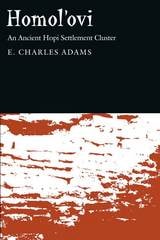
Charles Adams has directed fifteen years of research at these sites for the Arizona State Museum, including excavations in five of the seven primary Homol'ovi villages and in other villages predating them. Through this research he concludes that the founders of these settlements were Hopis who sought to protect their territory from migrating groups elsewhere in the Pueblo world. This book summarizes that research and broadens our understanding of the relationship of Homol'ovi to ancient and modern Hopi people.
Each Homol'ovi village had a unique history of establishment, growth, sociopolitical organization, length of occupation, and abandonment; and although the villages shared much in the way of material culture, their size and configuration were tremendously varied. By comparing Homol'ovi research to information from projects on other settlements in the area, Adams has been able to reconstruct a provocative history of the Homol'ovi cluster that includes relationships among the individual villages and their relationships to nearby clusters. He shows that social organization within villages is apparent by the number and variety of ritual structures, while political organization among villages is indicated by the need for cooperation to share water for irrigation and by the exchange of such materials as pottery, obsidian, and ground stone.
Adams advances several important theories about why Homol'ovi was founded where and when it was, who its founders were, and the importance of cotton in making Homol'ovi an important center of trade in the 1300s. He also considers why Pueblo settlements suddenly became so large, addressing theoretical issues pertaining to multiple settlements and the rise of enormous villages containing more than 1,000 rooms.
Homol'ovi is a rich work of synthesis and interpretation that will be important for anyone with an interest in Southwest archaeology, Arizona history, or Hopi culture. By considering the settlement trajectory of an entire cluster of sites, it will also prove valuable to archaeologists worldwide.
Homophobias
Lust and Loathing across Time and SpaceDavid A. B. Murray, ed.
Duke University Press, 2009
The contributors to this volume open up the scope of inquiry into processes of homophobia, moving the analysis of a particular form of “hate” into new, wider sociocultural and political fields. The ongoing production of homophobic discourses is carefully analyzed in diverse sites including New York City, Australia, the Caribbean, Greece, India, and Indonesia, as well as American Christian churches, in order to uncover the complex operational processes of homophobias and their intimate relationships to nationalism, sexism, racism, class, and colonialism. The contributors also critically inquire into the limitations of the term homophobia and interrogate its utility as a cross-cultural designation.
Contributors. Steven Angelides, Tom Boellstorff, Lawrence Cohen, Don Kulick, Suzanne LaFont, Martin F. Manalansan IV, David A. B. Murray, Brian Riedel, Constance R. Sullivan-Blum
Homosexual Desire
Guy Hocquenghem
Duke University Press, 1993
Significant as one of the earliest products of the international gay liberation movement, Hocquenghem's work was influenced by the extraordinary energies unleashed by the political upheavals of both the Paris "May Days" of 1968 and the gay and lesbian political rebellions that occurred in cities around the world in the wake of New York's Stonewall riots of June 1969.
Drawing on the theoretical work of Gilles Deleuze and Félix Guattari and on the shattering effects of innumerable gay "comings-out," Hocquenghem critiqued the influential models of the psyche and sexual desire derived from Lacan and Freud. The author also addressed the relation of capitalism to sexualities, the dynamics of anal desire, and the political effects of gay group-identities.
Homosexual Desire remains an exhilarating analysis of capitalist societies' pervasive fascination with, and violent fear of, same-sex desire and addresses issues that continue to be highly charged and productive ones for queer politics.