Results by title
1116 books match the query 'Africa' and 51 start with i
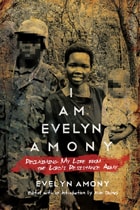
I Am Evelyn Amony
Reclaiming My Life from the Lord's Resistance ArmyEvelyn Amony, Edited with an introduction by Erin Baines
University of Wisconsin Press, 2015
Abducted at the age of eleven, Evelyn Amony spent nearly eleven years inside the Lord’s Resistance Army, becoming a forced wife to Joseph Kony and mother to his children. She takes the reader into the inner circles of LRA commanders and reveals unprecedented personal and domestic details about Joseph Kony. Her account unflinchingly conveys the moral difficulties of choosing survival in a situation fraught with violence, threat, and death.
Amony was freed following her capture by the Ugandan military. Despite the trauma she endured with the LRA, Amony joined a Ugandan peace delegation to the LRA, trying to convince Kony to end the war that had lasted more than two decades. She recounts those experiences, as well as the stigma she and her children faced when she returned home as an adult.
This extraordinary testimony shatters stereotypes of war-affected women, revealing the complex ways that Amony navigated life inside the LRA and her current work as a human rights advocate to make a better life for her children and other women affected by war.
Best books for public & secondary school libraries from university presses, American Library Association
I Am of Ireland
Women of the North Speak OutElizabeth Shannon
University of Massachusetts Press, 1997
I Give You Half the Road
Carol Spindel
University of Wisconsin Press, 2021
Once considered the most stable country in West Africa, Ivory Coast was split by an armed rebellion in 2002 and endured a decade of instability and a violent conflict. Spindel provides an intimate glimpse into this turbulent period by weaving together the daily lives and paths of five neighbors. Their stories reveal Ivorians determined to reunite a divided country through reliance on mutual respect and obligation even while power-hungry politicians pursued xenophobic and anti-immigrant platforms for personal gain. Illuminating democracy as a fragile enterprise that must be continually invented and reinvented, I Give You Half the Road emphasizes the importance of connection, generosity, and forgiveness.
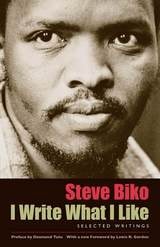
I Write What I Like
Selected WritingsSteve Biko
University of Chicago Press, 2002
I Write What I Like contains a selection of Biko's writings from 1969, when he became the president of the South African Students' Organization, to 1972, when he was prohibited from publishing. The collection also includes a preface by Archbishop Desmond Tutu; an introduction by Malusi and Thoko Mpumlwana, who were both involved with Biko in the Black Consciousness movement; a memoir of Biko by Father Aelred Stubbs, his longtime pastor and friend; and a new foreword by Professor Lewis Gordon.
Biko's writings will inspire and educate anyone concerned with issues of racism, postcolonialism, and black nationalism.
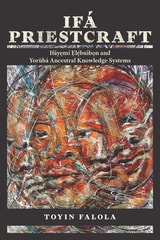
Ifá Priestcraft
Ifáyemí Elébuìbon and Yorùbá Ancestral Knowledge SystemsToyin Falola
University of Wisconsin Press, 2026
Born in 1947, Ifáyẹmí Ọ̀ṣúndàgbonù Ẹlẹ́buìbọn descends from a long line of Yorùbá healers, philosophers, and priests. A fervent disciple of Ifá from age four, Ẹlẹ́buìbọn grew to become both a living moral exemplar and an internationally recognized face of his religion. The first scholarly work to connect the biography of a devout Ifá practitioner to broader intellectual conversations around pluriversalism and Indigenous knowledge systems, Ifá Priestcraft analyzes the complexities of Yorùbá philosophy and religion and their lasting cultural impact in Nigeria and throughout the diaspora. Toyin Falola, a world-renowned scholar of African studies, employs a phenomenological approach that recognizes and solidifies the voice of the “guru” as an organic and authentic source of knowledge. The result is a wholly original and uniquely interdisciplinary study of Yorùbá spirituality and an extraordinary contribution to the field of ancestral studies.
Illegible Will
Coercive Spectacles of Labor in South Africa and the DiasporaHershini Bhana Young
Duke University Press, 2017
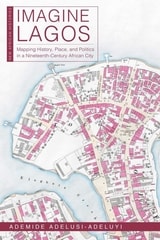
Imagine Lagos
Mapping History, Place, and Politics in a Nineteenth-Century African CityAdemide Adelusi-Adeluyi
Ohio University Press, 2024

Imagining Ethiopia
Struggles for History and Identity in the Horn of AfricaJohn Sorenson
Rutgers University Press, 1993
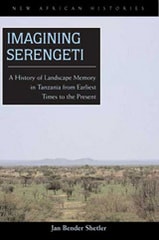
Imagining Serengeti
A History of Landscape Memory in Tanzania from Earliest Times to the PresentJan Bender Shetler
Ohio University Press, 2007
Many students come to African history with a host of stereotypes that are not always easy to dislodge. One of the most common is that of Africa as safari grounds—as the land of expansive, unpopulated game reserves untouched by civilization and preserved in their original pristine state by the tireless efforts of contemporary conservationists. With prose that is elegant in its simplicity and analysis that is forceful and compelling, Jan Bender Shetler brings the landscape memory of the Serengeti to life. She demonstrates how the social identities of western Serengeti peoples are embedded in specific spaces and in their collective memories of those spaces. Using a new methodology to analyze precolonial oral traditions, Shetler identifies core spatial images and reevaluates them in their historical context through the use of archaeological, linguistic, ethnographic, ecological, and archival evidence. Imagining Serengeti is a lively environmental history that will ensure that we never look at images of the African landscape in quite the same way.
Imperial Gullies
Soil Erosion and Conservation in LesothoKate B. Showers
Ohio University Press, 2005
Once the grain basket for South Africa, much of Lesotho has become a scarred and degraded landscape. The nation’s spectacular erosion and gullying have concerned environmentalists and conservationists for more than half a century. In Imperial Gullies: Soil Erosion and Conservation in Lesotho, Kate B. Showers documents the truth behind this devastation.
Showers reconstructs the history of the landscape, beginning with a history of the soil. She concludes that Lesotho’s distinctive erosion chasms, called dongas—often cited as an example of destructive land-use practices by African farmers—actually were caused by colonial and postcolonial interventions. The residents of Lesotho emerge as victims of a failed technology. Their efforts to mitigate or resist implementation of destructive soil conservation engineering works were thwarted, and they were blamed for the consequences of policies promoted by international soil conservationists since the 1930s.
Imperial Gullies calls for an observational, experimental, and, most important, a fully consultative and participatory approach to address Lesotho’s serious contemporary problems of soil erosion. The first book to bring to center stage the historical practice of colonial soil science—and a cautionary tale of western science in unfamiliar terrain—it will interest a broad, interdisciplinary audience in African and environmental studies, social sciences, and history.
Imperialist Imagination
German Colonialism and Its LegacySara Friedrichsmeyer, Sara Lennox, and Susanne Zantop, Editors
University of Michigan Press, 1998
Improvising Medicine
An African Oncology Ward in an Emerging Cancer EpidemicJulie Livingston
Duke University Press, 2012
In Idi Amin’s Shadow
Women, Gender, and Militarism in UgandaAlicia C. Decker
Ohio University Press, 2014
Finalist for the 2015 Aidoo-Snyder Prize
In Idi Amin’s Shadow is a rich social history examining Ugandan women’s complex and sometimes paradoxical relationship to Amin’s military state. Based on more than one hundred interviews with women who survived the regime, as well as a wide range of primary sources, this book reveals how the violence of Amin’s militarism resulted in both opportunities and challenges for women. Some assumed positions of political power or became successful entrepreneurs, while others endured sexual assault or experienced the trauma of watching their brothers, husbands, or sons “disappeared” by the state’s security forces. In Idi Amin’s Shadow considers the crucial ways that gender informed and was informed by the ideology and practice of militarism in this period. By exploring this relationship, Alicia C. Decker offers a nuanced interpretation of Amin’s Uganda and the lives of the women who experienced and survived its violence.
Each chapter begins with the story of one woman whose experience illuminates some larger theme of the book. In this way, it becomes clear that the politics of military rule were highly relevant to women and gender relations, just as the politics of gender were central to militarism. By drawing upon critical security studies, feminist studies, and violence studies, Decker demonstrates that Amin’s dictatorship was far more complex and his rule much more strategic than most observers have ever imagined.
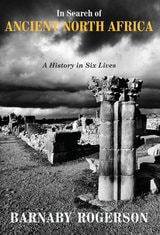
In Search of Ancient North Africa
A History in Six LivesBarnaby Rogerson
Haus Publishing, 2019
In Search of Ancient North Africa sheds new light on a time and place at the crossroads of numerous histories and cultures. It offers the first history of ancient North Africa told through the lives of North Africans themselves.
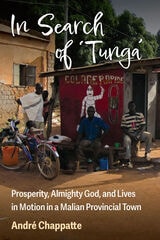
In Search of Tunga
Prosperity, Almighty God, and Lives in Motion in a Malian Provincial TownAndré Chappatte
University of Michigan Press, 2022
In the context of the current global war on terrorism, most studies of Muslim life have focused on the politics of piety of reformist movements, their leaders, and members. By contrast, In Search of “Tunga” takes a perspective from below. It opens piety up to “simply Muslims,” although the religious elites have always claimed authority and legitimacy over piety. Is piety an exclusive field of experiences for those who claim to strive for it? What does piety involve for the majority of Muslims, the non-elite and unaffiliated Muslims? This volume “democratizes” piety by documenting its practice as going beyond sharply defined religious affiliations and Islamic scholarship, and by showing it is both alive and normative, existential and prescriptive. As opposed to studies that build on the classic historical connections between the Maghreb and the Sahel, the southbound migration from the Sahel documented in this book stresses the overlooked historical connections between the southern shores of the Sahara and the lands south of those shores. It demonstrates how the Malian savanna, this former buffer-zone between ancient Mande kingdoms and thereafter remote areas of French Sudan, is increasingly becoming central in today’s Sahel contexts of desiccation and insecurity.
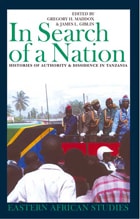
In Search of a Nation
Histories of Authority & Dissidence in TanzaniaGregory H. Maddox
Ohio University Press, 2005
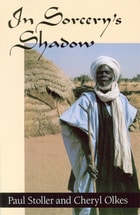
In Sorcery's Shadow
A Memoir of Apprenticeship among the Songhay of NigerPaul Stoller and Cheryl Olkes
University of Chicago Press, 1989
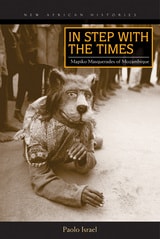
In Step with the Times
Mapiko Masquerades of MozambiquePaolo Israel
Ohio University Press, 2014
The helmet-shaped mapiko masks of Mozambique have garnered admiration from African art scholars and collectors alike, due to their striking aesthetics and their grotesque allure. This book restores to mapiko its historic and artistic context, charting in detail the transformations of this masquerading tradition throughout the twentieth century.
Based on field research spanning seven years, this study shows how mapiko has undergone continuous reinvention by visionary individuals, has diversified into genres with broad generational appeal, and has enacted historical events and political engagements. This dense history of creativity and change has been sustained by a culture of competition deeply ingrained within the logic of ritual itself. The desire to outshine rivals on the dance ground drives performers to search for the new, the astonishing, and the topical. It is this spirit of rivalry and one-upmanship that keeps mapiko attuned to the times that it traverses.
In Step with the Times is illustrated with vibrant photographs of mapiko masks and performances. It marks the most radical attempt to date to historicize an African performative tradition.
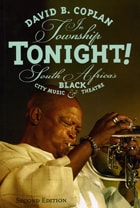
In Township Tonight!
South Africa's Black City Music and Theatre, Second EditionDavid B. Coplan
University of Chicago Press, 2008
In vivid detail, Coplan comprehensively explores more than three centuries of the diverse history of South Africa’s black popular culture, taking readers from indigenous musical traditions into the world of slave orchestras, pennywhistlers, clergyman-composers, the gumboot dances of mineworkers, and touring minstrelsy and vaudeville acts. This up-to-date edition of a landmark work will be welcomed by scholars of ethnomusicology and African studies, world music fans, and anyone concerned with South Africa and its development.
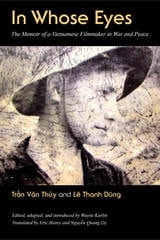
In Whose Eyes
The Memoir of a Vietnamese Filmmaker in War and PeaceTran Van Thuy
University of Massachusetts Press, 2016
Tran Van Thuy is a celebrated Vietnamese filmmaker of more than twenty award-winning documentaries. A cameraman for the People's Army of Vietnam during the Vietnam War, he went on to achieve international fame as the director of films that address the human costs of the war and its aftermath.
Thuy's memoir, when published in Vietnam in 2013, immediately sold out. In this translation, English-language readers are now able to learn in rich detail about the life and work of this preeminent artist. Written in a gentle and charming style, the memoir is filled with reflections on war, peace, history, freedom of expression, and filmmaking. Thuy also offers a firsthand account of the war in Vietnam and its aftermath from a Vietnamese perspective, adding a dimension rarely encountered in English-language literature.
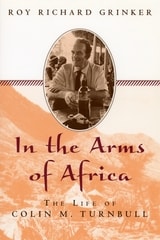
In the Arms of Africa
The Life of Colin TurnbullRoy Richard Grinker
University of Chicago Press, 2001
In this scrupulously researched biography, Roy Richard Grinker charts the rise and fall of this colorful and controversial man—from his Scottish family and British education to travels in Africa and his great love affair with Joe Towles. Grinker, noted for his own work on the Pygmies, herein gives readers a fascinating account of Turnbull's life and work.
Originally published by St. Martin's Press
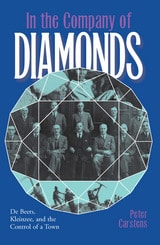
In the Company of Diamonds
De Beers, Kleinzee, and the Control of a TownPeter Carstens
Ohio University Press, 2001
After the 1925 discovery of diamonds in the semi-desert of the northwest coast of South Africa, De Beers Consolidated Mines Ltd. virtually proclaimed its dominion over the whole region. In the town of Kleinzee, the company owns all the real estate and infrastructure, and controls and administers both the town and the industry.
Peter Carstens’s In the Company of Diamonds draws a stark and startling portrait of this closed community, one that analyzes the power and hegemonic techniques used to acquire that power and maintain it.
As a prototypical company town, Kleinzee is subordinated to the industry and will of the owners. Employees and workers are variously differentiated and ordered according to occupation, ethnic variation, and other social criteria, a pattern reflected most markedly in the allocation of housing. Managers live in large, ranch-style houses, while contract workers are lodged in single-sex compounds.
As a community type, company towns like Kleinzee are not entirely unique, and Professor Carstens successfully draws a number of structural parallels with other closed and incomplete social formations such as Indian reservations, military bases, colleges, prisons, and mental hospitals.
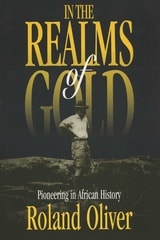
In the Realms of Gold
Pioneering in African HistoryRoland Oliver
University of Wisconsin Press, 1997
In the Realms of Gold is Oliver’s account of his life and work. He writes in a deft and lively style about the circumstances of his early life that shaped his education and outlook: his childhood on a river houseboat in Kashmir, the influential teachers and friends met at Stowe and Cambridge, and his service in World War II as a cryptographer in British intelligence, where he met his first wife, Caroline Linehan. His interest in church history while at Cambridge led him to study the historical effects of Christian missionaries in Africa, and thus his career began.
The core of the book is Oliver’s account of his research travels throughout tropical Africa from the 1940s to the 1980s; his efforts to train and foster African graduate students to teach in African universities; his role in establishing conferences and journals to bring together the work of historians and archaeologists from Europe and Africa; his encounters with political and religious leaders, scholars, soldiers, and storytellers; and the political and economic upheavals of the continent that he witnessed.
In the Shadow of Marriage
Gender and Justice in an African CommunityAnne M. O. Griffiths
University of Chicago Press, 1997
Griffiths's analysis is based on careful observation of how people actually experience the law as well as the more standard tools of statutes and cases familiar to Western legal scholars. She explains how women's access to law is determined by social relations over which they have little control. In this powerful feminist critique of law and anthropology, Griffiths shows how law and custom are inseparable for Kwena women. Both colonial common law and customary law pose comparable and constant challenges to Kwena women's attempts to improve their positions in society.
In the Skin of the City
Spatial Transformation in LuandaAntónio Tomás
Duke University Press, 2022

Indigenous Knowledge and the Environment in Africa and North America
David M. Gordon
Ohio University Press, 2012
Indigenous knowledge has become a catchphrase in global struggles for environmental justice. Yet indigenous knowledges are often viewed, incorrectly, as pure and primordial cultural artifacts. This collection draws from African and North American cases to argue that the forms of knowledge identified as “indigenous” resulted from strategies to control environmental resources during and after colonial encounters.
At times indigenous knowledges represented a “middle ground” of intellectual exchanges between colonizers and colonized; elsewhere, indigenous knowledges were defined through conflict and struggle. The authors demonstrate how people claimed that their hybrid forms of knowledge were communal, religious, and traditional, as opposed to individualist, secular, and scientific, which they associated with European colonialism.
Indigenous Knowledge and the Environment offers comparative and transnational insights that disturb romantic views of unchanging indigenous knowledges in harmony with the environment. The result is a book that informs and complicates how indigenous knowledges can and should relate to environmental policy-making.
Contributors: David Bernstein, Derick Fay, Andrew H. Fisher, Karen Flint, David M. Gordon, Paul Kelton, Shepard Krech III, Joshua Reid, Parker Shipton, Lance van Sittert, Jacob Tropp, James L. A. Webb, Jr., Marsha Weisiger

Indirect Subjects
Nollywood's Local AddressMatthew H. Brown
Duke University Press, 2021

Individual Freedoms and State Security in the African Context
The Case of ZimbabweJohn Hatchard
Ohio University Press, 1993
In 1980 the ZANU/PF government of Robert Mugabe came to power after an extended war of liberation. They inherited a cluster of emergency laws similar to those available to the authorities in South Africa. It was also the beginning of the cynical South African state policy of destabilization of the frontline states. This led to a dangerous period of insurrection in Mashonaland and increased activity by Renamo.
Dr. Hatchard uses the case of Zimbabwe to ask questions about the use of authority in contemporary African states. He examines:
1. Whether and in what circumstances the declaration and retention of a state of emergency is justified;
2.The scope of emergency regulations and their impact on individual freedoms;
3.What safeguards are necessary in order to protect those freedoms during a state of emergency.
The relationship is studied from a political as well as a legal perspective. Dr. Hatchard examines the role law has played, is playing and may play. The author concludes that, even if the state of emergency is justified, this does not necessitate the curtailment of the exercise of individual freedoms.
There are many comparisons with the rest of Africa. The book is of practical importance for members of the judiciary, legal practitioners, politicians and human rights organizations. The difficult questions it poses make stimulating teaching material for students of the Third World who want to understand the reality of the exercise of power in fragile situations.
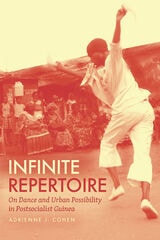
Infinite Repertoire
On Dance and Urban Possibility in Postsocialist GuineaAdrienne J. Cohen
University of Chicago Press, 2021
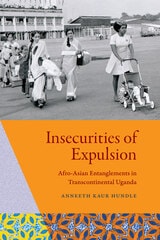
Insecurities of Expulsion
Afro-Asian Entanglements in Transcontinental UgandaAnneeth Kaur Hundle
Duke University Press, 2025
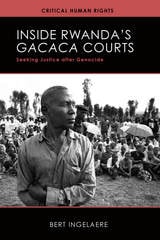
Inside Rwanda's /Gacaca/ Courts
Seeking Justice after GenocideBert Ingelaere
University of Wisconsin Press, 2018
Weaving together vivid firsthand recollections, interviews, and trial testimony with systematic analysis, Ingelaere documents how the gacaca shifted over time from confession to accusation, from restoration to retribution. He precisely articulates the importance of popular conceptions of what is true and just. Marked by methodological sophistication, extraordinary evidence, and deep knowledge of Rwanda, this is an authoritative, nuanced, and bittersweet account of one of the most important experiments in transitional justice after mass violence.
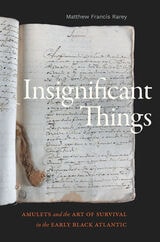
Insignificant Things
Amulets and the Art of Survival in the Early Black AtlanticMatthew Francis Rarey
Duke University Press, 2023
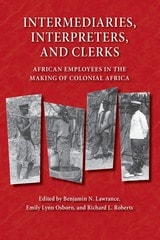
Intermediaries, Interpreters, and Clerks
African Employees in the Making of Colonial AfricaEdited by Benjamin N. Lawrance, Emily Lynn Osborn, and Richard L. Roberts
University of Wisconsin Press, 2006
By uncovering the role of such men (and a few women) in the construction, function, and legal apparatus of colonial states, the essays in this volume highlight a new perspective. They offer important insights on hegemony, collaboration, and resistance, structures and changes in colonial rule, the role of language and education, the production of knowledge and expertise in colonial settings, and the impact of colonization in dividing African societies by gender, race, status, and class.
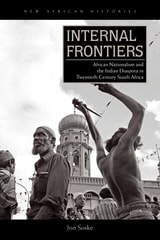
Internal Frontiers
African Nationalism and the Indian Diaspora in Twentieth-Century South AfricaJon Soske
Ohio University Press, 2017
In this ambitious new history of the antiapartheid struggle, Jon Soske places India and the Indian diaspora at the center of the African National Congress’s development of an inclusive philosophy of nationalism. In so doing, Soske combines intellectual, political, religious, urban, and gender history to tell a story that is global in reach while remaining grounded in the everyday materiality of life under apartheid.
Even as Indian independence provided black South African intellectuals with new models of conceptualizing sovereignty, debates over the place of the Indian diaspora in Africa (the “also-colonized other”) forced a reconsideration of the nation’s internal and external boundaries. In response to the traumas of Partition and the 1949 Durban Riots, a group of thinkers in the ANC, centered in the Indian Ocean city of Durban and led by ANC president and Nobel Peace Prize winner Albert Luthuli, developed a new philosophy of nationhood that affirmed South Africa’s simultaneously heterogeneous and fundamentally African character.
Internal Frontiers is a major contribution to postcolonial and Indian Ocean studies and charts new ways of writing about African nationalism.
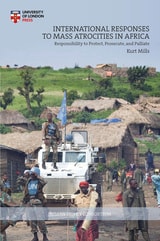
International Responses to Mass Atrocities in Africa
Responsibility to Protect, Prosecute, and PalliateKurt Mills
University of London Press, 2015
Parallel to this responsibility, two related responsibilities have developed: to prosecute those responsible for the crimes, and to provide humanitarian relief to the victims—what Kurt Mills in this book calls the “responsibility to palliate.” While this rhetoric of protection is well used by the international community, its application in practice has been erratic at best. In International Responses to Mass Atrocities in Africa, Mills develops a typology of responses to mass atrocities, considering four cases in Rwanda, the Democratic Republic of the Congo, Uganda, and Darfur. Putting the cases into historical context and analyzing them according to this typology, Mills investigates the limitations of these responses and calls for such responses to be implemented in a more timely and thoughtful manner. Mills provides critical analysis of the possibilities for the international community to respond to humanitarian crises in the future.
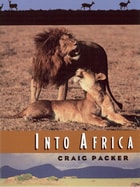
Into Africa
Craig Packer
University of Chicago Press, 1994
As in the works of George Schaller and Cynthia Moss, Packer transports us to life in the field. He is addicted to this land—to the beauty of a male lion striding across the Serengeti plains, to the calls of a baboon troop through the rain forests of Gombe—and to understanding the animals that inhabit it. Through his vivid narration, we feel the dust and the bumps of the Arusha Road, smell the rosemary in the air at lunchtime on a Serengeti verandah, and hear the lyrics of the Grateful Dead playing off bootlegged tapes.
Into Africa also explores the social lives of the animals and the threats to their survival. Packer grapples with questions he has passionately tried to answer for more than two decades. Why do female lions raise their young in crèches? Why do male baboons move from troop to troop while male chimps band together? How can humans and animals continue to coexist in a world of diminishing resources? Immediate demands—logistical nightmares, political upheavals, physical exhaustion—yield to the larger inescapable issues of the interdependence of the land, the animals, and the people who inhabit it.
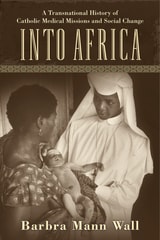
Into Africa
A Transnational History of Catholic Medical Missions and Social ChangeWall, Barbra Mann
Rutgers University Press, 2015
Awarded first place in the 2016 American Journal of Nursing Book of the Year Award in the History and Public Policy category
The most dramatic growth of Christianity in the late twentieth century has occurred in Africa, where Catholic missions have played major roles. But these missions did more than simply convert Africans. Catholic sisters became heavily involved in the Church’s health services and eventually in relief and social justice efforts. In Into Africa, Barbra Mann Wall offers a transnational history that reveals how Catholic medical and nursing sisters established relationships between local and international groups, sparking an exchange of ideas that crossed national, religious, gender, and political boundaries.
Both a nurse and a historian, Wall explores this intersection of religion, medicine, gender, race, and politics in sub-Saharan Africa, focusing on the years following World War II, a period when European colonial rule was ending and Africans were building new governments, health care institutions, and education systems. She focuses specifically on hospitals, clinics, and schools of nursing in Ghana and Uganda run by the Medical Mission Sisters of Philadelphia; in Nigeria and Uganda by the Irish Medical Missionaries of Mary; in Tanzania by the Maryknoll Sisters of New York; and in Nigeria by a local Nigerian congregation. Wall shows how, although initially somewhat ethnocentric, the sisters gradually developed a deeper understanding of the diverse populations they served. In the process, their medical and nursing work intersected with critical social, political, and cultural debates that continue in Africa today: debates about the role of women in their local societies, the relationship of women to the nursing and medical professions and to the Catholic Church, the obligations countries have to provide care for their citizens, and the role of women in human rights.
A groundbreaking contribution to the study of globalization and medicine, Into Africa highlights the importance of transnational partnerships, using the stories of these nuns to enhance the understanding of medical mission work and global change.
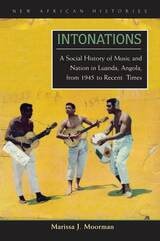
Intonations
A Social History of Music and Nation in Luanda, Angola, from 1945 to Recent TimesMarissa J. Moorman
Ohio University Press, 2008
Intonations tells the story of how Angola’s urban residents in the late colonial period (roughly 1945–74) used music to talk back to their colonial oppressors and, more importantly, to define what it meant to be Angolan and what they hoped to gain from independence. A compilation of Angolan music is included in CD format.
Marissa J. Moorman presents a social and cultural history of the relationship between Angolan culture and politics. She argues that it was in and through popular urban music, produced mainly in the musseques (urban shantytowns) of the capital city, Luanda, that Angolans forged the nation and developed expectations about nationalism. Through careful archival work and extensive interviews with musicians and those who attended performances in bars, community centers, and cinemas, Moorman explores the ways in which the urban poor imagined the nation.
The spread of radio technology and the establishment of a recording industry in the early 1970s reterritorialized an urban-produced sound and cultural ethos by transporting music throughout the country. When the formerly exiled independent movements returned to Angola in 1975, they found a population receptive to their nationalist message but with different expectations about the promises of independence. In producing and consuming music, Angolans formed a new image of independence and nationalist politics.

Inventing Africa
History, Archaeology and IdeasRobin Derricourt
Pluto Press, 2011
Inventing Africa is a critical account of narratives which have selectively interpreted and misinterpreted the continent's deep past.
Writers have created alluring images of lost cities, vast prehistoric migrations and golden ages of past civilisations. Debates continue on the African origins of humankind, the contributions of ancient Egypt to the world and Africa's importance to global history.
Images of 'Africa', simplifying a complex and diverse continent, have existed from ancient Mediterranean worlds, slave trading nations and colonial powers to today's political elites, ecotourists and aid-givers. Robin Derricourt draws on his background as publisher and practitioner in archaeology and history to explore the limits and the dangers of simplifications, arguing - as with Said's concept of 'Orientalism' - that ambitious ideas can delude or oppress as well as inform.
Defending Africa against some of the grand narratives that have been imposed upon its peoples, Inventing Africa will spark new debates in the history of Africa and of archaeology.
Inventing Masks
Agency and History in the Art of the Central PendeZ. S. Strother
University of Chicago Press, 1998
"Its presentation, its exceptionally lively style, the perfection of its illustrations make this a stunning book, perfectly fitting for the study of a performing art and its content is indeed seminal. . . . A breakthrough."—Jan Vansina, African Studies Review
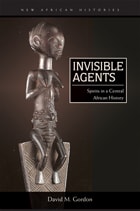
Invisible Agents
Spirits in a Central African HistoryDavid M. Gordon
Ohio University Press, 2012
Invisible Agents shows how personal and deeply felt spiritual beliefs can inspire social movements and influence historical change. Conventional historiography concentrates on the secular, materialist, or moral sources of political agency. Instead, David M. Gordon argues, when people perceive spirits as exerting power in the visible world, these beliefs form the basis for individual and collective actions. Focusing on the history of the south-central African country of Zambia during the nineteenth and twentieth centuries, his analysis invites reflection on political and religious realms of action in other parts of the world, and complicates the post-Enlightenment divide of sacred and profane.
The book combines theoretical insights with attention to local detail and remarkable historical sweep, from oral narratives communicated across slave-trading routes during the nineteenth century, through the violent conflicts inspired by Christian and nationalist prophets during colonial times, and ending with the spirits of Pentecostal rebirth during the neoliberal order of the late twentieth century. To gain access to the details of historical change and personal spiritual beliefs across this long historical period, Gordon employs all the tools of the African historian. His own interviews and extensive fieldwork experience in Zambia provide texture and understanding to the narrative. He also critically interprets a diverse range of other sources, including oral traditions, fieldnotes of anthropologists, missionary writings and correspondence, unpublished state records, vernacular publications, and Zambian newspapers.
Invisible Agents will challenge scholars and students alike to think in new ways about the political imagination and the invisible sources of human action and historical change.

Islam and Politics in East Africa
The Sufi Order in TanzaniaAugust H. Nimtz Jr.
University of Minnesota Press, 1980
Islam and Politics in East Africa was first published in 1980. Minnesota Archive Editions uses digital technology to make long-unavailable books once again accessible, and are published unaltered from the original University of Minnesota Press editions.
Focusing on the interplay of religion, society, and politics, August Nimtz examines the role of sufi tariqas (brotherhoods) in Tanzania, where he observed an African Muslim society at first hand. Nimtz opens this book with a historical account of Islam in East Africa, and in subsequent chapters analyzes the role of tariqas in Tanzania and, more specifically, in the coastal city of Bagamoyo. Using a conceptual framework derived from contemporary political theories on social cleavages and individual interests. Nimtz explains why the tariqa is important in the process of political change.
The fundamental cleavage in Muslim East Africa, he notes, is that of "whites" versus blacks. Nimtz contends that the tariqus, in serving the interest of blacks (that is, Africans), became in turn vehicles for the mass mobilization of African Muslims during the anti-colonial struggle. In Bagamoyo he finds a similar process and, in addition, reveals that the tariqas have served African interests in opposition to those of "whites" because of the individual benefits they provide. At the same time, Nimtz concludes, the social structure of East African Muslim society has ensured that Africans would be particularly attracted to these benefits. This work will interest both observers of African political development and specialists in the Islamic studies.
Islamic Africa 1.1
Muhammad Sani Umar
Northwestern University Press, 2010
Islamic Africa promotes interaction between scholars of Islam and Africa across all continents and across historical periods. We welcome papers on any aspect of Islam and Muslim life pertaining to Africa and/or Africans from the humanities and the social sciences, especially those originating from the African continent.
Islamic Africa 1.2
Muhammad Sani Umar
Northwestern University Press, 2010
Islamic Africa promotes interaction between scholars of Islam and Africa across all continents and across historical periods. We welcome papers on any aspect of Islam and Muslim life pertaining to Africa and/or Africans from the humanities and the social sciences, especially those originating from the African continent.
Islamic Africa 2.1
Muhammad S. Umar
Northwestern University Press, 2011
Islamic Africa promotes interaction between scholars of Islam and Africa across all continents and across historical periods. We welcome papers on any aspect of Islam and Muslim life pertaining to Africa and/or Africans from the humanities and the social sciences, especially those originating from the African continent.
Islamic Africa 2.2
Muhammad Sani Umar
Northwestern University Press, 2011
Islamic Africa promotes interaction between scholars of Islam and Africa across all continents and across historical periods. We welcome papers on any aspect of Islam and Muslim life pertaining to Africa and/or Africans from the humanities and the social sciences, especially those originating from the African continent.
Islamic Africa 3.1
Muhammad Sani Umar
Northwestern University Press, 2012
Islamic Africa promotes interaction between scholars of Islam and Africa across all continents and across historical periods. We welcome papers on any aspect of Islam and Muslim life pertaining to Africa and/or Africans from the humanities and the social sciences, especially those originating from the African continent.
Islamic Africa 3.2
Scott Reese
Northwestern University Press, 2012
Islamic Africa promotes interaction between scholars of Islam and Africa across all continents and across historical periods. We welcome papers on any aspect of Islam and Muslim life pertaining to Africa and/or Africans from the humanities and the social sciences, especially those originating from the African continent.
Islamic Africa 4.1
Scott Reese
Northwestern University Press, 2013
Islamic Africa promotes interaction between scholars of Islam and Africa across all continents and across historical periods. We welcome papers on any aspect of Islam and Muslim life pertaining to Africa and/or Africans from the humanities and the social sciences, especially those originating from the African continent.
Islamic Africa Electronic Journal
Volume 4, Issue 1 Spring 2013
Islamic Africa 4.2
Scott Reese
Northwestern University Press, 2013
Islamic Africa promotes interaction between scholars of Islam and Africa across all continents and across historical periods. We welcome papers on any aspect of Islam and Muslim life pertaining to Africa and/or Africans from the humanities and the social sciences, especially those originating from the African continent.